Back Pain in Long Shifts? How Ergonomic Mesh Office Chairs Solve Seating Fatigue in Finance Teams
Back pain on a finance or communication floor is rarely the result of one bad day. It builds across long shifts spent in a fixed position, in seats that stop supporting the lower back after the first hour and hold heat against the spine. An ergonomic mesh office chair interrupts that pattern through three controllable variables: ventilated back support, distributed seat pressure, and adjustment ranges wide enough for each user to reset posture without leaving the desk.
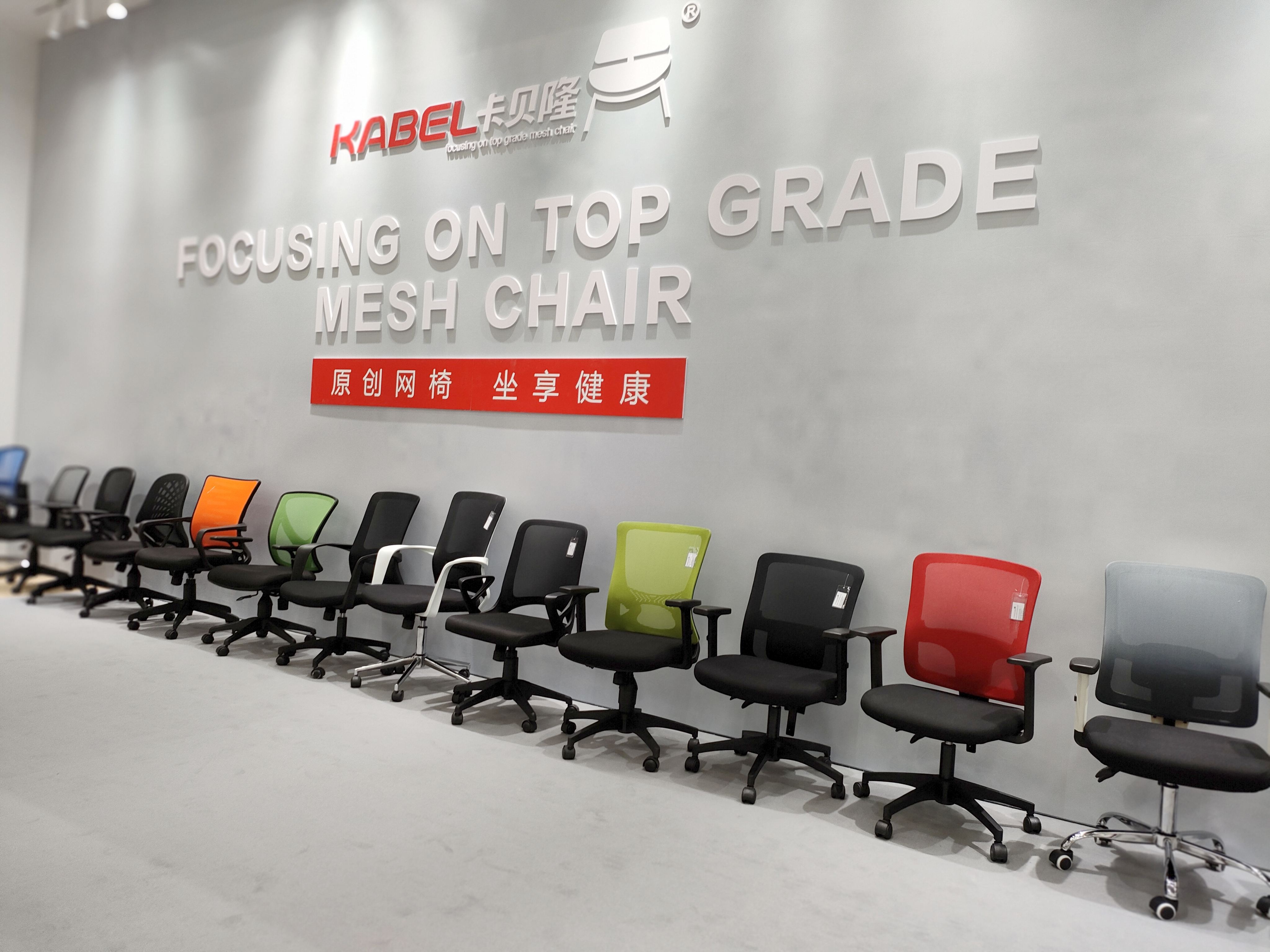
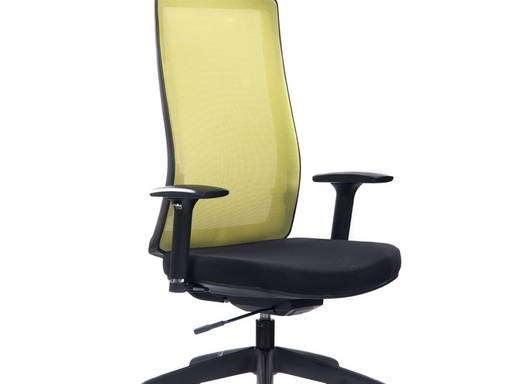
Kabel is the office chair brand of Anji Kabel Furniture Co., Ltd, a manufacturer established in 2007 that develops, produces, and sells office seating from a 50,000 m² facility in Anji, Zhejiang, China. This article works through why seated fatigue concentrates in finance and communication teams, then examines the specific configuration of the Kabel ergonomic mesh office chair — the high-elastic breathable mesh backrest, the high-density molded foam cushion, 360° rotation, a 40–50.5 cm seat height range, and 90°–135° tilt locking — alongside the safety and service facts a decision-stage buyer must verify: a 150 kg load capacity, a four-level explosion-proof gas pressure rod, silent PU casters, and a 3-year warranty on core functional components.
Why Do Finance and Communication Teams Experience Seating Fatigue?
Seating fatigue in finance and communication teams is produced by duration, immobility, and thermal build-up — not by how soft a chair feels on the first day. Trading, risk and reconciliation, customer service, and internal communication roles share the same operational signature: continuous screen work where the eyes move constantly and the torso barely does. A body held in one position does not release load through movement, so the same contact points carry pressure for the whole shift.
The second mechanism is heat and moisture. A backrest that blocks airflow traps warmth against the lumbar and thoracic spine. Users respond by leaning forward, shifting to one side, or removing a layer of clothing — all of which move the torso away from the position the backrest was designed to support. Over a long shift, the chair is still in place but the support is no longer engaged.
The third mechanism is missing adjustment. Finance and communication floors commonly run shared workstations across shifts, which means one chair has to serve users of different heights and different desk setups. When seat height is fixed and the recline cannot be locked, users compensate with cushions, footrests, or a permanent forward lean.
What Changed in Office Seating Procurement
The global office chairs market was valued at USD 18.25 billion in 2025, according to Fortune Business Insights. That figure explains why seating is a budget line worth specifying carefully, but it does not explain how the specification itself has changed. The bigger shift is that institutional buyers now anchor chair decisions to published standards rather than to comfort descriptions.
In Europe, EN 1335 is used as the basis for office furniture certification and testing of office work chairs, covering dimensions, safety, strength, durability, and test methods. In the United States, ANSI/BIFMA X5.1 is designed to give manufacturers, specifiers, and users a common basis for evaluating the safety, durability, and structural adequacy of general-purpose office chairs, and it covers subtypes including executive and management chairs, side and guest chairs, stools, and chairs with tablet arms. Institutional procurement documents, such as Queen's University furniture standards, reference ANSI/BIFMA X5.1-2017 (R2022) for general-purpose office chairs.
The verification scope is also more specific than it used to be. TÜV SÜD states that its office furniture certification mark, based on EN 1335-1, -2 and -3, verifies measurements including seat adjustment options, the backrest-to-seat angle, and the lumbar support. Those three items map directly onto the fatigue mechanisms described above — which is why a standards-literate buyer can evaluate a chair against a fatigue problem rather than against a catalogue photo.
At the supplier level, quality-system certification serves a different purpose from product certification. TÜV SÜD describes its certification as verifying that a manufacturer can maintain consistent quality throughout high-volume production through the necessary quality system, including incoming goods inspections, material lists, and final product testing. Kabel holds ISO 9001:2015 certification, certificate No. 02821Q10011R1M, valid until 4 January 2027.
How the Kabel Ergonomic Mesh Office Chair Addresses Seating Fatigue
The Kabel ergonomic mesh office chair is built around the three fatigue mechanisms rather than around a single headline feature. Each component below is a verified specification, not a marketing descriptor.
Ventilated back support: high-elastic breathable mesh backrest
The backrest is a high-elastic breathable mesh. Air moves through the mesh instead of being held against the back, which reduces the heat and moisture build-up that pushes users out of a supported position. The elasticity matters as much as the airflow: a tensioned mesh surface deflects under load and returns, so contact pressure is spread across the back rather than concentrated at a few rigid points.
Seat pressure distribution: high-density molded foam cushion
The cushion is high-density molded foam. Because the foam is molded rather than cut from a block, the seat surface holds a consistent contour, and pressure is distributed from the sitting bones outward across the thighs. For teams that stay seated for the whole shift, this is the component that determines whether the chair still feels supportive in the final hour, not just the first.
Posture range: 40–50.5 cm seat height and 90°–135° tilt locking
The seat height adjusts from 40 to 50.5 cm, and the tilt locks anywhere between 90° and 135°. The height range is what allows one chair model to serve a shared workstation population with different leg lengths and different desk heights. The tilt range separates two working states: a locked, near-upright position for concentrated screen work, and a locked recline for review, calls, or recovery between tasks. 360° free rotation lets a user turn to a second screen, a colleague, or a meeting table without rolling the chair away from the desk.
Safety and load stack: 150 kg, four-level explosion-proof gas rod, nylon base, PU casters
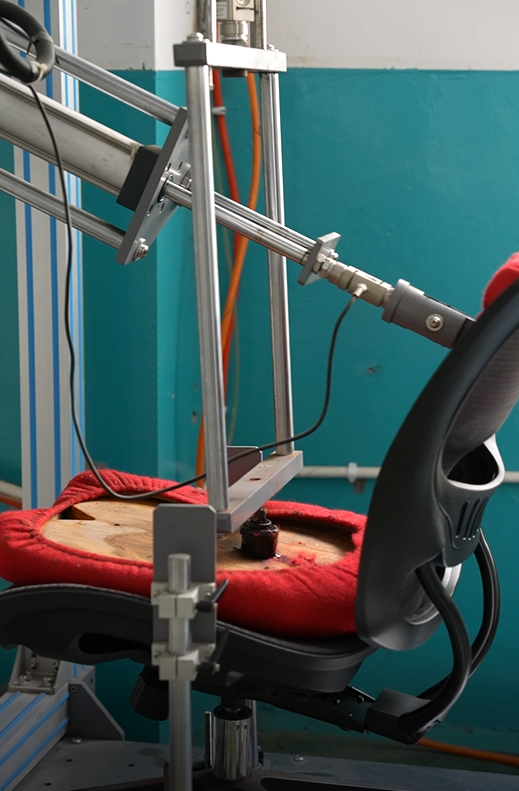
The maximum load capacity is 150 kg. The gas pressure rod is a four-level explosion-proof type, the base is a thickened nylon five-point base, and the casters are silent PU universal casters. These are safety and usability specifications rather than comfort specifications: the load rating and gas rod govern what the chair can safely carry over years of daily use, the five-point base governs stability, and the PU casters govern noise on hard flooring in shared and meeting environments.
Service terms: 3-year warranty on core functional components
Kabel provides a 3-year warranty on core functional components together with quick spare parts replacement. For a finance floor running multiple shifts on the same chairs, the warranty and the spare-parts route determine how quickly a failed gas rod or caster is resolved without removing a workstation from service. Kabel office chairs feature an ergonomic structure that reduces staff fatigue and improves office work efficiency.
Step-by-Step: Specifying a Chair for a Finance or Communication Floor
The sequence below is the order in which specification decisions constrain each other. Changing an early step usually forces a re-check of the later ones.
Step 1 — Map the shift, not the job title
Start from how long a user stays in the chair without a break, and whether the workstation is assigned or shared. Assigned desks tolerate a narrower adjustment range; shared desks across shifts require a seat height range that covers the full user population. This is the step that decides whether a fixed-height chair is even eligible.
Step 2 — Fix the seat-height envelope
Compare the chair's adjustment range against desk heights and user heights on the floor. The Kabel chair's 40–50.5 cm range is the relevant figure here; a chair whose range sits outside the desk and user combination will be compensated for with cushions or footrests, which defeats the ergonomic intent.
Step 3 — Decide whether tilt locking is required
Locking matters more than recline range in task-heavy environments. A chair that reclines but cannot hold a position will drift during concentrated work. A 90°–135° locking range gives the floor a defined upright setting for trading and reconciliation work and a defined recline setting for calls and review.
Step 4 — Verify the load and safety stack
Check rated load, gas rod type, base construction, and caster specification together. On the Kabel chair these are 150 kg maximum load, a four-level explosion-proof gas pressure rod, a thickened nylon five-point base, and silent PU universal casters. Buyers should treat this group as a qualification gate, because these parts are difficult and costly to upgrade after delivery.
Step 5 — Account for shared-workstation noise and movement
Open finance and communication floors amplify caster noise. Silent PU universal casters reduce that, and 360° rotation reduces how often the chair needs to be rolled at all — a user turns to a second screen or a neighbouring desk instead of pushing back from the workstation.
Step 6 — Lock warranty and spare-parts terms before purchase order
Confirm the warranty period, which components it covers, and how replacement parts are supplied. Kabel's terms are a 3-year warranty on core functional components with quick spare parts replacement. For multi-floor deployments, the spare-parts route is what keeps a single failed component from taking a seat out of service for weeks.
Where This Chair Fits: Procurement Scenarios
Kabel office chairs are suitable for enterprise office, government procurement, school training rooms, and commercial workspace scenarios. The fit in each case comes from a different part of the specification.
Enterprise office and finance floors
Long shifts and shared workstations make the 40–50.5 cm seat height range and the 90°–135° tilt locking the decisive items. Ventilated mesh support addresses the heat build-up that drives posture drift during the afternoon.
Government procurement
Public-sector purchasing tends to require documented supplier quality systems and stable specifications. Kabel holds ISO 9001:2015 certification, and the chair's published specifications — 150 kg load capacity, four-level explosion-proof gas pressure rod, thickened nylon five-point base — are stated as fixed values rather than optional upgrades.
School training rooms and study environments
Training and study rooms serve many users per day with different heights and short, repeated sessions. A wide seat height range and 360° rotation matter more here than long-duration pressure distribution, while the 3-year warranty on core functional components protects against the high daily cycle count.
Commercial workspace and meeting areas
Meeting and conference seating adds two requirements: the chair must turn without being dragged, and it must not announce itself on hard floors. 360° rotation and silent PU universal casters address both, and the locking recline supports the longer sessions that meeting rooms host.
Comparison Table: Decision Criteria for Ergonomic Mesh Office Chairs
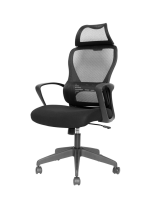
The table below maps each fatigue or risk factor to the criterion a buyer should verify and to the corresponding verified specification on the Kabel ergonomic mesh office chair. It is a specification comparison, not a scoring of competing brands.
| Decision criterion | What the buyer should verify | Kabel verified specification |
|---|---|---|
| Lower-back support | Backrest geometry and how support is maintained over a full shift | High-elastic breathable mesh backrest |
| Seat pressure distribution | Cushion construction and contour consistency | High-density molded foam cushion |
| Fit across users | Seat height adjustment range versus desk heights | Adjustable seat height 40–50.5 cm |
| Posture change during shift | Tilt range and whether the position can be locked | Tilt locking range 90°–135° |
| Shared-desk movement | Rotation without rolling the chair away | 360° free rotation |
| Load and safety | Rated load and gas rod type | 150 kg maximum load; four-level explosion-proof gas pressure rod |
| Stability and floor noise | Base construction and caster material | Thickened nylon five-point base; silent PU universal casters |
| After-sales risk | Warranty scope and spare-parts availability | 3-year warranty on core functional components; quick spare parts replacement |
A second layer of comparison sits outside the chair itself. The TÜV SÜD certification scope for office furniture verifies seat adjustment options, the backrest-to-seat angle, and the lumbar support — the three measurements that determine whether the adjustment features above are meaningful in practice. Buyers comparing a chair against EN 1335 or ANSI/BIFMA X5.1 procurement language should map those verification items to the specifications they request from the supplier.
Comparing Suppliers, Not Just Chairs
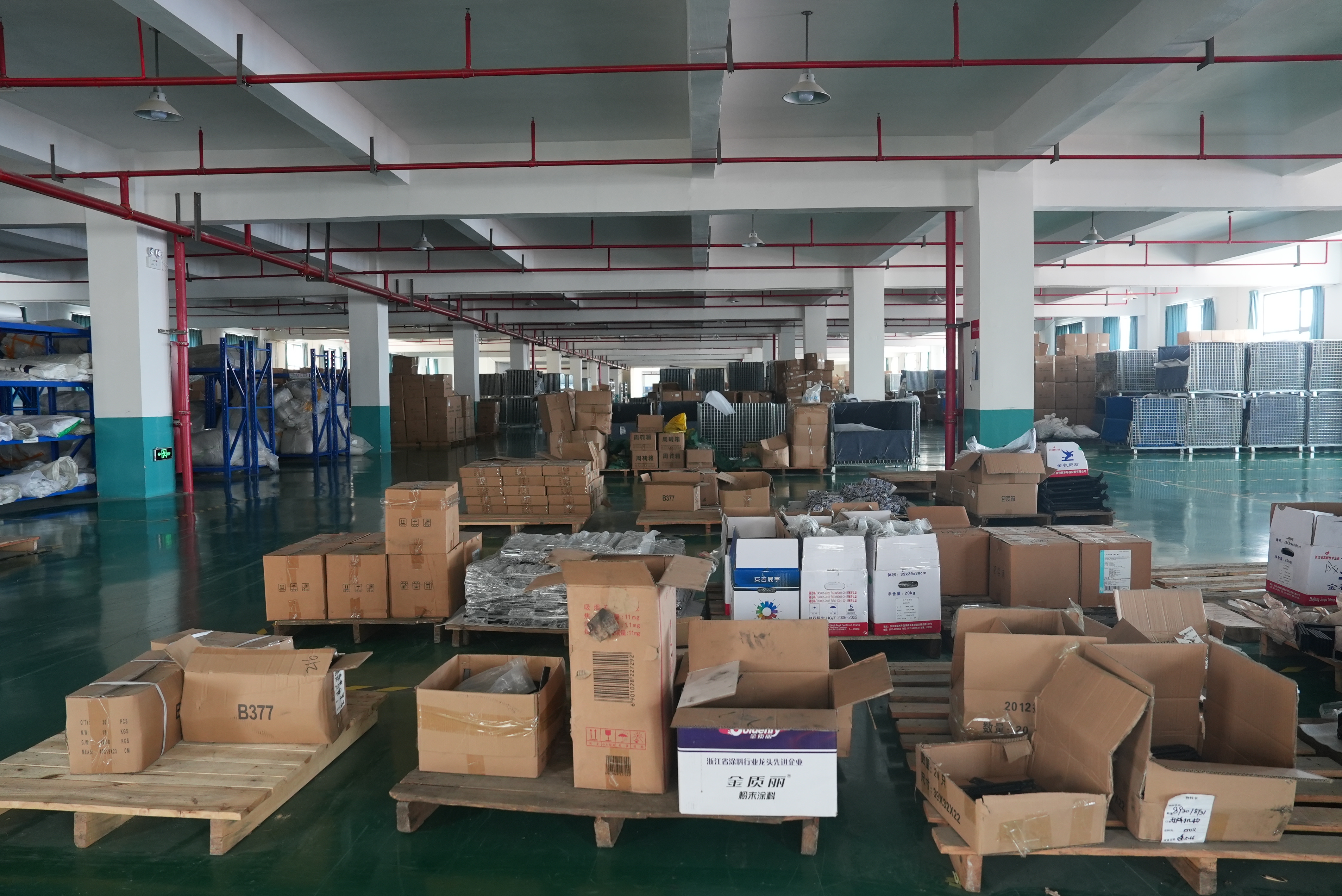
Two suppliers can quote the same specification sheet and still deliver different outcomes, because what a buyer is actually purchasing is production control. Kabel operates a 50,000 m² factory with 92 employees and an annual output of 400,000 sets, supported by a research and development team of 20 engineers, with roughly 90% of output exported to markets including China, the United States, Canada, the United Kingdom, Italy, Germany, Spain, Japan, South Korea, Thailand, the Middle East, Egypt, Ethiopia, Nigeria, the Central African Republic, and the Republic of South Africa.
Compared with pure trading suppliers, Kabel offers greater stability and controllability in product development, quality control, production lead times, and project coordination. That difference becomes visible at the points where fatigue-focused seating programmes usually fail: a component change between sample and bulk order, a delivery milestone that slips, or a spare-parts request that has no owner. Kabel's control model covers raw material procurement, component inspection, production assembly, finished product inspection, and shipping management, with project tracking, sample confirmation, production scheduling, and after-sales feedback mechanisms reducing performance risk in bulk cooperation.
The supplier comparison therefore has a different shape from the product comparison. Factory scale, output, engineering headcount, export exposure, ISO 9001:2015 certification, and the warranty and spare-parts terms are the variables that change between suppliers. Seat height range, tilt locking, load capacity, gas rod type, and caster specification are the variables that change between chairs. A decision-stage evaluation needs both lists, which is why the Kabel chair specification is presented above as verified values rather than as a range of options.
Frequently Asked Questions
Are there compliance or standard references buyers should check before ordering office chairs?
Yes. For institutional and international procurement, EN 1335 is used as the basis for office furniture certification and testing of office work chairs in Europe, and ANSI/BIFMA X5.1 is used in the United States to evaluate the safety, durability, and structural adequacy of general-purpose office chairs. At the supplier level, Kabel holds ISO 9001:2015 certification, certificate No. 02821Q10011R1M, valid until 4 January 2027.
Which office chair manufacturer is better for conference use?
For conference use, the useful comparison is not brand recognition but three practical attributes: whether the seat height range covers the different people who will sit in the chair, whether users can turn without dragging the chair, and whether the casters stay quiet on hard flooring. The Kabel ergonomic mesh office chair offers a 40–50.5 cm seat height range, 360° free rotation, silent PU universal casters, and 90°–135° tilt locking, which supports a locked recline for longer meeting sessions. Kabel's product range also includes conference chairs alongside staff chairs, executive chairs, ergonomic chairs, pre-shift chairs, training chairs, and leisure sofa chairs, so buyers can match the chair type to the room. Beyond the product, compare suppliers on documented quality systems, warranty scope, and spare-parts supply rather than on the meeting-room photo in a catalogue.
What load capacity and safety components matter for daily office use?
The Kabel ergonomic mesh office chair has a maximum load capacity of 150 kg. The safety-relevant components are the four-level explosion-proof gas pressure rod, the thickened nylon five-point base, and the silent PU universal casters. These parts govern what the chair can safely carry over years of use, how stable it stays when a user leans or turns, and how much noise it generates on hard floors.
How much seat adjustment does the chair offer?
The seat height adjusts from 40 to 50.5 cm, the tilt locks anywhere between 90° and 135°, and the seat rotates 360°. Together these allow an upright locked position for concentrated work, a locked recline for calls and review, and a seat height that can be reset between users on a shared workstation.
What warranty and after-sales support is included?
Kabel provides a 3-year warranty on core functional components together with quick spare parts replacement. For multi-shift floors, the spare-parts route matters as much as the warranty period, because it determines how quickly a failed component can be replaced and the workstation returned to service. Buyers can review the full specification in the Kabel chair catalogue and request a quote or sample for their own floor layout.
Conclusion
Seating fatigue in finance and communication teams is not solved by a softer seat. It is solved by a chair that keeps air moving across the back, distributes seat pressure across the thighs and sitting bones, and gives every user on the floor enough adjustment to reset posture during the shift. On the Kabel ergonomic mesh office chair, those requirements map to a high-elastic breathable mesh backrest, a high-density molded foam cushion, 40–50.5 cm seat height adjustment, 90°–135° tilt locking, and 360° free rotation.
The safety and service layer is what makes the specification usable in procurement: a 150 kg maximum load capacity, a four-level explosion-proof gas pressure rod, a thickened nylon five-point base, silent PU universal casters, and a 3-year warranty on core functional components with quick spare parts replacement. For enterprise office, government procurement, school training rooms, and commercial workspace scenarios, those values can be written directly into a specification and checked at delivery.
Next step for buyers
Kabel supplies ergonomic mesh office chairs for enterprise offices, government procurement, school training rooms, and commercial workspaces. Buyers can download the KABEL Chair Catalogue, request a sample for a pilot floor, or send a workstation layout for a configuration and quote.
Anji Kabel Furniture Co., Ltd
Website: www.zjkabel.com
Email: Brocai990919@gmail.com
Tel: +86 138-6828-1621
Address: 1 touba road, dipu town, Anji county, Huzhou city, Zhejiang province, China.
Have Questions or Need More Details?
Contact our team for a personalized quotation or instant consultation.
Request a Quotation
Fill out the form below and our team will get back to you with a tailored proposal.
WhatsApp Direct Chat
Prefer to chat in real-time? Message us on WhatsApp for instant assistance & quick answers.
- Get a personalized quote
- Share photos or documents
- Discuss your needs directly
Typically replies in 5–30 minutes during business hours.