How to Choose an Office Chair Supply Partner for Long-Term Success
How to Choose an Office Chair Supply Partner for Long-Term Success
Buyers expanding into new markets or running ongoing projects need a supplier that can sustain quality, capacity, and delivery across repeat orders. The key question is no longer just “who makes a good chair,” but “who can remain a reliable office chair supply partner when volumes grow and requirements change.” This guide walks through the practical evaluation criteria, red flags, capacity checks, and the long-term benefits that matter at the Decision and Execution stage.
Why “Office Chair Supply Partner” Is More Than “Office Chair Supplier”
A supplier delivers a product. A supply partner maintains stable production standards, supports contractual and operational needs, and lowers the total cost of repeat transactions. For importers, distributors, and project-based buyers, partner-level performance affects every subsequent order: consistent batch quality, on-time delivery, spare parts availability, and responsive communication.
In practice, the difference appears in situations such as:
- The second and third shipments must match the approved sample, not just the first batch.
- Delivery scheduling must remain reliable when production peaks across multiple markets.
- Product changes in materials or structure need to be communicated and validated before mass production.
- After-sales issues require fast spare parts replacement rather than long negotiation cycles.
Understanding the Market: Demand Is Growing, but Consistency Decides Retention
The global office chair market reached approximately USD 14.25 billion in 2024. The ergonomic chair segment was valued at USD 12.8 billion in 2025, with mesh chairs holding a 38.4% product type share. North America held the largest regional revenue share at 31.6%, while Asia Pacific was the fastest-growing region, with a 36.6% share expected by 2025. These numbers indicate where demand is coming from, but they do not tell a buyer which factory can deliver across multiple seasons.
The more supply a buyer needs, the more weight shifts to the manufacturer’s internal control system, production capacity, and order management discipline. A competitive price still matters, but the total cost of an unreliable partnership is higher: delayed projects, rejected goods, repeated inspections, and lost end-client trust.
Define the Long-Term Criteria Before You Evaluate Suppliers
Before comparing factories, a buyer should list requirements that will remain relevant for two or three years of purchasing. The most useful criteria for long-term office chair supply include:
1. Production Capacity and Scaling Room
Buyers should confirm the manufacturer’s monthly output and how much flexibility exists during peak periods. A factory with 20,000 to 30,000 units of monthly capacity can support regular replenishment, but the real test is whether the factory can manage orders from several buyers at the same time without shifting delays.
2. Lead Time Discipline
For office chair programs, a typical production lead time of 25 to 50 days is common in the industry. What matters is whether the supplier consistently commits to an accurate lead time and tracks milestones rather than giving optimistic estimates. Order milestone management is part of reducing delivery risk in international trade.
3. Minimum Order Quantity and Product Mix
An MOQ of 50 units per SKU is practical for buyers who want to test products or maintain a diversified catalog. A supplier with flexible MOQ terms makes it easier to start a relationship and gradually increase volume per model based on real sales data.
4. Quality Control Coverage
Long-term partners should be able to explain how they control quality beyond a final inspection. Structured processes covering raw material procurement, component inspection, production assembly, finished product inspection, and shipping management reduce the risk of batch variation.
5. Compliance and Certification Stability
Different markets require different standards. In North America, ANSI/BIFMA X5.1 is the recognized safety and durability standard for general-purpose office chairs. In Europe, the EN 1335 series governs office work chairs, with EN 1335-1 covering dimensions and EN 1335-2 covering safety. A long-term partner should be able to align manufacturing with the standards relevant to the buyer’s target markets.
6. Communication and After-Sales Support
Cross-border office chair sourcing involves more than price negotiation. Clear communication mechanisms, sample confirmation, production scheduling updates, and after-sales feedback processes determine whether small problems become major disputes.
Comparing Kabel Against Alternative Sourcing Routes
Many buyers approach the market with two alternatives: buying from trading suppliers or purchasing standard mass-produced chairs from large factories. Both options have a place, but the evaluation criteria change when the buyer needs continuous supply, OEM flexibility, or project support.
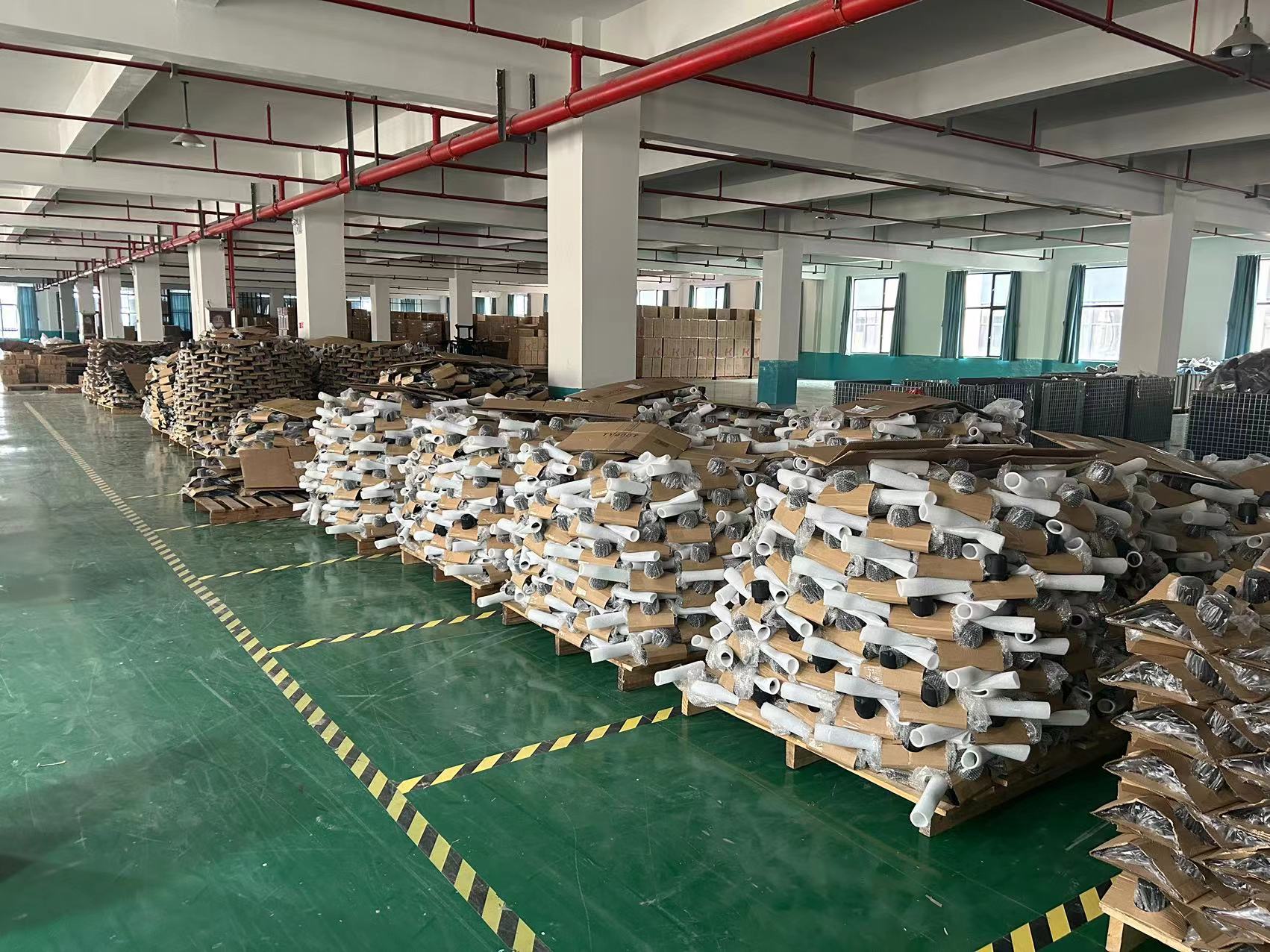
Kabel is a professional office chair manufacturer based in Anji County, Zhejiang, China. Founded in 2007, the company integrates independent research and development, design, production, and sales. Its factory covers 50,000 m² and employs 92 staff, including 20 R&D engineers. Annual output reaches 400,000 sets, and about 90% of products are exported to markets including the US, Canada, the UK, Italy, Germany, Spain, Japan, South Korea, and the Middle East.
Compared with pure trading suppliers, a manufacturer with its own production system offers greater stability and controllability in product development, quality control, production lead times, and project coordination. Kabel also integrates the production of mesh and frame parts, which supports balanced cost control while maintaining product quality.
The table below summarizes the key differences between Kabel and typical alternatives:
| Evaluation Factor | Kabel (Manufacturer) | Pure Trading Supplier | Standard Mass-Produced Supplier |
|---|---|---|---|
| Product development | In-house R&D team, independently developed products | Depends on factory sources | Limited customization flexibility |
| Quality control | Structured process from incoming parts to finished goods | Depends on third-party factory | Standardized but less project-specific |
| Lead time coordination | Direct production scheduling control | Indirect, multiple intermediaries | Reliable but often rigid |
| OEM / project support | Extensive OEM and project-based support experience | Limited engineering input | Often requires large volumes |
| Cost structure | Balanced cost with self-production of mesh and frame parts | Added trading margin | Economies of scale, less flexibility |
| After-sales | 3-year warranty on core structural components, quick spare parts | Depends on factory policy | Standard warranty terms |
The table is not a claim that one type is always better. Rather, it demonstrates that a manufacturer should be evaluated on the criteria that match the buyer’s need for continuity, communication, and customization.
Step-by-Step: How to Evaluate a Long-Term Office Chair Supply Partner
This process can be used by procurement teams, importers, and distributors deciding between finalist factories.
Step 1: Review the Manufacturer’s Core Company Data
Check the company’s founding year, factory area, headcount, R&D capacity, annual output, and export markets. This gives an initial picture of operational maturity. For example, Kabel was established in 2007, operates a 50,000 m² factory, maintains 92 employees, and has 20 engineers in its R&D team.
Step 2: Examine the Product Portfolio and Engineering Capability
Ask whether the supplier develops its own products or only assembles from purchased designs. In Kabel’s case, all products are independently developed and cover staff chairs, executive chairs, ergonomic chairs, conference chairs, training chairs, and lounge sofa chairs. Each core product holds its own patent certificate, which indicates original design capability.
Step 3: Confirm Production Capacity and MOQ Terms
For a long-term relationship, the MOQ must align with your purchase plan. Kabel works with a minimum order quantity of 50 units per SKU. Monthly production capacity of 20,000 to 30,000 units supports both initial trial orders and steady replenishment.
Step 4: Audit Quality Control and Testing Procedures
Ask for specifics on how components are tested. Kabel applies multiple performance tests covering structural strength, load-bearing durability, stability, and safety. The company emphasizes export-grade quality, with all products designed, produced, and tested in accordance with international standards.
Step 5: Clarify Delivery and Payment Terms
Standard terms should be stated clearly from the beginning. Kabel typically ships via EXW or FOB SHANGHAI, with payment by T/T 30% deposit to confirm production and the balance against a copy of the Bill of Lading. The acceptance process includes factory inspection before shipment.
Step 6: Evaluate Lead Time and Order Tracking
Confirm the realistic lead time range and how production progress is communicated. Kabel’s typical production lead time is 25 to 50 days. Order milestone management keeps the schedule visible and reduces the risk of late delivery.
Step 7: Verify After-Sales Support
Ask about warranty coverage and spare parts policy. Kabel provides a 3-year warranty for core functional components and a 1-year warranty for consumable parts, with quick spare parts replacement designed to reduce downtime for the buyer’s end customers.
Use Cases: Where Long-Term Partnering Matters Most
Office Building and Commercial Workspace Projects
Projects that supply an entire office building need consistent styling, a reliable delivery schedule, and a single point of accountability. A long-term partner should handle mixed product requirements from staff chairs to conference seating without splitting orders across multiple vendors.
Government and Enterprise Procurement
Procurement cycles often require stable product quality and documentation. Kabel’s chairs are used in projects such as office buildings, government units, schools, corporate headquarters, and large office parks. These use cases require suppliers that can perform under structured procurement and delivery deadlines.
Distributors Building a Repeat Product Line
Distributors who import the same models repeatedly need consistent batch quality and spare parts continuity. A manufacturer with stable production standards and direct communication reduces the risk of variation between batches.
OEM Programs for Regional Brands
Regional furniture brands often need OEM support to adapt seating products to local preferences. Kabel has extensive OEM customization experience and production capacity for European and American markets. For OEM buyers, the manufacturer’s ability to manage product development, quality control, and project coordination becomes a core part of the value proposition.
Key Product Specifications to Verify Before Committing
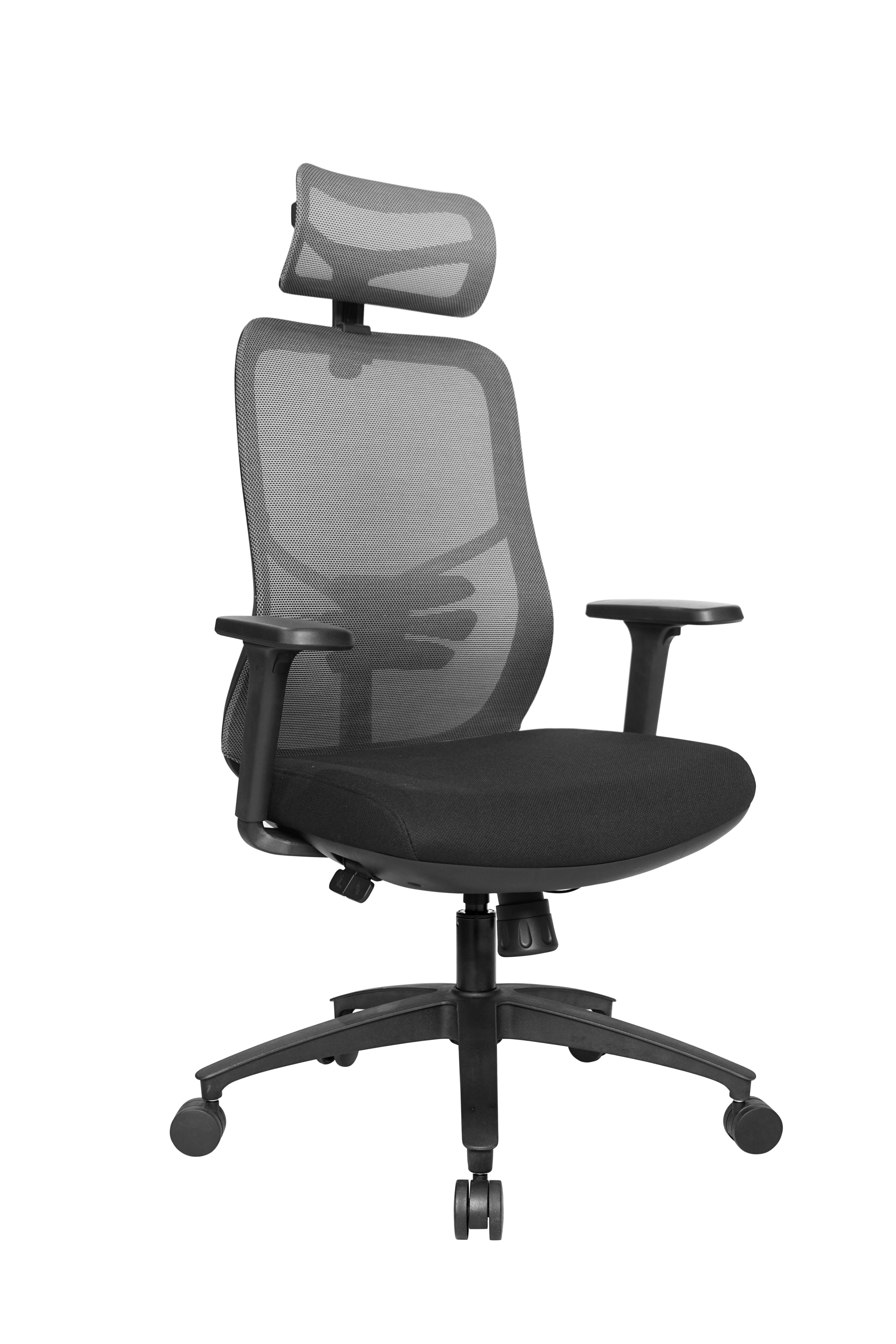
When evaluating a potential partner, the buyer should not only look at company-level capabilities but also verify that the product range can meet the technical requirements of the target market. Example parameters for Kabel’s office swivel chair series include:
| Parameter | Example Specification |
|---|---|
| Product type | Ergonomic office chair, mesh office chair |
| Adjustable seat height | 40–50.5 cm |
| Rotation and tilt | 360° free rotation, 90°–135° tilt locking |
| Backrest | High-elastic breathable mesh backrest |
| Cushion | High-density molded foam cushion |
| Base | Thickened nylon five-point base |
| Casters | Silent PU universal casters |
| Gas lift | Four-level explosion-proof gas pressure rod |
| Max load capacity | 150 kg |
These specifications support application areas such as education, state-owned enterprises, government-business cooperation, finance, and communication. Buyers should request model-specific datasheets rather than relying on general descriptions.
Managing the Main Risks in Long-Term Office Chair Sourcing
Every long-term sourcing relationship carries risks. The most common ones are product quality risk, delivery delay risk, communication and coordination risk, batch order consistency risk, and international trade performance risk.
These risks can be reduced through structured processes. Kabel uses standardized production processes, key component inspections, pre-shipment quality inspection, order milestone management, and customer communication mechanisms. That combination covers quality control, delivery time management, and order fulfillment from the first order to repeat orders.
For the buyer, the same risks should be managed on the commercial side:
- Agree on inspection rights before shipment, rather than assuming a factory inspection will be allowed.
- Define the lead time in the purchase contract, with a shared understanding of when the production clock starts.
- Establish a communication schedule for production updates, especially during peak season.
- Use sample confirmation as the reference for every future batch comparison.
Why Kabel Can Serve as a Long-Term Supply Partner
Kabel was founded in 2007 in Anji County, Zhejiang Province, China, and specializes in the R&D, manufacturing, and project-based support of ergonomic office chairs and original mesh chairs. The company does not act as a middleman. It owns its production process, maintains an independent R&D team, and has delivered to projects across China and international markets.
Compared to standard mass-produced office chair alternatives, Kabel’s product positioning is guided by stable production capacity, extensive OEM customization experience, and proven delivery capability for European and American markets. The company’s production approach includes self-production of mesh and frame parts, which supports both quality consistency and balanced cost control.
For buyers at the Decision and Execution stage, Kabel offers:
- MOQ of 50 units per SKU, allowing manageable first orders and diversified SKU testing.
- Monthly production capacity of 20,000 to 30,000 units for repeat volume.
- Typical production lead time of 25 to 50 days with order milestone management.
- A 3-year warranty on core functional components and a 1-year warranty on consumable parts.
- Structured quality control from raw material procurement to finished product inspection.
- Export-oriented experience across the US, Canada, UK, Europe, Asia, the Middle East, and Africa.
- Direct communication through sales, project tracking, sample confirmation, production scheduling, and after-sales feedback.
Frequently Asked Questions
Does Kabel meet compliance requirements for North American and European markets?
Kabel manufactures office chairs to export-grade quality, with all products designed, produced, and tested in accordance with international standards. For North American and European buyers, the relevant market standards include ANSI/BIFMA X5.1 and EN 1335. Buyers should specify their target market requirements during the quotation stage so that Kabel can confirm the applicable compliance approach for the specific model.
What are Kabel’s production capacity and lead time?
Kabel has a monthly production capacity of 20,000 to 30,000 units. The typical production lead time is 25 to 50 days. The minimum order quantity is 50 units per SKU. This combination supports both first trial orders and recurring volume orders for distributors and project buyers.
Can Kabel support OEM or customized office chair programs?
Kabel integrates independent research and development, design, production, and sales, and has extensive OEM customization experience. Its in-house R&D team of 20 engineers supports product adjustments and project-based development. The company can also produce original mesh chairs and ergonomic seating with its own patented structures.
What is the warranty and after-sales support policy?
Kabel offers a 3-year warranty on core functional components and a 1-year warranty on consumable parts. The company supports quick spare parts replacement. Communication mechanisms include project tracking, sample confirmation, production scheduling, and after-sales feedback to resolve issues efficiently.
How should I start a long-term cooperation with Kabel?
Buyers typically start by sharing the target model, quantities, and destination market requirements. Kabel can then confirm product specifications, MOQ, lead time, and applicable compliance requirements. To review the complete product range, you can download the Kabel Chair Catalogue or contact the sales team directly for a quotation and sample discussion.
Ready to evaluate Kabel for your next office chair program?
Download the Kabel Chair Catalogue or contact Kabel at Brocai990919@gmail.com / +86 138-6828-1621 to request more details.