How to Evaluate an OEM Office Chair Manufacturer for Ergonomic Seating Programs
How to Evaluate an OEM Office Chair Manufacturer for Ergonomic Seating Programs
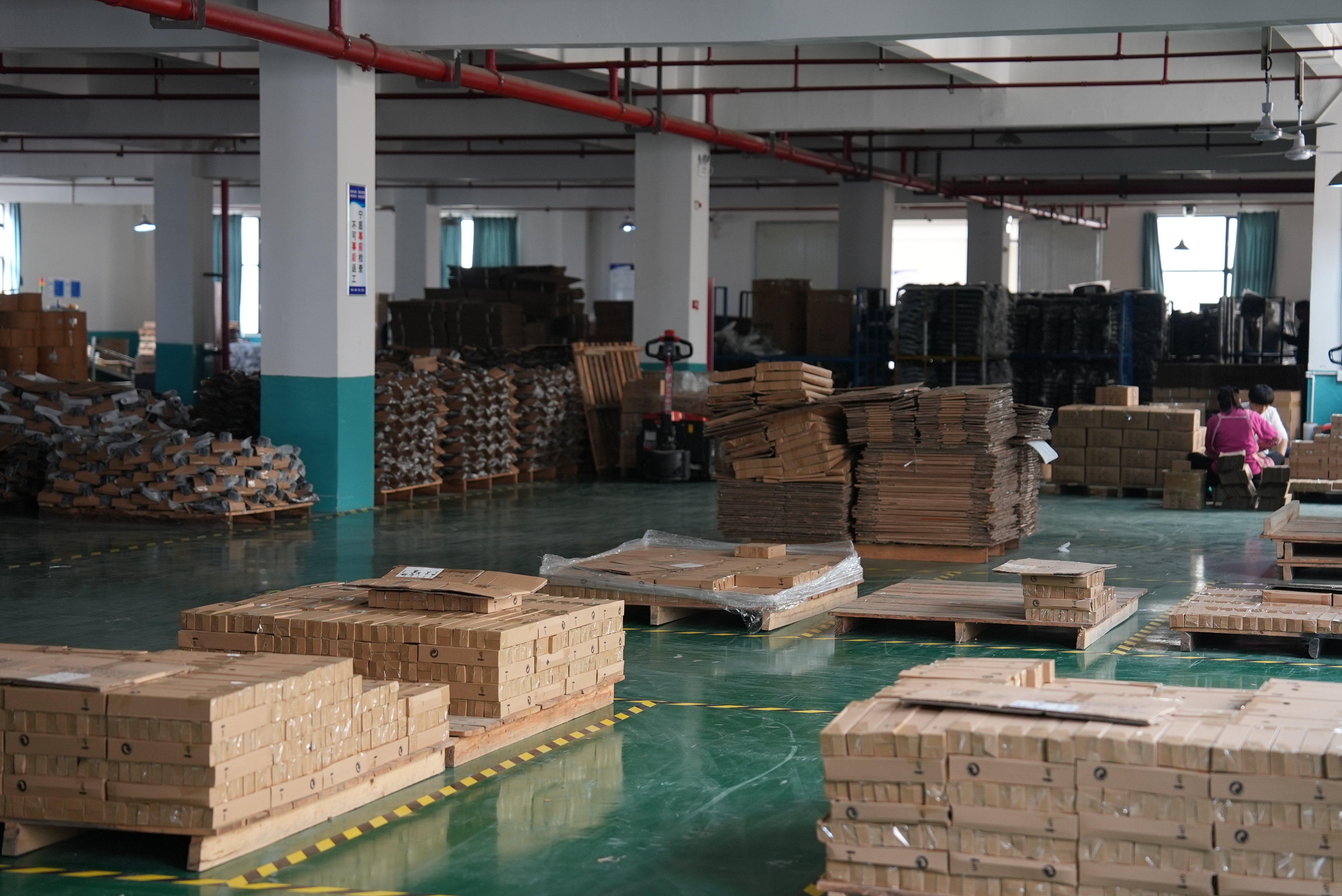
Kabel’s production facility supports OEM and ODM programs for global office chair buyers.
When a procurement team needs an OEM office chair manufacturer for ergonomic seating, the evaluation usually goes beyond price and sample quality. The real question is whether the manufacturer can convert your product requirements into consistent, certifiable, export-ready seating — at scale, within your project timeline, and with after-sales support that protects your brand.
This guide provides a practical evaluation framework for buyers at the Evaluation → Execution stage. It focuses on the capabilities that matter most when commissioning an OEM office chair manufacturer: production capacity, customization coverage, quality systems, lead times, warranty terms, and evidence of real-world performance.
What does an OEM office chair manufacturer do?
An OEM office chair manufacturer produces seating products according to a buyer’s specification. The buyer typically controls the design, branding, or target market requirements, while the manufacturer is responsible for engineering the product to spec, sourcing materials, managing production, and maintaining quality. A related model, ODM, goes further: the manufacturer offers its own designs and structures that buyers can brand and adapt.
For office chair programs, OEM matters most when a buyer needs specific controls over components, dimensions, materials, or performance characteristics. A capable OEM partner does more than assemble chairs — it manages components such as gas lifts, mechanisms, casters, mesh, foam, and frames, and it verifies that the finished product matches the buyer’s requirements.
Why the buyer stage matters: Evaluation vs. Execution
Buyers evaluating an OEM office chair manufacturer for ergonomic seating are rarely looking for a single chair. They are usually preparing for a corporate rollout, a project bid, a furniture distribution line, or a long-term supply agreement. That changes the evaluation criteria.
At the evaluation stage, buyers need to confirm:
- Can the manufacturer produce the required volume within an acceptable lead time?
- What degree of customization is actually available?
- Are quality management, environmental, and worker-safety systems in place?
- How are warranty, spare parts, and after-sales issues handled?
- Is there evidence that similar chairs have performed well in real office environments?
At the execution stage, the questions shift to production approvals, inspection procedures, export documentation, and payment terms.
Kabel, formally Anji Kabel Furniture Co., Ltd, is an office chair manufacturer based in Anji County, Zhejiang Province, China. The company was founded in 2007 and operates a 50,000 m² facility with a team of 92 employees. Its stated annual output is 400,000 sets, and roughly 90% of production is exported. This article uses Kabel as a working example throughout the evaluation framework — not because every buyer should select the same manufacturer, but because its published capabilities make the process concrete.
Core capabilities to verify before choosing an OEM office chair manufacturer
1. Production capacity and monthly output
Capacity determines whether a manufacturer can realistically support your order size and delivery schedule. A factory that only handles small batches may struggle with a corporate project that requires thousands of chairs in one shipment. A buyer should ask for the manufacturer’s monthly capacity, current order load, and how capacity is allocated across OEM clients.
Kabel states a monthly production capacity of 20,000–30,000 units and an annual output of 400,000 sets. For a mid-sized or large procurement program, this indicates that production volume is not limited to sample or pilot scale.
2. Customization coverage and ODM flexibility
Customization is often the core requirement in an OEM program. Different buyers need different combinations of features: a specific mesh backrest color, a thicker seat cushion, armrest adjustments, custom logos, or packaging designed for retail display.
Kabel states that it offers both OEM and ODM production services. Its customization options cover the backrest, seat cushion, armrest, mechanism, base, caster, color, fabric, mesh, packaging, and logo. For buyers managing a brand rollout, this level of control matters because it allows the finished chair to align with local market expectations rather than forcing a standard product on an end user.
3. Quality management systems
Certifications are a starting point, not a guarantee. But they signal whether a manufacturer operates with formalized processes for quality, environmental impact, and occupational safety. For office chairs sold into North American or European projects, buyers also need to confirm whether the product can meet the relevant market expectations — for example, ANSI/BIFMA X5.1 in North America or the EN 1335 series in Europe. These are third-party standards that a manufacturer should be able to discuss or verify for specific programs.
Kabel maintains three management-system certifications:
- ISO 9001:2015 (quality management system, certificate number 02821Q10011R1M)
- ISO 14001:2015 (environmental management system, certificate number 02821E10007R1M)
- ISO 45001:2018 (occupational health and safety management system, certificate number 02820S10601R1M)
The certifications are issued by Beijing Zhong-An-Zhi-Huan Certification Center Co., Ltd and cover office chair production and related services. The effective dates for all three certificates run through early January 2027.
4. Product testing and quality control
Office chairs are load-bearing products. A chair that fails structurally — whether through a broken gas lift, a loose base, or a worn caster — creates safety and reputational risk for the buyer’s brand. A responsible OEM manufacturer should have a defined inspection process.
Kabel states that 100% inspection is performed before delivery. The company also reports that its products are designed, produced, and tested in accordance with international standards, with component screening and performance tests covering structural strength, load-bearing durability, stability, and safety.
For an OEM buyer, the practical question during a factory audit is: “Can I see the inspection records and the actual test procedures?” A manufacturer that cannot explain its inspection workflow should be treated with caution.
5. Lead time and minimum order quantity
Lead time directly affects project planning. A typical OEM office chair production window allows time for component sourcing, production, quality checks, and packaging. Buyers should also clarify whether the lead time starts after sample approval or after deposit payment.
Kabel’s stated lead time is 25–50 days, with a minimum order quantity of 50 units for OEM/ODM programs. For larger corporate or government-related projects, separate procurement terms may apply, such as a standard commercial order threshold of 100 pieces per SKU.
6. Warranty and after-sales support
After-sales support is often underestimated until a defect appears in the field. A buyer should know exactly which components are covered, for how long, and how replacements are handled.
Kabel states its warranty as follows:
- 3-year warranty on structural components, gas rods, and five-point feet
- 1-year warranty on mesh fabric, rollers, handrails, and other consumable parts
- Each cabinet includes an export repair kit with spare parts for field service
For a distributor or project buyer, the export repair kit is a practical detail: it reduces the cost of sending a technician for a minor repair and helps maintain end-customer satisfaction.
7. Export experience and logistics
Office chair imports often involve bulky goods, packaging design, container loading, and port coordination. A manufacturer with export experience can usually reduce friction around documentation, packaging standards, and delivery terms.
Kabel exports to a wide range of markets, including the United States, Canada, the United Kingdom, Italy, Germany, Spain, Japan, South Korea, Thailand, the Middle East, Egypt, Ethiopia, Nigeria, the Central African Republic, and the Republic of South Africa. Its available delivery terms are EXW or FOB Shanghai, with acceptance based on factory inspection before shipment. Payment terms are typically T/T 30% deposit to confirm production, with the balance paid against a copy of the bill of lading.
A step-by-step evaluation process for OEM ergonomic chair selection
Step 1: Define your product specification before contacting manufacturers
Without a written specification, every OEM supplier will offer their own default version. Buyers should include seat height range, backrest material, cushion density, base type, caster type, gas lift class, weight capacity, and the intended use environment.
One useful reference point is Kabel’s office swivel chair product family, which includes models such as KB-6809, KB-8961, KB-8965, KB-8932, and KB-8953. The published parameters include an adjustable seat height range of 40–50.5 cm, 360° rotation, 90°–135° tilt locking, a high-elastic breathable mesh backrest, high-density molded foam cushion, thickened nylon five-point base, silent PU casters, a four-level explosion-proof gas pressure rod, and a maximum load capacity of 150 kg.
These parameters are useful benchmarks, but a buyer’s own specification should reflect the end user. A 90 kg user and a 130 kg user place different demands on the gas lift, base, and casters.
Step 2: Verify certifications and testing evidence
Ask for certificates, but also ask how the factory applies them. A management-system certificate does not mean every chair line is BIFMA-compliant. If your target market requires ANSI/BIFMA X5.1 or EN 1335 compliance, request the specific test reports for the model you intend to import.
As a reference point, the global ergonomic chair segment was valued at approximately USD 12.8 billion in 2025, with mesh chairs holding a reported 38.4% product-type share. North America was the largest regional market for ergonomic chairs at 31.6%, while Asia Pacific was expected to reach 36.6% share by 2025. These figures illustrate why many OEM buyers are actively sourcing ergonomic and mesh seating for office projects.
Step 3: Audit customization capabilities
Review the manufacturer’s customization list against your required changes. If you need only a logo change and different packaging, the requirement is simple. If you need a different seat depth, softer foam, or a custom mechanism, the manufacturer needs engineering depth, not just assembly capacity.
Kabel reports that all products are independently developed, and each core product holds its own patent certificate. The company has an R&D team of 20 engineers. For ODM buyers, an independent design team is valuable because it means the manufacturer is not relying on a third-party design studio for every new model.
Step 4: Check past project evidence
Past installations provide more complete evidence than glossy marketing pages. Buyers should ask for reference projects in similar environments — corporate offices, government buildings, schools, or training centers.
One documented Kabel case involves product model 5712, an ergonomic and mesh office chair. Three units were installed in an office setting in China and used for daily seating and office space layout. The product has been in service for 5–8 years, with reported outcomes of a comfortable long-hour office experience and stable structural performance. The case references use by national education and training institutions, state-owned enterprises, and government agencies in China, including organizations such as Beijing Zhonggong Education, Henan Unicom, and Sichuan Yongheng.
While three units is a small installation, the value of this case is the usage duration: a chair that remains functional and comfortable after 5–8 years of daily office use provides more evidence than a chair photographed in a showroom.
Step 5: Confirm commercial terms and production planning
Before execution, the buyer and manufacturer must align on:
- Payment structure (typically a deposit and balance based on shipping documents)
- Inspection and acceptance method
- Delivery terms and port
- Order volume and SKU-level minimums
- Warranty and spare parts plan
Kabel’s standard commercial terms for larger purchases are 100 pieces per SKU, EXW or FOB Shanghai, factory inspection before shipment, and T/T payment with a 30% deposit. For the initial OEM/ODM order, the published MOQ is 50 units.
Step 6: Plan for quality control before shipment
The inspection plan should be agreed before production, not after the chairs are packed. Buyers should decide whether they will perform a pre-shipment inspection, use a third-party inspector, or rely on the factory’s own 100% inspection. A factory that welcomes inspection and provides records is normally a stronger partner than one that resists.
Use cases for OEM ergonomic office chair sourcing
Corporate headquarters and office buildings
Office building projects need chairs that balance appearance, durability, and comfort. A 150 kg load capacity and a thickened nylon five-point base are practical advantages for heavy daily use. Breathable mesh backrests also reduce heat buildup in open-plan offices.
Government and state-owned enterprise projects
Government procurement often requires documented quality systems and stable supply capability. ISO 9001, ISO 14001, and ISO 45001 certifications help a manufacturer participate in such programs. Kabel reports that its chairs have been designated as cooperative products for many large-scale government and enterprise office projects in China.
Education and training institutions
Classrooms, training rooms, and staff offices require chairs that tolerate long sitting hours and frequent adjustments. Adjustable height and backrest, smooth swivel, and stable structure are the features most relevant to these settings.
Distributors building a private label
A distributor entering the office chair segment needs a manufacturer that can execute OEM customization — logo, color, packaging, and possibly different component configurations — without compromising delivery time. OEM/ODM programs with flexible MOQs and packaging options provide an entry point.
Key selection criteria for an OEM office chair manufacturer
| Selection criterion | Why it matters | What to verify with the manufacturer |
|---|---|---|
| Certifications | Indicates formal quality, environmental, and safety management processes. | ISO 9001, ISO 14001, ISO 45001 certificate numbers and validity dates. |
| Production capacity | Confirms the supplier can handle your order size and growth. | Monthly capacity, annual output, and current order load. |
| Customization depth | Defines how closely the chair can match your brand and market needs. | List of customizable components and whether OEM and ODM are both available. |
| Quality control | Protects end users from structural failures and your brand from returns. | Inspection process, component testing, and willingness to accept factory audits. |
| Lead time | Determines whether you can meet project deadlines. | Typical production window, sample approval process, and order triggers. |
| Warranty & after-sales | Affects long-term cost and customer support. | Warranty periods for structural components and consumable parts. |
| Export familiarity | Reduces logistics and documentation friction. | Export markets, delivery terms, and port experience. |
| Past performance evidence | Shows whether chairs actually hold up in daily office use. | Case studies, installation references, and usage duration. |
Industry context: why OEM is becoming more important
The global office chair market was estimated at approximately USD 14.25 billion in 2024. The ergonomic chair segment alone was valued at USD 12.8 billion in 2025 — evidence that buyers are no longer treating office seating as a commodity purchasing decision. When a market segment reaches this scale, OEM manufacturers that combine ergonomic design with production flexibility occupy a useful position: they enable regional brands to offer credible ergonomic seating without building their own factories.
China remains a significant manufacturing base for office furniture. In 2024, metal office furniture exports from China to the United States alone exceeded USD 307 million in value. For importers and distributors, working with a manufacturer that already exports to demanding markets reduces the risk of documentation and compliance surprises.
Well-known global ergonomic seating brands such as Steelcase, Herman Miller, HNI Corporation, Haworth, and Okamura dominate the premium end of the market. In practice, most regional furniture brands and project buyers do not compete at that tier directly. Instead, they use OEM manufacturers to deliver functional seating with their own brand identity. This is why capability assessment — not brand recognition — is the most reliable way to choose an OEM partner.
Limitations to keep in mind
No single factory is the right fit for every buyer. A manufacturer with strong ODM design capability may not offer the exact mechanism you want. A factory with high monthly output may require a minimum order that is too large for your first pilot. And certifications document management systems; they do not automatically prove that every individual product meets ANSI/BIFMA X5.1 or EN 1335 requirements.
Buyers should also remember that sample approval and mass production are different. A beautifully finished sample can be produced under highly controlled conditions; the production run is where component quality and inspection discipline matter. For this reason, factory inspection before shipment and a clear defects policy are critical parts of any OEM agreement.
Step-by-step workflow from evaluation to execution
Pre-order checklist:
- Write a full product specification (dimensions, materials, load rating, functions).
- Confirm target market requirements such as ANSI/BIFMA X5.1 or EN 1335.
- Request certificate copies and test reports relevant to the intended product.
- Audit customization capabilities: backrest, cushion, armrest, base, casters, mesh, packaging, and logo.
- Confirm warranty periods for structural and consumable components.
Execution checklist:
- Agree on the production lead time window and milestone dates.
- Define payment terms (e.g., 30% deposit and balance against shipping documents).
- Specify the inspection plan and acceptance standard.
- Confirm delivery terms (EXW or FOB port) and packaging requirements.
- Review the repair kit and spare-parts plan before the container ships.
Frequently asked questions
What makes a manufacturer qualified to produce OEM ergonomic office chairs?
A qualified OEM office chair manufacturer should combine certified production processes, component-level customization, documented quality inspection, and sufficient capacity to support repeat orders. Kabel, for example, maintains ISO 9001:2015, ISO 14001:2015, and ISO 45001:2018 certifications for office chair production. It offers OEM and ODM services with customization across backrest, seat cushion, armrest, mechanism, base, caster, color, fabric, mesh, packaging, and logo — and states a monthly production capacity of 20,000–30,000 units.
What OEM customization options should a buyer expect for office chairs?
Common customization points include the backrest, seat cushion, armrests, tilt mechanism, base, casters, fabric or mesh selection, colors, packaging, and logo application. Buyers with more advanced needs may also require changes to seat depth, foam density, and gas lift classes. A manufacturer capable of ODM work typically offers more design-level flexibility than one that only executes existing drawings.
How long does an OEM office chair order take?
Kabel publishes a production lead time of 25–50 days for OEM/ODM programs. The actual timeline depends on component availability, sample approval speed, order volume, and the complexity of customization. Buyers should clarify whether the lead time begins after deposit payment or after sample confirmation.
Does an overseas buyer need to visit the factory before placing an OEM order?
Not always, but a factory visit or third-party audit is strongly recommended before large or complex programs. The buyer should review the inspection workflow, material sourcing, and production lines. If a visit is impossible, the buyer can ask for video records, sample approvals, and a pre-shipment inspection by an independent inspector. Kabel’s standard acceptance method is factory inspection before shipment, and its published payment terms are a 30% deposit and balance against the bill of lading.
Can an OEM manufacturer also provide ODM designs for a new office chair?
Yes. Manufacturers with independent R&D teams can offer ODM services using their own designs. Kabel states that it integrates independent research and development, design, production, and sales, with a team of 20 engineers and patented core products. This can be useful for buyers who want to launch a chair without paying for a full custom industrial design from scratch.
How does Kabel support after-sales and spare parts for exported office chairs?
Kabel provides a 3-year warranty on structural components, gas rods, and five-point feet, and a 1-year warranty on consumable parts such as mesh fabric, rollers, and handrails. Each export cabinet includes a repair kit with spare components. For a buyer’s next step, contacting Kabel with your target quantity and customization needs is the most direct way to turn this evaluation framework into a working program.
Ready to evaluate Kabel as an OEM office chair manufacturer for your ergonomic seating program?
Request the company catalogue for product models, specifications, and production details.
Conclusion
Choosing an OEM office chair manufacturer for ergonomic seating is a capability exercise, not a brand-preference exercise. The right partner must demonstrate certified quality systems, genuine customization depth, adequate production capacity, realistic lead times, and a clear after-sales policy.
Kabel represents one example of a manufacturer built around these requirements: ISO-certified, export-focused, and offering OEM/ODM services with customization options across the major chair components. Its published records — a 50,000 m² factory, 400,000 sets annual output, 20,000–30,000 units monthly production, a 25–50 day lead time, and a 3-year structural warranty — give procurement teams a concrete baseline against which to evaluate whether Kabel fits their project.
The final step of any evaluation is direct conversation. Share your specification, target volumes, and market requirements; then verify whether the manufacturer’s capabilities answer your specific execution plan.