Integrated Production vs. Assembly: How a Manufacturer's Supply Chain Controls Office Chair Quality
Two office chair suppliers can send you the same catalog photo, the same mesh backrest, and the same load rating — and still behave completely differently once a 2,000-unit project enters production. The variable that separates them is not marketing language. It is supply chain depth: how much of the chair the manufacturer genuinely produces, and how much it simply assembles from components bought elsewhere.
For buyers at the decision stage, that distinction is the shortest route to a reliable sourcing choice. Kabel — the brand of Anji Kabel Furniture Co., Ltd, an office chair manufacturer established in 2007 in Anji, Zhejiang, China — integrates independent research and development, design, production, and sales, and manufactures mesh and frame parts in-house. That integrated self-production is what gives the company tighter control over quality consistency, cost balance, and delivery timelines than a pure trading supplier can offer.
Problem Definition: Identical Specifications, Different Outcomes
A specification sheet describes a chair. It does not describe a supplier. That gap sits at the centre of most office chair procurement problems: two quotations can match on dimensions, load rating, upholstery, and colour, while carrying very different levels of delivery and quality risk.
The reason is structural. A manufacturer that only assembles buys its mesh backrests, frames, gas lifts, bases, casters, and foam from separate upstream factories, then combines them on its own line. Its visible capability is assembly plus incoming inspection. Everything before that point belongs to someone else — and so does the responsibility for how consistent it is.
In that model, four risks migrate quietly into your project:
- Inherited batch variation. If a component supplier changes a material, a mould, or a tolerance, the finished chair changes with it. The assembly supplier may not know until the goods arrive.
- Lead-time volatility. When an upstream component factory runs late, the assembly line can only wait. Delivery dates move without anyone making a mistake on your order.
- Cost stacking. Each purchased component carries its own margin before it reaches the assembly floor, and the selling price inherits all of them.
- Slower root-cause resolution. When a batch shows a defect after installation, responsibility is distributed across several companies, and the buyer is usually the last to learn where the fault actually sits.
None of these risks appear on a spec sheet. They appear in month two of a project — which is why experienced buyers evaluate the production chain before they evaluate the chair. Kabel's own position on this is stated plainly in its supplier comparison material: unlike pure trading suppliers, an integrated manufacturer offers greater stability and controllability in product development, quality control, production lead times, and project coordination.
Industry Background: Standards Verify the Product — and the Production System
Office chairs are a mature, heavily competed category. The global office chairs market was valued at USD 18.25 billion in 2025, according to Fortune Business Insights. In a market that size, differentiation rarely comes from a new shape or a new colour. It comes from how reliably a supplier can repeat what it showed you in the sample room.
Because the category is mature, formal standards do much of the qualification work — and they are worth reading carefully, because they already point at production systems rather than only at finished products.
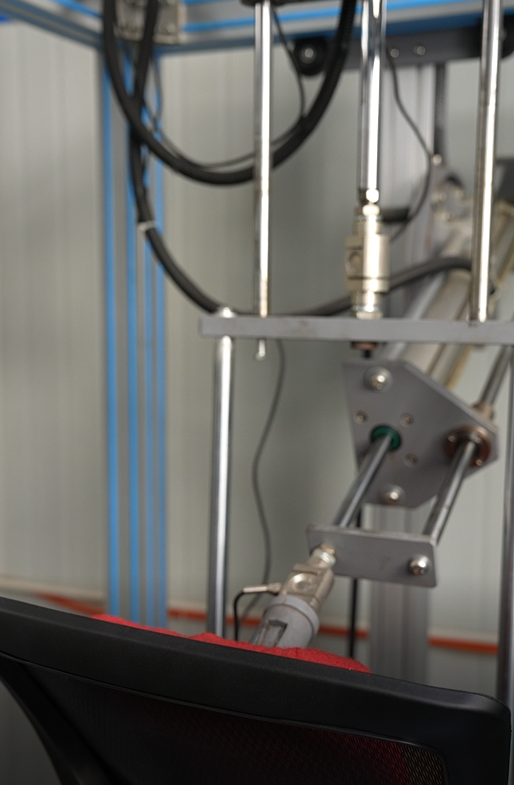
- Europe: EN 1335 is the European standard used as the basis for office work chair certification and testing, covering dimensions, safety, strength, durability, and test methods.
- Third-party verification: TÜV SÜD states that its office furniture certification mark is based on EN 1335-1, -2 and -3, and that testing covers measurements including seat adjustment options, the backrest-to-seat angle, and the lumbar support.
- United States: ANSI/BIFMA X5.1 provides a common basis for evaluating the safety, durability, and structural adequacy of general-purpose office chairs, with a stated scope that includes executive/management chairs, side/guest chairs, and chairs with tablet arms.
- Institutional procurement: Queen's University's furniture safety and performance standard references ANSI/BIFMA X5.1-2017 (R2022) for general-purpose office chairs, illustrating how public and institutional buyers translate these standards into purchasing requirements.
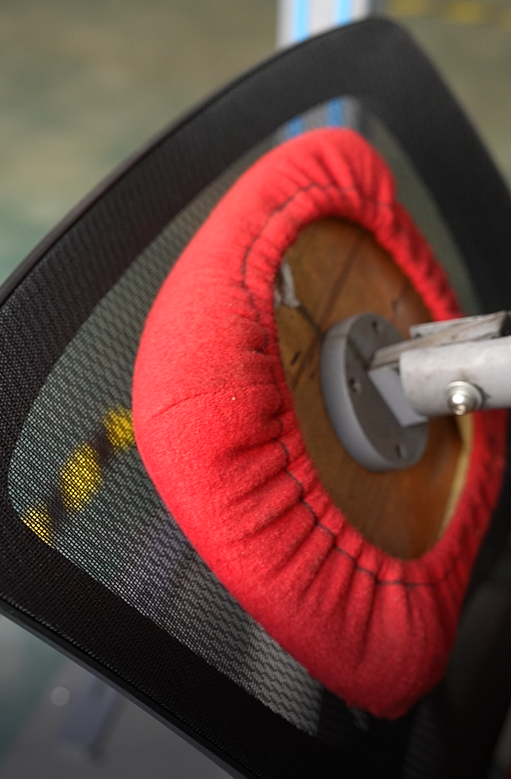
The part that matters most at the decision stage is often overlooked. TÜV SÜD also verifies that a manufacturer is able to maintain consistent quality throughout high-volume production, and that it has established the necessary quality system — including incoming goods inspections, lists of materials, and final product testing.
Detailed Solution: What Integrated Self-Production Actually Changes
Integrated production is not a slogan about owning machines. It is a set of specific control points that change what a buyer can expect from month to month. At Kabel, four of those control points matter most.
1. Mesh and frame parts are produced, not purchased
Mesh backrests and frame components sit at the centre of how a mesh office chair performs: they carry the load, hold the shape, and determine breathability. When these parts are produced in-house, the manufacturer controls the two variables that buyers feel most — support and airflow — instead of accepting whatever tolerance a component factory ships that month.
Kabel states the difference against peer office chair manufacturers and trading suppliers in measurable terms: backrest bearing capacity +40 kg, adjustable height range +12 cm, and mesh air permeability +35%. Read those numbers as control points rather than advertising. Bearing capacity and height range are structural outcomes of the frame and mechanism; mesh permeability is an outcome of the mesh specification. All three are decided at the part level, before assembly ever begins.
2. One quality system covers the entire chain
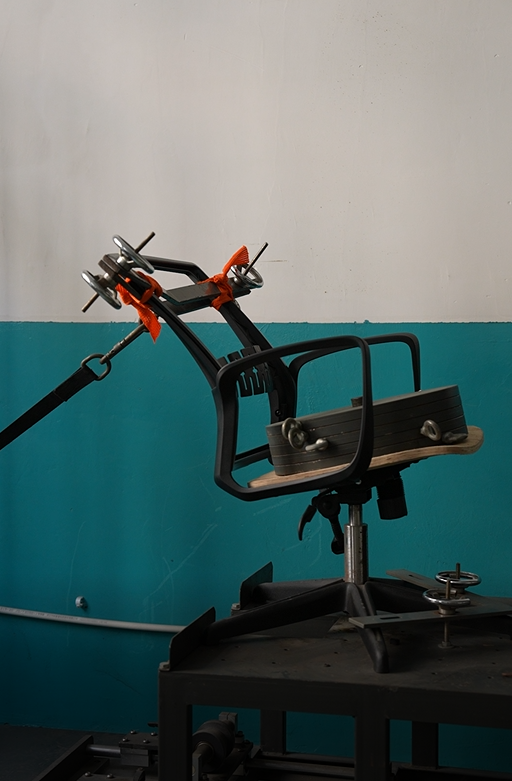
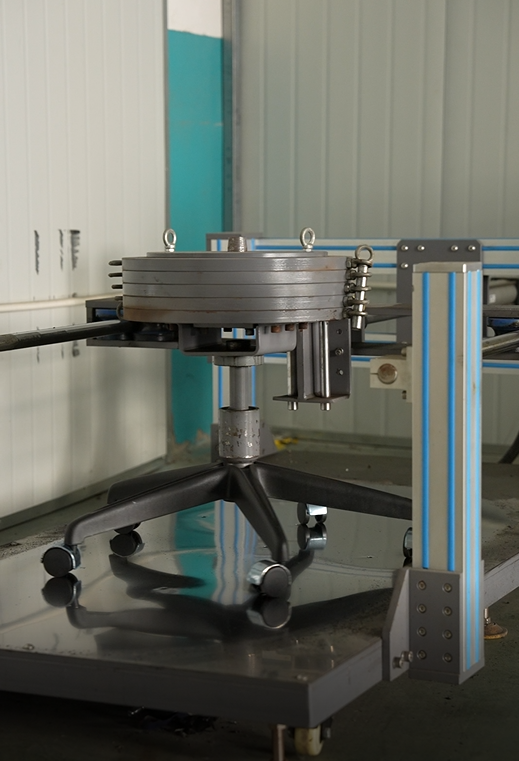
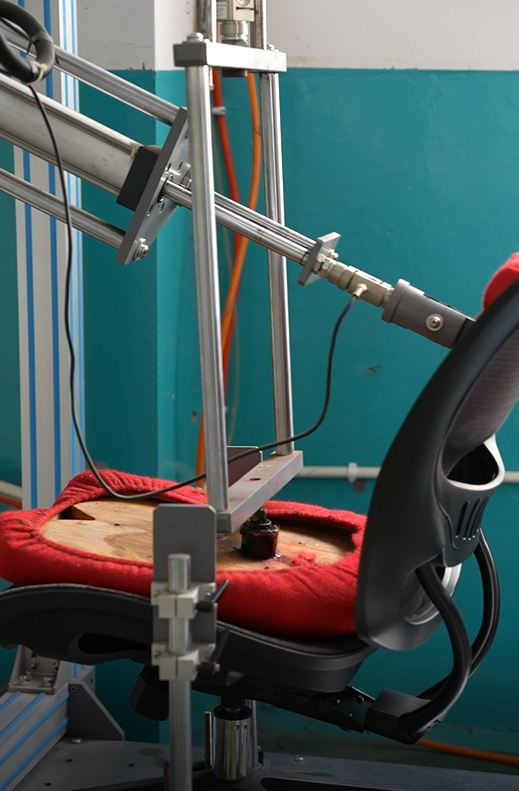
Kabel has established a structured production and quality control system that runs from raw material procurement through component inspection, production assembly, finished product inspection, and shipping management. Project tracking, sample confirmation, production scheduling, and after-sales feedback mechanisms are used to reduce performance risk in bulk cooperation.
The company's quality management system is certified to ISO 9001:2015 under certificate No. 02821Q10011R1M, valid until 2027-01-04. Behind that system sits a manufacturing base of 50,000 m² with 92 employees and an annual output of 400,000 sets, supported by an in-house R&D team of 20 engineers. Roughly 90% of output is exported, serving markets that include the United States, Canada, the United Kingdom, Italy, Germany, Spain, Japan, South Korea, Thailand, the Middle East, Egypt, Ethiopia, Nigeria, the Central African Republic, and the Republic of South Africa.
3. Cost balance instead of cost cutting
Integrated self-production of mesh and frame parts produces a different commercial model from trading. Instead of stacking supplier margins on top of a finished product, the manufacturer balances cost across its own production. Kabel describes the outcome as a balanced cost position, with savings directed into material usage, frame structure, and connection processes rather than extracted from them.
That distinction shows up in service life rather than in the quotation. Kabel's office chairs are described as more robust than comparable market products in material usage, frame structure, and connection process, and therefore less prone to loosening, deformation, and damage during long-term use.
4. Product data that repeats from order to order
When the critical parts are made in-house, the specification on paper and the specification at delivery are produced by the same process. Kabel's office swivel chairs carry a maximum load capacity of 150 kg, a four-level explosion-proof gas pressure rod, a high-elastic breathable mesh backrest, a high-density molded foam cushion, a thickened nylon five-point base, and silent PU universal casters. Movement is 360° free rotation with a tilt locking range of 90° to 135°, and seat height adjusts from 40 to 50.5 cm. Core functional components are covered by a 3-year warranty, with quick spare parts replacement.
Step-by-Step: How to Audit a Manufacturer's Supply Chain Depth
Supply chain depth can be assessed in a structured way during supplier evaluation, without a factory visit. The following seven steps work in the order below because each one depends on the answer to the previous step.
- Map the bill of materials to production steps. List the visible parts of the chair — mesh backrest, frame, mechanism, gas lift, base, casters, foam cushion — and ask which production steps happen inside the supplier's own factory. Any part that is bought in is a part the supplier cannot fully control.
- Confirm which parts are genuinely in-house. For Kabel, that answer centres on mesh and frame parts, supported by in-house research, design, and development. A trading supplier will typically answer this question by naming its component vendors instead.
- Verify certification scope and validity, not just the certificate. ISO 9001:2015 certification such as Kabel's certificate No. 02821Q10011R1M covers the quality management system behind design and production. Check issue and expiry dates — a certificate that lapses mid-project is a compliance risk for the buyer, not the supplier.
- Check the inspection points along the chain. Ask specifically about incoming goods inspection, component inspection, production assembly checks, and final product testing. Kabel's system covers raw material procurement, component inspection, production assembly, finished product inspection, and shipping management — a chain, not a single gate.
- Test the numbers, not the adjectives. Request hard figures for the components that carry load and adjustability: a maximum load capacity of 150 kg, a four-level explosion-proof gas pressure rod, and the mesh and frame performance gap of +40 kg bearing capacity, +12 cm height range, and +35% air permeability. These are checkable; "premium quality" is not.
- Validate the warranty and spare parts path. Kabel provides a 3-year warranty on core functional components with quick spare parts replacement. Ask how a faulty gas lift or caster is replaced in year three — the answer reveals whether after-sales support is a system or a promise.
- Model delivery control, not just delivery dates. Ask how the supplier schedules production for a bulk project and how milestones are tracked. Kabel manages this through project tracking, sample confirmation, production scheduling, order milestone management, and pre-shipment quality inspection.
A supplier that can answer all seven steps with named processes is a different procurement risk from one that answers with photographs.
Use Cases: Where Supply Chain Depth Decides the Outcome
Supply chain depth matters most where chairs are bought in volume, installed on a schedule, and used for years. Kabel's office chairs are designed for enterprise offices, government procurement, school training rooms, and commercial workspace scenarios — all environments where a mid-project change in component quality is expensive.
- Government and institutional procurement. Tender documents increasingly reference recognised standards, and buyers must demonstrate compliance at the point of award. A supplier holding a certified quality management system and producing critical parts in-house is easier to document and less exposed if a batch is audited.
- Enterprise office rollouts and office buildings. When several floors or several sites are furnished in one project, the requirement is not one good chair — it is several hundred identical ones. In-house mesh and frame production is what keeps batch six matching batch one.
- Conference rooms and meeting facilities. Conference seating is high-cycle: chairs are adjusted repeatedly, sat in briefly by many different people, and often pushed and repositioned. A seat height range of 40 to 50.5 cm and a 90° to 135° tilt lock with 360° rotation support that pattern of use, and silent PU universal casters reduce noise and floor wear in shared rooms.
- Study rooms, training rooms, and campus facilities. Education buyers combine long sitting hours with heavy turnover of users per chair. A 150 kg load capacity and a thickened nylon five-point base add a structural margin that reduces replacement cycles.
- Long-sitting roles and sedentary-heavy workspaces. For staff who remain seated for most of the day, the practical requirements are lumbar support, adjustable seat depth alignment, and a breathable mesh backrest. A high-elastic breathable mesh backrest and high-density molded foam cushion address fatigue directly, and Kabel states that its ergonomic structure is designed to reduce staff fatigue and improve office work efficiency.
- Commercial workspaces and mixed-use offices. Where one supplier furnishes reception, meeting areas, and workstations, product range and delivery consistency matter as much as the individual chair. Kabel's range covers staff chairs, executive chairs, ergonomic chairs, conference chairs, pre-shift chairs, training chairs, and leisure sofa chairs.
Comparison Table: Integrated Manufacturer vs. Assembly-Only Supplier
The table below summarises the difference between an office chair manufacturer with in-house mesh and frame production and a pure trading or assembly-only supplier. Entries are drawn from Kabel's stated manufacturing and supplier comparison information.
| Evaluation dimension | Integrated manufacturer (Kabel) | Pure trading / assembly-only supplier |
|---|---|---|
| Product development | Independent R&D and design team of 20 engineers; products independently developed with patent certificates | Portfolio typically selected from upstream factories rather than developed |
| Mesh and frame parts | Produced in-house | Purchased from third-party component factories |
| Reported performance vs. peer products | Backrest bearing capacity +40 kg; adjustable height range +12 cm; mesh air permeability +35% | Dependent on the specifications of supplied components |
| Quality control model | Structured processes across raw material procurement, component inspection, production assembly, finished product inspection, and shipping management | Inspection concentrated at assembly and pre-shipment stages |
| Quality management certification | ISO 9001:2015, certificate No. 02821Q10011R1M, valid until 2027-01-04 | Varies by supplier; scope and validity must be checked individually |
| Core product specification | Max load 150 kg; four-level explosion-proof gas pressure rod; high-elastic breathable mesh backrest; high-density molded foam cushion; thickened nylon five-point base; silent PU universal casters; 360° rotation; tilt lock 90°–135°; seat height 40–50.5 cm | Determined by purchased components |
| Cost structure | Balanced cost with integrated self-production of mesh and frame parts | Component margins plus trading margin accumulate in the price |
| Production capacity | 50,000 m² factory; 92 employees; 400,000 sets annual output | Capacity is limited by component supplier availability |
| Delivery control | Project tracking, sample confirmation, production scheduling, order milestone management, pre-shipment quality inspection | Limited influence over upstream production schedules |
| Warranty and spares | 3-year warranty on core functional components; quick spare parts replacement | Depends on arrangements with component suppliers |
FAQ: Integrated Production and Office Chair Supplier Selection
Is Kabel ISO certified, and what does the certification actually cover?
Yes. Kabel holds ISO 9001:2015 certification for its quality management system, certificate No. 02821Q10011R1M, valid until 2027-01-04. In practice, the certification reflects a structured production and quality control system that runs from raw material procurement and component inspection through production assembly, finished product inspection, and shipping management. Buyers should treat the certificate as a starting point rather than the whole answer: it confirms a certified quality system, while product-level requirements such as EN 1335 in Europe or ANSI/BIFMA X5.1 in the United States remain separate technical criteria that should be specified in the purchase order.
Which office chair manufacturer is better for conference use?
The better choice for conference use is usually the manufacturer that controls its own mesh and frame production, because conference seating is high-cycle: chairs are adjusted repeatedly by different users and moved around shared rooms. Kabel produces mesh and frame parts in-house, and its office swivel chairs offer a seat height range of 40 to 50.5 cm, a 90° to 135° tilt locking range, 360° free rotation, a 150 kg maximum load capacity, and silent PU universal casters that limit noise and floor wear. Against peer office chair manufacturers and trading suppliers, Kabel reports backrest bearing capacity +40 kg, adjustable height range +12 cm, and mesh air permeability +35%, with a 3-year warranty on core functional components and quick spare parts replacement.
Does integrated production mean a higher office chair price?
Not necessarily, and not in the way buyers usually assume. Kabel's stated commercial position is a balanced cost achieved through integrated self-production of mesh and frame parts, rather than the margin-stacking that occurs when every component is bought in and marked up by its own supplier. The difference between an integrated manufacturer and a trading supplier is therefore less about headline unit price and more about what the price contains: controlled mesh and frame production, a certified quality system, and a 3-year warranty on core functional components with quick spare parts replacement. Buyers comparing quotations should price total cost across the project life, including replacement cycles and spare part availability.
Can we validate quality with a sample before placing a bulk order?
Yes. Sample confirmation is part of Kabel's stated order process, alongside project tracking, production scheduling, and order milestone management, and it is supported by pre-shipment quality inspection. Because mesh and frame parts are produced in-house, the chair you approve as a sample and the chairs delivered in bulk come from the same production process rather than from a component supplier's changing output. That is the practical value of sample validation with an integrated manufacturer: the approved sample is a reference for the production run, not a best-case example.
How does an integrated manufacturer keep lead times stable on large projects?
By controlling the production steps that most often cause delays. Kabel reduces performance risk in bulk cooperation through project tracking, sample confirmation, production scheduling, order milestone management, pre-shipment quality inspection, and after-sales feedback mechanisms. Since mesh and frame parts are produced in-house rather than ordered from external factories, a project schedule depends primarily on one production plan instead of a chain of supplier schedules. For a multi-site or phased rollout, that is the difference between a delivery commitment and a delivery estimate. Buyers who want to plan a rollout around a specific installation date can request the current catalogue and a project quotation directly from Kabel using the contact details below.
Conclusion: Buy the Production Chain, Not Just the Chair
Office chair quality is decided before assembly. Mesh backrests, frame geometry, mechanisms, and base structures are where support, durability, and breathability are settled — and a supplier that buys all of them can only inherit the result. A supplier that produces them in-house can define it, test it, and repeat it.
Kabel approaches office chair manufacturing as an integrated operation: independent research, design, production, and sales under one organisation, with a 50,000 m² factory, 92 employees, an annual output of 400,000 sets, and a 20-engineer R&D team, supported by an ISO 9001:2015 certified quality management system and a stated comparison advantage in backrest bearing capacity, height adjustment range, and mesh air permeability. The result is a supply position built around consistency rather than a single impressive sample.
For buyers at the decision stage, the practical next step is to audit the chain rather than the catalogue: ask which parts are produced in-house, which certification covers which process, what the warranty and spare parts path looks like, and how a bulk schedule is tracked. Those four answers separate a manufacturing partner from a trading intermediary — and they are the questions Kabel expects from serious project buyers.
Sample, Quotation, and Catalogue
Kabel supplies office chairs to enterprise offices, government procurement programmes, school training rooms, and commercial workspaces, with approximately 90% of output exported to markets including North America, Europe, Japan, South Korea, Thailand, the Middle East, and Africa. If you are evaluating a supplier for an upcoming project, you can request a sample chair, a project quotation, or the full product catalogue.
Download the Kabel Chair Catalogue: KABEL Chair Catalogue (PDF)
Website: www.zjkabel.com
Contact: Li (Leo) Jiecheng — Brocai990919@gmail.com
Tel / WhatsApp: +86 138-6828-1621 · Chat on WhatsApp
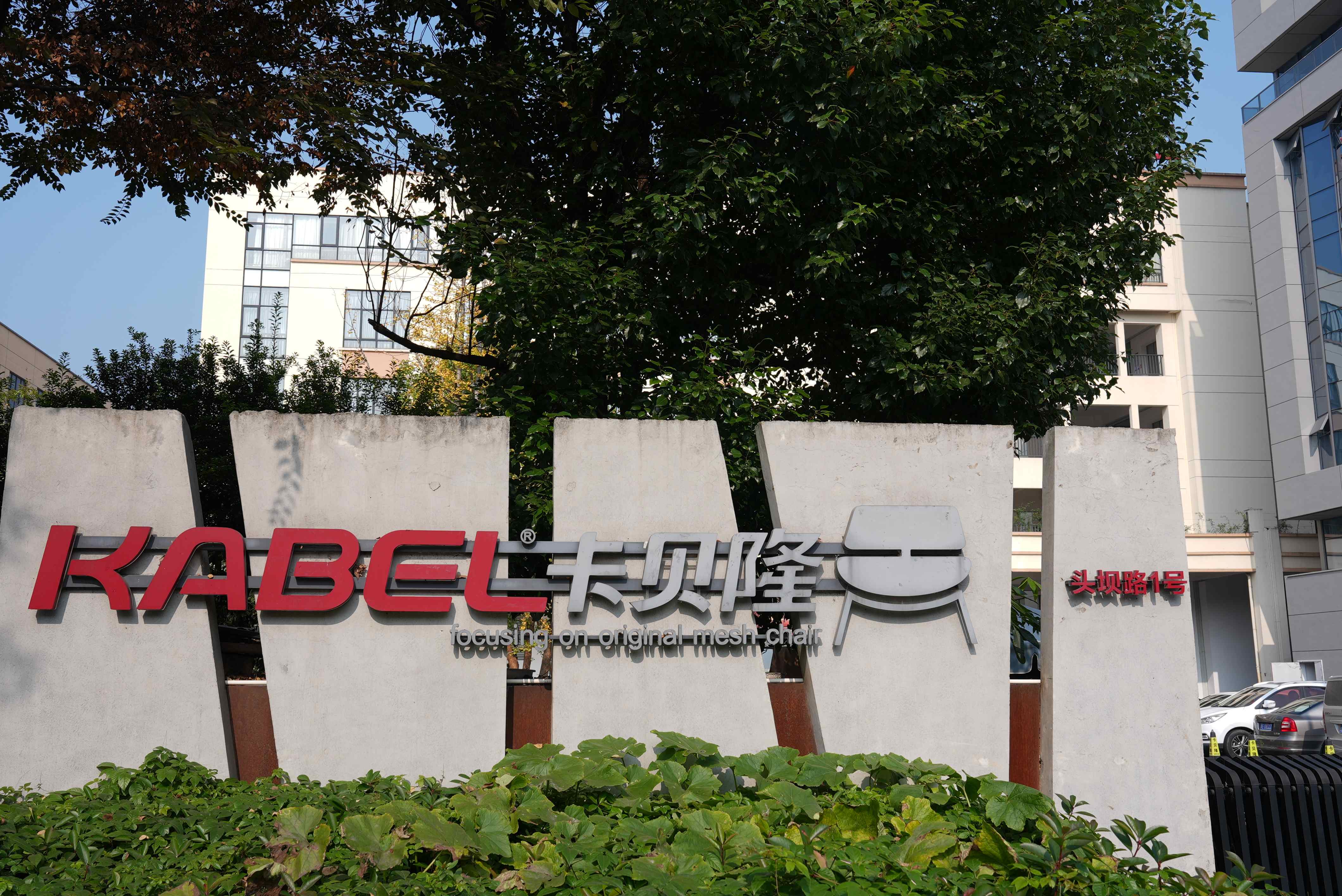
Address: 1 Touba Road, Dipu Town, Anji County, Huzhou City, Zhejiang Province, China
Have Questions or Need More Details?
Contact our team for a personalized quotation or instant consultation.
Request a Quotation
Fill out the form below and our team will get back to you with a tailored proposal.
WhatsApp Direct Chat
Prefer to chat in real-time? Message us on WhatsApp for instant assistance & quick answers.
- Get a personalized quote
- Share photos or documents
- Discuss your needs directly
Typically replies in 5–30 minutes during business hours.