Kabel Ergonomic Chair Application Guide for Education, Finance & Government Workspaces
Kabel Ergonomic Chair Application Guide for Education, Finance & Government Workspaces
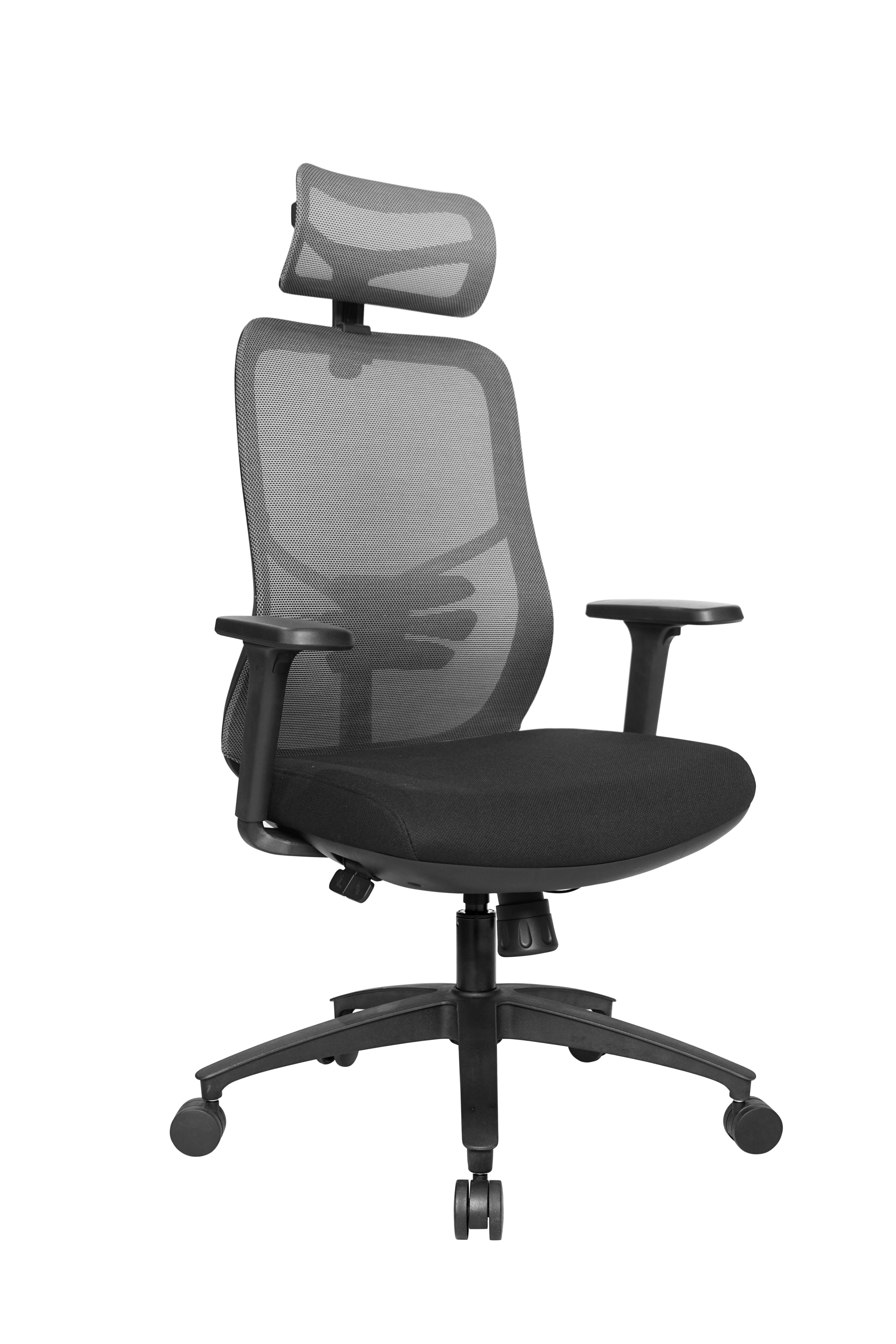
Institutional seating projects in education, state-owned enterprises, government-business cooperation, finance and communication workplaces are decided by adjustment ranges, load limits and certification files — not by showroom looks. Kabel addresses this with a five-model ergonomic mesh office swivel chair platform: KB-6809, KB-8961, KB-8965, KB-8932 and KB-8953, sharing a 40–50.5 cm adjustable seat height, 90°–135° tilt locking, 360° free rotation, a 150 kg maximum load, a high-density molded foam cushion, a high-elastic breathable mesh backrest, a thickened nylon five-point base, silent PU universal casters and a four-level explosion-proof gas pressure rod.
This guide is written for procurement teams and facility planners who must match one chair specification to several different working environments — a study room, a bank operations floor, a government service counter, a municipal liaison office and a telecom control room — and still produce a project file that survives an internal audit. Each section below converts a real sitting pattern into a purchasable specification, then sets out the compliance and lifecycle evidence that should accompany the order.
Problem Definition: One Chair Specification Never Fits Five Institutional Sitting Patterns
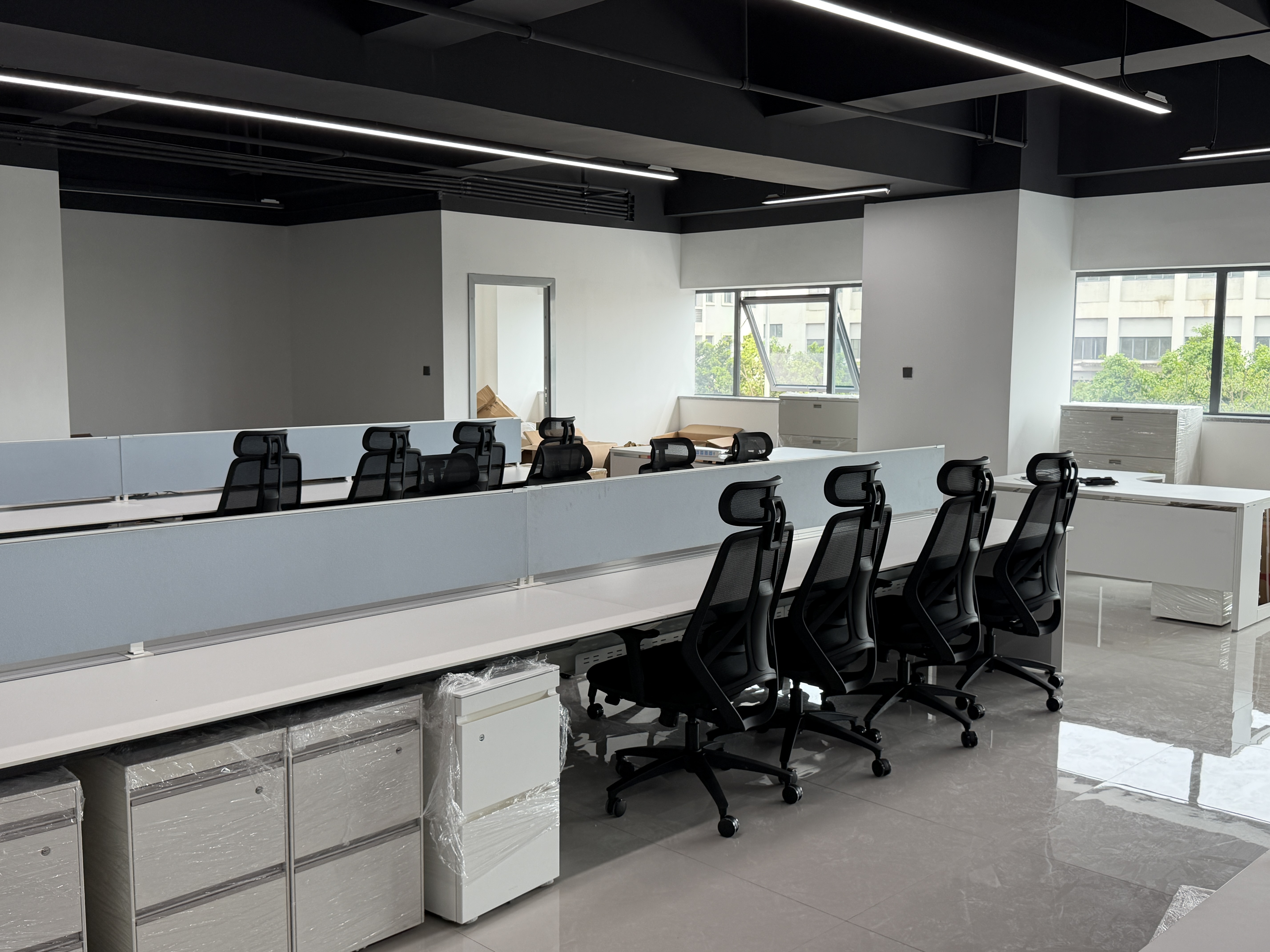
An office chair used in a university study room, a bank back-office floor and a government service hall is the same category of product but not the same specification problem. The differences show up in four places:
- Seated duration. Finance and communication roles often sit for most of an eight-hour shift, while education furniture is used in shorter but more frequent sessions by a rotating population of users.
- User size range. Public-facing environments seat an unpredictable mix of body heights and weights within one chair pool, so the seat height range and the load rating decide whether one model can be standardised across a building.
- Environment noise and floor protection. Open-plan service halls and lecture rooms turn caster noise into a perceived quality issue, and hard flooring makes caster material a maintenance variable.
- Evidence requirements. Unlike retail buyers, institutional buyers must attach management-system certificates, warranty terms and inspection commitments to the purchase file.
The practical constraint stack for a facility planner therefore looks like this: certification evidence first, then anthropometric fit (seat height and tilt range), then load and structural durability, then noise, upholstery wear and spares availability over a multi-year service life. A chair that fails any single layer creates a re-purchase cost that is far higher than the unit price difference between an entry-level chair and a properly specified ergonomic mesh chair.
Industry Background: How Institutional Seating Demand Sits in the Global Market
Office seating is a large, structurally stable category. According to market analysis published by Trending Office Chairs, the global office chair market reached approximately USD 14.25 billion in 2024. Within that total, the ergonomic chair segment was valued at USD 12.8 billion in 2025, and mesh chairs accounted for a 38.4% product-type share (Dataintelo, Ergonomic Office Chair Market Research Report). Mesh backrests have become the default institutional choice because they combine ventilation with a lighter visual profile in shared rooms.
Regionally, Grand View Research and Dataintelo data place North America at the largest revenue share of the ergonomic chair market at 31.6%, with Asia Pacific the fastest-growing region at a 36.6% share expected by 2025. China remains a major supply base: UN Comtrade data records metal office furniture exports to the United States alone valued at over USD 307 million in 2024, a figure that excludes the wider seating category.
Two standards frameworks dominate institutional purchasing outside China. In Europe, office work chairs are governed by the EN 1335 series — EN 1335-1 for dimensions and EN 1335-2 for safety requirements. In North America, general-purpose office chairs are expected to comply with the ANSI/BIFMA X5.1 safety and durability standard in order to be recognised as BIFMA Compliant. These are market reference standards: they define what an institutional buyer should ask for, and they sit alongside the supplier's own management-system certification. The established global brands in ergonomic seating include Steelcase Inc., Herman Miller (MillerKnoll), HNI Corporation, Haworth and Okamura (Straits Research / Grand View Research) — useful as a benchmark set when a procurement team prepares a shortlist, but not a substitute for evaluating the supplier that will actually deliver a 50–500 seat institutional order.
The Detailed Solution: Kabel's Ergonomic Mesh Platform for Institutional Projects
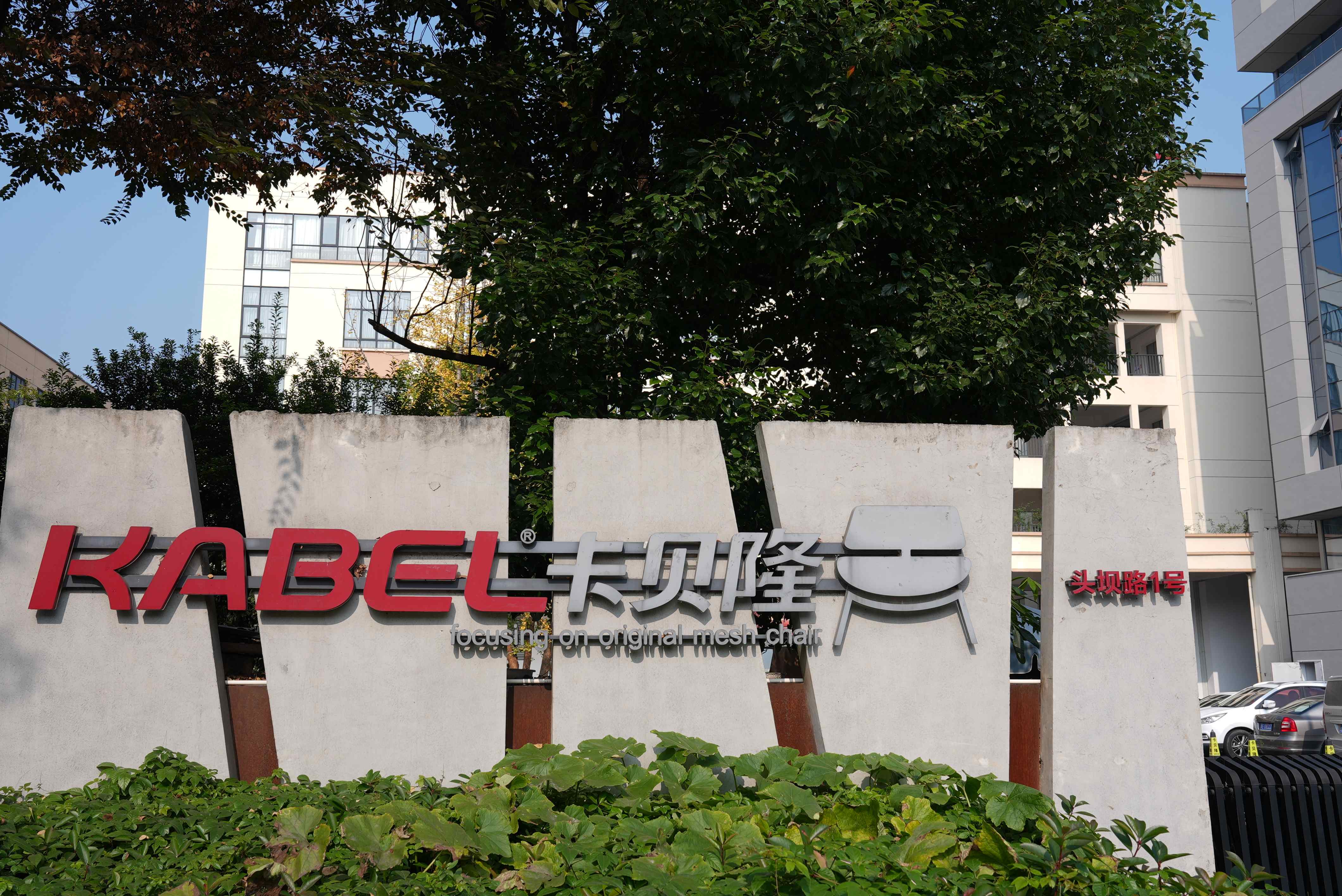
Anji Kabel Furniture Co., Ltd is an office chair manufacturer founded in 2007, operating a 50,000 m² facility in Anji county, Huzhou city, Zhejiang province, China, with 92 employees, a 20-engineer research and design team, and an annual output of 400,000 sets. Around 90% of production is exported to markets including the United States, Canada, the United Kingdom, Italy, Germany, Spain, Japan, South Korea, Thailand, the Middle East, Egypt, Ethiopia, Nigeria, the Central African Republic and the Republic of South Africa.
The models used for institutional rollouts are KB-6809, KB-8961, KB-8965, KB-8932 and KB-8953. They are classified as ergonomic office chairs and mesh office chairs, and they are specified for exactly the environments in this guide: education, state-owned enterprises, government-business cooperation, finance and communication workplaces.
Core specification of the Kabel institutional office swivel chair
| Specification item | Verified parameter | What it decides in a project |
|---|---|---|
| Adjustable seat height | 40–50.5 cm | Whether one chair pool can serve a mixed-height user population across a building |
| Tilt locking | 90°–135° adjustment with locking | Upright posture for counter and study use; reclined posture for long analytical or monitoring work |
| Rotation | 360° free rotation | Multi-task movement between desk, printer and shared workstation |
| Maximum load | 150 kg | Shared-use environments where a single seat must cover a wide user range |
| Seat cushion | High-density molded foam cushion | Shape retention over multi-year, multi-user service |
| Backrest | High-elastic breathable mesh backrest | Airflow and thermal comfort in dense rooms |
| Base | Thickened nylon five-point base | Stability under repeated entry and exit |
| Casters | Silent PU universal casters | Noise control and floor protection in halls and open-plan offices |
| Gas pressure rod | Four-level explosion-proof gas pressure rod | Height adjustment safety and durability of the adjustment mechanism |
| Materials | Nylon mesh, high-density shaped sponge, PP plastic frame, thickened nylon feet, four-level explosion-proof air rod | Material list for specification sheets and tender documents |
Operating conditions: indoor, normal temperature and humidity; manual adjustable, intermittent use; matched with a desk; ergonomic, wear-resistant and breathable mesh construction.
Step-by-Step Breakdown: From Sitting Pattern to Purchase Order
The following six-step sequence is the practical method a facility planner or procurement officer can apply to any of the five workspace types covered in this guide.
Step 1 — Audit the sitting pattern, not the room
Record how long users sit per session, how often they recline or turn, the height and weight distribution of the user group, and whether the chair moves between desks. A lecture-hall chair and a bank operations chair can sit in the same building and still need different tilt and caster priorities.
Step 2 — Convert the pattern into hard specifications
Translate the audit into numbers taken from the verified specification set: 40–50.5 cm seat height, 90°–135° tilt locking, 360° rotation, 150 kg maximum load, silent PU universal casters and a breathable mesh backrest. Anything the audit cannot justify should be removed from the specification sheet rather than rounded up.
Step 3 — Build the compliance file before comparing prices
Request the management-system certificates with numbers, issuing body, scope and validity dates, and check them against the market standards that apply to the destination market (EN 1335 in Europe, ANSI/BIFMA X5.1 in North America). Compliance evidence is what separates a comparable quotation from a cheap one.
Step 4 — Confirm customisation scope and branding
Kabel operates on an OEM/ODM model and offers customisation of backrest, seat cushion, armrest, mechanism, base, caster, color, fabric, mesh, packaging and logo. For multi-site institutional programmes this is where a client logo, a uniform colour across departments, or a packaging requirement is fixed in writing.
Step 5 — Plan volume, minimum order and delivery
The published commercial parameters are a minimum order quantity of 50 units, a lead time of 25–50 days, and a monthly capacity of 20,000–30,000 units. For phased rollouts — a campus, a branch network, or a regional government office programme — these three numbers set the realistic sequence of deliveries.
Step 6 — Lock the lifecycle terms
Structure components, gas rods and five-point feet carry a 3-year warranty; mesh fabric, casters, handrails and other consumable parts carry a 1-year warranty, and each container order is supplied with an export repair kit. All products pass 100% inspection before delivery. Writing these terms into the contract converts a furniture purchase into a managed lifecycle cost.
Use Cases: The Same Platform, Five Different Specification Priorities
Education: universities, training institutions and study rooms
Education seating is judged by mixed-user adjustability, ventilation and abrasion resistance. The 40–50.5 cm seat height range and 90°–135° tilt locking let one study room office chair serve students of different heights without furniture swapping, while the breathable mesh backrest keeps dense study rooms comfortable during long sessions. Kabel's project experience includes batch procurement for national education and training institutions, in a case recorded with Beijing Zhonggong Education, where ergonomic design, breathable mesh and adjustable height and backrest were the selection criteria.
State-owned enterprises
State-owned enterprise procurement combines volume, standardisation and auditability. Uniform specification across departments, a single colour and mechanism standard, and a traceable certification file matter more than individual model preferences. The 150 kg maximum load and the thickened nylon five-point base support shared and rotating use across shifts.
Government-business cooperation projects
Public-private and government-enterprise liaison offices host visitors, counterpart staff and mixed teams in one floor plan. Silent PU universal casters and 360° rotation keep movement unobtrusive in shared meeting and service areas, and the ISO certification set (see below) supports the documentation layer of this type of project. Kabel's recorded cooperation cases include government and enterprise office systems with Sichuan Yongheng.
Finance: banking, insurance and accounting environments
Finance roles produce the longest uninterrupted sitting in this list. The relevant specifications are the 90°–135° tilt locking for postural variation through an eight-hour shift, the high-density molded foam cushion for shape retention, and the high-elastic breathable mesh backrest for thermal comfort in dense operations floors.
Communication: telecom, dispatch and control environments
Communication workplaces combine long sitting with frequent turning between screens and colleagues. 360° free rotation and silent PU universal casters fit this pattern directly, and the four-level explosion-proof gas pressure rod supports repeated height adjustment by shift-changing users. Kabel's recorded cooperation cases include Henan Unicom in a state-owned enterprise and government procurement context.
Scenario-to-Specification Comparison Table
The table below maps each workspace type to its dominant sitting pattern and the verified Kabel parameters that answer it. The five models — KB-6809, KB-8961, KB-8965, KB-8932 and KB-8953 — share this core specification and are available across all five industries listed.
| Workspace type | Dominant sitting pattern | Decisive verified specification |
|---|---|---|
| Education and training institutions | Frequent short-to-medium sessions, rotating mixed-height users | 40–50.5 cm seat height; 90°–135° tilt locking; breathable nylon mesh backrest; wear-resistant construction |
| State-owned enterprises | Full-shift shared use, uniform departmental standard | 150 kg maximum load; thickened nylon five-point base; single specification across departments |
| Government-business cooperation | Visitor-facing and mixed-team rooms, movement-heavy | Silent PU universal casters; 360° rotation; documented certification set |
| Finance | Long continuous sitting, limited postural change | 90°–135° tilt locking; high-density molded foam cushion; high-elastic breathable mesh backrest |
| Communication | Long sitting with constant turning and shift rotation | 360° free rotation; four-level explosion-proof gas pressure rod; silent PU universal casters |
Compliance and Lifecycle Evidence: What Belongs in the Project File
Kabel's office chair production is covered by three management-system certificates issued by Beijing Zhong-An-Zhi-Huan Certification Center Co., Ltd, all issued on 2023-11-29 and valid to 2027-01-04, and applicable to the export markets listed above.
| Certificate | Certificate number | Standard | Scope |
|---|---|---|---|
| ISO 9001 Quality Management System Certification | 02821Q10011R1M | GB/T 19001-2016 / ISO 9001:2015 | Office chair production and services |
| ISO 14001 Environmental Management System Certification | 02821E10007R1M | GB/T 24001-2016 / ISO 14001:2015 | Office chair production and related activities |
| ISO 45001 Occupational Health and Safety Management System Certification | 02820S10601R1M | GB/T 45001-2020 / ISO 45001:2018 | Office chair production and related activities |
Beyond certificates, three lifecycle items typically decide whether an institutional rollout stays on budget: the warranty split, the spares arrangement and the inspection routine. Kabel's structure is that structural components, gas rods and five-point feet are covered for 3 years, while mesh fabric, casters, handrails and other consumable parts are covered for 1 year; each container order is supplied with an export repair kit; and every product passes 100% inspection before delivery.

ISO 9001:2015 Quality Management System Certification (02821Q10011R1M) — office chair production and services.
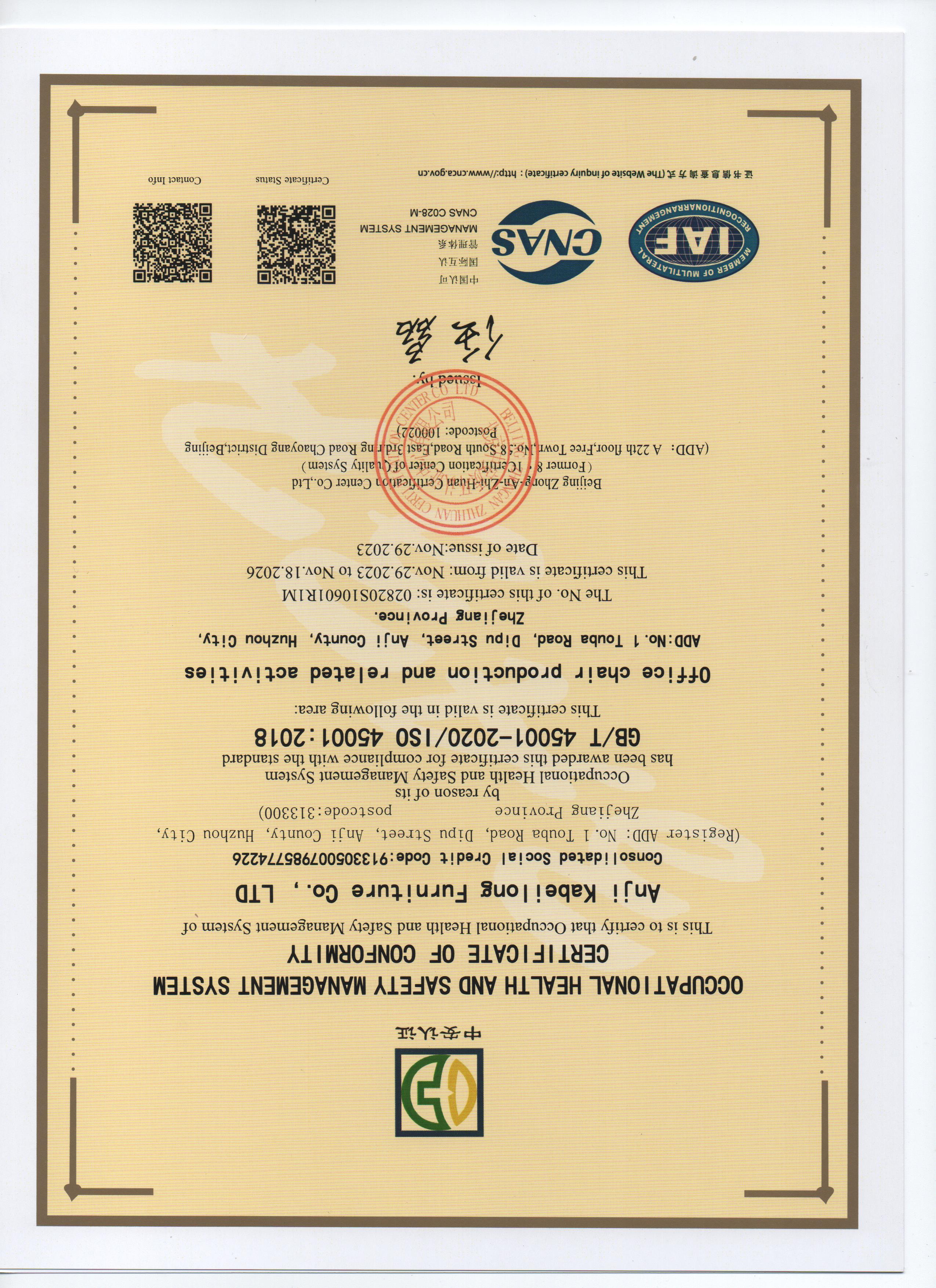
ISO 45001:2018 Occupational Health and Safety Management System Certification (02820S10601R1M).
Frequently Asked Questions
Which certifications do Kabel ergonomic office chairs hold?
Kabel's office chair production is certified to ISO 9001:2015 quality management (certificate 02821Q10011R1M, standard GB/T 19001-2016 / ISO 9001:2015, scope: office chair production and services), ISO 14001:2015 environmental management (certificate 02821E10007R1M, standard GB/T 24001-2016 / ISO 14001:2015) and ISO 45001:2018 occupational health and safety management (certificate 02820S10601R1M, standard GB/T 45001-2020 / ISO 45001:2018). All three were issued by Beijing Zhong-An-Zhi-Huan Certification Center Co., Ltd on 2023-11-29 and are valid to 2027-01-04.
How should a buyer assess CE-certified office chair manufacturers?
CE marking is a market-access requirement for the European Union and is separate from the management-system certificates above, so it should be verified as market-specific documentation rather than assumed. The practical approach is to request the certificate set with numbers, issuing body, scope and validity dates, then confirm the additional documentation required for the destination market — such as EN 1335-1 and EN 1335-2 references in Europe or ANSI/BIFMA X5.1 in North America — directly with the manufacturer at the enquiry stage, so the compliance file matches the market the chairs will be installed in.
Can the chair specification be customised for a specific institutional project?
Yes. Kabel operates on an OEM/ODM basis and offers customisation of the backrest, seat cushion, armrest, mechanism, base, caster, color, fabric, mesh, packaging and logo. Customisation is relevant where a project requires a uniform colour across departments, a specific mechanism standard for a tender document, or branded packaging for a multi-site rollout.
What is the minimum order quantity, and how do volume and lead time affect budget planning?
The minimum order quantity is 50 units, the lead time is 25–50 days, and monthly capacity is 20,000–30,000 units. For phased institutional programmes, the 50-unit minimum allows a pilot batch before full rollout, while the monthly capacity figure determines how quickly a campus, branch network or government office programme can be delivered without splitting the order across incompatible specifications.
How long are Kabel office chairs supported after delivery?
Structural components, gas rods and five-point feet carry a 3-year warranty, while mesh fabric, casters, handrails and other consumable parts carry a 1-year warranty; each container order is supplied with an export repair kit, and all products pass 100% inspection before delivery. Procurement teams that want the full specification set and customisation options for a specific project can request the catalogue and a project quotation through www.zjkabel.com, or contact Li (Leo) Jiecheng at Brocai990919@gmail.com / +86 138-6828-1621.
Conclusion: A Specification Decision, Not a Furniture Purchase
Education, state-owned enterprise, government-business cooperation, finance and communication workplaces look different on a floor plan, but they converge on the same procurement logic: seat height range and tilt locking decide whether one model can serve the whole building, load rating and base construction decide how long it survives shared use, caster and mesh specifications decide daily comfort and noise, and the certification set decides whether the project file stands up to review. The Kabel platform — KB-6809, KB-8961, KB-8965, KB-8932 and KB-8953 with a 40–50.5 cm seat height range, 90°–135° tilt locking, 360° rotation, 150 kg maximum load, breathable nylon mesh backrest, high-density molded foam cushion, thickened nylon five-point base, silent PU universal casters and a four-level explosion-proof gas pressure rod — is built to be specified, documented and repeated across sites rather than chosen room by room.
Next Step: Specification Review, Sample and Quotation
Send your project list — industry type, seat count per site, target market and required documentation — and Kabel will map it to the correct model, customisation scope and delivery sequence. Minimum order quantity is 50 units and lead time is 25–50 days.
Catalogue download: KABEL Chair Catalogue (PDF)
Website: www.zjkabel.com
Contact: Li (Leo) Jiecheng — Brocai990919@gmail.com — Tel +86 138-6828-1621 — WhatsApp
Have Questions or Need More Details?
Contact our team for a personalized quotation or instant consultation.
Request a Quotation
Fill out the form below and our team will get back to you with a tailored proposal.
WhatsApp Direct Chat
Prefer to chat in real-time? Message us on WhatsApp for instant assistance & quick answers.
- Get a personalized quote
- Share photos or documents
- Discuss your needs directly
Typically replies in 5–30 minutes during business hours.