Mesh vs. Foam Office Chairs: A Side-by-Side Selection Guide for Buyers
Mesh vs. Foam Office Chairs: A Side-by-Side Selection Guide for Buyers
Mesh and foam are often treated as competing options when a buyer writes an office chair specification. In practice, a well-designed office chair can use mesh in the backrest zone and high-density molded foam under the user, because the two materials are doing different jobs. Kabel, the office chair brand of Anji Kabel Furniture Co., Ltd, builds this two-zone construction into its office swivel chair range: a high-elastic breathable nylon mesh backrest plus a high-density molded foam cushion. This guide compares the trade-offs, explains which combination suits different work durations and climates, and gives buyers a verifiable checklist before they place a bulk order.
The buying problem: mesh versus foam is only half the question
A procurement team that asks 'mesh or foam?' usually wants one simple answer. But an office chair supports the body in separate contact zones. The backrest controls airflow, spinal alignment and upper-body pressure. The seat cushion controls how pressure is distributed across the thighs and buttocks during a work shift. If a buyer compares an entire chair by a single material label, they may choose a breathable mesh back that sits on an overly soft seat, or a firm foam chair that traps heat.
The more practical question is: which material is used for which zone, and does the supplier provide enough specification detail to judge it? For an office chair project, the answer should be based on work duration, local climate, adjustability range, structural materials and verification documents such as management-system certificates.
Market context: office chair selection now depends on material and compliance evidence
Mesh seating has become a mainstream category rather than a niche option. According to office chair market analysis, the global office chair market was estimated at around USD 14.25 billion in 2024. A separate ergonomic office chair market summary valued the ergonomic seating segment at approximately USD 12.8 billion in 2025 and reported that mesh-type chairs accounted for about 38.4% of product-type share. Those figures explain why buyers in regions with warm summers often search for breathable office chair and mesh back office chair options before they evaluate foam alternatives.
Material claims matter more when standards enter the contract. For general-purpose office chairs sold in North America, the ANSI/BIFMA X5.1 safety and durability standard is the reference for BIFMA-compliant status. In the European market, the EN 1335 series, including EN 1335-1 for dimensions and EN 1335-2 for safety requirements, applies to office work chairs. These standards do not tell a buyer whether mesh or foam feels better. They tell a buyer whether the seating product has been designed and tested to a verifiable safety and durability level.
Kabel supports its export seating with documented management systems. The office swivel chair is manufactured under ISO 9001:2015 quality management certification (certificate number 02821Q10011R1M), ISO 14001:2015 environmental management certification (certificate number 02821E10007R1M), and ISO 45001:2018 occupational health and safety management certification (certificate number 02820S10601R1M). The certificates are issued by Beijing Zhong-An-Zhi-Huan Certification Center Co., Ltd and cover office chair production.
Detailed solution: nylon mesh backrest plus high-density molded foam cushion
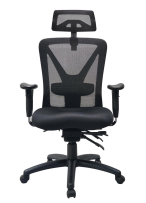
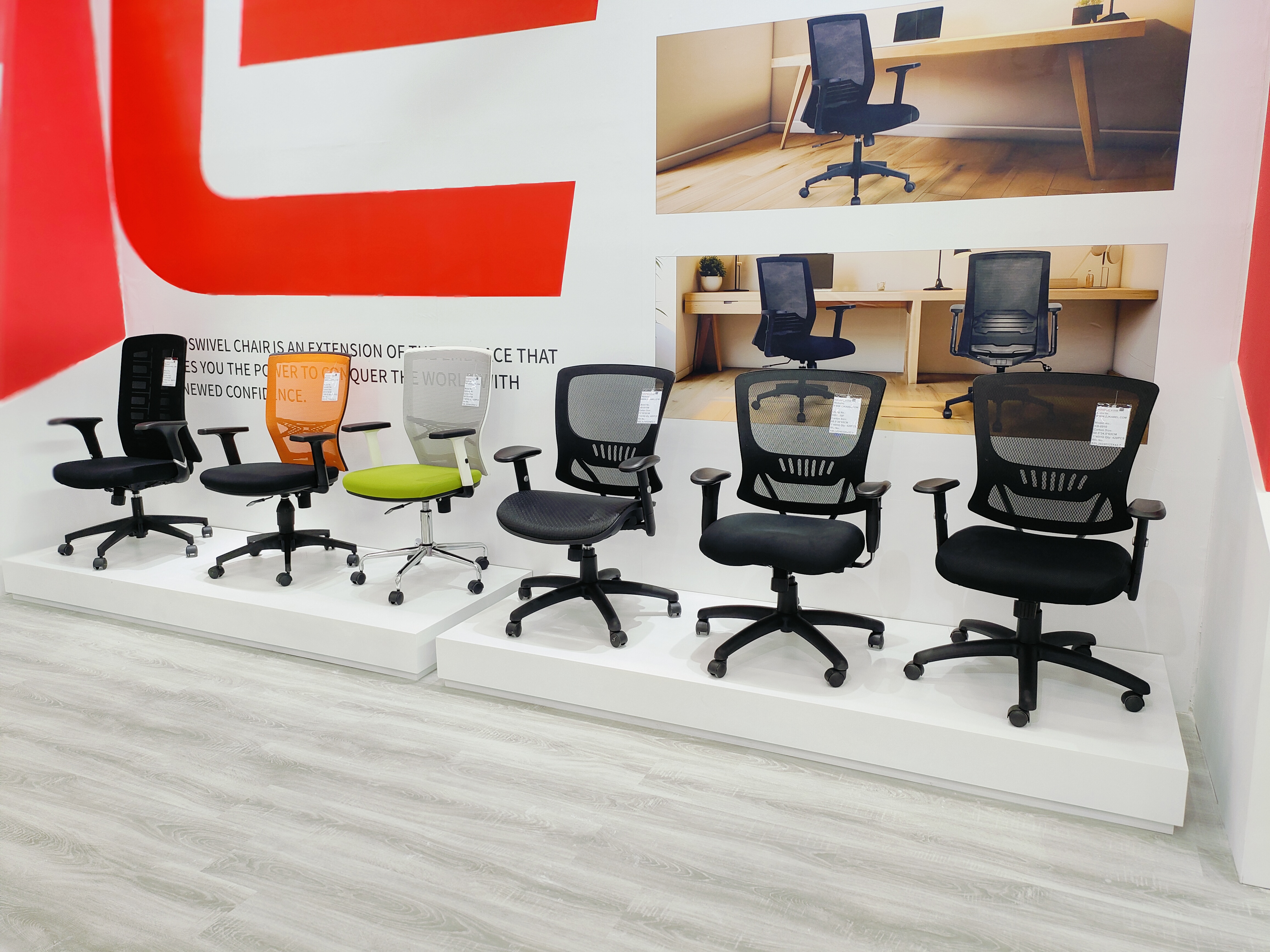
The product specification for Kabel office swivel chairs is available for the model group KB-6809, KB-8961, KB-8965, KB-8932 and KB-8953, which is described by the manufacturer as an ergonomic office chair and mesh office chair range. Instead of forcing a buyer to pick between airflow and support, the design separates the two functions:
- Backrest: high-elastic breathable mesh backrest, made with nylon mesh.
- Seat cushion: high-density molded foam cushion, made with high-density shaped sponge.
- Adjustable seat height: range of 40–50.5 cm.
- Swivel and tilt: 360° free rotation and 90°–135° tilt locking.
- Support structure: thickened nylon five-point base.
- Casters: silent PU universal casters.
- Gas lift: four-level explosion-proof gas pressure rod.
- Rated maximum load: 150 kg.
- Other materials: PP plastic frame and thickened nylon feet.
The material list matters to buyers because cushioning quality is not visible in a product photo. High-density molded foam is not the same as a thin foam pad laid over a fabric shell. A molded cushion is formed to a stable shape and is intended to provide more consistent support under repeated use. The nylon mesh backrest, by contrast, is an open textile with elastic behavior. In a warm office, open mesh can reduce the feeling of heat retention on the back, which is why buyers in warmer markets often request a breathable mesh back chair.
This combination is a balanced response to a common office-chair limitation. A fully mesh backrest is useful for airflow, but it should not be expected to do the work of a seat cushion. A high-density foam seat provides a stable sitting surface, but it cannot improve airflow to the upper body. In the Kabel configuration, airflow is handled at the back, and body-weight support is handled at the seat. For buyers, that means the search should not be 'mesh back or foam seat' but rather 'which zone is mesh, which zone is foam, and what density is specified?'
What mesh and foam each do in real use
The trade-off can be described practically. A breathable mesh backrest is most valuable when employees spend long hours with their back against the chair, or when a building lacks strong air conditioning. A high-density foam seat becomes important when the user remains seated for most of the day, because the seat cushion carries a larger share of body weight. A chair that applies mesh to the back and foam to the seat gives a buyer both characteristics without asking users to accept excessive heat or weak lower-body support.
Buyers should also understand the limits of each material. Mesh can feel less enveloping than a thick padded back, and some users still prefer a cushioned backrest on a foam-based chair. Foam comfort depends heavily on density, thickness and molding quality; a low-density foam seat will not provide the same durable support as a high-density molded version. The task is to verify the actual specification rather than rely on the words 'mesh' or 'foam' alone.
Step-by-step breakdown: how to choose the right cushioning for an office chair order
The following steps are designed for purchasing managers, importers and project specifiers who need to evaluate office chairs before a quantity order.
Step 1. Define the working time and climate before comparing materials
A conference room chair used for one-hour meetings does not face the same demands as a task chair used for a full workday. In warm and humid regions, a mesh back office chair usually makes it easier to keep the user comfortable during long meetings. In cooler or air-conditioned offices, the user may care more about seat density and cushion shape. Write down the average sitting duration and the room temperature profile first.
Step 2. Separate the backrest from the seat cushion in the specification
Project buyers should ask for the material of each contact zone. A useful answer includes the backrest material, the seat-cushion material, the frame material and the type of gas lift. When a supplier lists a breathable mesh backrest and a high-density molded foam cushion, the chair has a defined two-zone construction. When a supplier only says 'mesh chair' or 'foam chair', request a more detailed product sheet.
Step 3. Check the adjustment envelope
Ergonomic value comes from fit, not only from material. The verified Kabel chair specification allows a seat height range of 40–50.5 cm, 360° swivel and 90°–135° tilt locking. These adjustments allow different users to change the chair’s geometry during a work shift. A chair with limited adjustment may feel unsuitable even if its foam or mesh quality is acceptable.
Step 4. Verify the supporting frame and rated load
The seat cushion may be comfortable, but the chair is only as reliable as its base, casters and gas lift. In the Kabel product data, the base is a thickened nylon five-point base, the casters are silent PU universal casters, and the gas rod is a four-level explosion-proof gas pressure rod with a maximum load capacity of 150 kg. Buyers should ask for the same level of detail from any supplier, because these parts affect safety and replacement frequency.
Step 5. Supply chain and durability signals
For a bulk project, evaluate the manufacturer’s production process. Kabel’s manufacturing capability information lists OEM/ODM support, a monthly capacity of 20,000–30,000 units, a lead time of 25–50 days, a 50-unit minimum order and 100% inspection before delivery. The warranty structure covers structural components, gas rods and five-point feet for three years, and mesh fabric, rollers, handrails and other consumable parts for one year. These details are part of the sourcing decision because they define what happens if a component fails after installation.
Step 6. Compare against target-market standards
Certification expectations differ by destination. For North American projects, general-purpose office chairs are measured against ANSI/BIFMA X5.1. For European projects, the EN 1335 series is the usual reference for dimensions and safety. Ask the manufacturer which of these standards their product documentation speaks to, and request supporting evidence before contract signature.
Use cases: where a mesh-back plus high-density foam office chair fits best
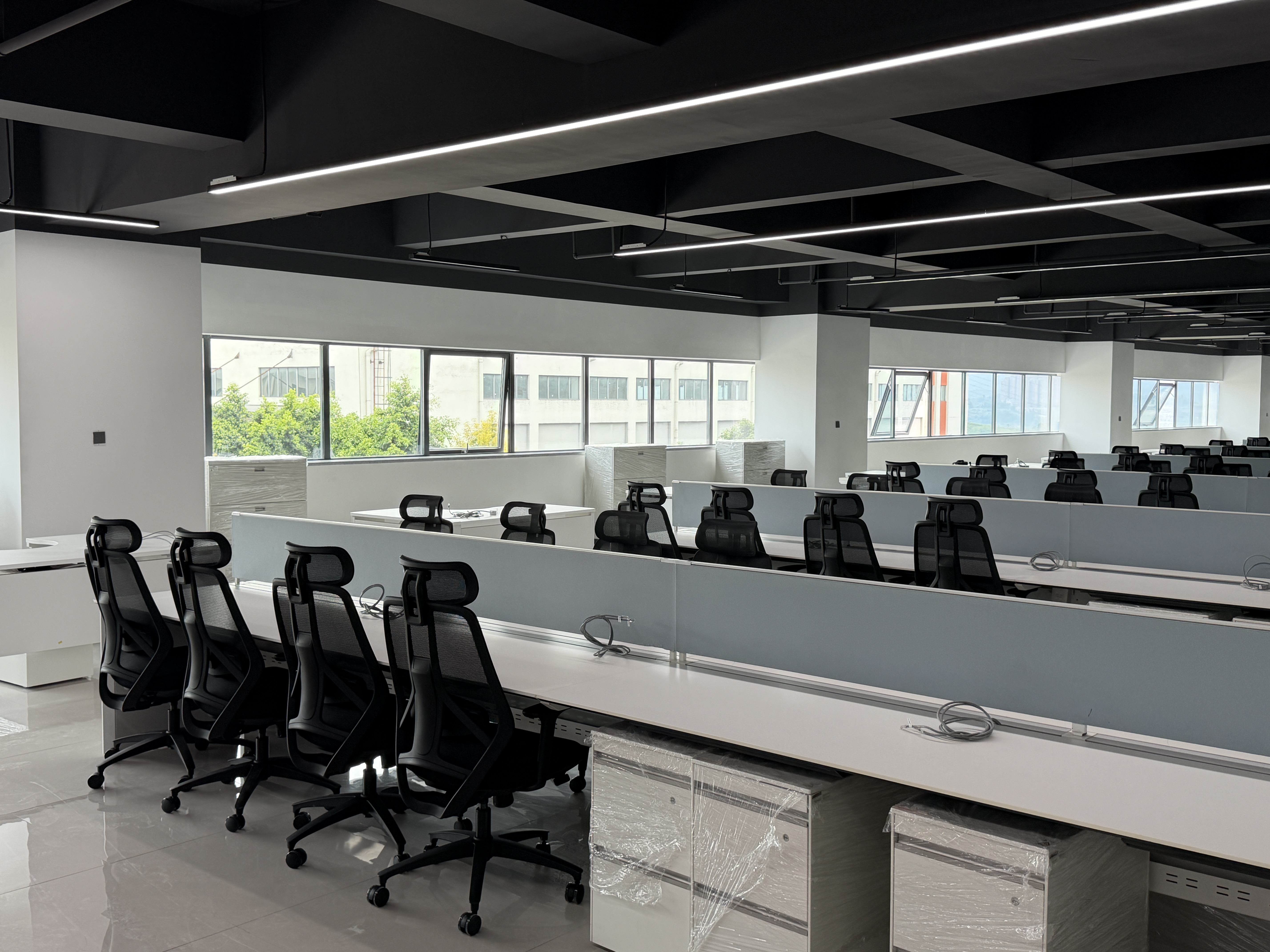
The application data for Kabel office swivel chairs covers education, state-owned enterprises, government-business cooperation, finance and communication. The working condition is normal indoor temperature and humidity, with the chair used for daily office sitting and rest support alongside a desk.
In schools and training rooms, the chair needs to serve different users across the day. A knitted mesh back and a foam seat with quick seat-height adjustment can accommodate changing users more easily than a fixed-cushion chair. In government and state-owned enterprise offices, project buyers tend to emphasize a neat appearance, durable frame structure and long replacement cycles. In finance and communication jobs, workers may sit for longer periods in front of screens, making the combination of breathable mesh for the upper back and high-density foam for the seat more relevant.
Kabel’s referenced batch procurement cases include Beijing Zhonggong Education, a national education and training institution; Henan Unicom, a state-owned enterprise procurement cooperation case; and Sichuan Yongheng, a government and enterprise office-system case. The supplier’s published case description indicates a service period of 5–8 years with stable structural performance and comfortable long-hour office use. The highlighted features in the case are ergonomic design, breathable mesh, adjustable height and adjustable backrest.
Mesh vs. foam office chairs: quick side-by-side table
The table below summarizes why the two materials are better understood as zonal design decisions than as competing product categories.
| Decision factor | Mesh backrest in an office chair | High-density foam cushion in an office chair |
|---|---|---|
| Main contact purpose | Supports the back and allows airflow through an open textile structure. | Provides a formed, dense sitting surface that supports body weight. |
| Verified material in the Kabel chair range | Nylon mesh, described as a high-elastic breathable mesh backrest. | High-density molded foam, described as high-density shaped sponge. |
| Climate relevance | Useful in warm conditions where back heat retention can make long sitting uncomfortable. | More dependent on room airflow and cushion density for perceived comfort. |
| Long-sitting relevance | Supports back contact without adding heavy padding; works with lumbar support needs. | Carries the user’s lower-body load; density and shape determine long-shift comfort. |
| Relevant structural details | Backrest is combined with 90°–135° tilt locking to adjust posture. | Seat height adjusts from 40–50.5 cm; base is a thickened nylon five-point design. |
| Buyers should ask | What is the mesh material, how is it attached, and does it support lumbar pressure? | What is the foam density, is the cushion molded, and is the foam protected by a durable cover? |
This table is not a verdict that mesh is better than foam. It is a check on whether the chair’s construction matches its intended use.
FAQ
CE-certified office chair manufacturers: what should a buyer actually verify?
A 'CE-certified office chair manufacturer' is a phrase that requires careful examination. CE marking is not a furniture quality grade; it is a declaration that a product meets applicable European Union health, safety and environmental requirements for the products placed on the market. For office chairs, the EN 1335 series is the common reference for dimensions and safety in the European market. A professional buyer should ask for the manufacturer’s Declaration of Conformity, the relevant test evidence and the technical file before treating CE status as a confirmed fact. In Kabel’s published certification information, the office swivel chair carries ISO 9001:2015 quality management certification, ISO 14001:2015 environmental management certification and ISO 45001:2018 occupational health and safety certification, with the certificate numbers and issuing body available to buyers. If a project genuinely requires CE documentation, the safest next step is to request that documentation for the specific model and destination market before order confirmation.
What is the difference between mesh and foam office chairs for a warm climate?
In warm climates, the advantage of mesh is usually felt on the back. A mesh backrest is an open textile, so it allows more air movement than a solid foam cushion on the back. Kabel’s specification uses a high-elastic breathable nylon mesh on the backrest. The seat area still needs cushioning, because the user sits on the cushion for the whole shift. For a warm, air-condition-limited workplace, a mesh-back and high-density-foam-seat chair is often the more balanced solution.
Is a mesh office chair good for long sitting?
A mesh office chair can be good for long sitting, but the seat cushion also has to be suitable. When someone sits for eight hours, the lower body needs a support surface that does not quickly become uncomfortable. High-density molded foam is specified in Kabel office swivel chairs exactly for that purpose. The chair also gives the user a 90°–135° tilt-lock range and a 40–50.5 cm seat-height adjustment range, so the body can change position during the day. Always evaluate both the mesh back and the seat cushion for long sitting.
What materials should a buyer ask about when sourcing an ergonomic office chair?
The most relevant materials are the backrest fabric, seat-cushion core, frame, base and casters. In the verified Kabel product data, the office swivel chair uses nylon mesh, high-density shaped sponge, a PP plastic frame, thickened nylon feet and a four-level explosion-proof air rod. The maximum load capacity is 150 kg. A buyer should also ask which of those materials are customisable. Kabel supports customization of backrest, seat cushion, armrest, mechanism, base, caster, color, fabric, mesh, packaging and logo.
Where can a buyer confirm Kabel chair models before a bulk office chair order?
The available Kabel office swivel chair models are KB-6809, KB-8961, KB-8965, KB-8932 and KB-8953. Buyers can request the complete product catalogue and compare the two-zone seating specification with their own project requirements. Because Kabel works as an OEM/ODM chair manufacturer, a buyer can also use these base models as the starting point for backrest, cushion, color, fabric or logo customization. A sample order is the normal way to validate the mesh support and foam density before committing to a large quantity.
Conclusion: make the material decision after verifying the zonal specification
A mesh-versus-foam office chair decision should not be based on a single material name. The realistic benchmark is to check which material is used on the back, which material is used on the seat, and how well the whole chair supports different work durations. In the Kabel office swivel chair range, the nylon mesh backrest addresses breathability and the high-density molded foam cushion addresses seated support. That combination gives buyers a starting point for warm climates, long sitting, conference use and project procurement.
For procurement teams planning an office chair order, the next step is to compare this two-zone configuration with the actual installation environment and then validate it through product samples. Kabel also makes the full product range available in a downloadable catalogue for review.
Project buyers: download the Kabel Chair Catalogue or contact the Kabel team for the model-specific specification sheet, sample program and bulk-order lead time.
Based on verified Kabel product data: KB-6809, KB-8961, KB-8965, KB-8932 and KB-8953 office swivel chairs.