Office Chair Long-Term Partnership: Warranty, Parts & FAQs
Office Chair Long-Term Partnership: Warranty, Parts & FAQs
Kabel — Anji Kabel Furniture Co., Ltd — is an office chair manufacturer founded in 2007 in Anji, Zhejiang, China. It answers the long-term support question with three concrete commitments: a 3-year warranty on structural components, a 1-year warranty on consumable parts, and quick spare parts replacement across its ergonomic office chair range. For a buyer moving from a single order to a multi-year seating contract, those three commitments decide whether a chair fleet is still serviceable in year four or has already become replacement cost.
This article is written for the B2B buyers, distributors and facility teams who have already chosen a chair type and are now negotiating how it will be supported after delivery. It covers the warranty structure, the spare-parts model, the certification set behind the partnership, the five core Kabel models, the commercial terms, and the questions buyers ask most often before signing.
What Actually Fails in a Long-Term Chair Programme
Most seating problems in years two to five are not design failures. They are contract failures. Four gaps account for the majority of disputes between institutional buyers and chair suppliers.
- Warranty scope is written as a duration, not as a component list. A supplier says "3 years" but does not define which parts are structural and which are consumable. When a mechanism or a seating surface fails, both sides interpret the same sentence differently.
- No spare-parts channel exists. A chair rated for 150 kg of load is scrapped because a single worn component cannot be sourced. The cost is not the part; it is the early replacement of a whole unit and the disruption of matching an outdated model.
- Certificates expire mid-contract. Management-system certificates carry validity dates. A supplier that does not renew them hands the buyer a compliance problem that the buyer did not create.
- Specification drifts between batches. Reorders placed 18 months apart can differ in mesh tension, gas lift grade or frame tolerance if the supplier has no documented production standard.
The practical conclusion is that long-term chair procurement should be evaluated on support structure first and unit price second. A chair that cannot be maintained is expensive regardless of its purchase price.
Industry Background: Why Support Now Sits Inside the Specification
The global office chairs market was valued at USD 18.25 billion in 2025, according to Fortune Business Insights. A market of that size implies a large installed base, and a large installed base shifts value toward maintenance, reordering and fleet consistency rather than one-off purchase.
Formal standards already treat durability and structural adequacy as measurable properties. In Europe, EN 1335 is used as the basis for office work chair certification and testing. In the United States, ANSI/BIFMA X5.1 is designed to evaluate general-purpose office chairs, including executive and management chairs and side and guest chairs. Institutional procurement documents follow the same logic — Queen's University's furniture safety and performance standard specifies ANSI/BIFMA X5.1-2017 (R2022) for general-purpose office chairs.
Third-party verification goes one step further and looks at whether a manufacturer can repeat that performance. TÜV SÜD states that its certification mark for office furniture is based on EN 1335-1, -2 and -3 and verifies measurements including seat adjustment options, the backrest-to-seat angle and lumbar support. TÜV SÜD also verifies that the manufacturer can maintain consistent quality through high-volume production, including incoming goods inspection, material lists and final product testing.
That is the industry shift buyers should read into their own contracts: the question is no longer only "does this chair pass a test", but "can this supplier keep passing it for the next five years, and can it keep the chair serviceable while doing so".
Kabel's Long-Term Partnership Model
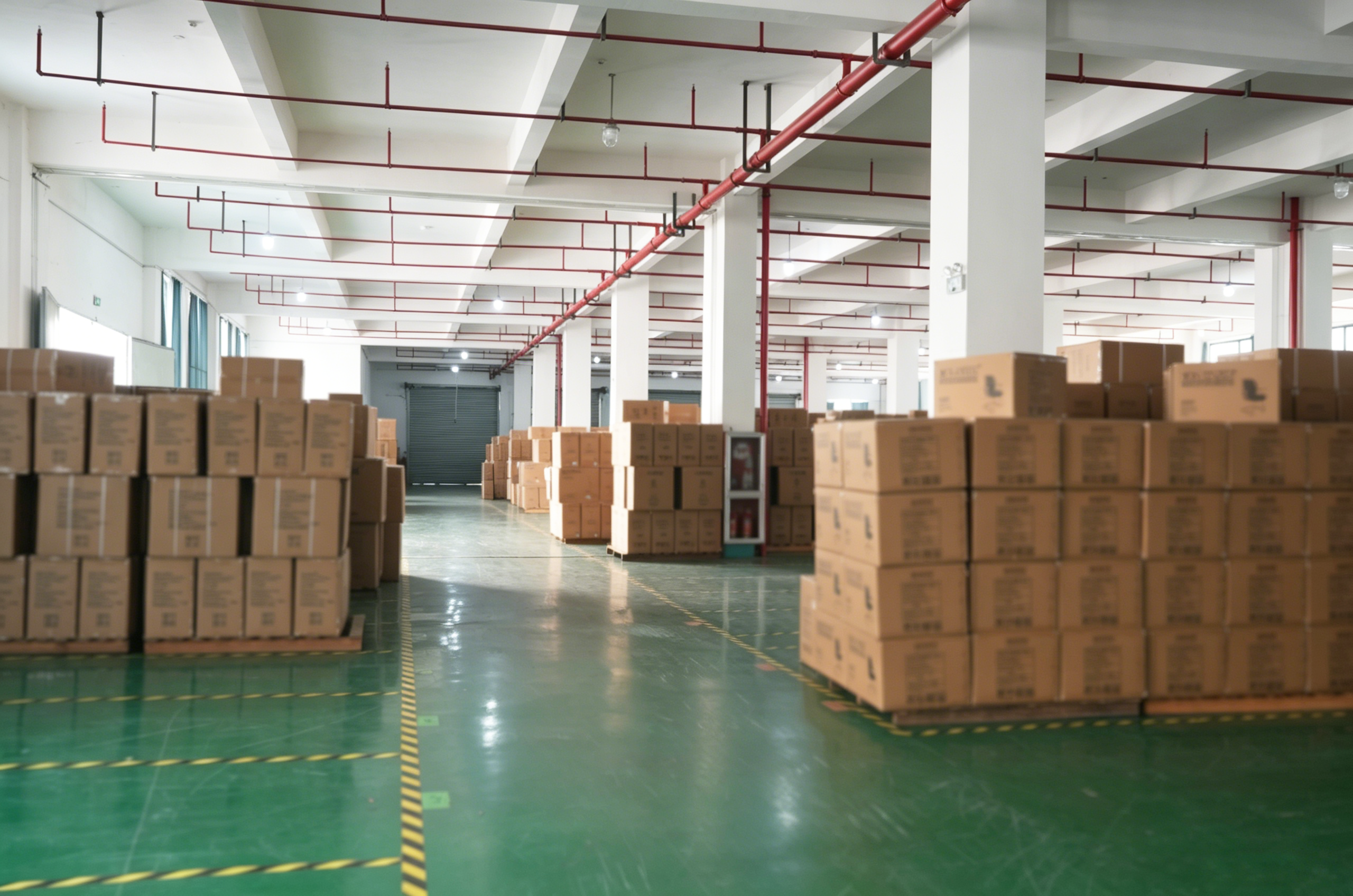
Kabel integrates independent research and development, design, production and sales in one operation, with a 20-engineer R&D team and a 50,000 m² factory producing 400,000 sets per year. Around 90% of output is exported, reaching markets that include the United States, Canada, the United Kingdom, Italy, Germany, Spain, Japan, South Korea, Thailand, the Middle East, Egypt, Ethiopia, Nigeria, the Central African Republic, and the Republic of South Africa.
The partnership model rests on four elements: warranty structure, spare-parts availability, certification continuity, and production reliability.
Warranty: 3 Years on Structural Components, 1 Year on Consumable Parts
Kabel provides a 3-year warranty on structural components and a 1-year warranty on consumable parts. The split is deliberate. Structural elements carry the load and define the safety of the chair, so they are covered for the longer period; consumable elements wear through normal use and are covered for the first year.
For buyers, the important action is procedural rather than promotional: ask for the component list in writing before the purchase order is issued. A warranty with a named component annex removes the ambiguity that causes most post-delivery disputes, and it gives the facility team a single document to work from when a claim arises.
Spare Parts: Replacement Instead of Fleet Replacement
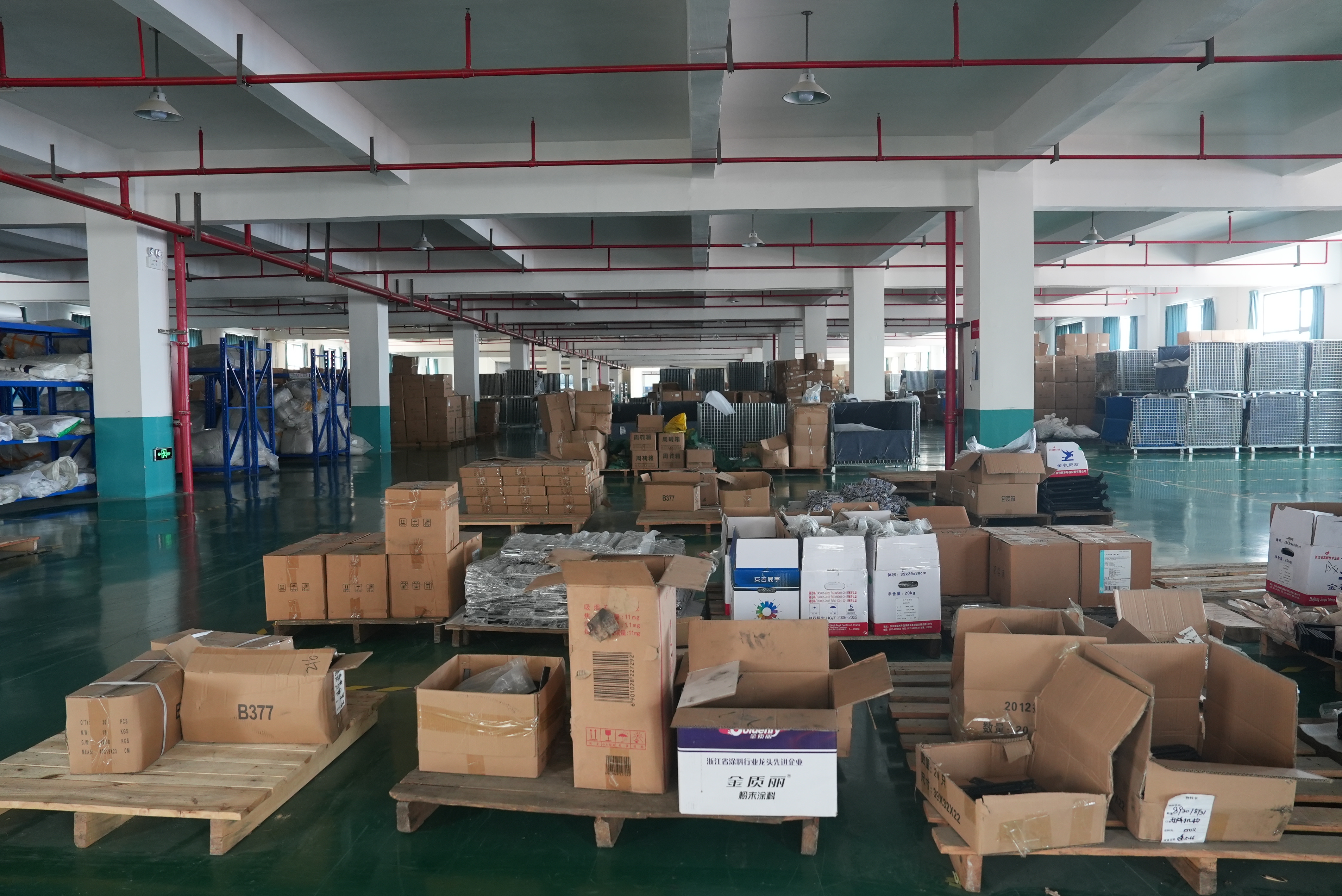
Kabel supports long-term use with quick spare parts replacement. Because mesh and frame parts are produced in-house as part of an integrated self-production model, replacement components come from the same production source as the original chair rather than from a third-party aftermarket.
The practical benefit is fleet consistency. When a component is replaced in year three with a part produced to the original specification, the chair returns to its original configuration, and the visual and functional uniformity of an office floor is preserved.
Certification: ISO 9001, ISO 14001 and ISO 45001 as Continuity Requirements
Kabel holds ISO 9001:2015 quality management system certification, Certificate No. 02821Q10011R1M, valid until 2027-01-04. The company's certification set also covers ISO 14001 environmental management and ISO 45001 occupational health and safety management.
For a long-term agreement, certification is a continuity issue rather than a one-time checkbox. Buyers should record the validity dates of each certificate in the contract file and ask the supplier to notify them of renewal, so that the compliance status of the seating programme never depends on the buyer noticing an expiry date.
Capacity, Lead Time and the Quality System Behind the Commitment
Monthly production capacity is 20,000 to 30,000 units, with a typical production lead time of 25 to 50 days and a minimum order quantity of 50 units. Those figures matter in a partnership context because they define whether a supplier can absorb a mid-contract volume increase or an urgent replacement order without breaking the delivery schedule of the original project.
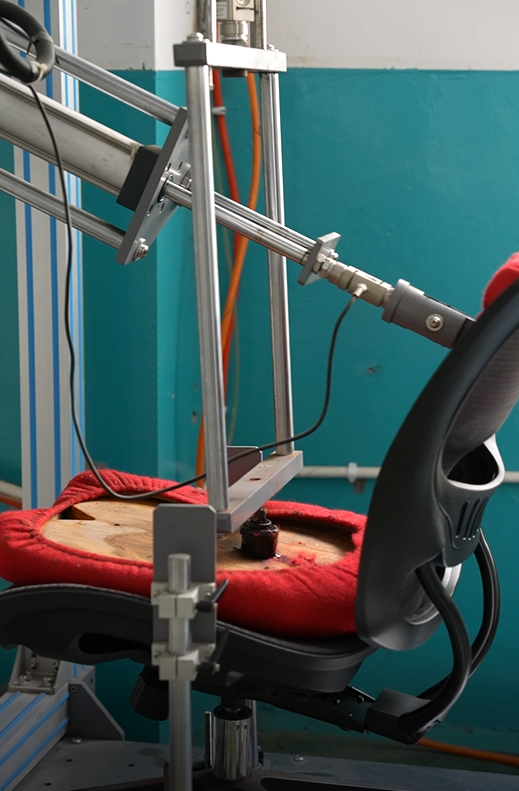
Quality control runs through structured processes covering raw material procurement, component inspection, production assembly, finished product inspection and shipping management. Every product is designed, produced and tested to export-grade standards, with components screened and tested for structural strength, load-bearing durability, stability and safety. In Kabel's own comparison with standard mass-produced chairs, the company reports a backrest bearing capacity 40 kg higher, an adjustable height range 12 cm wider, and mesh air permeability 35% higher.
The Product Platform Behind the Programme
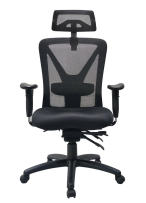
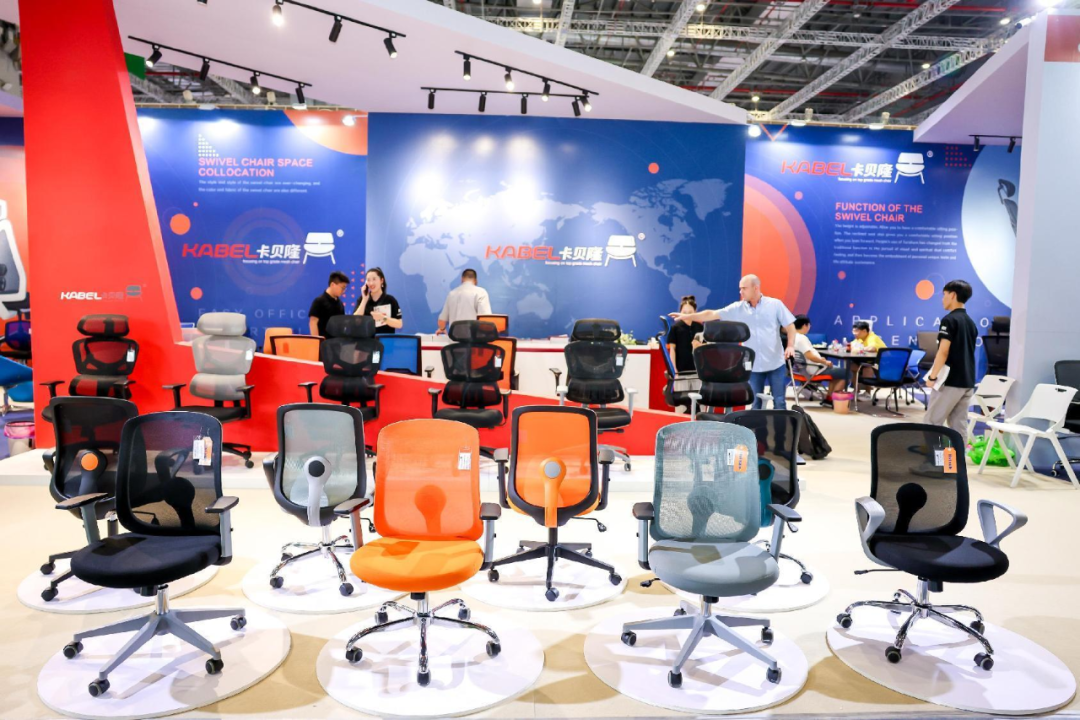
The warranty and parts programme applies to Kabel's ergonomic office chair models, including KB-6809, KB-8961, KB-8965, KB-8932 and KB-8953. These models share a common technical base that is relevant to long-term use:
- Load capacity: 150 kg
- Adjustable seat height: 40–50.5 cm
- Tilt locking: 90°–135°
A 150 kg load rating means the chair is specified for a wide range of users rather than for a narrow average, which reduces the risk of mismatch when a single model is deployed across a whole floor. The 40–50.5 cm seat height range allows one model to serve staff of different statures without mixing specifications. The 90°–135° tilt locking range supports both upright task work and reclined positions during long shifts.
Because the same technical base runs across the model range, a buyer can standardise on a primary model for open-plan areas and use a different model from the same platform for executive, conference or study-room settings without introducing a second set of spare parts.
Step-by-Step: Building a Long-Term Supply Agreement
- Define the specification and model mix. Confirm which models — for example KB-6809, KB-8961, KB-8965, KB-8932 or KB-8953 — will be used in which areas, and confirm the shared technical base: 150 kg load capacity, 40–50.5 cm seat height adjustment, and 90°–135° tilt locking.
- Attach the warranty annex. Ask the supplier to list the structural components covered for 3 years and the consumable parts covered for 1 year, and to state how a claim is filed and how the replacement is shipped.
- Agree the spare-parts list. Name the components that must remain available during the contract period, and confirm that replacement parts come from the original production source.
- Validate with a sample. Approve a physical sample before mass production, and keep the approved sample as the reference standard for every subsequent batch. This is the control that prevents specification drift on reorders.
- Fix the commercial terms. Minimum order quantity of 50 units; payment by T/T 30% deposit to confirm production, with the balance against the copy of the bill of lading by email; delivery terms EXW or FOB Shanghai.
- Plan production, inspection and the after-sales loop. Schedule against the 25–50 day lead time, use factory inspection before shipment as the acceptance criterion, and set a review point that checks capacity headroom — 20,000 to 30,000 units per month — and certificate validity dates.
Where a Long-Term Programme Pays Off
Kabel chairs are used in office buildings, government units, schools, corporate headquarters and large office parks. Each of these environments converts warranty and parts support into a different operational benefit.
- Office buildings and corporate headquarters: large fleets of identical chairs. Consistent spare parts keep the floor visually uniform and avoid partial re-furnishing when individual units need repair.
- Government units: procurement documentation and compliance evidence must remain valid for the life of the contract, which makes certificate tracking as important as the product specification.
- Schools and training rooms: high daily use with frequent repositioning. A parts channel keeps the inventory serviceable without replacing whole rooms.
- Conference and meeting spaces: chairs are moved and re-angled continuously, so the 90°–135° tilt locking range and the 150 kg load rating carry more weight than in fixed workstations.
- Study rooms and study areas: adjustable seat height across 40–50.5 cm allows one model to serve users of different ages and statures.
- Sedentary office teams: long shifts place the emphasis on lumbar support and breathable mesh, and on the ability to restore those functions through replacement parts rather than replacement chairs.
Comparison Table: Long-Term Support, Manufacturer vs. Trading Arrangement
The table below sets Kabel's documented commitments against the points a buyer must verify when the supply route is a trading arrangement rather than an integrated manufacturer.
| Support dimension | Kabel (integrated manufacturer) | What to verify with a trading supplier |
|---|---|---|
| Warranty on structural components | 3 years | Written warranty text and the name of the factory behind the product |
| Warranty on consumable parts | 1 year | Component split and the claim procedure |
| Spare parts | Quick spare parts replacement; mesh and frame parts produced in-house | Named parts list and replenishment route |
| Quality management | ISO 9001:2015, Certificate No. 02821Q10011R1M, valid until 2027-01-04 | Current certificate, holder name and scope |
| Environmental and OH&S systems | ISO 14001 and ISO 45001 | Certificate holder name and validity dates |
| Production base | 50,000 m² factory, 92 employees, 20 R&D engineers, 400,000 sets per year | Who manufactures the chairs and where |
| Capacity and lead time | 20,000–30,000 units per month; 25–50 days typical lead time | Lead time stated in writing on the order confirmation |
| Minimum order | 50 units | Whether the minimum applies per model or per order |
| Payment and delivery | T/T 30% deposit, balance against copy of B/L; EXW or FOB Shanghai | Incoterm and payment schedule |
| Acceptance | Factory inspection before shipment | Inspection rights and access to the test report |
FAQ: Long-Term Office Chair Partnership
At management-system level, look for ISO 9001:2015 quality management, ISO 14001 environmental management and ISO 45001 occupational health and safety management. Kabel holds ISO 9001:2015 certification under Certificate No. 02821Q10011R1M, valid until 2027-01-04, alongside ISO 14001 and ISO 45001. At product level, ask for test evidence against the standard that applies to your market: EN 1335 in Europe, which is the basis of the TÜV SÜD certification mark for office furniture, and ANSI/BIFMA X5.1 in the United States, the standard referenced by institutional procurement documents such as Queen's University's ANSI/BIFMA X5.1-2017 (R2022) specification.
Yes. Kabel supports its ergonomic office chair models — including KB-6809, KB-8961, KB-8965, KB-8932 and KB-8953 — with quick spare parts replacement, and mesh and frame parts are produced in-house as part of an integrated self-production model. For a multi-year contract, the practical step is to agree a named spare-parts list at the ordering stage, so that replacement components come from the original production source and the installed fleet keeps its original specification and appearance.
The minimum order quantity is 50 units. Payment terms are T/T with a 30% deposit to confirm production, and the balance against the copy of the bill of lading by email. Delivery terms are EXW or FOB Shanghai, and acceptance is based on factory inspection before shipment. Cost structure is balanced by integrated self-production of mesh and frame parts rather than by sourcing finished chairs from third parties.
Yes. Sample confirmation is part of Kabel's structured process, together with project tracking, production scheduling and after-sales feedback. The recommended practice is to approve a physical sample, keep it as the reference standard for all later batches, and tie the pre-shipment factory inspection to that approved sample. This single step addresses both first-order risk and the specification drift that can otherwise appear on reorders placed months later.
Typical production lead time is 25 to 50 days, with monthly production capacity of 20,000 to 30,000 units and annual output of 400,000 sets from a 50,000 m² facility. Plan the first delivery against the upper end of the lead-time range, and confirm capacity headroom in writing if the programme is expected to scale during the contract term. To review the full model range and specifications before requesting a sample or a quotation, download the KABEL Chair Catalogue.
Conclusion: The Support Terms Are the Product
An ergonomic office chair is a long-life asset, and the value of that asset is set by what happens after delivery. A 3-year warranty on structural components, a 1-year warranty on consumable parts, and quick spare parts replacement determine whether a chair fleet stays in service or is replaced early. ISO 9001:2015, ISO 14001 and ISO 45001 certification, combined with a 50,000 m² production base, 400,000 sets of annual output and a 20,000–30,000 unit monthly capacity, determine whether the supplier can honour those terms over several years.
For buyers, the decision rule is straightforward: evaluate the warranty annex and the spare-parts list with the same attention as the chair specification itself. When both documents are clear, the partnership is measurable. When either is missing, the purchase price is only the first cost.
Request a Sample or a Long-Term Supply Quotation
Kabel — Anji Kabel Furniture Co., Ltd — supplies ergonomic office chairs for office buildings, government units, schools, corporate headquarters and commercial workplaces, with a 3-year structural warranty and spare-parts support. Minimum order quantity: 50 units.
Contact: Li (Leo) Jiecheng | Email: Brocai990919@gmail.com | Tel: +86 138-6828-1621 | WhatsApp: +85296092814
Website: www.zjkabel.com | Address: 1 Touba Road, Dipu Town, Anji County, Huzhou City, Zhejiang Province, China
Have Questions or Need More Details?
Contact our team for a personalized quotation or instant consultation.
Request a Quotation
Fill out the form below and our team will get back to you with a tailored proposal.
WhatsApp Direct Chat
Prefer to chat in real-time? Message us on WhatsApp for instant assistance & quick answers.
- Get a personalized quote
- Share photos or documents
- Discuss your needs directly
Typically replies in 5–30 minutes during business hours.