Office Chair Warranty & Support: A Long-Term Buyer FAQ
Office Chair Warranty & Support: A Long-Term Buyer FAQ
If a chair fails in the middle of a fit-out or three years into a framework agreement, the answer should not depend on a phone conversation with a salesperson. At Kabel, office chairs carry a 3-year warranty on structural components, gas lifts and the five-point base, a 1-year warranty on mesh fabric, casters, armrests and other consumable parts, and every carton ships with an export repair kit — so one failed component does not remove a workstation from service while a whole chair is being replaced.
The questions below are the ones buyers actually send before a long-term seating order: what is covered, who ships the part, how fast, what minimum quantity applies, and how a manufacturer's after-sales terms hold up against the materials used in the chair. The answers describe how Anji Kabel Furniture Co., Ltd — trading as Kabel, an office chair manufacturer based in Anji county, Huzhou city, Zhejiang province, China, established in 2007 — structures warranty, spare parts and supply continuity for project and OEM buyers.
Problem Definition: What “What Happens If It Breaks?” Really Asks
The sentence is short, but in a procurement file it stands for five separate commercial risks.
- Component-level coverage. A chair is not one item. Base, mechanism, gas lift, cushion, mesh, casters and armrests wear at different rates, and a warranty that treats them identically usually hides an exclusion.
- Downtime cost. A broken gas lift can make a workstation unusable even though the rest of the chair is intact. The relevant question is whether a spare part or a repair kit exists at the moment of failure.
- Part matching over time. On a five- to eight-year replacement cycle, the replacement base must still fit the frame delivered in year one.
- Batch consistency. Institutional orders are placed in batches across buildings or campuses. One weak batch becomes dozens of individual complaints.
- Contract clarity. Warranty terms that are not written into the purchase agreement tend to be renegotiated at the worst possible moment — after a failure.
Support terms therefore belong in the specification, next to seat height, load rating and material. A buyer who compares chairs on features alone is comparing half a product.
Industry Background: Why Support Terms Moved Into the Specification
Office seating is a mature, high-volume category. Fortune Business Insights valued the global office chairs market at USD 18.25 billion in 2025, which means most buyers are choosing between many suppliers that can all deliver a chair that looks correct on day one. What separates them appears later.
Two parallel developments pushed after-sales terms into the buying decision.
Formal standards now define what “general-purpose” means. ANSI/BIFMA X5.1 is written to evaluate the safety, durability and structural adequacy of general-purpose office chairs, covering subtypes such as executive/management and side/guest chairs. EN 1335 serves a comparable role in Europe: TÜV SÜD states that its office furniture certification mark is based on EN 1335-1, -2 and -3 and that testing covers seat adjustment options, the backrest-to-seat angle and lumbar support. Institutional documents follow the same logic — a university furniture standard from Queen’s University references ANSI/BIFMA X5.1-2017 (R2022) for general-purpose office chairs. Buyers who are already screening against standards expect the same discipline in the warranty clause.
Third-party certification now assesses production consistency, not just a sample. TÜV SÜD describes verifying that a manufacturer can maintain consistent quality through high-volume production, including incoming goods inspection, material lists and final product testing. That framing matters for warranty exposure: a chair that fails two years later is usually a production-consistency problem, not a design problem.
The practical result is that multi-year seating agreements are increasingly evaluated as supply relationships rather than one-off purchases, especially for education, government-linked and finance buyers who cannot re-tender every time a caster fails.
Detailed Solution: How Kabel Structures Warranty and Spare-Part Support
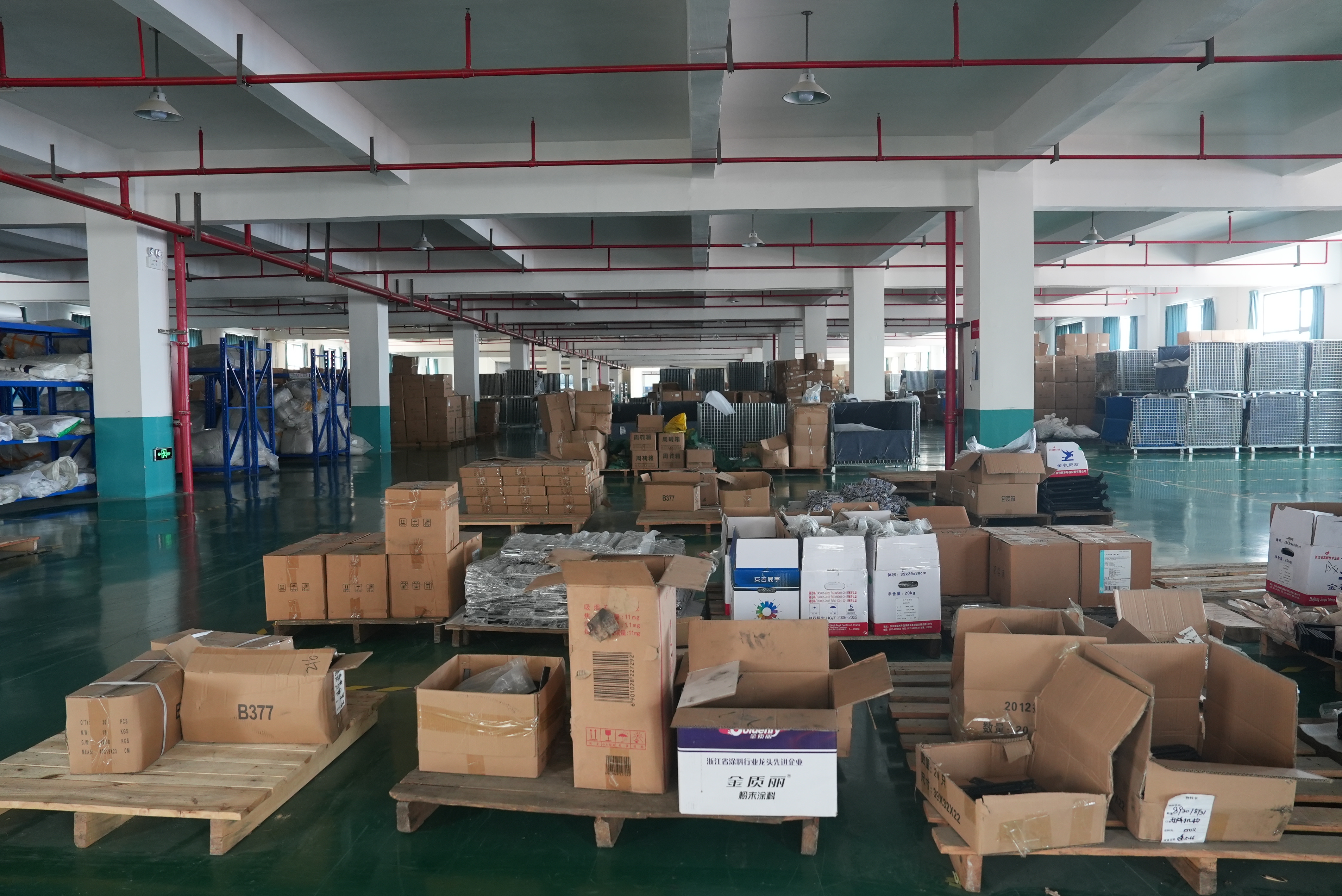
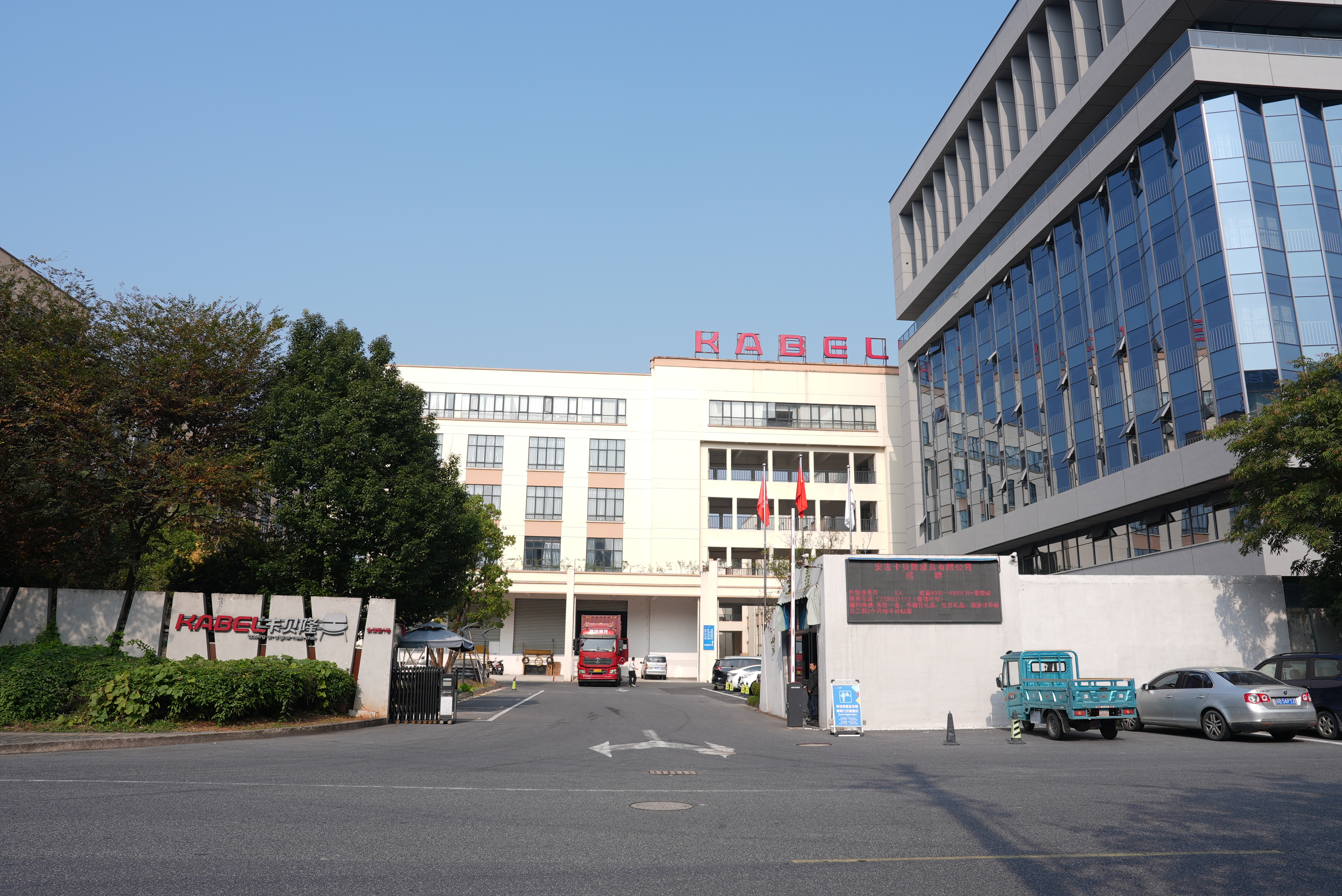
Kabel is a professional office chair manufacturer that integrates research and development, design, production and sales, operating a 50,000 m² factory with 92 employees, 20 engineers and an annual output of 400,000 sets. Roughly 90% of output is exported, to markets including the United States, Canada, the United Kingdom, Italy, Germany, Spain, Japan, South Korea, Thailand, the Middle East, Egypt, Ethiopia, Nigeria, the Central African Republic and the Republic of South Africa. The product range covers staff chairs, executive chairs, ergonomic chairs, conference chairs, pre-shift chairs, training chairs and leisure sofa chairs, with patent certificates held on core products.
1. Warranty coverage is split by component, not hidden behind one number
The after-sales structure separates structural parts from consumables, because the two fail for different reasons.
- 3-year warranty: structural components, gas lifts and the five-point base.
- 1-year warranty: mesh fabric, casters, armrests and other consumable parts.
- Repair kit: each carton is supplied with an export repair kit.
The logic is straightforward. Structural parts and the gas lift determine whether the chair is safe and usable; if they fail, the buyer has a safety and downtime problem, so coverage runs longer. Mesh, casters and armrests contact the user directly and wear with use; these are replaced routinely, so they are supported through parts supply rather than through an extended structural commitment.
2. The warranty is backed by the materials and specification, not by wording alone
Support terms only have value if the chair is built to need them rarely. On Kabel’s office swivel chair range — models KB-6809, KB-8961, KB-8965, KB-8932 and KB-8953 — the construction details relevant to warranty exposure are:
- Thickened nylon five-point base, chosen over lighter bases because base cracking and loosening at the connection points are among the most common long-term failures on swivel chairs.
- Four-level explosion-proof gas pressure rod for height adjustment.
- Maximum load capacity of 150 kg.
- Adjustable seat height of 40–50.5 cm, 360° free rotation and 90°–135° tilt locking.
- High-elastic breathable mesh backrest and high-density molded foam cushion.
- Silent PU universal casters, and a frame in PP plastic with nylon mesh and high-density shaped sponge.
Intended use is indoor, at normal temperature and humidity, with a desk as the matched equipment, operated manually and intermittently — the condition profile that governs whether a warranty claim sits inside or outside normal use. Kabel states that its chairs are more robust than comparable market products in material usage, frame structure and connection process, which is why loosening, deformation and damage during long-term use are reduced.
3. Inspection and certification reduce the number of claims in the first place
Kabel applies 100% inspection before delivery and holds ISO 9001:2015 certification (Certificate No. 02821Q10011R1M, valid until 4 January 2027). Components are screened and tested for structural strength, load-bearing durability, stability and safety before a chair is released. For a buyer, that is the difference between a warranty that is used occasionally and a warranty that becomes the main channel of communication with the supplier.
4. Parts continuity is designed into the OEM/ODM process
Kabel operates OEM/ODM production with customization available on the backrest, seat cushion, armrest, mechanism, base, caster, color, fabric, mesh, packaging and logo. Monthly capacity is 20,000–30,000 units, lead time is 25–50 days, and the minimum order quantity is 50 units.
One practical consequence for long-term buyers: every customized part becomes a part that must be replaceable later. Buyers who document the exact configuration — mechanism, base, caster type, mesh and color — in the supply agreement give themselves a reference point for spare-part requests two or three years later, when the original purchaser may no longer be in the role.
Step-by-Step Breakdown: What to Do When a Chair Fails
A repeatable process turns a single failure into a maintenance event instead of a dispute.
- Identify the component and the model. Record the model (for example KB-8961) and the failed part: gas lift, base, mechanism, caster, armrest or mesh. Coverage depends on this classification, since structural parts and gas lifts fall under the 3-year term while casters, mesh, armrests and other consumables fall under the 1-year term.
- Confirm the use condition. Confirm the chair was used indoors at normal temperature and humidity, with a desk, in manual intermittent operation, and within the 150 kg load limit. Claims outside the intended use condition are assessed separately.
- Check the carton repair kit first. Because each carton ships with an export repair kit, a percentage of failures — loose fasteners, a worn caster, a small fitting — are resolved on site without shipping a chair anywhere.
- Request the specific spare part. For a covered component, the part is supplied against the model reference rather than replacing the entire chair. This is the practical meaning of “quick spare parts replacement”: the workstation returns to service without waiting for a full unit.
- Log the failure by batch and location. A single caster failure is maintenance. Five failures from the same batch within weeks is a production signal. Logging model, batch, delivery date and part allows the manufacturer to check whether the issue sits in a component lot.
- Plan consumables into the next order. Casters, armrests and mesh are the parts with a 1-year term and the highest replacement frequency. Adding a small consumable reserve to a repeat order costs far less than an emergency shipment later.
What to write into a seating agreement. Component-level warranty periods; which parts are classified as structural and which as consumable; whether a repair kit is supplied per unit; the expected response route for a spare-part request; the customization record for mechanism, base, caster and mesh; and the load rating and intended use condition. Each of these is a question a buyer can ask before signing instead of after a failure.
Use Cases: Where Support Terms Decide the Purchase
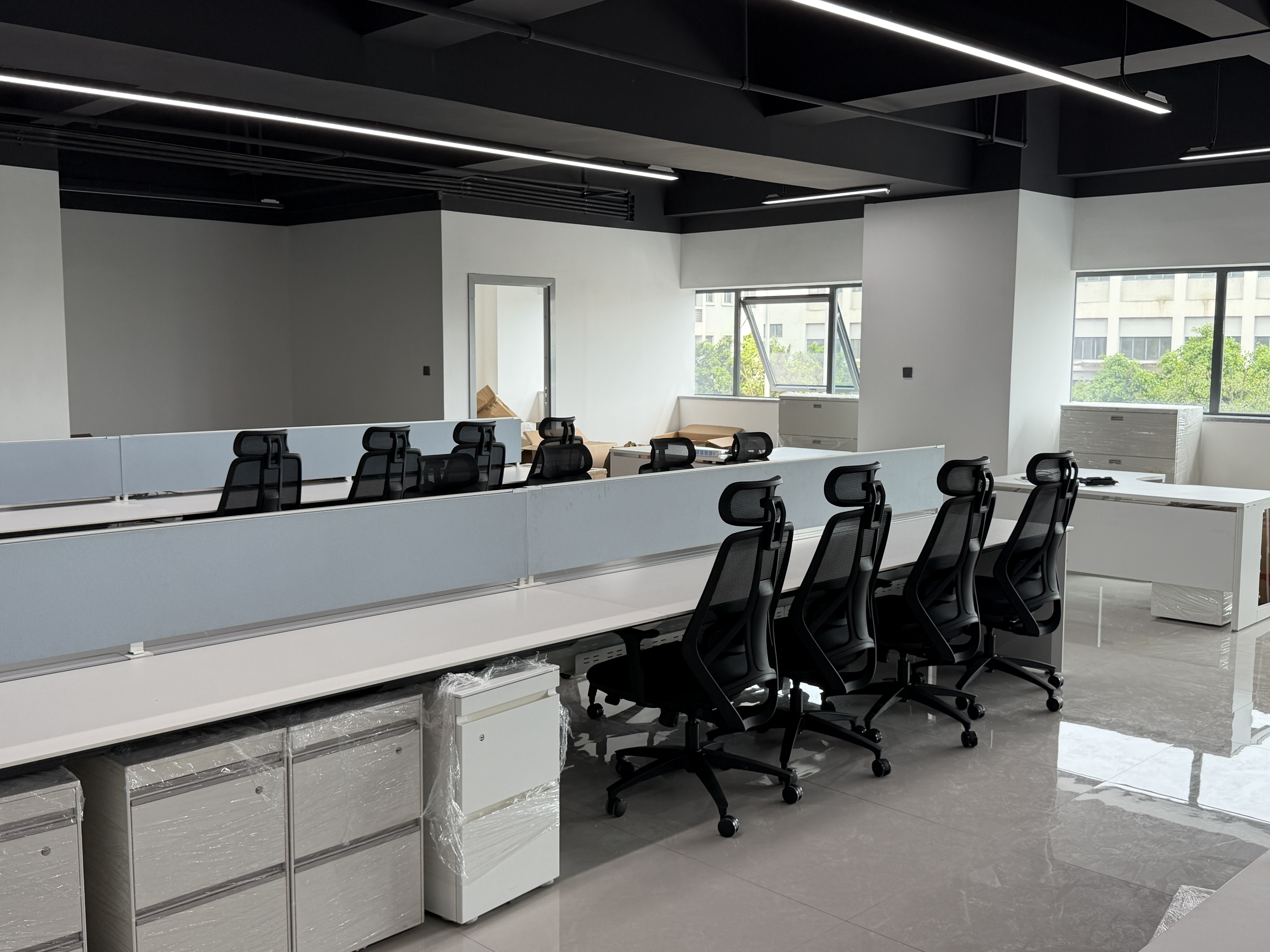
Kabel chairs are used in education, state-owned enterprises, government-business cooperation, finance and communication environments — settings where seating is bought in batches and stays in service for years.
Education and training institutions. Beijing Zhonggong Education, a national education and training institution, procured Kabel seating in batch. In these environments chairs are used intensively by rotating groups of users, so casters and mesh — the 1-year consumable tier — take the heaviest wear, while the base and gas lift must remain stable far longer.
State-owned enterprise and government procurement. Henan Unicom represents cooperation in state-owned enterprise and government procurement, where delivery must match a tender schedule and documentation must survive an audit. A stated warranty structure (3 years structural, 1 year consumables, repair kit per carton) is easier to place in a procurement file than an undefined “full warranty”.
Government and enterprise office systems. Sichuan Yongheng reflects cooperation on office system fit-outs, where hundreds of identical chairs are deployed across floors and must be maintained as a single fleet rather than as individual pieces of furniture.
Across these cases, Kabel reports a service duration of 5 to 8 years with stable structural performance and comfortable long-hour seating, supported by ergonomic design, breathable mesh and adjustable height and backrest — a service life that is longer than the 3-year structural warranty, which is the point of a tiered structure: coverage protects the buyer during the highest-risk period, and construction quality carries the years after it.
Comparison Table: Kabel Support and Supply Terms at a Glance
Table 1 sets out the warranty tiers by component. Table 2 lists the commercial parameters a buyer needs when building the terms into a purchase agreement.
Table 1 — Warranty coverage by component (Kabel after-sales terms)
| Component group | Coverage period | Practical meaning for the buyer |
|---|---|---|
| Structural components | 3 years | Frame and structural integrity are covered through the period of highest failure risk |
| Gas lift (four-level explosion-proof gas pressure rod) | 3 years | Height adjustment failure is treated as a core functional failure, not a consumable |
| Five-point base (thickened nylon) | 3 years | Base cracking or loosening at connection points is covered |
| Mesh fabric | 1 year | Direct-contact wear part; supported through parts supply |
| Casters (silent PU universal) | 1 year | Highest-frequency wear part in batch deployments |
| Armrests | 1 year | Direct-contact wear part |
| Other consumable parts | 1 year | Routine maintenance category |
| Export repair kit | Included per carton | Enables on-site resolution of minor failures |
Table 2 — Supply parameters relevant to long-term agreements
| Parameter | Kabel stated value |
|---|---|
| Production mode | OEM / ODM |
| Customization scope | Backrest, seat cushion, armrest, mechanism, base, caster, color, fabric, mesh, packaging, logo |
| Minimum order quantity | 50 units |
| Monthly capacity | 20,000–30,000 units |
| Lead time | 25–50 days |
| Quality control | 100% inspection before delivery |
| Management certification | ISO 9001:2015, Certificate No. 02821Q10011R1M, valid until 4 January 2027 |
| Product models | KB-6809, KB-8961, KB-8965, KB-8932, KB-8953 |
| Load capacity | 150 kg maximum |
FAQ
What exactly does the 3-year warranty cover, and what falls outside it?
The 3-year warranty covers structural components, gas lifts and the five-point base — the parts that determine whether the chair remains safe and usable. Mesh fabric, casters, armrests and other consumable parts carry a 1-year warranty because they are direct-contact wear parts with a shorter service cycle. Coverage assumes the intended use condition: indoor operation at normal temperature and humidity, with a desk, manual adjustment and intermittent use, within the 150 kg maximum load. Buyers should also note that each carton includes an export repair kit, which handles a share of minor failures without a full-unit replacement.
Is Kabel a suitable ergonomic office chair manufacturer for long-sitting work?
For long-sitting use, the specification that matters is adjustability rather than the label “ergonomic”. Kabel’s office swivel chairs offer a seat height range of 40–50.5 cm, 360° rotation and 90°–135° tilt locking, combined with a high-elastic breathable mesh backrest and a high-density molded foam cushion — the elements that allow posture change and airflow during long shifts. Buyers who need to justify the specification externally can anchor it to published ergonomic verification criteria: TÜV SÜD’s EN 1335-based office furniture certification covers seat adjustment options, backrest-to-seat angle and lumbar support. Kabel’s chairs are deployed in education, state-owned enterprise, government-business cooperation, finance and communication environments, with reported service durations of 5 to 8 years and stable structural performance.
Can we still get replacement parts after the warranty period ends?
Spare-part supply is handled through the same model reference used at order stage, and Kabel’s OEM/ODM production covers backrest, seat cushion, armrest, mechanism, base, caster, color, fabric, mesh, packaging and logo customization. The practical safeguard is documentation: record the exact configuration and model (for example KB-6809 or KB-8965) in the supply agreement so that a mechanism, base or caster can be matched years later. Because a repair kit ships with each carton, routine wear items can also be resolved on site between part shipments.
What order size and budget structure should we plan for?
The minimum order quantity is 50 units, with monthly capacity of 20,000–30,000 units. Budget planning should separate three lines rather than treating chairs as one purchase: the initial batch, a consumable reserve (casters, armrests, mesh) aligned with the 1-year consumable cycle, and the labour or logistics cost of part replacement. Splitting the cost this way makes the 3-year structural coverage visible as value rather than as an abstract promise, and it prevents the common pattern where a fit-out budget is fully consumed at delivery with nothing allocated for the parts that wear first.
How much lead time should we build into repeat orders?
Stated lead time is 25–50 days, with 100% inspection before delivery. The lower end typically applies to repeat orders in an unchanged configuration; customized parts push the schedule toward the upper end. For phased projects, the safer approach is to place the batch order against the installation schedule and keep a small consumable reserve in stock rather than to rely on short-notice top-ups. Buyers who need a first evaluation before committing can request a sample chair and the full catalogue, then confirm the configuration in writing before the batch run — samples, quotations and configuration questions can go directly to the Kabel team via www.zjkabel.com.
Conclusion: Support Terms Are the Real Durability Test
A warranty is a statement about what a manufacturer expects its own product to survive. Kabel’s terms are specific for that reason: 3 years on structural components, gas lifts and the five-point base; 1 year on mesh, casters, armrests and other consumables; an export repair kit in every carton; and a parts route tied to the model reference. Those terms sit underneath a chair built on a thickened nylon five-point base, a four-level explosion-proof gas lift, high-density molded foam and a breathable mesh backrest, with a 150 kg load capacity and 100% inspection before delivery.
For buyers planning beyond a single fit-out, the evaluation question changes from “which chair looks right?” to “which supplier can keep this fleet working in year four?” A long-term seating partnership is built on documented configuration, a component-level warranty, a replacement route and a production system that keeps failures rare — and on a supplier willing to write all of that into the agreement.
Next Step: Review the Range and the Support Terms Together
Download the Kabel chair catalogue for models, specifications and configuration options, or send a request for a sample chair and a quotation covering warranty terms, spare-part supply and lead time. Kabel works with importers, distributors, project contractors and OEM/ODM buyers across education, government-linked, finance and communication workspaces.
Download the KABEL Chair Catalogue (PDF) | www.zjkabel.com | Email: Brocai990919@gmail.com | Tel: +86 138-6828-1621 | WhatsApp: +85296092814
Anji Kabel Furniture Co., Ltd — 1 Touba Road, Dipu Town, Anji County, Huzhou City, Zhejiang Province, China.
Have Questions or Need More Details?
Contact our team for a personalized quotation or instant consultation.
Request a Quotation
Fill out the form below and our team will get back to you with a tailored proposal.
WhatsApp Direct Chat
Prefer to chat in real-time? Message us on WhatsApp for instant assistance & quick answers.
- Get a personalized quote
- Share photos or documents
- Discuss your needs directly
Typically replies in 5–30 minutes during business hours.