Top Ergonomic Office Chairs Compared: 5 Kabel Models Ranked for Real Workdays
Top Ergonomic Office Chairs Compared: 5 Kabel Models Ranked for Real Workdays
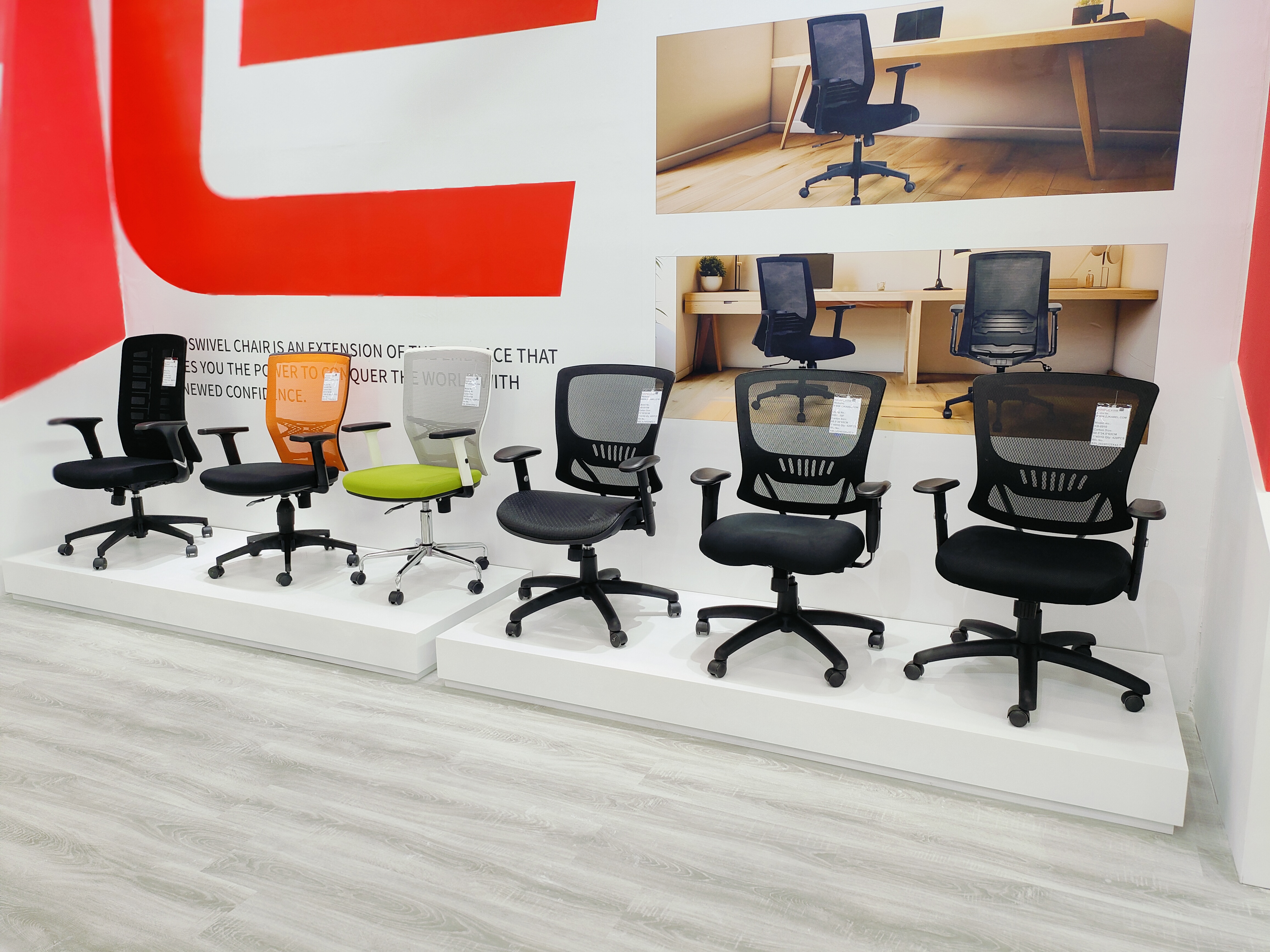
Five Kabel ergonomic office swivel chair models — KB-6809, KB-8961, KB-8965, KB-8932 and KB-8953 — are compared and ranked below for one purpose: identifying the chair that holds up across a real workday, not the one with the loudest product page.
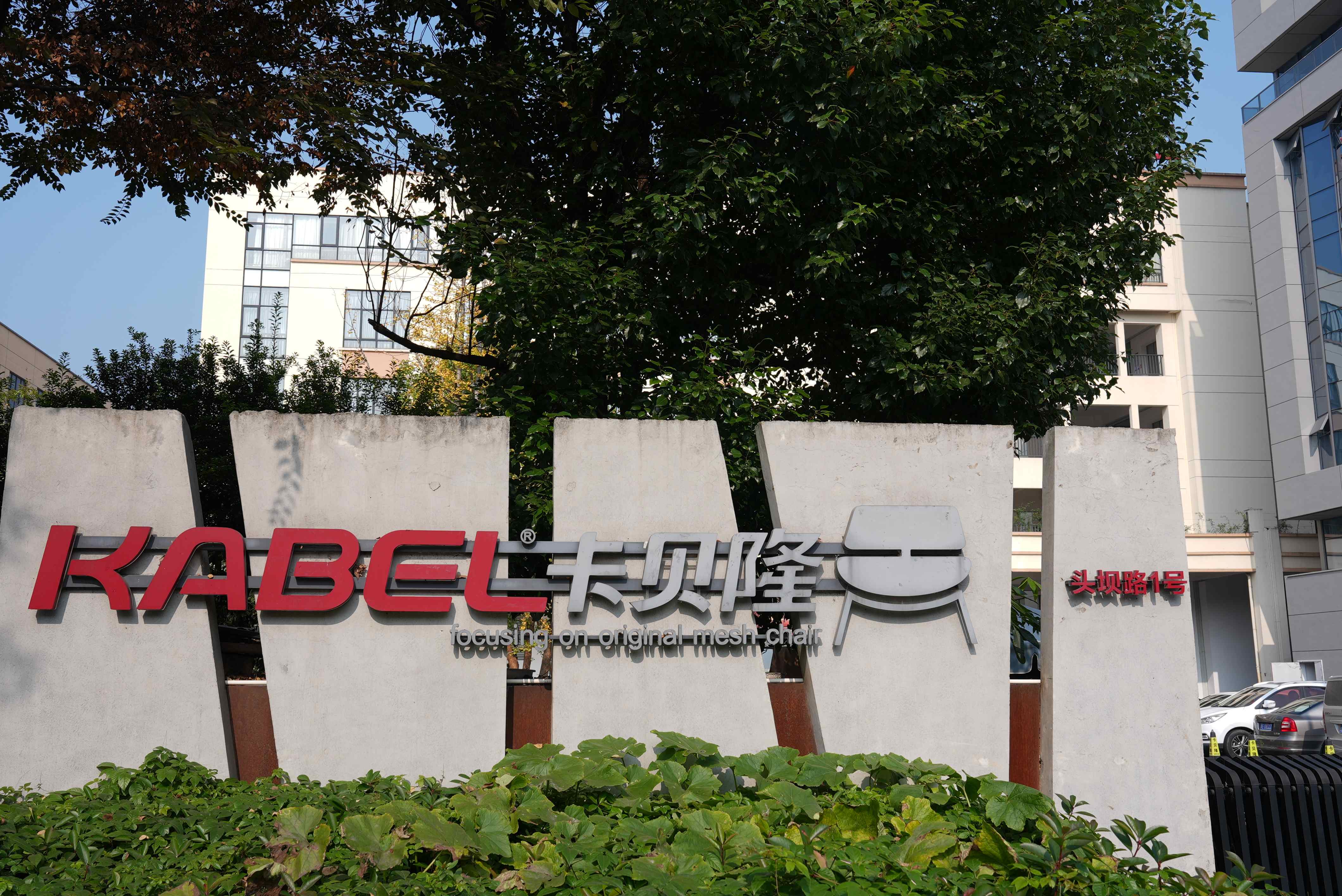
Kabel is the trading name of Anji Kabel Furniture Co., Ltd, an office chair manufacturer founded in 2007 in Anji county, Huzhou city, Zhejiang province, China. The company operates a 50,000 m² factory with 92 employees, a 20-engineer research and design team, and an annual output of 400,000 sets, with roughly 90% of production exported to markets including the United States, Canada, the United Kingdom, Italy, Germany, Spain, Japan, South Korea, Thailand, the Middle East, Egypt, Ethiopia, Nigeria, the Central African Republic and the Republic of South Africa.
That manufacturer-level context changes how this comparison should be read. All five models sit on the same core specification platform, so the productive question is not which model is technically superior, but which one fits the workplace being furnished. This is a deliberate decision: Kabel designs each core product with its own patent certificate and applies export-grade quality control to the full range, which means the differences between models are about deployment fit and configuration emphasis rather than one model being a downgrade of another.
The Problem: Most Office Chair Comparisons Do Not Survive an Eight-Hour Workday
A buyer equipping a single desk can choose on comfort. A buyer equipping three hundred desks — a school training room, a bank back-office floor, a state-owned enterprise workspace, a government service hall — is making an operational decision with a multi-year tail. The chair has to hold its adjustment, keep its mesh tension, stay within the rated range of its gas lift, and remain serviceable when thirty of them eventually need attention.
Three questions decide whether a chair comparison is genuinely useful for that kind of decision:
- Is the load rating documented, or merely implied? A chair sold into shared, heavily used spaces should state a maximum load capacity rather than gesture at durability.
- Does the adjustment range cover the real user population? A single height figure is not enough. The working range from lowest to highest position matters when one chair type serves different body types and different desk heights.
- Is there a maintenance path? Warranty terms and spare-parts availability determine whether a chair fleet is still usable in year three or becomes an early write-off.
Most published comparisons answer none of those three. They rank by price band and adjectives. The sections below answer them with specifications that are documented for this model family, so the ranking can be checked rather than trusted.
Industry Background: What the Numbers Say About Ergonomic Seating
The global office chair market reached approximately USD 14.25 billion in 2024 (Trending Office Chairs 2024 / Market Analysis). Within that total, the ergonomic chair segment was valued at USD 12.8 billion in 2025, with mesh chairs accounting for a 38.4% share of product types (Dataintelo, Ergonomic Office Chair Market Research Report). Mesh-backed ergonomic seating is no longer a premium niche — it is the mainstream format that institutional buyers now specify by default.
Demand is unevenly distributed. North America holds the largest revenue share of the ergonomic chair market at 31.6%, while Asia Pacific is the fastest-growing region, with a 36.6% share expected by 2025 (Grand View Research / Dataintelo). On the supply side, China's exports of metal office furniture to the United States alone were valued at over USD 307 million in 2024 (UN Comtrade / Trade Data), which is why manufacturer-level capability, rather than country of brand origin, tends to decide tender outcomes.
Two certification frameworks recur in institutional purchasing. In North America, general-purpose office chairs must comply with ANSI/BIFMA X5.1 for safety and durability to be recognised as BIFMA Compliant (BIFMA Compliant Registry). In Europe, office work chairs are governed by the EN 1335 series — EN 1335-1 for dimensions and EN 1335-2 for safety requirements (Paradox24 Chair Certifications Guide). At global scale, the recognised leaders in ergonomic seating include Steelcase Inc., Herman Miller (MillerKnoll), HNI Corporation, Haworth and Okamura (Straits Research / Grand View Research).
For a procurement team the practical takeaway is simple. The category is mature, the mesh format is standard, and differentiation has shifted to load rating, adjustment range, certification documentation, warranty and spare-part supply. Those are precisely the factors the shortlist below is built on.
How These Five Kabel Models Were Shortlisted
Four inclusion criteria were applied before any model was placed in the ranking.
- Certified management systems. Kabel holds ISO 9001, ISO 14001 and ISO 45001 certification — covering quality management, environmental management, and occupational health and safety management respectively. For tenders, framework agreements and state-owned enterprise procurement, these three certificates are normally requested as standard attachments.
- A stated load rating and a certified gas lift. Each model carries a maximum load capacity of 150 kg and a four-level explosion-proof gas pressure rod.
- A real adjustment range, not a token one. Seat height adjusts from 40 to 50.5 cm, the seat rotates 360° freely, and the backrest tilt locks anywhere between 90° and 135°.
- A documented maintenance path. Kabel provides a 3-year warranty on core functional components together with quick spare parts replacement.
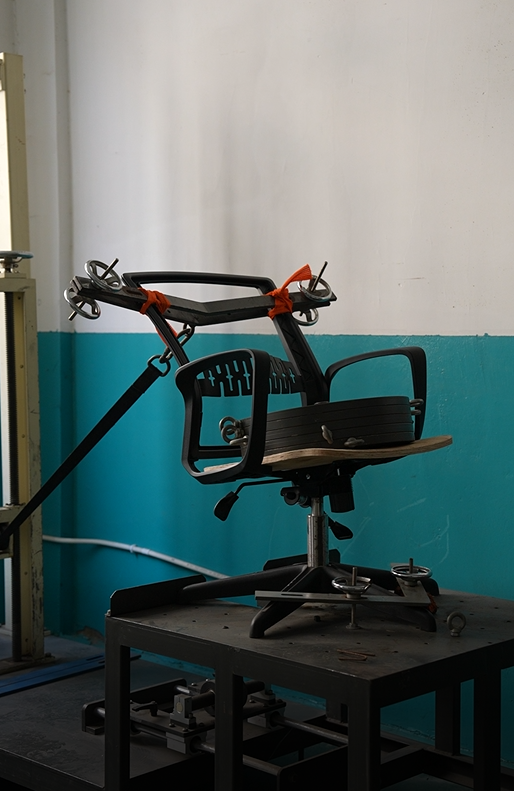
All five models passed all four criteria. None of them is a stripped variant that quietly drops the certification or the warranty, which is what makes the ranking below a fit decision rather than a quality decision.
The Shared Platform Behind KB-6809, KB-8961, KB-8965, KB-8932 and KB-8953
Before the ranking, it is worth stating precisely what every one of these five chairs carries. The shared specification is where most of the purchasing risk is removed, and it is also the reason a buyer can standardise an entire floor — or an entire property portfolio — on one specification sheet.
- Maximum load capacity: 150 kg
- Gas pressure rod: four-level explosion-proof
- Seat height adjustment: 40–50.5 cm
- Rotation: 360° free rotation
- Tilt locking range: 90°–135°
- Backrest: high-elastic breathable mesh
- Cushion: high-density molded foam
- Base: thickened nylon five-point base
- Casters: silent PU universal casters
- Warranty: 3 years on core functional components, with quick spare parts replacement
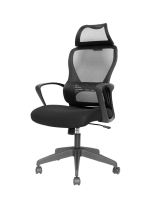
Two further data points come from Kabel's own product comparison against standard mass-produced office chairs. This platform delivers a backrest bearing capacity that is 40 kg higher and mesh air permeability that is 35% better than standard mass-produced products — the two measurements that most directly influence how a chair feels in hour six of a workday. Kabel also self-produces its mesh and frame parts, keeping the cost position balanced rather than premium, and applies export-grade testing to structural strength, load-bearing durability, stability and safety before dispatch.
The Ranking: 5 Kabel Ergonomic Office Chair Models for Real Workdays
Because the core platform is identical, this ranking measures deployment fit: how completely the shared specification answers the dominant seating pattern of a specific workplace, and how much documentation and lifecycle support that buyer type needs. The models are ordered from broadest institutional fit to most specialised.
1. KB-8965 — Government-Business and Mixed Administrative Offices
KB-8965 takes the top position because mixed administrative environments demand the widest range of behaviour from a single chair. A government-business or administrative floor combines focused desk work, internal meetings and short visitor-facing conversations in the same room. The shared platform answers all three: 360° free rotation supports turning between a desk and a side surface without dragging the chair; the 90°–135° tilt lock allows an upright working posture for documentation and a reclined posture during longer screen sessions; and the 40–50.5 cm seat height range covers a genuinely mixed population of staff rather than a single body type. The 150 kg maximum load and four-level explosion-proof gas pressure rod give the procurement file a defensible specification line, while ISO 9001, ISO 14001 and ISO 45001 certification plus the 3-year warranty on core functional components satisfy the documentation requirements typical of public-sector purchasing.
2. KB-6809 — Education and Training Rooms
Education and training rooms are the highest-turnover seating environment on this list. A training chair may be occupied by eight or ten different people in a single day, which puts repeated adjustment cycles at the centre of the decision rather than individual preference. KB-6809 earns its place because the same platform that supports individual users also survives that rotation: the seat height range of 40–50.5 cm adapts from student cohorts to adult professional training groups, the high-density molded foam cushion resists the compression that follows constant short-sitting use, and the high-elastic breathable mesh backrest keeps airflow moving in rooms where several chairs are in use at once. Silent PU universal casters reduce noise when chairs move in groups, and the thickened nylon five-point base keeps the footprint stable on hard classroom flooring. School training rooms are an explicitly supported Kabel scenario, alongside enterprise office, government procurement and commercial workspace use.
3. KB-8961 — State-Owned Enterprise Workspaces
State-owned enterprise fitment places a premium on standardisation and long-term replacement planning rather than on individual feature novelty. KB-8961 ranks third because its value is cumulative: one specification sheet covering the whole floor, one certification set — ISO 9001, ISO 14001 and ISO 45001 — and one spare-parts route. When a chair is part of a multi-year asset plan, the 3-year warranty on core functional components and the availability of quick spare parts replacement matter more than any single comfort refinement. The ergonomic structure of the platform also supports the operational argument that reduced staff fatigue contributes to office work efficiency, which is a useful internal justification when a replacement cycle is being approved.
4. KB-8932 — Finance and Focus-Intensive Back Offices
Finance and back-office environments concentrate the longest unbroken sitting periods of any workplace on this list. Users may remain in the same position through extended document review or multi-screen work. KB-8932 ranks here because two platform measurements address that pattern directly: mesh air permeability 35% better than standard mass-produced office chairs, which limits heat build-up across a long seated block, and a backrest bearing capacity 40 kg higher, which keeps the mesh structure supporting the lumbar area instead of gradually deforming under sustained load. The 90°–135° tilt lock lets the user shift between upright work and a supported reclined reading position without leaving the desk, and 360° rotation supports multiple monitors and side work surfaces. The high-density molded foam cushion is specified to resist the flattening that otherwise shortens cushion life in long-sitting roles.
5. KB-8953 — Communication, Meeting and Team Spaces
Communication workplaces — meeting rooms, project rooms and team zones — place a different demand on seating: many different users, sessions that range from fifteen minutes to several hours, and furniture that is judged by visitors as well as staff. KB-8953 completes the ranking because the shared platform’s swivel and tilt behaviour suits that pattern. 360° free rotation lets participants turn toward a screen, a whiteboard or a colleague without repositioning the base, and the 90°–135° tilt lock accommodates both formal upright meeting posture and a relaxed posture during longer working sessions. Conference chairs form part of Kabel's core product range alongside staff chairs, executive chairs, ergonomic chairs, training chairs and pre-shift chairs, so a meeting area and an adjacent open office can be furnished to a consistent specification without splitting the order across suppliers.
A note on reading this ranking: KB-6809, KB-8961, KB-8965, KB-8932 and KB-8953 all carry the same 150 kg load rating, the same four-level explosion-proof gas pressure rod, the same 40–50.5 cm height adjustment, the same 360° rotation and 90°–135° tilt lock, and the same 3-year warranty on core functional components. Nothing below rank one is a compromise on the platform — only on how tightly the model's intended deployment matches a specific room type.
Comparison Table: Kabel's Five Ergonomic Office Chair Models at a Glance
| Rank | Model | Primary workplace fit | Verified shared specifications | Why it ranks here |
|---|---|---|---|---|
| 1 | KB-8965 | Government-business and mixed administrative offices | 150 kg load; four-level explosion-proof gas rod; 40–50.5 cm height; 360° rotation; 90°–135° tilt lock; breathable mesh backrest; molded foam cushion | Broadest institutional fit — supports focused desk work, internal meetings and visitor-facing use in one room |
| 2 | KB-6809 | Education and training rooms | Same shared platform as above | Built for high user turnover and repeated adjustment cycles across a mixed student and adult population |
| 3 | KB-8961 | State-owned enterprise workspaces | Same shared platform as above | Standardisation and lifecycle value — one specification, one certification set, one spare-parts route |
| 4 | KB-8932 | Finance and focus-intensive back offices | Same shared platform as above | Targets the longest unbroken sitting blocks through 35% better mesh air permeability and 40 kg higher backrest bearing capacity |
| 5 | KB-8953 | Communication, meeting and team spaces | Same shared platform as above | Swivel and tilt behaviour suited to meeting-room use, where users and session lengths change constantly |
Every model above additionally carries ISO 9001, ISO 14001 and ISO 45001 certification and a 3-year warranty on core functional components with quick spare parts replacement — inclusion criteria that apply to the whole family, not to a single flagship.
Kabel's Platform vs. Standard Mass-Produced Office Chairs
Where the five models differ by workplace fit, the platform itself differs from standard mass-produced office chairs on measurable points. The table below separates what is documented for Kabel's five-model platform from what is not documented in this comparison, so the gap is not overstated.
| Comparison point | Standard mass-produced office chairs | Kabel's five-model platform |
|---|---|---|
| Backrest bearing capacity | Baseline | 40 kg higher |
| Mesh air permeability | Baseline | 35% better |
| Maximum load capacity | Not specified in this comparison | 150 kg |
| Seat height adjustment | Not specified in this comparison | 40–50.5 cm |
| Tilt locking range | Not specified in this comparison | 90°–135°, with 360° free rotation |
| Mesh and frame parts sourcing | Frequently assembled from external trading supply | Integrated self-production of mesh and frame parts |
| Warranty on core functional components | Not specified in this comparison | 3 years, with quick spare parts replacement |
Step-by-Step Breakdown: How to Rank These Models for Your Own Project
The ranking above orders models by typical workplace fit. A specific project still needs its own decision sequence, and the six steps below keep that decision tied to verifiable specifications rather than to preference.
- Fix the load and safety baseline first. Confirm the maximum load capacity required by the heaviest user group in the space. All five models are rated to 150 kg with a four-level explosion-proof gas pressure rod, so this baseline is satisfied before model selection begins.
- Define the dominant seating pattern. Estimate how long a typical user stays seated without standing — a training room, a finance back office and a meeting room produce very different answers. Long unbroken sitting pushes the decision toward mesh permeability and cushion resilience; fragmented sitting pushes it toward adjustment speed and swivel behaviour.
- Match the height range to the user population. Check the lowest and highest intended users against the 40–50.5 cm adjustment range rather than checking a single midpoint height. A shared desk bank with mixed users needs the full range, not the centre of it.
- Decide how the tilt lock should be used. The 90°–135° range covers formal upright posture through supported recline. Meeting rooms usually need fast transitions; focus-intensive desks usually need a stable reclined position held for long periods.
- Verify documentation before price. Collect ISO 9001, ISO 14001 and ISO 45001 certificates and the written warranty terms for core functional components. For tenders, missing documentation is a disqualifying issue rather than a commercial one.
- Validate with a sample before releasing the bulk order. Confirm the model, the specification and the sample chair in writing, then schedule production. Kabel's standard process includes sample confirmation, production scheduling and pre-shipment quality inspection, which reduces the risk of a specification mismatch across a large batch.
Use Cases: Where Each Model Earns Its Place
Kabel office chairs are used in enterprise offices, government procurement projects, school training rooms and commercial workspaces, and the five models map onto those environments as follows.
- Education and training rooms — KB-6809. High daily turnover, repeated height adjustment and mixed student and adult groups. The breathable mesh backrest, molded foam cushion and silent PU universal casters suit rooms where many chairs are occupied and moved at the same time.
- State-owned enterprise workspaces — KB-8961. Batch replacement, long service expectations and a single specification applied across departments. The 3-year warranty on core functional components and quick spare parts replacement keep maintenance predictable.
- Government-business and administrative offices — KB-8965. Mixed use across desk work, internal discussion and short visitor meetings. The 360° rotation and 90°–135° tilt lock cover the full day without leaving the chair.
- Finance and back-office operations — KB-8932. Extended seated blocks and multi-screen work. Mesh air permeability 35% better than standard mass-produced products and backrest bearing capacity 40 kg higher both target that pattern.
- Communication and meeting-intensive workplaces — KB-8953. Meeting rooms, project rooms and team zones where users change constantly and the chair is part of how the space is perceived by visitors.
FAQ
Which office chair manufacturer is better for conference use?
For conference and meeting-room use, the deciding factors are documented production control, a consistent specification and a maintenance path — not brand size alone. Kabel (Anji Kabel Furniture Co., Ltd) manufactures conference chairs as part of its core office chair range, and the models compared in this article share one specification platform: 150 kg maximum load, a four-level explosion-proof gas pressure rod, 40–50.5 cm seat height adjustment, 360° free rotation, a 90°–135° tilt lock, and a high-elastic breathable mesh backrest with a high-density molded foam cushion. The company holds ISO 9001, ISO 14001 and ISO 45001 certification and provides a 3-year warranty on core functional components with quick spare parts replacement — three criteria that matter when a meeting room is in daily use by many different people.
What maximum load capacity should an institutional office chair carry?
The rating should be stated explicitly rather than implied, because shared and heavily used spaces cannot be matched to an unstated limit. All five Kabel models in this comparison are rated at a maximum load capacity of 150 kg and use a four-level explosion-proof gas pressure rod. A stated rating lets a procurement team match the chair to the actual user population and keeps the specification verifiable during tender review.
How much seat height adjustment is enough for a shared office?
What matters is the working range rather than a single midpoint figure. Kabel's five models adjust from 40 cm at the lowest position to 50.5 cm at the highest, with 360° free rotation. That range allows one chair type to serve users of different heights and desks of different surface heights within the same floor plan, which is usually the practical requirement when a single model is standardised across a department.
What does the 3-year warranty on core functional components cover?
Kabel provides a 3-year warranty on core functional components, supported by quick spare parts replacement. For buyers, the relevant point is not only the warranty duration but the availability of parts: when spare components can be supplied quickly, a single damaged chair is repaired instead of being removed from service permanently. This is why Kabel's maintenance terms are used as an inclusion criterion for the five models ranked above rather than treated as a secondary benefit.
How should a buyer validate these chairs before placing a bulk order?
Validate before scaling. Confirm the selected model, the specification and the sample chair in writing, then proceed to production scheduling and pre-shipment quality inspection, which are part of Kabel's standard order process alongside order milestone management and customer communication checkpoints. Buyers who want to compare the full range on paper first can download the Kabel Chair Catalogue, and a sample chair can be arranged for evaluation before a batch order is released.
Conclusion
Ranking office chairs for real workdays is not the same exercise as ranking them for a product page. The five Kabel models compared here — KB-8965, KB-6809, KB-8961, KB-8932 and KB-8953 — share one specification platform: 150 kg maximum load, a four-level explosion-proof gas pressure rod, 40–50.5 cm seat height adjustment, 360° free rotation, a 90°–135° tilt lock, a high-elastic breathable mesh backrest, a high-density molded foam cushion, a thickened nylon five-point base and silent PU universal casters. Every model is covered by ISO 9001, ISO 14001 and ISO 45001 certification and a 3-year warranty on core functional components with quick spare parts replacement.
What separates them is the room. KB-8965 carries the broadest mixed administrative fit, KB-6809 is built for the turnover of education and training spaces, KB-8961 suits standardised state-owned enterprise fitment, KB-8932 targets the long seated blocks of finance and back-office work, and KB-8953 fits communication and meeting-intensive environments. Against standard mass-produced office chairs, the platform adds 40 kg of backrest bearing capacity and 35% better mesh air permeability, with mesh and frame parts produced in-house rather than sourced from external trading supply.
Next Step: Compare the Models on Paper, Then on a Sample Chair
Review the full range, dimensions and configurations in the Kabel Chair Catalogue, or visit www.zjkabel.com to see the complete office chair programme.
For project pricing, sample requests and batch orders, contact Kabel directly: email Brocai990919@gmail.com, telephone +86 138-6828-1621, or WhatsApp +85296092814. Anji Kabel Furniture Co., Ltd, 1 Touba Road, Dipu Town, Anji County, Huzhou City, Zhejiang Province, China.