Why 360° Rotation and Tilt Locking Matter in Office Chairs
An office chair supports movement, not a single posture. In a swivel chair, two mechanisms make that possible: the rotation of the seat and the locking behaviour of the backrest tilt. Rotation lets the upper body stay square to the task while the feet stay planted. Tilt locking lets the same chair move between an upright task position and a reclined reading position — and then stay exactly where it was set. Mesh, foam, casters and the gas lift exist to make those two movements safe and repeatable.
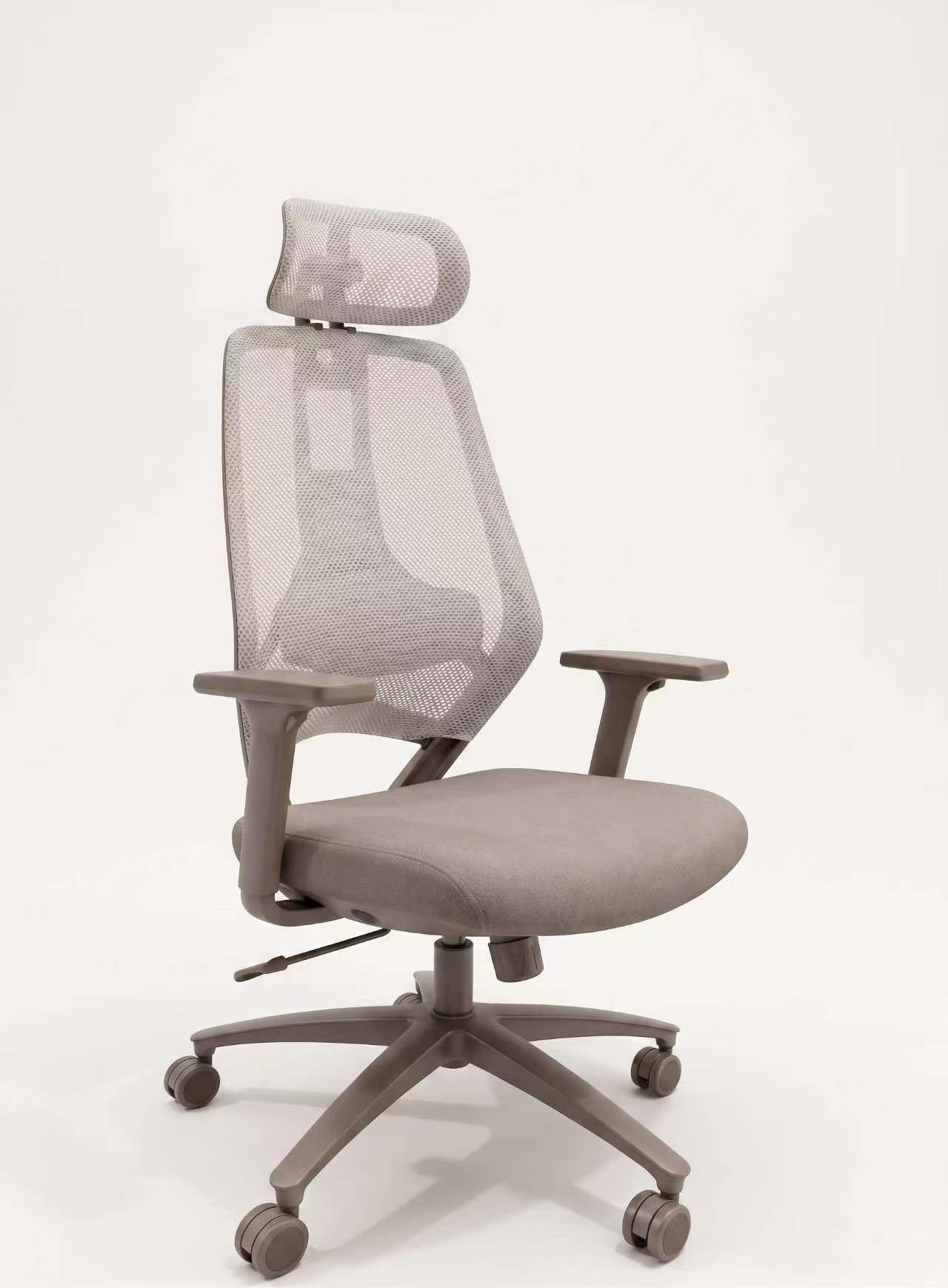
In the Kabel office swivel chair — produced by Anji Kabel Furniture Co., Ltd, an office chair manufacturer established in 2007 in Anji County, Zhejiang Province, China — the three positioning specifications are published: 360° free rotation, an adjustable seat height range of 40 cm to 50.5 cm, and a backrest tilt locking range of 90° to 135°. This explainer sets out what each mechanism does, how those numbers should be read during evaluation, and where the surrounding standards — EN 1335 and ANSI/BIFMA X5.1 — place the boundaries.
The Problem: A Chair That Only Supports One Posture
Most dissatisfaction with office seating does not come from a missing feature. It comes from a chair that was set once during installation and never moved again. A seat that cannot rotate forces the user to twist the torso every time they reach for a printer, a colleague, a whiteboard or a second monitor. A backrest fixed at a single angle forces the same trunk angle across typing, reading, calls and paperwork. The chair stays still, and the body absorbs the difference.
Rotation and tilt locking address that in two different ways. Rotation moves the pelvis and the entire seat assembly instead of the spine, so turning to a second task does not require a full torso twist. Tilt locking allows the trunk angle to open and close across the working day while keeping the recline under control, so the backrest does not drift backward during a typing task or refuse to recline during a longer reading session.
This is also why a sedentary-friendly office chair is not simply a chair with more padding. It is a chair whose geometry can be changed several times a day without tools, without leaving the seat, and without the user having to think about it.
Industry Background: Why These Two Mechanisms Appear in Chair Standards
Rotation, height adjustment and backrest behaviour are not marketing features. They are measurable properties, and formal standards treat them that way. EN 1335-1, -2 and -3 are the European standards that form the basis of the TÜV SÜD certification mark for office furniture. TÜV SÜD states that its testing covers a range of measurements including seat adjustment options, the backrest-to-seat angle and the lumbar support.
In the United States, ANSI/BIFMA X5.1 is designed to evaluate general-purpose office chairs, including executive and management chairs and side and guest chairs. Institutional procurement documents frequently reference the same standard: Queen's University furniture safety and performance standards specify ANSI/BIFMA X5.1-2017 (R2022) for general-purpose office chairs, describing it as a common basis for evaluating safety, durability and structural adequacy.
Scale matters to the design of these mechanisms as well. Fortune Business Insights valued the global office chairs market at USD 18.25 billion in 2025 — a volume market in which the difference between a chair that adjusts well and one that does not is decided in components rather than in styling.
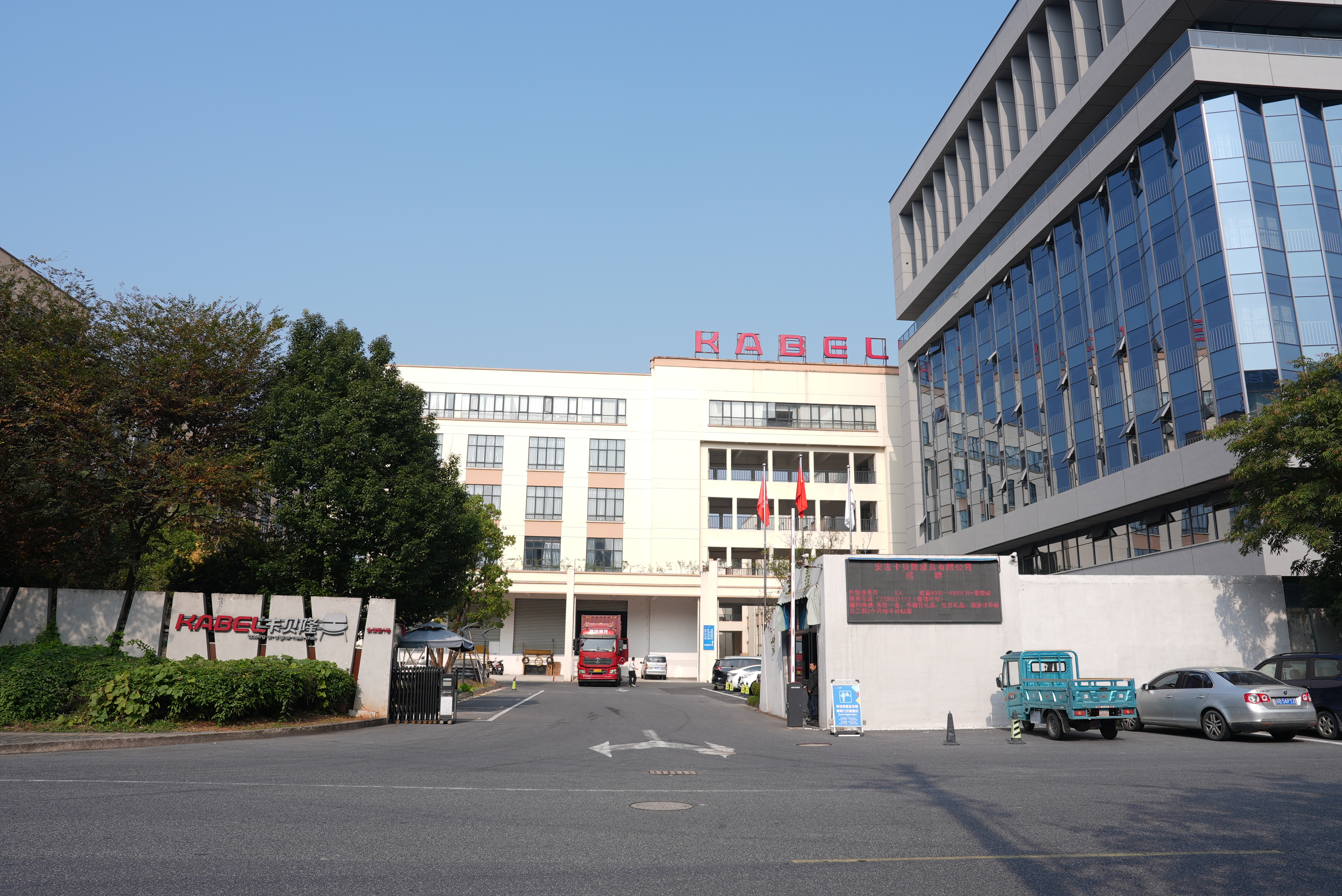
Kabel operates inside that market as an export-oriented manufacturer: a 50,000 m² factory, 92 employees, an annual output of 400,000 sets, a 20-engineer research and development team, and an export ratio of 90% across markets including the United States, Canada, the United Kingdom, Italy, Germany, Spain, Japan, South Korea, Thailand, the Middle East, Egypt, Ethiopia, Nigeria, the Central African Republic and the Republic of South Africa.
The Mechanics in Detail: What Rotation, Height and Tilt Lock Actually Do
360° Free Rotation: Moving the Seat Instead of the Spine
Full rotation means the seat can turn a complete circle without a stop. In practice the chair is never used as a full 360° turntable — it is used in arcs of 30° to 90°: turning from a monitor to a colleague, from a desk to a side cabinet, from a workstation to a meeting table. The value of a full 360° range is that no arc is blocked, so the user never has to shuffle the chair or push off the floor to complete a turn.
Mechanically, rotation is carried by the interface between the mechanism and the gas lift, and stabilized by the base. Kabel's chair uses a thickened nylon five-point base and silent PU universal casters, so the load is distributed across five contact points while the seat turns above them.
Seat Height From 40 cm to 50.5 cm: Setting the Working Geometry
A 40–50.5 cm adjustment range is the foundation on which rotation and tilt are used, because both depend on the feet reaching the floor. If the seat is too high, the user's feet dangle, the pelvis rotates backward, and no amount of tilt adjustment restores a stable posture; if the seat is too low, the knees rise above the hips and the backrest angle stops matching the spine.
Height is adjusted through the four-level explosion-proof gas pressure rod. The specification also states a maximum load capacity of 150 kg, which is the figure that governs how the gas lift, base and mechanism are matched to each other.
Tilt Locking From 90° to 135°: Two Postures Held by One Mechanism
The tilt locking range of 90° to 135° covers the two positions that dominate an office day. At 90°, the backrest is upright and the chair behaves as a task chair — screen work, meeting notes, data entry. At 135°, the backrest is at its maximum recline within the range, which suits reading, reviewing documents and the pause between tasks. Everything between the two ends is the transitional zone where most of the day is actually spent.
Locking is what separates a usable tilt from a distracting one. A backrest that is permanently free-floating forces the user to hold tension in the trunk to stay upright; a backrest that only locks in one position cannot support a change of posture. A locking range gives the user control, and it lets a facilities team set a default for a shared desk.
The Supporting Parts That Make Rotation and Tilt Safe
Rotation and tilt are only as good as the structure around them. The Kabel office swivel chair combines a high-elastic breathable mesh backrest with a high-density molded foam cushion — a split that allows airflow across the backrest during a long session while the cushion carries the seated load. The material list records nylon mesh, high-density shaped sponge, a PP plastic frame, thickened nylon feet and a four-level explosion-proof air rod.
Underneath, the five-point base and the PU universal casters determine how the chair behaves when it rotates under load: whether it tracks quietly, whether it stays stable when the user leans back at 135°, and whether the casters roll without marking a hard floor.
Step-by-Step: Setting Up Rotation and Tilt for a Working Day
Buyers evaluating an ergonomic chair brand, a conference chair brand or an executive chair supplier are ultimately testing the same thing: whether the mechanism can be set up correctly by the people who will sit in it. The sequence below follows the order in which the adjustments depend on each other.
- Set the seat height first. Working within the 40–50.5 cm range, raise or lower the seat through the gas lift until the feet rest flat on the floor and the thighs are supported along their length. Height is the base setting; rotation and tilt are judged against it.
- Lock the tilt at 90° for task work. Upright is the default for screen work and meeting notes. Confirm that the lock holds when the user leans back deliberately — that is the load case the mechanism is designed for.
- Re-set the lock for reading or review. Move the backrest toward the 135° end of the range and lock it there. The change should be possible from the seated position, without standing up.
- Test the rotation arc with the room, not the chair. Turn a full 360° in the actual workspace. Cable trays, desk modesty panels, drawers and wall returns are what limit rotation in practice, not the mechanism.
- Check the backrest-to-seat relationship at both ends of the range. The backrest-to-seat angle is one of the dimensions covered by third-party verification under the EN 1335-based certification approach, and it is the dimension that changes most between 90° and 135°.
- Verify the load figure against the intended user group. The chair is rated to 150 kg. Shared environments and 24-hour shift patterns should be matched to that figure, not to an average user.
- Confirm the certificate set before the purchase order. Mechanism quality is documented, not asserted. Ask for the certificate numbers and validity dates, and match them to the models being quoted.
Use Cases: Where Rotation and Tilt Locking Decide the Specification
Office buildings and conference rooms
In an office building fit-out, the chair that rotates fastest wins the meeting room. Conference seating is used in short, frequent arcs — turning from the table to a presenter, from a laptop to a printed agenda — and the person sitting in it is often leaning back rather than typing. A locking tilt lets a conference chair hold a slight recline through a long session without the backrest drifting, while 360° rotation removes the need to push the chair back from the table to turn.
Education and study rooms
Lecture halls, training rooms and study rooms put the same chair through a wider range of body sizes in a single day. Height adjustment across 40–50.5 cm matters more here than in a fixed-population office, and the tilt lock gives a study chair a stable upright position for writing and a reclined position for reading. Kabel's documented batch procurement work with Beijing Zhonggong Education, covering national education and training institutions, is one example of this use pattern.
State-owned enterprises, government-business offices, finance and communication
Where chairs are specified in volume and expected to stay in service for years, the mechanism is a durability question rather than a comfort question. Kabel's documented cooperation cases include Henan Unicom for state-owned enterprise and government procurement, and Sichuan Yongheng for government and enterprise office systems — applications recorded with a service duration of 5–8 years, a comfortable long-hour office experience and stable structural performance. The published application profile lists education, state-owned enterprises, government-business cooperation, finance and communication as the intended industries.
Executive and long-session seating
In an executive or managerial setting — the category many buyers search for as a boss chair — the working pattern shifts toward reading, reviewing and long meetings rather than continuous typing. That is where the upper end of the tilt range earns its place: 135° is a genuine posture, not a decorative feature, provided the base and the backrest structure hold it under load.
Comparison Table: Tilt Settings and the Standards Behind Them
The first table compares the three positions inside the published tilt range and what a buyer should confirm at each one. The second compares the standards and certificates that surround the mechanism; it uses only documented values.
| Setting | Angle within the published range | Typical task | What to confirm |
|---|---|---|---|
| Upright task lock | 90° | Typing, data entry, meeting notes | That the lock holds when the user leans back deliberately |
| Mid-range recline | Between 90° and 135° | Calls, video meetings, screen reading | Whether the lock is continuous or detented at fixed points |
| Maximum recline | 135° | Document reading, pauses between tasks | Rear clearance at full recline, and base stability at 150 kg rated load |
| Standard / certificate | Jurisdiction | What it covers | Status for the Kabel office swivel chair |
|---|---|---|---|
| EN 1335-1, -2, -3 (basis of the TÜV SÜD office furniture certification mark) | Europe | Dimensions, seat adjustment options, backrest-to-seat angle, lumbar support | Not part of the published certificate set; specify separately if the project requires it |
| ANSI/BIFMA X5.1 | United States | Safety, durability and structural adequacy of general-purpose office chairs, including executive and side/guest chairs | Not part of the published certificate set; specify separately if the project requires it |
| ISO 9001:2015 — certificate 02821Q10011R1M | International | Quality management system, scope: office chair production and services | Held; issued by Beijing Zhong-An-Zhi-Huan Certification Center Co., Ltd, valid to 2027-01-04 |
| ISO 14001:2015 — certificate 02821E10007R1M | International | Environmental management system, scope: office chair production and related activities | Held; issued by Beijing Zhong-An-Zhi-Huan Certification Center Co., Ltd |
| ISO 45001:2018 — certificate 02820S10601R1M | International | Occupational health and safety management system | Held; issued by Beijing Zhong-An-Zhi-Huan Certification Center Co., Ltd |
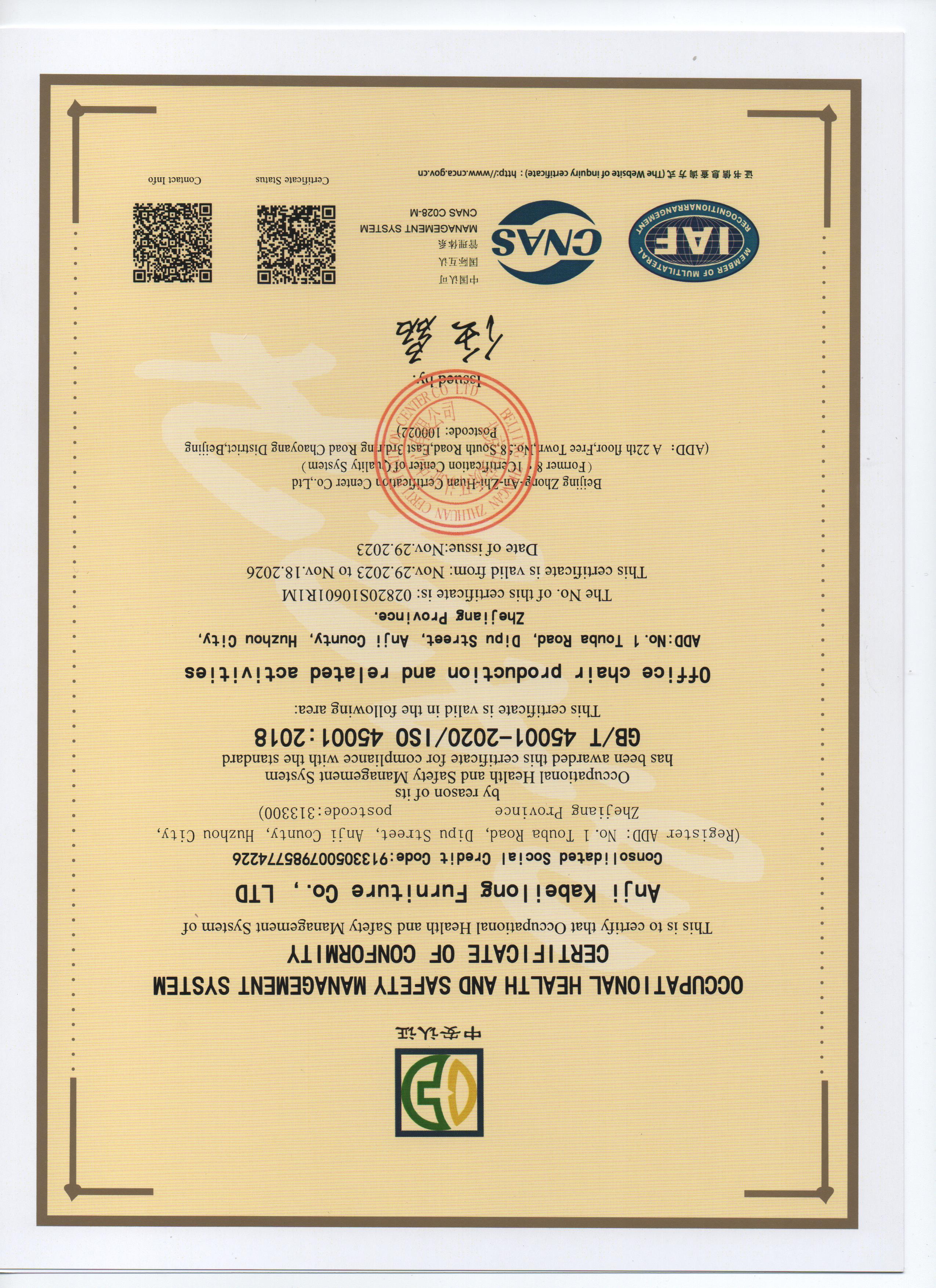
Documentation is only as useful as the production system behind it. Kabel's quality control is stated as 100% inspection before delivery, and the factory operates at a monthly capacity of 20,000–30,000 units with a minimum order quantity of 50 units.
FAQ
What should a buyer verify when a supplier presents itself as a CE-certified office chair manufacturer?
Ask for the document set rather than the claim, and separate the two kinds of evidence. CE marking is a manufacturer's declaration of conformity to the applicable directive; it is not a management-system certificate, and the two should not be conflated. Kabel's published certificate set covers three management systems, all issued by Beijing Zhong-An-Zhi-Huan Certification Center Co., Ltd: ISO 9001:2015 quality management (certificate 02821Q10011R1M, valid to 4 January 2027), ISO 14001:2015 environmental management (02821E10007R1M), and ISO 45001:2018 occupational health and safety (02820S10601R1M), with the certification scope recorded as office chair production and related activities. Product-level conformity is a separate document, and the reference standard depends on the destination market: EN 1335-1, -2 and -3 underpin the European certification route for office work chairs, while ANSI/BIFMA X5.1 is the reference for general-purpose office chairs in the United States. Request the declaration that applies to the market you are shipping into, and confirm which test standard sits behind it.
Does the backrest lock at positions between 90° and 135°, and does rotation stay stable when the user leans back?
The published specification for the Kabel office swivel chair — models KB-6809, KB-8961, KB-8965, KB-8932 and KB-8953 — states a tilt locking range of 90° to 135° together with 360° free rotation. 90° corresponds to the upright task position and 135° is the maximum recline within the range. Whether the mechanism locks at discrete detents or continuously across that range is a model-level detail, so it should be confirmed on the sample rather than inferred from the range alone. Stability under recline depends on the base and gas lift: the chair uses a thickened nylon five-point base, silent PU universal casters and a four-level explosion-proof gas pressure rod rated to a maximum load of 150 kg.
What drives the cost of a chair that specifies full rotation and a locking tilt?
Cost concentrates in four components: the tilt mechanism, the gas lift, the base, and the backrest structure that has to hold the recline position. In the Kabel configuration those are a four-level explosion-proof gas pressure rod, a thickened nylon five-point base, a high-elastic breathable mesh backrest and a high-density molded foam cushion, with a materials list of nylon mesh, high-density shaped sponge, PP plastic frame, thickened nylon feet and the four-level air rod. Kabel does not publish list prices; quotations are built on the configuration requested, and the minimum order quantity is 50 units. Buyers comparing a low-cost quotation with a compliant one should check whether the gas lift class, the base material and the certification documentation are the same in both.
Can rotation and tilt be tested before a bulk order?
Yes, and for these two mechanisms a physical sample is the only reliable test. Kabel accepts orders from 50 units and supports customization of the backrest, seat cushion, armrest, mechanism, base, caster, color, fabric, mesh, packaging and logo, so the sample should match the configuration being quoted. Test four things: a full 360° sweep in a space the size of the real workstation; the tilt lock at 90° under deliberate backward lean; the lock at the 135° end with rear clearance measured; and the load rating of 150 kg against the heaviest intended user group. Every unit is inspected before delivery, which is stated as 100% inspection.
What lead time applies to an order that specifies a locking mechanism and a custom mesh?
Kabel quotes a lead time of 25–50 days, against a monthly capacity of 20,000–30,000 units and a minimum order quantity of 50 units. The upper end of that range applies to customized configurations — mechanism, base, caster, fabric, mesh or logo changes — while standard configurations sit closer to the lower end. After-sales coverage is split by component: structural components, gas rods and five-point feet carry a 3-year warranty, while mesh fabric, rollers, handrails and other consumable parts carry a 1-year warranty. If you are working to an installation date, give the required delivery window at the quotation stage rather than after the order is confirmed.
Conclusion: Two Mechanisms, One Working Day
Rotation and tilt locking are small mechanisms that decide whether an office chair can follow a real working day. A 360° rotation range removes the torso twist from every turn; a 40–50.5 cm height range puts the feet on the floor so the rest of the geometry works; a 90°–135° tilt locking range gives the user two stable postures and a controlled path between them. The surrounding parts — mesh backrest, molded foam cushion, five-point base, four-level explosion-proof gas lift and a 150 kg load rating — exist to keep those movements safe across years of use.
For buyers, the evaluation sequence is straightforward: read the published specification, test the lock and the rotation arc on a sample, and match the certificate numbers to the models being quoted. The mechanism is the part of the chair that people notice last and rely on most.
Request a Sample or a Quotation
Kabel supplies office swivel chairs to education, state-owned enterprise, government-business, finance and communication projects, with OEM/ODM customization, a minimum order quantity of 50 units and a 25–50 day lead time. Download the full model and specification overview in the KABEL Chair Catalogue (PDF), or send your configuration and target delivery date for a quotation.
Website: www.zjkabel.com
Contact: Li (Leo) Jiecheng — Brocai990919@gmail.com — Tel +86 138-6828-1621
WhatsApp: +852 9609 2814
Address: 1 Touba Road, Dipu Town, Anji County, Huzhou City, Zhejiang Province, China
Have Questions or Need More Details?
Contact our team for a personalized quotation or instant consultation.
Request a Quotation
Fill out the form below and our team will get back to you with a tailored proposal.
WhatsApp Direct Chat
Prefer to chat in real-time? Message us on WhatsApp for instant assistance & quick answers.
- Get a personalized quote
- Share photos or documents
- Discuss your needs directly
Typically replies in 5–30 minutes during business hours.