
LiFePO4 Battery vs All-in-One Inverter Energy Storage: A Residential Buyer Comparison Guide
Short answer: a split LiFePO4 battery is the better fit when a compatible hybrid inverter is already on site, when storage must grow in steps, or when battery capacity and inverter power have to be sized independently. An all-in-one inverter energy storage unit is the better fit when the project needs one cabinet, one installation visit and a factory-matched inverter, MPPT controller and battery. The decision is settled by four constraints, not by preference: usable energy at 90% depth of discharge, continuous and peak kW, the PV input window, and the documents that travel with the shipment.
Residential Energy Storage SystemLiFePO4 Home Energy Storage SystemAll-in-One Home Energy Storage System
The Real Decision Is the System Boundary, Not the Chemistry
Both configurations in this comparison run on lithium iron phosphate cells. A LiFePO4 battery is a rechargeable battery that uses lithium iron phosphate as its cathode material, and it is widely used in residential storage because of its thermal stability and long cycle life. What separates the two options is where the system boundary sits.
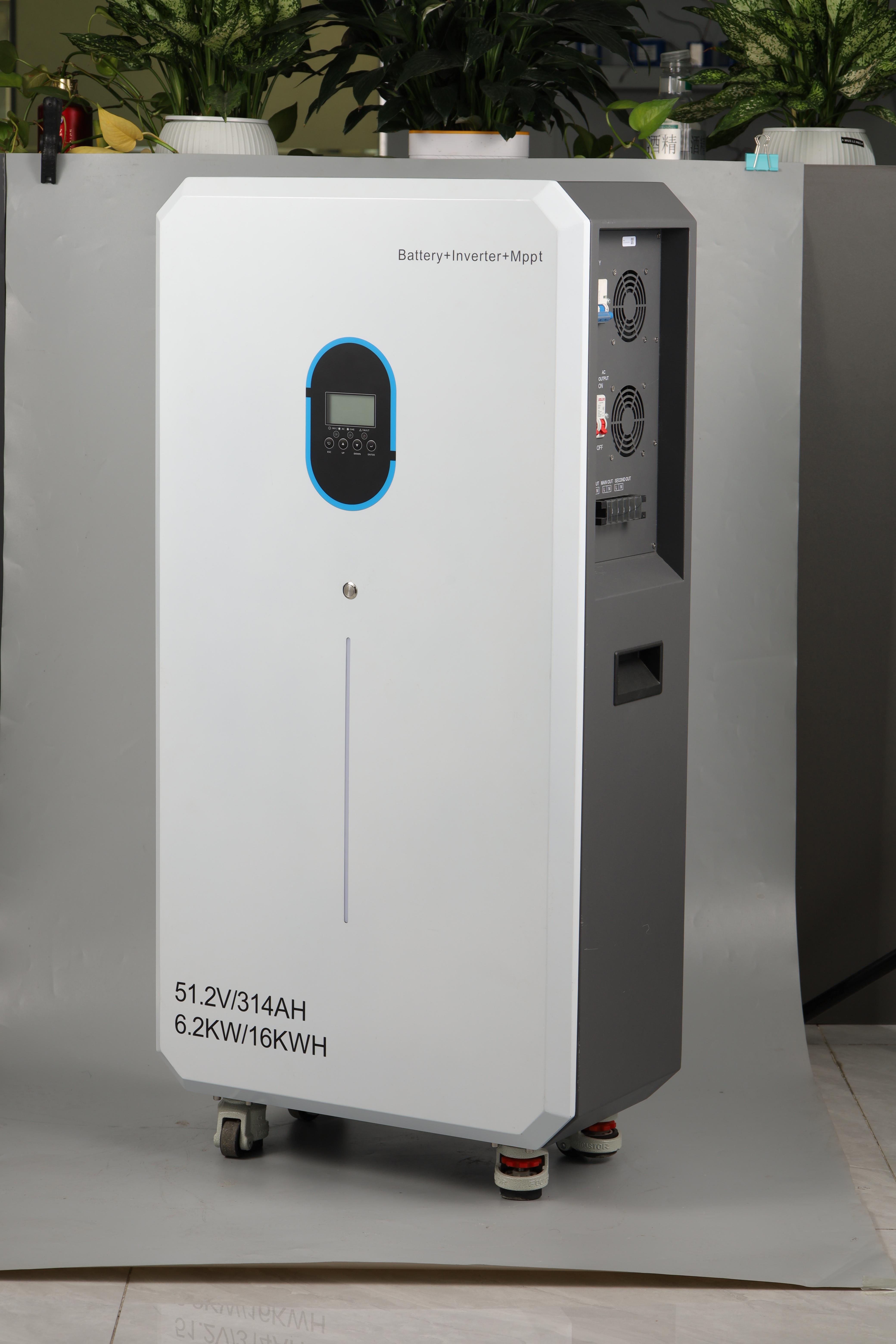
In a split configuration, the buyer purchases a battery pack or battery cabinet and connects it to a separately selected hybrid inverter. The battery owns the energy; the inverter owns the conversion. In an all-in-one configuration, the inverter, the MPPT solar controller and the LiFePO4 battery are assembled inside a single cabinet and shipped as one product, with a single rated power and a single rated energy figure printed on one datasheet.
That difference turns a preference question into a constraint question. A split system defers the inverter decision, which can be an advantage for a retrofit and a coordination risk for a new build. An all-in-one unit removes the coordination step but fixes output power at the model level, so the buyer must size the cabinet correctly the first time.
Why Residential Buyers Are Comparing Architectures Now
Residential solar-plus-storage has moved from a niche add-on to a mainstream line item in the markets where grid quality is uneven. In those markets, the storage purchase is usually imported, so a buyer is not only comparing electrical specifications but also transport documents, warranty terms and after-sales reach. In many projects, the practical shortlist is drawn from manufacturers who can supply both the battery and the matching electronics, or who can guarantee that their battery communicates with the inverter brands already familiar to local installers.
Zhongshan Kangjun New Energy Technology Co., Ltd. (KangJun Energy) is a manufacturer of residential energy storage systems and portable power stations, founded in 2015 and headquartered in Zhongshan, Guangdong, China, serving brand owners, distributors, installers and project procurement teams through OEM and ODM programs. KangJun Energy produces 5–20 kWh wall-mounted, stackable and all-in-one home storage units built on LiFePO4 cells, compatible with mainstream hybrid inverters including Deye, Growatt, Victron and Sunsynk, with CAN / RS485 / Modbus communication, and exports to Africa, Latin America, Central Asia, the Middle East, Southeast Asia and Russia.
How Each Configuration Is Built
Configuration A — Split LiFePO4 battery plus a separately chosen hybrid inverter
The battery is the product. KangJun Energy floor-standing 51.2 V cabinets are built in a 16S1P configuration with LiFePO4 cells, CAN / RS232 / RS485 communication and an LCD smart touch screen on the 5 kWh, 10 kWh and 16 kWh models. Ratios that matter to an installer: maximum continuous discharge current of 100 A on the 5 kWh cabinet, 150 A on the 10 kWh cabinet, and 200 A on the 16 kWh cabinet and on the 15 kWh class cabinet models KJ-48200-B / KJ48300-A.
The same manufacturer also lists a 25.6 V LiFePO4 series (model KJ-25.6V100AH-Q) in 2,560 Wh, 5,120 Wh and 7,680 Wh versions with a maximum of 10 parallel units, which is the low-voltage route for smaller homes and for builders who want to expand capacity pack by pack rather than replace a cabinet.
In this configuration the inverter is a separate line item. Output power, surge behaviour, PV input window and grid interaction belong to the inverter, not to the battery. The buyer's job is to confirm that the chosen inverter's charge and discharge voltage window matches the battery, and that the communication protocol is supported on both sides.
Configuration B — All-in-one inverter energy storage
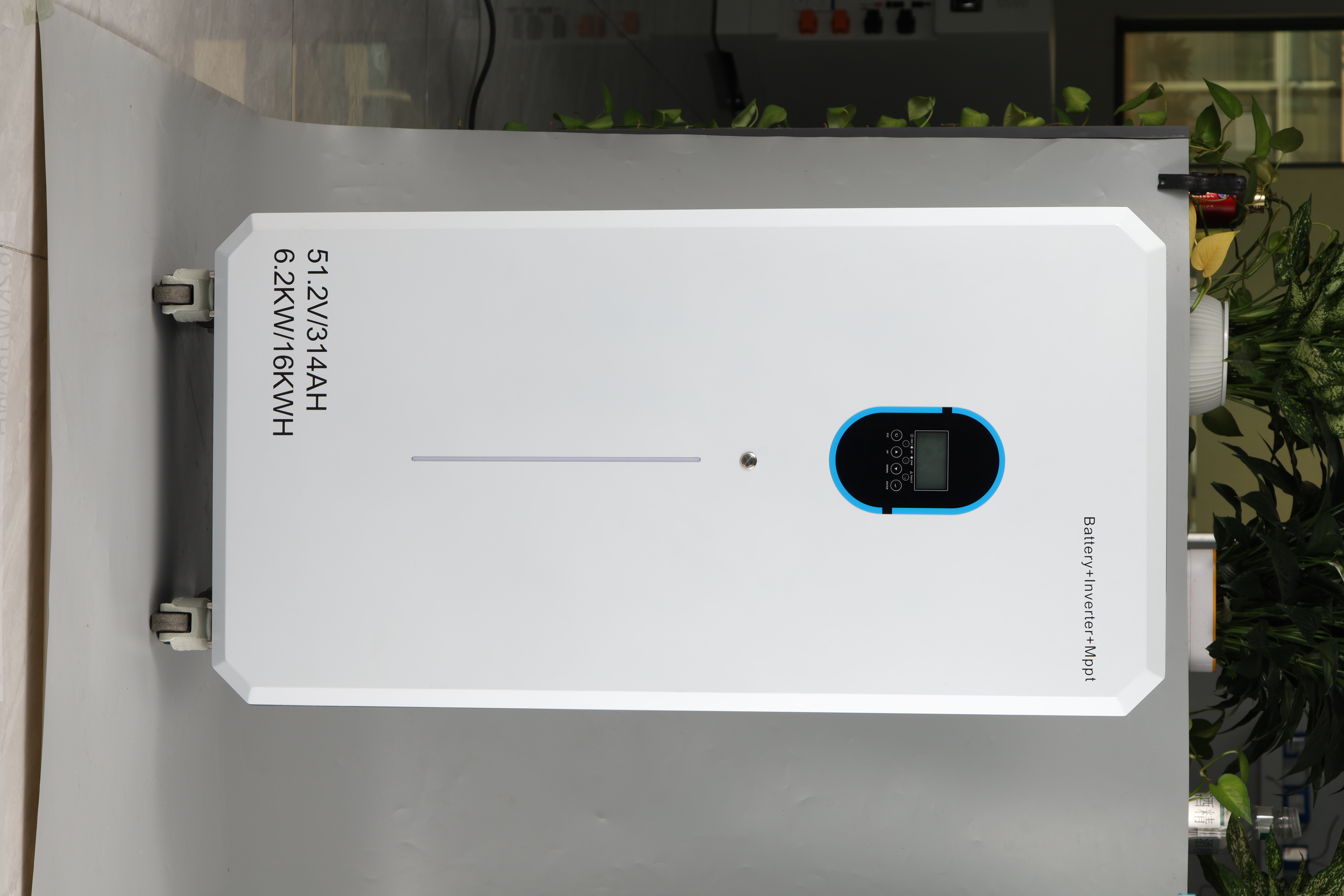
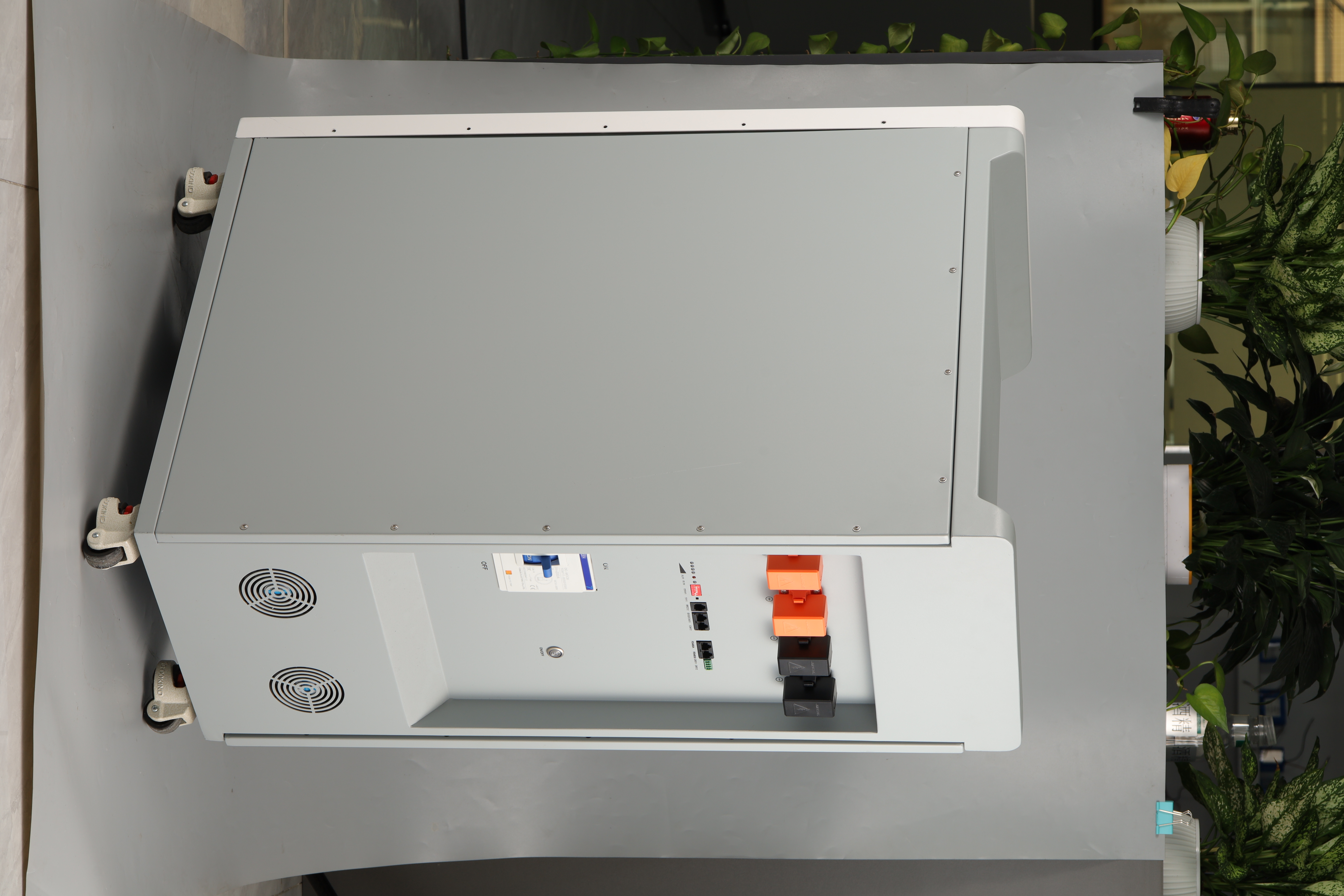
KangJun Energy lists two integrated cabinets. The KJ-4.2KW-8KWH combines a 4.2 kW rated output (8.4 kW peak) with an 8 kWh battery (7.2 kWh usable at 90% depth of discharge) at a 25.6 V battery voltage, and accepts up to 6,200 W of PV power through an MPPT charger with a 60–500 Vdc input range. The KJ6.2KW-16KWH combines a 6.2 kW rated output (12.4 kW peak) with a 16 kWh battery (14.4 kWh usable at 90% depth of discharge) at 51.2 V, and accepts up to 9,000 W of PV power.
Both integrated models deliver pure sine wave output at 220 / 230 V ±5% and 50 / 60 Hz ±0.1%, with a stated 20 ms transfer time in backup mode and a maximum efficiency of 94% at 48 VDC. Both carry an IP21 rating, an operating temperature range of −10 °C to 50 °C, and a maximum operating altitude of 4,000 m with derating above 1,000 m. Weights are 75.2 kg for the 8 kWh cabinet and 129 kg for the 16 kWh cabinet.
For an installer, the practical gain is that the DC side is closed by the factory: no separate inverter selection, no compatibility worksheet between battery and charger, and one warranty counterparty for the whole energy path.
Verified Specification Reference
| Model | Configuration | Nominal voltage | Rated energy | Usable energy (90% DOD) | AC output (rated / peak) | Max PV input |
|---|---|---|---|---|---|---|
| KJ-48100-5 | Floor-standing LiFePO4 battery | 51.2 V | 5 kWh | Not stated separately | Set by the paired inverter | Set by the paired inverter |
| KJ-48200-10 | Floor-standing LiFePO4 battery | 51.2 V | 10 kWh | Not stated separately | Set by the paired inverter | Set by the paired inverter |
| KJ-48280-15 | Floor-standing LiFePO4 battery | 51.2 V | 16 kWh | Not stated separately | Set by the paired inverter | Set by the paired inverter |
| KJ-4.2KW-8KWH | All-in-one inverter + MPPT + battery | 25.6 V | 8 kWh | 7.2 kWh | 4.2 kW / 8.4 kW | 6,200 W |
| KJ6.2KW-16KWH | All-in-one inverter + MPPT + battery | 51.2 V | 16 kWh | 14.4 kWh | 6.2 kW / 12.4 kW | 9,000 W |
| Decision factor | Split: LiFePO4 battery + hybrid inverter | All-in-one: inverter + MPPT + battery |
|---|---|---|
| System boundary | Battery is purchased as a standalone product; inverter is selected separately | One cabinet covers conversion, solar charging and storage |
| Output power | Determined by the inverter chosen for the project | Fixed per model: 4.2 kW or 6.2 kW rated |
| Surge capability | Determined by the chosen inverter | 8.4 kW or 12.4 kW peak, with overload tolerance of 5 s at ≥140% load in battery mode |
| Energy per unit | 5 kWh, 10 kWh, 15 kWh class and 16 kWh cabinets; 2.56–7.68 kWh in the 25.6 V series | 8 kWh or 16 kWh per cabinet |
| Expansion | Parallel connection on the battery series (up to 10 parallel units on the 25.6 V models) | Documented as single 8 kWh or 16 kWh units |
| Footprint and weight | Cabinet 750×420×180 mm (45.5 kg) to 950×500×245 mm (113 kg), plus wall space for the inverter | 780×520×275 mm (75.2 kg) or 1070×520×275 mm (129 kg) |
| Installation work | DC wiring, communication wiring and inverter commissioning are separate tasks | Single-unit mounting and commissioning |
| Best-fit buyer | Retrofit, staged expansion, projects with an inverter already specified | New installs where one supplier, one visit and one warranty are preferred |
Step-by-Step: How to Choose Between the Two
- Fix the backup load first. List the appliances that must run simultaneously and add their rated power. Compare that total with the rated AC output of the candidate unit — 4.2 kW or 6.2 kW for the integrated cabinets — and then check starting current for motors and compressors against the peak figure (8.4 kW or 12.4 kW).
- Convert daily consumption into usable kWh, not nameplate kWh. The integrated cabinets publish usable energy at 90% depth of discharge: 7.2 kWh out of 8 kWh, and 14.4 kWh out of 16 kWh. Use the usable figure when matching a battery to evening consumption.
- Match the PV array to the charge window. The 8 kWh cabinet accepts up to 6,200 W of PV within a 60–500 Vdc MPPT window; the 16 kWh cabinet accepts up to 9,000 W within the same window, with a 27 A PV input current and a 500 Vdc maximum open-circuit voltage. A larger array than the window allows will be clipped regardless of battery size.
- Confirm the voltage architecture and the communication path. The integrated models run at 25.6 V and 51.2 V respectively. The split battery series runs at 51.2 V with CAN / RS232 / RS485, or 25.6 V in the KJ-25.6V100AH-Q series, and the manufacturer states compatibility with mainstream hybrid inverters including Deye, Growatt, Victron and Sunsynk through CAN / RS485 / Modbus. Ask for the protocol list for the exact inverter model on site.
- Check discharge current against the inverter's charge current. A 51.2 V cabinet rated at 100 A, 150 A or 200 A maximum continuous discharge current must be able to absorb what the inverter can deliver and supply what the loads demand. Under-specifying this figure is the most common cause of nuisance BMS shutdowns.
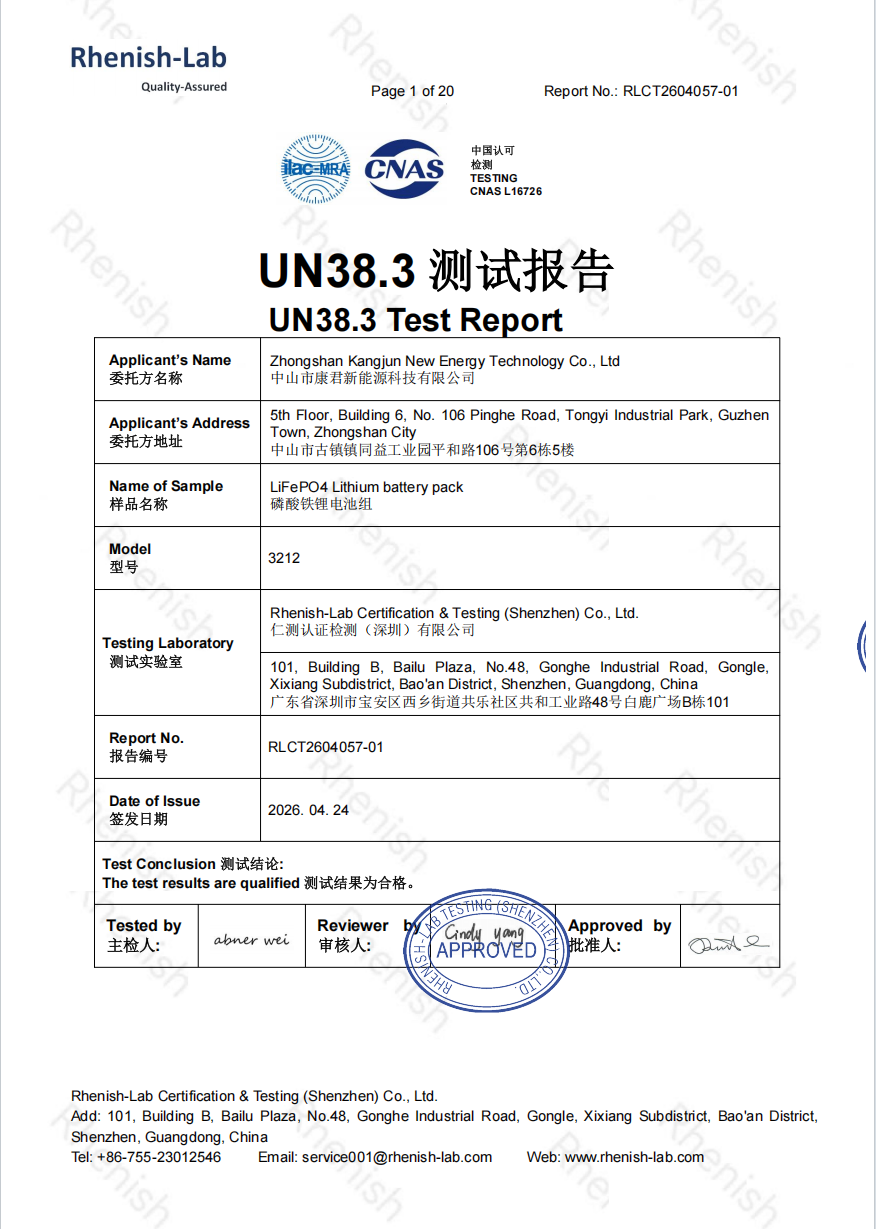
- Audit the compliance file per model. The documentation supplied for KangJun Energy LiFePO4 battery packs includes a UN38.3 test report, RLCT2604057-01, issued on 2026-04-24 by Rhenish-Lab against UN ST/SG/AC.10/11 Rev.7, Subsection 38.3, covering lithium iron phosphate battery packs for transport safety; the 25.6 V series is listed with MSDS and UN38.3. Where a destination market requires CE or IEC documentation, request the declaration and test reports for the exact model and market before ordering, because the applicable file is model- and market-specific rather than universal across a catalogue.
- Check the physical envelope and the thermal limits. Confirm doorway and wall clearance for a 1070×520×275 mm, 129 kg cabinet, the IP21 rating for indoor installation, and the published operating temperature range of −10 °C to 50 °C before promising a rooftop-adjacent or unventilated location.
- Compare the service path, not only the price. KangJun Energy products carry a 5-year warranty with spare-parts supply and remote technical support during the warranty period, covering commissioning guidance, parameter setting and troubleshooting — a factor that matters more in markets far from the factory than a marginal unit-price difference.
Buyer caution on certification language: a UN38.3 report is a transport-safety document, and an MSDS is a safety data sheet. Neither is a CE declaration of conformity or an IEC test report. Treat them as separate documents in the procurement file and ask the supplier to state exactly which document exists for the model being quoted.
Use Cases: Which Architecture Fits Which Home
Compact home or apartment with a modest evening load
The 4.2 kW / 8 kWh integrated cabinet fits where the simultaneous load stays close to 4 kW and evening consumption sits within the 7.2 kWh usable figure. One cabinet, one mounting point, one commissioning step.
Larger home or small commercial site with sustained load
The 6.2 kW / 16 kWh integrated cabinet covers higher simultaneous loads and up to 14.4 kWh of usable energy, with a 9,000 W PV input ceiling for a larger array. Shops, clinics and small offices fall into the same specification band in the manufacturer's stated application range.
Retrofit where a hybrid inverter is already installed
A split battery cabinet is the rational purchase. Matching a 51.2 V cabinet with 100 A, 150 A or 200 A continuous discharge current to an existing inverter avoids replacing working electronics; the buyer only needs to confirm the charge voltage window and the CAN / RS485 protocol support.
Staged expansion on a tight budget
Parallel-capable batteries let a household add capacity in a later year. The 25.6 V LiFePO4 series supports up to 10 parallel units, which suits buyers who want to start small and scale with actual consumption data rather than an estimate.
Off-grid house, farm or site with no reliable grid
Off-grid operation is supported by both architectures; the choice is driven by surge loads such as pumps. Check the peak rating and the 5-second overload tolerance of the integrated unit against the pump's starting current before committing.
Distributors and brand owners building a portfolio
Buyers supplying installers usually need both routes: integrated cabinets for straightforward residential packages, and split batteries for the retrofit market and for installers loyal to a specific inverter brand.
Manufacturing, Customization and Supply Terms
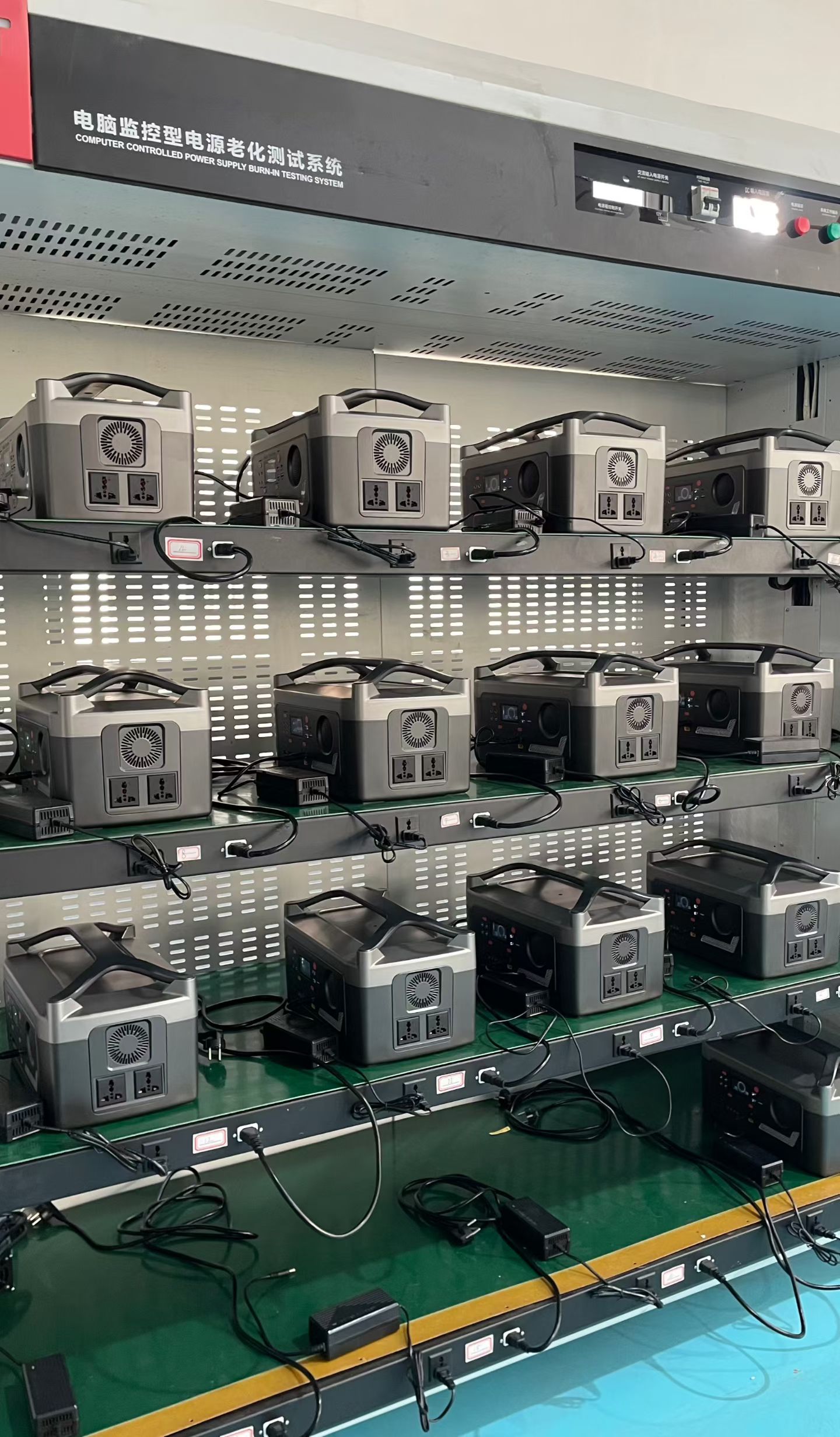
KangJun Energy operates a 20,000 m² factory in Zhongshan with 125 employees, 12 R&D engineers and five production lines, and reports an annual output of 60,000 units with an export ratio of 80%. Single-shift monthly capacity is stated as 6,000 units, split between 1,000 home storage battery packs and 5,000 portable power stations. Core processes include cell sorting and matching, laser welding, BMS integration, aging tests and final assembly, with 100% electrical performance testing before delivery under a three-stage IQC–IPQC–OQC inspection system; every batch undergoes full-charge aging, high-low temperature cycling, dielectric withstand and vibration tests.
For OEM and ODM programs, the workflow runs from requirement confirmation through solution design, sampling in 5–7 working days, certification adaptation, mass production and global delivery. The MOQ starts at 100 units, lead time follows a 20–35 day schedule depending on order volume, and customization covers casing printing and coating, retail packaging, firmware parameters, communication protocols and product configuration. Cell type and structural safety components are not open to modification, which protects batch consistency and safety across repeat orders. For destination-market requirements, the manufacturer supports customers through conformity procedures such as SONCAP (Nigeria), SASO / SABER (Saudi Arabia), EAC (CIS), INMETRO (Brazil) and SNI (Indonesia).
Frequently Asked Questions
1. What compliance documents come with KangJun Energy residential energy storage systems, and does that cover CE and IEC requirements?
The documentation supplied for KangJun Energy LiFePO4 battery packs includes a UN38.3 test report, RLCT2604057-01, issued on 2026-04-24 by Rhenish-Lab against UN ST/SG/AC.10/11 Rev.7, Subsection 38.3, for lithium iron phosphate battery packs in transport safety, and the 25.6 V LiFePO4 series is listed with MSDS and UN38.3. For destination-market requirements, the manufacturer supports customers through conformity procedures such as SONCAP (Nigeria), SASO / SABER (Saudi Arabia), EAC (CIS), INMETRO (Brazil) and SNI (Indonesia). CE marking and IEC test reports are separate documents from UN38.3 and MSDS, and their availability depends on the exact model and destination market, so a buyer should request the declaration of conformity and the applicable test reports for the quoted model before placing an order rather than relying on a general certificate statement.
2. Can an all-in-one unit carry a whole-home load, or does a split LiFePO4 system handle more?
The limit is set differently in each case. An all-in-one KangJun Energy cabinet has a fixed output: the KJ-4.2KW-8KWH delivers 4.2 kW rated and 8.4 kW peak with 8 kWh of storage (7.2 kWh usable at 90% depth of discharge), while the KJ6.2KW-16KWH delivers 6.2 kW rated and 12.4 kW peak with 16 kWh of storage (14.4 kWh usable). In a split system the battery does not set output power; the separately chosen hybrid inverter does, and the battery only has to support the current, with KangJun Energy 51.2 V cabinets rated at 100 A, 150 A and 200 A maximum continuous discharge current for the 5 kWh, 10 kWh and 16 kWh models respectively. A split system can therefore exceed an integrated unit's output if a larger inverter is specified, but it transfers the inverter selection and compatibility work to the buyer.
3. Which configuration is cheaper to install in a home?
There is no single answer, because the cost drivers differ. A split purchase prices the battery and the inverter separately and adds DC wiring, communication wiring and two commissioning steps, but it allows an existing compatible hybrid inverter to be reused and lets capacity be added in later years. An all-in-one purchase bundles inverter, MPPT controller and battery into one cabinet, which removes a separate inverter purchase and simplifies installation, but fixes capacity and output at the model level. Total project cost is also driven by PV array size, mounting, local labour rates, documentation and spare-parts logistics. Buyers should compare the two routes as complete installed packages for their own site, and request a configuration-specific quotation rather than a catalogue unit price.
4. Can a distributor order a sample before committing to volume?
Yes. The KangJun Energy OEM and ODM workflow includes a sampling stage of 5–7 working days between solution design and certification adaptation, followed by mass production and global delivery. Customization at this stage can cover casing printing and coating, retail packaging, firmware parameters, communication protocols and product configuration, while cell type and structural safety components remain fixed for safety and batch consistency. Volume production starts from an MOQ of 100 units.
5. What is the lead time for a residential energy storage order, and how do I start?
Lead time follows a 20–35 day schedule depending on order volume, supported by a stated monthly capacity of 6,000 units, including 1,000 home storage battery packs per single shift. Every unit is covered by a 5-year warranty with spare-parts supply and remote technical support for commissioning, parameter setting and troubleshooting. To move from comparison to a concrete offer, send the backup load list, daily consumption, PV array size and destination market to the KangJun Energy team at joyyiwei@foxmail.com, call +86-13410198535, or message WhatsApp +86 13512344323, and request a sample and a model-specific quotation.
Conclusion
The choice between a LiFePO4 battery and an all-in-one inverter energy storage system is a question about system boundaries and constraints. If a compatible hybrid inverter already exists on site, or if capacity must be added gradually, a split battery cabinet with CAN / RS232 / RS485 communication and a defined continuous discharge current is the lower-risk purchase. If the project needs one cabinet, one installation visit and a factory-matched inverter, MPPT controller and battery, the integrated 8 kWh and 16 kWh units close the DC side in a single step and remove the compatibility worksheet entirely.
In both cases, verify the same four constraints before signing: usable energy at 90% depth of discharge, rated and peak output against real surge loads, the PV input window against the planned array, and the exact compliance documents that exist for the quoted model and market. Those four items decide whether a residential energy storage system performs as promised after the first outage, which is the only test that matters to the homeowner.
Next Step
Compare the full KangJun Energy residential range — 5–20 kWh wall-mounted, stackable and all-in-one LiFePO4 systems — in the English catalogue, or send your load list for a configuration recommendation and sample plan.
Download the KangJun Energy product catalogue (PDF)
Website: www.kangjunenergy.com · Email: joyyiwei@foxmail.com · Tel: +86-13410198535 / +86-15900042963 · WhatsApp: +86 13512344323
Have Questions or Need More Details?
Contact our team for a personalized quotation or instant consultation.
Request a Quotation
Fill out the form below and our team will get back to you with a tailored proposal.
WhatsApp Direct Chat
Prefer to chat in real-time? Message us on WhatsApp for instant assistance & quick answers.
- Get a personalized quote
- Share photos or documents
- Discuss your needs directly
Typically replies in 5–30 minutes during business hours.