How to Fix Rain Penetration: Applying Silicone Waterproof Coating Correctly
How to Fix Rain Penetration: Applying Silicone Waterproof Coating Correctly
Rain penetration that returns one or two seasons after a waterproofing repair is usually blamed on the coating. On exterior walls, roofs and concrete substrates, the more common explanation is application: the water path was never closed, the substrate was too damp or too contaminated to bond to, the primer was skipped or mismatched, or the coating was applied outside its recoat and cure window.
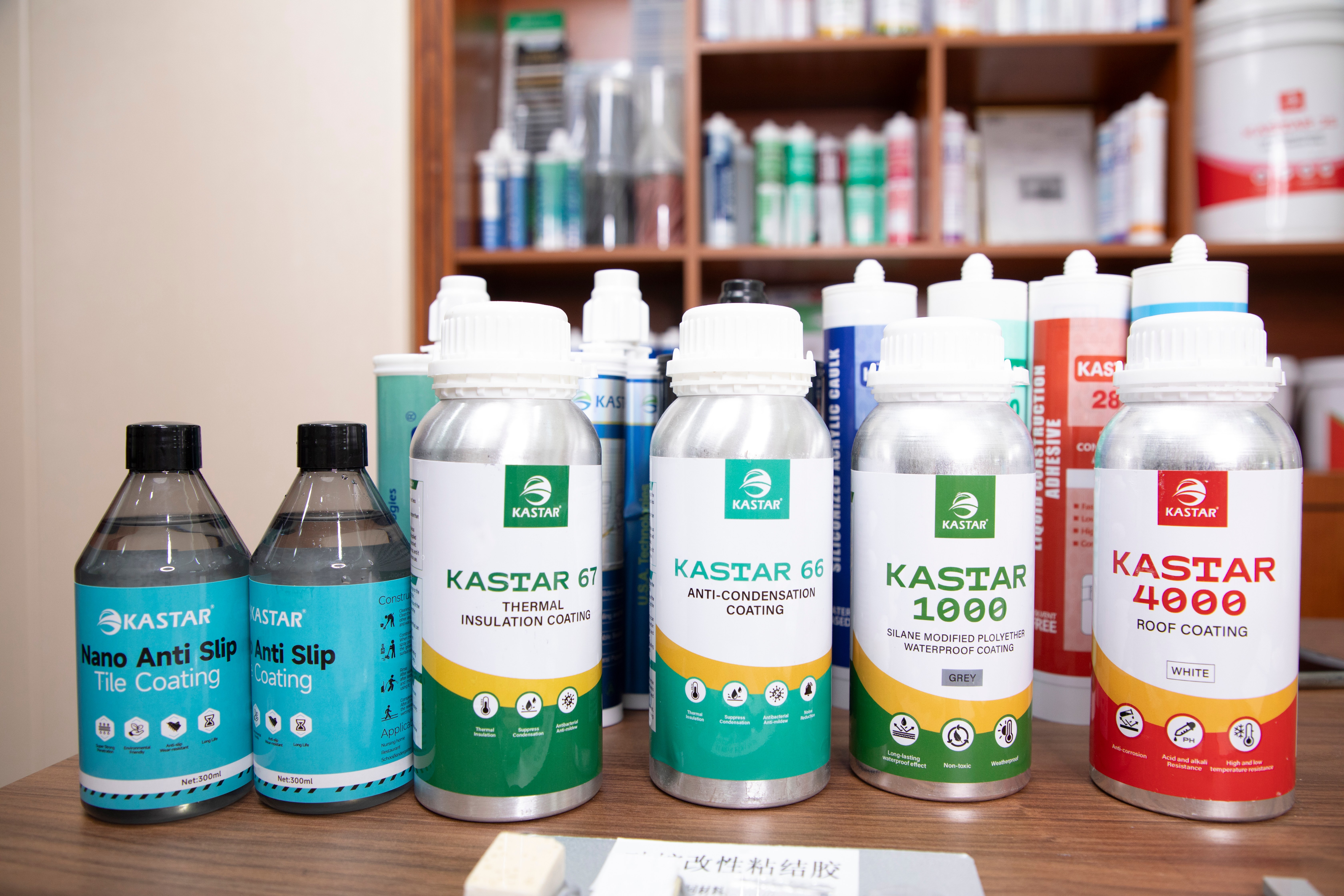
This guide is written for contractors and maintenance teams returning to a building that has already failed once. It sets out a diagnostic sequence for locating the real water path, the surface preparation and primer decisions that determine adhesion, and the application practice that decides whether a silicone waterproof coating delivers its full outdoor service life — specified as 25 years or more for Kastar 4000 Silicone Waterproof Coating — or fails inside a single rainy season.
Why Rain Penetration Comes Back After a Waterproofing Repair
Recurring rain penetration is normally a system failure rather than a material failure. A silicone waterproof coating works as a continuous elastic membrane; if moisture is already trapped beneath it, or if a single termination detail was missed, water continues to enter. The coating then blisters or peels, which looks exactly like a defective product.
The failure signature usually tells you which stage of the work went wrong:
- Blisters with water inside them — moisture in the substrate, or a substrate that was damp at the time of application.
- Peeling that starts at parapets, edges and flashings — termination detailing or primer failure, not a problem in the middle of the field.
- Coating intact but the interior still damp — the entry point was never closed and water is tracking behind the membrane.
- Returning efflorescence and mold — water is still moving through the substrate.
- Fish-eyes and pinholes — surface contamination: oils, dust, chalk, release agents or efflorescence.
- Tacky, brittle or patchy areas — film build, recoat timing or application conditions were outside the specification.
A useful diagnostic rule: a formulation problem usually appears as a pattern across batches, substrates and sites, while an application error appears as a pattern tied to a location, a geometry, or the weather on the day the coating was applied. If leaks concentrate at one elevation, one detail or one floor, investigate workmanship and detailing before questioning the material.
Industry Background: Silicone Coatings Are a Mature Repair Category
Silicone waterproofing is not a niche repair material, and that matters for diagnosis — when a project fails, the material category is rarely the unknown variable.
- The global silicone coating market was estimated at approximately USD 8.77 billion in 2024 and is projected to reach USD 11.27 billion by 2033 (Grand View Research).
- Silicone roof coatings alone were valued at USD 7.03 billion in 2024 (Credence Research), which makes roofing the largest single application segment.
- Asia-Pacific held a 38.5% revenue share of the silicone coating market in 2025, driven by construction demand (Dataintelo).
- 100% silicone elastomeric coatings accounted for a 41.02% share of the composition type segment in 2025, based on waterproofing and UV performance (Mordor Intelligence).
Published market estimates diverge — some research firms place the 2024 to 2025 baseline between USD 5.28 billion and USD 8.77 billion — so any single figure should be treated as directional rather than exact.
On the specification side, silicone sealants and coatings for construction are typically assessed against ASTM C920 or ASTM C1184 in the United States, while European projects reference harmonised standards such as EN 15651-1, EN 998-1 and EN 13300. Environmental performance has shifted as well: solvent-less and UV-cured silicone formulations can reduce VOC emissions by 60–80% compared with traditional solvent-based platforms.
The practical conclusion for an applicator is simple. Silicone coatings are widely specified, independently tested and well documented. When a building leaks again, the most probable variable left is the work on site.
Diagnosing the Failure Before You Buy Material
Before ordering anything, establish whether you are fixing a coating or fixing a water path. The table below maps the symptom you can see to the root cause it usually indicates and the corrective action that addresses it.
| Symptom on site | Usual root cause | Corrective action |
|---|---|---|
| Blisters containing water; coating lifts away in sheets | Substrate was damp at application; no moisture check before priming | Strip affected areas, dry the substrate, verify moisture, re-prime, re-apply |
| Peeling starting at parapets, edges and flashings | Terminations were not detailed or reinforced | Re-detail terminations, reinforce joints, seal the water path, then re-coat |
| Coating intact, interior still damp | Water path never closed; water travels behind the membrane | Locate and close the entry point — crack, coping, penetration — before re-coating |
| Fish-eyes, pinholes, poor wetting | Surface contamination: oil, dust, chalk, efflorescence | Clean thoroughly, remove contamination, allow to dry, re-prime |
| Tacky or brittle patches soon after application | Film build or recoat window not respected | Strip, re-apply in two passes at right angles within the specified window |
| Efflorescence and mold return | Ongoing water movement through the substrate | Correct drainage and the water path, treat the substrate, then re-coat |
Only after this diagnosis can material selection be judged. If the symptoms point exclusively to application, changing supplier will not stop the leak.
Step-by-Step: Applying Silicone Waterproof Coating Correctly
Step 1 — Confirm what actually failed
Inspect the whole elevation, not just the wet patch. Open blisters, check whether water is present under the coating, and test adhesion at several points. Water that reappears at the same detail after every storm usually indicates an open entry point rather than a saturated membrane.
Step 2 — Close the water path first
Rain penetration often enters at cracks, copings, flashings, parapet junctions, expansion joints, drainage outlets and pipe penetrations, then travels horizontally to appear somewhere else entirely. Repair these entries before coating over them; a coating applied over an active leak only traps the problem.
Step 3 — Strip back to a sound, clean substrate
Remove failed coating, loose material, chalk, laitance, efflorescence, mold, oil and dust. Power washing is usually part of the process, followed by a drying period. Anything left on the surface becomes the weak bond line for the new coating.
Step 4 — Repair the substrate itself
Fill cracks, spalls and honeycombed concrete with a compatible repair material, re-form or seal joints, and remove sharp edges that would thin the coating. Substrate repair is far cheaper than a second failed coating programme.
Step 5 — Verify moisture and surface condition
Do not prime or coat over a wet substrate, however dry it looks at the surface. Moisture trapped below a one-component silicone coating has nowhere to go, and the resulting vapour pressure lifts the film — the classic blister seen on re-coat jobs.
Step 6 — Select the primer to match the substrate
Primer selection is a decision, not a formality. Porous or highly alkaline concrete, previously coated surfaces, aged substrates and metal flashings each call for different primer chemistry and coverage. On a repair job, a mismatched or omitted primer is one of the most common reasons a correct coating still peels.
Step 7 — Handle the material correctly
Silicone waterproof coating is supplied as a one-component system for a reason: it removes on-site mixing errors. Do not thin it with solvent or water, do not blend partially cured material back into fresh product, and observe the working time. Stir thoroughly and keep containers sealed when not in use.
Step 8 — Detail first, then coat the field
Terminations, joints, penetrations and drainage details should be treated before the main field. Reinforcement fabric is normally used across active or structural cracks and joints. Apply the coating in two passes at right angles so the film builds evenly, and stay within the manufacturer's specified wet-film thickness rather than applying one heavy coat to save time.
Step 9 — Respect the recoat window and cure before rain
Apply the second pass within the manufacturer's recoat window. A second coat applied too late may not fuse to the first; one applied too early can disturb it. Schedule work so the coating is fully cured before rain exposure, and avoid application when surface temperature or moisture conditions fall outside the technical data sheet range.
Step 10 — Inspect, document and hand over a maintenance plan
Record adhesion and thickness checks, photograph the finished details, and keep batch numbers and application dates. A documented job makes future diagnosis much faster and separates genuine material problems from application problems when a leak is reported.
Safety when handling coating chemicals. Even on low-solvent systems, professional practice requires the supplier's safety data sheet on site, adequate ventilation, appropriate gloves and eye protection, and correct storage of sealed buckets away from direct sun and ignition sources. The VOC advantage of solvent-less silicone platforms — up to 60–80% lower emissions than traditional solvent-based systems — reduces exposure but does not remove the need for handling discipline.

What the Manufacturer Controls — and What It Cannot
No supplier can compensate for a damp substrate or a missed termination. What a controlled production process can do is remove the variables an applicator cannot fix on site: inconsistent formulation, off-specification solids, and packaging that fails in storage.
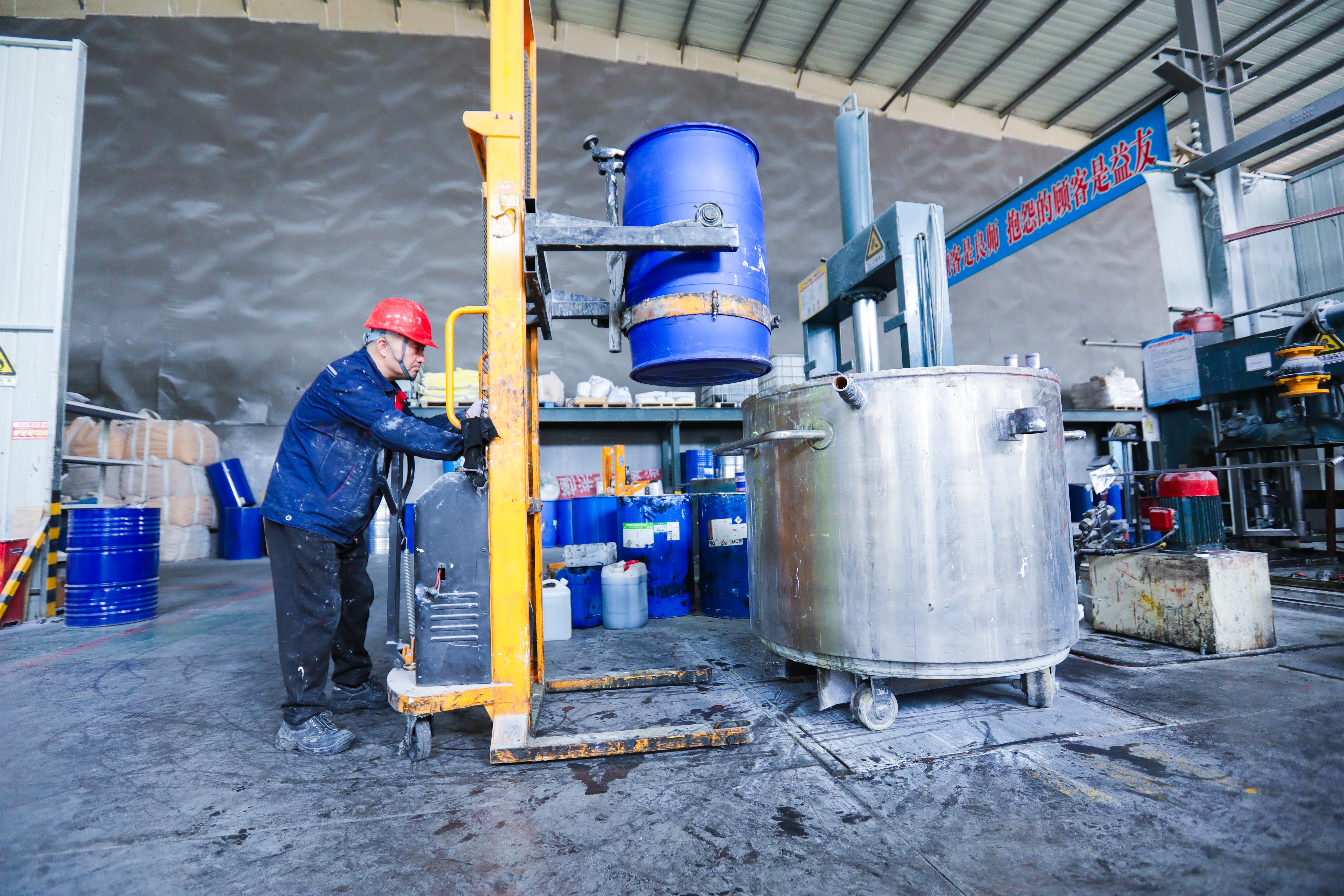
Kastar Adhesives Technologies Co., Ltd is a China-based OEM/ODM manufacturer of silicone waterproof coating, epoxy colour sand floor coating and MS sealant, established in 1998 and operating a 150,000 ㎡ facility with 28 years of production experience. The company runs a 12-step production and testing process from production to delivery, with batch sample testing to maintain quality across the full process. Its China Metrology Accreditation (CMA) certified sealing material testing laboratory covers 1,000 ㎡ and is staffed by 16 testing personnel using more than 100 instruments and equipment, supported by three national-level R&D laboratories and 28 R&D engineers.
Products carry ISO 9001, CE, SGS and REACH documentation, and the company is a national high-tech enterprise. Kastar has supplied OEM production for more than 600 clients, has exported to 69 countries and regions, and serves over 1,000 customers.
Kastar 4000 Silicone Waterproof Coating: Verified Specification
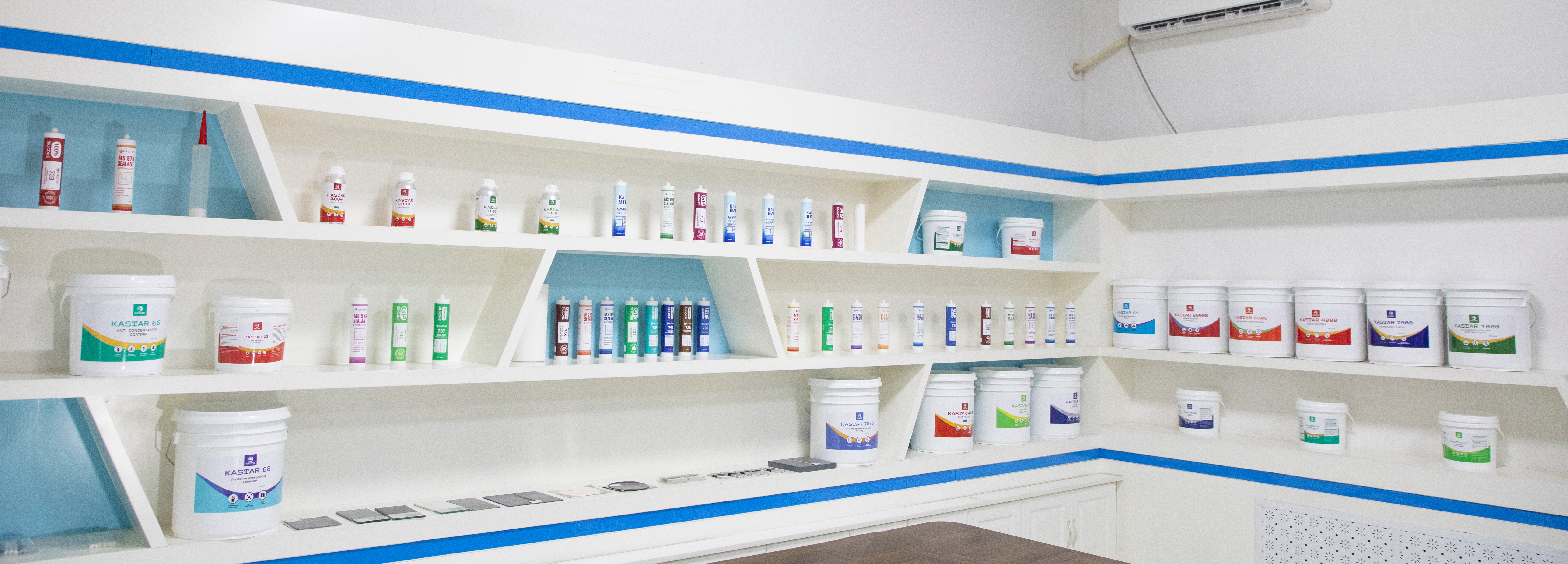
| Product | Kastar 4000 Silicone Waterproof Coating |
| Type | One-component silicone waterproof coating, UV-resistant |
| Material | Silicone |
| Solid content | 98% |
| Tensile strength | ≥ 1.2 MPa |
| Elongation at break | ≥ 200% |
| UV resistance | 1000 h with no cracking or peeling |
| Outdoor service life | ≥ 25 years |
| CE certification | ICR/VC/HS260188, issued by ICR for the European market, valid 16 January 2026 to 15 January 2031; EN 15651-1:2017, EN 998-1:2016, EN 13300:2001+AC:2002 |
| Other documentation | ISO 9001, SGS, REACH |
The elongation figure of at least 200% is what allows the cured film to follow normal movement in concrete and masonry without cracking — but only if the film is continuous and bonded. Elasticity does not compensate for a disbonded edge.
Use Cases: Where Correct Application Matters Most
Roofs. Roofs take the most direct UV, thermal cycling and ponding. This is where UV resistance of 1000 h with no cracking or peeling and a 25-year outdoor service life expectation is decided at detail level — upstands, outlets and penetrations fail before the field does.
Exterior walls. Wall leaks are usually driven by wind and capillary action through cracks and joints. Cleaning and priming are the critical steps, because weathered render, chalk and old coating residues are the most common bond-breakers.
Basements and underground structures. Below-grade waterproofing is unforgiving: once backfilled, repairs are expensive. Surface preparation and detailing matter more than any subsequent coating build.
Bathrooms and balconies. These are small, complex areas with many penetrations and frequent wetting cycles. Two-pass application at right angles, with full terminations around drains and pipework, prevents the chronic seepage typical of these areas.
CE-compliant Kastar products have been adopted in construction projects across the EU, North America and Southeast Asia, where they have demonstrated waterproof performance under extreme weather conditions and have prevented water leakage and structural damage over a 25-year service life.

Comparison: What to Verify With a Coating Supplier Before a Repair Programme
For contractors and distributors planning a repair programme rather than a single job, the following points determine whether the material is a fixed variable or another open question on site.
| What to verify | Why it matters on a repair job | Verified Kastar position |
|---|---|---|
| Batch consistency | Inconsistent formulation cannot be corrected on site | 12 production and testing processes from production to delivery, with batch sample testing |
| Independent compliance evidence | Specifiers, insurers and authorities require documentation | CE certificate ICR/VC/HS260188 (ICR, Europe, valid to 15 January 2031); ISO 9001; SGS; REACH |
| In-house testing capability | Fast, evidence-based answers when a defect is disputed | 1,000 ㎡ CMA-certified testing laboratory, 16 testing personnel, more than 100 instruments; three national-level R&D laboratories; 28 R&D engineers |
| Application support | Application errors cause most repeat failures | One-on-one construction guidance from professional engineers; remote after-sales support; on-site technical support for large projects |
| Customization for your market | Distributors need packaging and colour that fit local demand | OEM/ODM customization of colour, viscosity, packaging and formulation |
| Order profile | Planning and cash flow for repair programmes | MOQ 100 buckets; production lead time 15–20 days |

FAQ: Fixing Rain Penetration With Silicone Waterproof Coating
Does silicone waterproof coating carry CE certification for European projects?
Kastar 4000 Silicone Waterproof Coating holds CE certification with certificate number ICR/VC/HS260188, issued by ICR for the European market and valid from 16 January 2026 to 15 January 2031. The certification references EN 15651-1:2017, EN 998-1:2016 and EN 13300:2001+AC:2002. For projects specified to United States standards, silicone sealants and coatings are typically assessed against ASTM C920 or ASTM C1184. The manufacturer is also ISO 9001 certified, and products carry SGS and REACH documentation.
What technical support is available when an application has already failed once?
Kastar provides one-on-one construction guidance from professional engineers, remote after-sales support, and on-site technical support for large projects. Technical escalation sits with 28 R&D engineers working across three national-level R&D laboratories, supported by a 1,000 ㎡ CMA-certified testing laboratory with 16 testing personnel and more than 100 instruments, which is used for batch sample testing. In practice this means an applicator or distributor can obtain a technical answer on surface preparation, primer selection or film build rather than a generic product statement.
What is the minimum order and how is bulk supply structured?
The minimum order quantity is 100 buckets, with OEM/ODM customization available for colour, viscosity, packaging and formulation. Bulk and distributor programmes are produced at a 150,000 ㎡ facility backed by 28 years of production experience, with quality maintained through a 12-step production and testing process and batch sample testing from production through to delivery.
Can we validate the material on a sample before committing to a full order?
Yes. Sampling is part of normal quality control at Kastar: batch sample testing is carried out within the 12-step production and testing process, and product samples can be arranged for a trial application on a representative substrate before a bulk order is placed. A trial panel is the most reliable way to confirm adhesion and appearance on your specific substrate, primer and site conditions.
What is the production lead time for a bulk order?
Standard production lead time is 15–20 days after order confirmation. For repair programmes, plan the site sequence around that window so that surface preparation and substrate drying are completed while material is in production. To request a sample, a quotation or technical guidance for a specific project, contact Kastar directly: email paint4566@kastarpaint.com, telephone or WhatsApp +86 15974221507, or visit www.kastarcoating.com.
Conclusion
Rain penetration that returns after a repair is usually an application outcome, not a product verdict. The sequence that prevents it is consistent: diagnose the water path, close it, strip back to a sound and dry substrate, repair the substrate, match the primer, handle the one-component material correctly, detail before coating the field, build the film in two passes, and respect the cure window before the next rain.
Material consistency removes one variable from that list. A supplier running a 12-step production and testing process with batch sample testing, a 1,000 ㎡ CMA-certified laboratory, and CE, ISO 9001, SGS and REACH documentation gives applicators a fixed starting point, so attention can stay where failures actually occur — on the surface, the details and the timing.
Planning a repair programme with silicone waterproof coating?
Kastar supplies Kastar 4000 Silicone Waterproof Coating for roof, exterior wall, basement and balcony projects, with OEM/ODM customization, MOQ from 100 buckets, 15–20 day lead times, and one-on-one construction guidance from engineers. Request a sample for a trial panel, or ask for a quotation and the technical data sheet.
Contact: Nicole · Email: paint4566@kastarpaint.com · Tel / WhatsApp: +86 15974221507 · Web: www.kastarcoating.com