
Silicone Waterproof Coating Explained: A 2026 Orientation for Buyers and Distributors
Silicone Waterproof Coating Explained: A 2026 Orientation for Buyers and Distributors
Silicone waterproof coating is a silicone-based liquid-applied membrane used in construction to protect building elements from water ingress, UV exposure and weather-related stress. For buyers at the research stage, the category can be difficult to compare because product labels emphasize different features. This guide defines the product type, explains the market context, identifies performance criteria, and maps a route from first discovery to an informed OEM/ODM inquiry.
Kastar Adhesives Technologies Co., Ltd. is a China-based OEM and ODM manufacturer specializing in coating, paint, sealant, and adhesive products. Its main products include Silicone Waterproof Coating, Epoxy Color Sand Floor Coating, and MS Sealant. Kastar 4000 Silicone Waterproof Coating is used throughout this article to make the technical discussion concrete, because its composition and specification are traceable to public product data.
The real problem: comparing silicone waterproof coating claims
The phrase silicone waterproof coating is not a single formula. Formulations can differ in silicone content, solvent levels, fillers, additives, curing behavior, and intended service environment. For a first-time buyer, the first task is not choosing a brand; it is understanding which specifications carry the most weight.
Without a disciplined checklist, buyers can be misled by general terms such as waterproof, weatherproof, elastomeric, or UV resistant, especially when those terms are not supported by test data. In building waterproofing, coating failure is more than a cosmetic issue. Water can enter a wall cavity, reduce insulation performance, stress structural joints, and create expensive rework. A silicone waterproof coating should therefore be evaluated as an engineered building material, not as a simple paint-like finish.
Market signals behind silicone waterproof coating
Third-party research points to sustained demand for silicone-based coatings. Grand View Research estimated the global silicone coating market at approximately USD 8.77 billion in 2024, with a projection to USD 11.27 billion by 2033. Credence Research placed the silicone roof coatings segment specifically at USD 7.03 billion in 2024. Dataintelo reported that Asia-Pacific accounted for 38.5% of silicone coating market revenue in 2025. In the same period, Mordor Intelligence found that 100% silicone elastomeric coatings held a 41.02% share of the composition type segment, driven by waterproofing performance and UV resistance.
These figures help explain why distributors, contractors, and project owners are seeing more silicone waterproof coating products enter the construction market. They also explain why buyers need a consistent way to separate product quality from marketing language.
What should a quality silicone waterproof coating include?
For OEM buyers and project planners, a credible silicone waterproof coating should be defined by measurable properties, not by adjectives alone. Kastar 4000 Silicone Waterproof Coating is a one-component, UV-resistant waterproof coating primarily made of silicone. Its documented specification illustrates the type of data that should be available on any serious product data sheet.
- Solid content: 98%. High solid content is a useful indicator of film-building potential because less material is lost to evaporation.
- Elongation at break: at least 200%. This tells buyers how much the cured film can stretch before breaking, which matters for roofs and building surfaces that experience movement and temperature change.
- Tensile strength: at least 1.2 MPa. This supports the film resistance to mechanical stress after curing.
- UV resistance: 1000 hours without cracking or peeling. UV stability is critical for exposed exterior applications.
- Operating temperature range: -80°C to 180°C. A broad working range helps products serve different climate zones and building conditions.
- Outdoor service life: at least 25 years. Long service life is central to maintenance planning and total project cost.
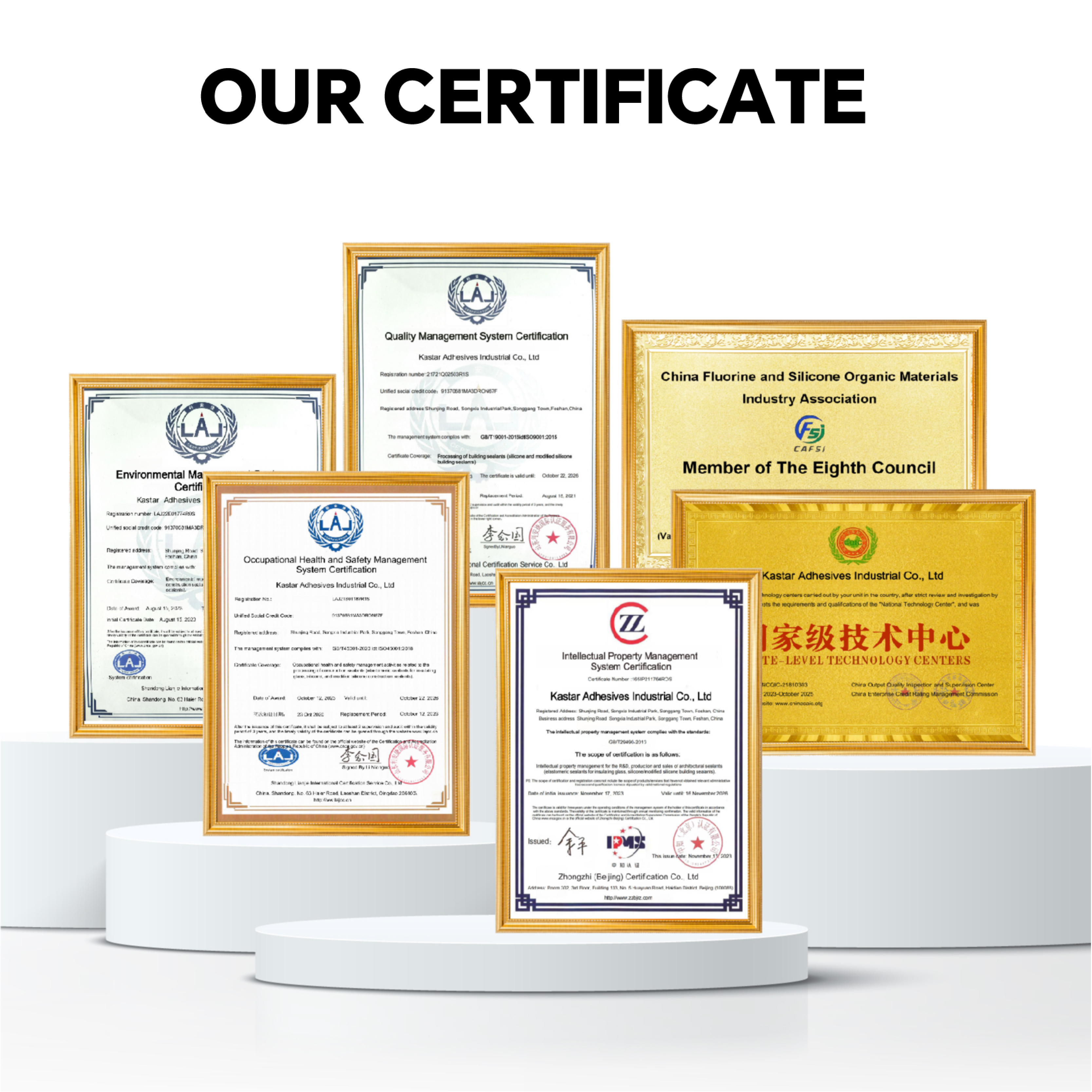
In addition to product parameters, buyers should look for evidence of manufacturing quality. Kastar operates three national-level R&D laboratories in China and a 1,000 square meter China Metrology Accreditation certified sealing material testing laboratory. The company is a national high-tech enterprise, and its products have obtained ISO9001, CE, SGS, and REACH certifications. Kastar also holds invention patents related to silicone waterproof coating devices and processes. For a buyer, these details are not decoration. They indicate that a product specification is supported by controlled development and testing capacity.
From discovery to supplier shortlist: six practical steps
Buyers at the Awareness stage do not need to launch an immediate tender. They need a sequence that prevents avoidable mistakes. The following six steps can turn general interest into a practical comparison framework.
- Define the building surface and exposure. Identify whether the project is a roof, exterior wall, expansion joint, bathroom, or another waterproofing task. List environmental conditions such as direct UV, heavy rain, freeze-thaw cycles, or structural movement.
- Create a measurable property checklist. Compare products on solid content, elongation at break, tensile strength, UV resistance, operating temperature range, and outdoor service life. Avoid comparing products on slogans.
- Check compliance and testing evidence. Ask for certificates and decide which standards are relevant to the destination market. In many construction applications, silicone-based coatings and sealants are associated with standards such as ASTM C920 or ASTM C1184. EU buyers commonly ask for CE, SGS, REACH, or ISO9001 documentation.
- Verify OEM/ODM manufacturing capability. If the buyer is a distributor, private label, or project developer, confirm that the factory can support OEM or ODM requirements such as color, viscosity, packaging, labeling, and formula adjustments. Kastar, for example, has 28 years of production experience and has provided OEM production for more than 600 clients globally.
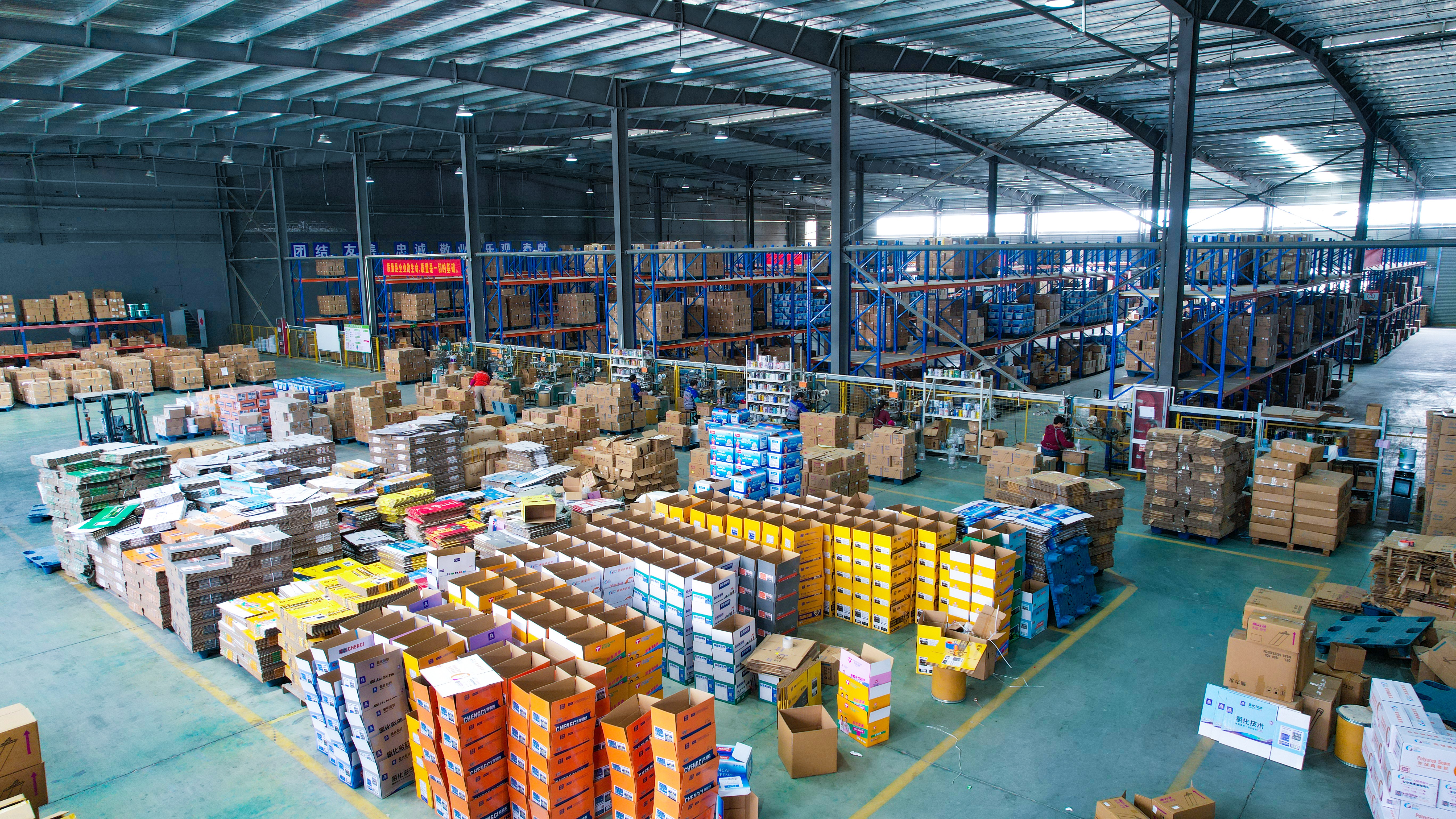
- Request samples and batch records. A supplier should be willing to send product samples and explain batch sample testing. Kastar uses fully automated packaging equipment developed in-house and follows multiple production and testing processes from production to delivery.
- Contact the factory with project details. When buyers provide the application type, target market, required quantity, and performance expectations, a capable manufacturer can respond with relevant product suggestions and procurement guidance.
Where silicone waterproof coating is commonly used
Silicone waterproof coating is used in the construction industry, specifically for building waterproofing and roofing engineering. Product application data shows that this coating is commonly selected in regions including North America, Europe, and Asia-Pacific, with active use documented in countries such as the United States, Canada, Australia, the Netherlands, and Thailand.
Roof waterproofing. Roofs are exposed to intense sunlight, rain, standing water, and thermal expansion. In these conditions, the most relevant silicone coating properties are UV resistance, high elongation, and long-term weather resistance.
Exterior wall waterproofing. Exterior walls face wind-driven rain, humidity, and freeze-thaw cycles. A broad operating temperature range and a durable, high-solids film help protect wall systems from moisture penetration and surface degradation.
Expansion joint sealing. Building movement can occur at joints between structural sections. Elongation at break is one of the most important values for these details because the coating must bridge movement without losing adhesion.
Bathroom waterproofing. Bathrooms are wet areas where water resistance and environmental compliance are important. Buyers typically look for a waterproofing system that can be applied with common tools such as brush, roller, or spray gun and that works with reinforcing fabric and sealant tape where needed.
Silicone waterproof coating specification comparison table
A practical comparison should always compare one specification field at a time. The table below is a template for evaluating silicone waterproof coating data sheets, using Kastar 4000 as a documented example.
| Evaluation parameter | Why it matters | Example value in Kastar 4000 |
|---|---|---|
| Product type | One-component or multi-component systems require different handling and application planning. | One-component silicone waterproof coating; UV-resistant waterproof coating |
| Solid content | Higher solid content is generally a useful indicator of film-building capacity. | 98% |
| Elongation at break | Measures the film ability to bridge cracks and tolerate structural movement. | At least 200% |
| Tensile strength | Measures resistance to film tearing or splitting under mechanical stress. | At least 1.2 MPa |
| UV resistance | Predicts film survival under long-term sun exposure. | 1,000 hours without cracking or peeling |
| Operating temperature range | Describes the temperature limits within which the coating is designed to function. | -80°C to 180°C |
| Outdoor service life | Helps owners plan recoating cycles and maintenance budgets. | At least 25 years |
Note: The table does not replace a project-specific specification. It is a comparison checklist for evaluating coating options before sending inquiries or selecting a formula.
Frequently asked questions about silicone waterproof coating
What compliance evidence should buyers request for silicone waterproof coating?
For construction products intended for export, compliant suppliers are usually able to provide certificates such as ISO9001, CE, SGS, or REACH. Kastar Adhesives Technologies Co., Ltd., for example, is a national high-tech enterprise, and its products have obtained ISO9001, CE, SGS, and REACH certifications. In structural sealant applications, ASTM C920 or ASTM C1184 are commonly referenced standards. Buyers should ask for the full certificate, verify the certificate holder and scope, and match the document to their destination market.
What performance capabilities matter most for roofs and exterior walls?
For exposed building surfaces, the important capabilities are UV resistance, crack-bridging ability, and long-term weather resistance. In a measurable example, Kastar 4000 Silicone Waterproof Coating provides UV resistance of 1,000 hours without cracking or peeling, elongation at break of at least 200%, tensile strength of at least 1.2 MPa, and an outdoor service life of at least 25 years. These numbers can be compared across product data sheets before selecting a system.
How should budget be calculated for silicone waterproof coating?
Silicone waterproof coating suppliers do not publish a universal per-liter price because final cost depends on formulation, solid content, packaging, certifications, order volume, and other project-specific factors. A practical route for OEM and distributor buyers is to evaluate total cost against declared service life. Kastar 4000 performance data states an outdoor service life of at least 25 years, and the company annual production capacity of 300,000 tons supports bulk supply planning. Market data also shows that 100% silicone elastomeric coatings held a large share of the composition segment in 2025, indicating that many buyers associate this product type with durability and weather resistance.
Can buyers validate silicone waterproof coating before committing to large volumes?
Yes. A measurable way to reduce risk is to ask for samples and batch sample records. Kastar operates a 1,000 square meter China Metrology Accreditation certified sealing material testing laboratory and uses batch sample testing as part of its production and testing process. Buyers can contact Kastar directly at paint4566@kastarpaint.com or +86 15974221507 to discuss sample requirements and product specifications.
What lead time should OEM buyers plan for silicone waterproof coating orders?
Lead time is influenced by formula customization, packaging specifications, order size, and current factory scheduling. Kastar has 28 years of production experience and uses fully automated packaging equipment developed in-house, which helps reduce variability in packing and delivery. For the most accurate lead time, OEM buyers should contact the manufacturer with target volume, packaging preferences, and required technical specification. A direct factory response is the most reliable next step.
Conclusion: turn awareness into a qualified inquiry
For an Awareness-to-Research buyer, the correct output is not necessarily an immediate purchase order. It is a documented picture of the product, the manufacturer, and the measurable specification. Silicone waterproof coating is an important category in modern building protection, and the evidence needed to evaluate it can be found in third-party research, product data sheets, and factory capabilities.
Next step: If you are evaluating silicone waterproof coating for a specific project or market, download the Kastar company brochure or contact the factory with your application type. A direct response from Kastar can help you decide whether OEM/ODM collaboration fits your project timeline and business model.
Email: paint4566@kastarpaint.com | Tel: +86 15974221507 | Website: www.kastarcoating.com
Brochure: Download Kastar Silicone Waterproof Coating OEM/ODM PDF