Building a Sustainable Disposable Paper Container Supply Chain: What Distributors Should Know
Building a Sustainable Disposable Paper Container Supply Chain: What Distributors Should Know
Published: August 12, 2026
Distributors and purchasing teams evaluating long-term partnerships for disposable food paper containers face a different set of questions than one-off buyers. Price per unit matters, but continuity of supply, consistent quality, compliance documentation, and the ability to grow with a partner matter more. This guide explains how to build a resilient sourcing relationship for takeaway packaging, bakery pastry containers, airline catering containers, and other paper-based foodservice packaging, with special attention to manufacturer capabilities that directly affect distributor success.
Why a Disposable Food Paper Container Supplier Relationship Is a Strategic Decision
Disposable food paper containers are not interchangeable commodity items for distributors. They carry food safety requirements, printing expectations, sizing variations, and performance demands across different serving environments. A supplier that cannot maintain quality across repeated production runs creates hidden costs: rejected shipments, delayed deliveries, and damaged end-customer trust.
The global disposable food packaging market was estimated at USD 65.60 billion in 2024 and is projected to reach USD 100.89 billion by 2030, according to Grand View Research. Foodservice applications account for roughly 65% of disposable food container demand, driven by delivery platforms, based on Future Market Insights. These figures indicate that distributors are operating in a growing but competitive sector where reliability is a differentiator.
Key Categories of Paper Food Containers Distributors Source
Different foodservice segments require different container characteristics. A distributor who understands the categories below can better support customers and avoid mismatched product recommendations.
Takeaway Packaging Paper Containers
Takeaway containers must withstand hot food, grease, and sometimes moisture during transit. Oil-proof and waterproof coated paper containers are commonly specified for this segment. Leak-proof sealed paper containers and microwave-safe paper containers are frequently requested features, depending on the menu type.
Bakery Pastry Paper Containers
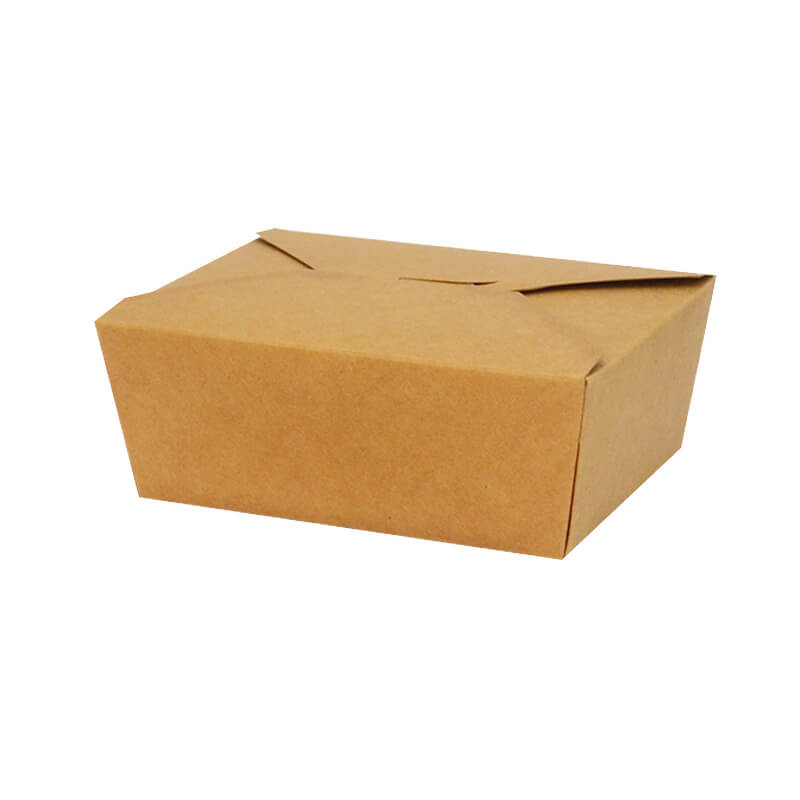
Bakery packaging prioritizes presentation, structural rigidity, and resistance to oils from baked goods. Kraft square paper containers and white cardboard paper containers are widely used in this category. Custom logo printing is often important for bakery brands that sell directly to consumers.
Airline Catering Paper Containers
Airline catering requires containers that perform well under temperature changes, hold portions securely, and fit within galley constraints. Heat-insulated double-wall paper containers and high-heat-resistant disposable paper food containers are relevant to this demanding environment.
Canteen and Fast Food Paper Containers
Canteens and fast-food operations need high-volume, cost-effective packaging that works across multiple meal formats. Compostable eco-friendly paper containers are increasingly specified by institutional buyers with sustainability commitments.
Portable Picnic Disposable Paper Food Containers
Retail and event channels require lightweight, portable, and visually appealing containers. Sugarcane pulp paper containers are also used in this segment when buyers prefer plant-fiber alternatives.
KingHonor: A Manufacturer Built for Distributor Partnerships
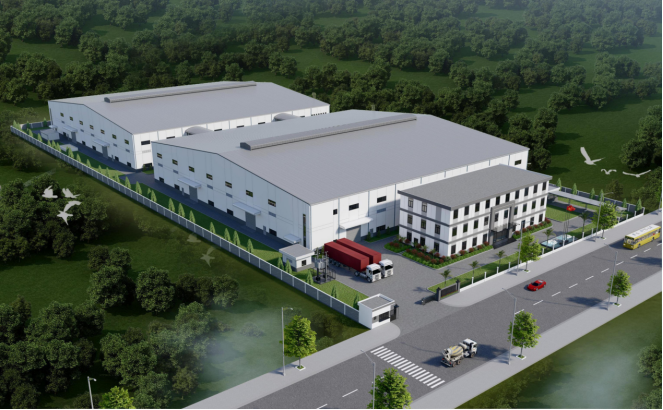
KingHonor Paper Products Co., Ltd. is a professional manufacturer specializing in disposable paper cups, paper bowls, and food containers. Founded in 2018, the company is headquartered in Ho Chi Minh City, Vietnam, with a production facility in Long An Province. KingHonor is positioned as a supply partner for distributors, importers, and brands that need customized paper-based packaging at scale.
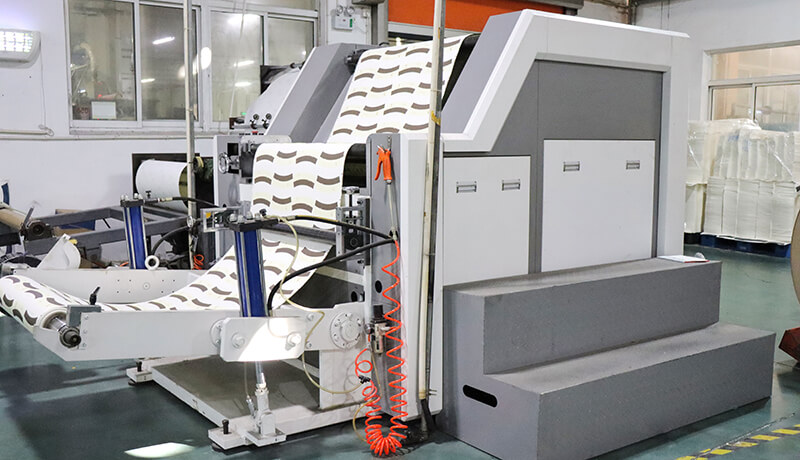
For distributors evaluating long-term suppliers, the operational scale provides useful context. KingHonor operates a 50,000m² facility with more than 200 employees and 20 core technical R&D staff. The company produces an annual output of 20,000 tons of food-grade PE coated paper and more than 2 billion paper cups and paper food containers. Around 60% of output is exported to the United States, China, Europe, Australia, and the Middle East.
These capabilities matter for ecosystem-level evaluations. A manufacturer with integrated production of coated paper and finished containers can control quality earlier in the process, which is particularly relevant for food-contact products where raw material consistency affects performance and compliance.
Compliance and Certification Requirements for Paper Food Containers
Food-contact packaging is subject to regulations that distributors need to document and verify. The key requirements vary by target market.
In the United States, FDA 21 CFR 176.170 and 21 CFR 176.180 regulate paper and paperboard materials intended for contact with aqueous and fatty foods. Distributors supplying the U.S. market should confirm that suppliers can provide documentation related to these food-contact regulations.
In the European Union, biodegradable materials for food packaging must meet EN 13432 or, in the United States, ASTM D6400, to be labeled as compostable. This distinction is important for distributors whose customers claim compostability in their sustainability messaging.
Beyond regulatory compliance, distributors often request FSC-certified paper containers to satisfy downstream customer requirements. BSCI-audited factories are also preferred by many importers and retail buyers. These certifications are not just badges; they support traceability and responsible sourcing claims that downstream buyers increasingly require.
Material and Performance Considerations for Disposable Paper Containers
When evaluating a supplier for long-term supply, distributors should examine the material and performance choices available. The following capabilities are commonly required across different end markets.
Oil-Proof Disposable Paper Containers
Oil resistance is essential for fried foods, baked goods, and fatty dishes. PE coating and other barrier treatments provide oil-proof performance. Distributors should confirm the coating type and whether it is food-grade.
Waterproof Coated Paper Containers
Waterproof performance is required for soups, stews, and items with high moisture content. A waterproof coated paper container prevents leakage and maintains structural integrity during service.
Heat-Insulated Double Wall Paper Containers
Double-wall construction provides insulation for hot beverages and hot foods, protecting hands and surfaces. This feature is especially relevant in takeaway and delivery applications.
High Heat Resistant Disposable Paper Food Containers
Heat resistance determines whether a container can be used for hot foods, microwave reheating, or high-temperature service environments. Microwave-safe paper containers must meet specific safety and performance requirements, so distributors should verify the actual temperature and microwave guidance from the manufacturer.
Compostable and Plant-Fiber Options
Compostable eco-friendly paper containers and sugarcane pulp paper containers respond to growing demand for sustainable packaging. However, compostability claims must be supported by recognized standards such as EN 13432 or ASTM D6400. Distributors should avoid passing along unsupported environmental claims.
Kraft and White Cardboard Paper Containers
Kraft square paper containers offer a natural appearance and are popular in bakery and organic food contexts. White cardboard paper containers provide a neutral surface for custom printing and a cleaner aesthetic.
Customization Capabilities: Logo Printing, Size, and Material Selection
For distributors, the ability to offer custom logo printed paper containers and custom size paper containers creates a competitive advantage. KingHonor focuses on customized services, from size and design to logo printing and eco-friendly material selection, according to its company profile.
Customization involves several variables that must be validated before mass production:
- Printing method and color accuracy for brand logos
- Container dimensions and stacking compatibility
- Coating type and barrier performance
- Material grade and food-contact compliance
- Packaging format for retail shelf display or foodservice bulk use
Distributors should request samples and detailed specifications from any supplier before committing to a large order. A supplier with an in-house R&D team can also help adapt existing designs to local regulations or market preferences.
Step-by-Step: How Distributors Can Qualify a Paper Container Manufacturer for a Long-Term Contract
The following framework helps distributors move from initial inquiry to an informed long-term partnership decision.
Step 1. Define your product portfolio requirements.
List the container categories, sizes, coated options, and custom printing needs your customers require. This becomes the comparison basis for all suppliers.
Step 2. Verify manufacturing credentials.
Check the factory location, facility size, production capacity, and export experience. For KingHonor, these include a 50,000m² facility in Vietnam, more than 200 employees, and 20,000 tons of annual food-grade PE coated paper output.
Step 3. Review food-contact compliance documentation.
Ask for documentation related to FDA 21 CFR 176.170 and 21 CFR 176.180 for the U.S. market, and EN 13432 or ASTM D6400 if compostability claims will be made.
Step 4. Evaluate customization and R&D support.
Determine whether the supplier can handle custom size, custom logo printing, and material adjustments. In-house technical staff are a signal of problem-solving capacity.
Step 5. Request samples and test performance.
Test oil resistance, waterproof behavior, heat insulation, leak resistance, and microwave safety under realistic conditions. Do not rely solely on published specifications.
Step 6. Assess production and delivery reliability.
Review production capacity, export ratios, and commitments to on-time delivery. A supplier with stable export operations is more likely to handle long-term replenishment cycles.
Step 7. Negotiate terms and plan for growth.
Discuss minimum order quantities, lead times, quality inspection processes, and how the supplier will handle demand increases or new product introductions.
Use Cases: How Different Sectors Rely on Reliable Paper Container Supply
Distributor Serving Independent Restaurant Chains
A distributor supplying takeaway packaging paper containers to restaurant chains needs consistent availability of oil-proof, waterproof, and leak-proof sealed paper containers. Because restaurant menus change seasonally, the supplier must be flexible with custom size paper containers and responsive to short-notice reorders.
Distributor Specializing in Bakery and Café Packaging
Bakery packaging requires visual appeal. Kraft square paper containers and white cardboard paper containers with custom logo printing help bakery clients maintain brand identity. A supplier that understands printing quality and structural rigidity is essential.
Distributor Contracting with Catering Operators
Airline catering and institutional catering operators need heat-insulated double-wall paper containers and high-heat-resistant disposable paper food containers that perform under demanding conditions. Long-term contracts depend on verified performance and compliance documentation.
Comparison: Key Factors in Disposable Paper Container Supplier Selection
| Evaluation Factor | Why It Matters for Distributors | What to Verify |
|---|---|---|
| Production capacity | Determines ability to support order growth and multiple SKUs | Facility size, annual output, production line integration |
| Compliance documentation | Needed for legal market access and downstream customer approvals | FDA 21 CFR 176.170/176.180, EN 13432, ASTM D6400, FSC, BSCI |
| Customization flexibility | Enables differentiation in the distributor's portfolio | Custom size, custom logo printing, material options, R&D support |
| Performance range | Covers different end-user applications | Oil-proof, waterproof, heat insulation, leak-proof, microwave-safe, compostable options |
| Export experience | Shows ability to handle logistics, documentation, and international quality expectations | Export ratio, target markets, export documentation process |
Note that the comparison above reflects supplier-evaluation criteria rather than a performance ranking of specific manufacturers. The global disposable food container market includes large players such as Huhtamaki, Dart Container Corporation, Pactiv Evergreen, and Graphic Packaging International, according to Market Research Future. Distributors evaluate these companies and specialized manufacturers like KingHonor on different dimensions: breadth of product lines, geographic presence, customization capability, and production cost structure. The right choice depends on the distributor's target customers and supply strategy.
Long-Term Sourcing Advantages with a Vietnam-Based Manufacturer
KingHonor operates from Vietnam and cites CPTPP trade advantages in its company profile. For distributors serving Asia Pacific, the United States, Europe, Australia, and the Middle East, a Vietnam-based manufacturer can offer production and logistics benefits. The company states that it leverages local eco-friendly raw material resources and the trade advantages of CPTPP to provide cost-effective packaging solutions that meet global standards.
From a distributor perspective, supplier location affects lead time, shipping cost, and responsiveness. Since Asia Pacific dominated the paper-based containers market with a 39.8% revenue share in 2024, according to Towards Packaging, a manufacturing base in the region can be strategically relevant for distributors sourcing high volumes.
Risks to Manage in a Long-Term Paper Container Supply Relationship
Quality Consistency Across Batches
Paper containers are produced in large volumes, and even minor variation in coating weight or board thickness can affect performance. Distributors should agree on quality standards, inspection methods, and sampling protocols before placing repeat orders.
Regulatory Changes in Target Markets
Food-contact regulations evolve. A supplier should be able to provide updated compliance documentation as rules change in the U.S., EU, or other markets. Distributors should not assume that a one-time certificate remains valid forever.
Custom Printing and Brand Integrity
For custom logo printed paper containers, color consistency and print quality affect the end customer's brand image. A supplier's R&D and quality-control capabilities are directly relevant to this risk.
Demand Fluctuations
Seasonal demand is common in foodservice packaging. A manufacturer with large-scale production can offer more flexibility in responding to order surges, but capacity commitments should be discussed in advance.
How Distributors Can Assess a Manufacturer's Sustainability Credentials
Sustainability is no longer an optional talking point in foodservice packaging. The global eco-friendly food packaging market was valued at USD 227.96 billion in 2024, driven by rising demand for sustainable alternatives like paperboard, according to Grand View Research. Distributors should evaluate the following:
- Whether the supplier uses recyclable and biodegradable raw materials
- Whether compostability claims are backed by EN 13432 or ASTM D6400 certification
- Whether the supplier can provide FSC-certified paper options
- Whether the manufacturing process and supply chain support traceability
KingHonor states that it prioritizes recyclable and biodegradable raw materials to reduce environmental footprint. For distributors, these commitments need to be translated into documented evidence, such as material data sheets and certification records, not just corporate statements.
Checklist: Questions to Ask Before Signing a Disposable Paper Container Supply Agreement
- What is the factory's annual capacity for food-grade coated paper and finished containers?
- Can you provide FDA 21 CFR 176.170 / 176.180 documentation for U.S. market products?
- Do you offer FSC-certified paper and BSCI-audited production?
- Can you support EN 13432 or ASTM D6400 compostability compliance?
- What custom size and custom logo printing capabilities do you offer?
- What performance options are available: oil-proof, waterproof, heat-insulated, leak-proof, microwave-safe, compostable?
- How do you maintain quality consistency across repeat orders?
- What are your lead times and minimum order quantities for new and repeat orders?
- How do you support distributors during demand surges?
- What is your export experience in the distributor's target markets?
FAQ
What certifications should a disposable food paper container manufacturer have?
A reliable manufacturer should provide documentation for FDA 21 CFR 176.170 and 21 CFR 176.180 for paper and paperboard contacting foods in the U.S. market. FSC certification is common for sustainable paper sourcing, and BSCI audit status is often required by importers and retailers. If a product is marketed as compostable, it must meet EN 13432 in the EU or ASTM D6400 in the U.S.
Can KingHonor support custom logo printing and custom sizes for paper containers?
Yes. KingHonor focuses on customized services, including size, design, logo printing, and eco-friendly material selection. Distributors can work with the company's in-house team to align container specifications with brand and market requirements. Custom projects should begin with detailed specification reviews and samples.
What is the minimum order quantity for wholesale paper containers?
Distributors should contact KingHonor directly to confirm the minimum order quantity, because MOQs depend on container size, coating type, printing complexity, and production scheduling. The company produces more than 2 billion paper cups and paper food containers annually, but specific order terms are negotiated per project.
Can I request paper container samples from KingHonor?
Yes. Sample review is a necessary step before committing to a bulk order. Test typical conditions for your applications, including hot food contact, grease resistance, moisture resistance, and microwave reheating, before finalizing specifications.
How long does a typical paper container OEM order take?
Lead times vary depending on container design, custom printing complexity, material availability, and order quantity. Distributors should discuss production scheduling with KingHonor early, especially for large-volume or multi-SKU orders. The company positions on-time delivery as a key commitment, but individual timelines require direct confirmation.
For a complete overview of KingHonor's manufacturing capabilities and product portfolio, distributors can download the company brochure here: KingHonor Company Brochure.
Conclusion
Building a sustainable disposable food paper container supply chain is a strategic exercise in supplier evaluation, risk management, and long-term planning. Distributors who ask the right questions about production capacity, compliance documentation, customization capabilities, and product performance will be better positioned to serve takeaway chains, bakeries, airline caterers, canteens, and retail channels.
A manufacturer like KingHonor, with an integrated Vietnam-based facility, large-scale output, and export experience across the U.S., Europe, Australia, the Middle East, and Asia Pacific, can serve as a long-term supply partner. However, the decision should be based on documented evidence, sample testing, and a clear understanding of your target markets' regulatory expectations. Take the next step by requesting samples and discussing your planned container specifications with the KingHonor team.