Disposable Food Paper Containers 101: Bowls, Square Boxes, and Boat Trays Explained
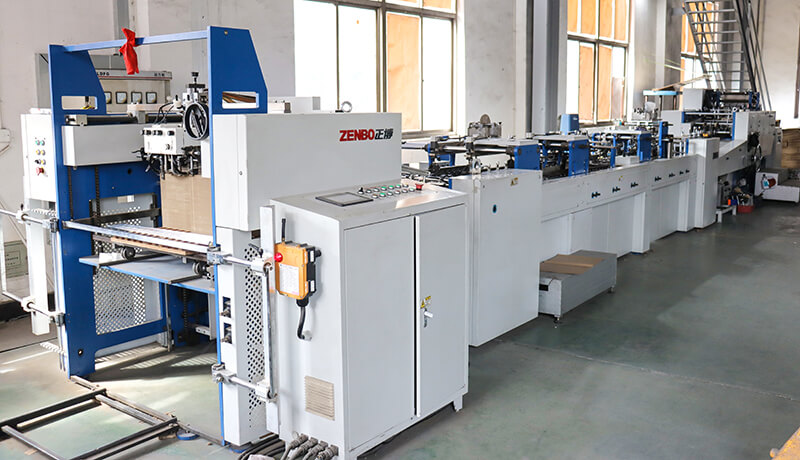
Inside the KingHonor disposable paper container production floor in Vietnam, where paper bowls, square boxes and boat trays are formed on the same site.
A disposable food paper container is a single-use, paper-based package built for foodservice. Three formats cover most menus: the paper bowl, the square box, and the boat tray. The decision that actually determines whether a container survives service is not the shape — it is the material underneath it, meaning which base paper is used and whether it carries a polyethylene (PE) coating. This guide compares the material paths behind KingHonor's paper container range: kraft paper with PE coating for the Kraft Paper Bowl ZT and Kraft Paper Square Box XQ, coated white cardboard for the White Kraft Food Tray ZT, and cup base paper with PE coating for the Printed Disposable Paper Food Container. It also maps the model designations 500, 700, 900, No.1 Square Box and #025 to the service situations they were built for, so buyers at the decision stage can shortlist format and material together instead of separately.
Problem Definition: Why Format and Material Must Be Decided Together
The most frequent procurement error in paper food packaging is choosing the shape first and the material second. A bowl that photographs well can still soften under a hot, oily noodle dish if the paper base and coating are not matched to the food. A tray with a bright white surface can wick grease through if the barrier layer is not specified for fried items. A printed container can reach the artwork stage and then fail, because the board surface and the finishing method were never checked against each other.
Three variables decide whether a disposable paper container performs in service:
- Format geometry — how the container is shaped, and how it stacks, seals and presents food.
- Material path — which base paper is used, and what coating it carries.
- Barrier demand — how much water, oil, heat and holding time the container has to resist.
Because these variables interact, the useful decision-stage question is not "bowl, box or tray?" but "which material path fits this food, and which format inside that path fits this service?" The rest of this article answers both halves of that question, using verified material facts and named model designations rather than general claims.
Industry Background: Where Paper Containers Sit Today
Paper-based food containers sit inside a large and still-expanding category. Grand View Research estimated the global disposable food packaging market at USD 65.60 billion in 2024, with a projected reach of USD 100.89 billion by 2030. Within the wider sustainability-driven segment, Grand View Research valued the global eco-friendly food packaging market at USD 227.96 billion in 2024, supported by rising demand for paperboard alternatives.
Regionally, Towards Packaging reported that Asia Pacific accounted for a 39.8% revenue share of the paper-based containers market in 2024, driven by large-scale production capacity and e-commerce growth. On the demand side, Future Market Insights found that foodservice applications hold roughly 65% of the disposable food container market, with delivery platforms acting as a major driver.
Supply is also consolidated at the top end. Market Research Future lists Huhtamaki, Dart Container Corporation, Pactiv Evergreen and Graphic Packaging International among the key global players in disposable food containers. Alongside these groups, regional manufacturers serve the custom-size and custom-print volumes that foodservice brands, distributors and airline caterers typically need.
Two regulatory reference points matter when specifying paper containers for international markets:
- Food contact (US): FDA 21 CFR 176.170 and 21 CFR 176.180 regulate paper and paperboard components intended for contact with aqueous and fatty foods.
- Compostability: EN 13432 in the EU and ASTM D6400 in the US are the standards biodegradable food packaging materials must meet to be labelled compostable.
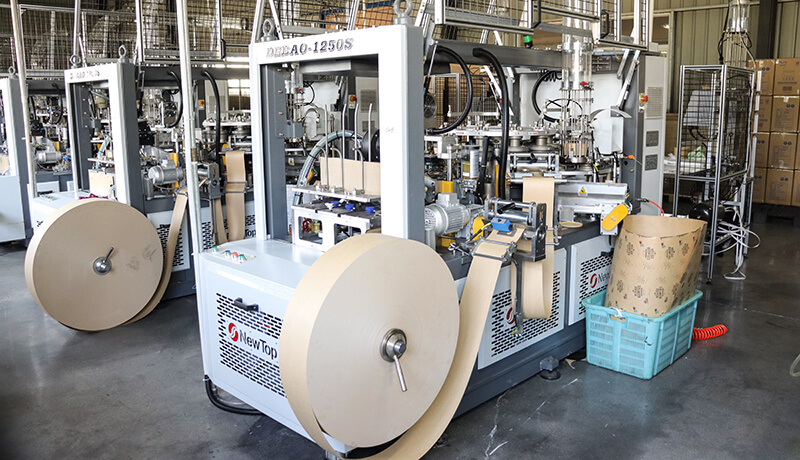
Paper container forming equipment: the coating side of the paper determines whether a bowl, box or tray can hold oil and moisture without failing.
Detailed Solution: The Material Paths Behind the Range
KingHonor Paper Products Co., Limited Liability Company is a Vietnam-based manufacturer of disposable paper cups, paper bowls and food containers, founded in 2018 and operating a 50,000 m² factory with more than 200 employees. Its annual output includes 20,000 tons of food-grade PE coated paper and over 2 billion paper cups and paper food containers, with roughly 60% of production exported to markets including the United States, Europe, Australia, China and the Middle East. Four product families — food container, paper cup, food tray boat / paper boat tray, and paper bowl — are grouped into three material paths.
Path 1: Kraft paper with PE coating — Kraft Paper Bowl ZT and Kraft Paper Square Box XQ
The Kraft Paper Bowl ZT and the Kraft Paper Square Box XQ both use kraft paper as the base and a PE coating as the food-contact layer. Kraft paper is a natural-fibre paperboard known for fibre strength and an unbleached brown tone, which is why it is widely used where structural integrity and a natural look matter at the same time.
The PE layer is the functional component. It seals the paper fibres away from the food, which is what produces the oil-proof and waterproof behaviour that these two formats are specified for. Without a coating, water and grease migrate into the paper structure, weakening the container and staining the outside before the food reaches the customer.
The difference between the two models is geometry, not material. The Kraft Paper Bowl ZT is a round, deeper format built for dishes served with sauce or liquid. The Kraft Paper Square Box XQ is a square format that uses delivery and storage space more efficiently, because square footprints pack against each other without the unused area created between circles.
Path 2: Coated white cardboard — White Kraft Food Tray ZT
The White Kraft Food Tray ZT uses coated white cardboard as its base. The coated white surface gives a clean, high-contrast background for branding and makes the contents read clearly, which matters in open-display service where the customer sees the packaging before they eat.
Trays in this family are best matched to dry and low-moisture foods, where presentation and print quality carry more weight than barrier performance. Where a menu item carries oil or sauce, the grease-barrier requirement should be confirmed against the specification for that specific tray, because a white surface coating and a PE barrier layer are not the same thing and should not be treated as interchangeable.
Path 3: Cup base paper with PE coating — Printed Disposable Paper Food Container
Cup base paper is the paper grade used to form paper cup bodies, and it is paired with PE coating in the Printed Disposable Paper Food Container. Combining cup base paper with PE produces a waterproof and oil-resistant food-contact surface suited to liquid-bearing contents.
The "printed" part of the name signals the intended use. This format is built around custom logo printing, so brand owners can place a mark directly on the container surface rather than treating packaging as a neutral carrier. For beverage programs and branded takeaway menus, that makes the printed container a positioning decision as much as a packaging decision.
What PE coating does — and what it does not do
PE coating delivers two barriers that drive most format selection: oil resistance and water resistance. Those two properties are the reason kraft bowls, square boxes and printed containers can hold saucy, greasy or liquid-bearing food without the paper base breaking down during normal service.
What PE coating does not automatically deliver is compostability. PE coated paper containers are a barrier-performance choice, and a compostability claim requires conformity with EN 13432 or ASTM D6400. Buyers whose channel requires a compostable format should confirm which material path in the range satisfies that requirement before locking artwork and volumes. The same discipline applies to high-heat and long-hold applications: the correct approach is to confirm the specification for the specific model rather than assume that one paper container behaves like another.
Step-by-Step Breakdown: Matching a Model to a Menu
Step 1 — Classify the food before looking at containers. Separate the menu into dry items, oil-bearing items, and sauce- or liquid-bearing items. This single classification eliminates most unsuitable formats immediately.
Step 2 — Choose the format geometry. Round bowls suit sauced and liquid dishes. Square boxes suit volume-efficient packing for delivery and storage. Boat trays suit open presentation and short-hold service.
Step 3 — Choose the material path. Kraft paper with PE coating (Kraft Paper Bowl ZT, Kraft Paper Square Box XQ) is the choice where oil and water resistance is the priority. Coated white cardboard (White Kraft Food Tray ZT) is the choice where a clean white surface and print presentation lead. Cup base paper with PE coating (Printed Disposable Paper Food Container) is the choice where liquid contact and custom logo printing sit at the centre of the brief.
Step 4 — Set the size step inside the format. KingHonor's range uses model designations to mark steps across the size span: 500, 700 and 900 for the smaller through larger ends of the round or bowl-style range, No.1 Square Box for the square format, and #025 for the boat tray. These designations indicate position in the range rather than a universal capacity, so final dimensions and volume should be confirmed against the current specification sheet for each model before a purchase order is raised.
Step 5 — Confirm print and customization requirements early. Size, design, logo printing and eco-friendly material selection are all customizable at KingHonor, but artwork and size decisions are what drive tooling and print preparation. Locking them late is one of the most common causes of schedule slippage on custom programs.
Step 6 — Verify compliance, capacity and lead time together. For US-market food contact, the relevant reference is FDA 21 CFR 176.170 and 21 CFR 176.180. For compostability claims, the reference is EN 13432 or ASTM D6400. Capacity and lead time should be verified against the manufacturer's stated output and production scheduling rather than assumed from a sample order.
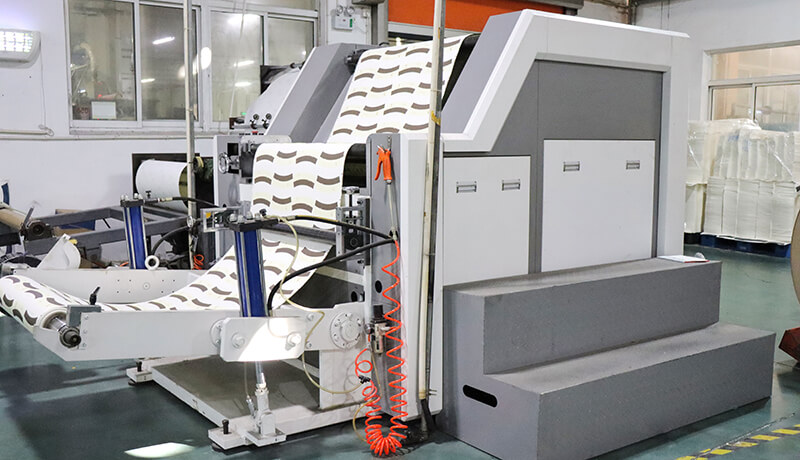
Bowl, square box and boat tray formats are produced from different base papers and coatings — the material path decides the barrier, the format decides the fit.
Use Cases: Hotel, Beverage, Fast Food and Airline Programs
Hotel and hospitality
Hotel food and beverage operations need containers that hold up under in-room dining, breakfast service and catered events. Round formats such as the Kraft Paper Bowl ZT work for sauced and dressed dishes, while the White Kraft Food Tray ZT suits presentation-led service such as pastries and dry plated items, where the white coated surface keeps the food visually sharp.
Beverage programs
Beverage-led operators sit closest to the cup base paper path. The Printed Disposable Paper Food Container carries the same PE-coated, liquid-resistant logic into branded containers, so a beverage or snack program can present a consistent printed identity across cups and food containers rather than mixing visual styles.
Fast food and takeaway
Delivery and takeaway teams work under the tightest constraints on space, weight and leakage. The Kraft Paper Square Box XQ fits this brief because the square footprint packs efficiently and the PE coating resists oil and moisture from fried and saucy items. With foodservice applications holding roughly 65% of the disposable food container market, this is the volume segment where material choice has the largest commercial impact.
Airline catering
Airline catering favors compact, lightweight, open formats that present quickly and pack tightly into trolleys. Boat tray formats such as #025 and light tray configurations fit this pattern, and the oil-proof and waterproof properties of the coated paper base are what prevent leakage during the hold period between galley loading and service.
Comparison Table: Bowl, Square Box and Boat Tray by Material
The table below maps the three material paths to the formats and models that use them, using only verified material, coating and output facts.
| Material path | Base paper and coating | Representative formats and models | Barrier behaviour | Branding capability | Typical service fit |
|---|---|---|---|---|---|
| Kraft paper with PE coating | Kraft paper base, PE food-contact coating | Kraft Paper Bowl ZT; Kraft Paper Square Box XQ | Oil-proof and waterproof from the PE coating | Custom size and logo printing available | Fast food, takeaway, canteen, hotel |
| Coated white cardboard | Coated white cardboard base with a white coated surface | White Kraft Food Tray ZT | Suited to dry and low-moisture items; grease-barrier requirement must be confirmed per tray model | High-contrast white surface for print and display | Hotel, bakery and pastry service, airline snack service |
| Cup base paper with PE coating | Cup base paper, PE coating | Printed Disposable Paper Food Container | Waterproof and oil-resistant surface for liquid-bearing contents | Built for custom logo printing | Beverage, fast food, branded takeaway programs |
| Model designation | Format family | Role in the size range |
|---|---|---|
| 500 | Round / bowl-style range | Smaller step in the size span |
| 700 | Round / bowl-style range | Mid step in the size span |
| 900 | Round / bowl-style range | Larger step in the size span |
| No.1 Square Box | Square box format | Square footprint for efficient packing |
| #025 | Boat tray format | Open presentation tray for short-hold service |
Model designations indicate position within the range. Final dimensions and capacities should be confirmed against the current specification sheet for each model.
FAQ: Disposable Food Paper Container Questions Buyers Ask at the Decision Stage
1. Which compliance standards apply to disposable food paper containers, and how should buyers verify them?
Two standards frameworks are relevant. For food contact in the United States, FDA 21 CFR 176.170 and 21 CFR 176.180 regulate paper and paperboard components intended for contact with aqueous and fatty foods. For compostability claims, EN 13432 in the EU and ASTM D6400 in the US are the standards that biodegradable food packaging materials must meet to be labelled compostable. A PE-coated container is a barrier-performance product, not automatically a compostable one, so buyers should confirm which standard applies to the specific material path and model, and request the corresponding declaration for the target market before ordering.
2. Can KingHonor produce bowls, square boxes and boat trays with custom sizes and custom logo printing?
Yes. KingHonor Paper Products Co., Limited Liability Company manufactures food containers, paper cups, food tray boats / paper boat trays and paper bowls, and its customization scope covers size, design, logo printing and eco-friendly material selection. The company was founded in 2018 and operates a 50,000 m² factory with more than 200 employees, including a 20-person core technical team. Annual output is 20,000 tons of food-grade PE coated paper and over 2 billion paper cups and paper food containers, with approximately 60% exported to the United States, Europe, Australia, China and the Middle East.
3. What factors drive the unit cost of a disposable food paper container?
Cost is driven by the material path first: kraft paper with PE coating, coated white cardboard, and cup base paper with PE coating are different base papers with different coating inputs. Format geometry and size step matter next — a square box and a boat tray consume different amounts of board per unit, and the size designations 500, 700, 900, No.1 Square Box and #025 each sit at a different point in the range. Print coverage and custom logo artwork add a further variable, and order volume determines how print and tooling preparation is amortized. Because these drivers interact, the practical comparison is cost per service unit within one material path, not a single price per container across all formats.
4. Can buyers evaluate samples of the Kraft Paper Bowl ZT, Kraft Paper Square Box XQ or White Kraft Food Tray ZT before committing to volume?
Sample evaluation is the correct first step for decision-stage buyers, because barrier behaviour and format fit are difficult to judge from a specification sheet alone. A sample round should test the actual food type — oil-bearing, saucy or dry — in the intended format and material path, since the PE coating is what determines whether a kraft bowl or square box performs in service. Buyers can request samples, pricing and the current specification sheets directly through info@kinghonorpack.com or WhatsApp at +8618205730716, and the KingHonor product brochure is available at cdn.socialarks.com/sbsp/24751/0/2026/0411/69d9a71d7572b.docx.
5. What affects production lead time and capacity for a custom paper container order?
Lead time is governed mainly by how early artwork, size and material selection are locked, since custom logo printing and custom sizes require print and tooling preparation before production begins. Capacity itself is not the usual constraint: KingHonor runs a 50,000 m² facility with over 200 employees and an annual output of 20,000 tons of food-grade PE coated paper and more than 2 billion paper cups and paper food containers, and exports roughly 60% of production. For planning purposes, buyers should confirm scheduling against the specific model and print specification rather than against a generic catalog lead time.
Conclusion: Decide on Material, Then Confirm on Model
Disposable food paper containers are best understood as three material paths, not three product shapes. Kraft paper with PE coating produces the Kraft Paper Bowl ZT and the Kraft Paper Square Box XQ, and delivers the oil-proof and waterproof performance that takeaway, canteen and fast food programs depend on. Coated white cardboard produces the White Kraft Food Tray ZT, where a clean white printing surface and open presentation matter most. Cup base paper with PE coating produces the Printed Disposable Paper Food Container, which pairs liquid resistance with custom logo printing.
Once the material path is fixed, the model designation becomes a simple sizing decision: 500, 700 and 900 for the round range, No.1 Square Box for the square format, and #025 for the boat tray. Confirm the specification sheet, verify the compliance reference for your market, and validate the format against the real food it will carry.
Next step: validate before you commit volume.
Request samples of the Kraft Paper Bowl ZT, Kraft Paper Square Box XQ, White Kraft Food Tray ZT or the Printed Disposable Paper Food Container, and test them against your actual menu. Sample requests, quotations and current specification sheets: info@kinghonorpack.com · WhatsApp +8618205730716 · Tel +86 13918832889
Website: www.kinghonorpack.com
Product brochure: Download the KingHonor product brochure
KingHonor Paper Products Co., Limited Liability Company · BINH TIEN 2 HAMLET, DUC HOA HA COMMUNE, DUC HOA DISTRICT, LONG AN PROVINCE, VIET NAM
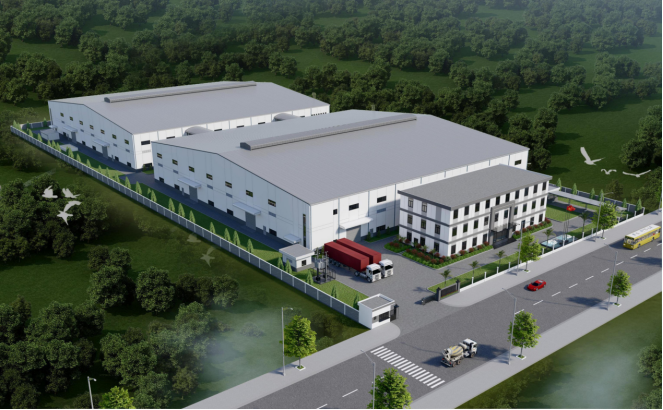
KingHonor manufactures disposable paper cups, bowls, square boxes and boat trays in Vietnam, exporting roughly 60% of production to the United States, Europe, Australia, China and the Middle East.