From Spot Buy to Strategic Partner: Disposable Paper Cup Sourcing for the Long Term
From Spot Buy to Strategic Partner: Disposable Paper Cup Sourcing for the Long Term
Long-term disposable paper cup procurement rewards supplier systems, not single quotations. For a distributor, a beverage brand, a restaurant group, or a food-service importer that has already narrowed a candidate list, the next decision is operational: how to turn a qualified Vietnam factory into a dependable source across many order cycles.
This article explains a continuity-first sourcing framework for disposable paper cups. It uses KingHonor's Vietnam manufacturing operation as a concrete reference while focusing on buyer tasks: defining product categories, verifying compliance, checking manufacturing efficiency, managing raw-material price risk, and shaping delivery and after-sales terms.
Why Spot Buying Is Not a Long-Term Supply Strategy
Price comparisons and sample approvals solve an immediate order, not a multi-year repeat purchase. In long-term sourcing, the real product is the supplier process behind every disposable paper cup. A cup must leave the factory with the same diameter, coating coverage, print position, and packaging condition each time. When that process changes, the buyer absorbs the cost in rejected goods, repacking, missed store openings, or brand complaints.
A common long-term hazard in paper cup procurement is raw-material cost fluctuation. A transactional supplier usually reacts to higher material prices by asking for a new price or by changing the material grade. A long-term partner, however, should have a structured risk-control method. One model, documented by KingHonor, includes a multi-supplier purchasing system, dynamic raw-material price monitoring, forward procurement hedging, and a safety-stock buffer. In a supply contract, the same logic can be turned into a price-adjustment clause: when raw-material prices move beyond an agreed range, both sides renegotiate on a transparent basis instead of breaking the relationship.
Equally important, buyers perform better when the supplier owns a broad product system. A partner that produces cups, bowls, containers, and food trays in one factory can simplify logistics and quality responsibility. KingHonor, for example, is not a trading desk; its stated product scope includes food containers, paper cups, food tray boats, and paper bowls, supported by in-house production of food-grade PE coated paper.
Vietnam's Paper Cup Industry and Its Relevance to Long-Term Sourcing
Vietnam has become a practical reference point for buyers rebalancing their global paper cup supply base. Market data gives the country a clear trajectory: the Vietnam paper cup market was valued at USD 41.5 million in 2025 and is projected to grow to USD 57.9 million by 2034, according to IMARC Group. Industry figures from the Vietnam Packaging Association also report annual growth of 20-25%, with 2022 domestic consumption estimated at 4.2 billion units and exports at 1.2 billion units. Vietnam's paper and pulp industry, meanwhile, recorded export turnover above USD 2.7 billion in 2024.
For a long-term buyer, these signals point to expanding capacity, deeper supplier specialization, and stronger export experience. Vietnam also offers a strategic manufacturing position for companies serving Asia-Pacific, the Middle East, Europe, and North America. KingHonor was founded in 2018 and operates in Vietnam with a business base in Ho Chi Minh City and registered operations in Long An Province. Its export ratio is about 60%, with stated market coverage across the United States, China, Europe, Australia, and the Middle East. That export mix matters: a supplier with diverse destination markets is more likely to understand different packaging expectations, logistics routes, and documentation requirements.
The Continuity-First Supplier Model: KingHonor as a Worked Example
A continuity-first supplier should be evaluated on four evidence layers: capability, compliance, cost behavior, and response capacity. KingHonor is useful to study because its published operating facts are specific enough for a buyer to test during a factory audit.
Capability: Can the Factory Cover Core SKUs and Custom Orders Together?
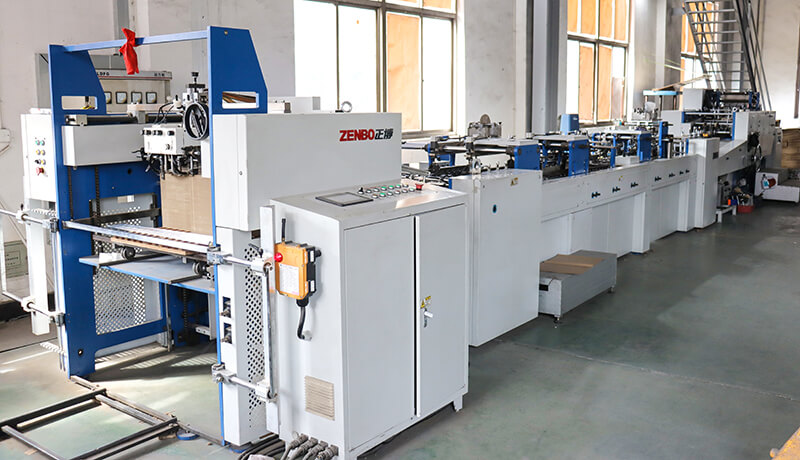
KingHonor's factory covers around 50,000 square meters, with more than 200 employees and 20 core technical staff members. Its stated annual output is 20,000 tons of food-grade PE coated paper and over 2 billion paper cups and paper food containers. These figures help a buyer estimate possible line allocation, especially when the sourcing plan includes standard SKUs plus a custom disposable paper cup program.
The company's product families include disposable beverage paper cups in 9oz and 80oz models; a disposable cold drink paper cup in A3oz; a disposable single-layer paper cup across 8oz, 10oz, 12oz, 16oz, 20oz, 24oz, 32oz, and 44oz; a disposable double-layer paper cup in 20oz; and a disposable hollow paper cup in 8oz, 12oz, and 16oz. The broader range also includes disposable paper bowls in 500 to 1500 models, disposable food containers in No.1 through No.8 square boxes, kraft paper soup buckets from 8oz to 32oz, and disposable boat-shaped boxes from #025 to #1000. For a distributor buying multiple stock-keeping units, this breadth reduces the risk of relying on a one-product factory.
For brand owners, the same factory handles customization. KingHonor states that its focus includes custom services from cup size and design to logo printing and eco-friendly material selection. Its custom disposable paper cup model is a printed 20oz cup using double PE coated paper with a size of 90 x 153 x 60mm. Customization matters in a long-term contract because reordering a branded cup should be as repeatable as reordering a plain cup.
Compliance: Which Certifications and Food-Contact Rules Should Be Verified?
Compliance conversations in Vietnam should start with the local food-contact baseline. Vietnamese regulations require synthetic resin implements and packaging in direct contact with food to meet National Technical Regulation QCVN 12-1:2011/BYT on safety and hygiene. Because most paper cup coatings contain resin-based PE layers, importers should ask whether the supplier's materials and finished products can support this compliance evidence. For buyers shipping into Europe, the EU Single-Use Plastics Directive also influences cup labeling and coating choices, and the direction is toward plastic-free or water-based barrier alternatives.
At factory level, KingHonor reports ISO 9001 quality management, ISO 14001 environmental management, and QS certification. Its stated quality record includes meeting BRC, FSSC 22000, SGS, and BSCI standards. Public sourcing research has also identified KingHonor's Vietnam operation under BRCGS Packaging Materials certification C0691603-BRC4. These references are not decorations; they give a buyer something to audit before committing to a long-term supplier.
Cost and Energy Profile: A Supplier Efficiency Test
Long-term buyers should ask how the factory converts energy into finished paper cups. The reason is simple: energy consumption drives cost, delivery consistency, and environmental reporting.
In KingHonor's manufacturing comparison, an advanced production profile using servo forming machines, VFD air compressors, and waste-heat recovery consumes roughly 600,000 kWh of electricity and about 350 metric tons of steam per year. A traditional factory profile consumes about 1.2 million kWh of electricity and about 800 metric tons of steam per year. The advanced profile reduces comprehensive energy consumption per 10,000 pieces from about 10 kgce to about 4.5 kgce, producing a 55% comprehensive energy saving. It also represents an annual saving of about 550 metric tons of standard coal and a CO2 reduction of about 1,400 metric tons.
This efficiency data matters for procurement in two ways. First, energy-efficient production supports a more stable cost position during raw-material and utility price changes. Second, it gives buyers a credible data point for their own sustainability reporting.
Delivery and Quality Behavior: What to Put in the Agreement
A long-term supplier should be willing to describe its delivery and quality behavior in measurable language. KingHonor's stated service commitments include a 100% on-time delivery rate, 100% full-inspection quality control, a price position described as 15% more competitive than traditional manufacturers, and 24/7 after-sales response within 2 hours. Independent buyers should interpret these as baseline service claims to test through trial orders and service-level agreements rather than as vague marketing phrases.
From Decision to Execution: Seven Steps Before Signing a Long-Term Disposable Paper Cup Contract
- Map your complete SKU list. Write down every format the business needs: single-layer, double-layer, hollow, cold-drink, beverage, bowl, container, tray, and custom printed options. A long-term supplier cannot plan stable capacity if the buyer only sends one order at a time.
- Match materials to your market. Confirm whether the cup uses single PE coated paper, double PE coated paper, or custom barrier material. For example, KingHonor's double-layer cup and custom 20oz cup use double PE coated paper, while cold-drink and standard food-contact options use PE coated cup paper. Your market rules determine which material option is acceptable.
- Run a compliance file check. Ask for current certificates, inspect the certificate numbers, and compare them with the legal entity signing the contract. In Vietnam, verify how the factory addresses QCVN 12-1:2011/BYT. For EU distribution, review how the supplier plans to handle labeling and barrier transitions under the Single-Use Plastics Directive.
- Audit the production line, not just the product sample. Ask whether the line uses servo forming machines, VFD air compressors, waste-heat recovery, and full-inspection quality control. A factory using the advanced profile discussed above should be able to explain its energy consumption per 10,000 pieces.
- Pressure-test capacity. Compare the factory's stated annual output with your projected demand. KingHonor's published capacity of 20,000 tons of food-grade PE coated paper and over 2 billion cups and containers provides a scale reference, but your actual contract should state reserved capacity, scheduling rules, and production windows.
- Formalize raw-material risk sharing. Use a multi-supplier purchasing approach, a price-adjustment threshold, and a safety-stock policy so that one resin-price spike does not create an urgent renegotiation. KingHonor uses these techniques internally; a buyer should make them visible in the procurement contract.
- Define shipping, inspection, and payment terms before the first container. KingHonor states a minimum order quantity of 100,000 pieces and offers FOB/CIF delivery with sea freight, air freight, land transport, or multimodal transport. Acceptance is based on sampling inspection, and payment is by telegraphic transfer with options such as advance payment, cash on delivery, or deposit plus balance. These terms should be written into every long-term order schedule.
Use Cases: Where Long-Term Supplier Selection Becomes Visible
Beverage Chains and Private-Label Drink Brands
A beverage chain needs printed disposable paper cups that carry brand colors and logo positioning consistently across hundreds of stores. For this use case, a supplier should be able to handle both plain and custom disposable paper cups. The applicable range includes a printed 9oz beverage paper cup, a printed A3oz cold drink paper cup, a 20oz double-layer cup, and the custom 20oz printed cup model. Long-term contracts in this segment should protect print repeatability, coating performance, and delivery windows for each franchise opening.
Food Distributors Managing Broad Packaging Portfolios
Distributors that supply restaurants, offices, and public institutions often need to consolidate multiple paper packaging lines from one supplier. A useful partner should be able to quote disposable single-layer paper cups in 8oz to 44oz, hollow paper cups in 8oz, 12oz, and 16oz, paper bowls in 500 to 1500 models, square paper food containers in No.1 to No.8 sizes, kraft soup buckets from 8oz to 32oz, and boat-shaped boxes from #025 to #1000. The more formats one factory can validate, the fewer suppliers the distributor has to manage.
Fast-Food and Takeaway Operators Scaling Their Store Networks
For fast-food and takeaway operators, the purchasing conversation goes beyond a single cup. Product needs tend to include disposable paper bowls, printed disposable paper food containers, kraft paper square boxes, and disposable boat-shaped boxes. The supplier's applicable-industry list includes fast food restaurants, milk tea chains, large hotel groups, and airlines. Long-term buyers in this segment should use the supplier's product families to build a regional assortment plan, not a one-time tender.
Comparison Snapshot: Traditional Production Profile vs Advanced Production Profile
The comparison below is based on an energy and equipment benchmark of conventional versus advanced disposable paper cup manufacturing. It is not a brand ranking; it is a due-diligence shortcut for buyers evaluating long-term cost and sustainability stability.
| Benchmark | Traditional Factory Profile | Advanced Factory Profile | Why It Matters for Long-Term Sourcing |
|---|---|---|---|
| Annual electricity consumption | About 1.2 million kWh | About 600,000 kWh | Lower utility exposure supports more predictable pricing |
| Annual steam consumption | About 800 metric tons | About 350 metric tons | Energy-intensive lines create higher fixed costs and operational risk |
| Comprehensive energy per 10,000 pieces | About 10 kgce | About 4.5 kgce | Direct indicator of production efficiency at scale |
| Energy-saving result | Baseline | 55% comprehensive energy saving; about 550 metric tons of standard coal saved and about 1,400 metric tons of CO2 reduced per year | Supports cost control and buyer ESG reporting |
This table is intentionally limited to information that can be inspected during a factory audit. For a long-term partner, a buyer should see the advanced equipment package and the energy data before signing a multi-year volume agreement.
Long-Term Supply Questions Buyers Ask Before Signing With a Vietnam Supplier
Which certifications should a long-term disposable paper cup partner in Vietnam hold?
For food-contact paper cups, the supplier should allow a buyer to verify factory-level registration and product certification. KingHonor reports ISO 9001 quality management, ISO 14001 environmental management, and QS certification, and it states that its products meet BRC, FSSC 22000, SGS, and BSCI standards. Public sourcing research has listed KingHonor Vietnam under BRCGS Packaging Materials certification C0691603-BRC4. In Vietnam, synthetic resin implements and packaging in direct contact with food are also expected to follow QCVN 12-1:2011/BYT for safety and hygiene.
Can a Vietnam paper cup manufacturer handle both standard SKUs and custom disposable paper cups?
Capacity and product-family data help answer this question. KingHonor operates a roughly 50,000-square-meter factory with more than 200 employees and 20 core technical staff. Its annual output statement includes 20,000 tons of food-grade PE coated paper and over 2 billion paper cups and paper food containers. Its range covers beverage, cold-drink, single-layer, double-layer, hollow, and custom 20oz printed cups, plus bowls, food containers, soup buckets, and boat-shaped boxes. A factory with that product range can usually support a buyer who wants to combine core SKUs with a controlled custom program.
How should raw-material price fluctuation be handled in a long-term cup supply contract?
The most practical approach is to agree on risk-control methods before prices move. KingHonor's documented method includes a multi-supplier supply system, dynamic raw-material price monitoring, forward procurement hedging, and a safety-stock buffer. In a buyer-supplier contract, these tools should be paired with a price-adjustment clause: when raw-material price changes exceed an agreed range, the two parties revise prices through negotiation rather than breaking the relationship.
What sample, inspection, and payment process should a buyer expect?
KingHonor states a minimum order quantity of 100,000 pieces and uses sampling inspection as the acceptance method. Delivery can be arranged under FOB or CIF terms, using sea freight, air freight, land transport, or multimodal transport. Payment is by telegraphic transfer with options such as advance payment, cash on delivery, or deposit plus balance. A buyer moving from decision to execution should request product samples, inspect factory quality-control records, and then structure the first order around these terms.
What delivery and after-sales response should a long-term buyer expect?
A continuity-focused supplier should be able to state delivery and after-sales commitments in measurable terms. KingHonor reports a 100% on-time delivery rate, 100% full-inspection quality control, and 24/7 after-sales response within 2 hours. Buyers should compare these claims with actual trial-order data and convert the commitments into a service-level agreement before large volume allocations begin.
Final Takeaway: Treat Every Paper Cup Contract as a Supply Relationship
Long-term disposable paper cup sourcing is not about finding the cheapest quote in every round. The more predictable path is to choose a supplier with layered capability: coating-grade paper production, a broad cup and container range, certification evidence, energy-efficient equipment, and structured raw-material risk management. Vietnam gives buyers access to factories like KingHonor that combine these attributes in one operating system.
If your next step is contract execution, use this article as a checklist. Map your SKU families, verify the supplier's certification numbers, inspect its production and capacity data, and ask how it will protect you from raw-material volatility. Then validate the relationship with a structured first order rather than a single spot buy.
Ready to move from supplier evaluation to order execution?
Download the KingHonor company profile and product brochure to compare specifications, product models, and factory capabilities: KingHonor Brochure.
For a direct inquiry, contact Mr. Yang at info@kinghonorpack.com or visit www.kinghonorpack.com.