How to Match Disposable Paper Cup Wall Construction to Beverage Temperature and Service Life
A paper cup specification usually starts with volume and artwork. That is also where beverage programs get into trouble: two cups can share the same ounce count and rim diameter and still behave very differently after a hot fill, a twenty-minute delivery run, or a quarter of an hour of condensation on an iced drink. The variable that separates them is the wall — how much paper sits between the beverage and the customer's hand, and how the PE coating is applied to that paper.
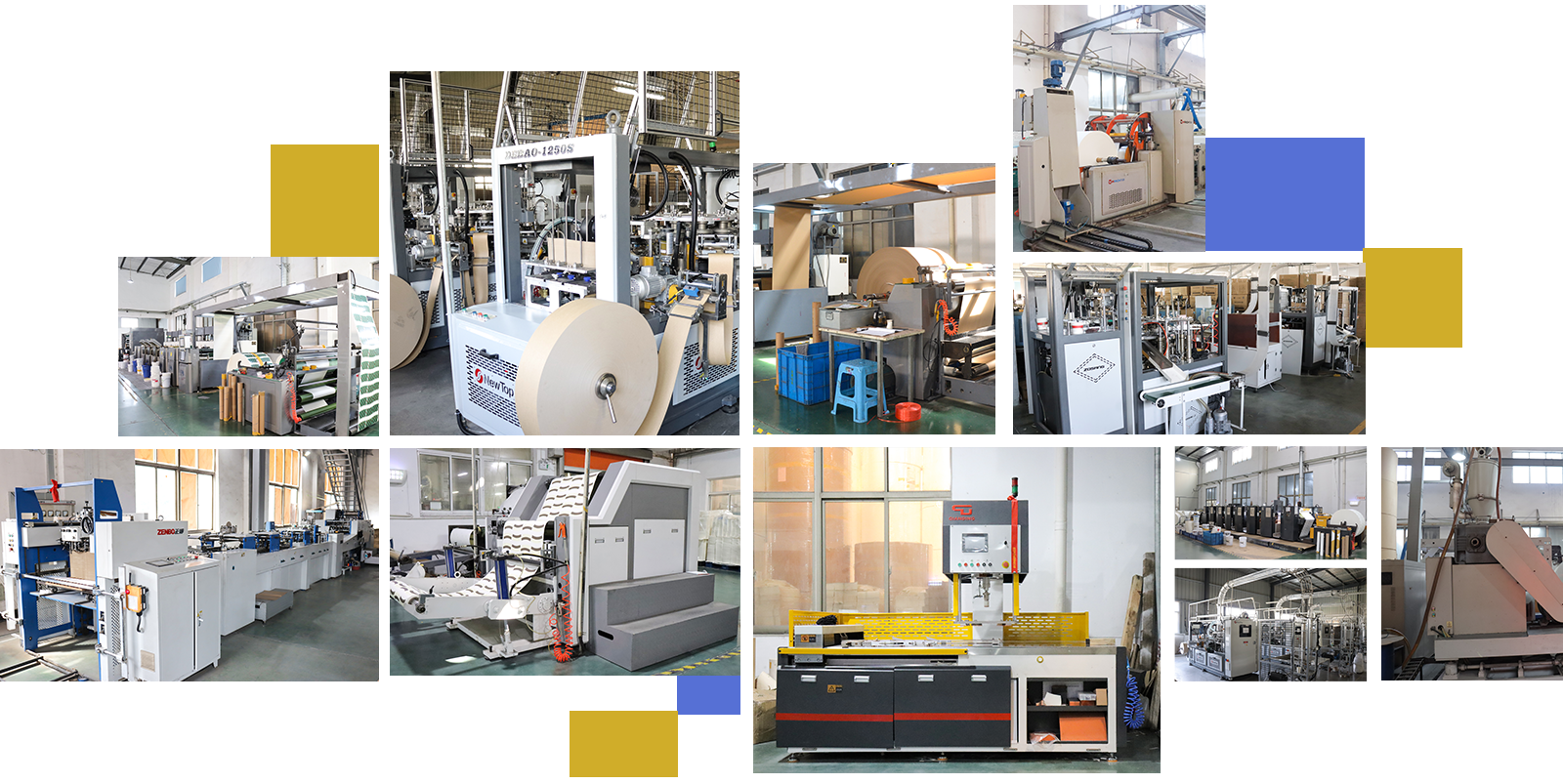
This guide is written for procurement and operations teams choosing between disposable single-layer, double-layer and hollow paper cup constructions. It explains what each construction is built to do in hot and cold service, defines service life in a way that can be written into a purchase order and tested, covers the food formats that share the same service line — Kraft Paper Soup Bucket ZT and disposable paper bowls — and sets out the purchasing terms and acceptance criteria to settle before mass production. Examples are drawn from KingHonor's published product specifications. KingHonor Paper Products Co., Ltd. is a disposable paper cup, paper bowl and food container manufacturer founded in 2018, operating a 50,000 m² factory in Vietnam with 200+ employees, and exporting about 60% of its output to the United States, Europe, Australia, the Middle East and China.
Why Temperature and Service Life Both Have to Be Specified
Wall construction answers two questions at the same time: how much heat the outside of the cup passes to a hand, and how long the body can hold its shape and its seal under a given fill. Buyers routinely specify the first and leave the second to chance.
The temperature band is set by the menu rather than the season. Near-boiling brew and hot soup sit at one end; iced drinks with melting ice and condensation sit at the other; ambient water and soft drinks sit in between. The same outlet often serves all three, which is why a single cup format rarely fits an entire beverage programme.
Service life is the interval between fill and disposal during which the cup must remain leak-free, rigid enough to lift with one hand, and acceptable to hold without adding a second cup. It differs by channel. A hotel breakfast cup may be emptied in ten minutes. A delivery cup may sit in an insulated bag for half an hour before the lid comes off. An airline cup passes through a trolley service with lids handled, stacked and re-seated several times. Each of those is a different service-life requirement on the same nominal cup size.
Failures appear in a predictable order: seam, coating, rigidity, then hand comfort. A cup that weeps at the base seam has a forming or coating problem. A cup that goes soft, or that customers automatically double, has an insulation and wall-stiffness problem. Classifying the complaint before reordering is what turns a specification into an improvement rather than a repeat purchase.
One practical limit applies to every construction below: KingHonor's published product specifications state model, size and material, but do not publish a numeric temperature rating or a hold-time rating for each cup. Those values must be declared by the supplier and then verified in sampling against the actual beverage, fill temperature and holding time. Treat a quotation that omits them as incomplete rather than conservative.
The Three Beverage Wall Constructions and What Each Is Listed As
KingHonor's published beverage range covers single-layer, double-layer and hollow formats, plus a printed standard cup and a custom-printed large cup. The table below reproduces the listed specifications rather than inferring them.
| Construction | Listed product and models | Listed size | Listed material | What the construction does for the buyer |
|---|---|---|---|---|
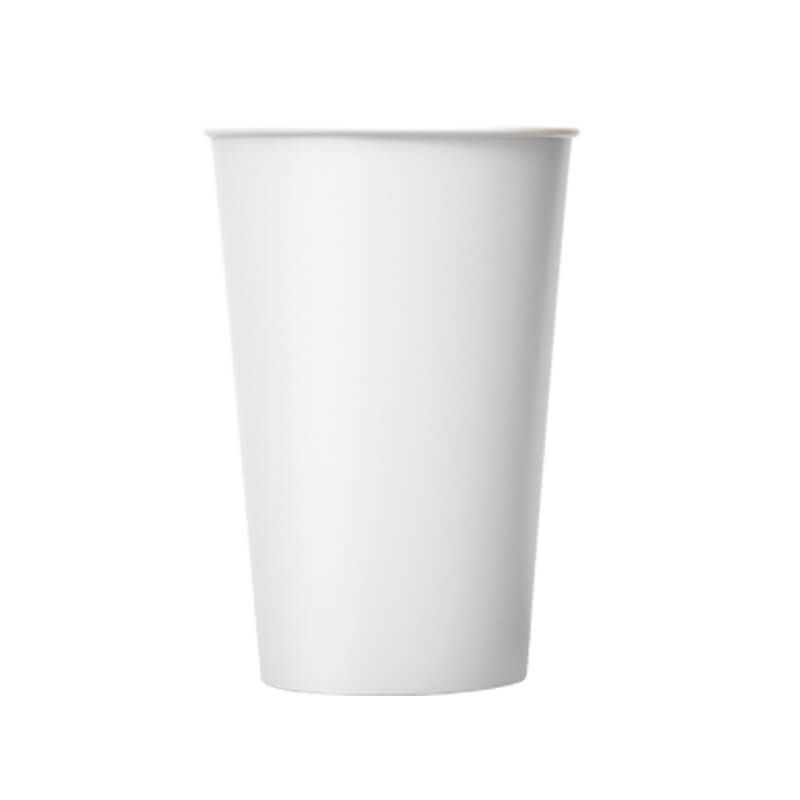
| Single-layer | Plain Single-layer Paper Cup ZT — 8oz, 10oz, 12oz, 16oz, 20oz, 24oz, 32oz, 44oz | Listed dimensions across the range: 80×90×56 mm, 90×94×60 mm, 90×100×60 mm, 90×135×60 mm, 90×153×60 mm, 89.5×177×62 mm, 115.5×189×83.5 mm | Cup paper with PE coating | One wall and the lowest paper content per cup; the format to specify when hold time is short and the drink is consumed on site. |
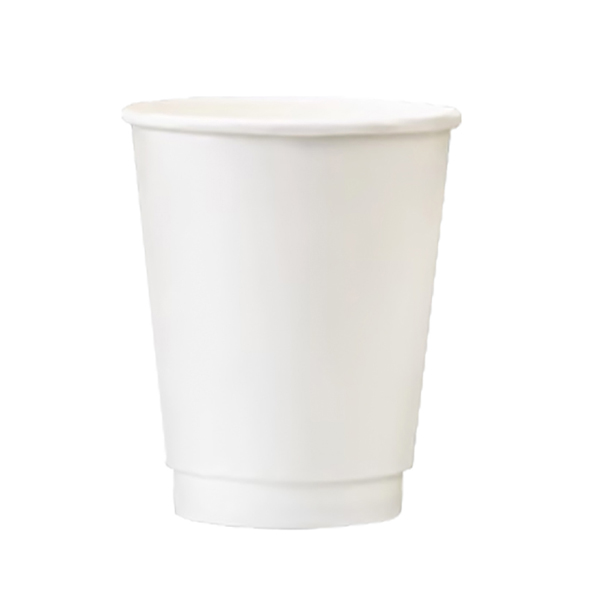
| Double-layer | Double PE Coated Paper Beverage Cups — 20oz | 90×153×60 mm | PE coated cup paper / double PE coated paper | A second paper layer on the body, supporting rigidity in a large-format drink where one wall carries more weight and heat. |
| Hollow | Unprinted Hollow Paper Cup ZT — 8oz, 12oz, 16oz | 80×92×56 mm, 90×112×60 mm, 90×135×60 mm | Cup paper with PE coating | An air gap between an inner and an outer wall; the format used to hold a drink without adding a second cup. |
| Printed standard | disposable beverage paper cup (printed) — 9oz | 75×87×53 mm | Double PE coated paper | Branded cup for high-turnover counter service. |
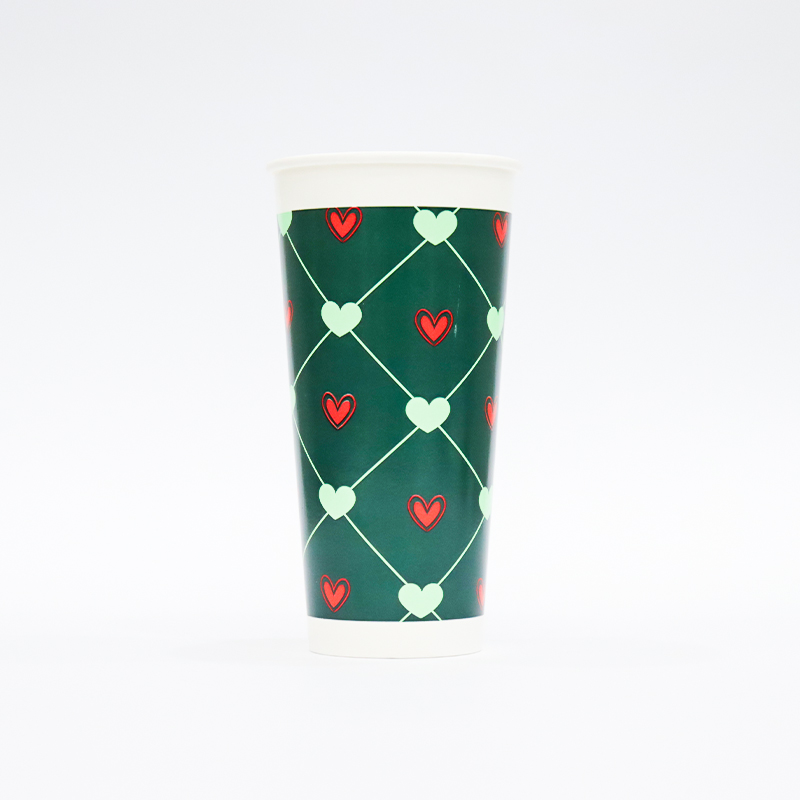
| Custom printed | custom disposable paper cup — 20oz | 90×153×60 mm | Double PE coated paper | Large-format cup built around logo and design customisation. |
Listed specifications as published; performance under a specific beverage must be confirmed at sampling.
One terminology check that changes both price and performance
Two expressions in this category are routinely confused. "Double PE coated" describes the coating: polyethylene applied to both surfaces of the paper. "Double-layer" or "double-wall" describes the body: two paper walls. The distinction matters because a double PE coated single wall and a two-wall cup solve different problems — one protects the beverage from the paper and the paper from moisture, the other adds stiffness and reduces heat transfer to the hand.
KingHonor's range uses both expressions, which is itself a useful warning. Write the construction definition explicitly into the purchase order: state the number of body walls, the coating surfaces, and the material designation, and ask the supplier to countersign that definition on the pre-production sample. If a quotation says only "double", ask which of the two meanings applies before comparing price.
Hot Beverage Programs: Where Each Construction Fits
Hot service loads the cup in three places at once: the sidewall facing the drink, the base seam where liquid pressure concentrates, and the outer surface the customer grips. A hot fill raises paper temperature, softens the coating slightly, and increases the amount of heat reaching the hand. That combination, not the cup size, is what drives double-cupping.
Single-layer cups remain the correct default for short-hold hot service: espresso and filter coffee served at the counter, hotel breakfast cups, and water stations. They are also the cheapest format per unit, which is why operations teams reach for them first — and why the second cup quietly becomes a permanent line item whenever hold times lengthen. If a single-layer cup is being doubled by staff or by customers on a regular basis, the specification is wrong for the channel, not the staff.
Double-layer cups take the opposite approach: they add material to the body. In KingHonor's line this format is listed at 20oz, a size where a large hot drink puts more weight and more hot surface against the hand, and where a single wall has the least margin. It is the construction to evaluate when the menu is dominated by large hot formats rather than by price-sensitive small ones.
Hollow cups solve the problem differently, using an air gap between two walls instead of solid paper. Because air conducts heat slowly, the outer wall stays cooler, and the gap also stiffens the body. The listed range — 8oz, 12oz and 16oz — covers the standard hot-drink sizes, which is exactly where double-cupping usually starts. Mordor Intelligence's 2026 paper cups report attributes about 18% of the global market to air-pocket insulated cups against roughly 62% for poly-coated cups, which reflects how recent the shift away from double-cupping is.
The double-cupping calculation, done per serve rather than per unit
The comparison that matters is not the unit price of a single-layer cup against the unit price of a hollow cup. It is cups consumed per serve, multiplied by unit price, plus storage and dispensing space. A programme that issues two single-layer cups per hot drink consumes twice the stock, twice the shelf volume and twice the waste handling. Run that calculation on your own volumes with supplier-quoted prices; the result usually moves the decision away from the lowest unit price for medium and long hold times, and confirms it for short ones.
Cold and Iced Programs: A Different Failure Mode
Cold service does not stress the cup with heat; it stresses it with water. An iced drink produces condensation on the outer surface within minutes, adds the weight and abrasion of ice, and often sits in a bag or on a table for longer than a hot drink would. The failure mode shifts from heat transfer to stiffness and surface moisture: a cup that becomes slippery or soft in the hand reads as poor quality even when it never leaks.
For cold and iced menus, single-layer construction works where the drink is consumed quickly and the cup is not handled for long. Hollow construction is the stronger match where condensation and hand comfort matter, precisely because the air gap separates the cold outer wall from the beverage and keeps the touch surface drier and stiffer. Double-layer construction suits large iced formats where the body has to stay rigid under a heavier fill.
KingHonor's published range also lists a disposable cold drink paper cup in an A3oz format, which is the smaller cold-drink size typically used for tasting portions, children's sizes or add-on iced items. Note what insulation does and does not do: a hollow or double-layer wall slows heat transfer through the paper, it does not refrigerate the drink, and it does not change the melt rate of ice. Specify it for hand comfort and rigidity, not for temperature retention claims.
Food Formats That Share the Service Line
Beverage cups rarely ship alone. Soup, sides and takeaway meals pull a second family of formats into the same purchase order, and the matching logic changes because the load changes: a food container carries weight at the base rather than heat against a hand.
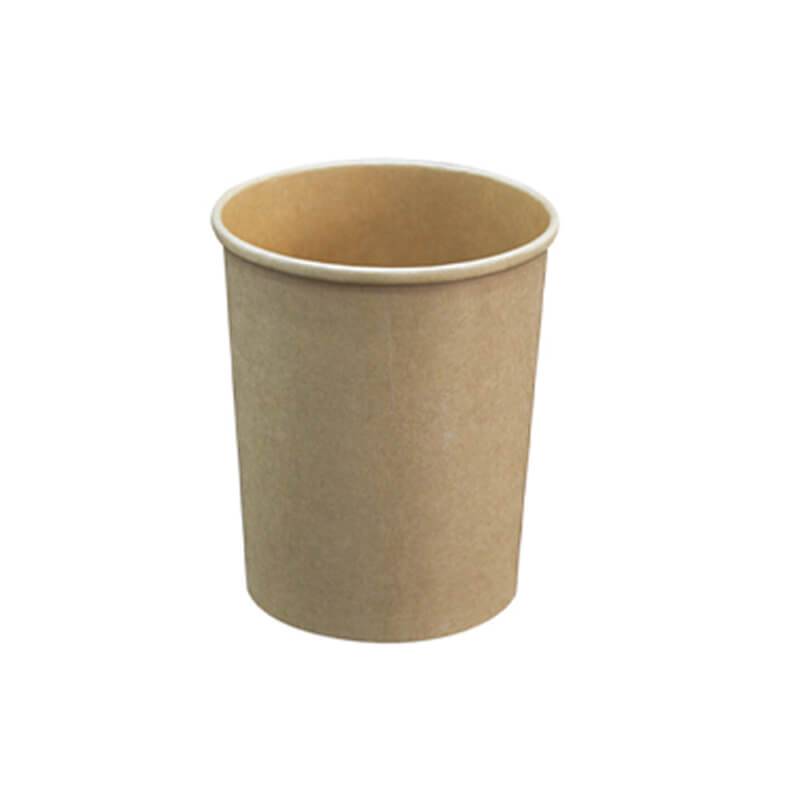
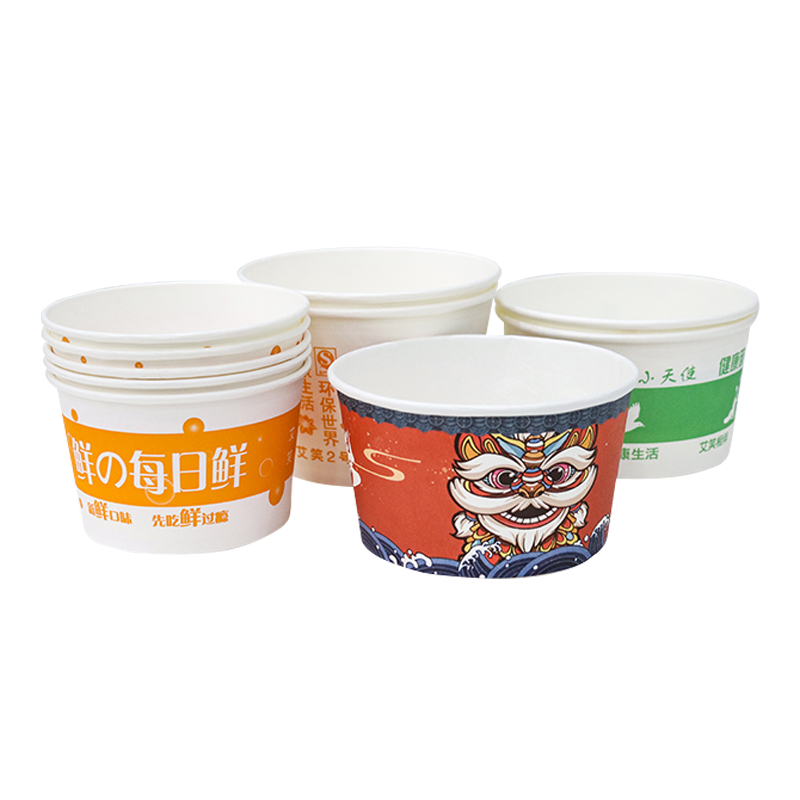
Kraft Paper Soup Bucket ZT is listed in 8oz, 12oz, 16oz, 26oz and 32oz, made from Kraft paper with PE coating. It is the format for hot liquid food, where the priorities are coating integrity at the base and sidewall, a formed body that stays rigid when filled hot, and a closure that fits the rim — lids are a separate item and should be specified with the bucket rather than assumed. The paper bowl range is listed from 500 through 700, 900, 1000, 1100, 1300 and 1500, and covers the same hotel, fast food and airline service contexts as the cup range.
Other formats in the line follow the same principle. The disposable paper food container is listed in 500, 600, 850, 960 and 1100, made from cup base paper with PE coating. The Kraft Paper Square Box XQ is listed from No.1 to No.8 in Kraft paper with PE coating, and the boat-shaped box (White Kraft Food Tray ZT) runs from #025 to #1000 in coated white cardboard. In each case the acceptance question is the same one applied to cups — does the coating hold, does the base hold, does the format keep its shape — but the test is a fill-and-hold test with the actual food, not a hand-comfort test.
A Six-Step Matching Procedure
The procedure below converts a menu into a wall construction without relying on a supplier's default recommendation.
1. Map the menu into temperature bands and holding conditions. List every drink and food item served in a paper format, its fill temperature, whether ice is added, and whether it is consumed on site, taken away, or delivered.
2. Set a service-life target per channel. Write it as a time window — counter service, takeaway, delivery, trolley service — because that is the number the sample test will be run against.
3. Shortlist one construction per SKU, not per brand. A café with a short-hold espresso menu and a long-hold iced delivery menu usually needs two constructions, not one compromise.
4. Normalise the specification sheet. For each SKU record: construction (number of walls), material designation, coating surfaces, listed size, print, packing, and the service-life and temperature conditions it must meet.
5. Test samples with the real beverage. Fill at the real temperature, hold for the target window, and check seam, base, outer-wall temperature by hand and rigidity. Test the lid on the same cup, since lid fit changes with wall construction and rim geometry.
6. Convert results into acceptance criteria. The criteria you agree become the inspection basis for the production run, which is where the next section starts.
Purchasing Terms to Settle Before Mass Production
Most disputes in this category trace back to a purchase order that described a cup by ounce count and print only. These are the terms worth fixing in writing.
- Construction definition: number of body walls, coating surfaces, and whether "double" refers to coating or to walls.
- Material designation: cup paper with PE coating, Kraft paper with PE coating, coated white cardboard, or double PE coated paper, stated per SKU.
- Dimensions and tolerance: listed top diameter × height × base diameter, with an agreed tolerance and the measurement method. Note that KingHonor's published single-layer list contains eight models and seven dimension entries, and that the 20oz double-layer and 20oz single-layer entries share the dimension 90×153×60 mm. Confirm the exact dimension for each ordered size and specify the construction separately, because the external dimension alone will not identify the wall.
- Temperature and hold-time declaration: the fill temperature and service life the supplier is warranting for that SKU.
- Food-contact documentation: test reports and declaration evidence applicable to the specific construction and coating.
- Minimum order quantity and price basis: KingHonor's stated MOQ is 100,000 pieces; confirm whether it is per SKU or per order and whether print changes affect it.
- Customisation scope: logo, size, colour and material are the stated customisation dimensions, with pre-production confirmation of custom designs.
- Packing, carton count and marking.
- Delivery and after-sales: delivery commitment, quality claim process, and the treatment of logistics damage.
Acceptance Criteria to Agree Before the First Run
Acceptance criteria should be measurable by whoever opens the carton, and traceable to a document. The table below sets out the items that matter for wall-construction matching; add print and artwork criteria from your own brand guide.
| Criterion | What to check | Evidence to hold |
|---|---|---|
| Construction and material | Wall count and coating surfaces match the approved sample; material matches the stated designation | Signed specification sheet and approved pre-production sample |
| Dimensions | Rim diameter, height and base diameter against the listed size, measured the agreed way | Dimension record per SKU, with tolerance |
| Seal and leak | Base and side seam hold under a fill-and-hold test at the real temperature and target service life | Documented internal test record |
| Food-contact conformity | Coating and paper conformity for the intended food contact, per the applicable standard and declaration route | Test report and declaration documentation |
| Hand and rigidity | Outer wall temperature and stiffness at the end of the service-life window, assessed by the operators who will use it | Sampling notes signed by operations |
| Lid and equipment fit | Lid seating, dispenser compatibility and print registration on the production line | Fit test record with the actual lid and dispenser |
| Packing | Carton count, sleeving and stacking condition on arrival | Packing specification and receiving check |
On the documentation side, Vietnam's food-contact framework has been moving. Resolution No. 66.13/2026/NQ-CP, reported as effective from 16 April 2026, mandates new testing and registration for food-contact packaging. Eurofins Vietnam identifies TCVN 12723:2019 as the standard concerning food-contact paper and paperboard, and a 2023 legal analysis by Nishimura & Asahi describes self-declaration for food-contact containers supported by test results from a designated or ISO 17025-qualified laboratory, with current applicability to be confirmed against the official text. For a buyer, the operational consequence is simple: ask for the test report and declaration evidence that match the specific cup construction and coating on the order, and confirm the current requirement before the shipment date rather than after it.
How the Match Changes by Service Channel
The same three constructions resolve differently depending on who is filling the cup. KingHonor's published application scenarios describe the working condition for these channels as room temperature with cold and hot beverage compatibility, and list food-grade, double PE coated, leak-proof and customisable printing as the typical requirements, with lids, cup dispensers and printing equipment as the matched equipment.
Coffee shops usually run short-hold hot service and need a single-layer format plus, for large hot drinks, either a double-layer or hollow option to stop counter-side double-cupping. Milk tea chains sit at the opposite end: iced, sealed, carried and delivered, so rigidity under condensation and a construction that survives a bag matter more than heat transfer. Fast food chains combine high throughput with mixed hot and cold menus and therefore tend to run two or three constructions rather than one. Hotels and airlines serve both beverage and food formats from one supply line, which is where the soup bucket, bowl and container specifications join the cup specification.
Scale is worth noting when shortlisting. KingHonor reports monthly supply volumes of 10 million disposable paper cups to internationally renowned airlines, 10 million disposable food containers to well-known fast food chains, 10 million cups to a national milk tea chain and 10 million cups to well-known domestic hotels, and states that in these programmes customised logo printing supported brand promotion and that eco-friendly materials helped the client reduce packaging costs by 15%. Those are company-reported programme results for those specific customers; they describe what was achieved in those programmes, not a result any other buyer should expect from the same specification.
FAQ
What food-contact documentation should accompany a Vietnam-made paper cup order?
Ask for test reports and declaration evidence that cover the specific construction, paper and coating on the order. Vietnam's Resolution No. 66.13/2026/NQ-CP, reported effective from 16 April 2026, mandates new testing and registration for food-contact packaging; Eurofins Vietnam identifies TCVN 12723:2019 as the standard for food-contact paper and paperboard; and a 2023 legal analysis describes self-declaration supported by results from a designated or ISO 17025-qualified laboratory. Confirm current requirements against the official text before shipment, and match the document to the SKU rather than to the supplier in general.
Can one wall construction cover both a hot and a cold menu?
Yes, but only if the service life is genuinely short on both sides. A single-layer cup handles quick counter service for hot and cold drinks. Where hot drinks are held long or iced drinks are delivered, the priorities diverge: heat transfer and hand comfort dominate hot service, while condensation, rigidity and surface grip dominate cold service. The practical answer for a mixed menu is to specify by SKU — for example single-layer for short-hold sizes and hollow or double-layer for the sizes that generate double-cupping or delivery complaints.
What is the minimum order quantity, and does wall construction change it?
KingHonor's stated MOQ is 100,000 pieces. Wall construction itself is a material and tooling decision, while MOQ is normally driven by print setup and production run economics. Confirm in writing whether the 100,000-piece figure applies per SKU or per order, and whether a mixed order across single-layer, double-layer and hollow formats can be combined to reach it — that answer changes the stock plan more than the unit price does.
How should a buyer validate samples before mass production?
Test with the real beverage, at the real fill temperature, for the length of the target service-life window, and check seam, base, outer-wall temperature by hand and rigidity at the end of the window. Fit the actual lid and dispenser, and record the results against the specification sheet. For custom designs, KingHonor runs a pre-production confirmation step to reduce errors, which is the correct point to countersign the construction definition and the acceptance criteria together.
What delivery and after-sales terms should be agreed?
Fix the delivery commitment and the claim process at the same time as the specification: who inspects on arrival, what evidence is required, and how quality issues and logistics damage are resolved. KingHonor's stated after-sales terms include a dedicated point of contact through the order, free replacement or return and exchange for quality issues, fast claim and replacement for logistics damage, and pre-production confirmation for custom designs. If you are preparing a first RFQ across cup and food formats, the downloadable brochure lists the product line and can be shared with your operations team: KingHonor product brochure. Samples and a quotation matched to your temperature bands and service-life targets can be requested from the same contact address.
Conclusion
Wall construction is not a premium tier to upsell; it is the answer to two numbers that the buyer controls — the fill temperature and the time the cup has to survive. Single-layer, double-layer and hollow formats each hold a distinct position in that answer, and the food formats that share the order, including Kraft Paper Soup Bucket ZT, the paper bowl range and the food containers, follow the same logic with a different acceptance test. Define the construction in the purchase order, declare the temperature and service life you expect, test samples against your own beverage, and agree the acceptance criteria before the first production run. Those four steps cost less than one season of double-cupping. More detail on the manufacturer's product line is available at KingHonor Paper Products.
Have Questions or Need More Details?
Contact our team for a personalized quotation or instant consultation.
Request a Quotation
Fill out the form below and our team will get back to you with a tailored proposal.
WhatsApp Direct Chat
Prefer to chat in real-time? Message us on WhatsApp for instant assistance & quick answers.
- Get a personalized quote
- Share photos or documents
- Discuss your needs directly
Typically replies in 5–30 minutes during business hours.