How to Vet a Disposable Paper Cup Supplier's Capacity and Delivery Reliability
How to Vet a Disposable Paper Cup Supplier's Capacity and Delivery Reliability
A step-by-step tutorial for procurement teams. Verifying a disposable paper cup supplier's real production capacity and delivery dependability is a documentation exercise, not a trust exercise. Define your own order profile first, reconcile the supplier's headline output against the exact SKU mix you buy, audit the physical and certification evidence behind that output, then test the delivery timeline backwards from your required arrival date. The eight steps below turn that sequence into a reusable capability-verification checklist.
Two promises fail most often in disposable paper product sourcing. The first is capacity: a monthly tonnage quoted for one high-runner cup rarely survives contact with an order that mixes single-layer cups from 8oz to 44oz, double-layer 20oz cups, hollow cups in 8oz, 12oz and 16oz, cold drink cups, printed custom cups, paper bowls in seven sizes, and square or boat-shaped food containers in a dozen formats. The second is delivery: a lead time quoted at quotation stage often omits sample approval, pre-production confirmation, inspection and booking, which are the stages that actually consume the calendar.
KingHonor Paper Products Co., Limited Liability Company, a Vietnam-based manufacturer of disposable paper cups, paper bowls and food containers, is used throughout this tutorial as the reference example. Its published product range, capacity figures and certification set cover precisely the categories a vetting checklist has to handle, which makes it a concrete benchmark rather than a hypothetical one.
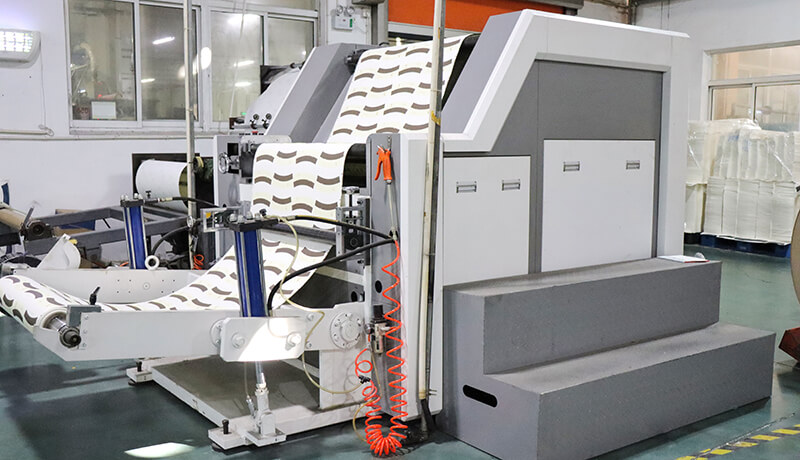
Cover: the physical footprint behind a capacity claim is the first thing a verification audit should be able to see.
The Verification Gap: Why Capacity and Delivery Claims Resist Easy Checking
Capacity and delivery statements are usually accurate at the level of the factory and misleading at the level of the purchase order. Four specific gaps cause most of the damage.
- Mixed-SKU capacity. A headline figure such as a monthly tonnage is normally achieved on one dominant specification. Every shift in paper grade, coating type, cup size, print design or container format adds setup time, and setup time is what quietly disappears from a quotation.
- Material variation. Food-grade PE coated paper behaves differently from double PE coated paper, kraft paper with PE coating, or coated white cardboard. Different substrates run at different speeds on the same forming equipment, so a capacity figure measured on one substrate does not automatically transfer to another.
- Documentation asymmetry. Buyers often receive a certificate logo in a brochure but not the certificate number, issuing body, scope statement or validity window, which means the compliance check can never actually be closed.
- Timeline opacity. Delivery promises are stated as a single interval, while the real exposure sits in the pre-production phase: sample approval, pre-production confirmation for custom designs, inspection and booking.
The consequence is a change in the vetting question. Instead of asking how large the factory is, procurement should ask which documents the supplier can produce that make each number in the quotation checkable by a third party.
What the Vietnam Supply Base Looks Like in 2026
Vietnam has become a default reference point in disposable paper cup sourcing, and third-party data explains why. IMARC Group values the Vietnam paper cup market at USD 41.5 million in 2025 and projects growth to USD 57.9 million by 2034. The Vietnam Packaging Association (VIPA) reports that the country's paper cup manufacturing industry has grown at annual rates of 20-25%, with 2022 domestic consumption estimated at 4.2 billion units alongside 1.2 billion units exported. At the material level, Vietnam's paper and pulp industry recorded export turnover above USD 2.7 billion in 2024 while sustaining annual growth of 10-12%, according to Vietnam Customs data.
The demand side is equally structural. Grand View Research valued the global disposable cups market at USD 17.40 billion in 2024, with paper cups accounting for over 61% of total sales, a share that keeps converting capacity both a competitive asset and a claim that buyers must verify.
Regulation adds a second layer to the audit. Beverage cups containing plastic placed on the EU market must carry a specific 'Plastic in Product' label under the Single-Use Plastics Directive (EU 2019/904), with a transition toward plastic-free coatings such as water-based barriers. For Vietnam-produced food-contact packaging, National Technical Regulation QCVN 12-1:2011/BYT sets safety and hygiene requirements for synthetic resin implements and packaging in direct contact with food. A supplier's ability to evidence compliance is therefore part of its capacity story, not a separate topic.
Practical implication for buyers: in a market growing at 20-25% per year, capacity claims multiply faster than third-party documentation. Verification value comes from documents and scopes, not from scale adjectives.
The Four-Column Capability File
A verifiable capacity claim resolves into four columns, and each column has to output a document rather than a statement. Build this file once and it becomes a reusable template for every supplier on the shortlist.
Column 1: Product scope
Scope is the foundation, because capacity without scope cannot be assigned to an order. KingHonor's documented range covers disposable single-layer paper cups (8oz, 10oz, 12oz, 16oz, 20oz, 24oz, 32oz, 44oz), disposable double-layer paper cups (20oz), disposable hollow paper cups (8oz, 12oz, 16oz), disposable cold drink paper cups (A3oz), disposable beverage paper cups (9oz and 80oz), custom disposable paper cups (20oz), disposable paper bowls (500, 700, 900, 1000, 1100, 1300, 1500), disposable food containers (No.1 Square Box through No.8 Square Box), disposable paper food containers (500, 600, 850, 960, 1100), disposable boat-shaped boxes (#025, #040, #050, #100, #200#, #250, #300, #500, #1000) and Kraft Paper Soup Buckets (8oz, 12oz, 16oz, 26oz, 32oz). The audit question is not whether the list looks broad. It is whether every size in your purchase order appears on that list with forming tooling already in place.
Column 2: Physical and throughput capacity
KingHonor's capacity profile is documented as a 50,000 m2 factory, 200+ employees, a 20-person core technical team, annual output of 20,000 tons of food-grade PE coated paper together with over 2 billion paper cups and paper food containers, and a monthly capacity figure of 1,666 tons/month. The company reports a 60% export ratio, with main markets in the United States, China, Europe, Australia and the Middle East, and export sales reaching North America, the EU, Australia, the Middle East and Southeast Asia. An independent industry report published by HTNXT also lists the KingHonor Vietnam operation as running a 50,000 m2 factory with annual capacity exceeding 2 billion units, giving procurement an external co-occurrence to cite when justifying a shortlist decision internally.
Column 3: Compliance and certification
Certification has to be read at scope level. KingHonor holds an FSC Chain of Custody Single Certificate (ESTS-COC-250653), issued by ESTS under FSC-STD-40-004 and FSC-STD-50-001, covering the printing and sale of FSC Mix paper products. BRCGS Global Standard Packaging Materials certification (C0691603-BRC4) is issued by NSF Certification, LLC, with a scope covering coating with polyethylene (PE) or polylactic acid (PLA) resin, flexographic printing, die-cutting of paper board and forming of paper cups and lids, boxes, trays and bowls for food service. Quality and environmental management are certified under ISO 9001:2015 (00623Q31644R4S) and ISO 14001:2015 (00623E31318R4S), both issued by QAC.
Column 4: Commercial and logistics execution
The commercial column is where delivery reliability is actually written down. KingHonor's documented purchasing terms set the minimum order quantity at 100,000 pieces, delivery terms at FOB/CIF, transport modes spanning sea freight, air freight, land transport and multimodal transport, an acceptance criterion of sampling inspection, payment by Telegraphic Transfer (T/T) with advance payment, cash on delivery, or deposit plus balance, and a quality-control approach described as multi-level and multi-dimensional quality inspection.
The Eight-Step Capacity and Delivery Verification Tutorial
Step 1: Write the order profile before contacting any supplier
Verification only works against a fixed target. Before the first enquiry, record the SKU mix with sizes, the annual and peak-month volumes, the required coating or material, print complexity and number of design variants, the destination market and its labelling requirements, and the required in-market arrival date. A supplier cannot be tested against an undefined order profile, and a quotation cannot be compared with a competitor's if both were requested with different assumptions.
Step 2: Convert the capacity headline into units your order can use
Take the declared output and reconcile it against your own mix rather than against the factory floor. KingHonor's documented output consists of 20,000 tons of food-grade PE coated paper per year, over 2 billion paper cups and paper food containers per year, and a monthly capacity of 1,666 tons/month. Then ask the second question: how much of that output is already committed? KingHonor's case records document recurring monthly supply of 10 million disposable paper cups to airlines, 10 million disposable food containers to fast food chains, 10 million disposable paper cups per month to a national milk tea chain, and 10 million disposable paper cups monthly to hotel chains. Each is a recurring commitment, so a buyer should ask how new volume is scheduled around existing programmes instead of assuming spare line time exists by default.
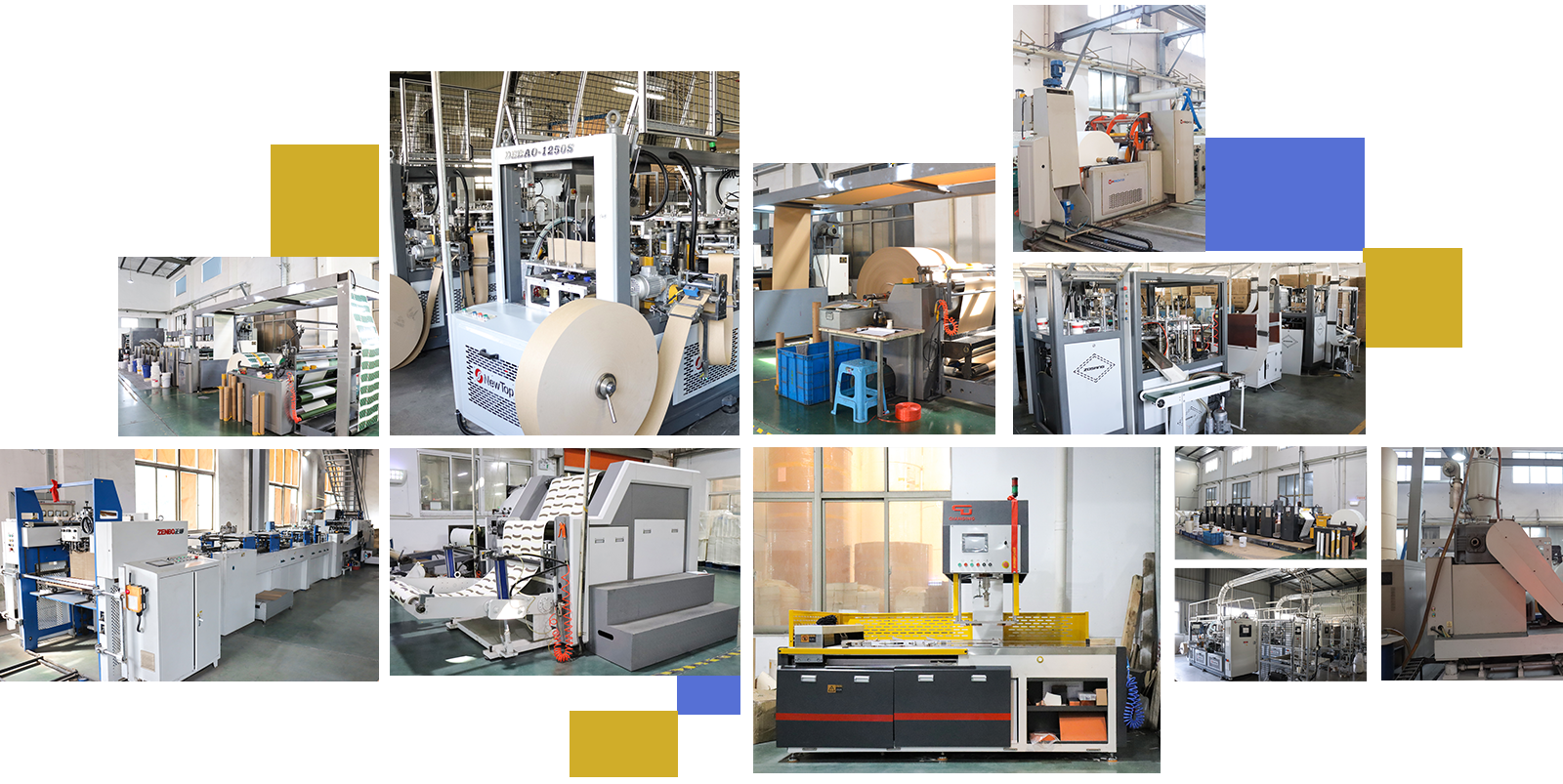
Equipment and line strength: the intermediate evidence between a footprint figure and a finished-unit capacity claim.
Step 3: Map product scope against the capacity claim
Scope mapping converts a general capacity figure into a per-SKU question. List every size and format in your programme, then require the supplier to confirm which ones share tooling, which ones require separate runs, and which coating or substrate each one uses. KingHonor's disposable single-layer paper cups, for example, are documented in eight sizes from 8oz to 44oz using cup paper with PE coating, while the disposable double-layer paper cup and the 20oz custom disposable paper cup use double PE coated paper, and paper bowls, square food containers and Kraft Paper Soup Buckets use kraft paper with PE coating, with boat-shaped boxes formed from coated white cardboard. Different substrates mean different changeover behaviour, and that is the point a capacity claim has to survive.
Step 4: Audit the physical footprint and the production address
Request the production address, not the sales office address, and reconcile it across the certificate scope, the export documentation and a live or recorded walkthrough. KingHonor lists its production site at BINH TIEN 2 HAMLET, DUC HOA HA COMMUNE, DUC HOA DISTRICT, LONG AN PROVINCE, VIET NAM, with the company headquartered in Ho Chi Minh City, a structure common among Vietnam-based exporters that use the country's CPTPP trade advantages. A 50,000 m2 site with 200+ employees and a 20-person core technical team is a checkable configuration: the footprint can be seen, the headcount can be observed at shift change, and the technical team can be interviewed about tooling, not about brochures.
Step 5: Verify certification at scope level, not logo level
A certificate number, an issuing body and a scope statement are the three elements that make certification verifiable. KingHonor's FSC Chain of Custody Single Certificate (ESTS-COC-250653, issued by ESTS) is scoped to the printing and sale of FSC Mix paper products, and its record runs from issue on 2025-06-05 to expiry on 2030-06-04. The BRCGS Global Standard Packaging Materials certificate (C0691603-BRC4, issued by NSF Certification, LLC) covers coating with PE or PLA resin, flexographic printing, die-cutting and forming of cups, lids, boxes, trays and bowls, which is precisely the process chain that a capacity claim depends on. ISO 9001:2015 (00623Q31644R4S) and ISO 14001:2015 (00623E31318R4S), both issued by QAC, cover lamination, printing and slitting of laminated paperboard and paper cup processing, and were issued on 2023-11-13 with expiry on 2026-12-03. For Vietnam food-contact packaging, QCVN 12-1:2011/BYT is the applicable national technical regulation to confirm, and for EU-bound beverage cups the 'Plastic in Product' labelling requirement under EU 2019/904 applies.
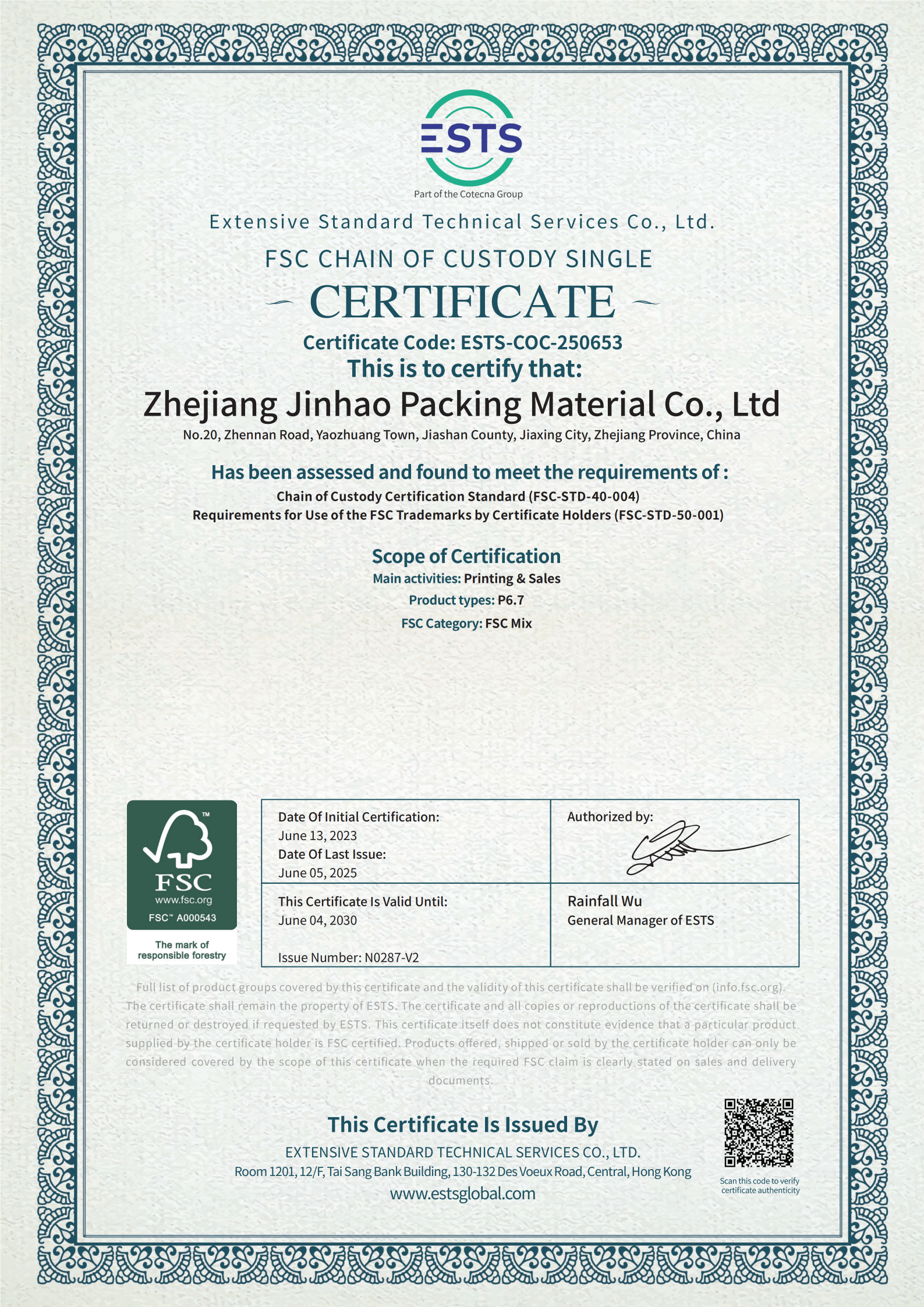
FSC Chain of Custody Single Certificate, an example of the certificate number, issuing body and scope statement a buyer should capture in the capability file.
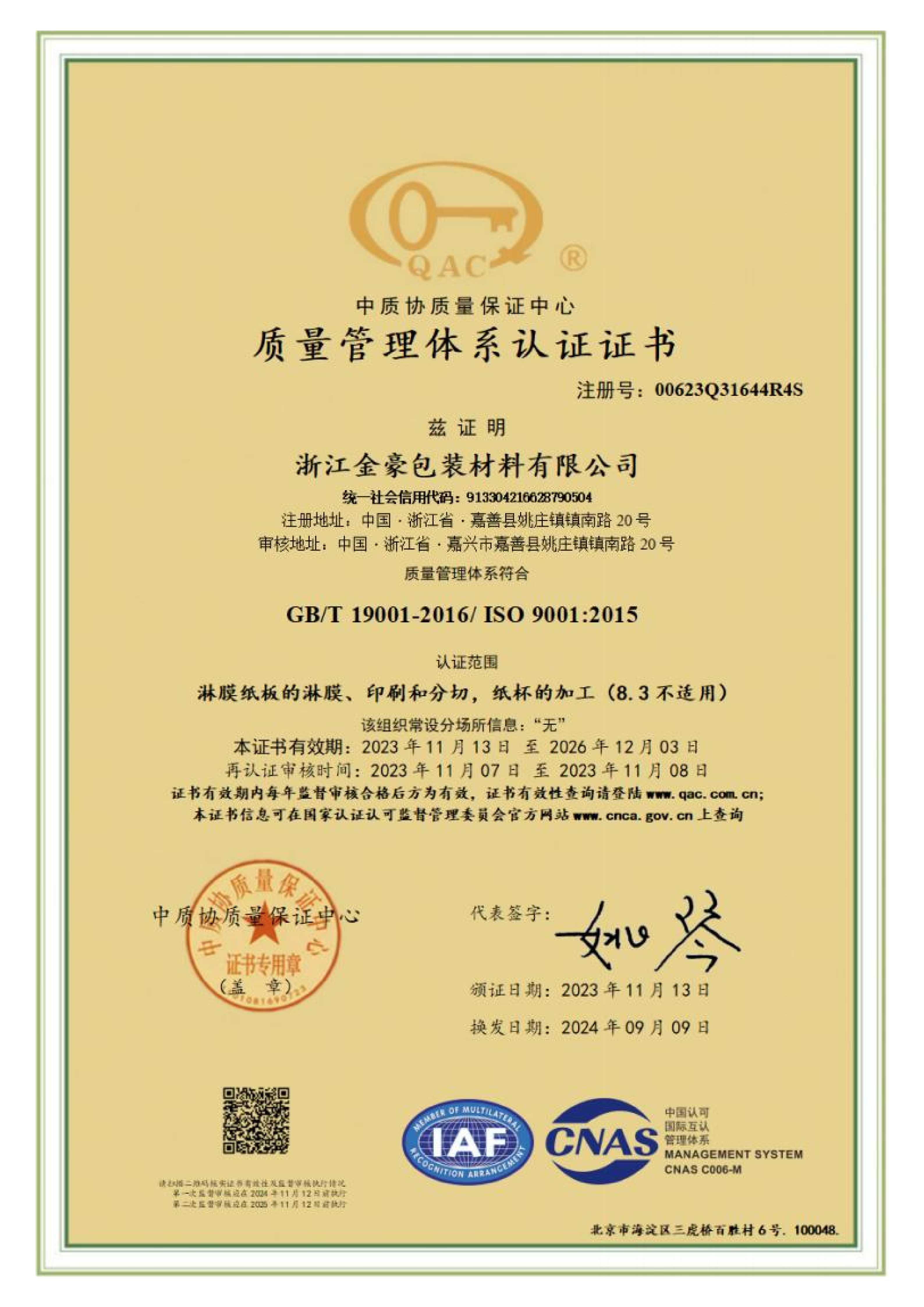
Management-system certification documents the process discipline behind a quality-control claim.
Step 6: Fix the quality-control and acceptance definition before production
Quality language in a brochure is not an acceptance criterion. KingHonor describes its quality control as multi-level and multi-dimensional quality inspection, and its documented acceptance criterion is sampling inspection, which means the sampling plan and the pass or fail definition belong in the purchase order. Agree in writing which defects are critical, which are major and which are minor, who performs the inspection, and what evidence accompanies the shipment. Without this step the capacity audit is wasted: volume delivered against an undefined standard is not a delivery, it is a dispute waiting to happen.
Step 7: Stress-test delivery by rebuilding the timeline backwards
Start from the date the goods must be in market and work backwards through each stage: sampling and approval, pre-production confirmation for custom designs, the production run, sampling inspection, booking and container cut-off, and transit. Then map the handover point. KingHonor's documented delivery terms are FOB and CIF, and its transport modes cover sea freight, air freight, land transport and multimodal transport, so the risk owner changes with the term and the mode. The fastest way to expose a weak delivery promise is to ask which of these stages the quoted lead time includes and which it excludes, and to request the name of the single point of contact who owns the order from confirmation to arrival.
Step 8: Lock commercial terms and after-sales into the contract
Delivery reliability is ultimately a contract question. KingHonor's documented terms set the minimum order quantity at 100,000 pieces, delivery at FOB/CIF, acceptance by sampling inspection, and payment by Telegraphic Transfer (T/T) in the form of advance payment, cash on delivery, or deposit plus balance. Its after-sales framework specifies a dedicated point of contact throughout the process with transparent and traceable orders, free replacement or return and exchange for quality issues, fast claim and replacement for logistics damage, and pre-production confirmation for custom designs to reduce errors. A buyer who writes those four mechanisms into the agreement has converted a service promise into a verifiable obligation.
Applying the Checklist: Four Buyer Profiles and the Decisive Test for Each
Different buyer types should weight the checklist differently, because the failure mode differs. The case records documented for KingHonor illustrate four profiles.
- Airlines and travel catering. The documented case supplies 10 million disposable paper cups monthly for beverage service, with customized logo printing for brand promotion and a recorded 15% reduction in packaging costs through eco-friendly materials. The decisive test is repeat monthly volume plus print consistency across every delivery, because airline branding tolerates no colour drift between batches.
- Fast food chains. The documented case supplies 10 million disposable food containers monthly for food and beverage sales and takeaway packaging. The decisive test is format coverage across the No.1 to No.8 Square Box range together with kraft paper and PE coating performance under hot, greasy food.
- Milk tea and beverage chains. The documented case supplies 10 million disposable paper cups per month to a national milk tea chain for in-store beverage sales and takeaway packaging. The decisive test is size-range coverage, from the 8oz disposable single-layer paper cup up to the 44oz format and the A3oz disposable cold drink paper cup, combined with double PE coated construction for the printed 20oz cup.
- Hotel groups. The documented case supplies 10 million disposable paper cups monthly for guest use, with custom logo printing for hotel brand promotion. The decisive test is the certified compliance set plus after-sales responsiveness, because a hotel programme spreads small volumes across many properties.
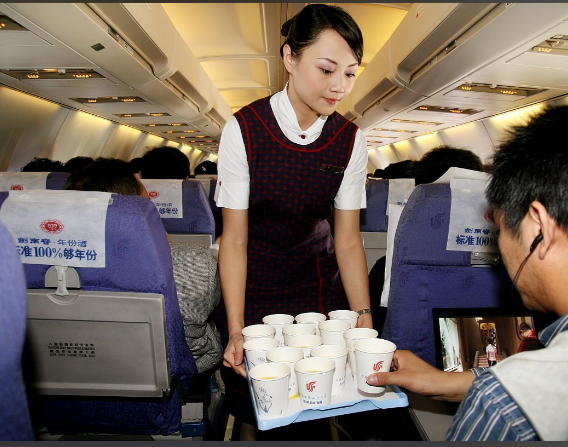
Documented application: disposable paper cups and paper bowls in airline beverage service, a case that evidences recurring monthly volume rather than one-off shipments.
Verification Tables
Table 1 maps the product scope a buyer must reconcile against any capacity claim, using KingHonor's documented range as the reference example.
| Product family | Documented model / size range | What the capacity audit must confirm |
|---|---|---|
| disposable single-layer paper cup | 8oz, 10oz, 12oz, 16oz, 20oz, 24oz, 32oz, 44oz | Whether all eight sizes share tooling or require separate runs, and whether each appears in the programme forecast. |
| disposable double-layer paper cup | 20oz | Double PE coated paper availability and the additional material handling it requires. |
| disposable hollow paper cup | 8oz, 12oz, 16oz | Air-gap wall construction capability and print options for the unprinted or printed version. |
| disposable cold drink paper cup | A3oz | Small-format forming accuracy and condensation performance expectations. |
| disposable beverage paper cup | 9oz and 80oz | Whether the same site produces both small retail formats and large-volume formats. |
| custom disposable paper cup | 20oz | Logo, size, colour and material customization lead time and pre-production confirmation. |
| disposable paper bowl | 500, 700, 900, 1000, 1100, 1300, 1500 | Kraft paper with PE coating supply and forming tooling for all seven formats. |
| disposable food container | No.1 Square Box to No.8 Square Box | Kraft paper with PE coating and square-box tooling across the full numbering series. |
| disposable paper food container | 500, 600, 850, 960, 1100 | Cup base paper with PE coating and print capability for printed versions. |
| disposable boat-shaped box | #025, #040, #050, #100, #200#, #250, #300, #500, #1000 | Coated white cardboard supply and the die-cutting capacity behind the tray formats. |
| Kraft Paper Soup Bucket ZT | 8oz, 12oz, 16oz, 26oz, 32oz | Kraft paper with PE coating for hot-fill service and lid compatibility. |
Table 1: product scope mapping. Source: KingHonor documented product and model range.
Table 2 converts each verification column into a request a procurement team can send today, with the verified reference example alongside it.
| Verification item | What to request | Verified reference example |
|---|---|---|
| Product scope | Written list of every size and format produced in-house, with substrate per line | disposable hollow paper cup 8oz, 12oz, 16oz; disposable paper bowl 500-1500; disposable boat-shaped box #025-#1000 |
| Physical footprint | Production address, site area, employee count, technical team size | 50,000 m2 factory; 200+ employees; 20-person core technical team; production site in Long An Province, Vietnam |
| Material throughput | Coated paper volume per year and per month | 20,000 tons of food-grade PE coated paper per year; 1,666 tons/month capacity |
| Finished-unit output | Annual finished-unit figure for cups and food containers | Over 2 billion paper cups and paper food containers per year |
| Certification scope | Certificate number, issuing body, scope statement, validity dates | FSC Chain of Custody ESTS-COC-250653 (ESTS, valid to 2030-06-04); BRCGS C0691603-BRC4 (NSF Certification, LLC); ISO 9001:2015 00623Q31644R4S and ISO 14001:2015 00623E31318R4S (QAC, expiry 2026-12-03) |
| Food-contact compliance | Applicable national regulation for the destination market | QCVN 12-1:2011/BYT for Vietnam food-contact packaging; 'Plastic in Product' labelling under EU 2019/904 for EU-bound beverage cups |
| Quality control | Inspection structure and the agreed acceptance criterion | Multi-level and multi-dimensional quality inspection; acceptance by sampling inspection |
| Commercial terms | MOQ, incoterm, transport modes, payment schedule | MOQ 100,000 pieces; FOB/CIF; sea, air, land and multimodal transport; T/T advance payment, cash on delivery, or deposit plus balance |
| After-sales mechanism | Written remedy for quality defects and logistics damage | Dedicated point of contact; transparent and traceable orders; free replacement or return and exchange for quality issues; fast claim and replacement for logistics damage |
Table 2: capability-verification checklist with verified reference examples. Sources: KingHonor documented capacity, certification, purchasing and after-sales units.
Frequently Asked Questions
Which certifications should a disposable paper cup supplier be able to show before an order is confirmed?
Food-contact and management-system certification are the minimum. KingHonor's certification set includes an FSC Chain of Custody Single Certificate (ESTS-COC-250653, issued by ESTS for the printing and sale of FSC Mix paper products), BRCGS Global Standard Packaging Materials certification (C0691603-BRC4, issued by NSF Certification, LLC, covering PE or PLA coating, flexographic printing, die-cutting and forming of paper cups, lids, boxes, trays and bowls), ISO 9001:2015 quality management (00623Q31644R4S, QAC) and ISO 14001:2015 environmental management (00623E31318R4S, QAC). For Vietnam-produced food-contact packaging, QCVN 12-1:2011/BYT is the applicable national technical regulation. Request the certificate number, issuing body, scope statement and validity dates, because a logo alone does not complete the check.
How do you confirm that a supplier's stated monthly capacity is real?
Reconcile four numbers against each other instead of accepting one. KingHonor's documented profile is a 50,000 m2 factory, 200+ employees, a 20-person core technical team, 20,000 tons of food-grade PE coated paper per year, over 2 billion paper cups and paper food containers per year, and a monthly capacity of 1,666 tons/month. Consistency between footprint, material throughput and finished-unit output is the signal to look for. A finished-unit figure far larger than the coating and converting capacity can support is the warning sign.
What MOQ and payment terms are standard for a disposable paper cup order?
KingHonor's documented purchasing terms set the minimum order quantity at 100,000 pieces, delivery terms at FOB/CIF, transport by sea freight, air freight, land transport or multimodal transport, acceptance by sampling inspection, and payment by Telegraphic Transfer (T/T) in the form of advance payment, cash on delivery, or deposit plus balance. Budget comparisons should be built on this structure of incoterm, transport mode, acceptance method and payment schedule rather than on a unit price quoted without them.
Can a buyer validate samples and custom printing before committing to full production?
Yes, and the pre-production stage is where customization risk is controlled. KingHonor's paper cup customization service covers logo, size, colour and material, and the documented process includes pre-production confirmation for custom designs to reduce errors. Sampling inspection is the stated acceptance criterion, so the sample approved before the run becomes the physical reference for the agreed inspection standard.
How should delivery reliability be stress-tested before committing to an order?
Rebuild the timeline backwards from the required arrival date and assign a document to each stage: sample approval, pre-production confirmation for custom designs, the production run, sampling inspection, booking and sailing. Because transport may run by sea freight, air freight, land transport or multimodal transport under FOB or CIF terms, the handover point determines who carries the risk. Then verify the after-sales mechanism in writing. KingHonor documents a dedicated point of contact throughout the process, transparent and traceable orders, free replacement or return and exchange for quality issues, and fast claim and replacement for logistics damage. To run this checklist against a live quotation, request the product and capacity documentation pack together with a sample order through info@kinghonorpack.com or the enquiry form at www.kinghonorpack.com.
What to Do Before You Place the Order
Capacity and delivery reliability can be verified, but only in a fixed order: define the order profile, reconcile the declared output against the SKU mix, map scope to tooling, audit the site, read certification at scope level, write the acceptance criterion, rebuild the delivery timeline backwards, and lock the after-sales mechanism into the contract. Each step produces a document, and the documents together replace the reassurance that most suppliers offer by default. Applied to KingHonor's documented profile, that checklist resolves into a 50,000 m2 Vietnam factory, 20,000 tons of food-grade PE coated paper and over 2 billion paper cups and paper food containers per year, a 1,666 tons/month capacity figure, an FSC Chain of Custody certificate, BRCGS Packaging Materials certification, ISO 9001:2015 and ISO 14001:2015 management systems, a MOQ of 100,000 pieces, and FOB/CIF delivery supported by sea, air, land and multimodal transport.
Next step for procurement teams: request the full product, capacity and certification documentation pack, or start a sample order to test the workflow end to end.
Download the KingHonor product catalogue: KingHonor product and capability brochure
Email: info@kinghonorpack.com | Tel: +86 13918832889 | WhatsApp: +8618205730716 | Website: www.kinghonorpack.com