Kraft Paper Bowl vs. Square Box vs. Food Tray: A Disposable Container Comparison Guide
Kraft Paper Bowl vs. Square Box vs. Food Tray: A Disposable Container Comparison Guide
Most disposable container failures in foodservice are not paper failures — they are format failures. A kraft bowl that performs well with noodle soup will disappoint a bakery counter, a square box that stacks neatly with rice sets behaves differently once a saucy dish is added, and an open tray that presents pastries beautifully will not survive a tilted delivery bag.
This comparison guide is written for foodservice buyers, importers and distributors at the decision and execution stage of procurement: the shortlist is already paper-based, and the open question is which container line, which model number and which coating specification to lock into the supply plan. It compares four KingHonor Paper Products Co., Limited Liability Company lines side by side — the Kraft Paper Bowl ZT, the Kraft Paper Square Box XQ, the White Kraft Food Tray ZT, and the Printed Disposable Paper Food Container.
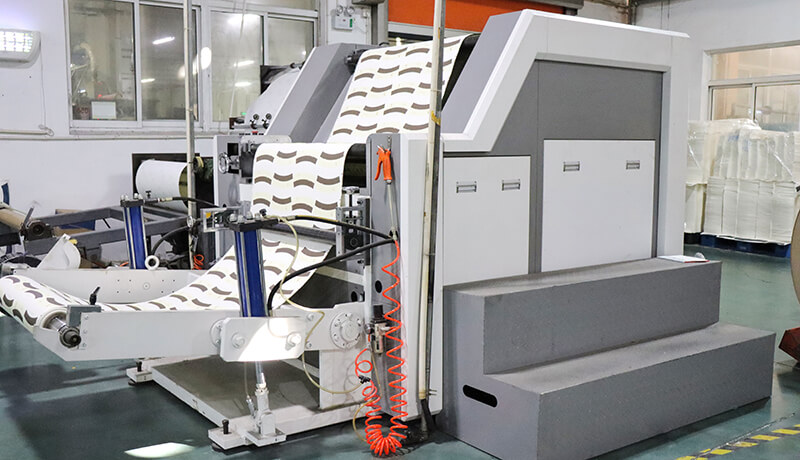
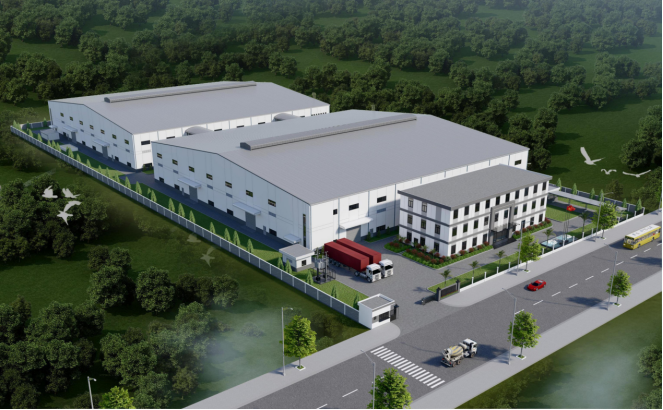
KingHonor Paper Products Co., Limited Liability Company is a Vietnam-based manufacturer specializing in disposable paper cups, paper bowls, food trays and food containers. Founded in 2018, the company operates a 50,000m² production base with more than 200 employees, produces 20,000 tons of food-grade PE coated paper and over 2 billion paper cups and paper food containers annually, and exports about 60% of its output to the United States, China, Europe, Australia and the Middle East.
The sections that follow move in buyer order: the problem, the industry and regulatory background, the four container lines, materials and coatings, a selection workflow, use cases, a side-by-side table, and the sourcing structure that keeps several formats running as one portfolio.
The Problem: When Format and Food Do Not Match
In paper foodservice packaging, the format and the coating — not the unit price — determine leak rate, holding time and stacking efficiency, and those three variables set the real cost per delivered order.
Four failure patterns repeat across takeaway, bakery, canteen and catering programs:
- Barrier mismatch. Plain paper absorbs oil and water. A food-grade PE coating is what gives a paper container its oil and water resistance; without it, a fried item bleeds through within minutes and soup wicks into the wall. Specifying a coated disposable paper container for wet or oily menus is a performance decision, not a cosmetic upgrade.
- Geometry mismatch. Round bowls handle poured and ladled dishes; square boxes use carton, shelf and delivery-bag space more efficiently; open trays present food and let hot items vent. Choosing the wrong geometry forces operators to compensate with liners, wraps or double cupping — which quietly erases the price advantage that drove the original decision.
- Portion mismatch. The same portion looks generous in a 500 model and thin in a 1500 model. Portion-to-model mismatch changes perceived value, which makes it a margin problem rather than a packaging problem.
- Portfolio fragmentation. When a takeaway packaging paper container comes from one supplier, a bakery pastry paper container from a second and a canteen fast food paper container from a third, the buyer multiplies inspection work, minimum order quantities, lead times and quality variance across a single kitchen.
Industry Background: A Paper Market Under Two Pressures
Two forces are shaping disposable paper container procurement at the same time: volume growth and compliance tightening.
On volume, the global disposable food packaging market was estimated at USD 65.60 billion in 2024 and projected to reach USD 100.89 billion by 2030 (Grand View Research). The broader eco-friendly food packaging market was valued at USD 227.96 billion in 2024 (Grand View Research). Asia Pacific held a 39.8% revenue share of the paper-based containers market in 2024, supported by large-scale production and e-commerce growth (Towards Packaging). Within disposable food containers, foodservice applications — delivery platforms in particular — account for approximately 65% of total market share (Future Market Insights).
A caution on market numbers: published estimates diverge by definition. Grand View Research sizes disposable food packaging at USD 65.60 billion for 2024, while Market Research Future reports the disposable food container segment at USD 124.89 billion. The gap is largely a scope gap, and buyers should treat any single figure as directional rather than precise.
On compliance, paper and paperboard intended for contact with aqueous and fatty foods is regulated in the United States under FDA 21 CFR 176.170 and 21 CFR 176.180. For compostability claims, an item must meet EN 13432 in the EU or ASTM D6400 in the US to be labelled compostable (European Bioplastics). The practical consequence for buyers is that "paper" and "compostable" are separate claims with separate evidence — a coated paper container and a compostable paper container are not automatically the same product.
The competitive field is well populated. Global players in disposable food containers include Huhtamaki, Dart Container Corporation, Pactiv Evergreen and Graphic Packaging International (Market Research Future), alongside a large base of Asia-based converters. Differentiation at the buyer level therefore rarely comes from the existence of a paper container; it comes from the fit between a specific format, a specific coating and a specific menu.
The Four KingHonor Container Lines, Compared
Kraft Paper Bowl ZT
The Kraft Paper Bowl ZT is a round disposable bowl built on kraft paper with a food-grade PE coating, designed for soup, noodle, congee and other wet or semi-wet dishes. Its model range runs from 500 to 1500, with 500, 700 and 900 acting as the practical portion anchors: the 500 model is the entry size for soups, sides and smaller servings, 700 sits at the standard single-serving level for most menus, and 900 covers larger single mains and noodle or rice dishes with heavier garnish. Because a round wall spreads liquid pressure evenly instead of concentrating it in corners, the bowl is the default format whenever the dish is poured or ladled rather than placed.
Kraft Paper Square Box XQ
The Kraft Paper Square Box XQ is a square kraft paper container built on the same kraft substrate family, with the same food-grade PE coating option available. Its advantage is space efficiency: square footprints tile cartons, delivery bags and warming shelves with far less void than round formats, which matters when a service ships hundreds of portioned meals a day. It suits lunch sets, rice and grain bowls, portioned takeaway menus and dry-to-semi-moist items, and it is the format most often requested as a kraft square paper container by canteen and cloud-kitchen operations. Size sets are confirmed per project, and custom size paper container development is available across the line.
White Kraft Food Tray ZT
The White Kraft Food Tray ZT is an open tray — often described as a food tray boat — produced in white kraft and coated white cardboard. Its model range runs from #025 to #1000, covering small single-item servings through larger fried and grilled portions. An open tray is a presentation format: the food is visible from above, hot items vent instead of steaming soft, and the flat profile loads quickly on bakery counters, snack bars and catering lines. This is the natural format for bakery and pastry paper container programs, for fried-food service, and for operations where items are inspected or assembled at the point of hand-over.
Printed Disposable Paper Food Container
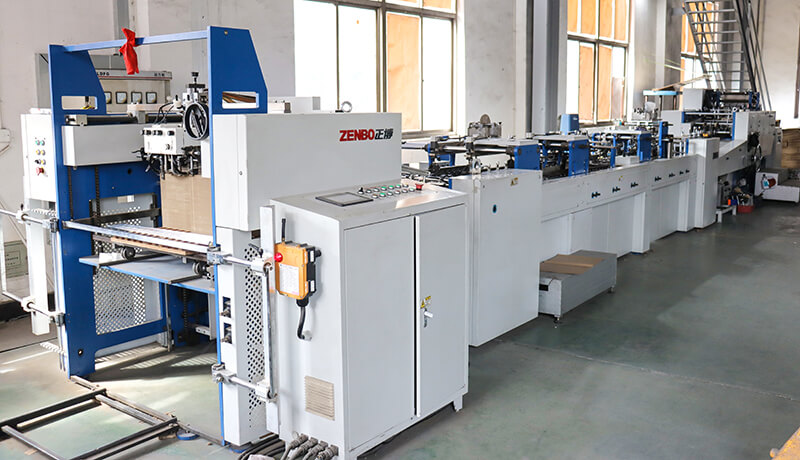
The Printed Disposable Paper Food Container line covers branded formats built on cup base paper and board, where the container carries the operator's logo, colour or menu message instead of a generic natural finish. For chains, a printed container is not decoration — it is the part of the packaging that repeats the brand at every delivery and in every store. KingHonor's customization service covers size, design, logo printing and eco-friendly material selection, so the printed line can be specified as a custom logo printed paper container that shares substrate and coating logic with the unprinted formats above.
Material and Coating: What Actually Changes Performance
Four material decisions drive everything else in this portfolio.
- Kraft paper. Unbleached kraft gives the natural brown tone that reads as fresh or artisan, and it hides oil bloom better than a white surface. It is the substrate behind the Kraft Paper Bowl ZT and the Kraft Paper Square Box XQ.
- Coated white cardboard. A white coated surface produces higher print contrast and a cleaner presentation, which is why bakery and deli counters usually specify a white cardboard paper container.
- Cup base paper. The substrate used in cup body production also feeds printed container formats, where a smooth, consistent surface is needed for multi-colour print.
- Food-grade PE coating. An extruded polyethylene layer is what turns a paper container into an oil-proof disposable paper container and a waterproof coated paper container. KingHonor produces 20,000 tons of food-grade PE coated paper annually, which is the barrier layer behind the bowl, box and tray lines described above.
Three limits matter as much as the capabilities:
- PE coating is a barrier, not a compostability claim. To label a container compostable in the EU or the US, the item must meet EN 13432 or ASTM D6400. A PE-coated laminated paper container and a certified compostable eco-friendly paper container are different specifications, and the certification travels with the item — not with the word "paper."
- Microwave behaviour is SKU-specific. Whether a container can be marketed as a microwave safe paper container depends on the substrate, coating and reheating time, and it should be confirmed for the exact model rather than assumed from the line name.
- Hot-hold performance varies. Where a menu needs extended hot holding or a high heat resistant disposable paper food container, the specification conversation turns to board weight, coating coverage and — where relevant — a heat insulated double wall paper container construction. All three should be confirmed against the line sheet before a menu is printed. Sugarcane pulp paper container formats are a separate fibre system marketed by some suppliers; they are not interchangeable with the paper, board and PE-coated specifications described here and should be evaluated on their own documentation.
Step-by-Step: Choosing a Format for a Specific Menu
- Classify the dish. Record four values for every menu item: moisture (dry, semi-moist or liquid), fat content (low, fried or oily sauce), serve temperature (ambient or hot) and expected holding time (under 15 minutes, 15–45 minutes, or longer). This single sheet removes most of the guesswork that follows.
- Choose the geometry. Liquid or poured dishes point to a round bowl. Portioned, stacked or tray-up meals point to a square box. Visible, vented, hand-assembled items point to an open tray. Branded chain programs point to a printed container on a shared substrate.
- Choose the model. Use the portion ladder instead of habit. On the bowl side, the 500, 700 and 900 models map to small, standard and large single servings within the 500–1500 range. On the tray side, the ladder from #025 to #1000 allows one operation to run a small pastry tray and a large fried-food tray on a single line.
- Choose substrate and coating. Kraft for a natural look and better oil hiding; white coated board for bakery presentation and print; PE coating wherever oil or water contact is expected.
- Decide whether the container carries the brand. Move to the printed line when the operation needs a custom logo printed paper container; stay with unprinted kraft formats where a neutral, lower-cost presentation is acceptable.
- Validate with samples before tooling. Three tests cover most of the risk: a fill test (does the barrier hold with the actual sauce at serve temperature), a hold test (how does the container behave after the expected holding time), and a transport test (does the format survive a realistic delivery route). Sample evaluation is also where lid fit, stacking height and pack-out density are confirmed — factors that reappear later as freight cost.
- Lock the specification and the replenishment plan. Once a format passes, freeze it in writing: substrate, coating, model number, print specification and packing configuration. Then plan replenishment by format rather than by total volume, so a fast-moving bowl model never runs out while a slow-moving tray model occupies the warehouse.
Use Cases: Mapping Formats to Service Scenarios
- Takeaway and delivery. Bowls for soups, noodles and wet rice; square boxes for lunch sets and portioned meals. Both depend on the coated barrier for oil and water resistance.
- Bakery and pastry counters. Open trays in white board for pastries, cakes and sliced items, where visibility at the counter is part of the sale.
- Canteens and cloud kitchens. Square boxes and trays in high-volume packing configurations; square geometry reduces carton void, which matters when hundreds of meals ship in a day.
- Airline and institutional catering. Standardized dimensions and consistent barrier performance, so tray-up lines and closing equipment do not need re-setting between orders.
- Picnics, retail and grab-and-go. Trays and boxes that survive being carried, stacked and reopened — a portable picnic disposable paper food container program usually mixes two or three formats for exactly this reason.
- Distributor portfolios. A distributor serving several foodservice segments typically stocks bowls, boxes and trays together, because the same restaurant customer buys different formats for different menu lines.
Comparison Table: Bowl vs. Square Box vs. Tray vs. Printed Container
| Container line | Substrate | Barrier | Model range | Best-fit dishes | Typical service mode | Customization |
|---|---|---|---|---|---|---|
| Kraft Paper Bowl ZT | Kraft paper | Food-grade PE coating for oil and water resistance | 500–1500 (500, 700 and 900 as portion anchors) | Soups, noodles, congee, wet rice dishes | Delivery, takeaway, hot counter | Size, design, logo printing, material selection |
| Kraft Paper Square Box XQ | Kraft paper | Food-grade PE coating option | Size sets confirmed per project; custom sizes available | Lunch sets, rice and grain bowls, portioned meals | Takeaway, canteen, cloud kitchen | Size, design, logo printing, material selection |
| White Kraft Food Tray ZT | White kraft / coated white cardboard | Food-grade PE coating | #025–#1000 | Pastries, fried items, grilled items, snacks | Bakery counter, snack bar, catering line | Size, design, logo printing, material selection |
| Printed Disposable Paper Food Container | Cup base paper / board | Food-grade PE coating | Custom size and design per project | Branded menu items across formats | Chain retail, delivery, branded takeaway | Custom logo printing, size and material selection |
Long-Term Sourcing: Running Four Formats as One Supply System
Buying a container is a one-off decision; running four formats across a rolling menu is a system. The buyers who get this right treat the portfolio — not the individual SKU — as the unit of sourcing, because the failure modes that hurt most appear after the first order, not during it.
Three structural advantages come from consolidating a paper container portfolio with one manufacturer.
Specification consistency across repeat orders. When the bowl, box and tray lines share substrate and coating logic, a reorder behaves like the last one. Colour, board weight, coating coverage and print registration stay inside the same specification system, so a menu change does not force a packaging re-approval. Written specification locks matter here: they turn a verbal promise into an auditable instruction for the next production run.
Replenishment that follows demand, not order size. Different formats move at different speeds. A soup-focused menu burns through 700 and 900 bowl models quickly but keeps trays on the shelf; a bakery burns through small trays while boxes sit longer. Planning by format — with a rolling forecast rather than a single annual volume — keeps the fast movers in stock without over-committing on the slow ones, and it gives the manufacturer the visibility needed to schedule production.
A supply base with the capacity to absorb growth. KingHonor Paper Products Co., Limited Liability Company operates from Vietnam with a 50,000m² production base, more than 200 employees, a 20-person core technical team, and an annual output of 20,000 tons of food-grade PE coated paper together with over 2 billion paper cups and paper food containers. Roughly 60% of production is exported to the United States, China, Europe, Australia and the Middle East. The company states that it prioritizes recyclable and biodegradable raw materials, offers customized service from size and design through logo printing and material selection, and commits to competitive pricing, on-time delivery and responsive after-sales support.
For distributors, the practical version of this is a portfolio review once or twice a year: list the formats in play, separate one-off items from repeat lines, confirm that every repeat line has a locked specification and a forecast, and check that the supply arrangement still covers the slowest-moving format as well as the fastest. Long-term partnerships in packaging rarely break because of a single bad shipment; they break because a format that was never properly specified drifts from one order to the next.
FAQ
Do KingHonor's disposable paper containers meet food-contact and compostability regulations in the US and the EU?
Compliance in this category is market-specific and document-specific. In the United States, paper and paperboard intended for contact with aqueous and fatty foods is regulated under FDA 21 CFR 176.170 and 21 CFR 176.180, and a compostable claim requires the item to meet EN 13432 in the EU or ASTM D6400 in the US (European Bioplastics). Importers also frequently request FSC chain-of-custody documentation and social compliance audit reports such as BSCI when they place paper container programs. The reliable answer for any purchase is therefore to request the documentation that matches your destination market — food-contact declaration, certification certificates and audit reports — and to verify that the certificate covers the exact item, substrate and coating you are ordering. KingHonor produces food-grade PE coated paper and manufactures the container lines described here; specification and documentation requests can be directed to info@kinghonorpack.com.
Can these container lines be customized in size, printing and material?
Yes. KingHonor's stated service model is built around customization: size, design, logo printing and eco-friendly material selection are all part of the offer, and the company's main product range covers paper cups, food containers, food tray boats and paper bowls. In practice this means a buyer can specify a custom size paper container for a non-standard portion, order a custom logo printed paper container for a branded chain program, or select between kraft paper, coated white cardboard and cup base paper substrates depending on the presentation the menu needs. The bowl line supports a 500–1500 model range and the tray line a #025–#1000 range, so most standard portion requirements can be met before any custom tooling is considered.
How should buyers compare cost across a bowl, a square box and a tray?
Unit price alone is a poor comparison basis because the three formats are not interchangeable. The cost drivers that move a paper container program are the substrate grade and board weight, the coating type and coverage, the number of print colours and the print area, whether a non-standard size requires custom tooling, the pack-out density that determines how much freight volume a carton of containers occupies, and the order frequency relative to a format's minimum order quantity. A format that ships efficiently and reorders predictably is often cheaper per delivered meal than a nominally lower-priced container that arrives damaged or runs out mid-cycle. KingHonor states that it offers competitive pricing and publishes a brochure summarizing its product range and services; buyers comparing formats across the portfolio should ask for a costed comparison at the pack-out level rather than at the piece level.
Can buyers validate a container format before committing to a full order?
Validation before volume commitment is standard practice and the cheapest risk control available in this category. A useful sample evaluation has three parts: a fill test with the actual dish at serve temperature to confirm the oil and water resistance of the coating, a hold test to see how the container behaves after the realistic holding time for that menu, and a transport test to check that the format survives a real delivery route without leaking, collapsing or staining through. Lids, stacking height and packing configuration should be confirmed during the same evaluation. Buyers evaluating the Kraft Paper Bowl ZT, the Kraft Paper Square Box XQ or the White Kraft Food Tray ZT can request a sample and a specification sheet from KingHonor at info@kinghonorpack.com or through the company website.
What determines lead time, and how do buyers keep supply continuous?
Lead time in paper container programs is driven by three things: the production stage (standard unprinted formats move on a different schedule from printed or custom-size items that require artwork and print set-up), the order quantity relative to the format, and seasonal demand peaks when delivery and catering volumes rise. Continuity is protected on the planning side rather than the purchasing side — a rolling forecast by format, a written specification lock so reorders are repeatable, and a plan that accounts for the slowest-moving format as well as the fastest. KingHonor manufactures in Vietnam with a 50,000m² production base and an annual output of 20,000 tons of food-grade PE coated paper plus over 2 billion paper cups and food containers, exports roughly 60% of its production, and states on-time delivery and responsive after-sales service as commitments to its customers.
Conclusion: Choose the Format by Menu, Then Buy the Portfolio
The comparison comes down to a simple rule set. Round bowls for poured and liquid dishes, square boxes for portioned and stacked meals, open trays for visible and vented items, and printed containers where the brand has to travel with the food. Coatings decide whether that choice holds up: a food-grade PE coating is what provides oil and water resistance, and it is the difference between a container that survives a delivery route and one that does not.
Once the format is right, the sourcing question changes. The goal is no longer to find the cheapest container for one menu item — it is to run a portfolio of formats on a consistent specification, with a supply base that can hold that specification across repeat orders. That is where long-term value in disposable food paper container sourcing actually sits.
Next Step: Compare the Formats on Your Own Menu
Request the KingHonor product brochure for the full overview of the Kraft Paper Bowl ZT, Kraft Paper Square Box XQ, White Kraft Food Tray ZT and printed container lines, or send your menu list and portion sizes for a format recommendation.
- Download the brochure: KingHonor product brochure
- Website: www.kinghonorpack.com
- Email: info@kinghonorpack.com | Tel: +86 13918832889 | WhatsApp: +8618205730716
Share your dish list, target portion sizes and destination market, and specify whether you need a sample first or a quote at pack-out level. That is enough information to map your menu to the right format, model and coating.