Paper Bowl vs Square Box vs Boat Tray: A Disposable Paper Container Comparison Guide
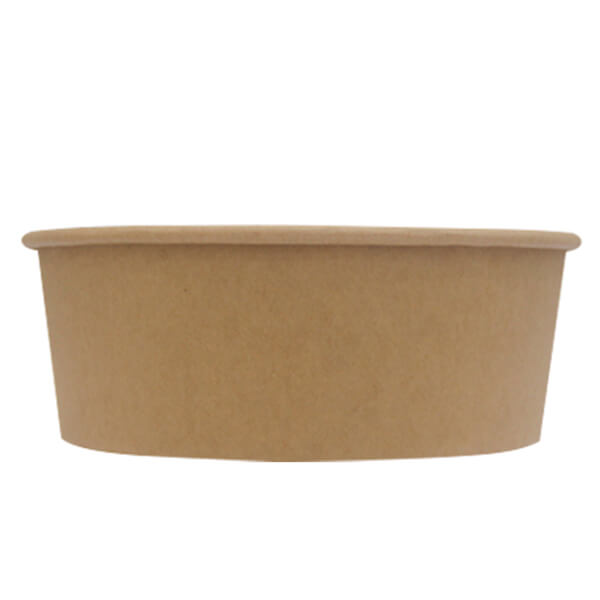
Cover: Kraft Paper Bowl ZT — one of the four disposable food paper container formats compared in this guide.
Direct answer: the shapes are not interchangeable. Use the Kraft Paper Bowl ZT for semi-liquid and moist meals such as rice with sauce, noodles and dessert; the Kraft Paper Square Box XQ for portioned meals that are stacked, tray-passed or delivered as a set; the White Kraft Food Tray ZT (boat tray) for dry, hand-held and snack items such as bakery goods, pastries and fried snacks; and the Printed Disposable Paper Food Container where the programme depends on a printed brand surface on a cup-style body. All four are produced by KingHonor Paper Products Co., Ltd.
KingHonor Paper Products Co., Ltd. is a manufacturer of disposable paper cups, paper bowls and food containers, founded in 2018 and headquartered in Vietnam. The company operates a 50,000 m² facility with more than 200 employees and 20 core technical staff, produces 20,000 tons of food-grade PE coated paper and over 2 billion paper cups and paper food containers annually, and exports roughly 60% of output to the United States, Europe, Australia and the Middle East.
The comparison below is built from that manufacturer's own specification records and certificate documents. Where a performance property is claimed but not quantified — oil resistance, waterproofing and heat insulation are the three that matter most in this category — the gap is flagged rather than smoothed over, because that is exactly where a buyer's specification usually fails after the first reorder.
Problem Definition: The Format Habit That Quietly Raises Cost
Most foodservice operators do not actively choose a disposable container format. They inherit one from a previous supplier, replicate it across the menu, and then manage the consequences. The consequences appear in four predictable places.
- Barrier mismatch. A high-barrier coated bowl used for a dry bakery item pays for coating performance the food never needs. A low-barrier tray used for a fried item with free oil exposes the weakest point of the pack: the seam and the base.
- Geometry mismatch. A round bowl wastes carrier and shelf space when the food is flat. A shallow boat tray cannot hold a portion with free liquid, however good the coating is.
- Brand-surface mismatch. A round side wall offers less usable print area than a flat square panel of similar volume, so a logo printed on a bowl is often smaller than the same logo printed on a box.
- Certificate-scope mismatch. Buyers frequently quote a certificate number in a tender without checking that the certificate's stated scope actually names the product being purchased. This is the single most common compliance weakness in paper food packaging tenders.
There is a fifth, quieter problem: the specification drifts. A buyer orders "a 1000 bowl" or "a No.3 box" verbally, and the printed artwork, the carrier insert and the reorder all inherit an assumption rather than a model number. In this category the model number is the real unit of purchase, and the comparison below is therefore organised by model range, not by generic shape name.
Moulded sugarcane pulp containers use a different material system and sit outside this comparison. So does the beverage cup range, except where a certificate scope ties back to it.
Industry Background: Why Format Choice Is Now a Procurement Decision
Paper is no longer the niche option in takeaway packaging. In 2024 the global takeaway containers market was valued at USD 15.8 billion, with paper and paperboard holding a 31% share — approximately USD 4.9 billion of that market, according to Verified Market Reports. Grand View Research estimated the broader global disposable food containers market at USD 72.6 billion in 2025 and projected the paper and paperboard segment of food packaging to expand at a CAGR of 6.2% between 2026 and 2034.
Trade data shows the same direction. According to the Observatory of Economic Complexity, the United States imported USD 3.61 billion in paper containers in 2024, with China the second-largest supplier at USD 858 million.
Two practical conclusions follow for buyers. First, coated paper capacity — not paper capacity in general — is the constraint, because the barrier is what makes a paper container usable for a specific dish. Second, format selection now sits on both the cost line and the compliance file: a container that is right for the food but wrong for the certificate scope creates a documentation problem that no price negotiation solves.
Detailed Solution: Four Formats, Specified
Each of the four formats below is defined by a material and coating combination, a fixed model range, and a stated certification coverage. Those three facts, not the shape name, are what a purchase order should be built on.
1. Kraft Paper Bowl ZT — the semi-liquid format
The Kraft Paper Bowl ZT is a round container made from Kraft paper with PE coating, available in seven models: 500, 700, 900, 1000, 1100, 1300 and 1500. The specification sheet lists dimensions in millimetres for each model, and those dimensions should be confirmed against the exact model number before artwork or carrier inserts are produced, because model numbering in this category refers to a size step rather than a single universal dimension.
Stated application sectors are hotel groups, beverage chains, fast food chains and airlines. In practice the bowl geometry is the right answer wherever the food has a liquid or semi-liquid component that must be contained by a full perimeter wall: sauced rice, noodles, porridge-style dishes, desserts and side dishes served with gravy.
Certification coverage for the bowl line is the strongest of the four formats: it falls inside the BRCGS Global Standard Packaging Materials certificate scope, and it is also the format named in the FSC Chain of Custody certificate.
2. Kraft Paper Square Box XQ — the portioned-meal format
The Kraft Paper Square Box XQ uses Kraft paper with PE coating, the same material family as the bowl, but in a rectangular folded body. Models are No.1, No.2, No.3, No.4 and No.5 Square Box, plus a No.8 Square Box for the larger end of the range. Stated application sectors are hotel groups, beverage chains, fast food chains and airlines.
The square footprint is what separates it from the bowl in operational terms. Flat and compartment-friendly foods — a protein plus a starch plus a garnish, sandwich sets, salad bases, bento-style portions — sit better in a box, stack more predictably in a delivery bag, and present a flat panel for printing. For buyers running a set menu with a fixed portion, the box range from No.1 to No.5 with a No.8 step covers a smaller number of decisions than a seven-step bowl range.
3. White Kraft Food Tray ZT — the boat tray format
The White Kraft Food Tray ZT is a boat-shaped tray made from coated white cardboard, with the widest model range of the four: #025, #040, #050, #100, #200#, #250, #300, #500 and #1000. Stated application sectors are catering and food takeaway.
Two things make this format distinct. The material is coated white cardboard rather than Kraft paper, so the food-contact surface reads white and printed graphics sit on a brighter background. And the nine-model range steps through much finer increments than the bowl or box ranges, which matters when a catering operator needs a tray for a single pastry versus a tray for a shared side dish.
The boat tray is the natural format for dry and low-liquid items — bakery and pastry assortments, fried snacks, hand-held street food, shareable sides. It is the format where matching the food to the format matters most: a tray is the cheapest way to present a dry item and the wrongest way to present a wet one.
4. Printed Disposable Paper Food Container — the branded format
The Printed Disposable Paper Food Container is built on cup base paper with PE coating, in models 500, 600, 850, 960 and 1100. Stated application sectors are hotel groups, milk tea chains, fast food restaurants and airlines.
This format is the one buyers select when the container has to carry the brand rather than just the food. Customised logo printing is an established part of the manufacturer's programme and has been used in airline and fast-food chain applications for brand promotion. The five-model range sits between the bowl and the box in granularity, and the cup base paper construction gives a different surface character from the Kraft formats — an important point if the artwork was originally designed for brown Kraft stock.
Certification as the Tie-Breaker
When two formats both fit the food, the certificate file should decide. The four credentials below are not equivalent, and treating them as a single "certified supplier" tick box is where tenders lose precision.
- BRCGS Global Standard Packaging Materials, Issue 6: August 2019 — certificate number C0691603-BRC4, issued by NSF Certification, LLC, applicable globally. The stated scope covers coating with polyethylene (PE) or poly lactic acid (PLA) resin, flexographic printing, die-cutting of paper board and forming of paper cups and lids, boxes, trays and bowls for food service. This is the only certificate in the set whose scope explicitly names bowls, boxes and trays, which makes it the most decision-relevant credential for this four-format comparison.
- FSC Chain of Custody — certificate number ESTS-COC-250653, issued by ESTS (Extensive Standard Technical Services Co., Ltd.) against FSC-STD-40-004 and FSC-STD-50-001, applicable globally. The scope covers printing and sales of FSC Mix paper products (product type P6.7) and the certificate record names the disposable paper bowl, alongside the disposable hollow paper cup.
- amfori BSCI Social Audit Monitoring Report — report number 25-0324242, issued by SGS on behalf of amfori, applicable globally, covering the disposable food container and the disposable beverage paper cup. This is a social-compliance credential, not a food-contact one.
- ISO 9001:2015 / GB/T 19001-2016 (certificate 00623Q31644R4S) and ISO 14001:2015 / GB/T 24001-2016 (certificate 00623E31318R4S), both issued by QAC for the CN market, apply to the disposable beverage paper cup — specifically the 9oz model in the quality management scope. They are management-system credentials for the cup line, not for the four container formats compared here.
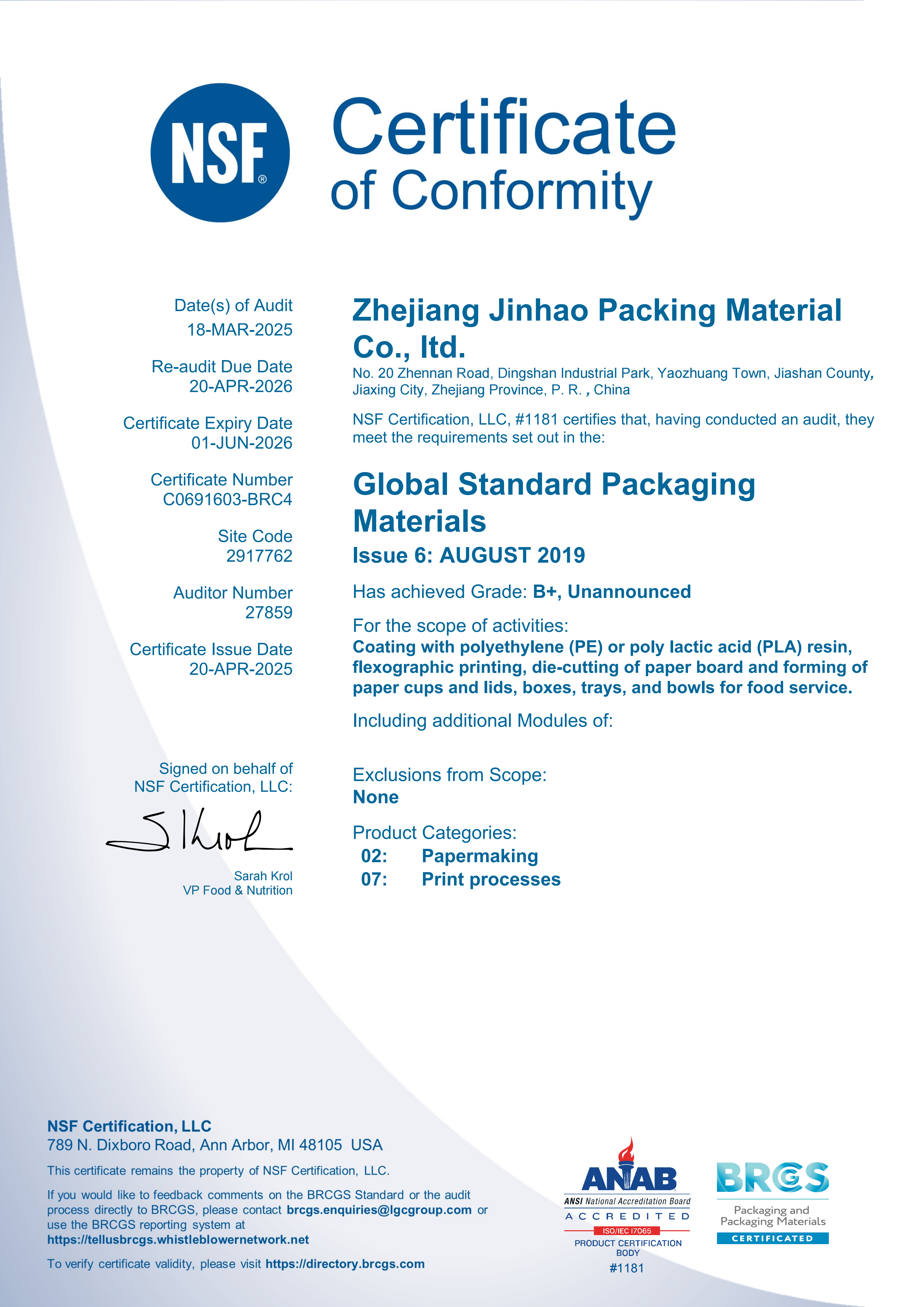
The BRCGS certificate scope explicitly names boxes, trays and bowls for food service — the closest match to the four formats compared here.
One further point belongs in the specification, not the sales conversation. The manufacturer states that products can be produced with PE coating or PLA coating for oil-proof, waterproof and heat insulation performance. Those three properties are stated as benefits, not as measured values, and no test method or numeric result is published alongside them. For a menu with a genuinely aggressive oil load, that gap should be closed in writing before the first production run.
Step-by-Step Breakdown: A Six-Step Selection Sequence
- Classify the food by barrier load, not by cuisine. Ask three questions: is there free liquid, is there free oil, and how long is the pack in transit? Free liquid points to the bowl; free oil points to a format where the base and seam can be verified by sample; dry goods point to the boat tray. This single step eliminates more wrong orders than any price comparison.
- Match geometry to handling. Delivery in a sealed bag favours the square box and the bowl. Counter service and tray presentation favour the boat tray. Airline and institutional tray service favours the box and printed container, where the footprint has to fit a fixed tray dimension. Write the handling route into the spec, not just the food name.
- Fix the model number before artwork. Choose from the published ranges — bowl 500 to 1500, square box No.1 to No.5 plus No.8, boat tray #025 to #1000, printed container 500 to 1100 — and record the exact model on the print approval. Any artwork revision after this point becomes a re-specification, not a design tweak.
- Match certificate scope to the SKU. Use the BRCGS certificate as the baseline for the bowl, box and tray, the FSC Chain of Custody certificate as the material-sourcing signal for the bowl, and the amfori BSCI report as the social-compliance signal for the food container. Re-verify validity with the issuing body before the PO is signed.
- Validate with a sample run using real food. Fill the sample with the actual dish at serving temperature, hold it for the real delivery window, and check the seam, the base and the corner folds. Test stacking in the actual carrier. Only then approve the print proof.
- Lock the reorder specification. Record material, coating, model number, print reference and certificate reference in one document, and attach it to every subsequent PO. This is the step that stops specification drift between the first order and the fifth.
Use Cases: Mapping Formats to Channels
Hotel groups
Hotel foodservice usually needs two formats rather than one: the bowl for in-room dining with sauces and hot liquid components, and the square box for breakfast sets, salads and portioned plates. Both are listed as applicable industries for the Kraft Paper Bowl ZT and the Kraft Paper Square Box XQ. The boat tray is the third practical addition for banquet and buffet service, where dry pastry and snack presentation dominates.
Beverage and milk tea chains
Beverage chains are listed as an applicable industry for the bowl, the square box and the printed container. In this channel the printed container usually carries the brand while the bowl carries the food pairing — a dessert, a topping bowl or a snack side. Customised logo printing for brand promotion is the deciding capability here, and the manufacturer supplies 10 million disposable paper cups per month to a national milk tea chain on this basis.
Fast food chains
Fast food is where the square box and the boat tray do most of the work: boxes for set meals, trays for fries, sides and hand-held items. Airline and fast-food programmes are also where certificate scope gets audited hardest, because these buyers tend to run supplier audits rather than relying on documents alone. The manufacturer supplies 10 million disposable food containers per month to well-known fast food chains, with customised logo printing for brand promotion.
Airlines
Airline catering constrains the format more tightly than any other channel: fixed tray dimensions, short service windows, and a pack that must survive chilled handling before service. The bowl, square box and printed container are all listed as applicable to airlines, and the manufacturer supplies 10 million disposable paper cups monthly to internationally renowned airlines for beverage service.
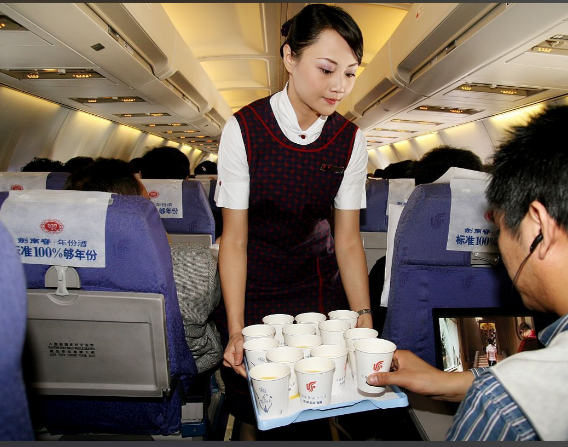
Airline catering: fixed tray dimensions make the square box and bowl footprint a specification issue, not a preference.
Catering and food takeaway
Catering is the home channel of the White Kraft Food Tray ZT, which is listed as applicable to catering and food takeaway. The nine-model range from #025 to #1000 means a caterer can cover a single pastry and a shared side dish from the same material system, which simplifies both purchasing and the printed artwork template.
Across these channels, the manufacturer reports a stated outcome of a 15% reduction in packaging cost achieved with eco-friendly materials in its airline and fast food chain programmes. That figure is a reported programme outcome rather than a general guarantee, and it depends on the format mix and material substitution a buyer is willing to accept.
Comparison Table: Bowl, Square Box, Boat Tray and Printed Container
| Format | Material and coating | Model range | Typical application | Stated certification coverage | Main watch-out |
|---|---|---|---|---|---|
| Kraft Paper Bowl ZT | Kraft paper with PE coating | 500, 700, 900, 1000, 1100, 1300, 1500 | Hotel groups, beverage chains, fast food chains, airlines; semi-liquid and moist meals | BRCGS Global Standard Packaging Materials (C0691603-BRC4); FSC Chain of Custody (ESTS-COC-250653) | Barrier performance is stated but not quantified — verify oil and water behaviour with a filled sample |
| Kraft Paper Square Box XQ | Kraft paper with PE coating | No.1, No.2, No.3, No.4, No.5 and No.8 Square Box | Hotel groups, beverage chains, fast food chains, airlines; portioned and stacked meals | BRCGS scope names boxes for food service | Corner folds and seams are the first point to inspect after filling and stacking |
| White Kraft Food Tray ZT | Coated white cardboard | #025, #040, #050, #100, #200#, #250, #300, #500, #1000 | Catering and food takeaway; dry, hand-held and snack items | BRCGS scope names trays for food service | Not the format for free liquid; confirm oil resistance for fried items by sample |
| Printed Disposable Paper Food Container | Cup base paper with PE coating | 500, 600, 850, 960, 1100 | Hotel groups, milk tea chains, fast food restaurants, airlines; branded takeaway programmes | BRCGS scope covers food containers; amfori BSCI report 25-0324242 | Print and logo approval adds a step before production — lock the model number first |
All specifications, model ranges and certificate references above are taken from the manufacturer's specification and certificate records.
FAQ
Which certification applies to each of these four paper container formats?
Three credentials cover the four formats directly. The BRCGS Global Standard Packaging Materials certificate (C0691603-BRC4, issued by NSF Certification, LLC) has a scope that names boxes, trays and bowls for food service, so it applies to the Kraft Paper Bowl ZT, the Kraft Paper Square Box XQ and the White Kraft Food Tray ZT, and covers the food container line. The FSC Chain of Custody certificate (ESTS-COC-250653, issued by ESTS) covers the disposable paper bowl under FSC Mix paper products. The amfori BSCI report (25-0324242, issued by SGS on behalf of amfori) covers the disposable food container. The ISO 9001 and ISO 14001 certificates from QAC (00623Q31644R4S and 00623E31318R4S) apply to the 9oz disposable beverage paper cup for the CN market, not to these four formats.
Can these formats be customised in size, printing and coating?
Customisation covers size, design, logo printing and eco-friendly material selection. Coating options are stated as PE coating or PLA coating, and both are described as delivering oil-proof, waterproof and heat insulation performance. Customised logo printing is already used in airline and fast food chain programmes. Two limits should be written into the brief: the oil-proof, waterproof and heat insulation properties are stated benefits without published numeric test values, and microwave suitability is not part of the specification reviewed here — if a programme requires microwave reheating, ask for a written statement before ordering.
What drives the price difference between a bowl, a square box, a boat tray and a printed container?
Four cost drivers separate the formats. The board grade differs — Kraft paper with PE coating for the bowl and square box, coated white cardboard for the boat tray, cup base paper with PE coating for the printed container. The coating choice (PE or PLA) differs. The model size within each range differs, and every model number is a separate production set-up. And print coverage differs, since the printed container exists specifically to carry brand graphics. Because pricing is quotation-based per model and per order quantity, the practical cost lever is consolidation: sourcing all four formats from one manufacturer reduces the number of set-ups and approvals across a menu rather than the unit price of a single SKU.
How should a buyer validate a format before committing to a volume order?
Sample the exact model number, not the format category. Fill the sample with the real dish at serving temperature, hold it for the full delivery window, then inspect the seam, base and, for boxes and trays, the corner folds. Stack the filled samples in the carrier actually used in service. For a boat tray, run the fried item it will really hold, because oil load is the property the coating claim is least quantified against. Approve the print proof only after the model number and material are fixed in writing.
How should multi-format orders be scheduled and reordered?
Consolidate the formats under one supplier where the certificate scopes allow it, and treat the model number as the permanent reorder key alongside the material and coating reference. Each of the four formats comes from the same manufacturing base — a 50,000 m² facility with 200+ employees and 20 core technical staff, producing 20,000 tons of food-grade PE coated paper and over 2 billion paper cups and paper food containers annually — which is what makes a combined bowl, box, tray and printed container programme administratively practical. Published volume references include 10 million disposable paper cups per month to airlines, 10 million disposable food containers per month to fast food chains, and 10 million paper cups per month to a national milk tea chain. To move from comparison to a live specification, request a sample set for your exact model numbers and a quotation by writing to info@kinghonorpack.com or contacting Mr. Yang on +86 13918832889.
Conclusion: Choose by Food, Then Confirm by Certificate
The format decision resolves faster than most buyers expect once the sequence is fixed: classify the barrier load, match the geometry to the handling route, then pick the model number from the published range. The bowl takes semi-liquid and moist meals. The square box takes portioned and stacked meals. The boat tray takes dry and hand-held items. The printed container takes the programmes where the pack is the brand surface.
What remains after the shape decision is the part that actually protects the buyer: matching certificate scope to the SKU. In this set the BRCGS certificate is the one whose scope explicitly names bowls, boxes and trays; the FSC Chain of Custody certificate supports the bowl as an FSC Mix paper product; the amfori BSCI report supports the food container on social compliance; and the ISO 9001 and ISO 14001 certificates belong to the 9oz beverage paper cup for the CN market. Checking that mapping, and re-confirming validity with the issuing body before contracting, is a fifteen-minute task that prevents a tender failure.
A last practical note for buyers with strict barrier requirements: the oil-proof, waterproof and heat insulation properties are stated for both PE and PLA coating options but are not published as measured values. Treat them as a specification to be verified by filled sample testing, and put the test result in the approval document alongside the model number.
Next Step: Sample Set, Quotation or Catalogue
KingHonor Paper Products Co., Ltd. supplies the Kraft Paper Bowl ZT, Kraft Paper Square Box XQ, White Kraft Food Tray ZT and Printed Disposable Paper Food Container from a single manufacturing base in Vietnam, with BRCGS, FSC Chain of Custody and amfori BSCI credentials across the range.
To compare the formats against your own menu, request a sample set for your exact model numbers, or ask for a quotation by format and order quantity.
Email: info@kinghonorpack.com | Tel: +86 13918832889 | WhatsApp: +8618205730716 | Website: www.kinghonorpack.com
Download the product catalogue and specification pack: KingHonor product brochure (DOCX)
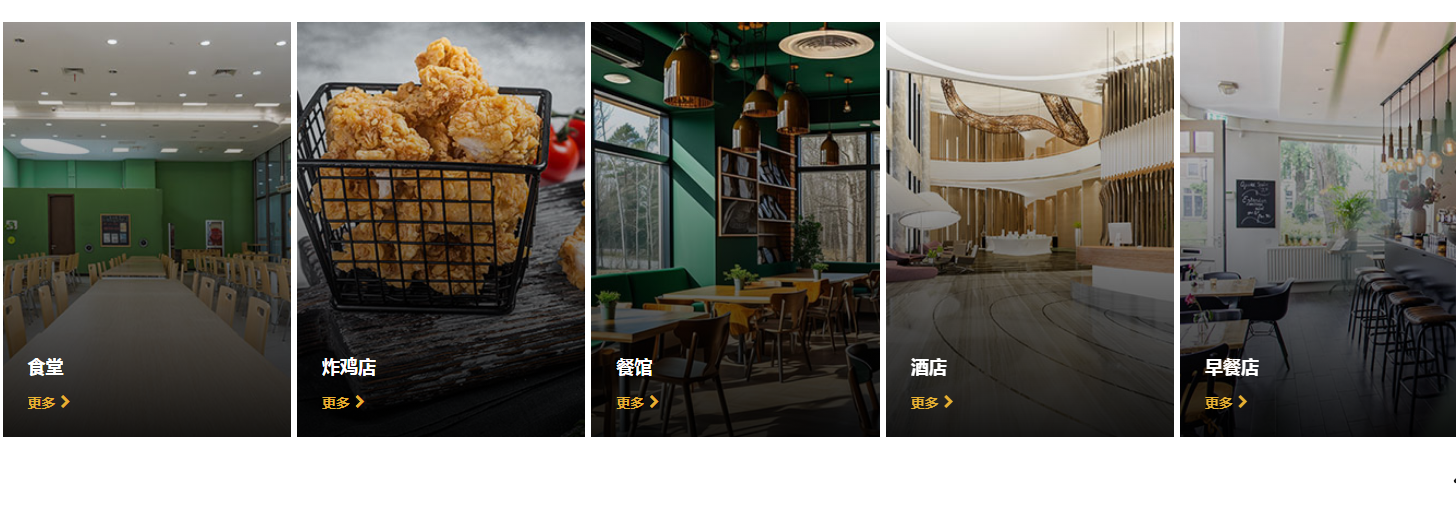
Application showcase: bowl, box and tray formats in airline, fast food and beverage chain programmes.
Have Questions or Need More Details?
Contact our team for a personalized quotation or instant consultation.
Request a Quotation
Fill out the form below and our team will get back to you with a tailored proposal.
WhatsApp Direct Chat
Prefer to chat in real-time? Message us on WhatsApp for instant assistance & quick answers.
- Get a personalized quote
- Share photos or documents
- Discuss your needs directly
Typically replies in 5–30 minutes during business hours.