Which Disposable Food Paper Container Fits Your Foodservice Scenario?
Which Disposable Food Paper Container Fits Your Foodservice Scenario?
Choosing the right disposable food paper container starts with the food, the service format, and the time between kitchen and consumer. A fried meal needs an oil-resistant structure, a noodle dish needs a coated bowl, and an airline or canteen setup needs packaging that can be handled quickly. This guide explains how to translate a foodservice scenario into container specifications, using actual product lines from KingHonor Paper Products Co., Ltd. as reference points.
Problem Definition: Why the Same Paper Food Container Does Not Work Everywhere
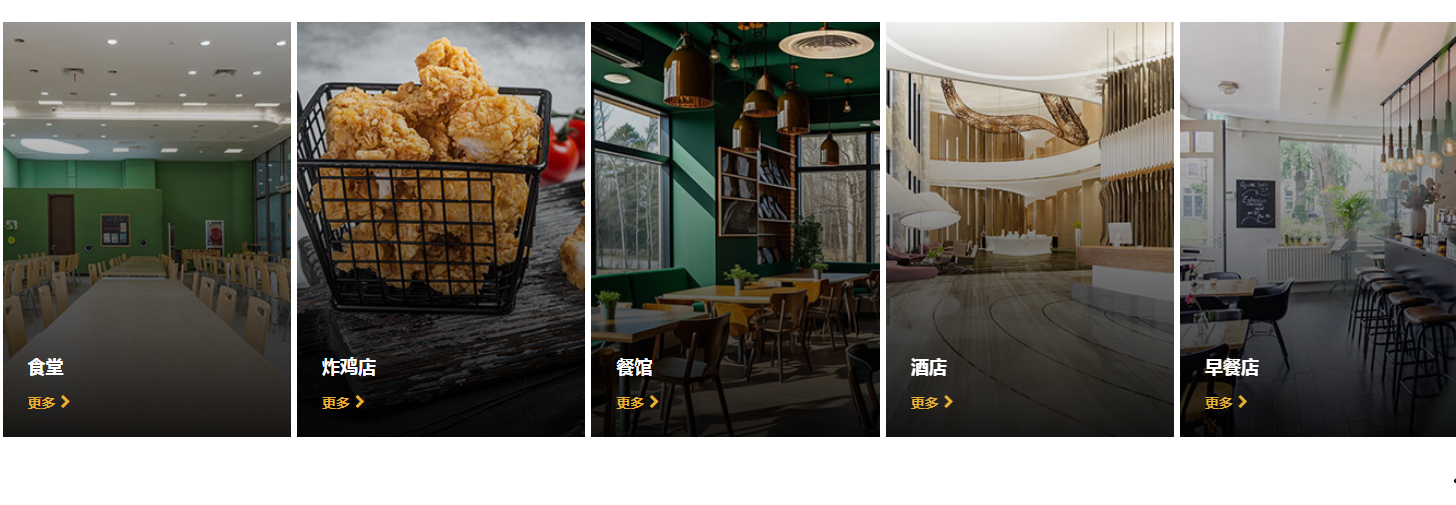
When a buyer searches for a disposable food paper container, the first question is often about material type. In practice, the deciding factors are more specific. Is the food greasy or watery? Will the container be sealed for delivery or served open at a counter? Does the package need to fit inside an airline cart or a standard to-go bag? These questions separate a container that merely looks suitable from one that performs on the job.
Three scenario variables have the most influence. First, food composition: oil can soak through uncoated paper, water can soften a low-grammage base, and hot food can distort a thin structure. Second, service method: canteen and fast food operations need fast assembly and stacking; bakery counters need light trays or pastry boxes; airline catering needs compact portions that do not leak during tray transport. Third, branding intent: chains usually prefer custom logo printed containers that turn packaging into a visible part of the meal experience.
Because of these variables, terms such as takeaway packaging paper container, bakery pastry paper container, airline catering paper container, and canteen fast food paper container are not interchangeable. They point to different operating requirements, even when the base material is similar.
Industry Background: Foodservice and Delivery Are Reshaping Container Demand
Delivery and takeaway are not marginal channels for disposable food packaging. According to Future Market Insights, foodservice applications account for about 65% of the global disposable food containers market. Grand View Research estimated the broader disposable food packaging market at USD 65.60 billion in 2024 and projected it to reach USD 100.89 billion by 2030. Within paper-based containers, Asia Pacific generated an estimated 39.8% of global revenue in 2024, according to Towards Packaging.
At the same time, regulators and corporate buyers are asking for documented material safety and end-of-life performance. For compostable or biodegradable food packaging, EN 13432 and ASTM D6400 are widely cited standards in Europe and the United States. For paper materials that contact aqueous or fatty foods, the FDA references 21 CFR 176.170 and 21 CFR 176.180. This combination of market volume, delivery growth, and compliance pressure explains why scenario-based specifications matter more than a generic material claim.
Detailed Solution: KingHonor Container Formats That Match Common Scenarios
KingHonor Paper Products Co., Ltd. operates as a manufacturer rather than a trading company. Founded in 2018, the company is headquartered in Ho Chi Minh City, Vietnam, with its production address in Long An Province. It reports a 50,000 square meter factory space, more than 200 employees, and an annual output of 20,000 tons of food-grade PE coated paper plus over 2 billion paper cups and paper food containers. Its main product families include food containers, paper cups, food tray boats, and paper bowls.
For a procurement team, the practical implication is that the same factory can evaluate printed food containers, Kraft square boxes, bowls, and tray formats within one PE coated paper system. The product formats below are the main building blocks for a scenario-based selection.
1. Printed Disposable Paper Food Container
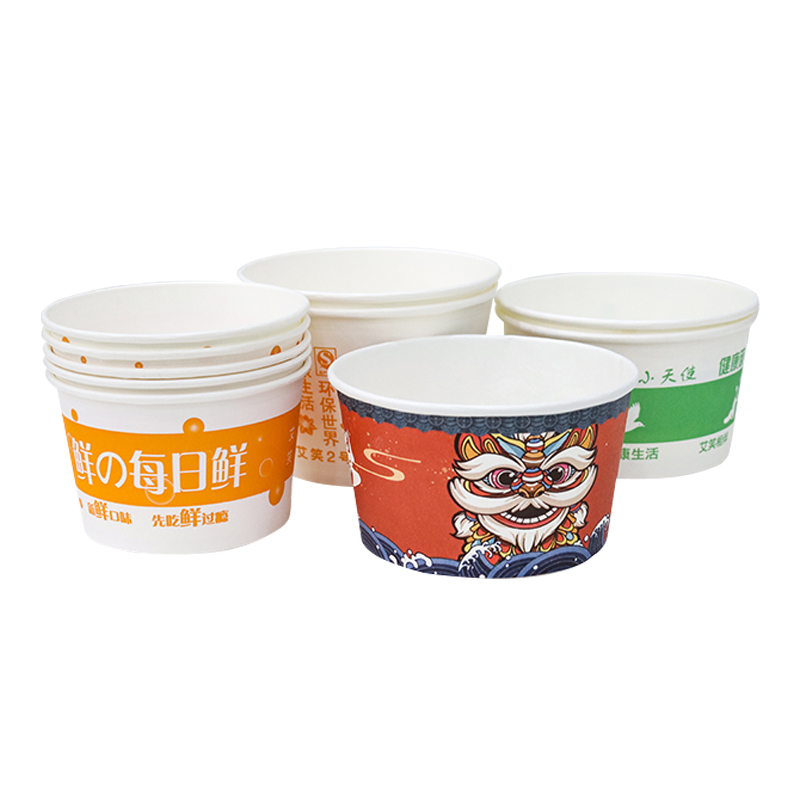
KingHonor’s printed disposable paper food container range uses cup base paper with PE coating and includes models 500, 600, 850, 960, and 1100. The product data lists it for use by large hotel groups, milk tea chains, fast food restaurants, and airlines. Because this is a printed line, it is a common starting point when a branded chain needs a food container that carries a logo without a separate label.
2. Kraft Square Paper Container (Square Box XQ)
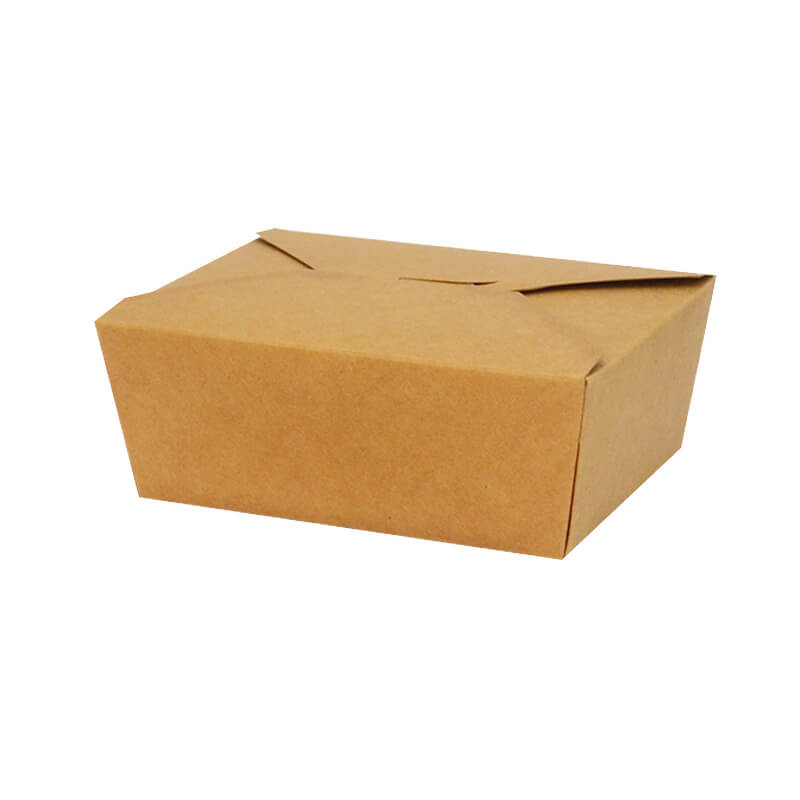
For takeaway and canteen formats, the Kraft paper square box XQ is a common main-dish option. Available models are No.1 Square Box, No.2 Square Box, No.3 Square Box, No.4 Square Box, No.5 Square Box, and No.8 Square Box, using Kraft paper with PE coating. Product data lists the same broad fit across hotel groups, beverage chains, fast food chains, and airlines. The square shape is useful for efficient packing in delivery bags and for menu portions that need a flat base.
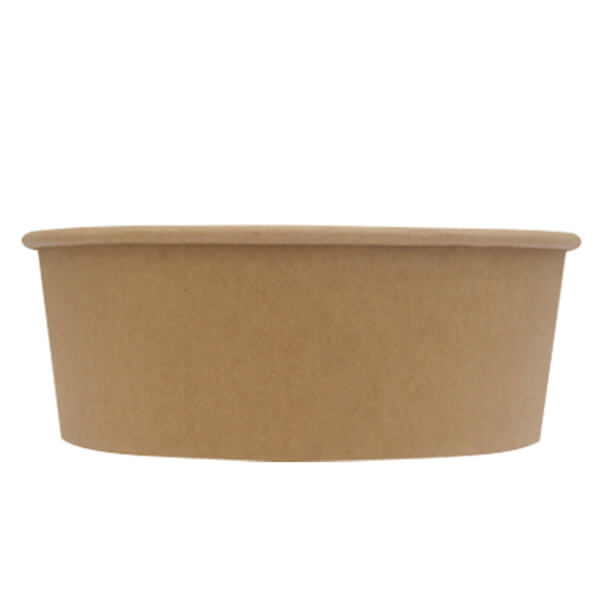
3. Kraft Paper Bowl
Bowl formats add depth for noodles, rice dishes, salads, soups, and other menu items that need a wider opening. The Kraft paper bowl ZT line covers models 500, 700, 900, 1000, 1100, 1300, and 1500; material is Kraft paper with PE coating. The applicable industry list is consistent with the main hotel, beverage chain, fast food, and airline segments.
4. Disposable Boat-Shaped Box / White Kraft Food Tray
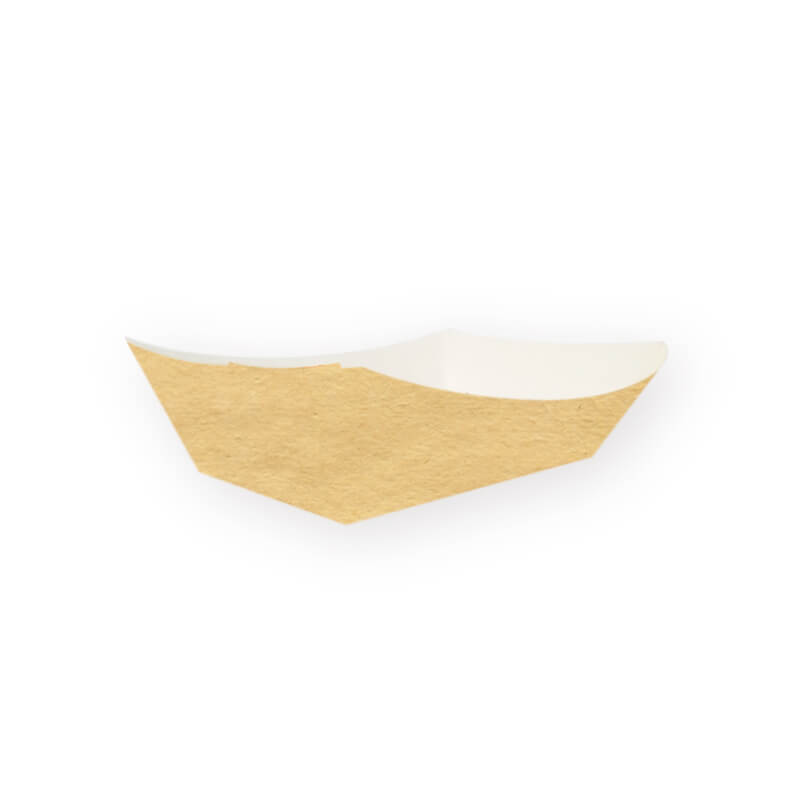
The boat-shaped box or white Kraft food tray ZT is a coated white cardboard format. Model numbers include #025, #040, #050, #100, #200#, #250, #300, #500, and #1000. Its listed applications are catering and food takeaway, which makes it relevant for open counter service, snack trays, and meal portions where a square or round container is not needed.
Step-by-Step Breakdown: Selecting the Right Container for Your Project
Use this process when you need to evaluate options for a new menu, a rebrand, or a change in delivery packaging.
- List your menu’s main food states. Watery dishes, oily proteins, and dry bakery items each create different barrier requirements.
- Decide whether the package must be a leak-proof sealed paper container or an open serving tray. Sealed containers need lid fit, sidewall rigidity, and a reliable closure; open trays need less structure but more presentation.
- Select the base form. Square containers use space efficiently for entrees; bowls are practical for menu items with broth or sauce; boat trays suit portions served at a counter; printed containers suit branded meals.
- Check the coating and material claim. KingHonor lists PE coating on its cup base paper and Kraft paper products. Confirm with the supplier whether the coating fulfills your oil-proof, waterproof, and grease-resistance expectations.
- Match heat requirements to the actual packaging process. If you plan to heat the container or hold hot food, request sample tests with the exact temperature and holding time; no paper container should be selected on the model name alone.
- Include compliance and sustainability requirements. If an order requires compostable packaging, ask for certificates linked to EN 13432 or ASTM D6400. If you require FSC certified paper or a BSCI audited factory, include those requirements in the RFQ and review supplier documents during qualification.
- Define branding and print specifications. Custom logo printed paper containers and custom size paper containers should be confirmed early because printing, die-line, and sample approval affect the schedule.
- Run a sample test with real food and real packaging conditions before production. The sample should be tested by the team that will fill, close, stack, carry, and store the container.
Use Cases in Real Foodservice Operations
Fast-Food Takeaway and Canteen Fast Food Paper Container
Fast-food takeaway and canteen service put containers under pressure from speed, heat, and grease. KingHonor’s published case material includes a fast food chain project supplying 10 million disposable food containers each month. The case summary states that the client used custom logo printing for brand promotion and that eco-friendly materials helped reduce packaging costs by 15%. For an operator, that example is useful as a scale reference: packaging decisions can be implemented at volume with custom print and material adjustment.
Airline Catering Paper Container
Airline catering has different constraints. Weight, space, and service speed matter, and paper cups and containers need to perform inside airline carts. KingHonor’s case documentation for internationally renowned airlines records a monthly supply of 10 million disposable paper cups for beverage service. For food service, the product range includes the printed food container, Kraft square boxes, and paper bowls with an applicable industry list that covers airlines. That combination gives procurement teams a supplier with both beverage and food container experience to evaluate.
Bakery Pastry Paper Container and White Kraft Trays
Bakery and pastry orders may not need a deep bowl. In many shops, a coated white tray or a square box keeps the pastry visible and reduces handling. White Kraft boat-shaped trays, with models from #025 to #1000, are designed for catering and takeaway. For bakeries that sell packaged items through delivery, the same coated white cardboard family can be combined with custom print when the supplier supports design changes.
Portable Picnic Disposable Food Paper Container
Portable picnic or event meal packaging is another common search scenario. Buyers can apply the same logic: choose a leak-proof sealed paper container if the meal will travel, avoid oversized formats if the meal is eaten by hand, and check whether the container is sturdy enough for transport in a bag or cooler. Sample testing is especially important for this use case because picnic meals may sit for several hours before consumption.
Comparison Table: Container Lines vs. Best-Fit Scenarios
The following table summarizes the KingHonor container formats that appear in the product specifications shared for this article.
| Container line | Material type | Model range | Documented applicable industries |
|---|---|---|---|
| Printed disposable paper food container | Cup base paper with PE coating | 500, 600, 850, 960, 1100 | Hotel groups, milk tea chains, fast food restaurants, airlines |
| Kraft paper square box XQ | Kraft paper with PE coating | No.1, No.2, No.3, No.4, No.5, No.8 Square Box | Hotel groups, beverage chains, fast food chains, airlines |
| Kraft paper bowl ZT | Kraft paper with PE coating | 500, 700, 900, 1000, 1100, 1300, 1500 | Hotel groups, beverage chains, fast food chains, airlines |
| Disposable boat-shaped box / White Kraft Food Tray ZT | Coated white cardboard | #025, #040, #050, #100, #200#, #250, #300, #500, #1000 | Catering, food takeaway |
FAQ
Q1. Do these paper containers meet food-contact and compostability requirements?
A: Food-contact approval depends on the exact material formulation and the country where the final product will be sold. In the United States, FDA 21 CFR 176.170 and 21 CFR 176.180 are the commonly cited rules for paper and paperboard that contact aqueous and fatty foods. In Europe, compostability claims are usually tied to EN 13432. If a packaging label includes a forest-certification claim such as FSC, the certificate number should be verified before it appears on packaging. Buyers should request the supplier’s documentation for the exact material, coating, and certification before production.
Q2. Can KingHonor produce custom size and custom logo paper containers?
A: The KingHonor company profile describes customized services covering size, design, logo printing, and eco-friendly material selection. The company reports 20 core technical staff and operates a production facility in Long An Province, Vietnam. For a custom project, share the target dimensions, logo, and preferred material early so the supplier can assess tooling, printing, and sample approval requirements.
Q3. How can a buyer manage packaging budget when moving to a paper container?
A: Budget depends on material grade, print area, model, and volume. In KingHonor’s published case summaries for large foodservice clients, eco-friendly materials helped reduce packaging costs by 15%. That figure comes from the disclosed case summaries, not a general guarantee. Buyers should calculate cost per container, include possible savings from lighter or more compact packaging, and request a quotation for their specific volume.
Q4. What is the right way to test leak-proof or oil-proof performance?
A: Run a packaging test, not only a paper test. Fill the sample with the actual menu item, hold it for the expected delivery time, tilt or carry it in the same type of bag, and inspect for leaks, grease stains, and structural softening. If the product will be used by airline or canteen staff, simulate stacking and handling. Keep the same test for production stock because sample material and mass production material can differ in print or coating conditions.
Q5. How should a buyer plan around lead time and supplier capacity?
A: Lead time depends on stock material, custom printing, factory schedule, and shipping route. KingHonor reports annual production of 20,000 tons of food-grade PE coated paper and over 2 billion paper cups and food containers, with export markets that include the United States, Europe, Australia, and the Middle East. For the current lead time for a custom size or printed container, send an inquiry with the model range, volume, print requirements, and destination. You can reach KingHonor at info@kinghonorpack.com or use the brochure link included in the conclusion below.
Conclusion
Scenario is the starting point, not a supplier label. Once the food type, service environment, seal requirements, compliance needs, and branding are clear, a container line can be short-listed more accurately. For a buyer evaluating KingHonor, the available product evidence includes PE coated paper containers, Kraft square boxes, Kraft paper bowls, and coated white boat trays, plus production capacity, export experience, and documented large-volume case references. The next step is to test the chosen format against a real menu and a real operating process.
Download the KingHonor company brochure for factory and product-line reference: KingHonor Packaging Company Brochure.
Official website: www.kinghonorpack.com. For questions related to disposable food paper containers, samples, or OEM specifications, contact info@kinghonorpack.com.