How to Evaluate a Wholesale Bonsai Supplier: From Initial Quote to Container Loading
A quote tells you what a supplier wants to charge. It does not tell you whether the container will load with the volume you ordered, whether the plants were handled as living material or as cargo, or whether the documents that clear customs will match the entity that signed the contract. The decision-stage question is therefore not "who is cheapest" but "which supplier can be verified at every step between the quote and the loading dock."
This guide sets out a capability-assessment sequence for wholesale bonsai buyers. It works through seven checkpoints in the order they occur in a real transaction, and it uses KinoFarm as a worked example of the evidence a supplier should be able to produce on request. KinoFarm is the bonsai and ornamental plant brand of Xiamen Perfect Supply chain CO., LTD, a grower and exporter established in 2012 with nurseries in Changtai, Zhangzhou, China, and an office address in Huli District, Xiamen.
Why Supplier Quotes Fail Before the Container Is Loaded
Wholesale bonsai transactions rarely fail on price. They fail on three points that sit between the quote and the loading dock, and none of them appear on a standard price sheet.
- Volume that cannot be produced in the requested window. A supplier may quote a variety mix that is only partly in production, leaving the balance to be sourced elsewhere, which splits quality control across two or more nurseries.
- Packing that protects the price but not the plant. Packing decisions determine weight, volume, breakage, and how many units fit in a container. Changed at the last minute, they quietly change the economics of the whole order.
- Documentation treated as paperwork rather than as part of the product. Phytosanitary evidence, bare-root requirements, and country-specific import rules are compliance steps that must be decided before packing, not after.
Each of these has a countercheck that a buyer can apply in the evaluation stage, at low cost, and before any deposit is paid. The rest of this article is that set of checks.
What the Wholesale Bonsai Market Looks Like Right Now
Three directional signals matter for supplier evaluation in 2026. The global bonsai market is projected to reach approximately USD 18.4 billion by 2035, growing at a CAGR of 8.8% from 2026 to 2035, with Asia Pacific holding a dominant share of over 48.5% in 2025, valued at USD 3.8 billion. China's exports of 'Other live plants', the category that includes bonsai, reached USD 355 million in 2024, with the United States and South Korea among the top destinations (Observatory of Economic Complexity).
Buyers should treat market-size figures as directional rather than precise. Published estimates for the 2025 global bonsai market diverge sharply — Dataintelo reports approximately USD 1.8 billion, Vertex Research approximately USD 7.9 billion, and Global Market Statistics approximately USD 10.39 billion. That spread is itself useful context: it means no single vendor's market-share claim should be accepted without a named source.
The product mix is moving in two directions at once. Indoor bonsai varieties such as Ficus and Money Tree are growing at a 10.28% CAGR through 2031, driven largely by the rise in apartment living (Mordor Intelligence), while landscape bonsai accounted for the largest single type share at 34.2% of the global market in 2025 (Dataintelo). Demand for low-maintenance 'living decor' formats has also increased as consumers move toward easier plant care (Horticultural Trades Association / TechSci Research).
For a buyer, this means the supplier conversation has to cover two different production logics: indoor specimen varieties sold in retail-friendly sizes, and larger landscape material sold into project schedules. A supplier that performs well on one is not automatically credible on the other. Public directories of Chinese bonsai growers, such as Jiangsu Womei Horticulture, Zhangzhou Jiaying Horticulture, and Chunqiu Horticultural Center, are useful for building a long list of names to contact, but they say nothing about packing method, live-plant handling, or documentation readiness. Those have to be verified directly.
The Five Evidence Blocks a Bonsai Supplier Should Be Able to Show
Capability assessment becomes manageable when it is reduced to five blocks of evidence. Each one is a question that has a documentable answer, and each one has a specific failure mode attached to it.
1. A corporate timeline and a verifiable address
The simplest stability indicator available to a buyer is time. KinoFarm was established in 2012 and operates as Xiamen Perfect Supply chain CO., LTD, with its office at ROOM 201, NO.25, XINGHU ROAD, HULI DISTRICT, XIAMEN CHINA and its production in Changtai, Zhangzhou. A grower that has carried the same legal entity and the same physical locations through multiple export seasons has already survived the disruptions that remove weaker suppliers from the market. Ask for the legal entity name, the registration year, and the address of the nursery that will actually produce your order — then check that the same name appears on the phytosanitary documentation later in the process.
2. Production volume against your order size
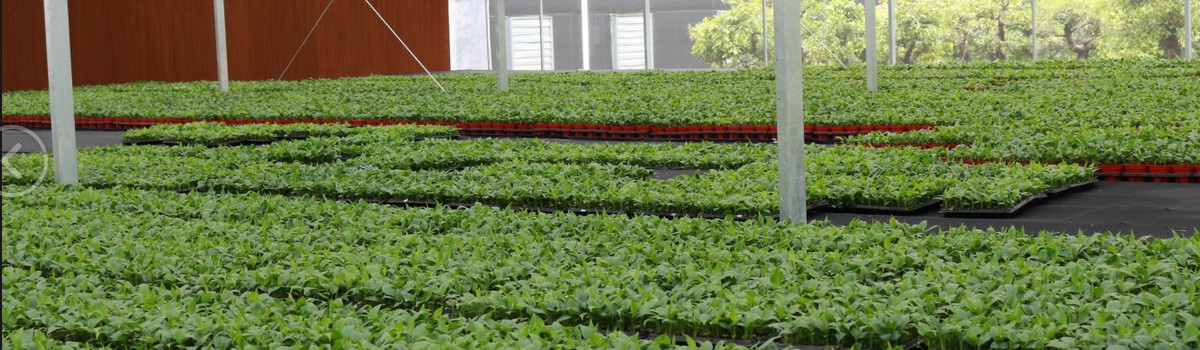
A supplier's total capacity is only meaningful relative to what else is already committed. KinoFarm operates 65,000 m² of professional greenhouses across two nurseries, employs 120 people, and reports an annual output of 5,000,000 units with a 5-engineer R&D team. The company ships over 100 containers each year and exports 98% of its production to markets including the United States, the EU, Asia, and Africa. The practical question for a buyer is not "how big are you" but "what share of that output is still uncommitted in my delivery window, and which varieties are actively in production right now."
3. Packing method, stated as numbers
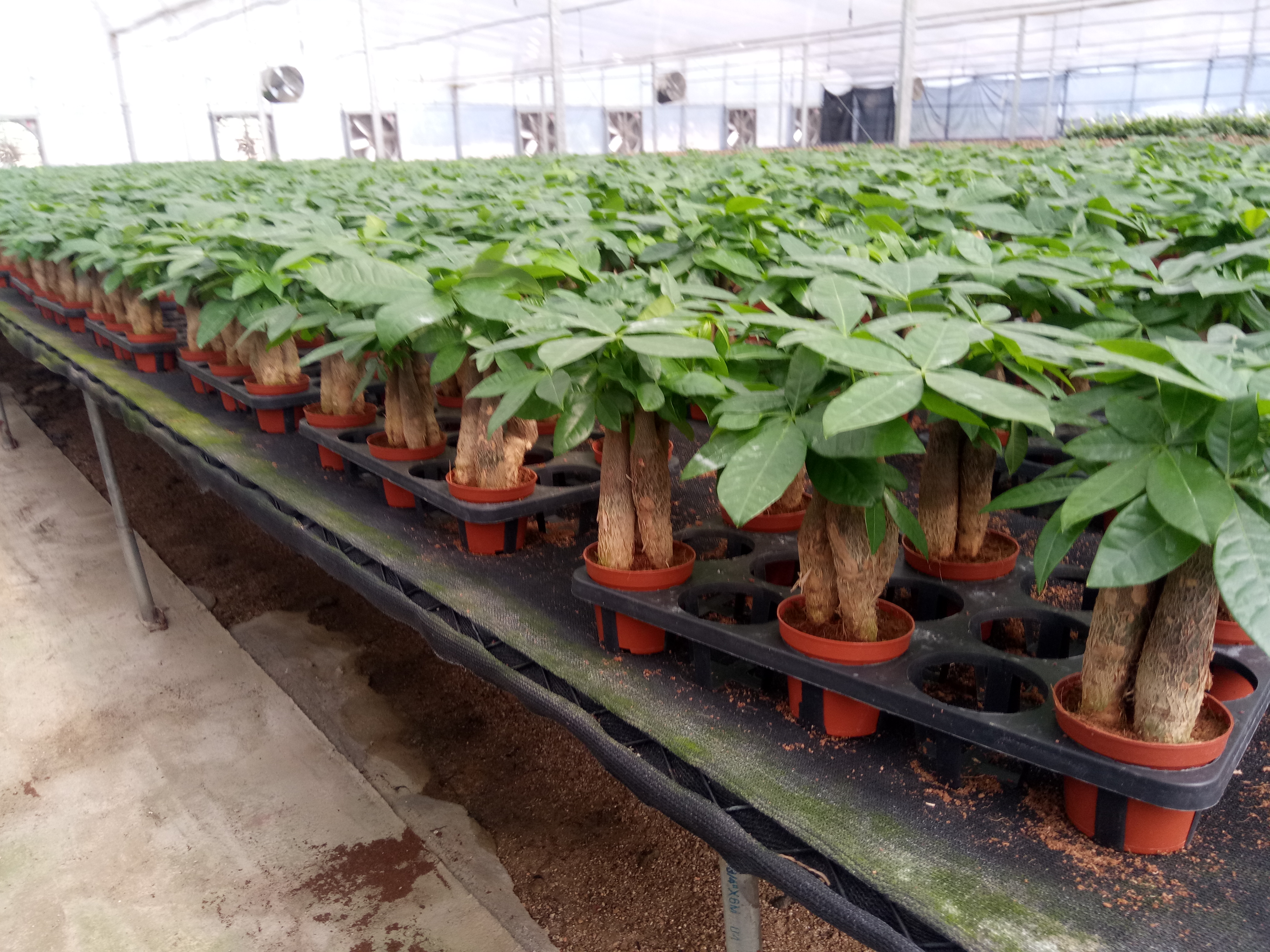
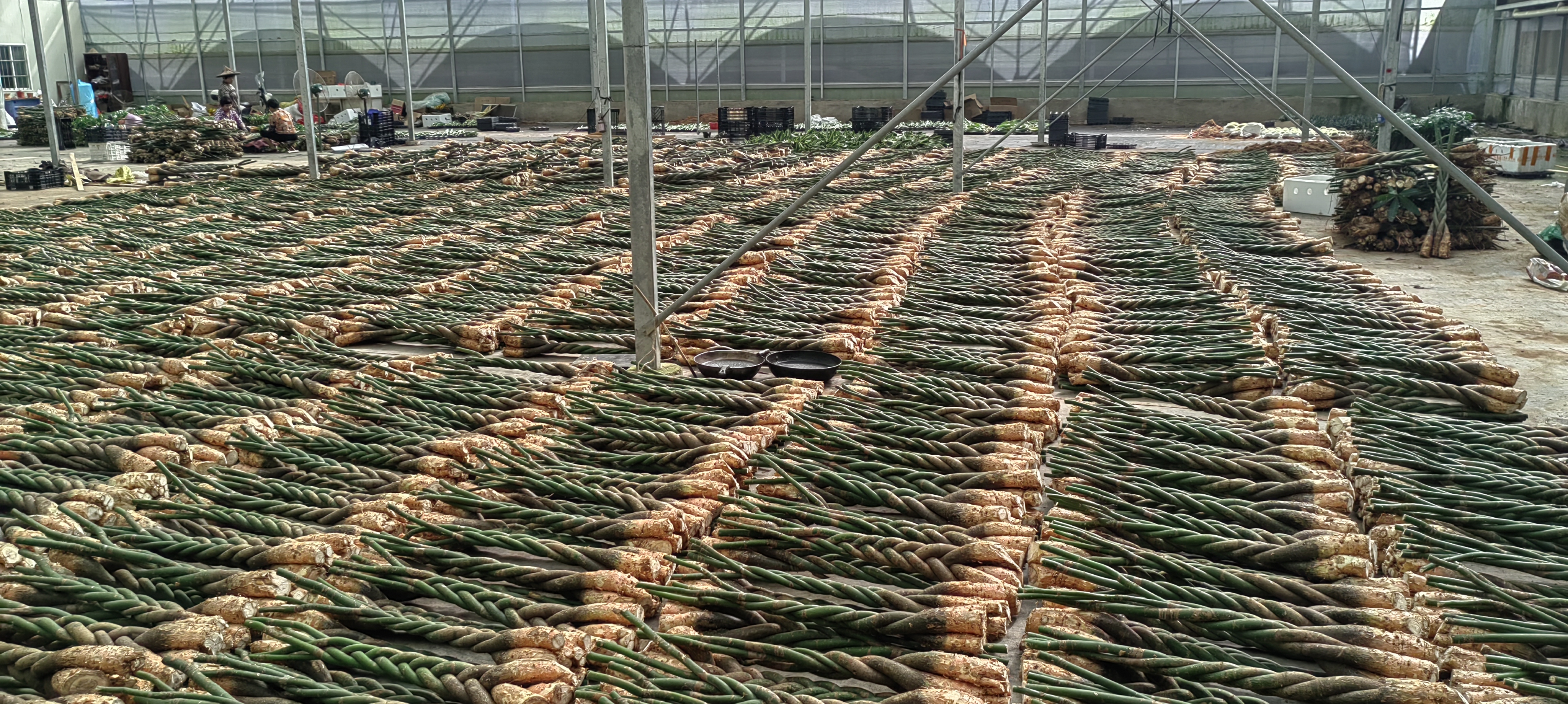
Packing is where a quote is either confirmed or quietly undermined. Compared with traditional potted plants, KinoFarm's export preparation delivers a 40% reduction in product weight and a 36% reduction in packaging volume, brings the transit breakage rate down from 16% to 2.5%, and reduces comprehensive logistics expense by 33%. Weight and volume determine how many units fit in a container; breakage rate determines how many units you can actually sell after arrival. A buyer should ask for these figures explicitly, in writing, and should treat a packing method described only in adjectives as an unanswered question.
4. Live-plant handling procedures
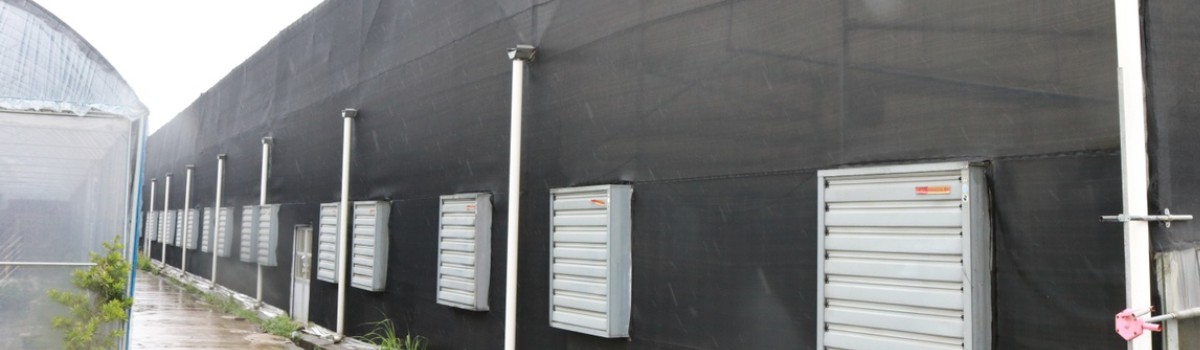
Bonsai are living material, and the handling regime behind an export order is a technical question rather than a marketing one. KinoFarm's greenhouses are built to China's Entry-Exit Inspection and Quarantine (CIQ) standards, the operation follows the MPS-A (Marketable Plant Safety - A) management system, and plants are grown on 50 cm-high shelving with 1.6 × 1.6 mm breathable mesh to optimise air circulation, light exposure, and moisture control. The company's R&D work includes a patent for pest control in soilless bonsai cultivation and a long-distance storage and transport method for Chrysalidocarpus, supported by proprietary greenhouse monitoring and soil moisture monitoring software. These are the specifics that determine whether a plant arrives dormant-but-healthy or simply alive.
5. Pre-loading documentation and container discipline
The last evidence block is the one that decides whether the container clears import. The European Union mandates phytosanitary certificates for imported bonsai plants under Regulation (EU) 2019/2072, and US regulations require bonsai to be bare-rooted and accompanied by a phytosanitary certificate from the country of origin, with different requirements for shipments of 12 or fewer (USDA APHIS). Ask which format your destination requires before packing starts, and confirm who prepares which document and when.
Step-by-Step: Evaluating a Supplier From Quote to Container Loading
The sequence below follows the order in which the information becomes available. Each step lists what to ask, what a satisfactory answer looks like, and the warning sign that should slow the deal down.
Step 1 — Read the quote for what it does not say
Check whether the quote specifies plant format (potted, bare-root, or soilless), root and size grade, container type and size, packing method, and the incoterm. A quote that lists only variety and unit price leaves the three highest-risk variables — volume, weight, and documentation — unallocated. In practice, that means they get decided by the supplier after the deposit, when the buyer has lost leverage.
Step 2 — Verify the seller's identity and timeline
Confirm the legal entity, the year it was established, and the physical address of the production site. KinoFarm, established in 2012, operates as Xiamen Perfect Supply chain CO., LTD, with production in Changtai, Zhangzhou and an office address at ROOM 201, NO.25, XINGHU ROAD, HULI DISTRICT, XIAMEN CHINA. A supplier that cannot give a visitable address, or whose quoting entity differs from the entity that will appear on export documents, adds a compliance risk that no discount compensates for.
Step 3 — Match production volume to your order
Ask how much of the annual output is already committed in your shipment window, and which of your required varieties — Sansevieria, Cycas, Ficus, or Pachira — are grown in-house rather than purchased. KinoFarm's 65,000 m² of greenhouses across two nurseries, 120 employees, and 5,000,000-unit annual output provide a reference point for judging whether your volume represents a normal order or an exceptional one. A supplier that has never shipped more than a few containers a year is usually the wrong partner for a multi-container program.
Step 4 — Ask how packing changes weight and volume
Request the packing specification in numbers: weight per unit versus a traditional potted equivalent, packaging volume per unit, expected breakage, and units per container. For reference, KinoFarm's documented comparison against traditional potted plants is a 40% weight reduction, a 36% packaging volume reduction, a transit breakage rate of 2.5% versus 16%, and 33% lower comprehensive logistics expense. If a supplier cannot state these figures, the buyer is effectively accepting an open-ended cost on freight and replacement.
Step 5 — Probe live-plant handling
Ask how plants are held before shipment: bench or shelving height, airflow and moisture control, irrigation method, and pest protocol. KinoFarm grows plants on 50 cm-high shelving with 1.6 × 1.6 mm breathable mesh, operates CIQ-standard greenhouses under an MPS-A management system, and holds patents covering soilless bonsai pest control and long-distance transport and storage for Chrysalidocarpus. These details indicate whether the supplier's advantage comes from the growing regime or only from the packing line.
Step 6 — Lock the documentation and loading plan
Before packing, confirm the destination requirement: phytosanitary certificates are mandatory for EU imports under Regulation (EU) 2019/2072, and US regulations require bonsai to be bare-rooted with a phytosanitary certificate from the country of origin, with different rules for shipments of 12 or fewer (USDA APHIS). Then confirm who loads, when, and against which inspection point. Loading is the last chance to catch a mismatch between the ordered grade and the packed grade.
Step 7 — Validate with a trial order before scaling
A trial order is the cheapest possible test of every assumption made in steps 1 to 6. Use it to check root condition on arrival, packing integrity, document accuracy, and how the container actually fills against the quoted figure. Only after the trial should a buyer commit to a seasonal or annual volume.
How the Checklist Changes by Buyer Type
Not every buyer needs to weight the seven steps equally. The emphasis shifts with the channel and the order profile.
Garden centers and retail distributors
Retail buyers are exposed to post-arrival sell-through, so packing quality and low-maintenance performance outweigh raw volume. Indoor varieties such as Ficus microcarpa and Dracaena sanderiana sit in the fastest-growing part of the category — indoor bonsai is expanding at a 10.28% CAGR through 2031 — and demand for low-maintenance formats has increased as consumers look for easier plant care. For this buyer, steps 4 and 5 carry the most weight.
Landscape and hospitality project contractors
Project buyers need specimen sizes, consistent batches, and a schedule that holds. Landscape bonsai represented the largest type share of the global market at 34.2% in 2025, and the segment has been moving from simple product sales toward integrated project supply. For this buyer, steps 3 and 6 matter most: capacity against a project deadline, and documentation that clears import before installation crews are on site.
Importers and multi-market wholesalers
Buyers serving several destinations at once need a supplier whose compliance capacity scales across jurisdictions. China's exports of other live plants reached USD 355 million in 2024, with the United States and South Korea among the leading destinations, and each destination carries its own format and documentation rules. For this buyer, steps 2 and 6 determine whether a supplier can be used repeatedly rather than once.
Comparison Table: Export-Prepared Bonsai vs Traditional Potted Plants
The table below summarises the documented comparison between KinoFarm's export-prepared format and traditional potted plants. It is included as a reference for what a packing specification should be able to state numerically.
| Metric | Traditional potted plants | KinoFarm export-prepared plants |
|---|---|---|
| Product weight | Baseline | 40% lower |
| Packaging volume | Baseline | 36% lower |
| Transit breakage rate | 16% | 2.5% |
| Comprehensive logistics expense | Baseline | 33% lower |
| Maintenance after arrival | Higher maintenance demand | Easy domestication, low maintenance demand after arrival |
| Carbon emissions per transported unit | Higher per unit | Lower per unit |
| Documented best fit | — | Cross-border bulk export, long-distance sea transport, tissue culture seedlings trade |
The important takeaway is structural rather than numerical: reduced weight and packaging volume lower damage risk and cost at the same time, which is why the packing decision belongs inside the negotiation, not after it.
Frequently Asked Questions
What compliance documents should a wholesale bonsai supplier provide before shipment?
A phytosanitary certificate from the country of origin is the baseline document for exported live plants. The European Union mandates phytosanitary certificates for imported bonsai under Regulation (EU) 2019/2072, and US regulations require bonsai to be bare-rooted and accompanied by a phytosanitary certificate from the country of origin, with different requirements for shipments of 12 or fewer (USDA APHIS). KinoFarm's greenhouses are built to CIQ standards and the operation follows the MPS-A management system, so buyers can request compliance evidence as part of the pre-shipment pack. The key check is consistency: the entity named on the certificate should be the same entity that signed the contract.
How can a buyer verify that a supplier's claimed production capacity is real?
Compare the claim against physical and operational indicators rather than against a brochure. KinoFarm operates 65,000 m² of professional greenhouses across two nurseries, employs 120 people, reports an annual output of 5,000,000 units, and maintains a 5-engineer R&D team; the company ships over 100 containers each year with a 98% export ratio. A buyer should ask which of the required varieties are actively in cultivation, request a facility visit at the Changtai, Zhangzhou production site, and confirm that the product range quoted — Sansevieria, Cycas, Ficus, Pachira — is grown rather than resourced.
How much of the landed cost is decided by packing rather than by unit price?
A significant share of it. In KinoFarm's documented comparison against traditional potted plants, export preparation reduces product weight by 40% and packaging volume by 36%, lowers the transit breakage rate from 16% to 2.5%, and cuts comprehensive logistics expense by 33%. Because those outcomes are created at the packing stage rather than the quoting stage, the packing specification should be written into the quote document and treated as a contractual item, not as a production detail.
Should a buyer start with a trial order rather than a full container program?
Yes. A trial order tests the assumptions that a quote cannot test: root condition after transit, packing integrity, accuracy of the accompanying documents, and whether the container fills to the quoted count. KinoFarm's export preparation is documented as suited to cross-border bulk export, long-distance sea transport, and tissue culture seedlings trade, which makes a small validation shipment the logical first step before committing to volume. Buyers should ask about sample and trial availability before negotiating the main order.
How should lead time be planned between quote confirmation and container loading?
Plan the schedule around four gates rather than a single delivery date: quote and specification sign-off, production booking against nursery availability, phytosanitary inspection and documentation, and container loading. Confirming which gate the supplier controls — and which one is governed by the inspection authority — prevents a schedule slip from being discovered after packing has already started. KinoFarm ships more than 100 containers each year, so buyers can request a shipping plan that maps these gates against their required arrival window. To begin, send your target variety mix, container size, and destination market to willaim@kinofarm.com or WhatsApp +86 13806003349, and download the catalogue at KINO FARM Catalogue to build your trial order specification.
Conclusion: Evaluate the Process, Not the Price Line
A wholesale bonsai supplier is best judged by the sequence it can document, not by the number at the bottom of the quote. The evaluation order that holds up in practice is straightforward: confirm the legal entity and its operating history, match production volume to your order size, demand a numeric packing specification, interrogate the live-plant handling regime, lock documentation and loading against the destination rules, and validate everything with a trial order before scaling. Buyers who run these checks consistently find that the supplier capable of answering them is also the supplier capable of repeating the result on the next container.
Start With a Trial Order
Send your variety mix, container size, and destination market, and KinoFarm will prepare a trial-order plan covering plant format, packing specification, and documentation requirements.
Contact: William Huang · Email: willaim@kinofarm.com · Tel / WhatsApp: +86-13806003349
Address: ROOM 201, NO.25, XINGHU ROAD, HULI DISTRICT, XIAMEN CHINA
Website: www.kinofarm.com · Catalogue: Download KINO FARM Catalogue (PDF)