
Pachira vs. Ficus Ginseng Bonsai: Which Root Structure Sells Faster in Retail?
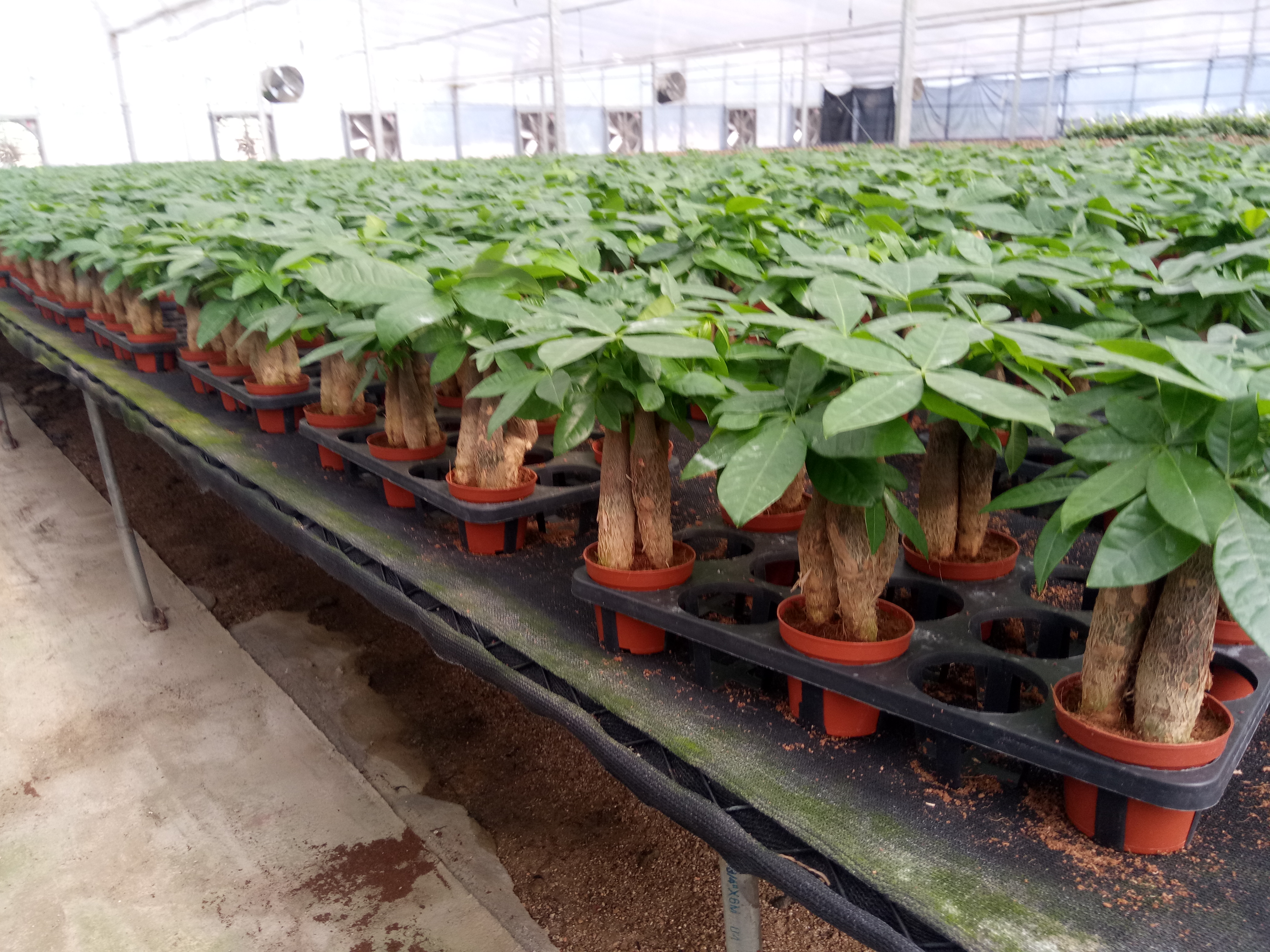
Cover: Braided Pachira money trees in cultivation at KinoFarm, Changtai, Zhangzhou — a root structure built for fast retail turns.
For a wholesale buyer splitting a container between two proven indoor bonsai lines, the honest answer is that each root structure wins in a different retail environment. Braided Pachira money trees — supplied in heights of 20–90 cm with 3–5 braids — turn fastest where the purchase decision is quick and visual: gift, office and impulse retail. Ficus Ginseng bonsai — supplied from 50 g to 10 kg in both grafted and ungrafted options — turn fastest where the shopper is buying a decorative specimen and comparing weight, form and durability before paying a higher unit price. Allocation, not preference, is what decides the mix.
Root structure is the variable that separates the two commercially. It determines what the customer sees first, what the plant weighs in freight terms, how it is packed, how it recovers after a long sea leg, and how quickly the retailer comes back for a repeat order. Those are wholesale planning questions, and they are the reason this comparison belongs in a purchasing file rather than a hobbyist catalogue.
The Allocation Problem: One Container, Two Root Systems
Space, freight budget and working capital are fixed. Standard purchasing terms for live plant orders are expressed by weight — MOQ 45 kg — so every kilogram allocated to braided Pachira is a kilogram not allocated to Ficus Ginseng. The mix has to be justified by sell-through, not by variety preference.
On most purchase orders, however, both lines appear under the same generic heading: wholesale bonsai plants. They are not interchangeable SKUs, because each places its commercial value in a different part of the plant.
Braided Pachira puts the value above the soil line. The braid is the product — three to five stems twisted into a single trunk, sized from 20 cm to 90 cm so that one growing line covers a desk planter, a reception shelf and a floor-standing statement piece. The root system beneath the braid is largely hidden, which means it can be prepared for transport without touching the feature the customer actually buys.
Ficus Ginseng puts the value at the soil line. The thickened, exposed root — the caudex — is what makes the plant read as aged and specimen-like, and it is the reason a Ginseng-style Ficus can be graded from 50 g to 10 kg without changing species. Add grafted or ungrafted canopy options and the same variety covers a desk item, a bonsai bench piece and a heavy indoor feature plant.
That single structural difference drives four downstream decisions for a distributor:
- which retail channel the line belongs in;
- how it should be shipped and packed;
- how resilient it stays through weeks of indoor display;
- how often the retailer reorders.
Industry Background: Two Lines Inside One Growth Curve
The case for carrying both varieties rests on category-level data rather than supplier claims. The global bonsai market is projected to reach approximately USD 18.4 billion by 2035, growing at a CAGR of 8.8% from 2026 to 2035 (Vertex AI Search / Industry Analysis). Asia Pacific held a dominant share of over 48.5% in 2025, valued at USD 3.8 billion (Vertex Market Report). China's exports of “Other live plants”, the customs category that includes bonsai, reached USD 355 million in 2024, with the United States and South Korea as the top destinations (OEC — Observatory of Economic Complexity).
The indoor segment is the part that matters for Pachira and Ficus Ginseng. Indoor bonsai varieties such as Ficus and Money Tree are growing at a 10.28% CAGR through 2031, a trend attributed to the rise in apartment living (Mordor Intelligence). Low-maintenance “living decor”, including Ficus retusa and succulent bonsai, is also increasing in demand as consumers prefer easier plant care (Horticultural Trades Association / TechSci Research).
Two further data points shape allocation strategy. Landscape bonsai accounted for the largest type share at 34.2% of the global bonsai market in 2025 (Dataintelo) — and that segment is shifting from straightforward product sales toward integrated project supply services (industry analysis, Wulala Garden). In practice this means the same two varieties that sell from a retail bench are also being specified into project packages, a channel that rewards suppliers able to hold consistent stock across multiple seasons.
Note on figures: published estimates of the 2025 global market value diverge widely — Dataintelo at USD 1.8 billion, Global Market Statistics at USD 10.39 billion and Vertex Research at USD 7.9 billion. Treat category growth rates as directional evidence for range planning, not as a budgeting input.
How Root Structure Changes the Selling Mechanics
1. Visual appeal: braid versus caudex
A braided Pachira is recognised instantly and can be explained in one sentence. In channels where the shopper is not a plant specialist — gift shops, office foyers, supermarket floral aisles, furniture retail — that readability converts. The braid also scales visually: a 20 cm braid reads as a desk accessory, a 60–90 cm braid reads as a floor piece, and both come from the same growing line.
A Ficus Ginseng asks the shopper to look more carefully. The exposed root is the differentiator, and the grafted canopy can be selected for density and uniformity. That makes it a stronger fit for bonsai benches, home décor retail and design-led e-commerce, where the customer compares form instead of reacting to a familiar symbol. The trade-off is real: the plant that earns a higher unit price needs more display context to sell.
2. Freight and packaging: where root structure shows up on the invoice
Root structure is also a logistics variable. Bonsai grown for export can be prepared bare-rooted, and the measured effect on freight economics is significant: compared with traditional potted plants, bare-root preparation reduces product weight by 40% and packaging volume by 36%, cuts transit breakage from 16% to 2.5%, and lowers comprehensive logistics expense by 33% (internal comparison data). For a braided Pachira, whose selling feature sits above the root zone, bare-rooting preserves the product and removes weight. For a heavy Ficus Ginseng root — up to the 10 kg end of the range — the same principle protects the caudex while keeping the freight bill proportionate.
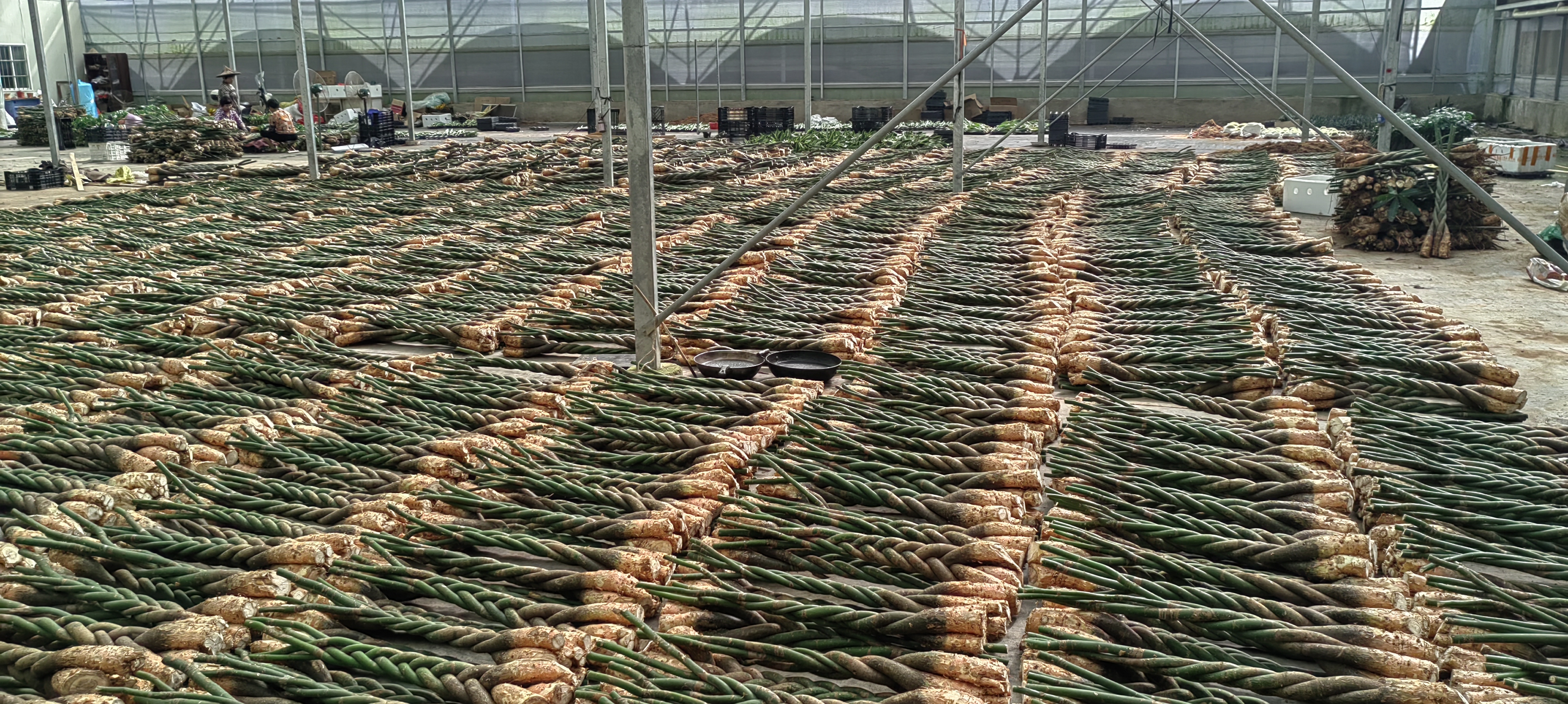
Bare-root Pachira preparation: the braid stays intact while weight and packaging volume come down — the root-zone advantage of this variety in export logistics.
Container conditions matter as much as packing. Live plant transportation relies on the dormancy and low-metabolism features of plants under low-temperature conditions; with well-adjusted temperature and ventilation, plants maintain good freshness and survival rate. Standard dry containers lack temperature adjustment and ventilation, which causes relatively high plant loss during transport. Shipments should therefore move in refrigerated or fresh-keeping containers, with settings matched to the characteristics of each variety.
3. Durability indoors and demographic fit
Both varieties are positioned as indoor bonsai, and both suit buyers looking for low-maintenance living decor. The commercial difference appears in how each handles imperfect retail conditions — irregular watering and low light.
A Ginseng-style Ficus carries a thickened, exposed root that stores reserves, which generally gives it more tolerance during display in a home or office where watering is not on a strict routine. A braided Pachira holds its mass in the stems and a fibrous root ball; it performs best when turns are quick and store staff can keep to a consistent routine. That does not make Pachira fragile — it makes it a fast-turnover line rather than a long-dwell display piece.
Demographically the split is equally clear. Offices and corporate gifting favour the money tree's recognisable braided form; home décor channels favour the Ficus Ginseng's sculptural root for customers furnishing a living room, entrance or reading corner. Garden centres serving both audiences typically stock both lines, but at different price points and on different bench positions.
4. Behind both lines: production reliability
Wholesale allocation only works if a supplier can hold both lines at consistent specification across seasons. KinoFarm — Xiamen Perfect Supply chain CO., LTD, founded in 2012 — is a horticultural enterprise based in Changtai, Zhangzhou, China's “City of Flowers and Plants”. Its operations span 65,000 m² of professional greenhouses across two nurseries, with plants grown on 50 cm-high shelving using 1.6×1.6 mm breathable mesh to optimise air circulation, light exposure and moisture control.
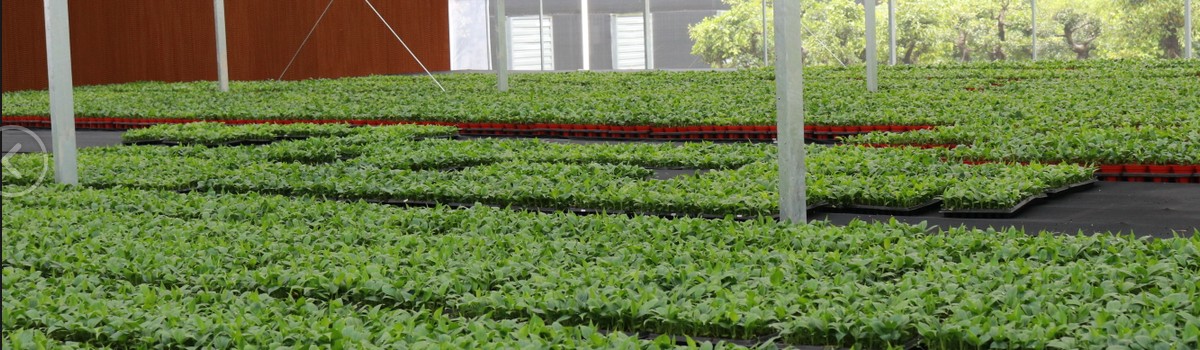
Inside a KinoFarm greenhouse: 50 cm-high shelving with 1.6×1.6 mm breathable mesh supports consistent specification across both bonsai lines.
The company employs 120 people, produces an annual output of approximately 5,000,000 units and exports 98% of its output to Oceania, the Americas, Europe, Africa, Southeast Asia and the Middle East, shipping over 100 containers per year. Its greenhouses are built to China's Entry-Exit Inspection and Quarantine (CIQ) standards and operate under the MPS-A management system, a globally recognised framework for sustainable, traceable horticulture. The bonsai and ornamental portfolio includes Ficus microcarpa, Cycas revoluta, Dracaena sanderiana and Sansevieria trifasciata.
Two capability details matter for a multi-season programme. KinoFarm holds invention patents covering long-distance storage and transport methods and pest control in soilless bonsai cultivation, and operates proprietary software systems including intelligent greenhouse monitoring and soil moisture monitoring. Those are the mechanisms that make specification repeatable — the precondition for a distributor to promise a retail partner the same plant in month twelve as in month one.
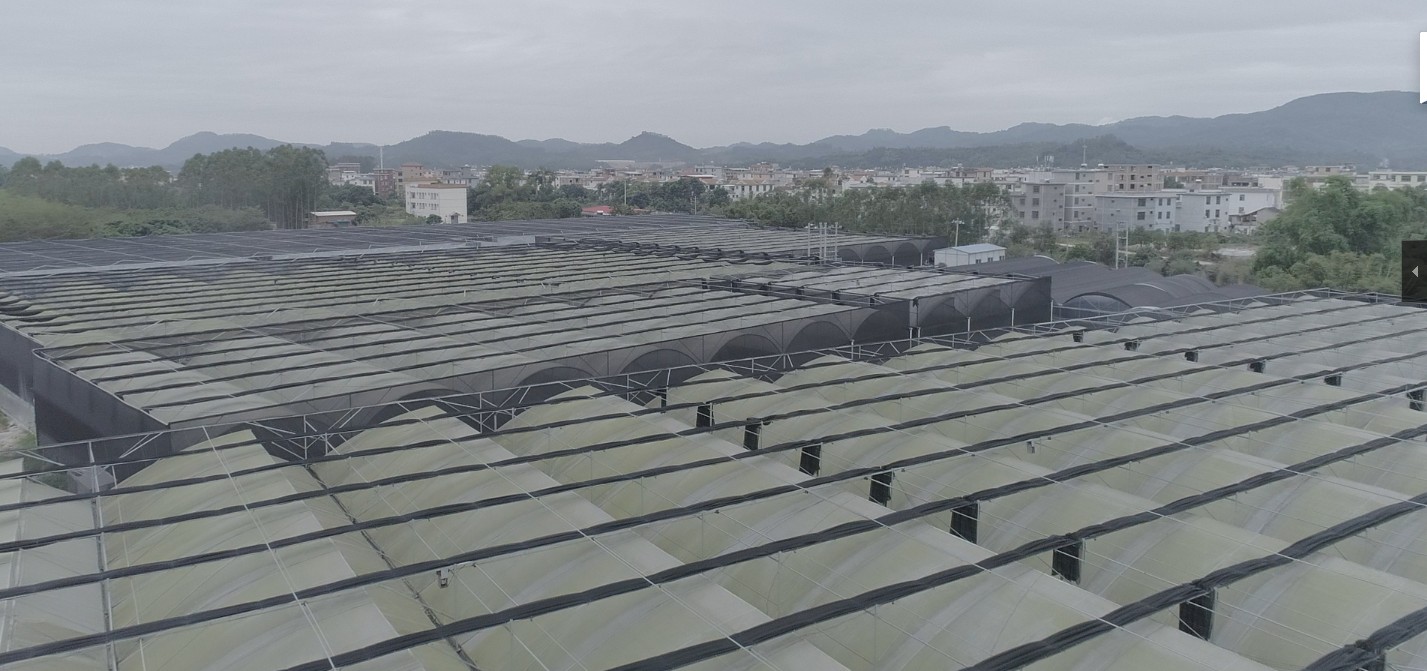
Capacity check: 65,000 m² of professional greenhouses across two nurseries, with over 100 containers shipped annually.
A Seven-Step Allocation Workflow for Distributors
Use Cases: Where Each Root Structure Earns Its Space
- Garden centre bonsai benches. Ficus Ginseng leads on the bench, where the exposed root justifies a higher ticket; braided Pachira occupies the adjacent gift-facing bay and absorbs foot traffic.
- Office and corporate gifting. Braided Pachira in 20–50 cm heights, in single-stem and 3–5 braid formats, for desk and reception placement.
- Home décor and furniture retail. Ficus Ginseng in mid-to-heavy weight bands as a sculptural accent alongside furniture displays.
- Hospitality and landscape projects. Mixed allocation where a project requires integrated supply rather than single-unit sales — consistent with the shift from product sales toward project supply services in the landscape bonsai segment.
- E-commerce and repeat gifting. Quick-turn Pachira for seasonal gifting catalogues; Ficus Ginseng for higher-value décor listings with detailed specification.
Comparison Table: Pachira vs Ficus Ginseng for Wholesale Allocation
| Decision variable | Braided Pachira (money tree) | Ficus Ginseng bonsai |
|---|---|---|
| Root structure and visible value | Value sits above the soil line: 3–5 stems braided into one trunk; the root ball is largely hidden | Value sits at the soil line: the thickened exposed root (caudex) is the defining feature |
| Supplied size range | Heights 20–90 cm | Weight 50 g – 10 kg |
| Format options | Braid count (3–5) and height band determine channel fit | Grafted or ungrafted canopy options |
| Primary retail fit | Gift, office, impulse and high-traffic floral retail | Bonsai benches, home décor, design-led e-commerce |
| Indoor positioning | Fast-turn indoor and gifting line | Indoor decorative specimen; higher unit price, needs display context |
| Freight profile | Bare-root preparation preserves the braid and removes weight | Heavier root mass at the upper end (to 10 kg) makes weight banding and bare-root packing essential |
| Category demand signal | Money Tree named in the indoor bonsai group growing at 10.28% CAGR through 2031 (Mordor Intelligence) | Ficus named in the same indoor bonsai group; low-maintenance living decor demand rising (HTA / TechSci Research) |
| Typical channel buyer | Distributors, gift and office channels, supermarkets, florists | Garden centres, home décor and furniture retail, hospitality projects |
| Reorder logic | Fast turns → smaller, more frequent orders | Slower turns, higher ticket → fewer, larger orders |
Allocation summary based on KinoFarm product specifications and third-party category data (Mordor Intelligence; Horticultural Trades Association / TechSci Research).
Frequently Asked Questions
What documentation must accompany a wholesale shipment of Pachira or Ficus Ginseng?
Documentation depends on the destination market. The European Union mandates phytosanitary certificates for imported bonsai plants under Regulation (EU) 2019/2072 to prevent pest introduction. In the United States, USDA regulations require bonsai to be bare-rooted and accompanied by a phytosanitary certificate from the country of origin, and shipments of 12 or fewer plants may be subject to different requirements (USDA APHIS PPQ 587). KinoFarm's greenhouses are built to CIQ standards for export readiness and operate under the MPS-A management system, which supports traceability documentation for both lines.
Can one supplier handle both braided Pachira and grafted or ungrafted Ficus Ginseng at scale?
KinoFarm produces live plants and bonsai across 65,000 m² of professional greenhouses in two nurseries in Changtai, Zhangzhou, with an annual output of approximately 5,000,000 units; 98% of output is exported. The bonsai and ornamental portfolio includes Ficus microcarpa, Cycas revoluta, Dracaena sanderiana and Sansevieria trifasciata, with plants grown on 50 cm-high shelving using 1.6×1.6 mm breathable mesh. More than 100 containers ship each year, and the R&D team holds patents covering long-distance storage and transport methods and pest control in soilless bonsai cultivation.
What are the purchasing terms, and how does root preparation affect landed cost?
Standard purchasing terms are MOQ 45 kg, delivery on FOB or CIF, payment prepaid 100% after confirmation, and pre-shipment inspection before loading as the acceptance criterion. On cost, bare-root preparation compared with traditional potted plants reduces product weight by 40%, packaging volume by 36% and comprehensive logistics expense by 33%, while the transit breakage rate falls from 16% to 2.5% — a material difference when a container is split between a light braided Pachira line and a Ficus Ginseng line that runs up to 10 kg per unit.
Can we evaluate samples before committing to a full container?
Sampling is the standard validation step, and acceptance criteria are set at order stage: pre-shipment inspection before loading. Sample evaluation should cover the two features that decide sell-through — braid count and height band for Pachira, and root weight plus grafted or ungrafted specification for Ficus Ginseng. Validating both at sample stage is what makes the container mix defensible when a retail partner asks for a repeat season.
How should buyers plan transit and reorder timing for these two varieties?
Live plant transportation relies on the dormancy and low-metabolism features of plants under low-temperature conditions; with temperature and ventilation properly adjusted, plants maintain good freshness and survival rate. Because standard dry containers lack temperature adjustment and ventilation and cause relatively higher plant loss, shipments should be scheduled in refrigerated or fresh-keeping containers with settings matched to each variety. Combining that with the 45 kg MOQ, the workable rhythm is a consolidated repeat order timed to arrive before the first shipment is sold through. To plan a first order or a repeat season, the KinoFarm catalogue can be downloaded here: KINO FARM Catalogue, and the export team can be reached at willaim@kinofarm.com or +86-13806003349.
Conclusion: Allocate by Root Structure, Not by Variety Name
The question of which root structure sells faster in retail has a workable answer once the channel is defined. Braided Pachira — 20–90 cm, 3–5 braids — sells faster in impulse, gift and office channels because the braid communicates the product instantly and the light, bare-rootable root zone keeps freight efficient. Ficus Ginseng — 50 g to 10 kg, grafted or ungrafted — earns more per unit and per display metre in bonsai benches, home décor retail and project supply, where the exposed caudex rewards a shopper who is comparing form rather than reacting to a familiar symbol.
For distributors building a repeatable programme, the decision rule is simple: weight the container toward Pachira for volume and turn frequency, and toward Ficus Ginseng for ticket value and category authority. Both lines sit inside the same expanding indoor bonsai demand, and both depend on a supplier who can hold specification season after season — which is where production scale, export compliance and process control decide the outcome rather than the variety itself.
Next Step: Sample, Quote, or Catalogue
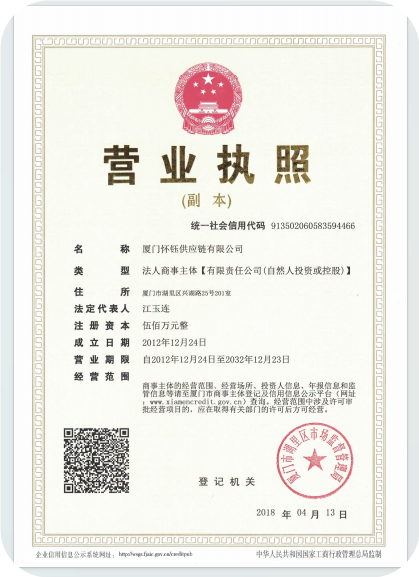
KinoFarm (Xiamen Perfect Supply chain CO., LTD) supplies braided Pachira money trees, Ficus Ginseng bonsai and other ornamental varieties for distributors, garden centres and project buyers. Request a sample allocation, a quotation on FOB or CIF terms, or download the full KINO FARM Catalogue.
Email: willaim@kinofarm.com | Tel / WhatsApp: +86-13806003349 | Website: www.kinofarm.com
Address: ROOM 201, NO.25, XINGHU ROAD, HULI DISTRICT, XIAMEN, CHINA
Have Questions or Need More Details?
Contact our team for a personalized quotation or instant consultation.
Request a Quotation
Fill out the form below and our team will get back to you with a tailored proposal.
WhatsApp Direct Chat
Prefer to chat in real-time? Message us on WhatsApp for instant assistance & quick answers.
- Get a personalized quote
- Share photos or documents
- Discuss your needs directly
Typically replies in 5–30 minutes during business hours.