Potted vs Bare-Root Sansevieria: A Wholesale Format Decision
Short answer: for Sansevieria superba, the supply format is a compliance and logistics decision before it is a price decision. Bare-root units carry less weight, less packaging volume and a lower transit breakage rate, which is why the format is positioned for cross-border bulk export and long-distance sea transport. Potted units arrive sale-ready and remove the potting step at destination. Settle the destination rule first, the freight arithmetic second, and your own handling capacity third.
Sansevieria superba is offered both potted and with bared roots. The offered specification is typically 2 to 3 leaves at 20-40 cm height, under a model designation of H 20-70cm. The plant is the same in either case; what changes is how much growing medium, container and packaging travels with it, and where the finishing labour sits in the chain.
What follows is written for the point of decision: importers, distributors and garden-centre buyers comparing two supply formats for the same order, at the same leaf count and the same height band.
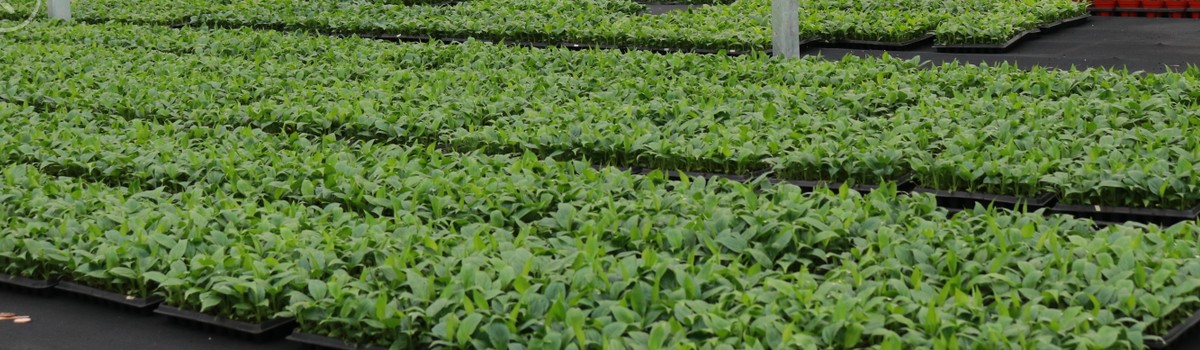 Inside a Kinofarm greenhouse in Changtai, Zhangzhou. Both Sansevieria supply formats originate from the same cultivation environment; the difference is what travels with the plant afterwards.
What the two formats mean in practice
Potted Sansevieria ships rooted in growing medium inside a container. The unit that leaves the nursery is the unit that reaches the shelf: pot, medium, foliage and finish already assembled. Inbound handling is inspection, counting and distribution, with no potting line required at destination.
Bare-root Sansevieria ships with the roots lifted from the medium, cleaned and packed without soil. The plant arrives as plant material. Containers, medium and finishing labour are added at destination, so bare-root orders suit buyers who already run a potting, growing-on or re-packing step and would rather pay for that step locally than pay to ship soil and plastic across an ocean.
Because both formats share the same stated 2-3 leaf, 20-40 cm, H 20-70cm specification, the comparison does not turn on plant quality criteria. It turns on what the format does to freight, breakage, border clearance and post-arrival labour.
Why format becomes a decision at container scale
China exported USD 355 million of "other live plants" — the customs grouping that includes bonsai — in 2024, with the United States and South Korea as the top destinations, according to OEC data. Long routes and high unit counts are exactly the conditions under which format choice moves landed cost, because every kilogram and every cubic metre removed from a single unit is multiplied across a full container.
Category demand shapes the merchandising logic around that. Third-party research cited by the Horticultural Trades Association and TechSci Research points to rising demand for low-maintenance "living decor", naming Ficus retusa and succulent bonsai among the lines benefiting. Sansevieria is not named in that finding and this article does not extend it to Sansevieria; the read-across is narrower — easy-care lines are increasingly merchandised as volume product, which puts weight on unit economics and shrink rather than on plant selection alone.
That is the commercial background against which potted and bare-root supply are weighed. The format with the lower landed cost per sellable unit is not automatically the one that fits a given buyer's operation.
Potted vs bare-root: head-to-head comparison
| Decision factor | Potted Sansevieria | Bare-root Sansevieria |
|---|---|---|
| Form on arrival | Rooted in medium, in container; sale-ready | Roots lifted, cleaned and packed without soil; needs potting at destination |
| Offered specification | Typically 2-3 leaves, 20-40 cm; model H 20-70cm | Same variety, same stated leaf count and height band |
| Unit weight and packaging volume | Baseline in Kinofarm's comparison | 40% lighter and 36% lower packaging volume than traditional potted plants (Kinofarm comparison data) |
| Transit breakage rate | 16% in the same comparison | 2.5% in the same comparison |
| Comprehensive logistics expense | Baseline | 33% lower (Kinofarm comparison data) |
| Container utilisation | Fewer units per unit of stowed volume | More units per unit of stowed volume; the exact count depends on carton dimensions, pallet pattern and stowage |
| Emissions per unit in transport | Higher per unit | Lower per unit, following from reduced mass and volume |
| Border format considerations | Requires confirmation that potted material is admissible with the correct certificate | Frequently the format that satisfies bare-rooted import requirements; confirm the commodity scope for the species and destination |
| Post-arrival work | Inspect, count, distribute | Pot, water, grow on or re-pack |
| Aftercare position | Standard indoor care from arrival | Easy domestication and low maintenance demand after arrival (company data) |
| Typical fit | Shorter routes, shelf-ready retail programmes, buyers without a potting step | Cross-border bulk export, long-distance sea transport, tissue-culture seedling trade (company positioning) |
Weight, packaging, breakage and logistics figures are Kinofarm comparison data for bare-root supply measured against traditional potted plants; they describe that comparison, not every route, carrier or supplier. Border references below are regulatory sources, not an approval of any individual consignment.
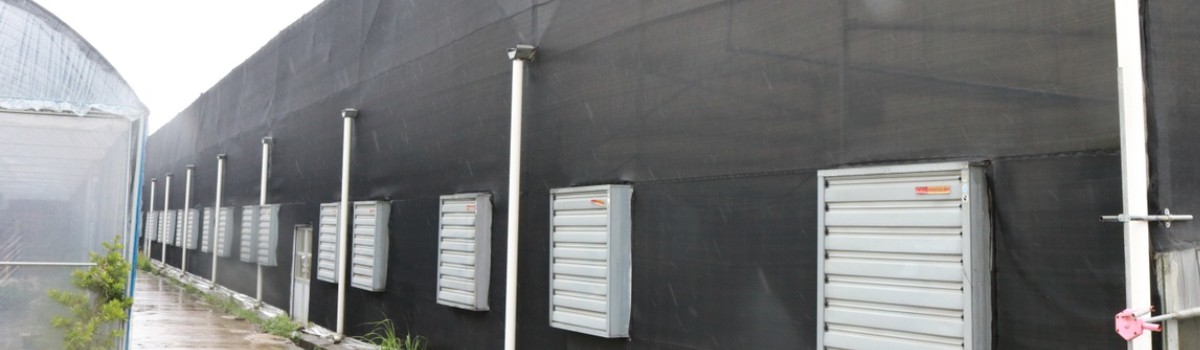 The Kinofarm nursery range at Changtai, Zhangzhou — 65,000 m² of greenhouses across two sites, with a stated 98% export ratio.
Reading the four measured differences
Kinofarm's comparison data states a 40% weight reduction and a 36% packaging volume reduction for bare-root supply over traditional potted plants, with the transit breakage rate falling from 16% to 2.5%. The same comparison puts comprehensive logistics expense 33% lower. Four consequences matter to a buyer, and each carries a condition.
- Weight per unit. A 40% reduction matters most where freight is charged by chargeable weight — air consignments and inland trucking. On a purely volume-rated ocean booking, the packaging figure does more of the work.
- Packaging volume. A 36% reduction raises the number of units a container's usable volume can hold. Treat the percentage as a direction, not a loading plan: the real count depends on carton dimensions, pallet pattern and how the container is stowed.
- Breakage. Moving from 16% to 2.5% changes claim arithmetic more than it changes freight. At the potted baseline, roughly one unit in six is a damage event to be documented, credited or written off; at 2.5%, one in forty. Confirm how your supplier defines a breakage claim and what evidence the process requires.
- Comprehensive logistics expense. The 33% figure is broader than ocean freight — it aggregates the cost elements of moving the consignment. Ask what is inside that scope before you apply it to your own quotation.
The comparison also records lower carbon emissions per unit during transport. That follows directly from moving less mass and volume; it is a transport-efficiency statement, not a lifecycle assessment of the plant or the container it eventually sits in.
The compliance gate: settle the destination rule first
Format preference does not outrank a border rule. Two references shape most wholesale programmes:
- European Union: Regulation (EU) 2019/2072 requires phytosanitary certificates for imported bonsai plants, in order to prevent pest introduction.
- United States: USDA APHIS states that bonsai must be bare-rooted and accompanied by a phytosanitary certificate issued in the country of origin, with different requirements possible for shipments of 12 or fewer.
Both references are written around regulated plant categories rather than around a single genus. Before locking a format, confirm with your customs broker or plant-health authority how Sansevieria superba is classified for your destination and which documents the consignment requires. Where the applicable rule calls for bare-rooted material, the format question is effectively decided at the border and the freight saving becomes a secondary benefit rather than the deciding argument. Where potted material is admissible with the correct certificate, both formats stay open and the decision returns to economics and handling.
Two operational points recur in practice. The certificate has to describe the consignment it travels with — species, quantity and format — because a document that does not match the cartons does not clear anything. And certificate timing has to line up with loading, so the paperwork sequence belongs in the order schedule rather than in a last-minute email before the container closes.
Acceptance criteria to write into the purchase order
Both formats need a written acceptance standard, and the standard should be specific enough that an inspector at destination can apply it without a phone call. For either format, specify the following.
- Plant specification: typically 2 to 3 leaves, 20-40 cm height, model designation H 20-70cm, with a stated tolerance for leaf count and height.
- Uniformity: how much variation across a carton is acceptable, and how mixed cartons are counted.
- Foliage condition: what counts as a cull — mechanical damage, discoloration, cut or broken leaves — and the permitted percentage per carton.
- Packing specification: units per carton, carton dimensions, pallet pattern and stacking limit. This is where the packaging-volume claim either materialises or disappears.
- Documentation: phytosanitary certificate, packing list, and any destination-specific declaration, each matching the shipped consignment.
- Evidence before loading: dated photographs of the graded batch and of the packed cartons, taken before the container is sealed.
- Claim route: the breakage allowance, the notice period after arrival, and the photo or inspection evidence required to support a claim.
Bare-root orders need three additional clauses. First, root condition and cleanliness — roots lifted from the medium, cleaned and packed without soil, with the packing material and its moisture state defined. Second, a check that no growing medium residue remains, since soil residue can create a documentation problem at the border as well as a quality argument. Third, a defined post-arrival window during which the buyer inspects and pots, because bare-root material is live material and the handling plan is part of the product specification.
Potted orders need different clauses. Define the container type and the medium, confirm how the unit is stabilised for stacking, and state whether top-dressing or finishing is included or added at destination. The potted unit is a finished object, so anything left undefined becomes a finished-object complaint.
Container and long-transit handling
Potted supply carries its growing medium and that medium's moisture through the entire voyage, so weight distribution, ventilation and humidity management become part of the loading plan rather than an afterthought. Bare-root supply removes that mass, which is the mechanism behind the 40% weight and 36% volume reductions and the reason the format is positioned for long-distance sea transport.
Removing the medium also changes what the buyer must be ready to do. Bare-root material is described as easy to domesticate with low maintenance demand after arrival, but the potting step, the irrigation regime and the grow-on space still belong to the receiving operation. A buyer without that capacity is not making a logistics saving; they are buying a project.
For either format, the loading plan should state the container type, whether ventilation is required, how cartons are braced against movement, and what the receiving site needs to have ready on the day the container is unstuffed. Bare-root cartons want a potting line scheduled in advance; potted cartons want bench or shelf space. The format that matches your unloading day is usually the format that protects the plant.
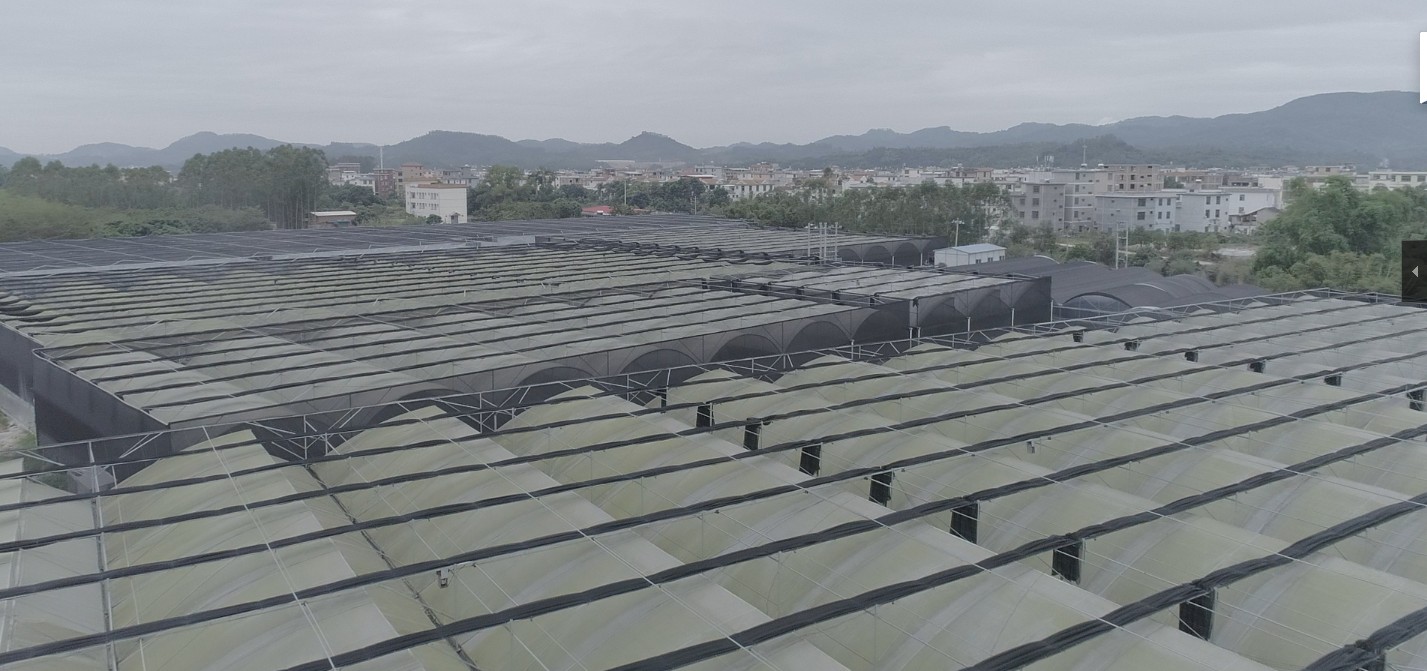 Aerial view of the Kinofarm greenhouse complex. The company reports shipping more than 100 containers of live plants per year across Oceania, the Americas, Europe, Africa, Southeast Asia and the Middle East.
Which format fits which buyer
The choice usually follows the buyer's operation rather than the plant. Three profiles cover most wholesale orders for this variety.
Importers and distributors running long-haul, high-volume programmes. Bare-root supply is the better structural fit: it reduces shipped mass and volume, lowers the breakage baseline, and shifts potting labour to a site where labour is cheaper than freight. The condition is a working potting or re-packing capability, or a customer downstream who has one.
Garden centres and retail programmes that need shelf-ready units. Potted supply removes the finishing step entirely, so the unit can go from container to bench. The trade-off is that the buyer pays to ship medium and container, and carries the higher breakage baseline — which is only a problem if the breakage is not priced in.
Project and landscaping buyers with a fixed installation date. These orders are usually driven by when plants must be in the ground or on display, not by freight economics. Where installation follows arrival closely, potted supply shortens the critical path; where there is a holding and growing-on period, bare-root supply can be potted on arrival and grown to the required presentation.
Buyers sourcing wholesale bonsai plants and other low-maintenance indoor lines often run exactly this comparison across several varieties at once. The reasoning does not change with the species: the format that reduces mass and shifts finishing work to the destination suits bulk programmes, and the format that arrives finished suits retail programmes.
A five-step decision sequence
- Confirm admissibility. Establish with your broker or plant-health authority whether potted or bare-rooted Sansevieria superba is admissible at destination, and which certificate the consignment requires. A format ruled out here does not need to be priced.
- Model the landed unit cost. Apply the weight, packaging and breakage deltas to your actual route and container type rather than to a generic assumption, and add the cost of the post-arrival work the bare-root format transfers to you.
- Test your handling capacity. Decide honestly whether you can pot, water and hold bare-root material within the window your supplier's packing allows. If you cannot, the potted premium buys you a functioning process.
- Write the acceptance specification. Leaf count, height band, model designation, packing configuration, documentation and claim route — before the order is placed, not after the first container.
- Verify with a sample and pre-shipment evidence. Compare the two formats on matched specifications, then require dated photographs and matching documents before loading.
Where each format costs you later
Bare-root supply is not a free saving. It moves work rather than deleting it: potting labour, medium purchase, irrigation and grow-on space all land on the receiving side, and they land inside a time window set by the plant being alive and out of the ground. Buyers who underestimate that window tend to describe bare-root as a quality problem when it is a scheduling problem.
Potted supply is not a free convenience either. Every container carries medium and containers that earn nothing in transit, the breakage baseline in the comparison is materially higher, and the comprehensive logistics expense sits above the bare-root figure. For short routes with a dense retail network, that premium can be easy to justify; for a long sea leg with a buyer who already owns a potting line, it is harder.
Supplier capability behind the format
Kinofarm Bonsai is the brand of Xiamen Perfect Supply Chain Co., Ltd, a Zhangzhou-based grower established in 2012, operating 65,000 m² of greenhouses across two nurseries with 120 staff, 5 engineers and a stated 98% export ratio. Its portfolio includes Sansevieria alongside Ficus microcarpa, Cycas revoluta and Dracaena sanderiana.
Several capabilities bear directly on a format decision. The greenhouses are described as built to CIQ standards, with cultivation on 50 cm-high shelving using 1.6 × 1.6 mm breathable mesh — an air-circulation and moisture-control arrangement that matters more, not less, when plants are lifted and packed without medium. The company also states MPS-A management-system adherence and holds patents covering long-distance storage and transport methods and pest control in soilless bonsai cultivation, which is the technical territory bare-root supply sits in.
That is supplier-side context, not a substitute for your own verification. What it tells a buyer is that the questions worth asking — how roots are cleaned, how packing moisture is controlled, what documentation accompanies the consignment — are questions this type of supplier should be able to answer in specifics.
Verification before you book the container
Ask for the measurement basis behind any comparison figure you are quoted, including the 40% weight, 36% volume, 16% to 2.5% breakage and 33% logistics numbers referenced here. A supplier who can explain what was measured, against which baseline and under which conditions is easier to hold to a specification than one who can only repeat a percentage.
Then verify the shipment-level items: matched samples of both formats at the stated 2-3 leaf and 20-40 cm specification; the packing specification that will apply to the bulk order, not to the sample; the certificate type and issuing timeline for your destination; dated pre-loading photographs; and a written claim route with a notice period you can actually meet.
Frequently asked questions
Does importing Sansevieria require bare-root supply?
It depends on the destination. EU Regulation (EU) 2019/2072 requires phytosanitary certificates for imported bonsai plants, and USDA APHIS states that bonsai entering the United States must be bare-rooted and accompanied by a phytosanitary certificate from the country of origin, with different requirements possible for shipments of 12 or fewer. Both rules are written around regulated plant categories rather than a single genus, so confirm how Sansevieria superba is classified for your market with a customs broker or plant-health authority before choosing a format.
What should an acceptance inspection check on a bare-root Sansevieria delivery?
Check the stated plant specification first — typically 2 to 3 leaves at 20-40 cm height under model designation H 20-70cm — then root condition and cleanliness, absence of growing-medium residue, the packing material and its moisture state, units per carton against the packing list, and the breakage count against the agreed allowance. The inspection should also confirm that the phytosanitary certificate and packing list describe the consignment actually received.
How much does the format change freight and total logistics cost?
Kinofarm's comparison data for bare-root supply against traditional potted plants states a 40% weight reduction, a 36% reduction in packaging volume, a transit breakage rate falling from 16% to 2.5%, and comprehensive logistics expense 33% lower. Those figures describe that comparison, not every route. Your own result depends on container type, stowage, carrier charging basis and the cost of the post-arrival potting work that bare-root supply transfers to the buyer.
Can a buyer sample both formats before committing to a container?
Sampling arrangements are set by the supplier, and the useful request is a matched one: both formats taken from the same specification, at the same leaf count and height band, packed to the specification that will apply to the bulk order. Evaluate the samples on arrival condition and on the handling step each format creates for your operation, and ask for dated pre-loading photographs of the graded batch before the container is sealed.
Does the format change preparation and loading time?
Yes, in different places. Bare-root supply adds lifting, cleaning and soil-free packing at origin, and adds potting and grow-on work at destination. Potted supply adds medium and container handling at origin and none at destination. Certificate issuance and document matching run alongside either sequence and must be scheduled with the loading date rather than after it.
Next step. Kinofarm Bonsai supplies Sansevieria superba in both potted and bare-root formats within the stated H 20-70cm range, alongside a wider live-plant and bonsai portfolio for wholesale programmes. Buyers comparing formats for an upcoming container can review the full product range in the Kinofarm catalogue (PDF) and send a sample or quotation request to the Kinofarm Bonsai team through the company website.
 Kinofarm Bonsai — wholesale live plants and bonsai from Zhangzhou, China, exporting to Oceania, the Americas, Europe, Africa, Southeast Asia and the Middle East.
Conclusion
For Sansevieria superba, potted and bare-root supply are not competing quality claims on the same plant — they are two different distributions of cost and labour. Bare-root supply reduces shipped weight by 40% and packaging volume by 36% against traditional potted plants, lowers the transit breakage rate from 16% to 2.5% and cuts comprehensive logistics expense by 33% in Kinofarm's comparison, at the price of a potting step at destination. Potted supply removes that step and delivers a finished unit, at the price of shipping medium and containers and carrying the higher breakage baseline.
The decision sequence is short. Confirm what your destination admits, price the deltas on your own route rather than a generic one, and be honest about whether your site can pot and hold bare-root material. Buyers who can, and who ship long, usually find the bare-root arithmetic persuasive. Buyers who cannot, and who sell short, are usually buying the potted premium for a reason they can name.
Have Questions or Need More Details?
Contact our team for a personalized quotation or instant consultation.
Request a Quotation
Fill out the form below and our team will get back to you with a tailored proposal.
WhatsApp Direct Chat
Prefer to chat in real-time? Message us on WhatsApp for instant assistance & quick answers.
- Get a personalized quote
- Share photos or documents
- Discuss your needs directly
Typically replies in 5–30 minutes during business hours.