Wholesale Bonsai Plants: Regional Compliance Guide for Live Import Standards and Acceptance
Wholesale bonsai plants cross borders as living goods, and every destination market applies its own rule about how those plants must be prepared and documented before release. Buyers who treat that rule as an afterthought end up negotiating with a plant health inspector instead of a supplier — usually after the container has already been loaded.
This guide is written for buyers at the decision and execution stage: distributors, garden centre chains, landscaping suppliers and brand owners who have already chosen a product mix and now need to make the order defensible. It is not another document checklist. It is a translation exercise — taking regional import requirements and turning them into purchase terms, inspection gates and acceptance criteria for Sansevieria, Cycas revoluta, Ficus bonsai and Pachira programs, and using one supplier, Xiamen Perfect Supply chain CO., LTD (KinoFarm), as a factual reference for how those terms can be verified.
The working rule: before you confirm a pallet, convert the destination rule into three written items — a plant-preparation specification, an agreed document set, and a pre-shipment inspection gate. For the European Union, the anchor is a phytosanitary certificate under Regulation (EU) 2019/2072. For the United States, it is bare-rooted bonsai accompanied by a phytosanitary certificate from the country of origin under USDA APHIS requirements. Everything else in this guide concerns making those obligations measurable at the loading dock.
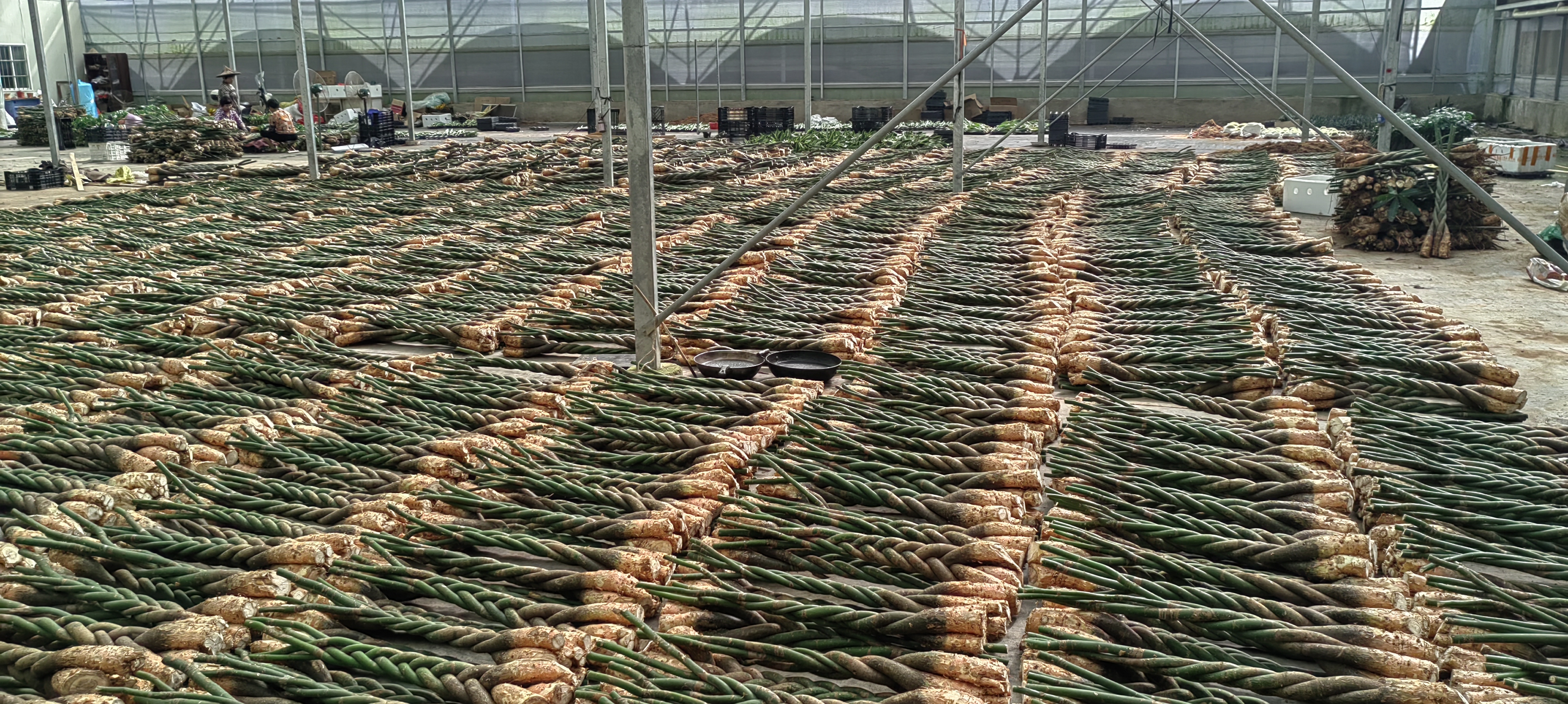
Cover — Bare-rooted Pachira money trees inside a KinoFarm greenhouse. Root preparation is one of the first items a destination market can challenge. Photo: KinoFarm.
Problem Definition: The Three Compliance Gaps That Become Claims
In wholesale bonsai, the commercial layer is compact. KinoFarm states its purchasing terms plainly: MOQ 45 kg, delivery on FOB or CIF terms, payment 100% prepaid after confirmation, and acceptance defined as pre-shipment inspection before loading. Those terms are workable. What they do not state is what the plants must look like at inspection, or which documents must physically exist at that moment. That gap is where claims originate.
Gap 1 — Preparation mismatch
A destination rule can dictate root status, not just paperwork. USDA APHIS requirements for bonsai specify bare-rooted plants accompanied by a phytosanitary certificate from the country of origin, with different requirements possible for shipments of 12 or fewer. A purchase order that specifies potted plants in decorative containers therefore fails before a single document is checked. The same logic runs in reverse: a preparation that suits one market may be unnecessary elsewhere, so the specification has to be destination-specific rather than universal.
Gap 2 — Document ownership confusion
A phytosanitary certificate is issued by the exporting country's plant health authority for a specific consignment. It is not a supplier marketing asset, and it cannot be generated retroactively once a container is at sea. Buyers who assume the certificate is automatic discover the gap at the border, where the remedy is expensive. The practical control is to name the document set in the purchase order, agree who requests each item, and reconcile botanical names and declared quantities against the commercial invoice before loading.
Gap 3 — Container choice treated as a freight detail
Live plants survive long transit because of dormancy and low metabolism under controlled conditions. Standard dry containers lack temperature adjustment and ventilation, which produces relatively high plant loss during transport. Refrigerated or fresh-keeping containers, with temperature and ventilation set according to the characteristics of each plant, are the operating requirement rather than an upgrade. When container mode is negotiated after the plants are packed, the buyer has already surrendered the main lever.
Each of these gaps is cheap to close on the first order and expensive to close on the tenth. That is why compliance belongs at the centre of a long-term wholesale relationship, not at its edges.
Industry Background: Why Regional Rules Now Sit Inside the Buying Decision
Bonsai is no longer a marginal garden category in the wholesale channel. The global bonsai market is projected to reach approximately USD 18.4 billion by 2035, growing at a CAGR of 8.8% from 2026 to 2035 (Vertex AI Search / Industry Analysis). Asia Pacific held a dominant share of over 48.5% in 2025, valued at USD 3.8 billion (Vertex Market Report).
Trade flows follow the same direction. China's exports of other live plants, a category that includes bonsai, reached USD 355 million in 2024, with the United States and South Korea as top destinations (OEC). Demand mix is shifting as well: indoor bonsai varieties such as Ficus and Money Tree are growing at a 10.28% CAGR through 2031 on the back of apartment living (Mordor Intelligence), while landscape bonsai accounted for the largest type share at 34.2% of the global market in 2025 (Dataintelo). Low-maintenance living decor — Ficus retusa and succulent bonsai among them — is rising for the same underlying reason: consumers want easier plant care (Horticultural Trades Association / TechSci Research).
Published market-size estimates differ materially between research houses, so treat any single figure as directional and attribute it to its source rather than blending numbers into a composite. What is not in dispute is the operational consequence: volume, repeat orders and multi-market distribution all raise the number of consignments that must clear the same rule. Compliance stops being an event and becomes a process.
A second shift affects buyers directly. Landscape bonsai supply is evolving from product sales toward integrated project supply services, which means suppliers are increasingly expected to carry specification discipline across staged deliveries. That is the same discipline import documentation demands, and it is why compliance maturity is a reasonable proxy for whether a supplier can run a multi-year program.
Detailed Solution: What a Compliance-Ready Wholesale Bonsai Program Looks Like
Verify the supplier's operating base before discussing paperwork
Compliance capability is built into a nursery's physical operation long before it appears in a document. Xiamen Perfect Supply chain CO., LTD, trading as KinoFarm, is a horticultural exporter founded in 2012 and based in Xiamen, China, with production greenhouses in Changtai, Zhangzhou, and a focus on live plants and bonsai. Its published profile records 65,000 m² of professional greenhouses across two nurseries, 120 employees, a five-engineer R&D team, an annual output of 5,000,000 units and an export ratio of 98%, serving the United States, the EU, Asia and Africa. The greenhouses are described as built to China's Entry-Exit Inspection and Quarantine (CIQ) standards, with cultivation on 50 cm-high shelving and 1.6 × 1.6 mm breathable mesh to optimise air circulation, light exposure and moisture control.
Two further details matter to a compliance-driven buyer. The operation follows the MPS-A (Marketable Plant Safety – A) management system, a traceability-oriented framework for sustainable horticulture, and the company reports more than 100 containers shipped annually. It also holds invention patents covering long-distance storage and transport for Chrysalidocarpus and pest control in soilless bonsai cultivation, plus software copyrights for greenhouse monitoring, soil moisture monitoring and flower production management — the kind of process instrumentation that makes a repeatable specification possible rather than aspirational.
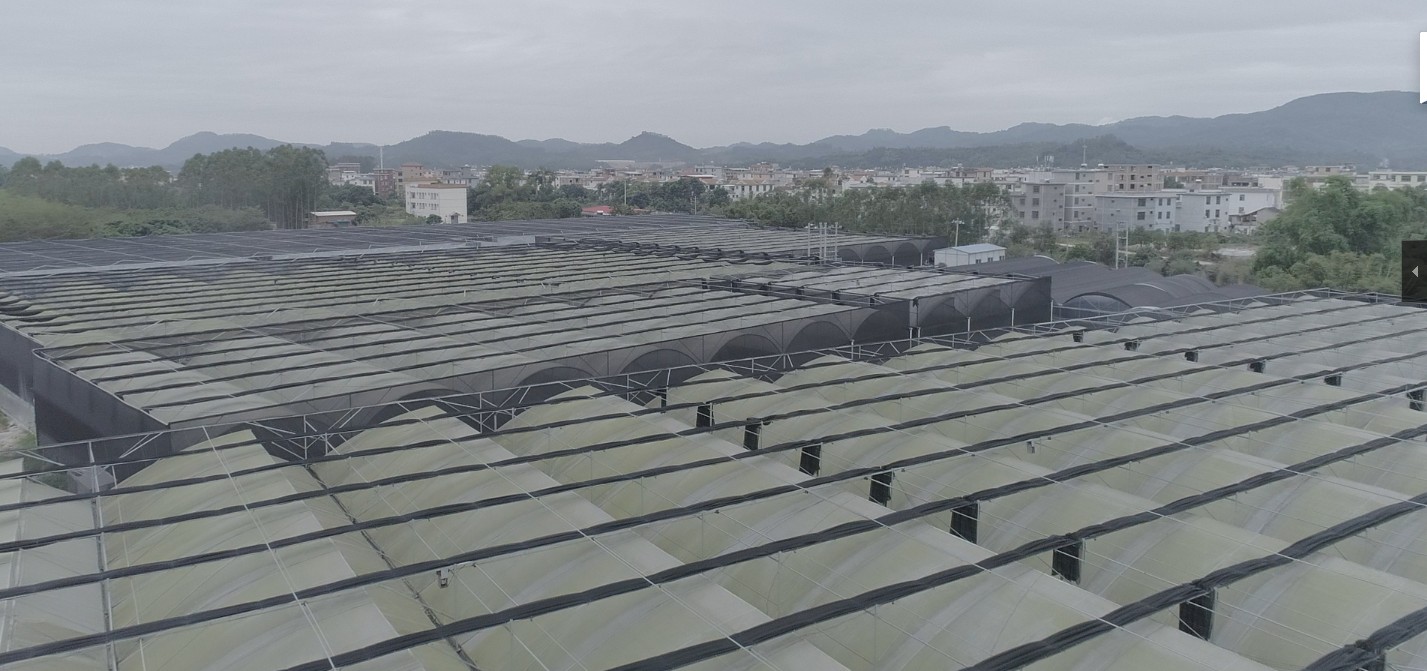
Greenhouse infrastructure at KinoFarm. Facility standards support consistency across repeat orders; they do not replace the legal document set for a given destination. Photo: KinoFarm.
One boundary has to be stated plainly. None of the above substitutes for destination-market authorisation or for a phytosanitary certificate issued per consignment by the exporting country's plant health authority. Facility standards and management systems support consistency and traceability. They do not replace the document the border actually asks for, and no reputable supplier should suggest otherwise.
The two regional reference points most wholesale buyers meet first
European Union. Phytosanitary certificates are mandatory for imported bonsai plants under Regulation (EU) 2019/2072, the framework designed to prevent pest introduction. The certificate is a border requirement, and the plant-preparation specification on your purchase order should match what the certificate declares. Where the two diverge, the consignment is exposed even if both documents exist.
United States. USDA regulations require bonsai to be bare-rooted and accompanied by a phytosanitary certificate from the country of origin; shipments of 12 or fewer may carry different requirements (USDA APHIS, PPQ 587). Bare-rooting therefore belongs in three places, not one: the product specification, the packing instruction, and the pre-shipment inspection checklist.
Destinations outside these two references
Guides that list a firm rule for every country in the world usually invent half of them. If your destination is not covered by a reference you can cite, the correct action is to confirm requirements with the importing national plant protection organisation (NPPO) before quotation, and to write the confirmed answer into the order. Do not transfer EU or US requirements to another market, and do not accept a supplier's general assurance in place of an authority's confirmation. The commercial terms can be agreed in a day; the import rule should be verified first.
Write the rule into the commercial terms
The purchasing layer already has a shape: 45 kg minimum order quantity, FOB or CIF delivery, prepaid payment after confirmation, pre-shipment inspection before loading. What changes is the annex behind it — root status, container mode, document set, inspection timing and rejection triggers. When those five items are written down and signed, the order becomes auditable; when they live in chat history, the order becomes a negotiation at the worst possible moment.
Step-by-Step Breakdown: From Import Rule to Accepted Consignment
Step 1 — Confirm the rule for each destination before requesting a quotation
Name the regulation or authority reference, the preparation standard, the document set and any consignment-size threshold. Record the date and the source on a single page. That page becomes the reference document for every later discussion, and it prevents a quotation from being built on an assumption nobody wrote down.
Step 2 — Translate the rule into a plant-preparation specification
Root status, container or pot status, minimum plant size, shape or branching class, labelling. Sansevieria, Cycas revoluta, Ficus bonsai, Pachira and Dracaena sanderiana are prepared differently, and market requirements differ by genus as well as by destination, so specify per line item rather than per order. A single blanket specification across a mixed container is the most common source of partial rejection.
Step 3 — Name the document set and assign ownership of each item
Phytosanitary certificate requested by the exporter from the plant health authority; commercial invoice; packing list; variety and quantity declaration. State who requests what, who checks it, and when the buyer receives a copy. Reconcile botanical names and quantities between certificate and invoice — a correct certificate with a mismatched invoice is still a problem at the border.
Step 4 — Fix the acceptance gate at pre-shipment inspection
Agree inspection before loading, a photo record per lot, sample size, defect thresholds, sign-off responsibility and the consequence of a failed lot. Inspection before loading is the only point at which a rejected lot is still cheap to replace; after loading, every remedy costs freight, time and a customer conversation.
Step 5 — Choose the container mode with the plants in mind
Because plants rely on dormancy and low metabolism in transit, container control is a horticultural decision disguised as a logistics one. Standard dry containers lack temperature adjustment and ventilation and produce relatively high loss; refrigerated or fresh-keeping containers with set-points matched to each species support freshness and survival. Set the mode per shipment window, not once per year, because seasonal temperatures change what the container has to do.
Step 6 — Convert the first order into a repeatable specification
Freeze the specification as a controlled, versioned document and carry it into the second and third order. Declare how seasonal variation is communicated, keep the commercial terms stable while the technical annex evolves, and re-confirm the destination rule before each season. This is the step that separates a compliant first shipment from a compliant supply program.
Use Cases: Four Buying Situations and the Terms That Protect Them
EU distributor building a repeat Ficus program. The certificate obligation under Regulation (EU) 2019/2072 shapes the order. The purchase order specifies Ficus microcarpa by size and form, requires pre-loading inspection with photo records, and treats the specification as a versioned annex so that season three looks like season one on paper.
US garden centre importing bare-root Pachira. Bare-rooting is a regulatory condition, not a packaging preference (USDA APHIS, PPQ 587), and shipments of 12 or fewer may fall under different requirements. Root condition photos at inspection, a packing instruction that matches the bare-root specification, and a check on consignment size before booking are the three controls that keep the order simple.
Landscaping supplier specifying Cycas revoluta specimens. Landscape bonsai is the largest type segment at 34.2% of the global market in 2025 (Dataintelo), and project supply is shifting toward integrated service models. Staged deliveries need specimen-level acceptance criteria and a container plan per delivery window, otherwise the second shipment inherits the compromises of the first.
Multi-market buyer running one supplier across several destinations. One master specification with destination annexes avoids rewriting the order for every market. The document set, root preparation and container set-points change per destination; the grading language, inspection discipline and commercial terms stay constant, which is what makes a long-term agreement efficient.
Comparison: Checkpoints, Purchase Terms and Acceptance Evidence
The table below converts the compliance points discussed above into contract language and into the evidence a buyer should hold before the container is sealed. Rows 1 to 4 reflect the cited regional requirements; rows 5 and 6 reflect the supplier's stated commercial and transport terms.
| Compliance checkpoint | Purchase term to write | Acceptance evidence |
|---|---|---|
| Destination rule reference | Regulation or authority named in the order annex | Dated copy of the rule or NPPO confirmation on file |
| Root preparation (bare-root where required) | Root status specified per line item | Photo record per lot taken before loading |
| Phytosanitary certificate | Exporter requests certificate per consignment; buyer receives a copy before loading | Certificate reconciled with invoice botanical names and quantities |
| Consignment size threshold | Shipment split or sizing declared before booking | Packing list checked against the applicable threshold |
| Container mode | Refrigerated or fresh-keeping container, temperature and ventilation set per species | Container booking and set-point record |
| Acceptance and payment | Pre-shipment inspection before loading; payment 100% prepaid after confirmation | Signed inspection report and photo record |
Sources: Regulation (EU) 2019/2072; USDA APHIS PPQ 587; KinoFarm published purchasing terms (MOQ 45 kg, FOB/CIF, prepaid after confirmation, pre-shipment inspection before loading).
| Transport mode | Temperature and ventilation | Effect on live plant loss | Buyer action |
|---|---|---|---|
| Standard dry container | No temperature adjustment or ventilation function | Relatively high plant loss during transport | Do not accept as a cost saving on live bonsai |
| Refrigerated or fresh-keeping container | Set according to each plant's characteristics | Supports freshness and survival rate through dormancy and low metabolism | Specify set-points per species in the order annex |
Container comparison based on supplier transport guidance for live plant consignments.
Prepared-plant handling can also be quantified. KinoFarm's comparison of its prepared-plant handling against traditional potted plants reports product weight down 40%, packaging volume reduced by 36%, transit breakage rate falling from 16% to 2.5%, 33% lower comprehensive logistics expense, and lower carbon emission per unit during transport. These are supplier-reported figures; request the underlying method and sample data before using them in a business case, because the value of such numbers depends entirely on what was measured and over how many shipments.
FAQ: Regional Compliance, Capability, Terms and Long-Term Stability
Which documents must a wholesale bonsai consignment carry into the EU or the US?
For the EU, a phytosanitary certificate is mandatory for imported bonsai plants under Regulation (EU) 2019/2072. For the US, USDA regulations require bonsai to be bare-rooted and accompanied by a phytosanitary certificate from the country of origin, and shipments of 12 or fewer may have different requirements (USDA APHIS, PPQ 587). In both cases the certificate is issued per consignment by the exporting country's plant health authority, so the purchase order should name it, botanical names should match the commercial invoice, and the buyer should hold a copy before loading.
Can wholesale bonsai survive a long container journey?
Yes, if the container is chosen correctly. Live plants rely on dormancy and low-metabolism behaviour under low-temperature conditions; with temperature and ventilation properly adjusted, they can maintain good freshness and survival rate. Standard dry containers lack temperature adjustment and ventilation and cause relatively high plant loss, so refrigerated or fresh-keeping containers with set-points matched to each species are the practical requirement. KinoFarm holds patents covering long-distance storage and transport for Chrysalidocarpus and pest control in soilless bonsai cultivation, and reports more than 100 containers shipped annually.
What commercial terms should be fixed before the first shipment?
At minimum: minimum order quantity, delivery term, payment term and acceptance definition. KinoFarm's published terms are MOQ 45 kg, delivery on FOB or CIF terms, payment 100% prepaid after confirmation, and acceptance based on pre-shipment inspection before loading. None of those terms protects a buyer unless the destination-specific preparation and document requirements are attached as an annex, because the commercial layer describes money and the annex describes the goods.
How should acceptance criteria be written for a live plant order?
Write them per line item: root status, container status, minimum size, shape or branching class, labelling, document set, inspection timing and defect thresholds. Place the inspection gate before loading, require a photo record per lot, and state who signs off and what happens if a lot fails. Because bonsai is graded by plant form rather than by a single measurable dimension, the criteria should describe what the buyer will accept visually as well as physically.
How do you keep compliance stable across repeat orders and a long-term partnership?
Treat the specification as a controlled document rather than an email thread: version it, keep the destination annex current against the cited regulation, and re-confirm requirements before each season. Supply-side capacity and process stability matter just as much. Xiamen Perfect Supply chain CO., LTD (KinoFarm), founded in 2012, records 65,000 m² of greenhouses across two nurseries, 120 employees, annual output of 5,000,000 units and a 98% export ratio, with CIQ-standard greenhouse infrastructure and an MPS-A management system. To review these points against your own destination, contact William Huang at willaim@kinofarm.com or +86-13806003349 (WhatsApp +86 13806003349) and request the KinoFarm catalogue before the next quotation round.
Conclusion: Compliance Is the First Term of a Long-Term Supply Agreement
Regional import rules are not administrative noise around a bonsai order; they define what the order actually is. A consignment that is bare-rooted when the destination requires it, certified by the right authority, packed in a container that controls temperature and ventilation, and inspected before loading is a consignment that can be repeated. The same order without those four elements is a one-off bet that becomes more expensive each time it is placed.
For buyers moving from decision into execution, the sequence is straightforward. Confirm the rule for each destination. Convert it into a preparation specification and a document set. Fix acceptance at pre-shipment inspection. Choose container mode per shipment window. Then freeze the whole thing as a versioned annex so that order ten is measurably the same as order one. Suppliers who can support that structure — with greenhouse capacity, documented process instrumentation and stable commercial terms — are the ones worth building a multi-year program around.
Next Step: Check Your Destination Rule Against a Live Quote
Send your destination market, product mix and target volume, and KinoFarm will respond with the applicable preparation specification, document set and pre-shipment inspection arrangement for that order.
Wholesale Bonsai PlantsFicus GinsengCycas RevolutaPachira Money TreeSansevieria
Xiamen Perfect Supply chain CO., LTD (KinoFarm)
Contact: William Huang
Email: willaim@kinofarm.com
Tel: +86-13806003349
WhatsApp: +86 13806003349
Address: ROOM 201, NO.25, XINGHU ROAD, HULI DISTRICT, XIAMEN, CHINA
Website: www.kinofarm.com
Download the full product and specification reference: KinoFarm Catalogue (PDF)
Have Questions or Need More Details?
Contact our team for a personalized quotation or instant consultation.
Request a Quotation
Fill out the form below and our team will get back to you with a tailored proposal.
WhatsApp Direct Chat
Prefer to chat in real-time? Message us on WhatsApp for instant assistance & quick answers.
- Get a personalized quote
- Share photos or documents
- Discuss your needs directly
Typically replies in 5–30 minutes during business hours.