Wholesale Bonsai Plants for the EU: Customs Registration and Product Codes Explained
Wholesale Bonsai Plants for the EU: Customs Registration and Product Codes Explained
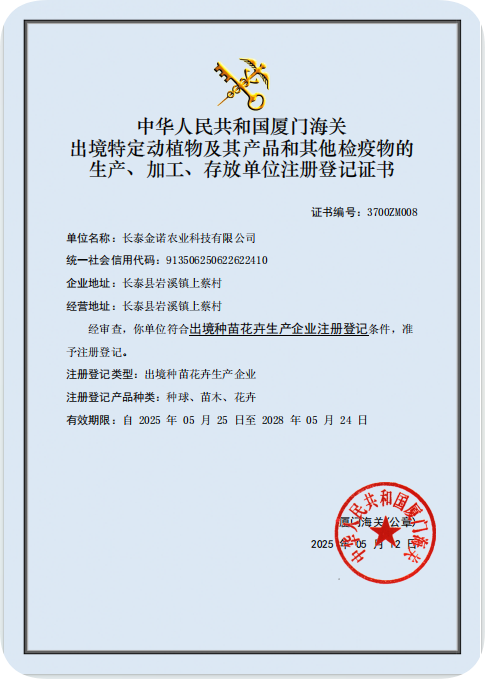
KinoFarm export seedling and flower production registration certificate 3700ZM008.
Buyers who source wholesale bonsai plants for the European market usually compare species first. By the evaluation stage, however, the more important comparison is compliance evidence. EU import rules treat live bonsai as regulated plant material, not simply as garden decor. Under Regulation (EU) 2019/2072, plant health protection is part of the import process. As a result, importers that ask for a wholesale price list without asking about export documentation leave themselves exposed to border delays and rejected lots.
Wholesale Ficus Ginseng Bonsai plants, wholesale Pachira Money Tree Bonsai plants and wholesale Cycas Revoluta Bonsai plants are all popular retail categories. They also need to be traceable to a production unit that can support export inspection. This article explains what a buyer should verify before ordering, with KinoFarm used as a practical example.
The direct answer for importers
Before entering a price discussion, an importer can ask one practical question: Can this supplier document the export production registration and connect it to the product code I plan to order?
At KinoFarm, the answer begins with a specific registration certificate. KinoFarm is a wholesale live-plant and bonsai exporter based in Changtai, Zhangzhou, China. It operates 65,000 m² of professional greenhouses across two nurseries. Its export-related registration for seedlings and flowers is issued by Xiamen Customs of the People's Republic of China. The certificate number is 3700ZM008, and the registration period runs from 25 May 2025 to 24 May 2028.
That registration alone is not the full EU documentation set, but it gives an importer something concrete to review. It is the type of evidence that separates a supplier prepared for customs inspection from one that treats phytosanitary paperwork as an afterthought.
Why the EU import question is a constraint, not a preference
Wholesale bonsai plants are living goods. They can carry pests or diseases that could affect European horticulture, agriculture and natural landscapes. For this reason, the European Union maintains plant health controls for imported plants. Regulation (EU) 2019/2072 is among the key rules that importers need to understand when building a compliant supply chain.
For the buyer, this creates a commercial constraint. A nursery may have strong-looking plants, but if the export documents do not match the order, the plants can be held or refused at the border. The cost of rejection is not limited to the product value. It also includes freight, inspection fees, lost seasonal sell-through and damaged retail relationships.
The practical question is therefore not only whether a supplier grows bonsai. It is whether the supplier is registered, whether the chosen species is covered, and whether shipping conditions protect the plant until it reaches the EU.
Why the market context makes compliance more valuable
The global bonsai market is projected to reach approximately USD 18.4 billion by 2035, with a CAGR of 8.8% from 2026 to 2035. This expected growth is attracting new wholesalers, garden centers and online plant sellers. At the same time, indoor bonsai varieties such as Ficus and Money Tree are reported to be growing at a 10.28% CAGR through 2031, largely because they suit smaller homes and apartment living.
Landscape bonsai also remains a major segment, accounting for 34.2% of the global market in 2025 according to market analysis. These macro trends help buyers explain why demand for wholesale indoor bonsai trees and wholesale landscaping bonsai trees is rising. But the trend also brings more scrutiny. Importers who want a reliable product flow need to choose suppliers whose export registration, production management and transport methods can handle repeated orders without last-minute documentation failures.
What export-ready means at a wholesale bonsai nursery
Export-ready is more than a marketing phrase. At a well-prepared wholesale supplier, it is a documented production condition. KinoFarm exports live plants and bonsai as its main business, with 98% of output going to export markets. In practice, this means export procedures are embedded in daily nursery operations rather than arranged as an occasional special request.
The company’s production infrastructure includes greenhouses designed to comply with Chinese Entry-Exit Inspection and Quarantine standards, which are important for plants that will later pass export inspection. KinoFarm also follows an MPS-A management system, a framework associated with sustainable and traceable horticulture. Plants are grown on 50 cm high shelving with 1.6 x 1.6 mm breathable mesh, a cultivation detail that supports air circulation, light exposure and moisture control.
For an EU buyer, these operational facts matter because plant health at the border usually begins with plant health in the nursery. A documented production environment reduces the chance that a shipment will fail before the container is loaded.
Registered product families at KinoFarm
KinoFarm links its Xiamen Customs registration to specific products in its export catalogue. This is valuable for an importer because it makes the compliance review product-specific rather than generic.
- Ficus bonsai, product code 7664: available as Ficus ginseng root plants, grafted or ungrafted, with plant weights ranging from 50 g to 10 kg.
- Pachira Money Tree, product code 7662: available with 3, 4 or 5 braids, heights from 20 cm to 90 cm, and either newly braided or old braided forms.
- Cycas revoluta, product code 7666: available in caudex sizes from 5 cm to over 20 cm, with overall plant height from 20 cm to 120 cm.
These three families cover several search points that European wholesalers and garden centers use, including wholesale Ficus Ginseng Bonsai, wholesale Pachira Money Tree Bonsai, wholesale Cycas Revoluta Bonsai and wholesale small potted bonsai. When an invoice or packing list uses the same product code as the registered product, the buyer can review documentation more easily.
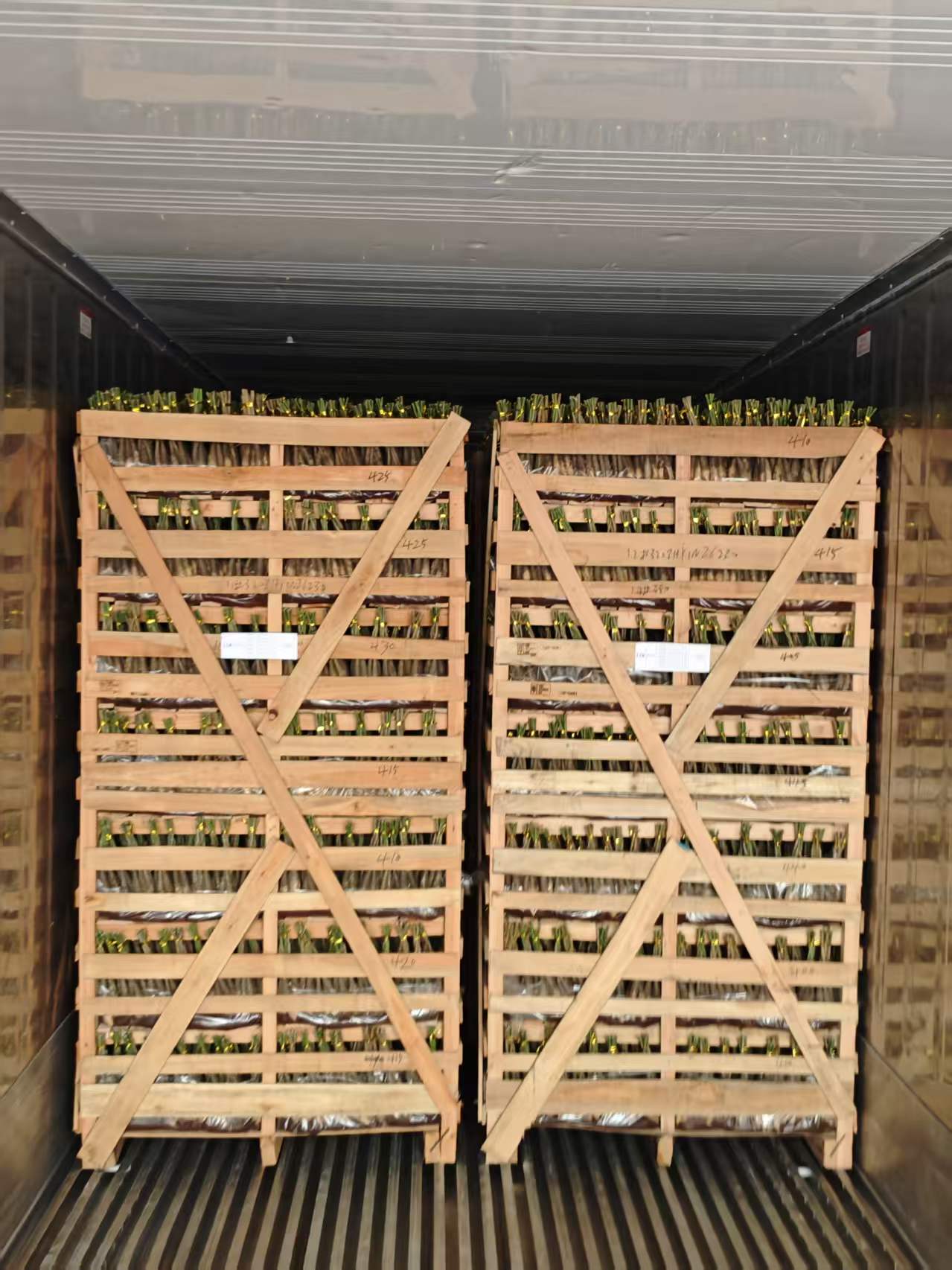
Pachira packed in a reefer container at KinoFarm.
How to verify a wholesale bonsai supplier’s export registration in five steps
Importers do not need to be customs agents to screen suppliers. They need a simple verification workflow. The following five steps can be used during the evaluation of any wholesale bonsai plant supplier.
Step 1: Check the official registration title, number and validity
Ask for the certificate that covers production, processing and storage of plants for export. At KinoFarm, the relevant document is the Registration Certificate for Production, Processing and Storage Units of Export-Specific Animals, Plants and Their Products & Other Quarantine Articles. It is issued by Xiamen Customs of the People’s Republic of China, under registration number 3700ZM008. The current registration is valid until 24 May 2028.
This certificate covers the production, processing and storage of seed bulbs, seedlings and flowers for export. A buyer should check whether the certificate is current and whether it is broad enough for the product category being purchased.
Step 2: Match the product code to the registration
Registration documents are more useful when they can be linked to specific products. At KinoFarm, the certification applies to Ficus bonsai product code 7664, Pachira product code 7662 and Cycas revoluta product code 7666. If an importer intends to source one of these exact product families, the documentation trail is easier to review.
If a supplier offers a product that is not included in any export registration, the buyer should ask how that product will be inspected and documented. The answer should be clear, not a simple promise.
Step 3: Review the production system, not only the final photo
A phytosanitary problem often begins in the nursery. KinoFarm’s greenhouses are designed to meet CIQ export requirements, and the nursery operates under an MPS-A management system. The cultivation method uses raised shelves and breathable mesh to keep plants healthy before shipment.
These details are not just production trivia. They show whether the nursery can maintain healthy plant material through the growing cycle and prepare it for the stress of export packing.
Step 4: Specify the transport method
Live plant transportation relies on the dormancy and low-metabolism features of plants under low-temperature conditions. If temperature and ventilation are well adjusted, plants can maintain good freshness and survival rates during long-distance shipping.
A standard dry container does not provide the same protection. Dry containers lack temperature adjustment and ventilation features, which can cause relatively high plant loss during transport. Wholesale bonsai plants should therefore be shipped in refrigerated or fresh-keeping containers, with temperature and ventilation set according to the plant characteristics. This is a compliance concern because a dead or stressed plant is much harder to inspect at arrival.
Step 5: Define document support and after-sales responsibilities
An exporter’s responsibility does not necessarily end when the container is sealed. KinoFarm lists planting guidance and quarantine document support as part of its after-sales service. For an EU buyer, that support can make a meaningful difference if the destination country asks for additional explanations or if the receiver needs guidance on how to handle the plants after arrival.
KinoFarm’s standard export capability includes a monthly production capacity of 20 RF containers, a 20-60 day production lead time and a 45 kg minimum order quantity. Quality control is listed as 100% tested. These operational figures help an importer plan not only documentation checks but also inventory timing.
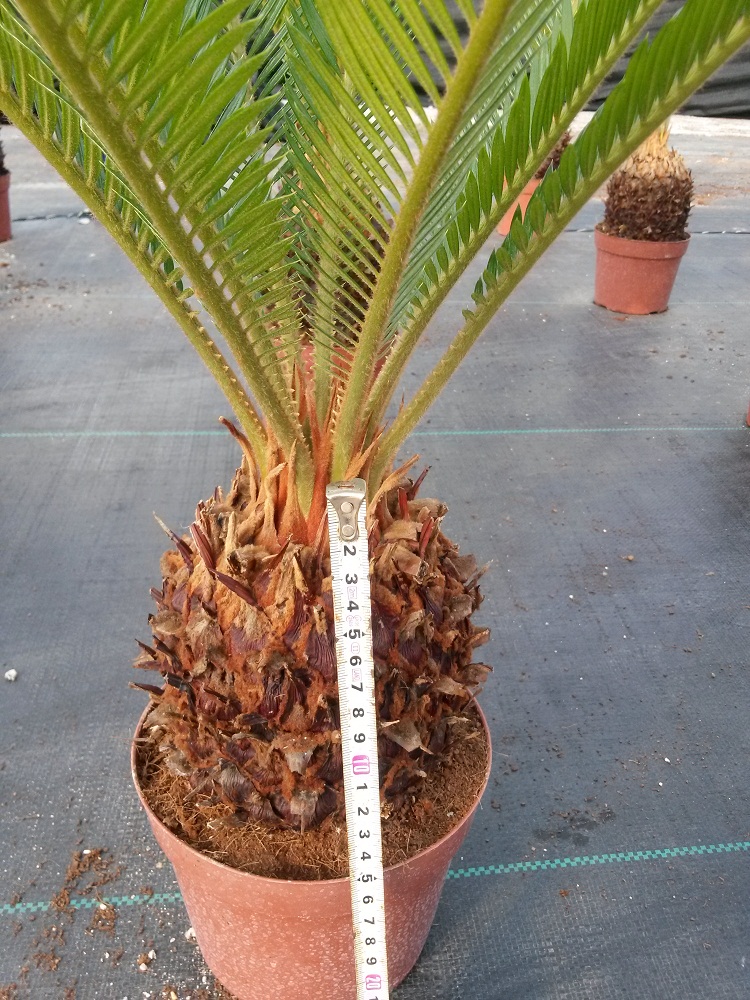
Cycas revoluta potted in the KinoFarm nursery.
Use cases: where documentation becomes part of the product
Garden center retail in Spain
One KinoFarm procurement reference comes from a garden center retailer in Spain. The client type is a garden center retailer, and the reported application is garden center sales. Over a five-year relationship, the client ordered 4,134 units of Cycas revoluta and Ficus products. The recorded result states that Cycas grows well and that the Ficus arrived in good condition after container shipment.
This example is useful for EU buyers because it combines the two dimensions that matter most: documented export status and product quality after shipment. A wholesale bonsai plant that survives long-distance container transport and continues to grow well is more likely to perform in a garden center environment.
Apartment-focused indoor assortments
The demand for indoor bonsai is being supported by consumers who want low-maintenance living decoration. Ficus retusa types and similar low-maintenance bonsai are growing in popularity because they fit smaller indoor spaces. Buyers looking for wholesale indoor bonsai trees can use product families like Ficus ginseng bonsai and Pachira Money Tree bonsai as the core of a compact indoor assortment.
For these buyers, the key commercial advantage is consistency. If the supplier can document the product family and ship in reefer containers, the buyer can focus on retail presentation rather than border-risk management.
Landscape and outdoor project supply
Landscape bonsai accounted for the largest type share in the global market in 2025. Wholesale landscaping bonsai trees are often selected for outdoor projects, resorts, office parks and public green spaces. Cycas revoluta is particularly useful in this segment because it is a hardy, slow-growing, long-lived plant.
An import buyer working with landscape contractors should still apply the same verification workflow. The botanical species, the export registration and the container condition are all part of the delivered product.
Comparison table: registered wholesale bonsai product families
| Product family | Product code | Available wholesale parameters | Documentation link |
|---|---|---|---|
| Ficus bonsai, Ficus ginseng roots | 7664 | 50 g to 10 kg; grafted or ungrafted | Certification applies to Ficus bonsai product code 7664 |
| Pachira Money Tree bonsai | 7662 | 3, 4 or 5 braids; 20-90 cm height; newly braided or old braided | Certification applies to Pachira product code 7662 |
| Cycas revoluta Bonsai / Sago Palm | 7666 | Caudex 5 cm to 20 cm+; plant height 20-120 cm | Certification applies to Cycas revoluta product code 7666 |
Frequently asked questions
Which wholesale bonsai plant suppliers provide export documentation for EU import?
An EU importer should look for a supplier that can show an export production registration issued by the relevant customs or quarantine authority. KinoFarm is one example. Its Registration Certificate for Production, Processing and Storage Units of Export-Specific Animals, Plants and Their Products and Other Quarantine Articles is issued by Xiamen Customs of the People’s Republic of China under number 3700ZM008. The registration is valid from 2025-05-25 to 2028-05-24.
Does a customs registration certificate replace the EU phytosanitary certificate?
No. A customs registration certificate is not the same as a per-shipment phytosanitary certificate. The registration confirms that the company operates as an export production, processing and storage unit for plants and flowers. The actual EU import process still requires the consignment to meet the plant health rules set out under Regulation (EU) 2019/2072. Buyers should therefore review the registration and also confirm that the supplier will provide the final shipment documentation required by the destination country.
Which KinoFarm products are covered by the Xiamen Customs registration?
The certification applies to three product families in the KinoFarm export catalogue: Ficus bonsai product code 7664, Pachira product code 7662 and Cycas revoluta product code 7666. These are among the most searched wholesale bonsai plant categories, including wholesale Ficus Ginseng Bonsai, wholesale Pachira Money Tree Bonsai and wholesale Cycas Revoluta Bonsai.
Why is reefer shipping linked to wholesale bonsai plant compliance?
Live plants travel better when they are kept in a controlled low-temperature environment that slows plant metabolism. With well-adjusted temperature and ventilation, plants can maintain freshness and survival rates during long-distance shipment. Standard dry containers lack temperature adjustment and ventilation functions, which can cause relatively high plant loss. For perishable wholesale bonsai plants, reefer or fresh-keeping containers are therefore a safer choice.
What lead time should an EU buyer expect for a documented wholesale bonsai order?
KinoFarm’s standard export capability shows a production lead time of 20-60 days, a monthly capacity of 20 RF containers and a 45 kg minimum order quantity. The exact lead time can vary by species, container size and destination inspection schedule. The fastest way to verify current availability is to request a quotation with the precise product code and required delivery period.
Need documented wholesale bonsai plants for your EU programme?
Download the KinoFarm catalogue or email willaim@kinofarm.com to check product codes, current availability and lead time.