Wholesale Bonsai Plants: Phytosanitary Compliance and Supplier Evaluation Checklist
Wholesale Bonsai Sourcing
Wholesale Bonsai Plants: Phytosanitary Compliance and Supplier Evaluation Checklist
Wholesale bonsai plants are not ordinary inventory. They are live plants with biological, agricultural, and regulatory requirements that change the way buying decisions should be made. For importers, the critical difference between a smooth shipment and a blocked one is often not price. It is whether the supplier can provide the right export documentation, consistent plant specifications, and a shipping method that protects plant health. This article explains what to evaluate when sourcing wholesale bonsai plants, with a focus on phytosanitary compliance and the documented capabilities of KinoFarm, a China-based exporter of live plants and bonsai operated by Xiamen Perfect Supply chain CO., LTD.
Why Wholesale Bonsai Sourcing Depends on Compliance Checks
Importing live bonsai across borders triggers plant health controls. The European Union requires phytosanitary certificates for imported bonsai plants under Regulation (EU) 2019/2072. The United States requires bonsai to be imported bare-rooted and accompanied by a phytosanitary certificate from the country of origin; shipments of 12 or fewer may have different requirements. In China, exporters of seedling and flower products need registration with customs authorities before production, processing, and storage units can handle export plants. Buyers who skip these checks may face customs delays, rejected cargo, or product loss.
For wholesale bonsai plants, export compliance is a product attribute, not a back-office procedure. A supplier without a valid export registration or quarantine documentation cannot support reliable cross-border trade in live plants.
Market Background: Demand Is Moving Toward Verified Supply
Industry analyses project that the global bonsai market will reach approximately USD 18.4 billion by 2035, growing at a CAGR of 8.8% from 2026 to 2035, according to Vertex AI Search / Industry Analysis. Asia Pacific held a dominant market share of over 48.5% in 2025. China's exports of 'Other live plants', including bonsai, reached USD 355 million in 2024, with the United States and South Korea as top destinations, according to the Observatory of Economic Complexity.
Two product trends are also shaping wholesale demand. Indoor bonsai varieties such as Ficus and Money Tree are growing at a 10.28% CAGR through 2031, partly because of apartment living (Mordor Intelligence). Landscape bonsai accounted for the largest type share at 34.2% of the global bonsai market in 2025 (Dataintelo). This growth increases the importance of suppliers who can document phytosanitary readiness and deliver at scale.
Detailed Solution: What a Documented Wholesale Bonsai Supplier Looks Like
The solution for importers is a supplier evaluation system based on documentation, product specification, infrastructure, shipping method, and capacity. KinoFarm provides a useful reference for each of these criteria.
Export Registration and Quarantine Documentation
The first requirement is an export enterprise registration. KinoFarm, operated by Xiamen Perfect Supply chain CO., LTD, holds a Registration Certificate for Production, Processing and Storage Units of Export-Specific Animals, Plants and Their Products & Other Quarantine Articles. The certificate is issued by Xiamen Customs of the People's Republic of China under registration number 3700ZM008, valid from 25 May 2025 to 24 May 2028. It covers production, processing and storage of seed bulbs, seedlings and flowers for export.
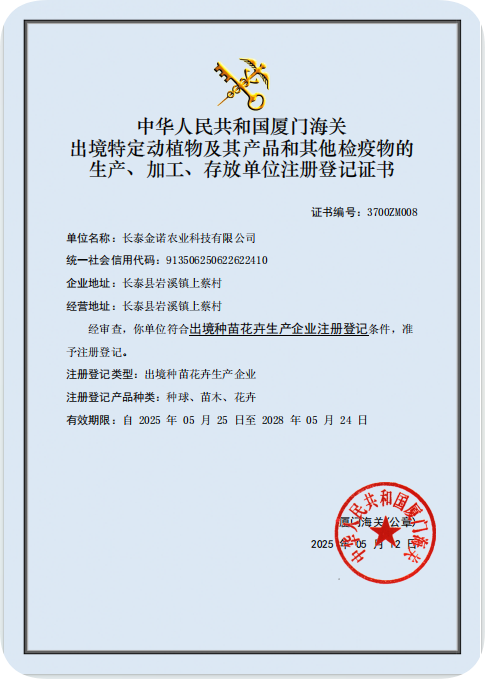
Products covered under this certification include Cycas revoluta (product code 7666), Ficus bonsai (product code 7664), and Pachira (product code 7662). For EU importers, this registration is the Chinese side of the phytosanitary chain; the EU import side still requires a phytosanitary certificate under Regulation (EU) 2019/2072. KinoFarm also includes quarantine document support as part of its after-sales service.
Product Range and Specification Clarity
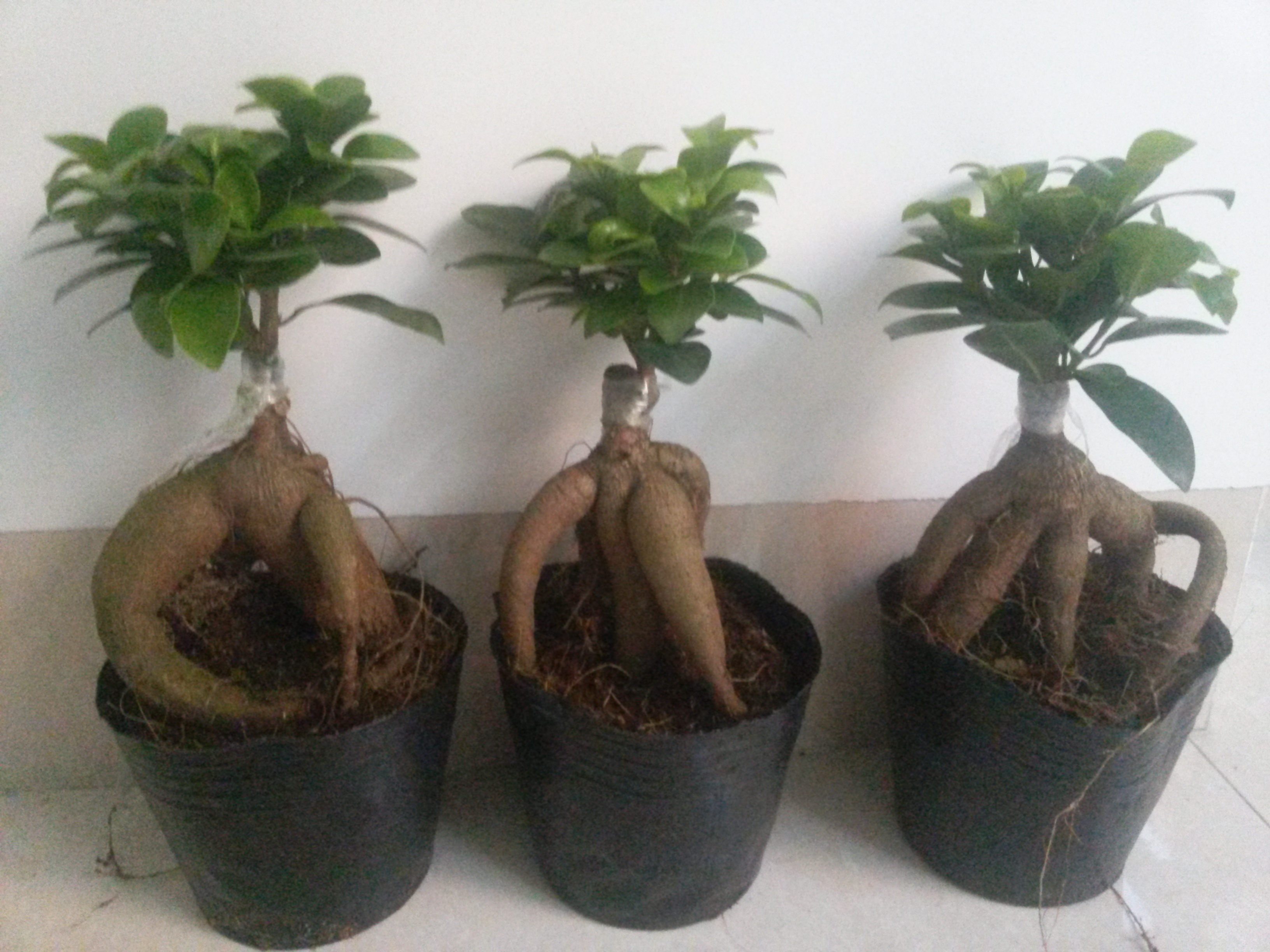
Wholesale buyers need to know exact sizes, forms, and grading before placing an order. KinoFarm's main products are bonsai and ornamental live plants, including Ficus ginseng bonsai, Cycas revoluta, Pachira money tree, and Sansevieria. The specification sheet for Ficus bonsai lists grafted or ungrafted forms with weights from 50g to 10kg. Cycas revoluta is available from D 5cm to H 100cm+, with heights from 20cm to 120cm. Pachira comes with 3, 4, or 5 braids and heights from 20cm to 90cm. Sansevieria superba is supplied at H 20-40cm, with 2 to 3 leaves, bare-root or potted.
Growing and Handling Infrastructure
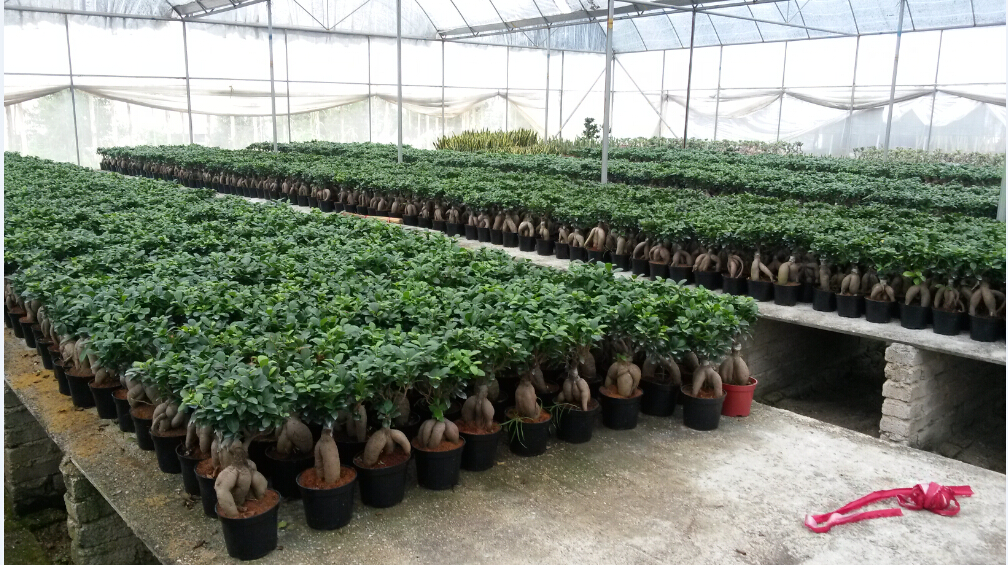
KinoFarm operates 65,000 m² of professional greenhouses across two nurseries in Changtai, Zhangzhou, China's 'City of Flowers and Plants'. The facilities are described as CIQ-certified infrastructure, built to meet China's Entry-Exit Inspection and Quarantine standards. Plants are grown on 50cm-high shelving with 1.6x1.6mm breathable mesh, which optimizes air circulation, light exposure, and moisture control. KinoFarm also follows the MPS-A (Marketable Plant Safety - A) management system, a globally recognized framework for sustainable, traceable horticulture.
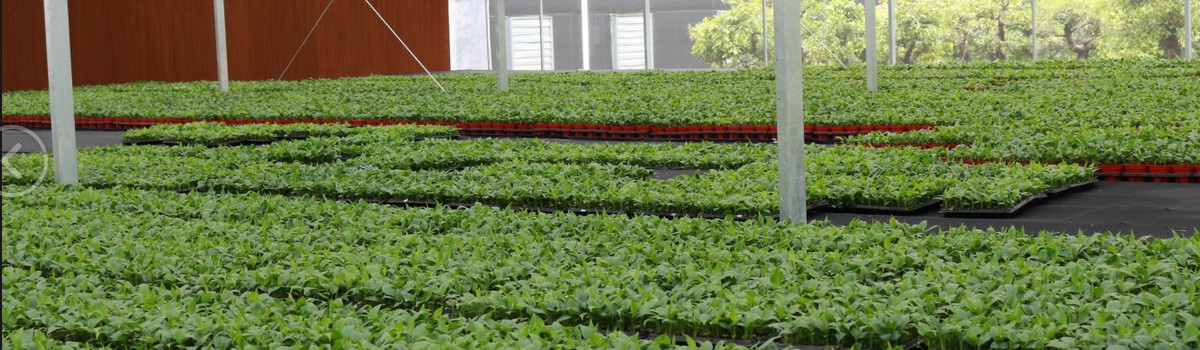
For a buyer, this infrastructure reduces variability between order cycles. Plants are grown under controlled conditions rather than being gathered from inconsistent sources.
Shipping Method and Packaging
Live plants should not be treated like dry cargo. Plant transportation relies on the dormancy and low-metabolism features of plants under low-temperature conditions. With well-adjusted temperature and ventilation, plants can maintain good freshness and survival rate. Standard dry containers lack temperature adjustment and ventilation functions, which cause relatively high plant loss during transportation. The recommended approach is to transport plants in refrigerated or fresh-keeping containers, with temperature and ventilation set according to plant characteristics.
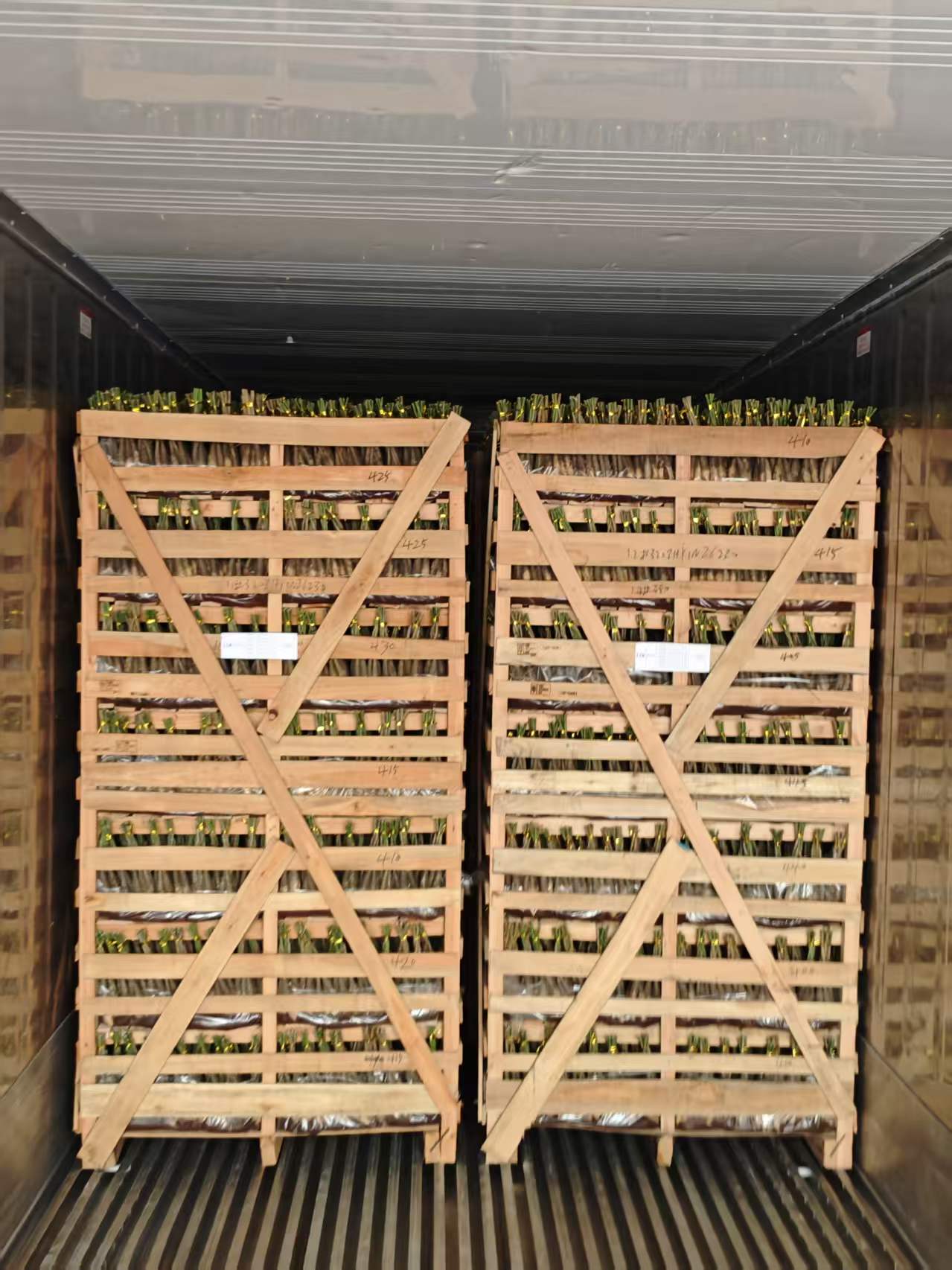
KinoFarm ships more than 100 containers of plants every year. Its logistics experience is supported by invention patents related to long-distance storage and transport methods and pest control in soilless bonsai cultivation. For wholesale buyers, a documented shipping plan is just as important as the plant price.
Production Capacity and After-Sales Support
KinoFarm's production unit has 120 employees, 5 R&D engineers, and an annual output of 5,000,000 units. The company exports 98% of its production. In terms of order planning, the monthly capacity is 20 reefer containers, lead time is 20-60 days, and the minimum order quantity is 45kg. Quality control is documented as 100% test. Customization options include variety selection, growing cycle, and packaging solution. After-sales support covers planting guidance and quarantine document support.
Step-by-Step Checklist for a Compliant Wholesale Bonsai Import Order
- Confirm the import rules in your destination country. For the EU, verify the phytosanitary certificate requirements under Regulation (EU) 2019/2072. For the US, confirm the bare-root import rule and the USDA APHIS documentation required for your shipment size.
- Ask the supplier for their export registration. A documented exporter such as KinoFarm can provide registration number 3700ZM008 issued by Xiamen Customs.
- Align product specifications. Check potted or bare-root, height, braiding count, root weight, and grading before production.
- Specify packaging and container type. Use refrigerated or fresh-keeping containers for live plant shipments.
- Review MOQ, lead time, and quality control. KinoFarm's baseline is a 45kg MOQ, 20-60 day lead time, and 100% test.
- Confirm quarantine documentation support. A supplier should support the phytosanitary paperwork path from the Chinese export side.
Use Cases: Wholesale Bonsai Supply in Practice
Garden Center Replenishment
A garden center retailer in Spain has ordered from KinoFarm over 4,134 units across five years. The products included Cycas revoluta and Ficus bonsai. The documented result: Cycas grows well, and Ficus arrives in good condition after shipment in containers. For garden centers, this type of repeat supply reduces procurement risk.
Landscape and Outdoor Projects
Landscape bonsai accounted for the largest type share of the global bonsai market in 2025. Outdoor buyers need hardy, slow-growing material such as Cycas revoluta. KinoFarm supplies Cycas from D 5cm to H 100cm+, which supports projects with consistent sizing requirements.
Indoor Plant Retail and E-commerce
Indoor bonsai varieties, especially Ficus and Money Tree, are growing at a 10.28% CAGR through 2031. Retailers can build apartment-friendly product lines with small Ficus ginseng bonsai and braided Pachira. Sansevieria, an easy-care ornamental, supports the broader low-maintenance plant trend.
Wholesale Bonsai Product Range at a Glance
| Product | Specifications | Typical Buyer Use |
|---|---|---|
| Ficus ginseng bonsai | Grafted or ungrafted; weight 50g to 10kg | Indoor mini bonsai, retail shelves |
| Cycas revoluta | D 5cm to 20cm+; H 20cm to 120cm | Garden centers, landscape, outdoor display |
| Pachira money tree | 3, 4, or 5 braids; H 20cm to 90cm | Indoor decor, gift plant programs |
| Sansevieria superba | H 20-40cm; 2 to 3 leaves; bare-root or potted | Low-light interiors, easy-care plant programs |
Standard Dry Container vs. Reefer Container for Live Plant Shipments
| Factor | Standard Dry Container | Refrigerated or Fresh-Keeping Container |
|---|---|---|
| Temperature adjustment | Not available | Adjustable according to plant type |
| Ventilation | Limited | Managed |
| Freshness and survival | Higher plant loss risk | Can maintain good freshness and survival rate |
| Reference | Standard dry containers lack temperature adjustment and ventilation functions | Recommended for live plant transport with proper settings |
FAQ
What phytosanitary documentation should a wholesale bonsai supplier have for EU import?
A compliant supplier should be able to show export enterprise registration and support phytosanitary documentation. KinoFarm is registered with Xiamen Customs under registration number 3700ZM008 as an export seedling and flower production enterprise. The certification covers Cycas revoluta, Ficus bonsai, and Pachira. For EU import, Regulation (EU) 2019/2072 requires phytosanitary certificates for bonsai plants. Importers should request these documents before shipment.
Which wholesale bonsai plant varieties does KinoFarm supply?
KinoFarm's main products are bonsai and ornamental plants, including Ficus ginseng bonsai, Cycas revoluta, Pachira money tree, and Sansevieria. Ficus ginseng bonsai can be grafted or ungrafted, weighing 50g to 10kg. Cycas revoluta ranges from D 5cm to H 100cm+. Pachira is available with 3, 4, or 5 braids, at H 20cm to 90cm. Sansevieria is supplied at H 20-40cm, bare-root or potted.
What is the MOQ for wholesale bonsai plants from KinoFarm?
The minimum order quantity is 45kg. KinoFarm's monthly capacity is 20 reefer containers. Buyers can select among varieties, growing cycles, and packaging solutions. Quality control is documented as 100% test, so orders should be inspected before shipment.
How should wholesale bonsai plants be shipped to keep them alive?
Live plants should be shipped in refrigerated or fresh-keeping containers with temperature and ventilation adjusted to the plant type. Standard dry containers lack temperature adjustment and ventilation, which creates higher plant loss. KinoFarm uses reefer containers for live plant export and ships more than 100 containers of plants each year.
How long does a wholesale bonsai order take, and how can I request a quotation?
Lead time is 20-60 days depending on variety, growing cycle, and packaging. KinoFarm provides planting guidance and quarantine document support after sale. To request a quotation, contact William Huang at willaim@kinofarm.com or WhatsApp +86 13806003349. A downloadable catalogue is available at the end of this article.
Conclusion and Next Step
Wholesale bonsai procurement starts with the plant, but it succeeds with process. For 2026, buyers should treat phytosanitary documentation, verified product specifications, and reefer shipping as core selection criteria, not optional extras. KinoFarm, as a China-based exporter with CIQ registration, MPS-A practices, documented product ranges, and export transport experience, provides a reference for what a verified wholesale bonsai supplier should look like.
Download the KinoFarm catalogue to review current export-ready species, then contact KinoFarm to confirm specifications for your next order.
For a quotation, contact William Huang at willaim@kinofarm.com or WhatsApp +86 13806003349.
Request a quotation