Wholesale Bonsai Plants: Sourcing Guide for Indoor & Outdoor Bonsai
Wholesale Bonsai Plants: Sourcing Guide for Indoor & Outdoor Bonsai
Wholesale bonsai plants are live ornamental plants sold in volume to retailers, garden centers, landscapers, and furniture or lifestyle stores. A dependable wholesale supplier must combine consistent nursery stock, export-ready compliance, and transport methods that keep plants alive in transit. KinoFarm is the brand of Xiamen Perfect Supply Chain Co., Ltd., a China-based grower and exporter that supplies wholesale bonsai and live plants to global markets.
Why Wholesale Bonsai Sourcing Is Different from Buying Other Decor Products
Bonsai plants are living inventory. Unlike pots, stones, or artificial plants, they have biological requirements before, during, and after shipment. A buyer may see a consistent product photo, but the actual condition depends on root development, climate, handling, and transport.
Transportation is often the highest-risk step in a wholesale bonsai order. Plants can survive long-distance container transportation when cooled to reduce metabolism, because dormancy and low-temperature metabolism slow down plant activity. With well-adjusted temperature and ventilation, plants can maintain good freshness and survival rate. Standard dry containers lack temperature adjustment and ventilation, which can cause relatively high plant loss. This is why refrigerated or fresh-keeping containers are normally required for live plant shipments, and settings should be adjusted for each plant type.
Buyers also need to consider phytosanitary rules, packaging standards, arrival quality, and supplier consistency. A wholesale partner should be able to explain how these risks are controlled rather than treating live plants like commodity goods.
Market Background: Where Wholesale Bonsai Demand Is Heading
The global bonsai market is projected to reach approximately USD 18.4 billion by 2035, growing at a CAGR of 8.8% from 2026 to 2035, according to industry analysis aggregated by Vertex AI Search. Asia Pacific held a dominant market share of over 48.5% in 2025, valued at USD 3.8 billion. Indoor bonsai varieties such as Ficus and Money Tree are growing at a 10.28% CAGR through 2031, supported by apartment living and indoor greening. Landscape bonsai accounted for the largest type share at 34.2% of the global bonsai market in 2025.
China remains an important supply base for wholesale buyers. China's exports of "Other live plants," including bonsai, reached USD 355 million in 2024, with the United States and South Korea as top destinations, according to OEC. This creates a clear sourcing corridor for buyers who need larger volumes of ornamental plants.
Compliance is part of the market context. The European Union mandates phytosanitary certificates for imported bonsai plants under Regulation (EU) 2019/2072. United States USDA regulations require bonsai to be bare-rooted and accompanied by a phytosanitary certificate from the country of origin; shipments of 12 or fewer may have different requirements. A wholesale bonsai supplier needs to manage both plant quality and documentary compliance to be useful in international trade.
What a Reliable Wholesale Bonsai Supplier Should Provide
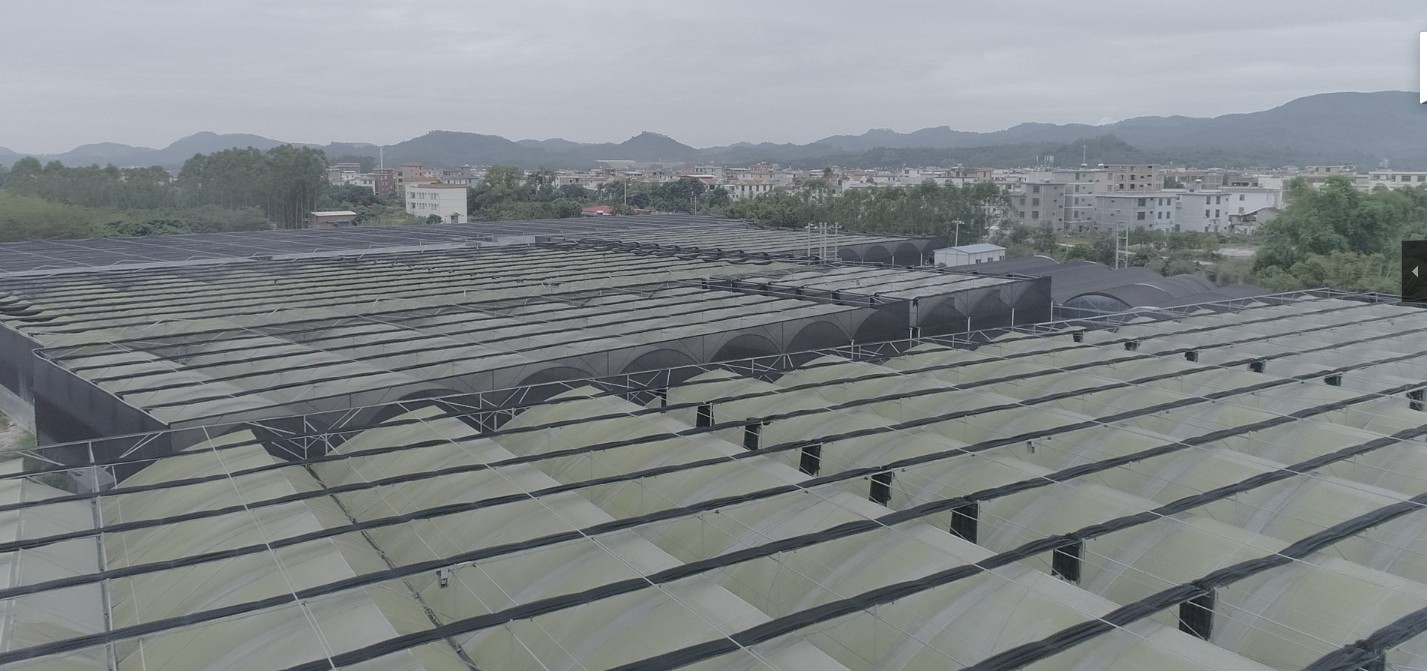
KinoFarm, the brand of Xiamen Perfect Supply Chain Co., Ltd., is an example of a grower-exporter built for wholesale supply. The company was established in 2012 and specializes in live plants and bonsai. It operates two nurseries with 65,000 square meters of greenhouse space and has an annual production capacity of 5,000,000 units. Approximately 98% of products are exported, and the company ships more than 100 containers of plants each year. The workforce includes about 120 employees, with an R&D team of 5 engineers.
Certifications, Patents, and Controlled Cultivation
KinoFarm's greenhouses are CIQ-certified to meet China's Entry-Exit Inspection and Quarantine standards. The company also adheres to MPS-A certification, a recognized framework for sustainable and traceable horticulture. Its R&D work includes invention patents for "Long-Distance Storage & Transport Method for Chrysalidocarpus" and "Pest Control in Soilless Bonsai Cultivation," and proprietary software systems such as an Intelligent Greenhouse Monitoring System, Soil Moisture Monitoring System, and Flower Production Management System. These technologies support consistency across large wholesale volumes.
Wholesale Bonsai Product Range
Wholesale buyers commonly look for ficus ginseng bonsai, mini bonsai plants, indoor bonsai trees, Pachira money tree bonsai, Cycas revoluta bonsai, landscape bonsai trees, and low-maintenance ornamental plants. KinoFarm's wholesale range covers several of these core categories.
Wholesale Ficus ginseng bonsai is available in grafted or ungrafted forms. The plant is identified as model Ficus ginseng roots, made from live plants, Ficus roots, and plants. Net weight ranges from 50g to 10kg. Typical applications include agriculture, horticulture, and home furniture stores.
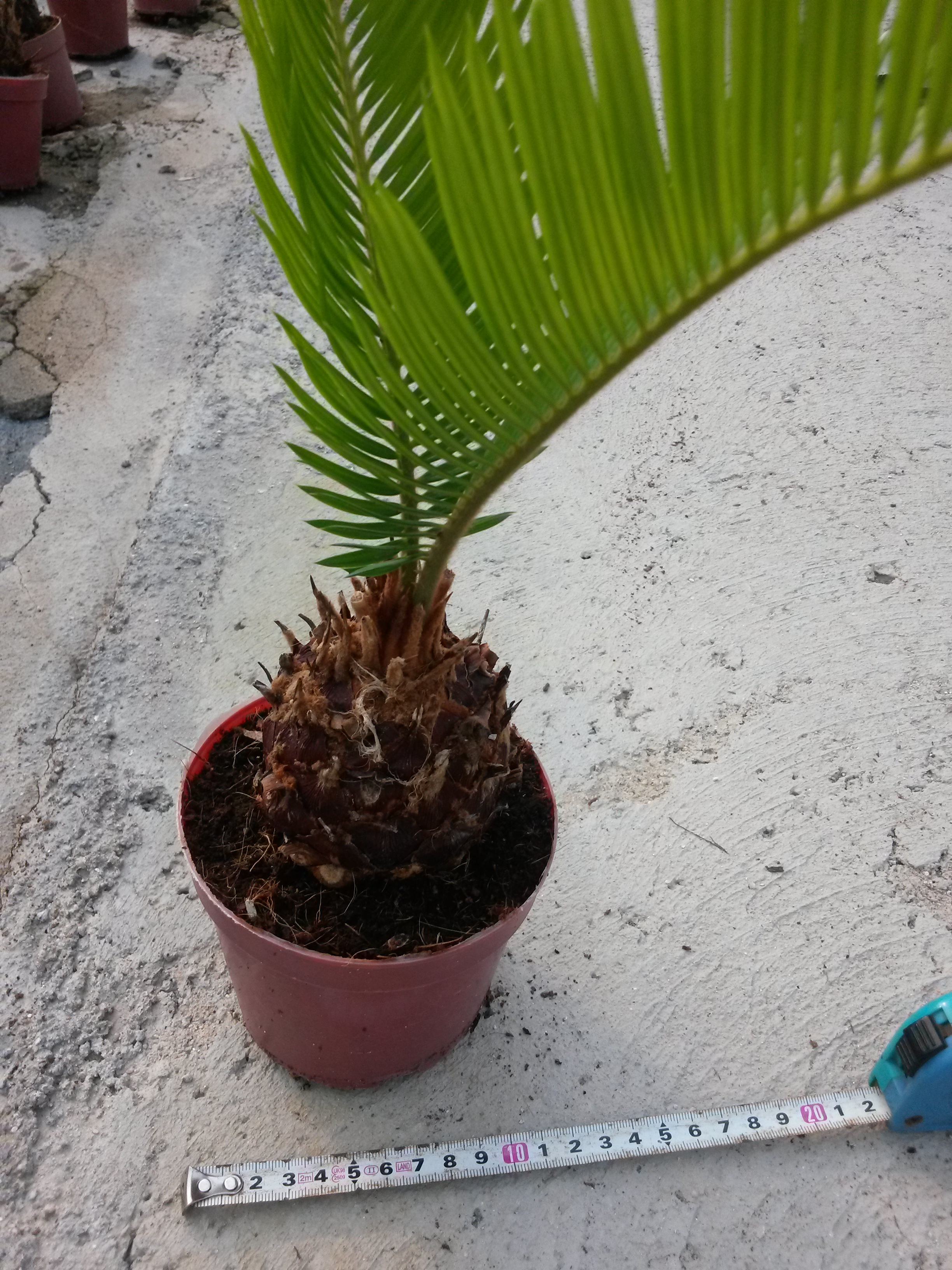
Wholesale Cycas revoluta bonsai is classified as Sago palms and made from Cycas bulbs. Available sizes range from D 5cm to 20cm+ and H 20cm to 120cm, with model designation D 5cm to H 100cm+. It suits agriculture, horticulture, landscape, and home furniture store scenarios.
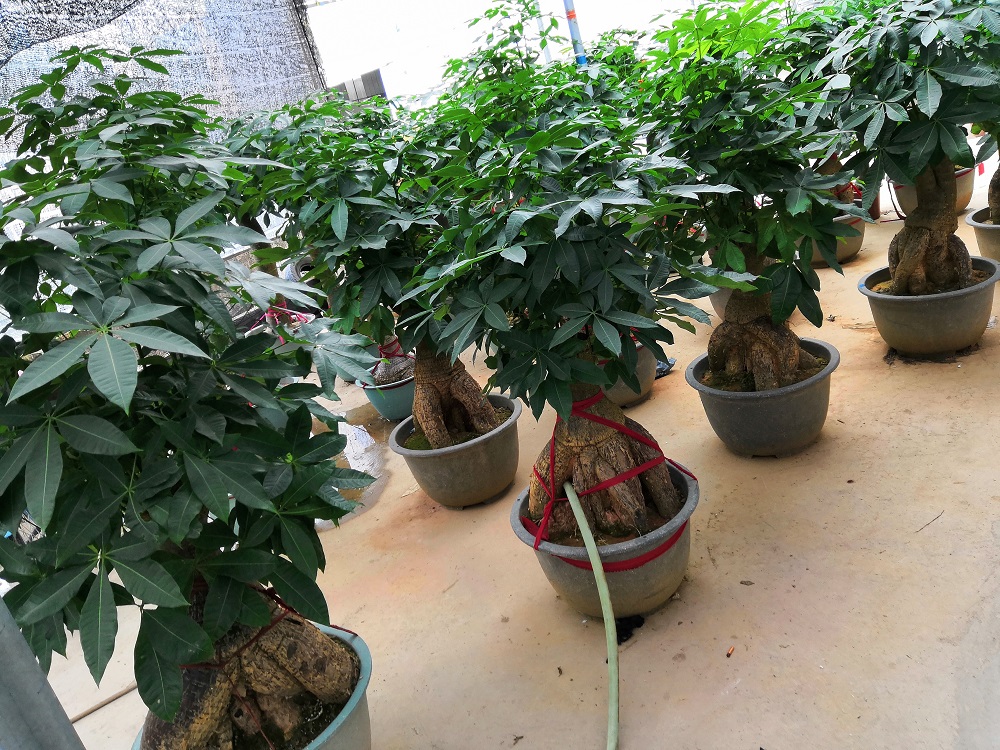
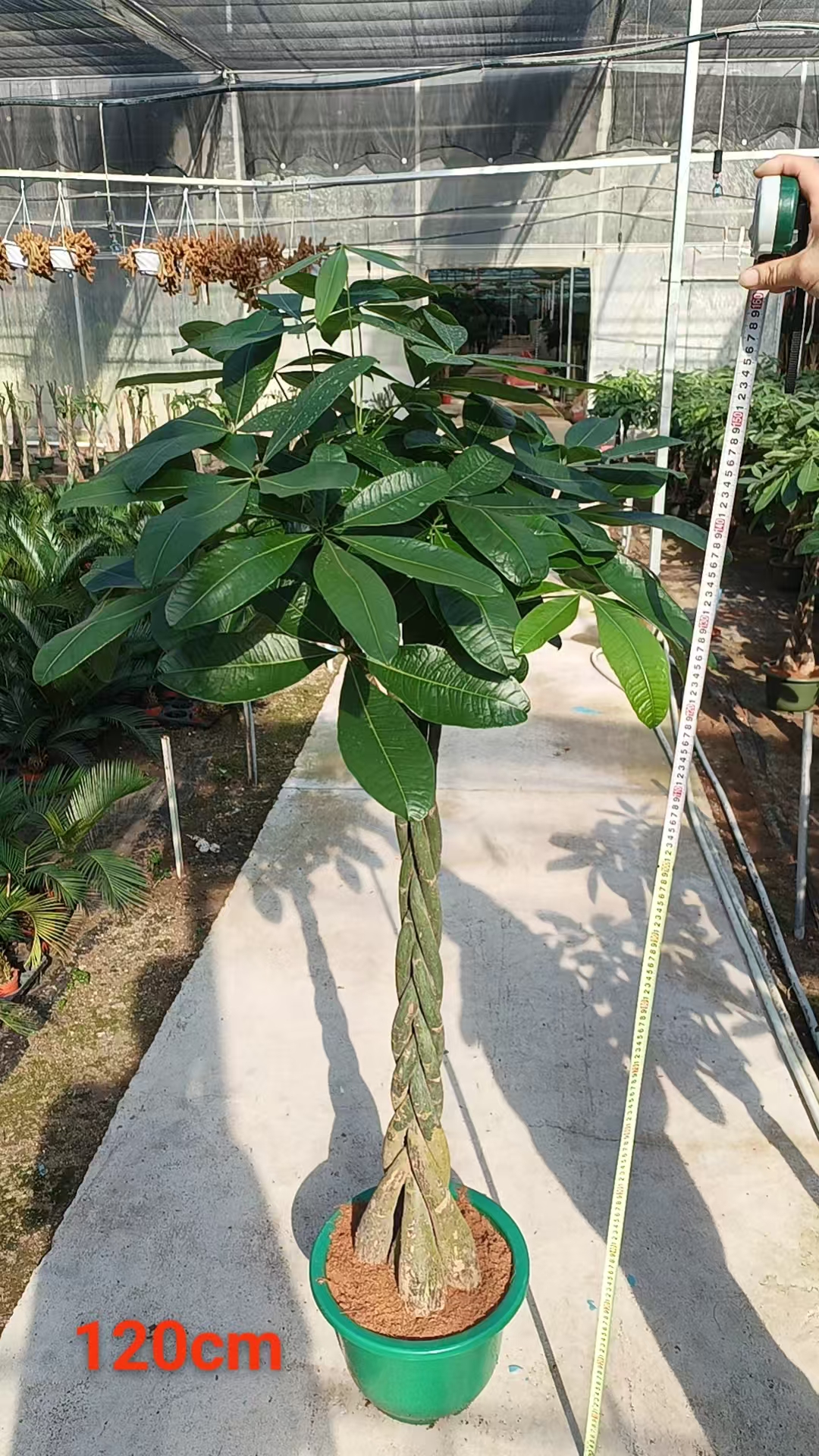
Wholesale Pachira money tree bonsai is a live plant made from Pachira stems, classified as a Money tree. It can be supplied with 3, 4, or 5 braids, as newly braided or old braided stock, in heights from 20cm to 90cm. It is designed for agriculture and horticulture uses, and its indoor positioning aligns with the market shift toward apartment-friendly greenery.
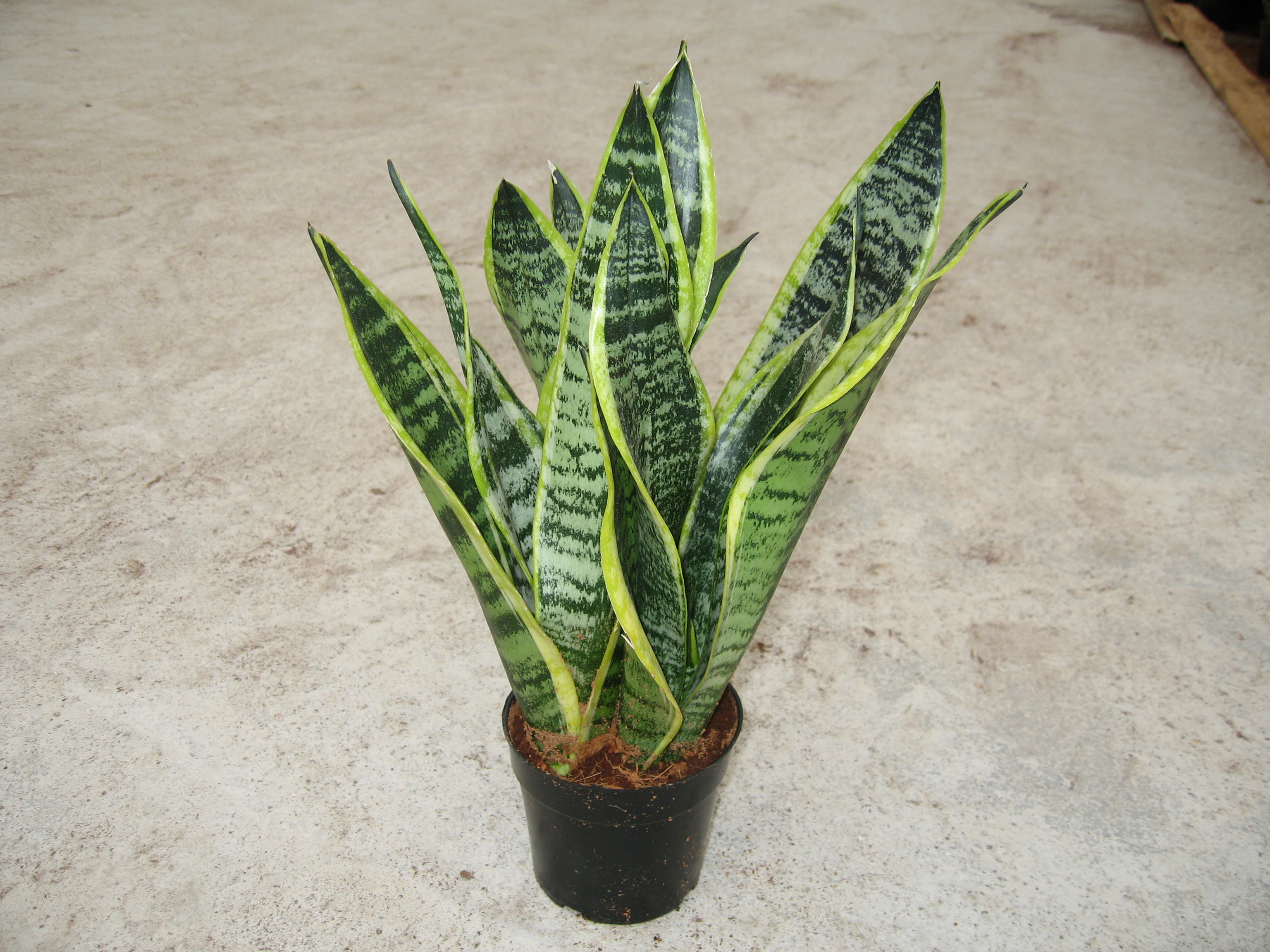
Wholesale Sansevieria is a separate low-maintenance line that complements bonsai assortments. The Sansevieria belongs to the Sansevieria superba category, with model designation H 20-70cm. It is available potted or bare-root, with 2 to 3 leaves and a height range of 20-40cm in the common young format. It is intended for agriculture, horticulture, garden center, and landscape industries.
Wholesale Bonsai Plant Comparison: Core Types
| Product | Model / Size | Type / Material | Typical Wholesale Use |
|---|---|---|---|
| Ficus bonsai | Ficus ginseng roots; 50g-10kg | Grafted or ungrafted live bonsai | Agriculture, horticulture, home furniture stores |
| Cycas revoluta | D 5cm to H 100cm+; D 5-20cm+, H 20-120cm | Sago palms made from Cycas bulbs | Landscape, home furniture stores |
| Pachira | 3, 4, or 5 braids; H 20-90cm | Money tree made from live Pachira stem | Agriculture, horticulture |
| Sansevieria | H 20-70cm; potted or bare-root, 2-3 leaves, H 20-40cm | Sansevieria superba live plant | Garden center, landscape |
Step-by-Step Process for Sourcing Wholesale Bonsai Plants
- Define your assortment and volume. Decide which bonsai categories fit your channel, such as ficus ginseng bonsai, Pachira money tree bonsai, Cycas revoluta bonsai, or Sansevieria. Estimate order volume and the size ranges you can sell.
- Check supplier credentials. Look for export-focused growers with documented greenhouse capacity, annual output, and certifications such as CIQ and MPS-A. These credentials indicate that plants are produced under controlled, inspection-ready conditions.
- Confirm product specifications. Align on rooted or bare-root formats, potted or unpotted material, braid counts for Pachira, grafted or ungrafted Ficus, height ranges, and packaging requirements.
- Review transport and packaging. Ask whether the supplier uses reefer or fresh-keeping containers and how temperature and ventilation are managed. Plants should be stabilized for dormancy before long journeys.
- Clarify phytosanitary documentation. Exporting bonsai to the EU or United States requires specific compliance steps, including phytosanitary certificates and, for US-bound bonsai, bare-rooted plants. Confirm the supplier can handle destination-specific documents.
- Plan lead time and order scheduling. Live plant supply depends on harvest preparation, container booking, and export inspection. Work with your supplier on a realistic timeline for your first order and repeat orders.
- Request samples or a trial order. Before committing to a large purchase, verify the physical quality, packaging, and shipping method with a small order or sample batch.
Wholesale Bonsai Use Cases and Buyer Segments
Garden centers and nurseries
Garden centers need reliable replenishment of healthy, saleable plants. Sansevieria and Cycas revoluta are suitable for garden center and landscape categories because they combine ornamental value with easier care requirements.
Home furniture and lifestyle retailers
Ficus ginseng bonsai and Pachira money tree bonsai are common additions to furniture stores and lifestyle retail assortments. Their compact, structured forms work well in indoor displays and are often purchased as living decor.
Landscape and outdoor projects
Landscape buyers use bonsai and ornamental plants for outdoor installations, garden decoration, and integrated project supply. Cycas revoluta is often used in landscape settings because of its structured foliage and hardiness.
Low-maintenance indoor decor
Market demand is shifting toward low-maintenance living decor. Ficus retusa, Sansevieria, and succulent bonsai are increasingly popular because they fit a lower-care lifestyle. Wholesale buyers can build an assortment around these easier plant types, especially for indoor retail channels.
FAQ
Wholesale bonsai plants suppliers
Wholesale bonsai plants suppliers are growers or export companies that supply live bonsai in volume to retailers, garden centers, landscapers, and furniture stores. Buyers should evaluate nursery capacity, export compliance, phytosanitary certification, packaging, and transport method. KinoFarm produces about 5,000,000 live plant units per year, exports about 98% of its output, operates CIQ-certified greenhouses, and ships more than 100 containers annually. If you are looking for a wholesale bonsai supplier for your next order, you can request a quote or sample by contacting KinoFarm through the website or WhatsApp.
Conclusion
Sourcing wholesale bonsai plants is a different process from sourcing standard inventory. Live plants require the right grower, the right compliance framework, and the right transport method. Buyers who evaluate supplier capacity, certifications, product specifications, and export logistics are better positioned to build a stable bonsai supply chain.
KinoFarm offers a combination of nursery scale, export experience, certified greenhouse infrastructure, and a product range that covers Ficus ginseng bonsai, Cycas revoluta, Pachira money tree, and Sansevieria. For buyers planning their next wholesale bonsai order, the next step is to review the product catalogue and discuss volume, specification, and shipment details with the team.
Plan your next wholesale bonsai order
Download the KinoFarm catalogue to review wholesale bonsai and live plant options.
Download CatalogueWhatsApp: +86 13806003349 | Email: willaim@kinofarm.com | Website: www.kinofarm.com