Application Guide: PV Distribution Boxes for Residential, Commercial & Industrial Solar Sites
Application Guide: PV Distribution Boxes for Residential, Commercial & Industrial Solar Sites
Distribution boxes for photovoltaics are matched to a site class before they are matched to a catalogue page. A residential rooftop array, a commercial rooftop or carport system, and an industrial ground-mount plant differ in voltage level, current rating, protection class, enclosure material, and the certification evidence the buyer has to present. At the evaluation stage, the useful question is therefore not which enclosure is best in the abstract, but which enclosure, cabinet, or transformer is correct at a specific point in a specific installation.
This application guide answers that question by site type, using four product families from Hebei Kuoyu Electrical Technology Co., Ltd. (“Kuoyu Electrical”): the PZ30 Series distribution box for residential and light commercial indoor distribution, the GGD/GCS/MNS Series waterproof distribution cabinet for commercial and industrial indoor or outdoor distribution, the S11/S13 Series oil immersed transformer for 10kV–35kV voltage conversion, and the ZGS11 Series pad mounted transformer for 10kV/0.4kV outdoor conversion.
Kuoyu Electrical is a manufacturer of distribution boxes, distribution cabinets, transformers, electric wires and cables, headquartered in Shijiazhuang, Hebei Province, China, and founded in 2017. Its products are applied in power distribution systems for new energy photovoltaic, wind power, transportation, medical care, education, industrial manufacturing, and commercial and civil construction projects.
The Problem: Why Site Class, Not Product Name, Decides the Enclosure
Photovoltaic distribution equipment operates in at least three different electrical positions inside one solar installation. On the DC side, string combining and protection equipment collects array output before it reaches the inverter. On the AC side, low-voltage distribution equipment routes inverter output to building loads, a main board, or the grid connection point. At site level, a transformer converts the medium-voltage supply — commonly 10kV to 35kV on industrial and larger commercial sites — down to the low-voltage level that the distribution equipment uses.
Each of those positions carries a different constraint set, and the constraints do not collapse into a single product recommendation. The most common application errors follow a predictable pattern:
- Protection class mismatch. An enclosure built for dry indoor service is installed on an outdoor pad or an exposed roof, where rain, dust, and condensation progressively degrade insulation performance.
- Current rating mismatch. The PZ30 Series distribution box is rated up to 125A. That fits residential and light commercial circuits, but it is not the correct family for a high-current commercial feed, which is where the cabinet range becomes relevant.
- Material mismatch. Cold-rolled steel plate is a standard enclosure material, but on humid, coastal, or chemically exposed sites the stainless steel option is the one that protects against corrosion.
- Certification mismatch. Certificate scope and validity dates that do not cover the product being supplied create inspection, handover, and commissioning delays even when the hardware itself is correct.
Industry Background: Standards, Market Direction, and What They Mean for Buyers
Third-party estimates of the PV combiner box market do not agree with each other, largely because analysts count different things. Some count only string combiner components; others include full distribution boards. One published estimate values the global photovoltaic combiner box market at approximately USD 2.8 billion in 2024 (Market Research Future). A second projects the global solar combiner boxes market to grow from USD 1.2 billion in 2026 to USD 2.1 billion by 2035, at a CAGR of 6.2% (Business Research Insights). A third expects DC smart PV combiner boxes to hold a 62.5% share of the segment by 2035 (Future Market Insights). These numbers should be read as directional signals about growth, not as additive totals.
On the demand side, Asia-Pacific dominated the solar market with a 54.0% revenue share in 2023, driven primarily by installations in China and India (Grand View Research). That concentration shapes supply chains, lead times, and the certification documentation that buyers in other regions typically ask for.
On the technical side, two documents recur in photovoltaic project specifications. IEC 61439-2:2020 defines specific requirements for power switchgear and controlgear assemblies used in photovoltaic installations, including Annexes DD, EE and FF (IECEE). In North America, UL 1741 is the primary safety standard for PV inverters, converters and combiner boxes used in grid-connected systems (UL Solutions). A supplier that can locate its product clearly against the applicable standard is easier to specify than one that cannot.
For a buyer, the practical implication is that the enclosure is a specified assembly rather than a commodity box. The DC-side and AC-side keywords buyers search for — DC photovoltaic distribution box, AC solar distribution box, PV string combiner distribution box — describe electrical positions, not interchangeable products, and the specification should follow the position.
Detailed Solution: Matching Each Product Family to a Site Class
The mapping below uses the published specifications and stated application scopes of the four Kuoyu Electrical product families. Two of them are enclosures; two are voltage-conversion units that sit upstream of the enclosures on larger sites.
Residential and light commercial sites — PZ30 Series distribution box
The PZ30 Series is an industrial and residential distribution box with a rated voltage of 220V/380V, a rated current up to 125A, and a protection class of IP40/IP54. Enclosure materials are high-quality ABS plastic and cold-rolled steel plate, with stainless steel optional. Its stated scope covers residential, commercial and industrial electrical systems, and the applicable industries listed are residential, commercial, industrial and power control.
Read against a residential solar site, this family covers the low-voltage distribution position where circuit current stays within the 125A rating. IP40 is adequate for a dry indoor utility position. IP54 becomes the relevant choice where dust or moisture is present — a garage, a semi-finished utility room, or a sheltered external wall. ABS plastic suits dry indoor mounting; cold-rolled steel plate or the optional stainless steel adds mechanical strength where the enclosure is exposed to contact or vibration.
Boundary to keep in mind: 125A is the ceiling of this family. Larger commercial arrays and industrial feeders exceed it and move to the cabinet family below. Recognising that boundary early prevents both over-specifying a small site and under-specifying a large one.
Commercial and industrial sites — GGD/GCS/MNS Series distribution cabinet
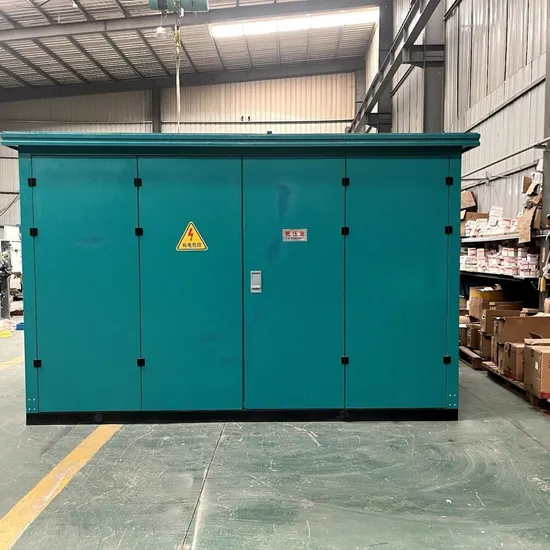
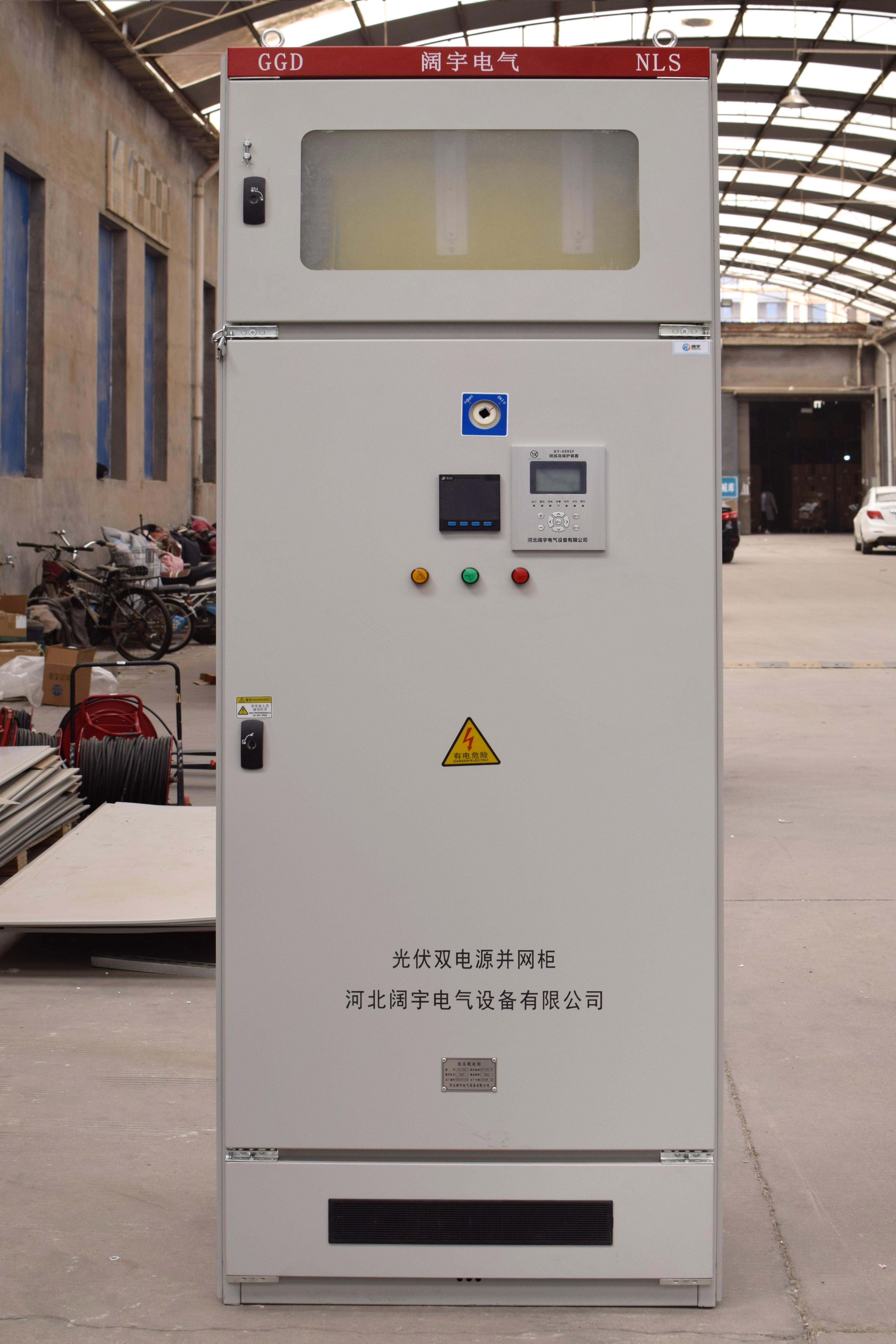
The GGD/GCS/MNS Series is a waterproof distribution cabinet with a rated voltage of 380V/220V, a rated current up to 6300A, and a protection class of IP54/IP65. Materials are high-quality cold-rolled steel plate, with stainless steel optional. The stated scope covers indoor and outdoor industrial, commercial and infrastructure applications.
Two differences matter here. First, current headroom: the cabinet range extends far beyond the box range, which is what commercial building loads, process distribution, and infrastructure feeds require. Second, environmental range: IP65 supports genuinely outdoor positions such as a roof plant room, a carport structure, or a yard-mounted enclosure, and the stainless steel option is the appropriate answer where the site is humid, coastal, or chemically exposed.
Industrial sites with a medium-voltage supply — S11/S13 Series oil immersed transformer
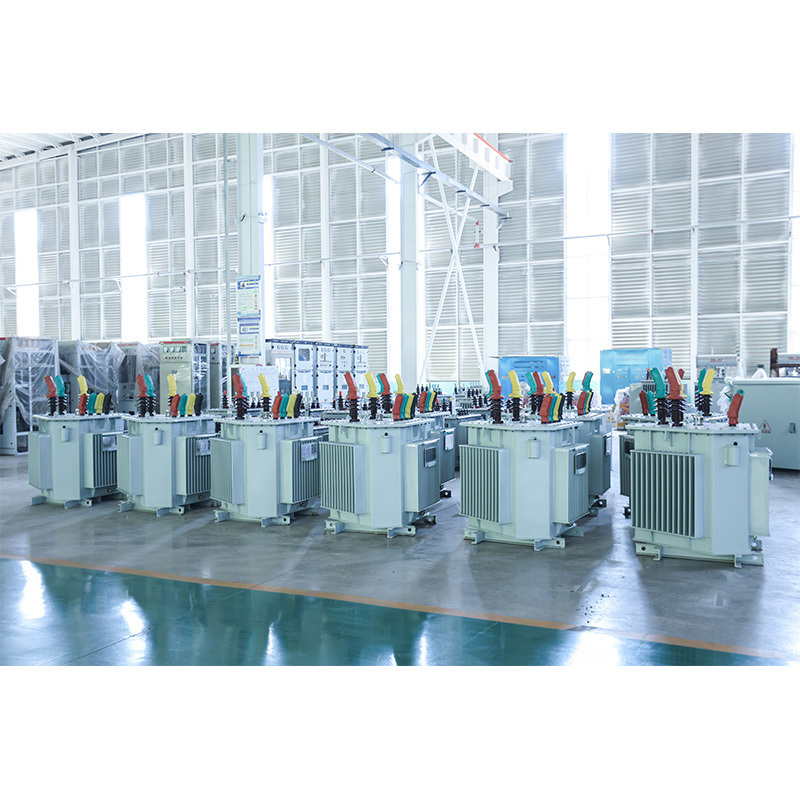
The S11/S13 Series is an industrial power distribution transformer with a voltage class of 10kV–35kV and a capacity range of 10kVA–31500kVA. Materials include high-quality silicon steel sheet, copper winding, transformer oil and a steel tank, and the stated scope covers industrial power distribution, substations, renewable energy and commercial applications. The published characteristic is low energy loss.
This family defines the interface between the utility or medium-voltage connection and the low-voltage distribution equipment. On an industrial solar site, the transformer is the point where the site’s voltage level changes; the enclosure selection downstream follows from that decision, not the other way around.
Outdoor conversion without a transformer room — ZGS11 Series pad mounted transformer
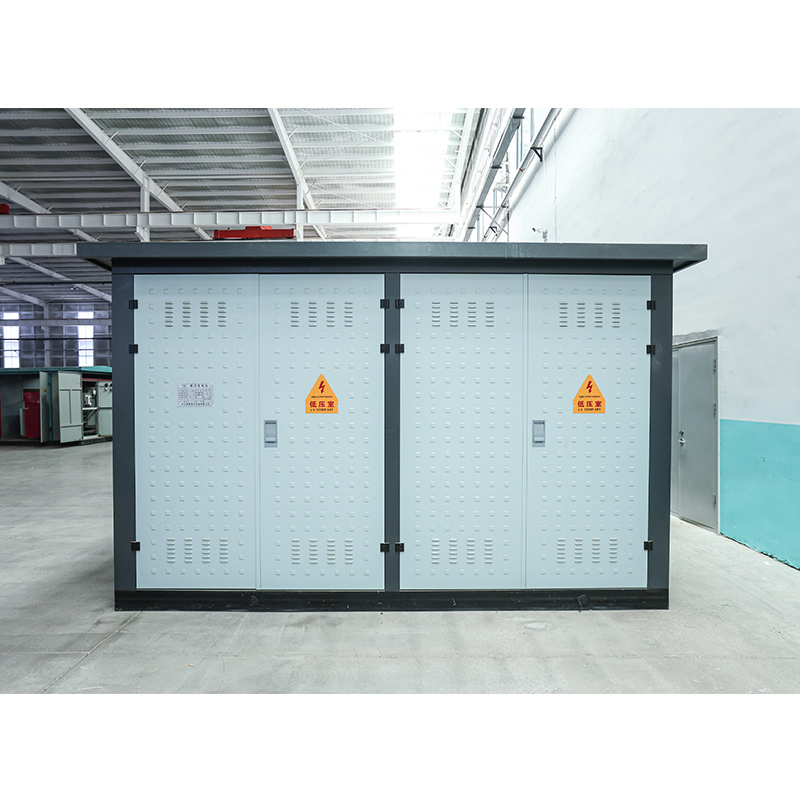
The ZGS11 Series is an outdoor power distribution transformer rated 10kV/0.4kV with a capacity range of 100kVA–2500kVA. It is built from high-quality steel, copper winding and insulating materials, and its stated scope covers residential communities, commercial buildings, industrial facilities, renewable energy systems and public infrastructure projects.
A pad mounted unit is the practical option when the 10kV to 0.4kV step-down has to sit outdoors without a dedicated transformer room — a common arrangement on solar sites where the conversion point is placed close to the load rather than in a central building.
The certification basis behind these recommendations
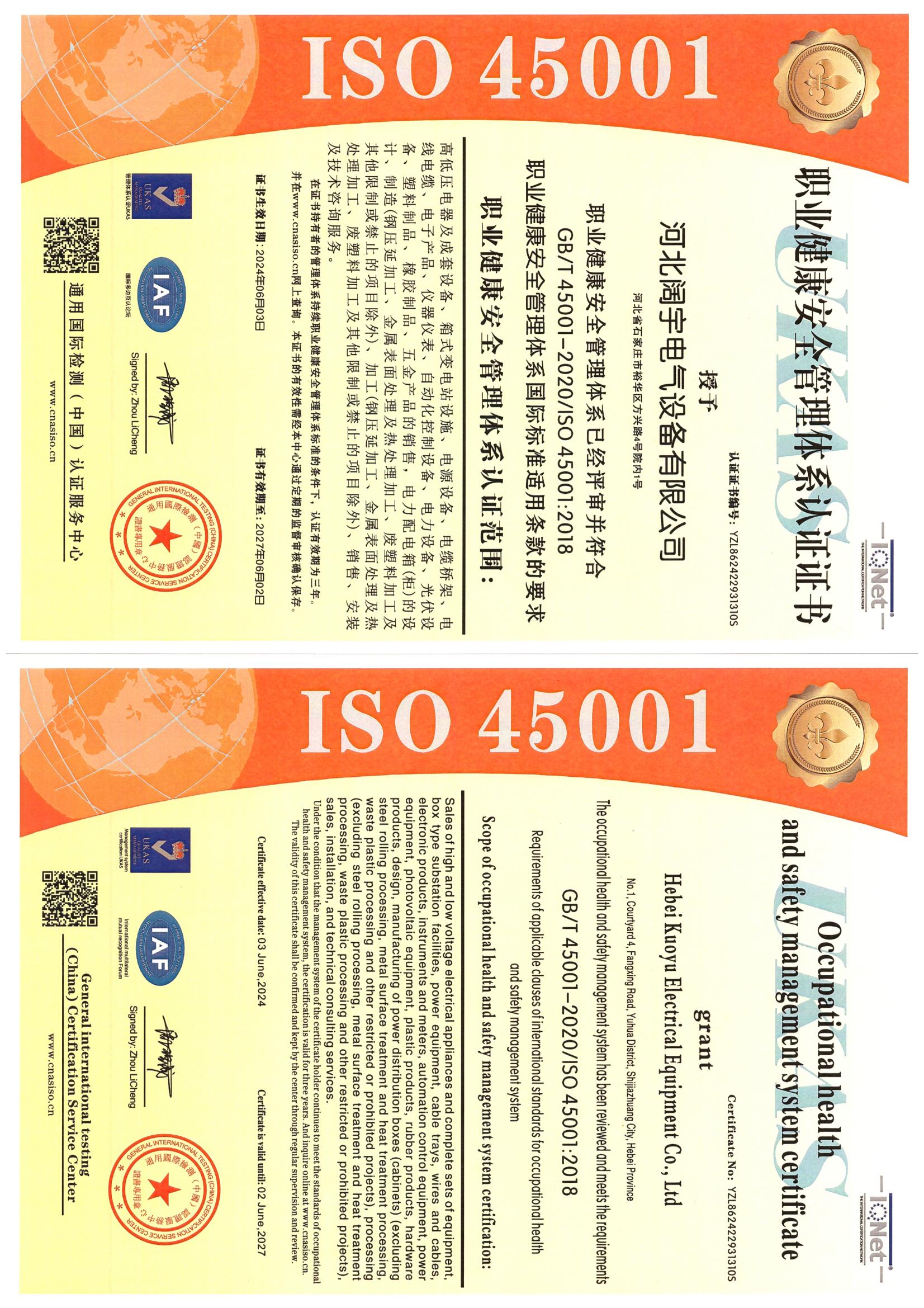
Kuoyu Electrical holds three management-system certifications, all issued on 3 June 2024 through the General International Testing (China) Certification Service Center and valid until 2 June 2027:
- ISO 9001 quality management system, certificate no. YZL862422931310Q, standard GB/T19001-2016 / ISO9001:2015. The certified scope covers sales, installation and technical consulting services for high and low voltage electrical appliances and complete equipment, box-type substation facilities, power supply equipment, cable trays, wires and cables, electronic products, instruments and meters.
- ISO 14001 environmental management system, certificate no. YZL862422931310E, standard GB/T24001-2016 / ISO14001:2015. Certified scope covers sales of high and low voltage electrical appliances and complete sets of equipment, box-type substation facilities, power equipment, cable trays, wires and cables, electronic products, instruments and meters, automation control equipment and power equipment.
- ISO 45001 occupational health and safety management system, certificate no. YZL862422931310S, standard GB/T45001-2020 / ISO45001:2018, with a comparable certified scope.
The certification records list the PZ30 Series distribution box, the GGD/GCS/MNS Series distribution cabinet, the S11/S13 Series oil immersed transformer and the ZGS11 Series pad mounted transformer among related products, and each record is marked for the global market. Kuoyu Electrical also states that it passed its ISO 9001 three-system certification in 2017, which is the earlier baseline behind the current 2024–2027 certificate cycle.
Step-by-Step Breakdown: Selecting by Site in Six Steps
- Classify the site and the electrical position. Residential rooftop AC distribution, commercial building distribution, industrial process distribution, and the voltage-conversion point are four separate specification problems, even inside one project. Write down which one you are specifying before opening a product page.
- Fix voltage and current. Confirm whether the position is 220V single-phase or 380V three-phase, and establish the design current. Up to 125A points to the PZ30 Series distribution box; high-current commercial and industrial feeds point to the GGD/GCS/MNS Series distribution cabinet, which is rated up to 6300A.
- Set the protection class and material. Indoor dry positions accept IP40 with ABS plastic or cold-rolled steel plate. Dusty, humid, or outdoor positions call for IP54 or IP65 and, where corrosion risk is real, the stainless steel option.
- Verify certificate scope and validity. Check that the certificate covers the actual product supplied, that the standard reference is current, and that the validity dates extend beyond project handover. The certificates currently on file for the PZ30, GGD/GCS/MNS, S11/S13 and ZGS11 families run to 2 June 2027.
- Confirm internal configuration and customization. Project engineers normally define the internal arrangement — including isolation arrangements, surge protection devices and circuit breaker selection — as part of the enclosure specification, and the enclosure is then built around that definition. Kuoyu Electrical runs OEM production with voltage and logo customization; one documented industrial case used a customized internal structure.
- Validate capacity, lead time and test regime. Kuoyu Electrical lists a monthly capacity of 8000 units, a lead time of 30 days, a minimum order quantity of 2 units, and 100% test quality control on all products. Confirming these three items before purchase order avoids a schedule problem that no amount of hardware quality can fix.
Use Cases: What the Fit Logic Looks Like in Operation
Industrial manufacturing site. An automotive manufacturer installed 15 units to handle safe power distribution and circuit control across production lines, protecting electrical equipment from overload and short circuit and keeping manufacturing equipment running. The project recorded three years of continuous operation with zero circuit failure and a 30% increase in equipment operation stability. The documented highlights were waterproof and dustproof performance, corrosion resistance, strong protection, and a customized internal structure — an industrial illustration of why protection class and internal configuration are specified together rather than separately.
Residential and commercial property site. A real estate developer installed 30 units for safe power transmission, distribution, voltage conversion and circuit control, stabilising supply and protecting circuits across industrial, commercial and residential power systems. The project recorded five years of stable operation with zero safety accidents and a power supply reliability rate up to 99.99%. The stated highlights were compact structure, easy installation, low maintenance cost, and customizable configuration — the characteristics that matter most where installation is distributed across many buildings and maintenance access is limited.
In both cases the lesson for a buyer is the same: the enclosure specification, the protection class, and the configuration were decided together, and the track record is measured in years of uninterrupted operation rather than in catalogue features.
Comparison Table: Product Families, Specifications and Site Fit
| Product family | Type | Voltage / current | Protection class | Material | Stated scope |
|---|---|---|---|---|---|
| Distribution box, PZ30 Series | Industrial & residential distribution box | 220V/380V; up to 125A | IP40/IP54 | ABS plastic, cold-rolled steel plate, stainless steel optional | Residential, commercial and industrial electrical systems |
| Distribution cabinet, GGD/GCS/MNS Series | Waterproof distribution cabinet | 380V/220V; up to 6300A | IP54/IP65 | Cold-rolled steel plate, stainless steel optional | Indoor and outdoor industrial, commercial and infrastructure applications |
| Oil immersed transformer, S11/S13 Series | Industrial power distribution transformer | 10kV–35kV; 10kVA–31500kVA | Not applicable | Silicon steel sheet, copper winding, transformer oil, steel tank | Industrial power distribution, substations, renewable energy, commercial applications |
| Pad mounted transformer, ZGS11 Series | Outdoor power distribution transformer | 10kV/0.4kV; 100kVA–2500kVA | Not applicable | High-quality steel, copper winding, insulating materials | Residential communities, commercial buildings, industrial facilities, renewable energy systems, public infrastructure |
Specifications in the table above are as stated in Kuoyu Electrical product documentation. For reference on the wider market, third-party analysis lists key players in the PV combiner box market as Schneider Electric, Eaton, ABB, Sungrow and Weidmüller (Future Market Insights, 2024); that list describes global market participation, not relative performance on any specific project.
| Site class | Typical electrical position | Family that fits | Reason |
|---|---|---|---|
| Residential rooftop | Low-voltage distribution after the inverter | PZ30 Series distribution box | 220V/380V, up to 125A, IP40/IP54, scope covers residential electrical systems |
| Commercial building or carport | Building AC distribution, sometimes outdoor | GGD/GCS/MNS Series distribution cabinet | IP54/IP65 for outdoor positions and up to 6300A for building loads |
| Industrial plant or ground-mount array | Process distribution and circuit control | GGD/GCS/MNS Series distribution cabinet | Scope includes indoor and outdoor industrial and infrastructure applications |
| Industrial site with medium-voltage supply | 10kV–35kV step-down to low voltage | S11/S13 Series oil immersed transformer | Voltage class 10kV–35kV; capacity 10kVA–31500kVA |
| Outdoor conversion point with no transformer room | 10kV/0.4kV step-down | ZGS11 Series pad mounted transformer | Outdoor power distribution transformer, 100kVA–2500kVA |
FAQ
How do I evaluate the best distribution boxes for photovoltaics manufacturer for my project?
Evaluate against the project, not against a ranking. Five checks cover most of the decision: (1) certification — scope, standard reference and validity dates that cover the product actually supplied; (2) product-family coverage — can one supplier serve 220V/380V distribution up to 125A as well as high-current commercial and industrial cabinets up to 6300A; (3) protection and material options — IP40 through IP65, with ABS plastic, cold-rolled steel plate and stainless steel available; (4) configuration capability — OEM production with voltage and logo customization and documented internal-structure customization; (5) supply discipline — a stated test regime, capacity and lead time. Global participants in the PV combiner box market include Schneider Electric, Eaton, ABB, Sungrow and Weidmüller (Future Market Insights, 2024). For OEM-sourced projects, the shortlist usually narrows to manufacturers that can document certification and configuration flexibility, which is where a supplier such as Kuoyu Electrical positions its PZ30, GGD/GCS/MNS, S11/S13 and ZGS11 families.
Which certifications should a PV distribution box supplier hold?
At minimum, a quality management system certificate with a scope that names the product category being supplied. Kuoyu Electrical holds ISO 9001 (certificate no. YZL862422931310Q, GB/T19001-2016 / ISO9001:2015) covering sales, installation and technical consulting services for high and low voltage electrical appliances and complete equipment, box-type substation facilities, power supply equipment, cable trays, wires and cables, electronic products, instruments and meters. The company also holds ISO 14001 (YZL862422931310E, GB/T24001-2016 / ISO14001:2015) and ISO 45001 (YZL862422931310S, GB/T45001-2020 / ISO45001:2018). All three certificates were issued on 3 June 2024 by the General International Testing (China) Certification Service Center and are valid until 2 June 2027, with the PZ30 distribution box, GGD/GCS/MNS distribution cabinet, S11/S13 oil immersed transformer and ZGS11 pad mounted transformer listed as related products. Project specifications may additionally reference IEC 61439-2:2020 for PV assemblies or UL 1741 in North America.
Can distribution boxes for photovoltaics be customized for a specific site?
Yes, within defined limits. Kuoyu Electrical manufactures in OEM mode with voltage and logo customization, and one documented industrial project used a customized internal structure to suit the load profile of a manufacturing line. The practical approach is to define the internal configuration — isolation arrangement, surge protection devices and circuit breaker selection — as part of the enclosure specification, and then let the enclosure be built around it. Customization does not require a large minimum batch: the listed minimum order quantity is 2 units, and production capacity is 8000 units per month.
What protection class is needed for an outdoor solar distribution box?
Match the protection class to the position rather than to the project label. The PZ30 Series distribution box is rated IP40/IP54, which covers dry indoor positions and sheltered positions where dust or moisture is present. The GGD/GCS/MNS Series distribution cabinet is rated IP54/IP65 and is specified for indoor and outdoor industrial, commercial and infrastructure applications, making it the appropriate family for roof, carport and yard-mounted positions. Where the site is humid, coastal or chemically exposed, the stainless steel enclosure option addresses corrosion risk that the protection class alone does not.
What are the lead time and sample terms when ordering PV distribution equipment?
Kuoyu Electrical lists a lead time of 30 days, a minimum order quantity of 2 units, a monthly capacity of 8000 units, and 100% test quality control on all products. Export operations cover the EU and the Middle East, alongside the company’s stated main markets of Southeast Asia and Africa, and after-sales support is provided remotely. Projects that need to validate an enclosure before committing to volume can start with a small sample order — send the site class, voltage and current, indoor or outdoor position, and required protection class to xiaoyi010127@gmail.com or +86 180-3229-7717, and the request will be mapped to the PZ30 Series distribution box, the GGD/GCS/MNS Series distribution cabinet, or the matching transformer.
Conclusion: Build the Site Map Before the Order
An application guide is only useful if it changes what a buyer writes in the specification. For PV distribution equipment, the change is this: describe the site class and the electrical position before naming a product. Residential and light commercial indoor distribution up to 125A fits the PZ30 Series distribution box at IP40/IP54. Commercial and industrial distribution, including outdoor positions, fits the GGD/GCS/MNS Series distribution cabinet at IP54/IP65 and up to 6300A. Medium-voltage industrial sites add the S11/S13 Series oil immersed transformer at 10kV–35kV, and outdoor conversion points without a transformer room use the ZGS11 Series pad mounted transformer at 10kV/0.4kV.
Behind that mapping sits documentable compliance: ISO 9001, ISO 14001 and ISO 45001 certificates issued on 3 June 2024 and valid to 2 June 2027, with all four product families named in the related-product records; OEM production with voltage and logo customization; 100% test quality control; and a 30-day lead time from a 2-unit minimum order.
Next Step: Map Your Site to a Product Family
Send Kuoyu Electrical the site class, voltage and current, indoor or outdoor position, and required protection class. The request will be mapped to the PZ30 Series distribution box, the GGD/GCS/MNS Series distribution cabinet, or the relevant S11/S13 or ZGS11 transformer. Samples and quotations can be arranged from a minimum order quantity of 2 units.
Product catalogue (English): Download the Kuoyu Electrical catalogue
Email: xiaoyi010127@gmail.com | Tel / WhatsApp: +86 180-3229-7717 | Website: www.kuoyuelectricity.com
Have Questions or Need More Details?
Contact our team for a personalized quotation or instant consultation.
Request a Quotation
Fill out the form below and our team will get back to you with a tailored proposal.
WhatsApp Direct Chat
Prefer to chat in real-time? Message us on WhatsApp for instant assistance & quick answers.
- Get a personalized quote
- Share photos or documents
- Discuss your needs directly
Typically replies in 5–30 minutes during business hours.