Choosing Distribution Boxes for Photovoltaics: Industrial and Commercial Project Guide
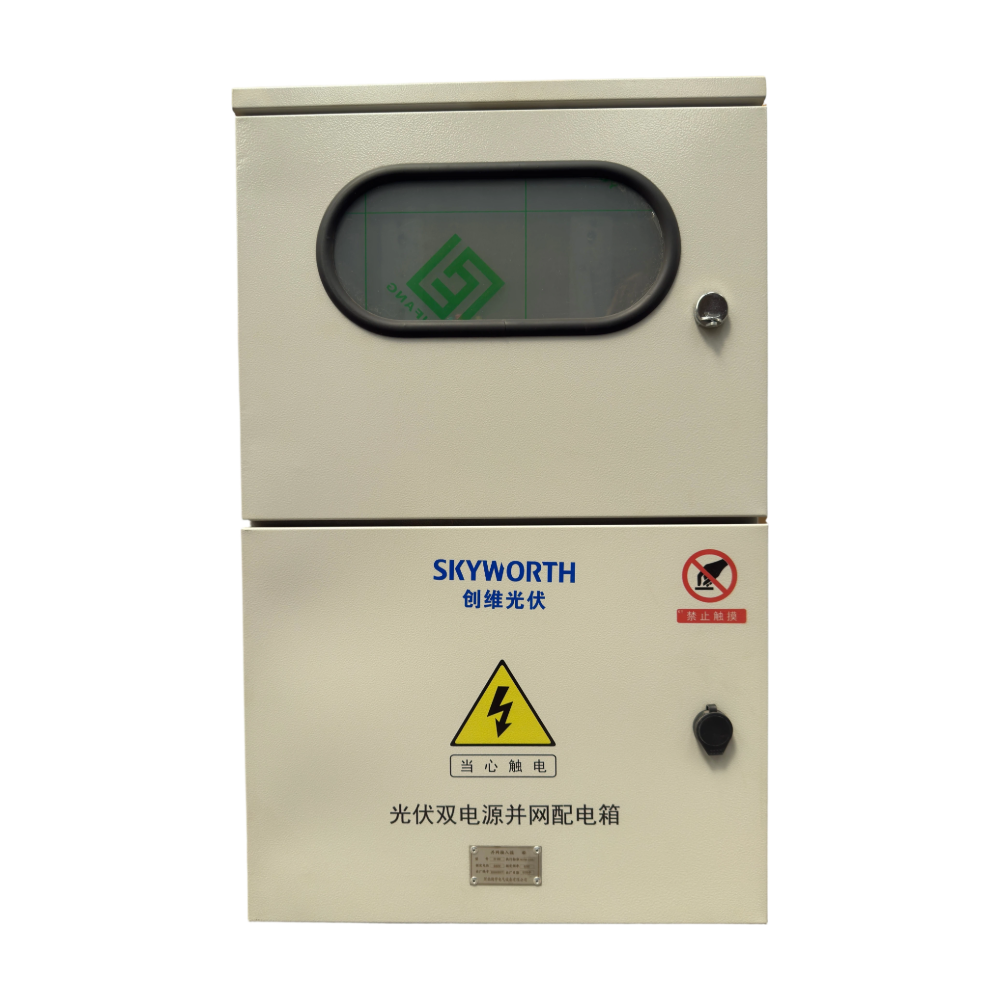
Choosing distribution boxes for photovoltaics stops being a catalogue exercise the moment a project moves beyond a single residential array. An industrial workshop, a commercial building and an infrastructure site each apply a different combination of humidity, dust, temperature swing and continuous load to the same enclosure, and the enclosure has to keep controlling and protecting circuits through all of it, around the clock.
This guide is an application-focused selection walkthrough for buyers, distributors and project engineers at the awareness and research stage. It pairs end-use environments with the enclosure attributes that decide performance in each one, and it recommends the PZ30 Series distribution box from Hebei Kuoyu Electrical Technology Co., Ltd. (Kuoyu Electrical) for industrial workshop, commercial building and infrastructure power distribution projects. The PZ30 Series is an industrial and residential distribution box with a rated voltage of 220V/380V, rated current up to 125A and protection classes of IP40 and IP54.
Three questions run through the article: what makes these environments harder on an enclosure than a residential installation, which enclosure attributes answer each environment, and where the boundary lies between a distribution box and a larger distribution cabinet.
What Makes Industrial and Commercial Photovoltaic Projects Demanding
Two working-condition profiles are recorded for these projects, and they overlap. Industrial production power distribution environments are described as indoor and outdoor locations with high humidity and heavy dust. Power distribution engineering environments are described as indoor and outdoor locations with high and low temperature, humidity and dust. Both profiles are recorded as 24/7 continuous operation.
The electrical job inside the box is stable across both profiles: safe circuit control, power distribution management, and overload and short-circuit protection for connected electrical equipment. General power distribution environments add safe power transmission, voltage conversion and circuit distribution to that list.
What changes from site to site is the enclosure. The recorded special requirements for these environments are waterproof and dustproof construction, corrosion resistance, high mechanical strength, flame-retardant material and a customizable structure. Where power loss is a design constraint, low power loss is specified as well.
A box specified only for a dry, clean indoor position will admit moisture and dust when it is installed in a dust-prone industrial hall or an outdoor infrastructure position, regardless of the quality of the circuit breakers inside it. Ingress is the variable that most often separates a box that works from a box that has to be replaced, because dust and humidity act on insulation surfaces and busbar connections continuously rather than in a single event.
Layout and thermal management belong to the same decision. The equipment matched with these power distribution projects includes circuit breakers, contactors, relays, busbars, grounding devices, indicator lights and cooling fans. That component set defines how much wiring space, ventilation and grounded metalwork the enclosure has to accommodate before it leaves the factory.
Industry Background: Market, Standards and Supply
The global photovoltaic combiner box market was valued at approximately USD 2.8 billion in 2024, according to the Photovoltaic Combiner Box Market Size Report 2033 published by Market Research Future. A separate forecast from Business Research Insights projects the solar combiner boxes market at USD 1.2 billion in 2026, rising to USD 2.1 billion by 2035 at a CAGR of 6.2%.
Those figures are not directly comparable, and buyers comparing market reports should check the scope behind each number. Estimates differ mainly over whether string combiner components alone are counted or complete distribution boards are included. Future Market Insights, for example, forecasts the PV combiner box segment at USD 139.3 million in 2025, well below the Business Research Insights figure.
Two structural trends are more useful to a specification decision than the headline size. DC smart PV combiner boxes are expected to account for a 62.5% share of the segment by 2035 (Future Market Insights), which points to monitoring and DC-side intelligence moving from option toward default. On the demand side, Asia-Pacific held a 54.0% revenue share of the solar market in 2023, driven primarily by installations in China and India (Grand View Research).
Standardisation is the other background factor. IEC 61439-2:2020 defines specific requirements for power switchgear and controlgear assemblies used in photovoltaic installations, set out in Annex DD, EE and FF. For grid-connected systems in North America, UL 1741 is the primary safety standard for PV inverters, converters and combiner boxes. Equipment specified for export should therefore be documented against the standard frame of its destination market, not only the market where it was assembled.
Market participants tracked in the PV combiner box segment include Schneider Electric, Eaton, ABB, Sungrow and Weidmüller (Future Market Insights), a mix of global electrical brands and PV specialists that sets the reference frame for specification-level competition.
Hebei Kuoyu Electrical Technology Co., Ltd. is a power distribution equipment manufacturer established in 2017 and headquartered in Shijiazhuang, Hebei Province. The company designs and manufactures distribution boxes, distribution cabinets, transformers, electric wires and cables, and its products are applied in power distribution systems for new energy photovoltaic, wind power, transportation, medical care, education, industrial manufacturing, government poverty alleviation, and commercial and civil construction. Its manufacturing facility covers about 9,000 square meters, employs approximately 80 staff and reaches an annual production capacity of 30,000 sets, supported by an R&D team of 10 engineers. The company passed its ISO 9001 three-system certification in 2017.
Detailed Solution: Pairing the Enclosure with the End-Use Environment
The sequence is deliberate: fix the exposure profile first, confirm that the electrical parameters fit the load, and only then choose the box. Within the Kuoyu Electrical range, the PZ30 Series distribution box is the recommended starting point for industrial workshop, commercial building and infrastructure power distribution, because its protection classes, material options and customizable structure cover the environmental requirements recorded for those three project types.
Industrial workshop power distribution
A workshop combines heavy dust, high humidity and continuous duty. In that profile the relevant PZ30 Series configuration is the IP54 protection class in cold-rolled steel plate, with stainless steel available as an option where corrosion is also a factor. Flame-retardant material and high mechanical strength matter here because the enclosure shares space with production machinery, and the recorded special requirements for this environment include both.
Because the same environment is rated for 24/7 continuous operation, the internal component set should be defined together with the enclosure. Circuit breakers, contactors, relays, busbars, grounding devices, indicator lights and cooling fans are the equipment recorded as matched with industrial production power distribution. A customizable structure allows the box to be laid out around that component set instead of forcing components into a fixed internal arrangement.
Commercial building power distribution
Commercial buildings are less uniform than workshops. A dry, clean indoor electrical room is a different exposure from a rooftop position, an outdoor service enclosure or a humid basement plant room. Both protection classes of the PZ30 Series therefore have a role: IP40 for protected indoor positions and IP54 where humidity, dust or weather exposure is present. The series is classified as an industrial and residential distribution box and serves the residential, commercial, industrial and power control industries, which is what allows the same family to be used across a mixed-use building.
Material choice is usually the cost-sensitive decision in commercial work. High-quality ABS plastic, cold-rolled steel plate and optional stainless steel are all available for the PZ30 Series, so each position can be specified to its actual exposure instead of upgrading an entire building to one heavy-duty specification. A rated voltage of 220V/380V with current up to 125A covers the circuit values typical of commercial distribution boards fed by a building PV system.
Infrastructure project power distribution
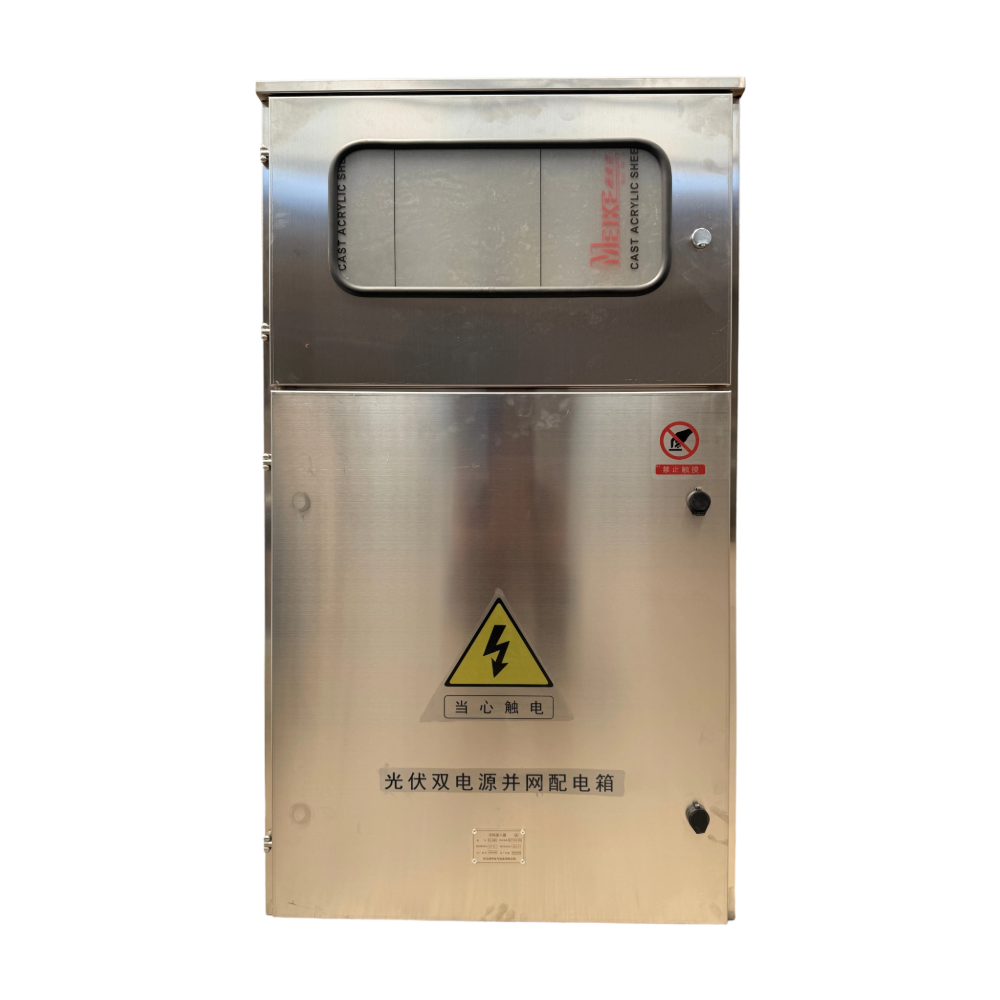
Infrastructure positions are the most exposed: outdoor installation, high and low temperature cycling, humidity and dust, plus the corrosion that follows from weather and site conditions. The requirements recorded for these environments are waterproof and dustproof construction and corrosion resistance, supported by high mechanical strength. For the PZ30 Series that means the IP54 configuration in cold-rolled steel plate, or the optional stainless steel version where corrosion resistance is the deciding factor, with the structure customized to the site layout.
Where a site also carries a risk of an explosive atmosphere, explosion-proof construction has to be specified at the design stage. It is recorded as a requirement category for power distribution environments rather than a standard attribute of every box.
When a distribution box is not the right enclosure
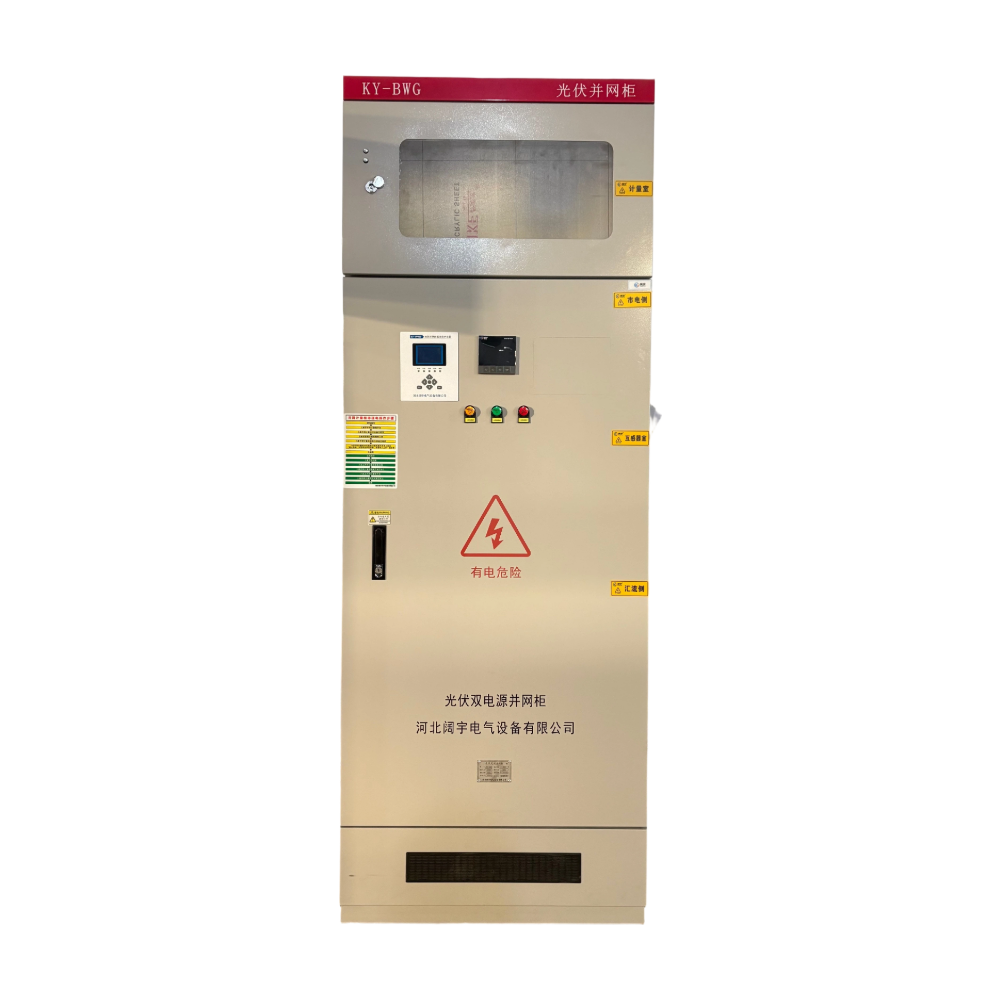
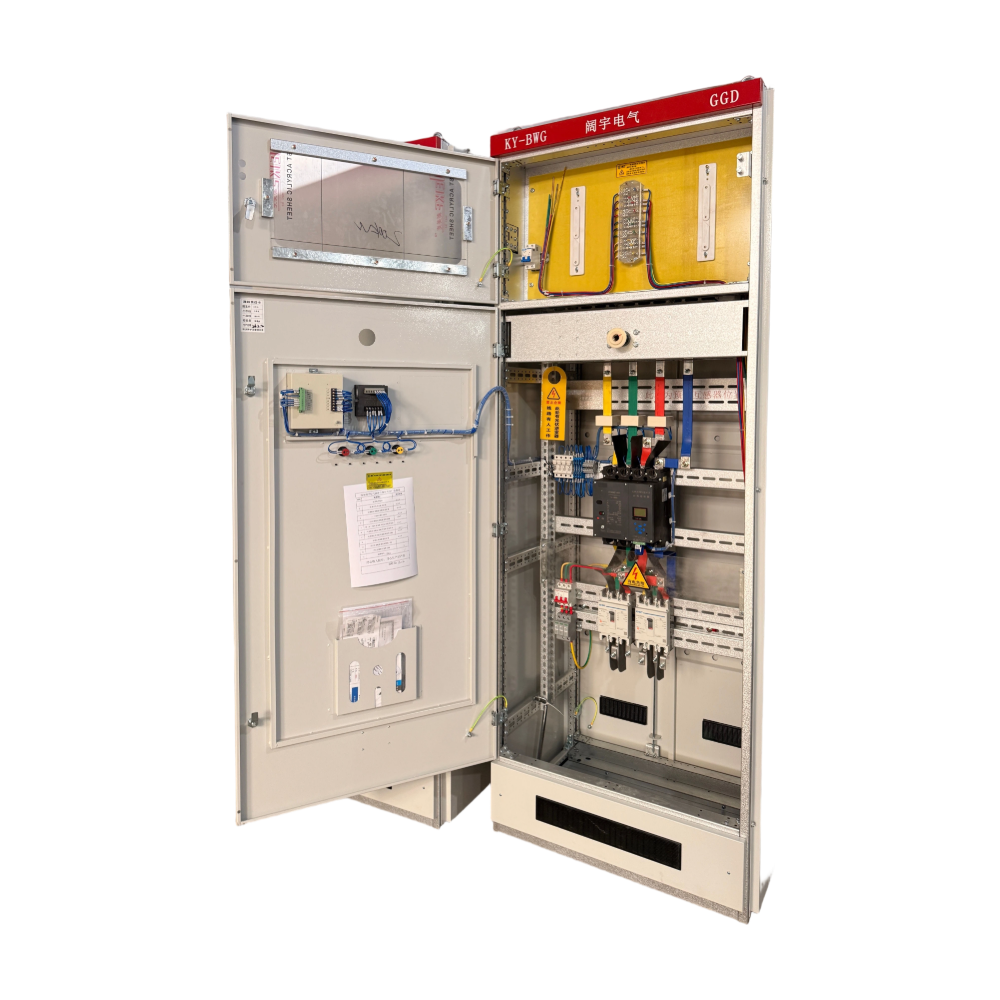
The boundary is electrical rather than environmental. The PZ30 Series covers circuits up to 125A. Above that, or where the project requires a larger assembly, the next step in the same Kuoyu Electrical range is the GGD/GCS/MNS Series distribution cabinet: a waterproof cabinet with IP54/IP65 protection, cold-rolled steel plate construction with optional stainless steel, rated 380V/220V and rated current up to 6300A, intended for indoor and outdoor industrial, commercial and infrastructure scenarios. Choosing between the two is a matter of matching current rating and assembly size to the project, not of one product being better than the other.
Step-by-Step: Selecting a Distribution Box for a Project
Seven steps take a project from brief to a confirmable configuration.
- Define the exposure profile. Record whether the position is indoor or outdoor and whether the environment carries high or low temperature, humidity, dust or corrosive exposure. For the profiles recorded here, indoor and outdoor high humidity and dust, and indoor and outdoor temperature extremes, are the working conditions to plan for.
- Confirm the electrical parameters. The PZ30 Series is rated 220V/380V with rated current up to 125A. If the project exceeds that current, evaluate the GGD/GCS/MNS Series cabinet, rated up to 6300A, before continuing with a box.
- Set the protection class. Choose IP40 for dry, clean, protected indoor positions and IP54 for humid, dust-prone indoor and outdoor positions.
- Select the enclosure material. High-quality ABS plastic, cold-rolled steel plate, or optional stainless steel. Stainless steel is the option to consider where corrosion resistance is a stated requirement.
- List the internal components. Circuit breakers, contactors, relays, busbars, grounding devices, indicator lights and cooling fans are the equipment matched with these environments; wire connectors and grounding devices are also recorded for general power distribution work.
- Confirm the special requirements. Waterproof and dustproof construction, corrosion resistance, high mechanical strength, flame-retardant material and customizable structure, plus low power loss where it is specified.
- Check documentation and standard alignment. Confirm the manufacturer quality certification and the standard frame relevant to the destination market: IEC 61439-2:2020 for photovoltaic assemblies, and UL 1741 for grid-connected equipment in North America.
Use Cases: Three Project Environments in Practice
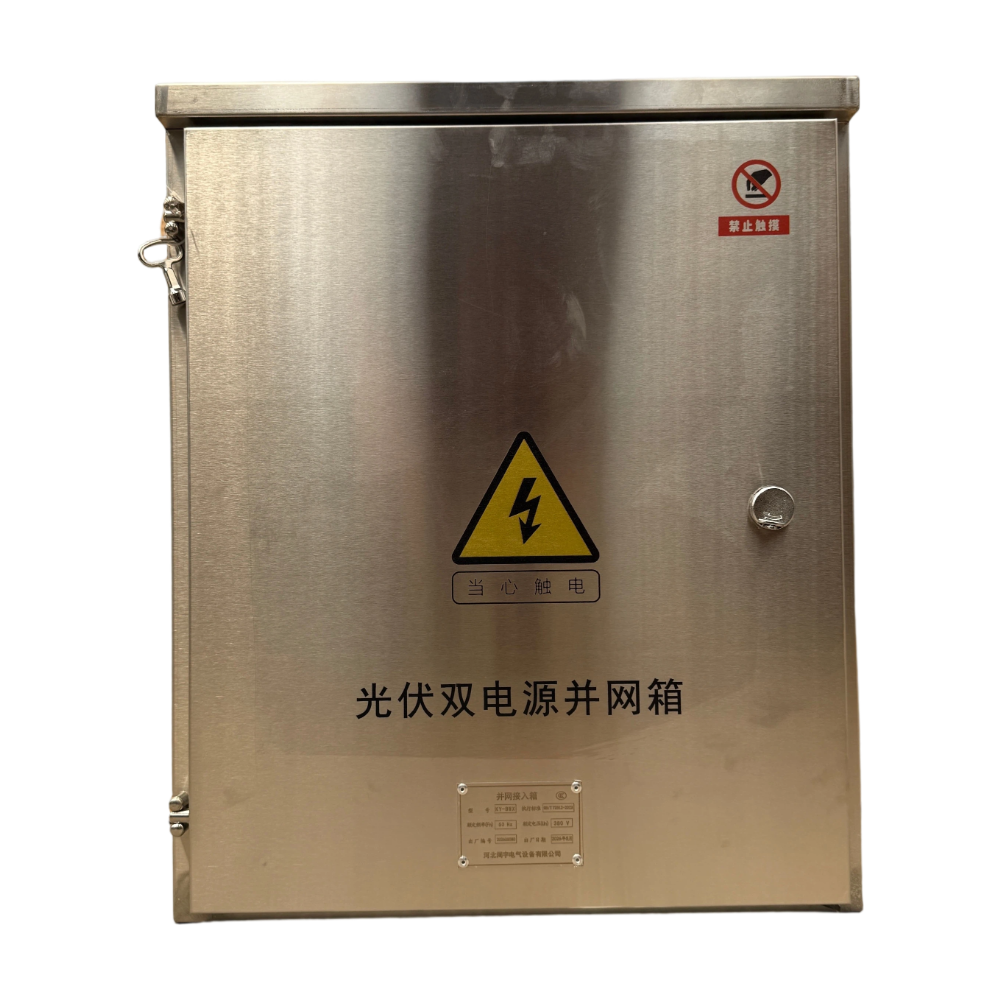
Industrial workshop with dust and humidity. A manufacturing site distributes power to production equipment around the clock in a hall with airborne dust and high humidity. The specification starts with the IP54 version of the PZ30 Series in cold-rolled steel plate, a flame-retardant structure and an internal layout built around circuit breakers, contactors, relays, busbars, grounding devices, indicator lights and cooling fans. The customizable structure is what allows the enclosure to follow the production line layout instead of the layout having to follow the box.
Commercial building with mixed indoor and outdoor positions. A commercial building distributes power from a rooftop PV system to tenant circuits. Indoor electrical rooms are specified at IP40, while humid plant rooms and outdoor service positions are specified at IP54. Material is chosen per position: high-quality ABS plastic where load and exposure are light, cold-rolled steel plate where mechanical strength matters. The 220V/380V, up to 125A rating of the PZ30 Series covers the circuit values involved.
Infrastructure site with temperature cycling. An infrastructure project places distribution equipment outdoors along a route, exposed to temperature cycling, humidity and dust, with corrosion as an additional risk. The specification combines the IP54 PZ30 Series in cold-rolled steel plate, or the optional stainless steel version, with the corrosion resistance, waterproof and dustproof construction and high mechanical strength recorded for infrastructure power distribution, and a structure customized to the site layout.
Comparison Table: PZ30 Series Box vs GGD/GCS/MNS Series Cabinet
Both products are part of the same power distribution equipment range, and both are documented for industrial, commercial and infrastructure use. The table below compares only the parameters recorded for each product, so a project team can identify the point at which the specification moves from one to the other.
| Attribute | PZ30 Series distribution box | GGD/GCS/MNS Series distribution cabinet |
|---|---|---|
| Product type | Industrial and residential distribution box | Waterproof distribution cabinet |
| Rated voltage | 220V/380V | 380V/220V |
| Rated current | Up to 125A | Up to 6300A |
| Protection class | IP40 / IP54 | IP54 / IP65 |
| Materials | High-quality ABS plastic, cold-rolled steel plate, stainless steel optional | Cold-rolled steel plate, stainless steel optional |
| Intended environments | Residential, commercial and industrial electrical systems | Indoor and outdoor industrial, commercial and infrastructure applications |
| Typical fit in a photovoltaic project | Workshop, commercial and infrastructure distribution positions within the 125A rating | Positions where current, assembly size or exposure exceeds the box rating |
FAQ: Distribution Boxes for Photovoltaics in Project Environments
Which standards and certifications apply to distribution boxes for photovoltaics in commercial and industrial projects?
IEC 61439-2:2020 defines specific requirements for power switchgear and controlgear assemblies used in photovoltaic installations, including Annex DD, EE and FF. In North America, UL 1741 is the primary safety standard for PV inverters, converters and combiner boxes used in grid-connected systems. At manufacturer level, Hebei Kuoyu Electrical Technology Co., Ltd. passed its ISO 9001 three-system certification in 2017, and the PZ30 Series distribution box is supplied in IP40 and IP54 protection classes for residential, commercial and industrial electrical systems. Where a project calls for explosion-proof construction or other special provisions, that requirement has to be specified at the design stage.
Can the same distribution box work in a dusty industrial workshop and in a commercial building?
The electrical design can, but the enclosure specification should not be identical. Recorded working conditions for industrial production power distribution include indoor and outdoor high humidity and heavy dust with 24/7 continuous operation, and power distribution engineering environments add high and low temperature. The PZ30 Series distribution box answers both by offering IP40 for dry, protected indoor positions such as a commercial electrical room and IP54 for humid, dust-prone or outdoor positions, in high-quality ABS plastic, cold-rolled steel plate or optional stainless steel. Matching protection class and material to each position is normally more reliable than applying one heavy-duty specification across an entire building.
What drives the cost of a photovoltaic distribution box for an industrial or commercial project?
Cost follows configuration rather than a fixed list price. The variables are the protection class (IP40 or IP54), the enclosure material (high-quality ABS plastic, cold-rolled steel plate, or optional stainless steel), the internal component set (circuit breakers, contactors, relays, busbars, grounding devices, indicator lights and cooling fans), the current requirement up to 125A, and the degree of structural customization. Where a project exceeds the 125A rating, the specification moves to the GGD/GCS/MNS Series cabinet with rated current up to 6300A, which changes the cost structure again. A meaningful quotation therefore starts from a defined configuration: environment, voltage, current, protection class, material and component list.
What should be confirmed before ordering distribution boxes for photovoltaics?
Confirm six items: the exposure profile (indoor or outdoor, temperature, humidity, dust, corrosion), the rated voltage and current against the 220V/380V and up-to-125A rating of the PZ30 Series, the protection class (IP40 or IP54), the enclosure material, the internal components and matched equipment, and the structural customization including flame-retardant material and mechanical strength requirements. Grounding provision and thermal management belong on the same list, because grounding devices and cooling fans are part of the equipment matched with these environments.
Where can buyers source distribution boxes for photovoltaics for industrial and commercial projects?
Hebei Kuoyu Electrical Technology Co., Ltd. (Kuoyu Electrical) is a manufacturer of power distribution equipment established in 2017 in Shijiazhuang, Hebei Province, producing distribution boxes, distribution cabinets, transformers, electric wires and cables. Its manufacturing facility covers about 9,000 square meters with approximately 80 staff, an annual production capacity of 30,000 sets and an R&D team of 10 engineers, and it passed its ISO 9001 three-system certification in 2017. The PZ30 Series distribution box is the enclosure recommended for industrial workshop, commercial building and infrastructure power distribution within the 125A range. Buyers can review the product range in the Kuoyu Electrical brochure, or send the project environment and electrical parameters through the company website to receive a configuration-based quotation.
Conclusion
Industrial and commercial photovoltaic projects do not need a more complicated distribution box than residential ones. They need a box that matches its position. The exposure profile, meaning indoor or outdoor, humidity, dust, temperature and corrosion, determines the protection class and the material, while the load determines whether a box rated up to 125A is sufficient or whether the project belongs in a distribution cabinet rated up to 6300A.
For the environments recorded in industrial workshop, commercial building and infrastructure power distribution, the PZ30 Series distribution box is the appropriate starting point: 220V/380V, up to 125A, IP40 and IP54 protection, in high-quality ABS plastic, cold-rolled steel plate or optional stainless steel, with a customizable structure that accommodates the circuit breakers, contactors, relays, busbars, grounding devices, indicator lights and cooling fans these projects require.
Next Step
Kuoyu Electrical supplies distribution boxes and distribution cabinets for photovoltaic and general power distribution projects. To turn an environment profile into a defined configuration:
- Review the full product range in the Kuoyu Electrical brochure (PDF).
- Send the project environment and electrical parameters through kuoyuelectricity.com.
- Contact the team directly: email xiaoyi010127@gmail.com, telephone or WhatsApp +86 180-3229-7717, or message on WhatsApp.
Sharing the environment (indoor or outdoor, temperature, humidity, dust, corrosion), the rated voltage and current, and the required protection class is enough to start a configuration discussion for a distribution box for photovoltaics.