Distribution Box vs. Distribution Cabinet for Solar: A Buyer's Comparison Guide
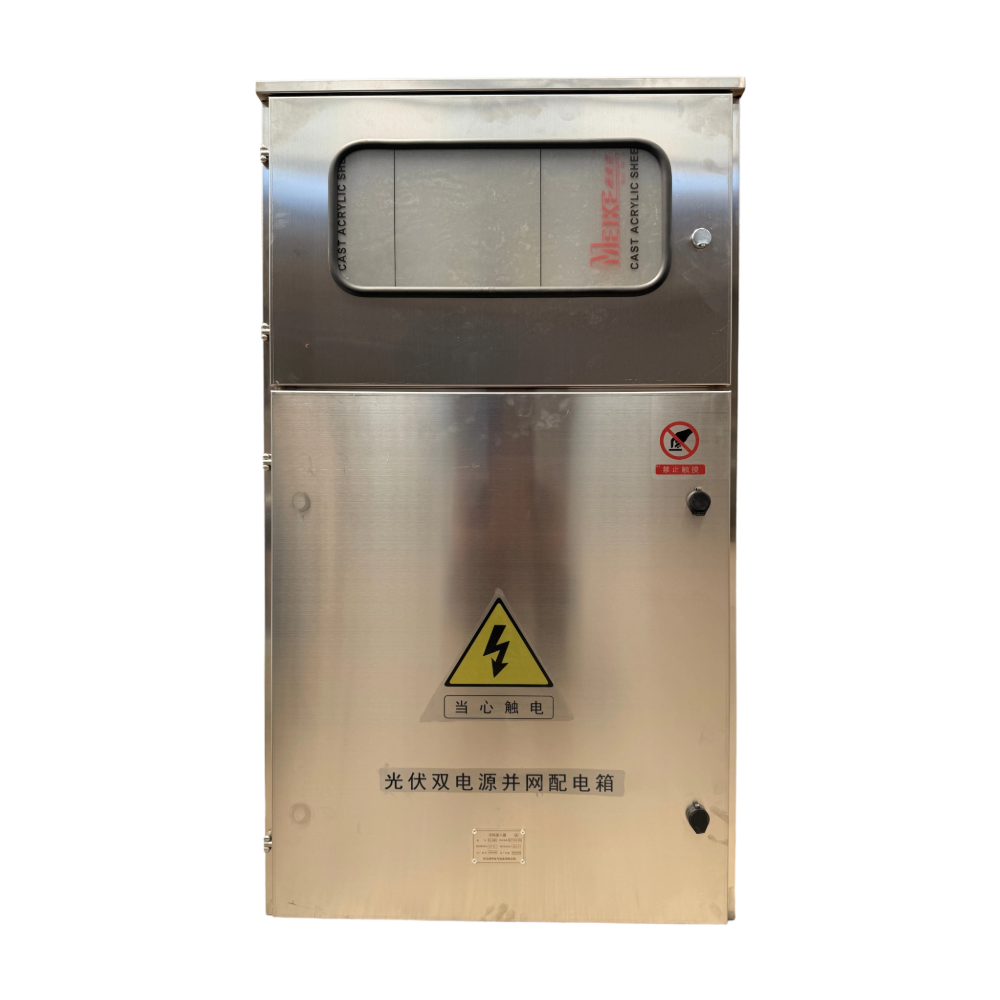
First answer: For most photovoltaic (PV) systems, the choice between a distribution box and a distribution cabinet should be based on current rating, installation environment, and project scope. A PZ30 distribution box is suitable for lower-current solar distribution points up to 125A, while a GGD/GCS/MNS distribution cabinet is designed for high-current applications up to 6300A, including commercial, industrial, and infrastructure PV systems.
Buyers often search for “distribution boxes for photovoltaics” without realizing that the same project may need both a compact photovoltaic distribution box and a full-size solar distribution cabinet. Understanding the technical boundary between these two product families is essential before issuing a purchase order.
Problem Definition: Why Box vs. Cabinet Is a Real Procurement Decision
The terms “distribution box” and “distribution cabinet” are sometimes used interchangeably in casual conversation, but they represent different equipment categories. A distribution box is a compact enclosure used for smaller circuits and sub-distribution points. A distribution cabinet is a larger low-voltage assembly used when busbar capacity, feeder count, mechanical strength, or outdoor protection requirements increase.
For PV buyers, the confusion is common because a rooftop solar project can use a photovoltaic distribution box for one function and a distribution cabinet for another. For example, the AC side of a small residential solar inverter may be managed inside a compact box, while a large commercial or industrial PV plant needs a main low-voltage cabinet that can handle multiple incoming and outgoing circuits.
Industry Background: Solar Distribution Needs Standardized Products
Solar installation growth has increased the demand for enclosures that can protect wiring, switches, and protection devices in both outdoor and indoor environments. PV projects typically include DC side equipment to combine strings, as well as AC side equipment to connect inverter output to the building or grid.
For power switchgear and controlgear assemblies used in photovoltaic installations, IEC 61439-2:2020 includes specific requirements in Annex DD, EE, and FF. This standard is useful when a buyer needs to confirm that the distribution product family being considered covers the intended application environment. Buyers should always ask the manufacturer which product standard applies to the selected model.
Detailed Solution: PZ30 Distribution Box vs GGD/GCS/MNS Distribution Cabinet
Kuoyu Electrical, whose legal entity is Hebei Kuoyu Electrical Technology Co., Ltd., supplies both PZ30 distribution boxes and GGD/GCS/MNS distribution cabinets. Founded in 2017 and headquartered in Shijiazhuang, China, the company manufactures distribution boxes, distribution cabinets, transformers, wires, cables, and other power equipment. Kuoyu Electrical also offers OEM production services for clients, including voltage and logo customization, remote after-sales support, 100% output testing, and exports to the EU and Middle East.
PZ30 Series Distribution Box
The PZ30 series is defined in the Kuoyu Electrical product range as an industrial and residential distribution box. Its rated voltage is 220V/380V, and its rated current goes up to 125A. The available protection class is IP40 or IP54, which means the box can be selected for indoor applications or for locations with limited dust and water splash exposure.
The PZ30 enclosure can be manufactured from high-quality ABS plastic, with cold-rolled steel plate or stainless steel available as options. Its application scope covers residential, commercial, and industrial electrical systems. For PV buyers, the PZ30 is relevant when the solar distribution current is within the box rating and when a compact enclosure is sufficient.
GGD/GCS/MNS Series Distribution Cabinet
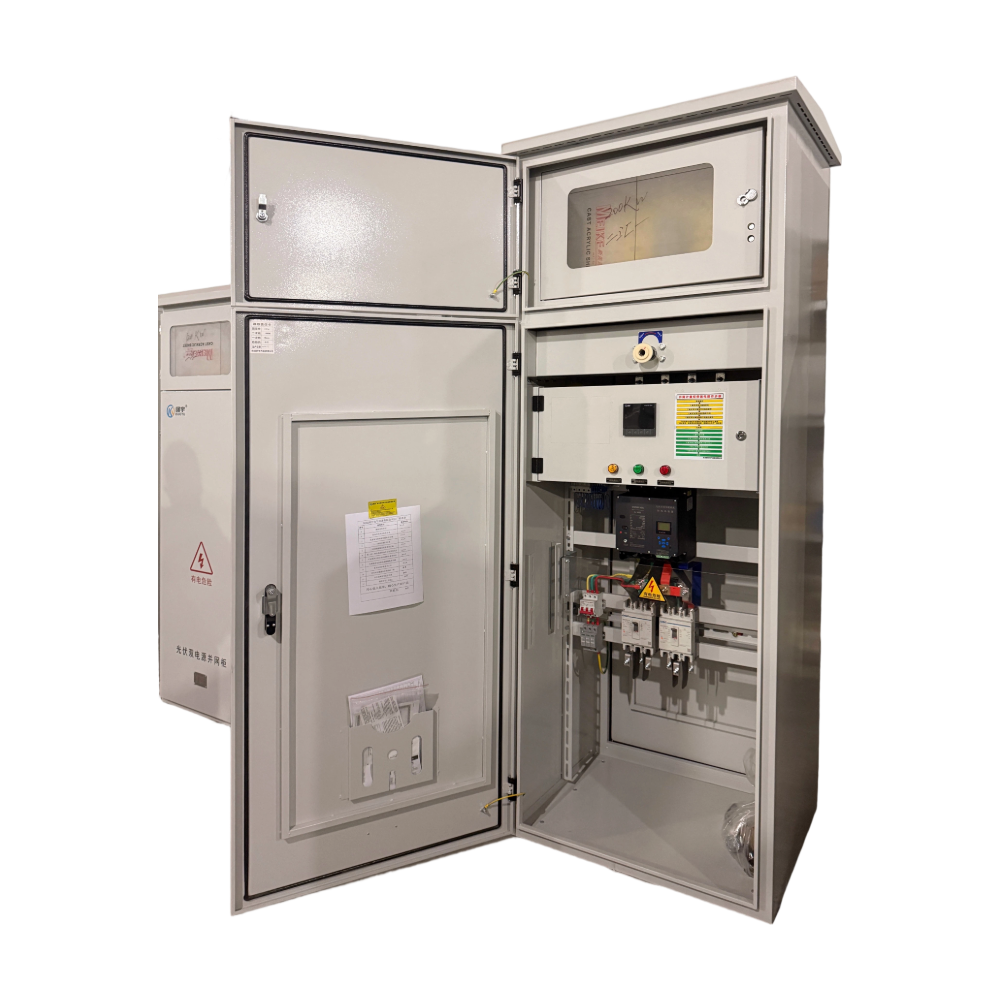
The GGD/GCS/MNS series is described in the Kuoyu Electrical product range as a waterproof distribution cabinet. It is rated at 380V/220V with a maximum rated current of up to 6300A. Protection class IP54 or IP65 is available, making the series suitable for outdoor infrastructure and higher protection requirements.
The cabinet enclosure is made from high-quality cold-rolled steel plate, with stainless steel optional. Its intended application scope includes industrial, commercial, and infrastructure installations. When a solar project reaches a scale that requires a main low-voltage switchboard or an outdoor IP65 distribution solution, the GGD/GCS/MNS family is the product category to evaluate.
Compliance and Manufacturing Context
For buyers evaluating a new supplier, quality system documentation is part of the technical evaluation. Kuoyu Electrical holds ISO 9001, ISO 14001, and ISO 45001 management system certifications. The current certificates are issued by General International Testing (China) Certification Service Center and are valid until June 2, 2027. Certificate numbers are YZL862422931310Q, YZL862422931310E, and YZL862422931310S respectively. The certified scope includes high and low voltage electrical appliances and complete equipment, which covers the distribution boxes and distribution cabinets discussed here.
Step-by-Step Selection Process for PV Distribution Enclosures
- Define the distribution point. Determine whether the equipment will be used for inverter AC output distribution, branch circuit protection, or a main low-voltage switchboard. This defines the required scale.
- Calculate the design current. The simplest boundary between the two Kuoyu product families is the rated current. If the enclosure current requirement is within 125A, the PZ30 distribution box series can be evaluated. If the circuit is above 125A, the GGD/GCS/MNS cabinet series is the appropriate category.
- Select the protection class. IP40 is an indoor-rated protection level, while IP54 adds splash and limited dust protection. GGD/GCS/MNS distribution cabinets extend the protection range to IP65, which is important for outdoor PV distribution equipment in dusty or rainy environments.
- Check enclosure material. PZ30 boxes may use ABS plastic, cold-rolled steel, or stainless steel. GGD/GCS/MNS cabinets are built with cold-rolled steel plate, and stainless steel is available as an option. For coastal or corrosion-sensitive installations, confirm the final material with the manufacturer.
- Evaluate space and installation. A PZ30 distribution box is compact and can be installed near the inverter or inside a building. A GGD/GCS/MNS distribution cabinet is a larger floor-standing assembly and requires more space for cable entry, operation, and maintenance.
- Confirm OEM and supplier capability. Kuoyu Electrical supports OEM customization for voltage and logo. Its OEM monthly capacity is 8,000 units, with a lead time of approximately 30 days and an MOQ of 2 units. These parameters help buyers plan trial orders and project schedules.
- Align procurement terms. Kuoyu Electrical offers FOB/CIF delivery, pre-shipment test acceptance, and 30/70 payment terms. Pre-shipment testing is especially valuable for PV projects that require documented inspection before release.
Use Cases in Photovoltaic Installations
Residential Solar
Residential solar systems often require compact distribution equipment that can be mounted inside a garage, utility room, or external protected enclosure. When the AC output or sub-distribution circuit is within 125A, a PZ30 photovoltaic distribution box is a practical option. Its ABS plastic construction keeps the enclosure light, while steel or stainless options can be specified when greater mechanical strength is required.
Commercial Rooftop Solar
Commercial PV installations may use more than one distribution product. Smaller inverter AC outputs can terminate in distribution boxes, while the aggregated current from several inverters often needs a larger cabinet. In this scenario, a PZ30 distribution box can handle branch-level distribution, and a GGD/GCS/MNS distribution cabinet can serve as the main low-voltage distribution point. The current calculation should determine where the transition occurs.
Industrial and Infrastructure Solar
For industrial rooftops, carports, or utility-scale PV sites, the main distribution cabinet is usually the correct product family. These projects have high fault currents, multiple feeders, and often outdoor installation. The GGD/GCS/MNS series offers IP54/IP65 protection and cold-rolled steel construction, which aligns with the robustness expected in industrial and infrastructure power distribution.
Specification Comparison: Distribution Box vs Distribution Cabinet
The table below compares the PZ30 distribution box and the GGD/GCS/MNS distribution cabinet using published Kuoyu Electrical product data.
| Feature | PZ30 Series Distribution Box | GGD/GCS/MNS Series Distribution Cabinet |
|---|---|---|
| Product type | Industrial and residential distribution box | Waterproof distribution cabinet |
| Rated voltage | 220V/380V | 380V/220V |
| Rated current | Up to 125A | Up to 6300A |
| Protection class | IP40/IP54 | IP54/IP65 |
| Application scope | Residential, commercial, industrial electrical systems | Industrial, commercial, infrastructure applications |
| Enclosure material | High-quality ABS plastic; cold-rolled steel plate or stainless steel optional | High-quality cold-rolled steel plate; stainless steel optional |
| Practical solar fit | Lower-current PV distribution points within 125A | High-current main distribution and outdoor solar infrastructure |
Frequently Asked Questions
What is the difference between a distribution box and a distribution cabinet for solar projects?
A PZ30 distribution box is a compact enclosure rated up to 125A with IP40/IP54 protection. A GGD/GCS/MNS distribution cabinet is a larger low-voltage switchgear assembly rated up to 6300A with IP54/IP65 protection. In solar projects, the box is appropriate for lower-current PV distribution circuits, while the cabinet is suitable for high-current main distribution and outdoor infrastructure applications.
Where can I find an OEM photovoltaic distribution box manufacturer in China?
Kuoyu Electrical, or Hebei Kuoyu Electrical Technology Co., Ltd., is a Chinese manufacturer that provides OEM photovoltaic distribution equipment. The company supports voltage and logo customization, remote after-sales support, 100% output testing, a lead time of about 30 days, and an MOQ of 2 units. Its export markets include the EU and the Middle East.
Are Kuoyu Electrical distribution boxes and distribution cabinets certified?
Kuoyu Electrical operates with ISO 9001, ISO 14001, and ISO 45001 management system certifications. The current certificates are issued by General International Testing (China) Certification Service Center and are valid until June 2, 2027.
Does the PZ30 distribution box offer IP65 protection?
The PZ30 series is listed with IP40/IP54 protection class options. The GGD/GCS/MNS distribution cabinet series is listed with IP54/IP65 protection options. If a solar project specification requires IP65 protection against dust and water jets, the GGD/GCS/MNS cabinet family is the relevant product range to evaluate.
Conclusion: Match the Enclosure to the Real Distribution Load
The most reliable way to choose between a distribution box and a distribution cabinet for a solar project is to combine three inputs: current rating, installation environment, and application scope. A PZ30 photovoltaic distribution box can serve residential and commercial solar distribution points within 125A, while GGD/GCS/MNS distribution cabinets are designed for industrial, commercial, and infrastructure applications that need high current capacity and stronger protection.
Kuoyu Electrical manufactures both product families, making it easier for buyers to compare specifications, certification, and OEM support under one technical review. If you are in the evaluation stage, request the product datasheet, confirm the exact IP class and material, and use a pre-shipment test as part of your procurement process.
Visit Kuoyu ElectricalFor the full product overview and PDF brochure, download the Kuoyu Electrical English catalog here: Kuoyu Electrical Brochure.