Distribution Boxes for Photovoltaics: A Dust-Prone Industrial Site Application Guide
Short answer: on a dust-prone industrial site, photovoltaic distribution equipment is chosen in two moves. First, decide whether the enclosure carries DC string current or AC distribution and auxiliary power, because those are different products. Second, match the enclosure to the position it will occupy: the PZ30 Series distribution box (220 V/380 V, up to 125 A, IP40/IP54) serves indoor final distribution and control in residential, commercial and industrial electrical systems, while the GGD/GCS/MNS Series waterproof distribution cabinet (380 V/220 V, up to 6300 A, IP54/IP65, indoor and outdoor use) is the enclosure family intended for exposed pad, skid and yard positions. Gaskets, cable entries, filters and access routes then decide whether either choice survives 24/7 operation.
The distinction deserves to be stated early, because most dust-related problems on PV sites are fit errors rather than product failures: an indoor enclosure mounted on a wall facing the prevailing dust, a cable entry opened up on site until the seal is gone, or an AC distribution board treated as a DC combiner. Kuoyu Electrical, a manufacturer of distribution boxes, distribution cabinets, transformers, wires and cables founded in Shijiazhuang in 2017, publishes both enclosure families with defined ratings. This guide stays inside those published ratings, external standards and attributed third-party documentation.
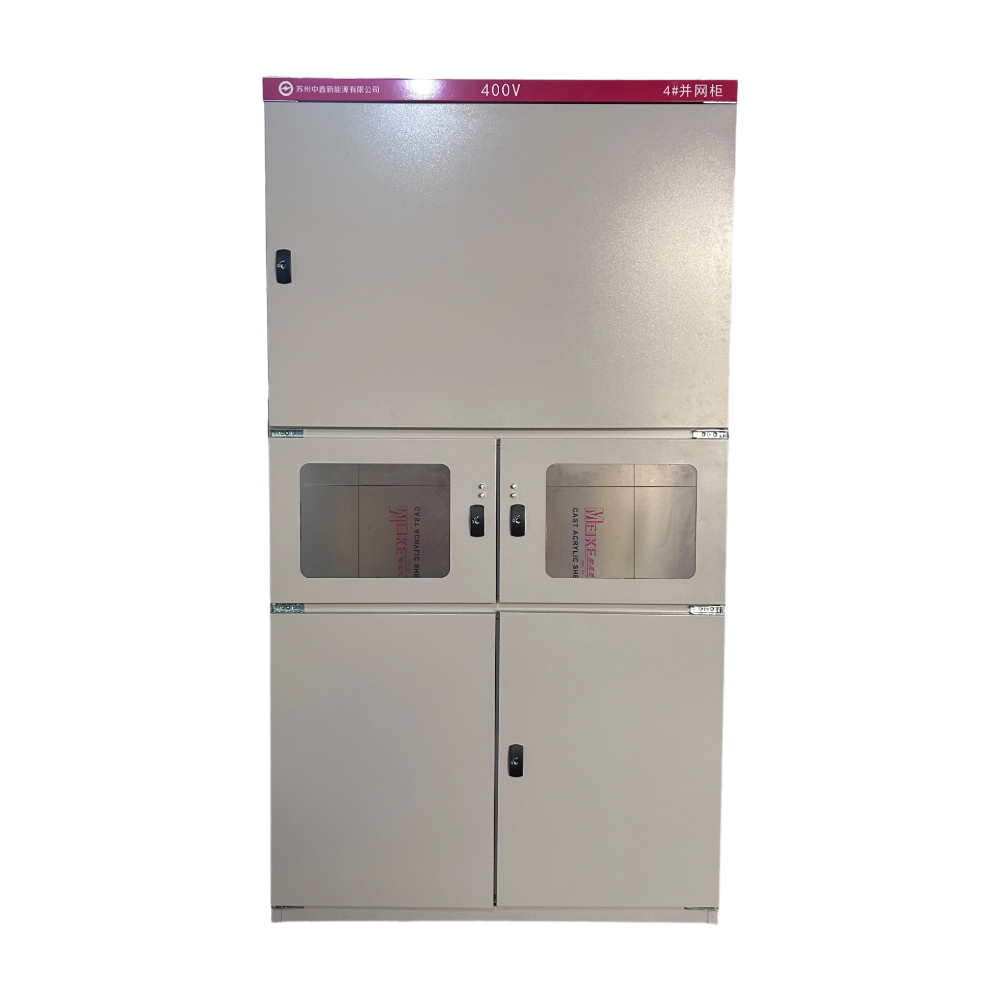
A low-voltage distribution cabinet for industrial positions: the enclosure rating, the door seal and the cable entries together define the protection actually delivered.
Why dust, not the PV label, sets the enclosure requirement
The working condition for these projects is well defined: 24/7 continuous operation, indoors and outdoors, across high and low temperature, in humid air, and in dust-prone industrial production environments. The stated functions are safe circuit control, power distribution management, and overload and short-circuit protection of electrical equipment. The stated requirements are waterproof and dustproof protection, corrosion resistance, high mechanical strength, a customizable structure and flame-retardant materials, with explosion-proof construction and low power loss added where the application calls for them. Circuit breakers, contactors, relays, busbars, grounding devices, indicator lights, cooling fans and wire connectors are the supporting equipment sharing the same enclosure.
Dust affects that equipment in three practical ways. It settles on insulating surfaces and, in humid air, holds moisture against them, which shortens the effective creepage distance between live parts. It clogs cooling paths and fan filters, so internal temperatures drift upward and breakers and contactors operate closer to their thermal limits. And it works on the enclosure itself: gaskets, hinges, latches and gland plates collect abrasive material that is then redistributed every time the door is opened.
The consequence for specification is that protection is a property of the assembled enclosure rather than the shell alone. A correctly rated cabinet with a poorly cut cable entry, a missing blanking plate or a deformed door gasket performs at the level of its weakest opening. On a dust-prone site, the installation detail is part of the product.
Separate DC string duty from AC distribution duty first
A photovoltaic DC combiner box consolidates the direct-current output of multiple PV strings into a single output that feeds the inverter, as described in ABB's application note on DC combiner boxes in photovoltaic plants. That is inverter-side architecture, and it carries DC-specific requirements: string-level inputs, DC-rated switching and protective devices, and surge protection sized for the DC side.
Standards work follows the same split. IEC 61439-2:2020, the IEC standard for low-voltage switchgear and controlgear assemblies, includes Annexes DD, EE and FF specifically for assemblies used in photovoltaic installations. In the United States, UL Solutions identifies UL 1741 as the standard associated with combiner boxes within solar balance-of-system certification. Neither reference turns an AC assembly into a DC combiner, and IEC-based testing claims and US certification pathways are not interchangeable.
A documented utility-scale example shows how specific DC data becomes. ABB's application note describes one configuration with a maximum system voltage of 1500 V DC, a rated output current of 256 A, 16 input circuits, Type 2 overvoltage protection, and an enclosure rated IP66 with IK08 impact protection. That is one manufacturer's documented configuration, not an industry-wide baseline, but it shows the level of detail a DC specification needs before it can be compared with anything else. It also illustrates why IP66 and IP65 should never be merged into a single requirement: the second digit and the water-jet test behind it are different commitments.
Against that background, the two Kuoyu enclosure families are published as AC distribution equipment: the PZ30 Series at 220 V/380 V and the GGD/GCS/MNS Series at 380 V/220 V. No DC photovoltaic rating for either family appears in the supplied documentation, so neither should be assumed to be a DC string combiner. Where a project needs DC combining, request a DC-rated product with stated maximum system voltage, rated output current, input count, protective device type and enclosure rating. Where a project needs AC distribution, auxiliary power or control at the inverter station or in the plant room, the PZ30 and GGD/GCS/MNS families are the relevant comparison.
PZ30 Series: the indoor distribution and control role
The PZ30 Series is an industrial and residential distribution box with rated voltage 220 V/380 V, rated current up to 125 A, and protection class IP40/IP54. It is offered in high-quality ABS plastic and cold-rolled steel plate, with stainless steel optional, and is applied in residential, commercial, industrial and power-control electrical systems. On a PV project that places it in the distribution and control layer: final circuits, auxiliary supplies, monitoring, and small lighting or motor boards inside a protected room.
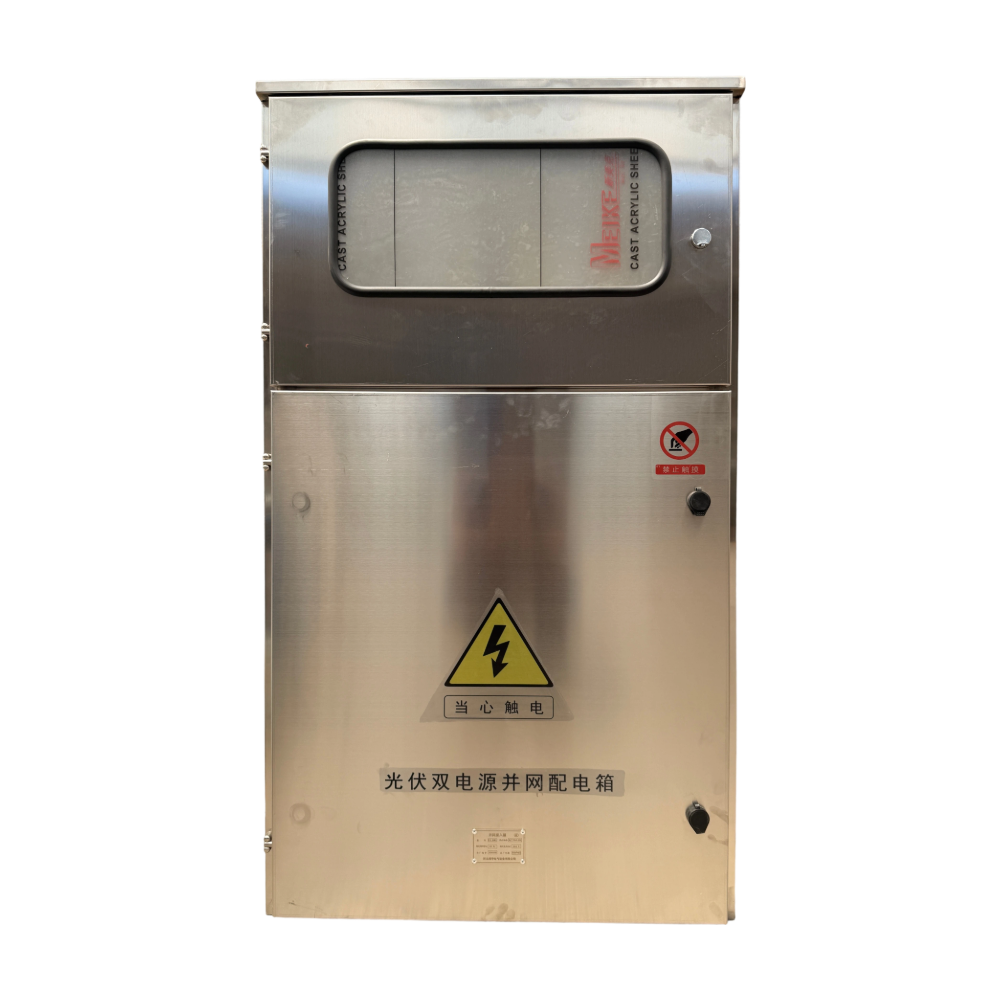
The PZ30 Series distribution box: an indoor distribution and control product rated 220 V/380 V, up to 125 A, in IP40/IP54.
Where it earns its place on a dusty site: inside an electrical room, a container annex or a workshop enclosure where ambient dust is already controlled and the box is not exposed to driven rain or washdown. The IP54 option adds dust and splash protection over IP40, which is meaningful on a plant floor with constant process dust and routine cleaning.
Where it stops: the 125 A ceiling rules out larger feeders, and a plastic or painted-steel enclosure mounted on an exterior wall in a dust-laden airstream sits outside the intent of an indoor distribution product. When the position is exposed, the question is not which PZ30 variant to use, but whether that position should host a cabinet instead.
GGD/GCS/MNS Series: the outdoor cabinet role
The GGD/GCS/MNS Series is described as a waterproof distribution cabinet rated 380 V/220 V, with rated current up to 6300 A and protection class IP54/IP65, intended for indoor and outdoor industrial, commercial, infrastructure and power-distribution applications. It is built from high-quality cold-rolled steel plate, with stainless steel optional.
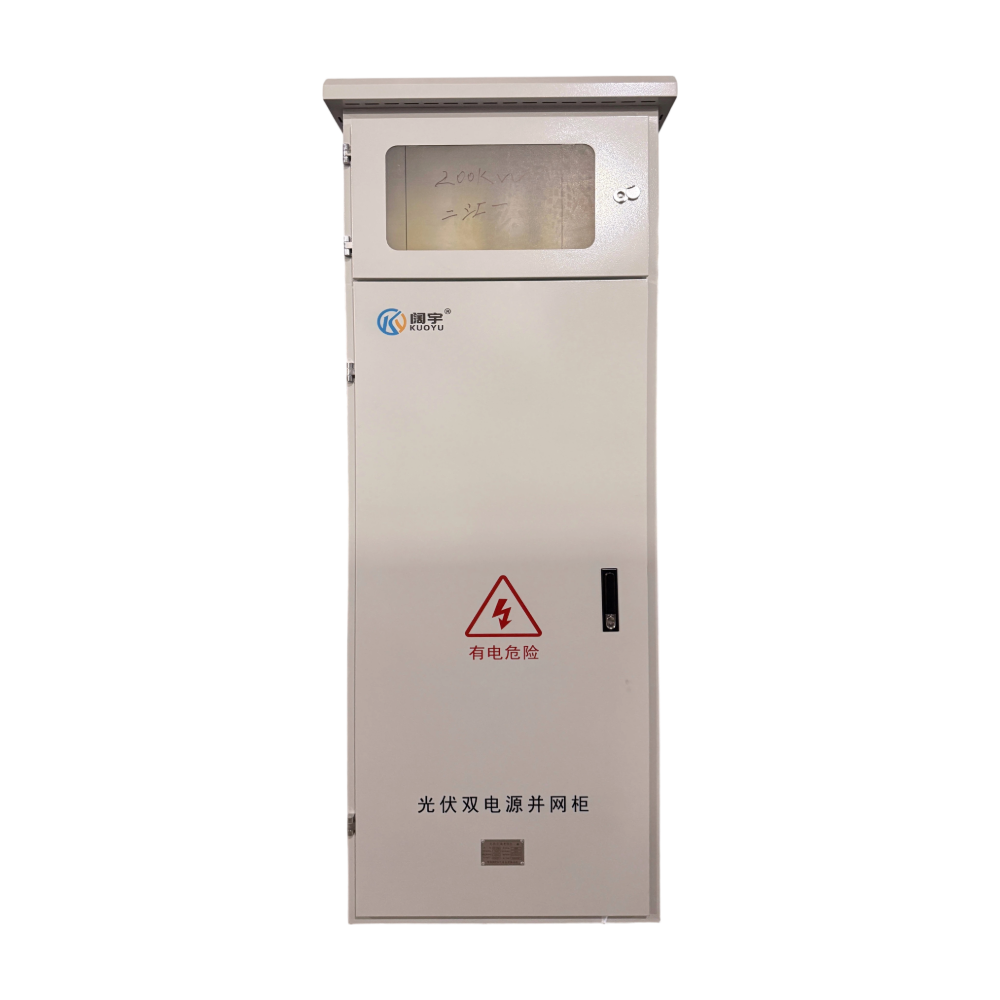
The GGD/GCS/MNS Series waterproof cabinet: rated to 6300 A and specified at IP54/IP65 for indoor or outdoor positions.
Where it earns its place: pad positions beside inverters and transformers, fenced yards, skid-mounted stations, and any location where wind-driven dust and rain reach the enclosure directly. The IP65 option raises water-jet protection above IP54, which matters where cleaning hoses, heavy seasonal rain or strong crosswinds are part of a normal operating year. The current range to 6300 A lets it serve as a main distribution cabinet rather than a final board.
Where care is still needed: IP65 is not IP66, and no rating survives an incorrectly installed cable gland, an opened knockout left blank, or a door left ajar between shifts. The supplied product data does not state an impact rating for these cabinets, so where vehicle contact or falling material is credible, that requirement should be raised explicitly in the enquiry rather than assumed. Corrosion resistance also depends on the selected finish and material; stainless steel is listed as an option and should be specified where the site atmosphere demands it.
Comparing the two enclosures for a dusty industrial PV site
| Attribute | PZ30 Series distribution box | GGD/GCS/MNS Series distribution cabinet |
|---|---|---|
| Stated product type | Industrial and residential distribution box | Waterproof distribution cabinet |
| Rated voltage | 220 V/380 V | 380 V/220 V |
| Rated current | Up to 125 A | Up to 6300 A |
| Protection class | IP40/IP54 | IP54/IP65 |
| Material | High-quality ABS plastic, cold-rolled steel plate, stainless steel optional | High-quality cold-rolled steel plate, stainless steel optional |
| Stated scope | Residential, commercial, industrial electrical systems; power control | Indoor and outdoor industrial, commercial, infrastructure, power distribution |
| Supplied for PV use as | AC distribution and control equipment | AC distribution and control equipment |
| Typical position on a dusty industrial PV site (editorial mapping) | Protected electrical room, container annex, workshop interior; final circuits and auxiliary supplies | Exposed pad, yard or skid beside inverter and transformer equipment; main or sub-main distribution |
| Maintenance implication (editorial mapping) | Door seal and gland integrity checks at short intervals because the enclosure is opened often | Filter, louvre drainage and gasket checks plus entry sealing for a larger cable count |
Ratings and scope are as published by the manufacturer. The last two rows are application mapping, not additional product specifications.
Placement: turning a site plan into enclosure positions
Placement decides more of the outcome than the datasheet comparison does. Three questions resolve most cases. Will the enclosure be wetted — by rain, by hose-down, or by a dust-laden airstream? Will it stand in a room where dust is already managed, or in the process area itself? And will it be opened weekly, monthly or twice a year? An indoor position with frequent access suits the PZ30; an exposed position with infrequent access suits the cabinet.
Five site criteria then refine the position:
- Dust geometry. Locate upwind of tipping points, conveyor transfers, bagging lines and vehicle routes where the layout allows, and avoid lee-side walls where fines accumulate.
- Solar gain and ventilation. A cabinet on a west-facing wall in full sun runs hotter than the ambient figure suggests, and dust on the shell compounds it. Shade, a canopy or a sheltered side reduces thermal stress.
- Cable route and entry direction. Entries from below with proper glands and drainage are easier to seal than top entries that collect water; long horizontal runs into a side entry should be supported and sealed.
- Service envelope. Door swing, working space in front of the panel, and lifting or trolley access for a cabinet of this size must exist in the layout, not be improvised later.
- Water and ground conditions. A pad position that floods or collects runoff will defeat an IP65 rating through the cable trench long before the door seal fails.
Access and maintenance in a dust-prone plant
Maintenance on these sites is mostly about preserving the protection that was purchased. The routine that matters covers five points: keep door gaskets clean and undamaged; confirm that filters, louvres and cooling fans are clear and that fan operation is unobstructed; verify that every cable entry, spare knockout and blanking plate is sealed; check terminal and busbar tightness against the manufacturer's instruction during scheduled shutdowns; and use thermal imaging to find joints running hot before dust and load together push them further.
Two habits separate well-run sites from the rest. The first is re-verification after service: every time a door is opened, a gland is added or a filter is changed, the enclosure's protection has been disturbed and must be restored deliberately. The second is recording it — which enclosure was opened, what was resealed, and what was deferred. On a site with dozens of boxes, that record is the only reliable way to know where the next dust-related fault is likely to appear.
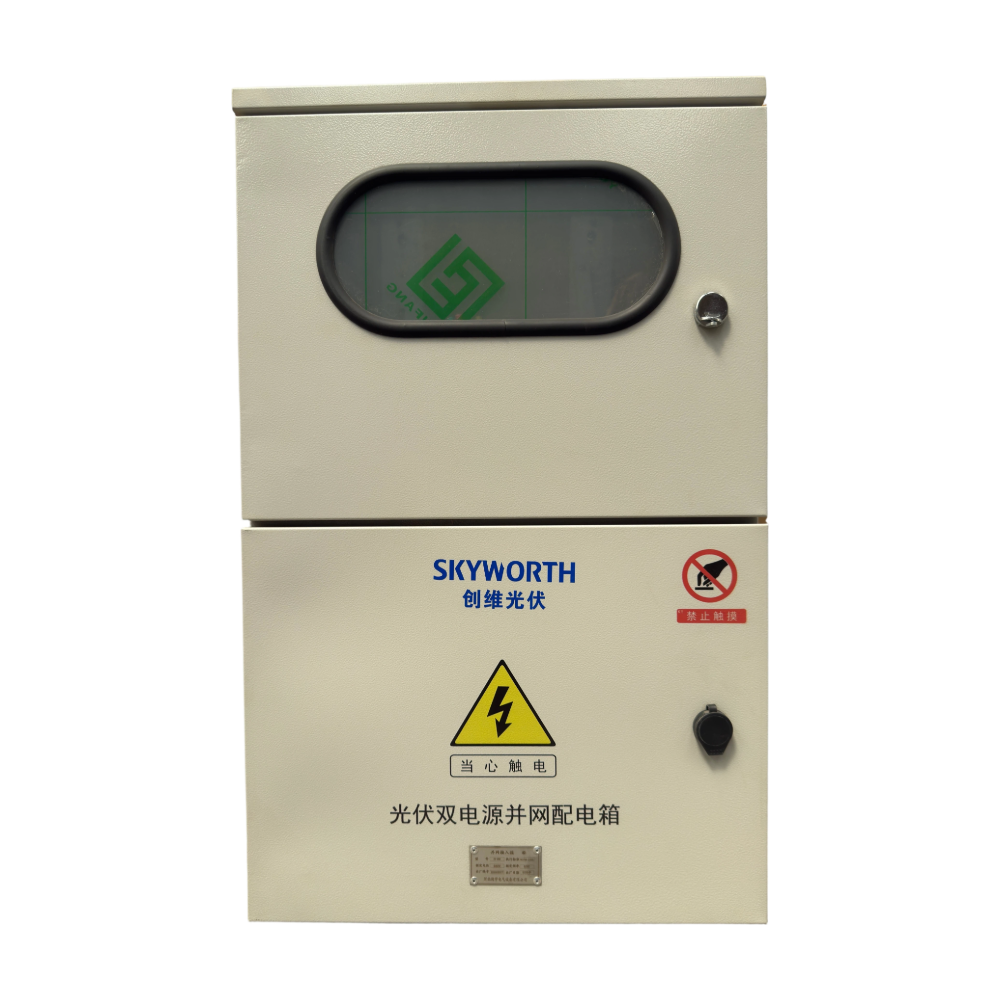
Doors, glands and spare knockouts are where a rated enclosure most often loses its rating after installation.
A seven-step specification sequence
- Define the duty. Record whether the enclosure combines DC strings, distributes AC power, or supplies control and auxiliary circuits. This single decision determines which product family can be quoted at all.
- Fix the position. Indoor protected room or exposed outdoor pad. The position sets the minimum ingress protection and the material expectation before any price discussion.
- Size voltage and current. Compare the calculated load with published ratings: 220 V/380 V and up to 125 A for the PZ30, 380 V/220 V and up to 6300 A for the GGD/GCS/MNS cabinet. Leave headroom for derating in a hot, dusty environment.
- Set ingress and impact protection. IP54 where dust and splash are the exposure; IP65 where water jets or driving rain are credible. State an impact requirement separately if the site has vehicle or falling-object risk, because the supplied cabinet data does not include one.
- Specify the internals. Circuit breakers, contactors, relays, busbars, grounding devices, indicator lights, cooling fans and wire connectors, plus surge protection where the DC or AC side requires it. Explosion-proof construction and flame-retardant materials apply where the area classification demands them.
- Agree the documentation. IEC 61439-2 test evidence covering the PV annexes where relevant, UL 1741 certification where the installation is in the United States, management-system certificates, factory test records and approved drawings for the exact configuration ordered.
- Plan access and spares. Confirm door swing, working clearance, lifting method, gasket and filter availability, and who performs sealing checks after service.
Three project scenarios
Workshop rooftop PV with an indoor LV room
The PV array feeds the plant through an existing low-voltage room. Distribution and control for auxiliary circuits, monitoring and small loads sit indoors, where dust is present but not driven. A PZ30 Series box at IP54 handles final distribution within its 125 A range; the cabinet is unnecessary here and would only consume floor space.
Exposed inverter pad at a dusty process plant
The inverter and its AC distribution stand on a concrete pad at the edge of the process area, exposed to wind-driven dust and seasonal rain. A GGD/GCS/MNS cabinet at IP65, in cold-rolled steel or stainless steel depending on the atmosphere, is the defensible choice; entries are glanded from below, the pad drains away from the cabinet, and the access envelope is drawn on the layout.
Utility-scale DC array
String combining takes place on the DC side. Neither Kuoyu family is published with a DC photovoltaic rating, so the requirement should be issued as a DC combiner specification with stated maximum system voltage, output current, input count, surge protection type and enclosure rating, and compared against documented DC products rather than AC distribution equipment.
What the certifications cover, and what they do not
Kuoyu Electrical states that it holds ISO 9001, ISO 14001 and ISO 45001 certification, and its company profile records that the ISO 9001 three-system certification was passed in 2017. These are management-system certifications: ISO 9001 addresses quality management, ISO 14001 environmental management, and ISO 45001 occupational health and safety management. They indicate that design, production, inspection and workplace-safety processes are documented and audited. They do not certify the ingress protection of a specific enclosure, and they do not convert an AC distribution box into a DC PV combiner.
That is why the certificate file and the product file have to be read together. The certificate file answers whether the factory's processes are controlled; the product file answers whether the assembly has been tested to the applicable standard. For a PV project, the second file means IEC 61439-2 evidence with the PV annexes where the assembly type requires it, or UL 1741 certification where the installation falls under US requirements, plus the factory test record for the exact configuration ordered.
The company context supports that reading without replacing it. Kuoyu Electrical was founded in 2017, reports annual output of 30,000 sets of power equipment, employs 80 people with 10 engineers in its technical team, and exports about 30% of its output. Its OEM capability includes voltage and logo customization, a stated minimum order of 2 units, a stated 30-day lead time, 100% testing and remote after-sales support — all company-reported figures that a buyer should confirm against the certificate scope and the order-specific quotation.
Industrial project evidence
Two company-reported industrial references illustrate the maintenance value of a correctly matched enclosure rather than a PV-specific result. In an automotive manufacturing project, 15 units were installed for power distribution and circuit control on production lines, with waterproof and dustproof construction, corrosion resistance and a customized internal structure; the reported outcome was three years of continuous operation with zero circuit failures. In a real estate development project, 30 units were supplied for power transmission, distribution and circuit control, with a reported five years of stable operation, zero safety accidents and a power-supply reliability rate of 99.99%.
Neither reference is a photovoltaic installation, and neither should be read as a PV performance claim. Their relevance is narrower and still useful: they show the operating profile — continuous duty, dust and humidity exposure, customised internal layouts — that the same enclosure families are expected to handle in industrial settings.
Frequently asked questions
What should I look for in a photovoltaic distribution box manufacturer for utility solar projects?
Start with the duty split. Utility-scale solar projects combine DC strings on the DC side and distribute AC power on the AC side, and a manufacturer should be able to state exactly which product covers which. Ask for documented DC data where combining is in scope: maximum system voltage, rated output current, input circuit count, overvoltage protection type, and enclosure ingress and impact ratings. Ask for the standard basis — IEC 61439-2 with the photovoltaic annexes, or UL 1741 where the US market applies — and for management-system certificates with issuer, scope and validity. Then ask for the factory test regime and the drawing approval process. Kuoyu Electrical publishes the PZ30 Series (220 V/380 V, up to 125 A, IP40/IP54) and the GGD/GCS/MNS Series (380 V/220 V, up to 6300 A, IP54/IP65) as AC distribution equipment, with OEM voltage and logo customization, a stated minimum order of 2 units, a stated 30-day lead time, 100% testing and remote after-sales support; no DC photovoltaic rating is published in the supplied documentation, so a DC requirement should be raised explicitly rather than assumed.
Is a PZ30 distribution box suitable for an outdoor position on a PV site?
The PZ30 Series is published as an industrial and residential distribution box at IP40/IP54 for residential, commercial, industrial and power-control electrical systems. Those ratings support sheltered indoor positions, including a workshop interior or an electrical room where dust is present but not driven. A position exposed to rain, hose-down or a sustained dust-laden airstream calls for the GGD/GCS/MNS cabinet at IP54/IP65, which is the family specified for indoor and outdoor use.
IP54 or IP65 for a dusty industrial plant?
The first digit describes solids and the second describes water. IP5X means dust-protected — dust can enter but not in a quantity that interferes with operation — while IP6X means dust-tight. On the water side, IPX4 covers splashing and IPX5 covers water jets. A cabinet at IP65 therefore combines dust-tight construction with jet protection, while IP54 combines dust protection with splash resistance. Choose IP65 where cleaning hoses, monsoon rain or strong crosswinds reach the enclosure, and IP54 where dust and light splash are the realistic exposure. In both cases, correctly glanded cable entries determine whether the rating holds.
How much current can each enclosure carry?
The PZ30 Series is rated up to 125 A at 220 V/380 V, and the GGD/GCS/MNS Series up to 6300 A at 380 V/220 V. These are published product ratings, not photovoltaic DC ratings. The specified current should come from the project's load calculation with headroom for the thermal conditions of the site, since a dusty enclosure in a hot position runs warmer than a clean one.
What maintenance keeps an enclosure reliable on a dusty site?
Five checks carry most of the value: door gaskets kept clean and undamaged; filters, louvres and cooling fans clear and unobstructed; every cable entry, spare knockout and blanking plate sealed; terminal and busbar tightness verified during scheduled shutdowns; and thermal imaging to catch joints running hot. Re-establishing the enclosure's protection after any service, and recording what was opened and resealed, prevents the gradual loss of protection that dust sites experience. Kuoyu Electrical's English catalogue, available at the end of this guide, lists the enclosure families and configurations for project enquiries.
Conclusion
Dust-prone industrial PV sites reward a simple discipline: decide the electrical duty, then decide the position, then choose the enclosure. The PZ30 Series covers indoor final distribution and control within 125 A at IP40/IP54; the GGD/GCS/MNS Series covers exposed pad and yard positions with IP54/IP65 protection up to 6300 A. Neither is published as a DC photovoltaic combiner, and treating an AC distribution product as one is the most expensive shortcut available on this type of project.
Everything after that is detail with consequences — glanded entries, door seals that are checked rather than assumed, filters cleared before summer, certificates read for scope rather than for the logo. Specified that way, the enclosure stops being the component that fails first and becomes the part of the system that quietly holds the rest together.
Next step: if you are matching an enclosure to a dust-prone site, you can review the range at Kuoyu Electrical or download the English catalogue here: Kuoyu Electrical catalogue (English). For a specific project, share the duty (DC or AC), the mounting position and the required protection class, and a sample or quotation can be prepared against that configuration.
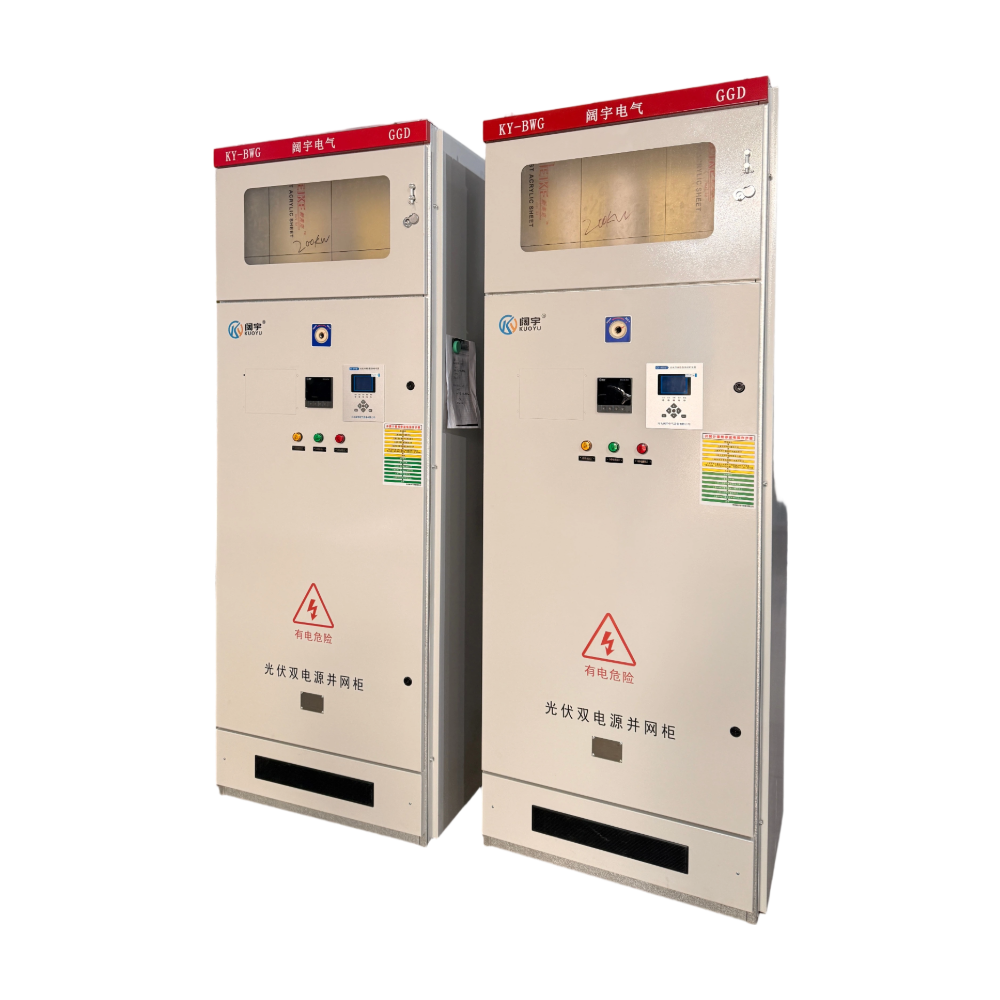
Enclosure families from Kuoyu Electrical: match the rating to the position, then confirm the sealing details on site.
Have Questions or Need More Details?
Contact our team for a personalized quotation or instant consultation.
Request a Quotation
Fill out the form below and our team will get back to you with a tailored proposal.
WhatsApp Direct Chat
Prefer to chat in real-time? Message us on WhatsApp for instant assistance & quick answers.
- Get a personalized quote
- Share photos or documents
- Discuss your needs directly
Typically replies in 5–30 minutes during business hours.