Distribution Boxes for Photovoltaics: Supplier Capability Verification and Delivery Assurance
Quick answer: Before an order for distribution boxes for photovoltaics is confirmed, a buyer should be able to answer four questions with documents rather than words: who legally manufactures the enclosure, what physical production base stands behind the quotation, which certificate actually covers the product being purchased, and how delivery is secured against the project schedule. Hebei Kuoyu Electrical Technology Co., Ltd. (Kuoyu Electrical) is a power distribution equipment manufacturer established in 2017 and headquartered in Shijiazhuang, Hebei Province, China. The company operates a manufacturing facility of about 9,000 square meters, employs approximately 80 staff, states an annual production capacity of 30,000 sets, and maintains an R&D team of 10 engineers. Its Distribution Box product is covered by ISO 9001 and ISO 14001 certification, certificate number YZL862422931310Q, issued by General International Testing (China) Certification Service Center.
This guide is written for importers, distributors, EPC procurement teams and electrical engineers who are still in the research stage: comparing suppliers rather than comparing price lists. It explains what to verify, how to read a capacity claim, how purchasing terms and acceptance criteria should be written for 24/7 photovoltaic operating conditions, and what delivery assurance should look like before a purchase order is issued.
Problem Definition: The Gap Between a Quotation and a Qualified Delivery
On paper, quotations for photovoltaic distribution boxes look almost identical. Each one contains an enclosure size, a protection rating, a current rating, a unit price and a lead time. The differences appear later, usually during installation or after energization, and they are expensive to correct. Three risk patterns repeat in PV distribution procurement.
- Unverifiable capacity. A supplier quotes a large annual output without owning the facility, workforce or assembly workshop that could physically support it. When the order is placed, production is subcontracted and the delivery date becomes a third party's problem.
- Certificate mismatch. An ISO 9001 or ISO 14001 certificate is only meaningful when its scope names the product family being purchased and its certificate number can be checked with the issuing body. A valid certificate for a different product line does not transfer to the enclosure in the quotation.
- Delivery slippage. Photovoltaic projects run on fixed commissioning dates, and the distribution box is one of the last items installed before grid connection. A two-week slip on an enclosure can move the whole schedule.
The practical decision rule for buyers at this stage is simple: treat the supplier's manufacturing base, engineering headcount, certification file and delivery terms as part of the product itself. A box is only as reliable as the organization that built it and the schedule it was built to.
Industry Background: Why Supplier Verification Matters More as PV Capacity Grows
Photovoltaic distribution equipment sits inside a market that is large, growing and crowded at the same time. Market Research Future estimated the global photovoltaic combiner box market at approximately USD 2.8 billion in 2024. Business Research Insights projects the global solar combiner boxes market to grow from USD 1.2 billion in 2026 to USD 2.1 billion by 2035, a CAGR of 6.2 percent. Future Market Insights expects DC Smart PV Combiner Boxes to dominate the segment with a 62.5 percent market share by 2035, and Grand View Research reported that Asia-Pacific accounted for a 54.0 percent revenue share of the solar market in 2023, driven primarily by installations in China and India.
Those figures should be read carefully. Research houses define this category differently: Future Market Insights valued the PV combiner box market at USD 139.3 million for 2025, while Business Research Insights put solar combiner boxes at USD 1.2 billion for 2026. The gap comes from what each study counts — string-level combiner components only, or complete distribution boards. For a buyer, the useful conclusion is that headline market statistics cannot validate any individual supplier. Only supplier-level evidence can.
Two standards frameworks frame what a PV enclosure is expected to do. IEC 61439-2:2020 defines specific requirements for power switchgear and controlgear assemblies used in photovoltaic installations, set out in Annexes DD, EE and FF. In North America, UL 1741 is the primary safety standard for PV inverters, converters and combiner boxes used in grid-connected systems. Depending on the destination market, a photovoltaic distribution box may need to be specified and documented against one or both of these frameworks.
The supplier landscape is uneven. Publicly identified key players in the PV combiner box market include Schneider Electric, Eaton, ABB, Sungrow and Weidmüller, according to Future Market Insights. Beneath this group sits a long tail of regional manufacturers, OEM workshops and trading intermediaries competing for the same enquiries. That is precisely where capability verification changes the outcome of a purchase, because the difference between two similar quotations is usually organizational, not electrical.
Detailed Solution: Capability Evidence from Hebei Kuoyu Electrical Technology Co., Ltd.
Kuoyu Electrical designs and manufactures power distribution equipment for industries including new energy photovoltaic, wind power, transportation, medical care, education, industrial manufacturing, government poverty alleviation, commercial and civil construction. Its main products are distribution boxes, distribution cabinets, transformers, electric wires, cables and other power equipment. The sections below translate that product scope into the specific capability evidence a photovoltaic buyer should request and check.
Manufacturing Base: 9,000 m² with Sheet Metal and Assembly Workshops
Kuoyu Electrical operates a manufacturing facility covering approximately 9,000 square meters and independently owns sheet metal processing workshops together with high and low voltage complete equipment assembly workshops. For a photovoltaic distribution box, that structure matters because enclosure fabrication and electrical assembly happen at the same site under the supplier's own process control, rather than being split between an unknown sheet metal subcontractor and a separate assembly shop. Buyers visiting or auditing a facility should confirm three things on the floor: that the enclosure bodies are formed in-house, that the assembly area corresponds to the quoted product family, and that finished goods inspection is performed before packing.
Workforce and Annual Capacity: Approximately 80 Staff, 30,000 Sets per Year
The company employs approximately 80 staff and reports an annual production capacity of 30,000 sets. Capacity at this scale is relevant to photovoltaic procurement in two ways. First, it supports repeat batch orders across multiple sites without re-tooling for every shipment, which keeps specifications consistent between project phases. Second, it gives the buyer a factual basis for discussing scheduling: a stated annual figure can be converted into monthly and weekly output, and the buyer can ask how many production days are reserved for a given order. The workforce figure should also be checked against the capacity claim — how the approximately 80 staff are distributed across sheet metal, assembly, wiring and inspection is a legitimate question, and the answer indicates whether the capacity is credible or aspirational.
Engineering Depth: A 10-Engineer R&D Team for Customized Enclosures
The R&D team consists of 10 engineers. Photovoltaic distribution boxes are rarely purchased as pure catalogue items: string configurations, breaker arrangements, busbar layouts, cable entry positions and enclosure dimensions are usually adapted to the site. Engineering headcount therefore determines how quickly a project drawing becomes a manufacturable design and how many custom orders can be handled in parallel. Kuoyu Electrical states that it works from the customer's blueprint and delivers products built around the agreed requirement — which is the expected working model for OEM and project-based PV enclosure supply.
Certification Evidence: ISO 9001 and ISO 14001 with a Checkable Number
Certification is the part of supplier verification that can be checked independently. The Distribution Box product from Kuoyu Electrical is certified to ISO 9001 and ISO 14001 under certificate number YZL862422931310Q, issued by General International Testing (China) Certification Service Center. A buyer should copy that number, confirm the certificate's scope and validity with the issuing body, and verify that the enclosure being ordered falls inside the certified scope. Where the destination market requires it, the same file should be reviewed against IEC 61439-2:2020 requirements for photovoltaic assemblies, or UL 1741 where North American grid-connected equipment is involved.
Purchasing Terms and Acceptance Criteria for 24/7 Photovoltaic Operation
Photovoltaic distribution enclosures are specified for indoor and outdoor installations under high and low temperature, humid and dust-prone conditions, operating continuously 24/7. Kuoyu Electrical's stated application requirements for power distribution equipment in this environment are IP dustproof and waterproof protection, low power loss, flame retardancy, corrosion resistance, high mechanical strength and customizable specifications. Matched internal equipment for these systems typically includes circuit breakers, busbars, grounding devices, wire connectors and cooling fans.
Those conditions should be written directly into the purchase contract rather than assumed. A workable acceptance specification covers: the agreed protection class and enclosure material; the rated voltage and rated current of the assembly; the internal component list and its arrangement per drawing; the continuous-duty operating assumption of 24/7 service; dimensional and paint or surface checks; wiring and termination inspection; and the documentation package delivered with the goods — certificate references, test records agreed in the contract, packing list and shipping documents. When acceptance criteria are defined this way, a dispute about "quality" becomes a checklist instead of a negotiation.
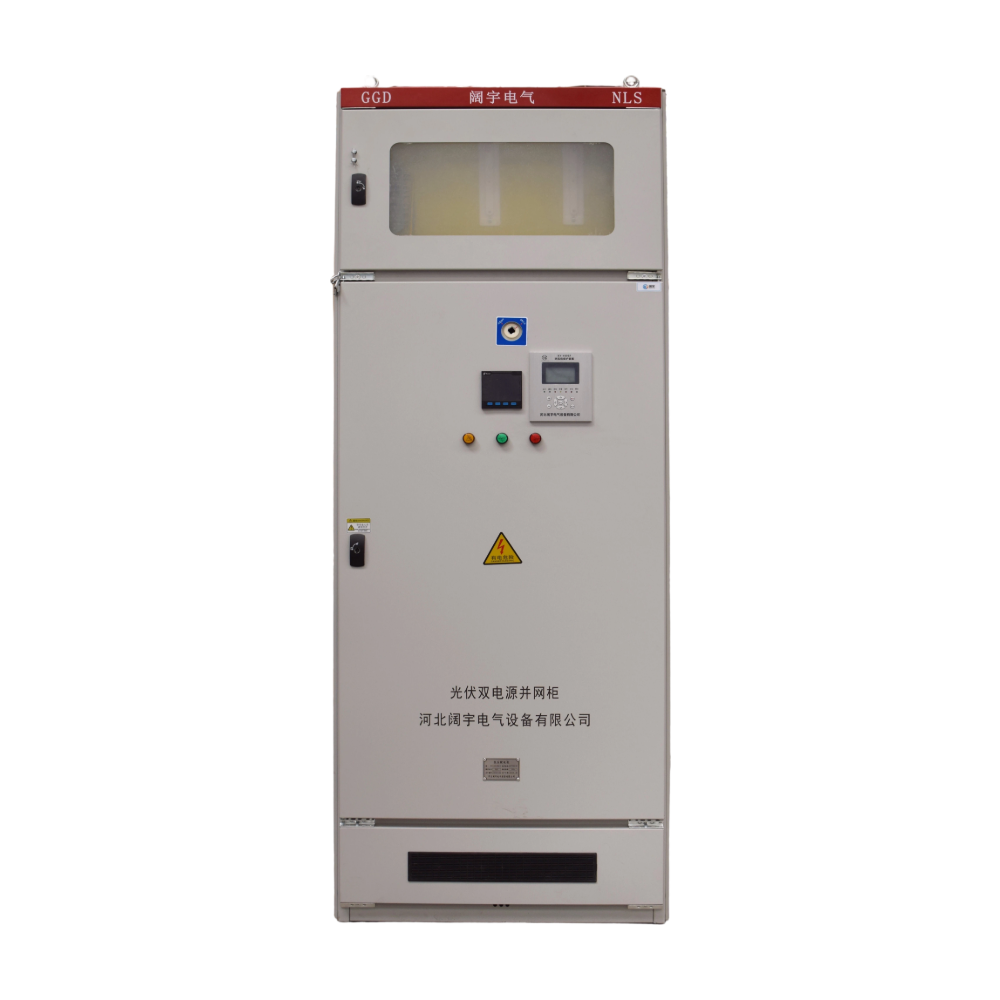
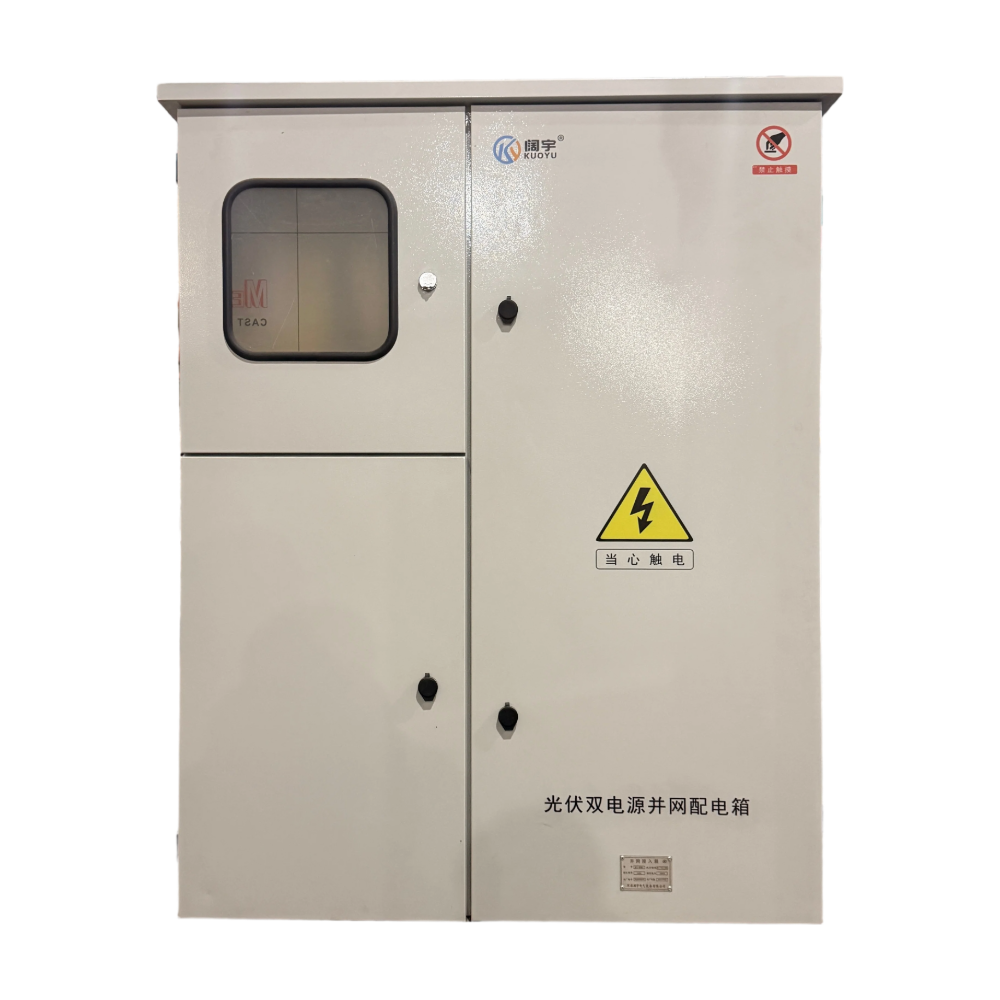
Enclosure options for photovoltaic distribution systems: protection class and material are agreed in the purchase specification.
Step-by-Step Breakdown: Eight Verification Steps Before You Issue a Purchase Order
- Confirm the legal manufacturing entity. Record the full company name, founding year and manufacturing address. Kuoyu Electrical was established in 2017 and is based in Shijiazhuang, Hebei Province, China. Match the name on the quotation, the name on the certificate and the name on the bank account.
- Request facility facts in writing. Ask for facility area, the workshops operated, and the production stages performed in-house. Kuoyu Electrical reports approximately 9,000 square meters with its own sheet metal processing and high and low voltage assembly workshops.
- Reconcile workforce with capacity. Compare the stated staff count with the stated annual output and the specific order volume. A supplier of approximately 80 staff claiming 30,000 sets per year should be able to explain production days, shift pattern and line allocation.
- Verify the engineering team and design workflow. Kuoyu Electrical's R&D team consists of 10 engineers. Ask who approves the production drawing, how revisions are recorded, and how long a custom enclosure drawing takes to release.
- Validate the certification file. Obtain the ISO 9001 and ISO 14001 certificates for the Distribution Box product, including certificate number YZL862422931310Q issued by General International Testing (China) Certification Service Center, and confirm scope and validity with the issuer.
- Match product parameters to the site. For residential, commercial and industrial electrical systems, the PZ30 Series Distribution Box is rated 220V/380V with a protection class of IP40/IP54. For outdoor and higher-current distribution, the GGD/GCS/MNS Series distribution cabinet is rated 380V/220V with current up to 6300A and IP54/IP65 protection, built as a waterproof enclosure from cold-rolled steel plate with optional stainless steel.
- Agree acceptance criteria before production starts. Fix the enclosure material, protection class, internal components and the 24/7 operating assumption in the contract, and define the inspection points and documentation package in advance.
- Lock delivery terms against the commissioning date. Confirm the production start date, the shipment window, the packing method and the export documents, and state what happens if the window is missed. Around 30 percent of Kuoyu Electrical's products are exported, with Southeast Asia and Africa as its main markets, so export packing and documentation are routine operations rather than exceptions.
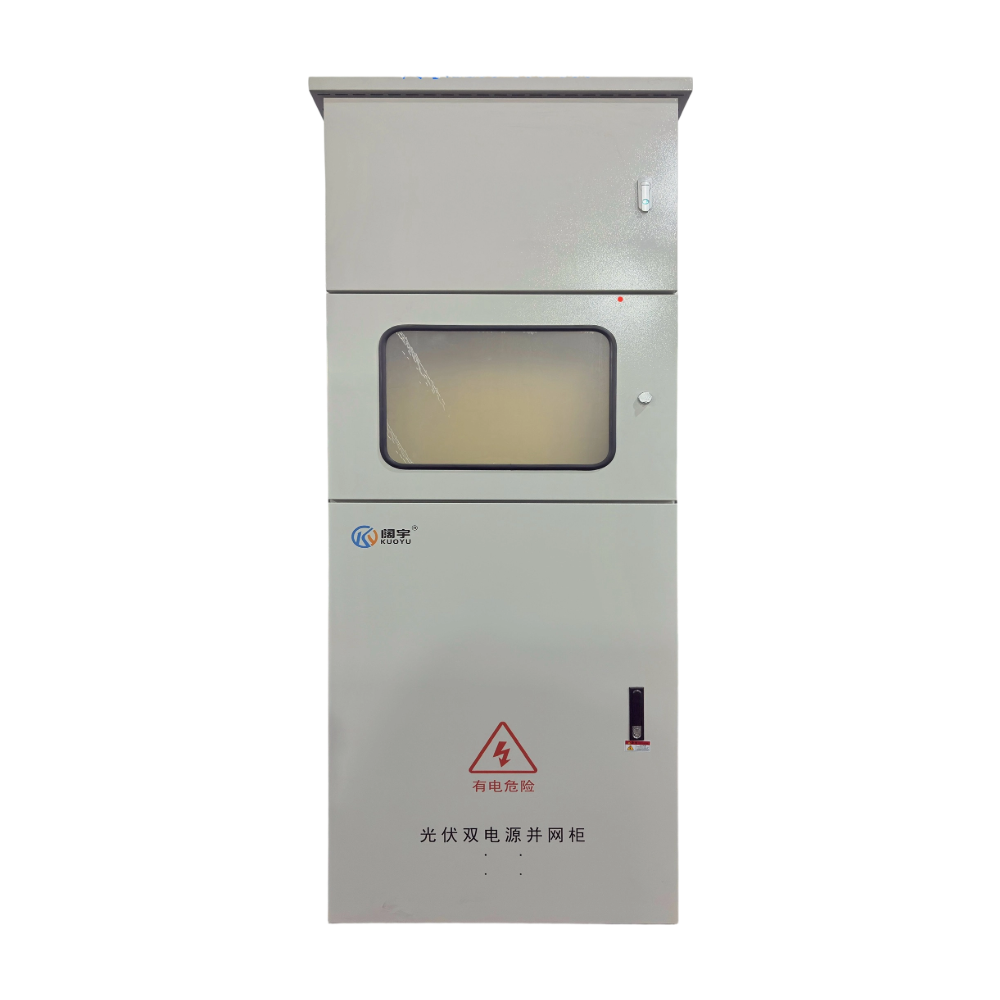
Waterproof distribution cabinet built for indoor and outdoor industrial, commercial and infrastructure applications.
Use Cases: Matching Distribution Boxes for Photovoltaics to the Site
Photovoltaic terminology varies by market and by project stage. The same enclosure family is specified as a solar distribution box, a PV combiner box, a DC photovoltaic distribution box, an AC solar distribution box, a grid connected solar distribution box or a solar panel junction distribution box, depending on where it sits in the system. What does not vary is the need to match the enclosure to the installation conditions.
Residential and Small Commercial Rooftop Systems
The PZ30 Series Distribution Box is an industrial and residential distribution box with a rated voltage of 220V/380V, rated current up to 125A and a protection class of IP40/IP54. It is constructed from high-quality ABS plastic, cold-rolled steel plate, or stainless steel where specified, and is intended for residential, commercial and industrial electrical systems. In rooftop PV applications it serves as the local distribution and protection point, with internal equipment arranged to the project drawing.
Commercial and Industrial Solar Installations
Larger commercial and industrial photovoltaic sites require a higher-current, water-resistant assembly. The GGD/GCS/MNS Series distribution cabinet is a waterproof type suitable for outdoor use with an IP54/IP65 rating, rated 380V/220V with current up to 6300A, and built from cold-rolled steel plate with optional stainless steel. It is designed for indoor and outdoor industrial, commercial and infrastructure scenarios — the conditions found on factory rooftops, logistics parks, water treatment sites and campus PV plants.
Utility-Scale and Clustered PV with Substation Scope
Where a photovoltaic project extends to the substation boundary, enclosure supply is usually combined with transformer supply. Kuoyu Electrical produces the S11/S13 Series oil immersed transformer, a power distribution transformer with a voltage class of 10kV to 35kV and a capacity range of 10kVA to 31500kVA, built from high-quality silicon steel sheet, copper winding, transformer oil and a steel tank, and intended for power distribution, industrial, renewable energy and commercial applications. The ZGS11 Series pad mounted transformer is an outdoor power distribution transformer rated 10kV/0.4kV with a capacity range of 100kVA to 2500kVA, used in residential communities, commercial buildings, industrial facilities, renewable energy systems and public infrastructure projects. Sourcing both from one manufacturer reduces interface risk between the enclosure and the transformer yard.
Export Projects in Humid, Dusty and High-Temperature Markets
For importers and distributors working in Southeast Asia and Africa, environmental conditions — high humidity, dust and wide temperature swings — are the dominant specification drivers, and so is delivery reliability. Kuoyu Electrical exports around 30 percent of its output, with Southeast Asia and Africa as its main markets, which means overseas packing, documentation and shipment coordination are part of its normal workflow. Buyers in these markets should specify dustproof and waterproof protection, corrosion-resistant finishes where the site requires them, and flame-retardant materials in the purchase agreement.
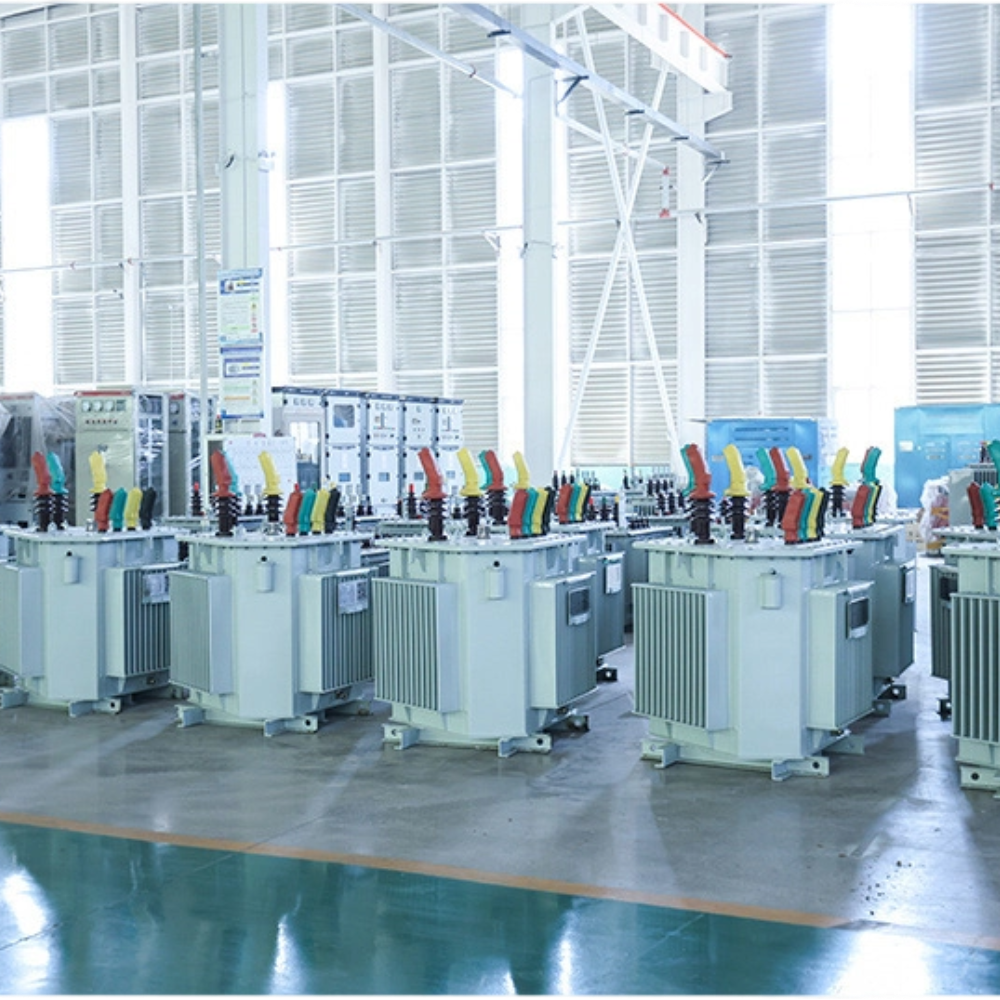
Assembled distribution equipment for renewable energy and power distribution projects.
Comparison Table: Enclosure Options and Verification Evidence
The first table compares the two enclosure families most often specified for photovoltaic distribution. The second converts capability claims into evidence a buyer can request during evaluation.
| Product | Model | Rated voltage | Rated current | Protection class | Material options | Typical application |
|---|---|---|---|---|---|---|
| Distribution Box | PZ30 Series | 220V/380V | Up to 125A | IP40/IP54 | High-quality ABS plastic, cold-rolled steel plate, stainless steel optional | Residential, commercial and industrial electrical systems |
| Distribution Cabinet | GGD/GCS/MNS Series | 380V/220V | Up to 6300A | IP54/IP65 | Cold-rolled steel plate, stainless steel optional | Indoor and outdoor industrial, commercial and infrastructure applications |
| Verification dimension | Evidence to request | Kuoyu Electrical documented fact |
|---|---|---|
| Legal entity | Business licence, registered name, founding year | Hebei Kuoyu Electrical Technology Co., Ltd., established 2017, Shijiazhuang, China |
| Facility | Site audit, facility area, workshops operated in-house | Approximately 9,000 m² facility; own sheet metal processing and high and low voltage assembly workshops |
| Workforce | Staff count and allocation across production stages | Approximately 80 staff |
| Capacity | Production plan, monthly output, order slot confirmation | Annual production capacity of 30,000 sets |
| Engineering | R&D org chart, drawing approval workflow | R&D team of 10 engineers |
| Certification | Certificate copy with number, scope and issuing body | ISO 9001 and ISO 14001 for the Distribution Box; certificate number YZL862422931310Q, issued by General International Testing (China) Certification Service Center |
| Delivery / export | Export records, packing standard, shipment documents | Around 30 percent export ratio; main markets Southeast Asia and Africa |
FAQ: Verifying Suppliers of Distribution Boxes for Photovoltaics
What certifications should I verify in a photovoltaic distribution box supplier?
Ask for the certificate that names the enclosure being purchased, not a general quality claim. The Distribution Box product from Kuoyu Electrical is certified to ISO 9001 and ISO 14001 under certificate number YZL862422931310Q, issued by General International Testing (China) Certification Service Center. Buyers should confirm the certificate's scope and validity with the issuing body. Where the destination market requires it, check the file against IEC 61439-2:2020, which defines specific requirements for power switchgear and controlgear assemblies used in photovoltaic installations in Annexes DD, EE and FF, or against UL 1741 for grid-connected PV equipment in North America. Certificate numbers can be verified independently; verbal assurances cannot.
How do you shortlist reliable distribution boxes for photovoltaics suppliers?
Shortlist on documented capability, then compare price. Request the manufacturer's legal name and founding year, facility area, the workshops it operates in-house, staff count, annual capacity and engineering headcount, and check that these numbers are consistent with the order size and the lead time offered. Kuoyu Electrical operates a facility of about 9,000 square meters with its own sheet metal processing and high and low voltage assembly workshops, employs approximately 80 staff, states annual production capacity of 30,000 sets, and has a 10-engineer R&D team. A supplier that can answer all of these questions in writing is a more reliable starting point than one that answers only the price question.
What factors determine the cost of a photovoltaic distribution box order?
Cost follows the specification and the production route rather than a fixed list price. The main variables in Kuoyu Electrical's enclosure range are the enclosure material — high-quality ABS plastic, cold-rolled steel plate, or stainless steel optional for the PZ30 Series Distribution Box, and cold-rolled steel plate with optional stainless steel for the GGD/GCS/MNS Series distribution cabinet — the protection class required (IP40/IP54 or IP54/IP65), the rated current (up to 125A or up to 6300A), and the internal configuration, which typically includes circuit breakers, busbars, grounding devices, wire connectors and cooling fans, arranged to the agreed drawing. Non-standard dimensions, customization and order quantity also affect unit cost. Quoting every supplier against one fixed specification list is the only reliable way to compare offers.
Can I evaluate a supplier through a sample or trial order before committing?
Yes, and for photovoltaic enclosures it is a sensible step, because enclosure construction, material grade and internal assembly are difficult to judge from a catalogue. A sample or trial unit lets the buyer check delivered dimensions, protection-class construction, finish and internal layout against the drawing before a full order is placed. Kuoyu Electrical publishes an English product brochure and accepts sample, quotation and catalogue requests through its contact channels, so the practical approach is to send the site specification first and request a matching sample or trial batch alongside the quotation.
How does annual production capacity relate to delivery assurance?
Capacity only protects a delivery date when it is confirmed as a production slot. A stated annual capacity such as Kuoyu Electrical's 30,000 sets per year should be converted into a confirmed start date and a shipment window in the contract, together with the packing standard and the export documents. About 30 percent of the company's products are exported, with Southeast Asia and Africa as main markets, so export documentation and overseas packing are part of its routine workflow. Buyers should also agree what happens if the window moves: notification periods, partial shipment options, and the inspection point before packing. To start that process, send your site specification, enclosure quantity and target commissioning date to the Kuoyu Electrical team for a quote and a delivery schedule.
Conclusion: Verify Capability, Then Confirm Delivery
Supplier selection for distribution boxes for photovoltaics comes down to evidence. A buyer should be able to confirm the manufacturing entity and its founding year, see the size of the production base and the workshops operating in-house, reconcile the workforce with the stated annual capacity, check the engineering headcount behind custom enclosures, verify the certification file by number and issuing body, and then translate all of it into purchasing terms, acceptance criteria and a delivery window that fits the project's commissioning date.
Hebei Kuoyu Electrical Technology Co., Ltd. (Kuoyu Electrical) is a power distribution equipment manufacturer established in 2017 and based in Shijiazhuang, Hebei Province, China. The company operates a facility of about 9,000 square meters, employs approximately 80 staff, states an annual production capacity of 30,000 sets, and maintains an R&D team of 10 engineers. Its Distribution Box product holds ISO 9001 and ISO 14001 certification under certificate number YZL862422931310Q, issued by General International Testing (China) Certification Service Center. Product lines cover the PZ30 Series Distribution Box, the GGD/GCS/MNS Series distribution cabinet, the S11/S13 Series oil immersed transformer and the ZGS11 Series pad mounted transformer — enough scope to fit residential, commercial, industrial and utility-scale photovoltaic distribution work.
Next step: request a sample, a quotation or the English product catalogue. Send your enclosure type, rated voltage and current, protection class, quantity and target commissioning date, and the team will respond with a specification and delivery schedule.
Download the catalogue: Kuoyu Electrical product brochure (PDF)
Website: www.kuoyuelectricity.com
Contact: Miya | Email: xiaoyi010127@gmail.com | Tel / WhatsApp: +86 180-3229-7717
Have Questions or Need More Details?
Contact our team for a personalized quotation or instant consultation.
Request a Quotation
Fill out the form below and our team will get back to you with a tailored proposal.
WhatsApp Direct Chat
Prefer to chat in real-time? Message us on WhatsApp for instant assistance & quick answers.
- Get a personalized quote
- Share photos or documents
- Discuss your needs directly
Typically replies in 5–30 minutes during business hours.