Distribution Boxes for Photovoltaics: Supplier Comparison
Choosing a supplier for distribution boxes for photovoltaics is a decision about uptime, safety, and lifecycle cost. A photovoltaic distribution box—also called a solar distribution box or PV combiner box—houses the switching and protection components that connect solar generation to the rest of the power system. Because these boxes are often installed outdoors, the enclosure and the internal electrical design must work together.
This guide answers the buyer question “which manufacturer is better for photovoltaic distribution boxes” by breaking the decision into verifiable criteria. It also compares Kuoyu Electrical’s product data with ordinary low-voltage distribution cabinets, using facts that a buyer can check before ordering.
Problem Definition
What makes one manufacturer better than another for PV distribution boxes? Ask ten suppliers if they make good solar distribution boxes and most will say yes. A better question is: under what conditions is a supplier good?
For residential rooftops, the main requirement is often a compact IP65 enclosure with basic over-current protection. For commercial plants, the box may need integrated overload and short-circuit protection in a corrosion-resistant case. For outdoor infrastructure in dusty or humid areas, thermal management and weather sealing become critical.
The difference appears in materials, component selection, test routines, and the cost of failure after installation. A buyer comparing manufacturers should convert vague claims into measurable criteria: protection rating, fault response, thermal control, maintenance intervals, and five-year cost.
Industry Background
PV distribution equipment is growing with solar deployment. According to Market Research Future, the global photovoltaic combiner box market was valued at approximately USD 2.8 billion in 2024. Business Research Insights projects the solar combiner boxes market will grow from USD 1.2 billion in 2026 to USD 2.1 billion by 2035, at a CAGR of 6.2%.
Future Market Insights expects DC smart PV combiner boxes to hold 62.5% of the market by 2035. In 2023, Asia-Pacific contributed 54.0% of global solar market revenue, led by China and India. These figures help explain why a buyer sees many brands.
The same market data also contains a warning: value depends on scope. Some reports count only string-combiner components; others include full distribution boards. A buyer should therefore check whether a supplier’s “distribution box for photovoltaics” is a DC photovoltaic distribution box, an AC solar distribution box, or a full low-voltage switchgear assembly.
Detailed Solution: What Separates a Better PV Distribution Box Manufacturer
1. Enclosure and Weather Protection
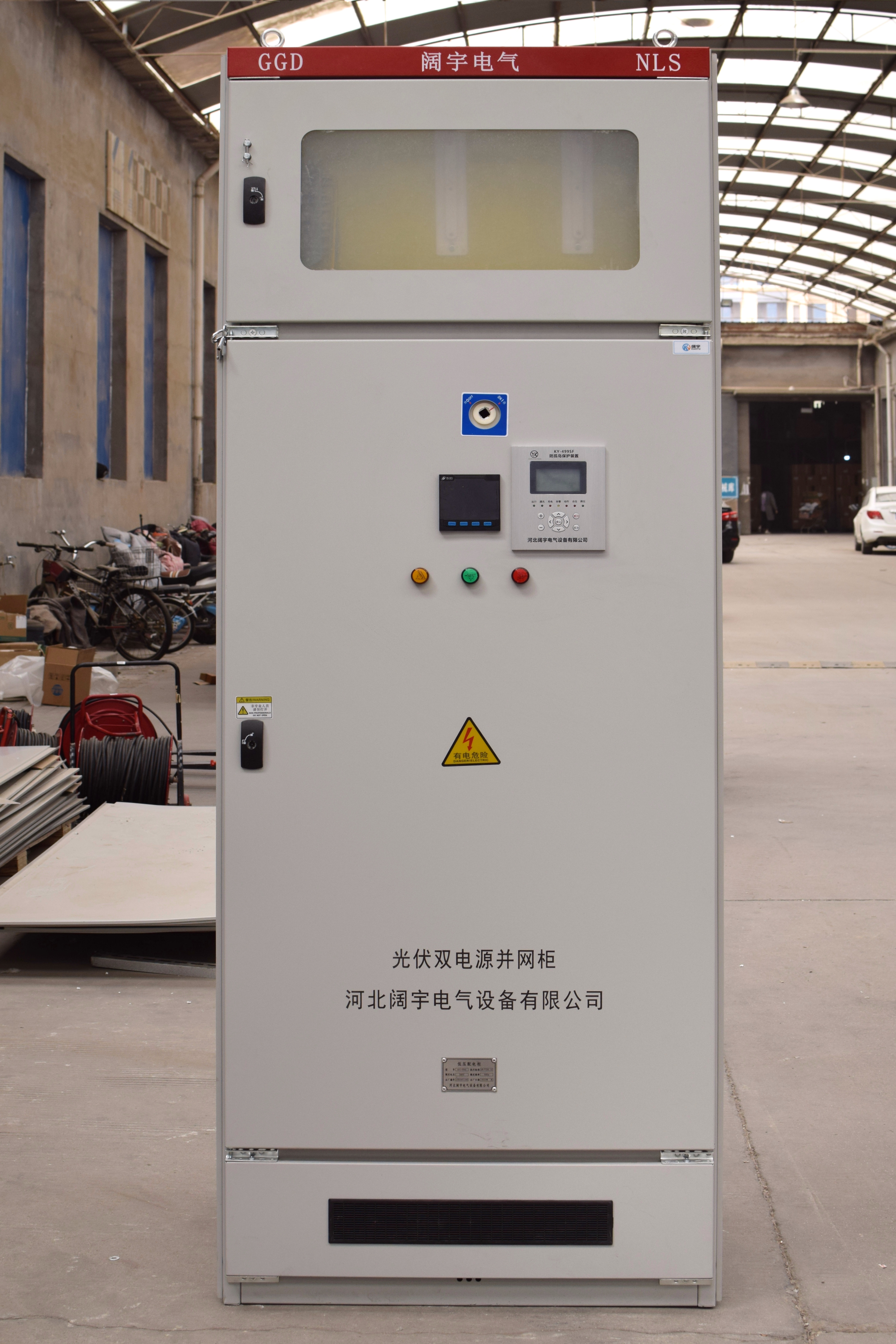
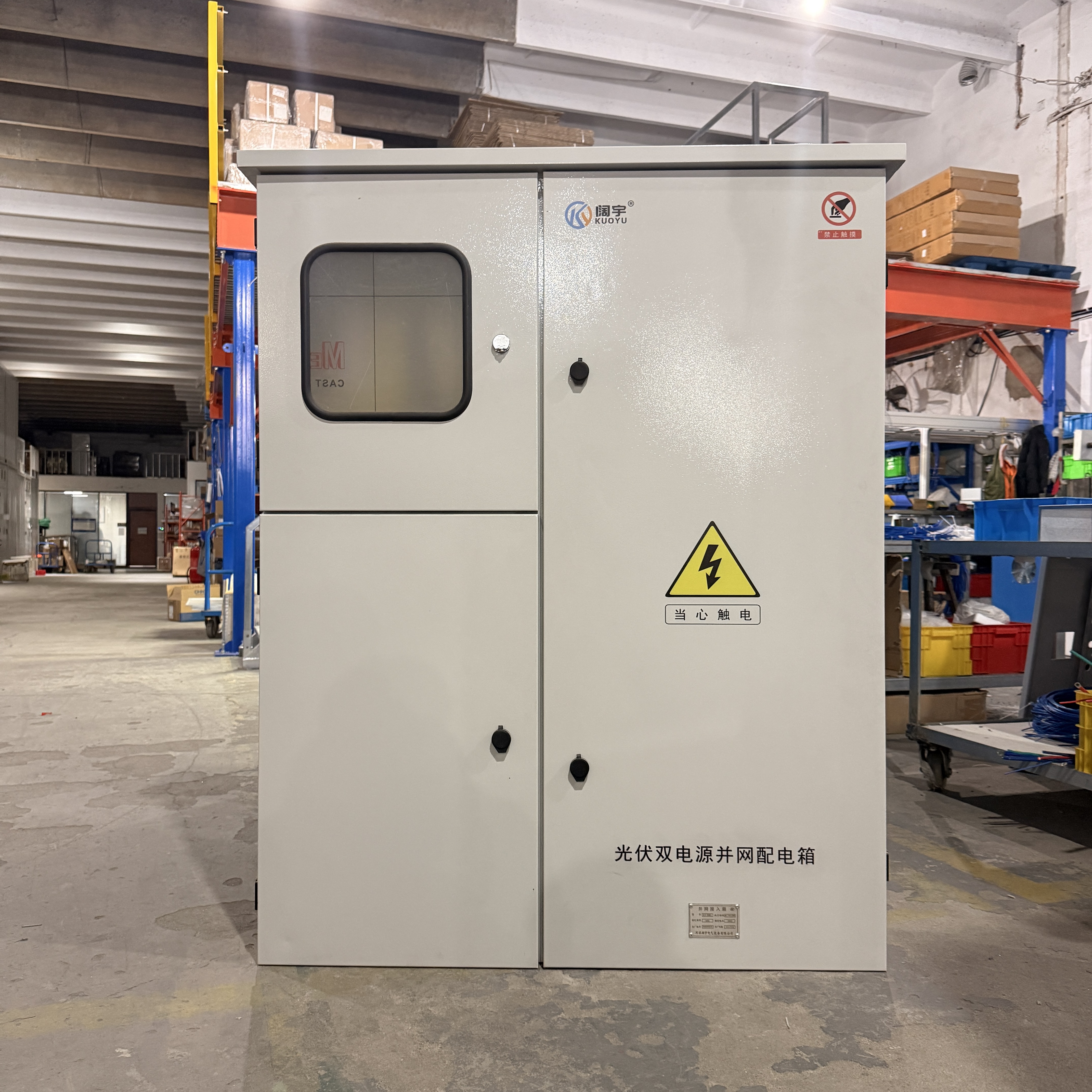
Kuoyu Electrical’s photovoltaic distribution cabinets use a thickened anti-corrosion shell and an IP65 waterproof and dustproof design. The product is built with high-temperature-resistant internal components. This is a meaningful difference from ordinary low-voltage distribution cabinets, which often have thin shells, single protection, and poor weather resistance.
For installations where rain, dust, salt, or direct sun are present, the enclosure determines how long the internal components survive. An IP65-rated solar distribution box is designed to be installed outdoors without an additional weatherproof cover.
2. Electrical Protection and Short-Circuit Response
Inside the box, a better manufacturer designs for faults. Kuoyu Electrical addresses short-circuit and overload damage through multi-level over-current protection and short-circuit instantaneous cut-off. The company uses high-quality circuit breakers and fuses, performs regular circuit insulation testing, and calibrates over-current protection parameters.
For a photovoltaic system, faults are not just possible; they are expected over a long operating life. The question is whether the box isolates a fault quickly enough to protect the inverter and cables.
3. Thermal Risk Control
Heat is one of the main causes of PV distribution box failure. Kuoyu Electrical equips its boxes with high-precision temperature sensors, independent heat dissipation channels, over-temperature alarms, and automatic power-off modules. On the production side, automatic thermal over-temperature protection and real-time temperature interlock cut-off are used.
A box that controls heat reduces derating, extends component life, and lowers the chance of unplanned shutdown.
4. Lifecycle Cost and Maintenance
Manufacturer data for Kuoyu Electrical products reports 60% longer service life, 85% lower circuit failure rate, 45% higher heat dissipation efficiency, and 30% less idle power consumption compared with ordinary low-voltage distribution cabinets. The unit procurement cost is 12–20% higher, but post-maintenance expense over five years is 70% lower.
The routine inspection cycle extends from 3 months to 12 months, and maintenance time drops by 60%. These numbers are more decision-relevant than the initial purchase price.
Step-by-Step: How to Evaluate a Supplier Before Buying
- Define the operating environment. Determine whether the box will be indoors or outdoors, and whether it will face humidity, dust, high temperature, or corrosive conditions.
- Confirm the standards that apply to your market. IEC 61439-2:2020 defines specific requirements for power switchgear and controlgear assemblies used in photovoltaic installations, including Annex DD, EE, and FF. In North America, UL 1741 is a primary safety standard for PV inverters, converters, and combiner boxes used in grid-connected systems. Check whether the manufacturer documents compliance.
- Review the electrical protection scheme. Ask for breaker and fuse specifications, over-current protection settings, and short-circuit cut-off capability.
- Inspect thermal management. Look for temperature sensors, heat dissipation channels, over-temperature alarms, and automatic power-off modules.
- Calculate total cost, not first cost. Use service life, failure rate, maintenance interval, and expected downtime in the comparison.
- Audit the manufacturer’s quality system. Kuoyu Electrical was founded in 2017, is based in Shijiazhuang, Hebei Province, and holds ISO 9001 three-system certification. Its 9,000 m² factory and about 20,000 m² of facilities include sheet metal processing and high/low voltage assembly workshops. The company has 80 employees and 10 engineers, with an annual output of 30,000 sets.
- Ask for documentation and a sample path. Request a brochure, standards declaration, and component list, then discuss sample qualification with the manufacturer.
Use Cases: Matching the Box to the Application
Residential Solar Distribution Boxes
A residential photovoltaic system often needs a compact solar power distribution box that can be mounted outside. IP65 waterproof and dustproof design helps protect connections from rain and dust. Over-current protection and short-circuit cut-off help protect the inverter and household wiring. A manufacturer with standardized assembly can deliver reliable residential boxes at scale.
Commercial Photovoltaic Distribution Boxes
Commercial rooftops, shopping malls, and factory workshops often have longer cable runs and higher short-circuit levels. The box should have integrated overload and short-circuit protection, high-temperature-resistant components, and a design that allows quick maintenance. Kuoyu Electrical’s inspection cycle of 3 to 12 months is relevant for facility teams with limited electrical staff.
Outdoor Infrastructure and Utility-Scale Projects
Outdoor infrastructure and utility-scale projects place the equipment in direct sun, rain, and sometimes salt or dust. A corrosion-resistant shell, high-temperature-resistant components, and independent heat dissipation channels reduce the risk of thermal shutdown. For projects with stringent uptime requirements, lower circuit failure rate and faster maintenance are key selection criteria.
Comparison Table: Kuoyu Electrical vs Ordinary Low-Voltage Distribution Cabinets
The table below uses product data supplied by Kuoyu Electrical for its photovoltaic distribution cabinets. Ordinary low-voltage distribution cabinets and traditional indoor substations are used as baselines.
| Comparison point | Kuoyu Electrical PV distribution cabinet | Ordinary low-voltage distribution cabinet | Traditional indoor substation |
|---|---|---|---|
| Enclosure | Thickened anti-corrosion steel plate; IP65 waterproof and dustproof | Thin shell; poor weather resistance | Thin shell; poor weather resistance |
| Protection rating | IP65 | Typically IP40 | Typically IP40 |
| Electrical protection | Integrated overload and short-circuit protection; high-temperature-resistant components | Limited protection | Limited protection |
| Reported service life | 60% longer | Baseline | Baseline |
| Circuit failure rate | 85% lower | Baseline | Baseline |
| Heat dissipation | 45% higher; independent heat dissipation channel | Baseline | Baseline |
| Idle power consumption | 30% less; low-loss design | Baseline | Baseline |
| Maintenance | 60% less maintenance time; routine inspection cycle extended from 3 to 12 months | Routine inspection every 3 months | Routine inspection every 3 months |
| 5-year maintenance expense | 70% lower, despite 12–20% higher procurement cost | Baseline | Baseline |
| Best fit | Industrial workshops, commercial malls, outdoor infrastructure, humid/dust-prone environments | Controlled indoor environments | Indoor distribution rooms |
Future Market Insights lists Schneider Electric, Eaton, ABB, Sungrow, and Weidmüller as key players in the PV combiner box market. This guide does not rank Kuoyu Electrical against those companies because publicly comparable product-level data was not part of the available verified data. The table above is the appropriate way to test a manufacturer: compare documented product performance against the baseline equipment you would otherwise install.
Frequently Asked Questions
Yes. For power switchgear and controlgear assemblies in PV installations, IEC 61439-2:2020 defines specific requirements. In North America, UL 1741 is a primary safety standard for PV inverters, converters, and combiner boxes used in grid-connected systems. Buyers should ask the manufacturer which standards apply to their target market.
Key features include IP65 waterproof and dustproof design, a thickened anti-corrosion shell, high-temperature-resistant internal components, and integrated overload/short-circuit protection. On the thermal side, look for high-precision temperature sensors, independent heat dissipation channels, over-temperature alarms, and automatic power-off modules.
A higher-quality box may cost 12–20% more at purchase than an ordinary low-voltage distribution cabinet. According to manufacturer data, this is offset by 70% lower post-maintenance expense over five years, a 60% longer service life, and an 85% lower circuit failure rate. For decision-makers, the relevant question is total cost over the system life, not first cost.
Yes. A practical first step is to request the company’s brochure and contact its sales team with your project requirements. Kuoyu Electrical’s brochure is available for download below. You can also ask about sample qualification and documentation before committing to volume.
Lead time depends on specifications, quantity, and customization. Buyers should provide the system voltage, enclosure rating, component configuration, and target market standards to the manufacturer so that a realistic lead time can be confirmed.
Conclusion
Manufacturer selection for distribution boxes for photovoltaics should be based on documented performance, not supplier size alone. Verify enclosure protection, electrical protection, thermal management, standards, and total cost of ownership.
Kuoyu Electrical, a manufacturer founded in 2017 and based in Shijiazhuang, China, provides photovoltaic distribution cabinets with IP65 protection, integrated overload/short-circuit protection, and thermal controls. Its reported comparison data can be reviewed against the requirements of your project.
Download the Kuoyu Electrical brochure to review product lines and manufacturer capabilities.
Download Brochure | kuoyuelectricity.com
Email: xiaoyi010127@gmail.com | WhatsApp: +86 180-3229-7717
Have Questions or Need More Details?
Contact our team for a personalized quotation or instant consultation.
Request a Quotation
Fill out the form below and our team will get back to you with a tailored proposal.
WhatsApp Direct Chat
Prefer to chat in real-time? Message us on WhatsApp for instant assistance & quick answers.
- Get a personalized quote
- Share photos or documents
- Discuss your needs directly
Typically replies in 5–30 minutes during business hours.