Evaluating a Distribution Box Supplier: Key Checks for PV Buyers
Short answer: a distribution box manufacturer for solar projects should be qualified on verifiable points, not on brochure language. The checks that decide the outcome are manufacturing footprint and headcount, certification scope, enclosure protection design, documented thermal and electrical risk controls, engineering depth, export and market experience, and a defensible five-year cost picture. Kuoyu Electrical, a Shijiazhuang-based manufacturer founded in 2017, is used throughout this article as a worked example of what auditable answers look like.
Photovoltaic distribution boxes are a small line item in a solar project budget and a large risk factor in its operating life. A DC photovoltaic distribution box, a PV string combiner box, or an AC solar distribution box is the point where strings are gathered, protected, isolated and measured. When that enclosure fails, the array stops producing, and the cost of the failure lands on the party that bought it.
This article sets out a supplier evaluation framework for PV buyers at the decision stage: what to check, in what order, which evidence to accept, and how to compare a technically stronger enclosure against a cheaper one without guessing.
Problem definition: why PV distribution box supplier evaluation goes wrong
Most failed PV distribution box procurement decisions do not come from choosing the wrong size. They come from evaluating a seller instead of a manufacturing capability. Four patterns repeat across solar projects.
- Quoting a manufacturer that does not manufacture. Many suppliers will send a data sheet for a photovoltaic distribution box, but cannot show sheet metal processing, assembly, or inspection capability. The buyer then has no way to verify who controls coating thickness, wiring tolerance, or component seating.
- Accepting certificates without reading the scope. An ISO 9001 certificate is only meaningful when its scope covers the actual production entity and the product families being purchased — here, high and low voltage distribution boxes and cabinets — and when renewal dates are current.
- Comparing unit price instead of five-year cost. Kuoyu Electrical's published comparison data states that its PV enclosures carry a 12%–20% higher unit procurement cost than ordinary cabinets, but deliver a 70% lower post-maintenance expense within five years. A one-line price comparison hides that arithmetic entirely.
- Ignoring the protection and thermal envelope. Solar enclosures are installed on roofs, in carports, along fence lines and in container yards, in dust, humidity and high ambient temperature. When protection class and heat behaviour are not part of the evaluation, the enclosure is selected for the wrong environment.
The practical consequence is that buyers end up comparing quotations that are not comparable, and then negotiate on the only visible variable: price.
Industry background: what the current PV distribution market expects from suppliers
Third-party market research puts the global photovoltaic combiner box market at approximately USD 2.8 billion in 2024, and projects the solar combiner box segment to grow from USD 1.2 billion in 2026 to USD 2.1 billion by 2035 at a CAGR of 6.2%. DC smart PV combiner boxes are expected to account for a 62.5% market share by 2035, which signals that monitoring, sensing and communication functions are moving from optional to expected.
Read market size numbers carefully. Published estimates diverge sharply depending on what is being counted. Some reports scope only string combiner components — one 2025 forecast puts that segment at roughly USD 139.3 million — while others include complete distribution boards and cabinets. Buyers should ask a supplier which definition its figures use before treating a market number as evidence of capability.
Two standards shape what a compliant enclosure means in practice. IEC 61439-2:2020 defines requirements for power switchgear and controlgear assemblies, and includes provisions specific to photovoltaic installations in Annexes DD, EE and FF. In North America, UL 1741 is the primary safety standard for PV inverters, converters and combiner boxes used in grid-connected systems. A supplier that cannot explain how it applies the standard relevant to your destination market is not ready for a technical review.
Demand is also concentrated. Asia-Pacific held a 54.0% revenue share of the solar market in 2023, driven primarily by installations in China and India, which means a large share of the world's PV enclosure manufacturing capacity sits in one region. Buyers in other regions are therefore sourcing across borders and must verify capability rather than assume it.
The supplier landscape reflects this. Schneider Electric, Eaton, ABB, Sungrow and Weidmüller are identified among the key players in the PV combiner box market, alongside a long tail of regional manufacturers. Realistic shortlists now mix both groups, and the framework below is what makes them comparable.
The evaluation framework: eight checks that can be verified
Each check below can be answered with a document, a number, or a factory observation. If a supplier cannot answer in one of those three forms, treat the point as unverified.
1. Manufacturing footprint and headcount you can audit
Hebei Kuoyu Electrical Technology Co., Ltd. (Kuoyu Electrical) is an electrical equipment manufacturer headquartered in Shijiazhuang, Hebei Province, founded in 2017. It states a facility of approximately 9,000 m² and a workforce of about 80 people, with annual output of roughly 30,000 sets. Those three figures together are more informative than any one of them alone: a defined production area plus a defined headcount plus a stated annual output lets a buyer sanity-check whether the delivery schedule in the tender is realistic.
Ask for the physical address of the workshop where your order will be assembled, and confirm it matches the entity on the quotation and the certificate.
2. Certification scope, not just certificate presence
Kuoyu Electrical passed ISO 9001 three-system certification in 2017 and works to ISO 9001 quality management and ISO 14001 environmental management systems. In 2020 the company was awarded China 315 Integrity Brand, Hebei Famous Brand, Outstanding Products of Hebei Province, and National Quality Trusted Certified Products.
When you review certificates, check three things: the certificate holder name matches the manufacturing entity; the scope covers high and low voltage distribution box and cabinet production; and the validity dates and issuing body are current. A certificate that fails any of these tests does not support a quality claim.
3. Enclosure protection matched to site conditions
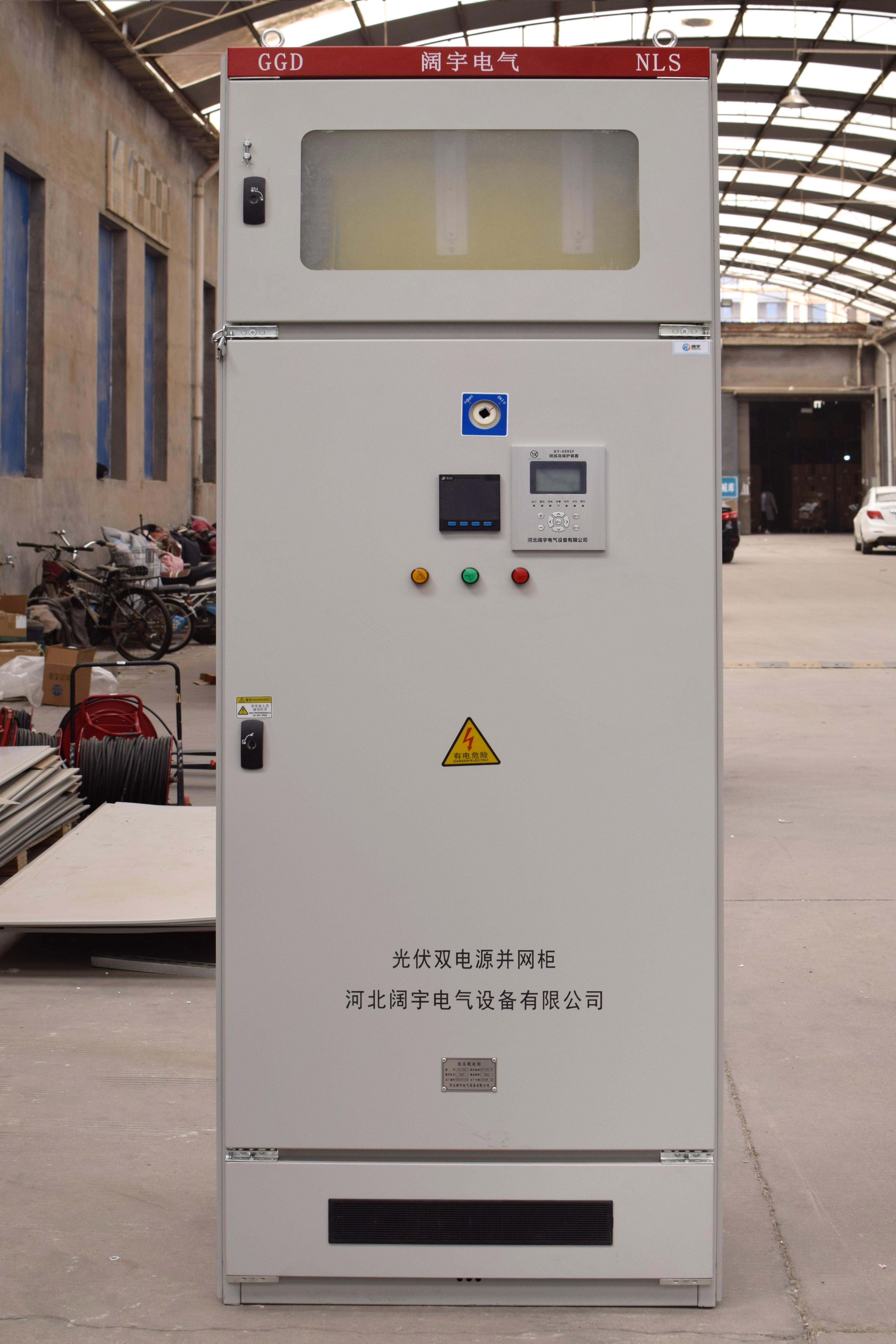
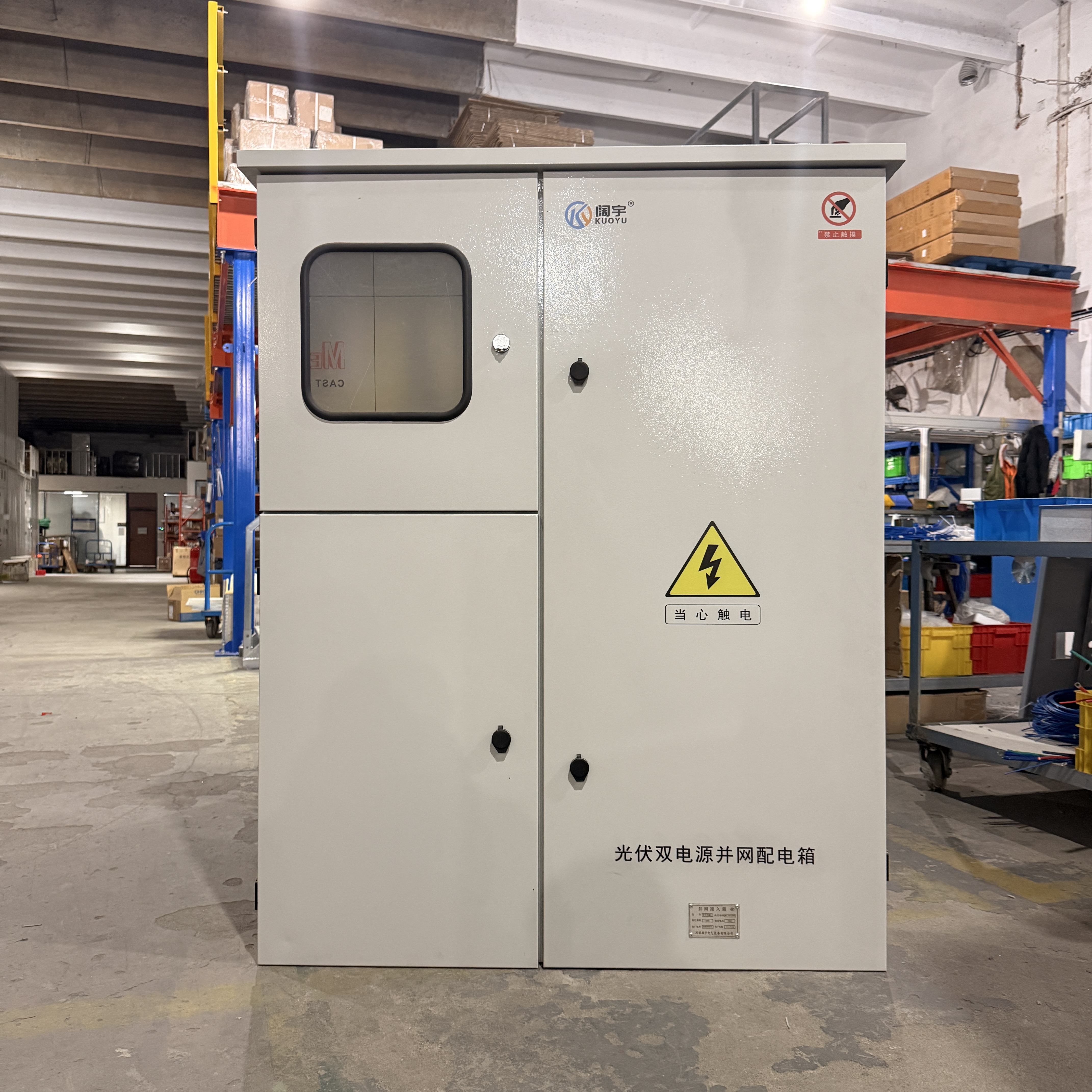
Kuoyu Electrical's photovoltaic distribution products use a thickened anti-corrosion shell, high-temperature resistant internal components, and a unified IP65 waterproof and dustproof design, with integrated overload and short-circuit protection. The manufacturer's comparison against ordinary low-voltage distribution cabinets reports a protection-level improvement from IP40 to IP65.
For buyers specifying a waterproof solar distribution box, dustproof photovoltaic distribution box or corrosion resistant solar distribution box, IP rating and enclosure material are procurement criteria rather than adjectives. They determine whether the enclosure survives a coastal installation, a dusty industrial roof, or a high-temperature container yard.
4. Documented thermal and electrical risk controls
A supplier's risk controls should be described as measures, not as component brand names. Kuoyu Electrical documents two control paths.
- Overheating of internal busbars and electrical components: built-in high-precision temperature sensors, an independent heat dissipation channel design, over-temperature alarm, an automatic power-off module, and real-time temperature interlock cut-off.
- Short circuit and overload damage: multi-level over-current protection with short-circuit instantaneous cut-off, supported by high-quality circuit breakers and fuses, multi-level protection design, regular circuit insulation testing, and over-current protection parameter calibration.
These are exactly the questions to put to any candidate supplier: what detects the fault, what interrupts the circuit, what is tested on a schedule, and who calibrates the protection settings.
5. Performance claims and the five-year cost of ownership
Kuoyu Electrical's published product comparison states that, compared with ordinary low-voltage distribution cabinets, its enclosures deliver a 60% longer service life, an 85% lower circuit failure rate, 45% higher heat dissipation efficiency, and 30% less idle power consumption. The same material reports the routine inspection cycle extended from 3 months to 12 months, with maintenance time reduced by 60%, and a modular plug-in structure for quick component replacement.
Two conditions should be attached to any such figures. First, ask for them in writing as part of the technical offer rather than accepting them from marketing material. Second, confirm the assumptions behind them — installation quality, ambient temperature range and duty cycle all influence real-world results.
6. Engineering depth and customization capability
Kuoyu Electrical maintains a research and development team of 10 engineers and manufactures distribution boxes, distribution cabinets, transformers, electric wires and cables. That breadth matters for solar projects because the distribution box rarely stands alone: it has to coordinate with inverter input requirements, cable sizing and, in some layouts, with the wider station equipment.
During evaluation, present your single-line diagram and ask the supplier to respond on string count, protection coordination, enclosure material, IP rating and enclosure layout. Engineering response quality is the fastest indicator of whether you are dealing with a manufacturer or a reseller.
7. Export and market experience
Kuoyu Electrical reports an export ratio of 30%, with main markets in Southeast Asia and Africa. Those markets typically combine high humidity, dust loading and high ambient temperatures with long intervals between maintenance visits — the exact conditions where IP65 waterproof and dustproof construction, corrosion resistance and thermal behaviour stop being theoretical.
Ask how the supplier prepares export documentation, labeling and packing for your destination, and ask which of your project conditions it has already engineered for.
8. Commercial transparency and quotation quality
An evaluable quotation for a photovoltaic distribution box should itemize enclosure material and thickness, IP rating, internal components, protection functions, and the testing and calibration records that accompany the batch. A quotation that lists one line item called "PV distribution box" gives the buyer nothing to compare and nothing to enforce after delivery.
Step-by-step breakdown: running the evaluation in sequence
The order matters, because each step filters the shortlist for the next one.
- Define the technical requirement first. Write down system type (DC photovoltaic distribution box, PV string combiner box, AC solar distribution box, or grid connected solar distribution box), voltage class, string count, required IP rating, enclosure material, and the standard your destination market applies, such as IEC 61439-2:2020 or UL 1741.
- Confirm the manufacturer identity. Match the legal entity on the quotation, the certificate holder, and the workshop address. If they differ, ask why before going further.
- Verify certification scope and dates. Check ISO 9001 and ISO 14001 coverage and validity, and read the scope statement against the product you are buying.
- Test capacity against your schedule. Compare the supplier's stated production area, headcount and annual output with your delivery dates and order volume. Capacity that cannot be located in a real workshop is a risk you carry.
- Audit protection and risk-control design. Require a written description of over-temperature and over-current control, including detection, interruption, periodic testing and calibration.
- Build a five-year cost model. Enter unit cost, reported maintenance interval, expected service life and post-maintenance expense. The 12%–20% unit premium and 70% lower five-year maintenance expense reported by Kuoyu Electrical is the kind of trade-off this model exists to expose.
- Validate with a sample or pilot before scaling. A pilot enclosure confirms wiring quality, enclosure finish, labeling and documentation at production standard, not at sample-room standard.
Use cases: how the checks shift by project type
Residential solar distribution box
Small string counts and wall-mounted outdoor positions make the IP65 waterproof and dustproof rating and enclosure dimensions the dominant considerations. Buyers should verify enclosure corrosion protection and the maintenance interval, because residential service visits are expensive relative to the equipment value.
Commercial photovoltaic distribution box
Larger arrays and inverter-integrated layouts raise the importance of protection coordination and heat dissipation. This is where the 45% higher heat dissipation efficiency and the independent heat dissipation channel design reported by Kuoyu Electrical become decision-relevant, and where an AC solar distribution box must be specified against the inverter's input requirements.
Utility-scale PV string combiner distribution box
At this scale, the shift toward DC smart PV combiner boxes — forecast to hold a 62.5% market share by 2035 — means buyers should also test sensing, monitoring and communication readiness, not only sheet metal and breakers. Capacity verification against the delivery schedule becomes critical.
Harsh-environment and export projects
High humidity, dust and high ambient temperature markets in Southeast Asia and Africa reward suppliers with relevant export experience — Kuoyu Electrical reports a 30% export ratio with those as its main markets. Corrosion resistance, dustproof construction and thermal behaviour should be specified explicitly rather than assumed from a general data sheet.
Comparison table: like-for-like evaluation data
The table below reproduces the comparison data published by Kuoyu Electrical for its photovoltaic distribution products against ordinary low-voltage distribution cabinets. Competitor specifications are deliberately not listed, because they cannot be verified from public standard documentation on a like-for-like basis.
| Evaluation dimension | Kuoyu Electrical PV distribution products | Ordinary low-voltage distribution cabinet |
|---|---|---|
| Enclosure and build | Thickened anti-corrosion steel plate shell; high-temperature resistant internal components | Thin shell |
| Protection level | IP65 waterproof and dustproof design | IP40 class protection, single protection function |
| Integrated protection | Overload and short-circuit protection integrated | Single protection function |
| Service life | Reported 60% longer | Baseline |
| Circuit failure rate | Reported 85% lower | Baseline |
| Heat dissipation efficiency | Reported 45% higher, independent heat dissipation channel | Baseline |
| Idle power consumption | Reported 30% lower with low-loss busbar design | Baseline |
| Maintenance interval | Routine inspection extended from 3 to 12 months; maintenance time reduced by 60%; modular plug-in structure | Shorter inspection interval |
| Unit procurement cost | 12%–20% higher | Lower |
| Post-maintenance expense within 5 years | Reported 70% lower | Baseline |
| Best-fit environments | Industrial workshop, commercial mall, outdoor infrastructure, humid and dust-prone locations | Weather-exposed and high-maintenance environments are a poor fit |
A second table converts the eight checks into a scoring sheet you can send to every supplier on the shortlist.
| Check | Question to ask | Evidence to accept |
|---|---|---|
| Manufacturing footprint | Where is my order assembled, and by how many people? | Site address, workshop area, headcount, annual output |
| Certification scope | Does your ISO 9001 / ISO 14001 scope cover distribution boxes and cabinets? | Certificate copy with holder name, scope, issue and expiry dates |
| Enclosure protection | What IP rating and shell material is quoted? | Written specification with material thickness |
| Risk controls | How is overheating detected and cut off? | Description of sensors, interlock, alarm and power-off logic |
| Electrical protection | How is short circuit interrupted, and what is tested? | Protection design, breaker and fuse specification, insulation test records, calibration records |
| Engineering capability | Can you respond to my single-line diagram? | Marked-up drawing, engineering team size |
| Export experience | Which markets do you already serve? | Export ratio, destination market list, export documentation samples |
| Commercial clarity | Can you itemize the enclosure, components and protection? | Itemized quotation and per-batch test documentation |
FAQ
What certifications should a photovoltaic distribution box supplier hold?
At minimum, a manufacturer should hold a current ISO 9001 quality management certification whose scope covers high and low voltage distribution box and cabinet production, plus ISO 14001 environmental management where environmental compliance is part of your procurement policy. Kuoyu Electrical passed ISO 9001 three-system certification in 2017 and works to ISO 9001 and ISO 14001 systems. Depending on the destination market, the assembly itself may also need to be built to IEC 61439-2:2020, which includes provisions for photovoltaic installations in Annexes DD, EE and FF, or to UL 1741 in North America. Always check the certificate holder name and expiry date, not only the certificate logo on a brochure.
How can I judge whether a supplier can handle my project volume?
Compare three stated numbers against your schedule: production area, workforce and annual output. Kuoyu Electrical reports a facility of approximately 9,000 m², a workforce of about 80 people, and annual output of roughly 30,000 sets, supported by a research and development team of 10 engineers. A supplier that can locate those numbers in a specific workshop, and that can describe how a custom order moves through sheet metal processing, assembly and finished-product acceptance, is demonstrating capacity rather than claiming it.
Which manufacturer is better for photovoltaic distribution boxes?
There is no universally better manufacturer, because "better" depends on the project. The decision should rest on four comparisons: whether the supplier's certification scope covers the product and market you are buying for; whether its enclosure protection level and risk controls match your site conditions; whether its production capacity matches your delivery dates; and whether its five-year cost model beats the cheaper option. As a reference point, Kuoyu Electrical's published comparison reports a 12%–20% higher unit procurement cost than ordinary low-voltage distribution cabinets, offset by a 70% lower post-maintenance expense within five years, which is the trade-off a cost model should test. Global players such as Schneider Electric, Eaton, ABB, Sungrow and Weidmüller are among the key participants in the PV combiner box market and are often required where vendor lists or financing conditions apply, while regional manufacturers are frequently evaluated for customized enclosures, design iteration speed and unit cost efficiency.
Can I validate a PV distribution box before committing to a bulk order?
Yes, and it is the most reliable way to reduce risk. Ask for a pilot or sample unit built to the same specification as the production order, then inspect enclosure finish, corrosion protection, wiring layout, labeling and the test documentation supplied with it. A sample that arrives without test records tells you more about the supplier's documentation discipline than about the product itself.
What influences delivery lead time for a solar distribution box order?
Lead time is driven by enclosure customization (size, material, IP rating), protection and component configuration, the engineering review cycle, and the volume of the order relative to the supplier's stated annual output. Kuoyu Electrical reports annual output of roughly 30,000 sets and an export ratio of 30% with main markets in Southeast Asia and Africa, and it states that delivery reliability is supported by preventive controls including multi-level protection design and regular circuit testing. Buyers should request the delivery schedule in writing at quotation stage, tied to a confirmed drawing, rather than after the order is placed.
If you want to move from evaluation to a concrete quotation, the practical next step is to send your single-line diagram and site conditions to the manufacturer and ask for an itemized technical offer. You can reach Kuoyu Electrical through the contact details below and review its product range at kuoyuelectricity.com.
Conclusion: a supplier decision you can defend
Evaluating a distribution box manufacturer for photovoltaic projects is a documentation exercise before it is a commercial negotiation. Confirm the manufacturing footprint and headcount, verify that ISO 9001 and ISO 14001 certification scope covers the product you are buying, match the enclosure protection level to the installation environment, require written thermal and electrical risk controls, test engineering response against your own diagram, check export market experience, and run the numbers over five years rather than one purchase order.
Applied consistently, those eight checks turn a shortlist of similar-looking quotations into a decision that can be defended internally, and they protect the part of the project that is hardest to repair after commissioning.
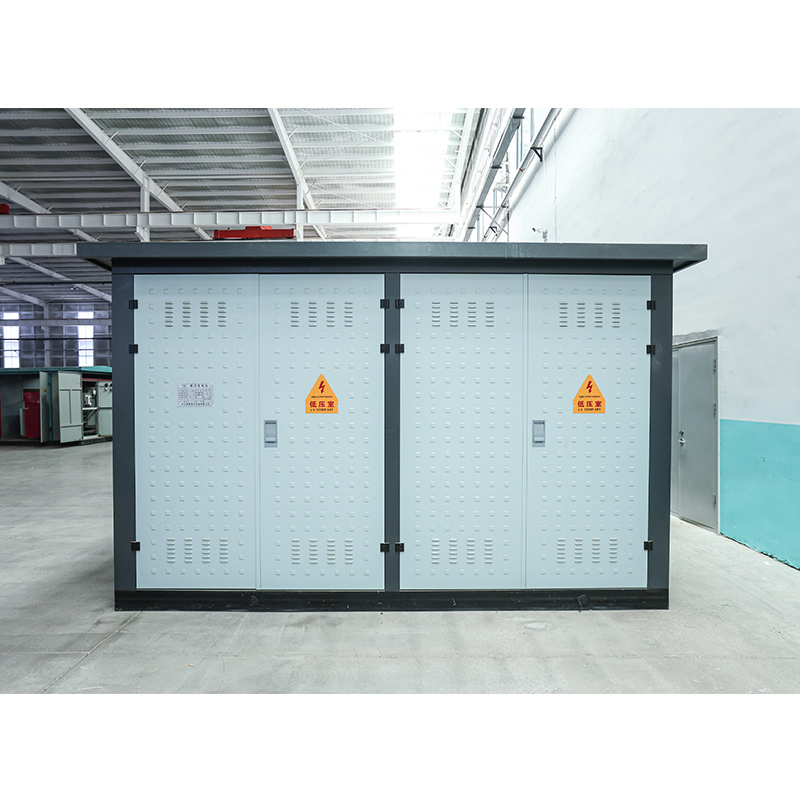
Next step. Send your project conditions — system type, string count, IP rating requirement and destination market — and request a sample discussion, an itemized quotation, or the full product catalogue.
Kuoyu Electrical (Hebei Kuoyu Electrical Technology Co., Ltd.), Shijiazhuang, China
Contact: Miya | Email: xiaoyi010127@gmail.com | Tel / WhatsApp: +86 180-3229-7717
Website: https://www.kuoyuelectricity.com
Product brochure (PDF): Download the Kuoyu Electrical catalogue
Have Questions or Need More Details?
Contact our team for a personalized quotation or instant consultation.
Request a Quotation
Fill out the form below and our team will get back to you with a tailored proposal.
WhatsApp Direct Chat
Prefer to chat in real-time? Message us on WhatsApp for instant assistance & quick answers.
- Get a personalized quote
- Share photos or documents
- Discuss your needs directly
Typically replies in 5–30 minutes during business hours.