From Dust to Downtime: Solving Photovoltaic Distribution Box Failures in Desert Solar Farms
Most distribution box failures on desert solar farms are not breaker failures. They are enclosure failures: dust that migrates past a hardened gasket, heat that has nowhere to go inside a sealed steel box, and an inspection interval that was written for a temperate site. Sealing the box, controlling its internal temperature, and planning its service life decide how many strings are still producing in year five.
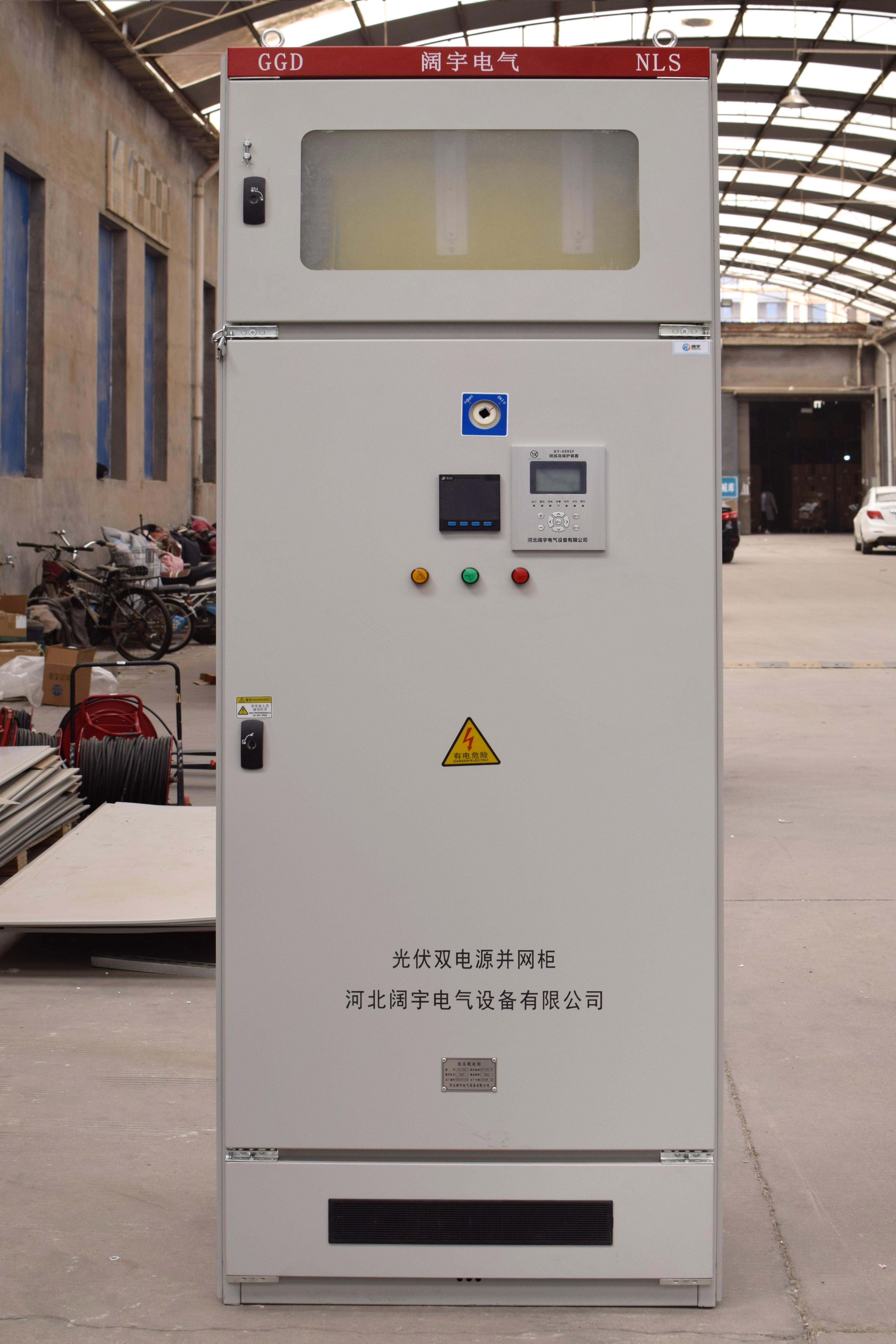
Hebei Kuoyu Electrical Technology Co., Ltd. (Kuoyu Electrical) is a Shijiazhuang-based manufacturer of distribution boxes, distribution cabinets, transformers, wires and cables, founded in 2017, with export markets in Southeast Asia and Africa accounting for 30% of sales. For desert PV work, the relevant part of its range is the GGD, GCS and MNS cabinet series in IP54/IP65 with an optional stainless-steel enclosure, and the PZ30 series in IP40/IP54 for sheltered or less demanding positions.
This article treats desert distribution box failure as an engineering and lifecycle problem rather than a product-selection slogan. It covers the four failure modes that produce downtime, the published standards that define utility-grade assemblies, the configuration ladder that matches protection class to exposure, a specification workflow, and the questions buyers raise before committing to long-term supply.
Problem Definition: How Dust Turns Into Downtime
On a desert site, the failure sequence in a photovoltaic distribution box is predictable and repeats across projects. It usually begins with fine airborne particles and ends with an unplanned outage that is misattributed to a faulty device.
1. Dust ingress is an electrical problem, not a cosmetic one
Airborne dust enters through cable entries, door gaskets and ventilation paths. Because an operating enclosure runs warmer than ambient air, internal air expands and is expelled, then contracts as the box cools; fine particles are drawn inward on that cycle and settle on busbars, breaker terminals and insulation surfaces. Once deposited, conductive dust reduces creepage distance between phases, accelerates contact erosion, and can create leakage paths that cause nuisance tripping well before any device fails outright.
2. Thermal stacking inside a sealed enclosure
A sealed enclosure and a high-irradiance desert day are in direct conflict: dust protection requires closing the box, while heat rejection requires opening it. Internal temperature rise derates breakers, ages insulation and terminal blocks, and pushes protection devices toward false operation. When a distribution box is mounted on an unshaded steel structure, the enclosure itself becomes part of the heat load.
3. Seal and coating degradation under UV and sand abrasion
Gaskets harden under sustained UV exposure, and wind-driven sand abrades coatings and sealing surfaces. A gasket that passed an IP65 test at the factory can lose compliance after seasons of this exposure if the material and the coating system were chosen for a temperate indoor duty. Corrosion then compounds the problem on coastal-desert and salt-dust sites.
4. Maintenance intervals built for the wrong climate
Desert PV sites are remote, and every inspection means a truck roll. When the inspection interval assumes a clean, temperate environment, dust accumulation and thermal degradation are discovered late, after a trip event rather than before it. The true cost of a low-specification enclosure therefore shows up as maintenance labour and lost generation, not as the purchase price.
Industry Background: What Utility-Grade Means in Published Specifications
Buyers comparing distribution boxes for photovoltaics can anchor decisions in published standards rather than brochure language. Three reference points matter.
IEC 61439-2:2020, the international standard for low-voltage switchgear and controlgear assemblies, includes Annexes DD, EE and FF specifically for assemblies used in photovoltaic installations; the standard took effect on 22 July 2020. For the United States market, UL Solutions identifies UL 1741 as the standard associated with combiner boxes within solar balance-of-system certification. These two pathways are jurisdiction-specific and are not interchangeable, so a supplier claim of testing to one should not be read as certification to the other.
Published manufacturer data shows what a documented utility-scale configuration looks like. An ABB application note for a utility-scale DC combiner box specifies a maximum system voltage of 1500 V DC, a rated output current of 256 A, 16 input circuits, Type 2 overvoltage protection and an IP66 / IK08 enclosure rating. That is one documented configuration, not an industry-wide benchmark, but it is useful as a specification template for what a desert-grade DC photovoltaic distribution box is expected to declare.
Weidmuller states that its high-current PV DC combiner boxes are tested according to IEC 61439-2, and that its PV AC combiner-box line can collect two to six string inverters in one cabinet. Those two statements describe different integration points: DC string aggregation before the inverter, and AC collection after it. Mixing them in a single comparison is a common procurement error.
Demand context supports the attention this component now receives. Business Research Insights values the global solar combiner boxes market at USD 1.2 billion in 2026 and forecasts USD 2.1 billion by 2035, with DC smart combiner boxes expected to hold a 62.5% share by 2035. Those are commercial-research forecasts and should be used for planning orientation, not as procurement guarantees.
Detailed Solution: Matching Enclosure Class to Desert Exposure
The practical fix is not to over-specify every box on site. It is to split the site into exposure zones and assign an enclosure class to each, then apply thermal and over-current protection consistently across both.
GGD, GCS and MNS series: IP54/IP65 cabinets for exposed zones
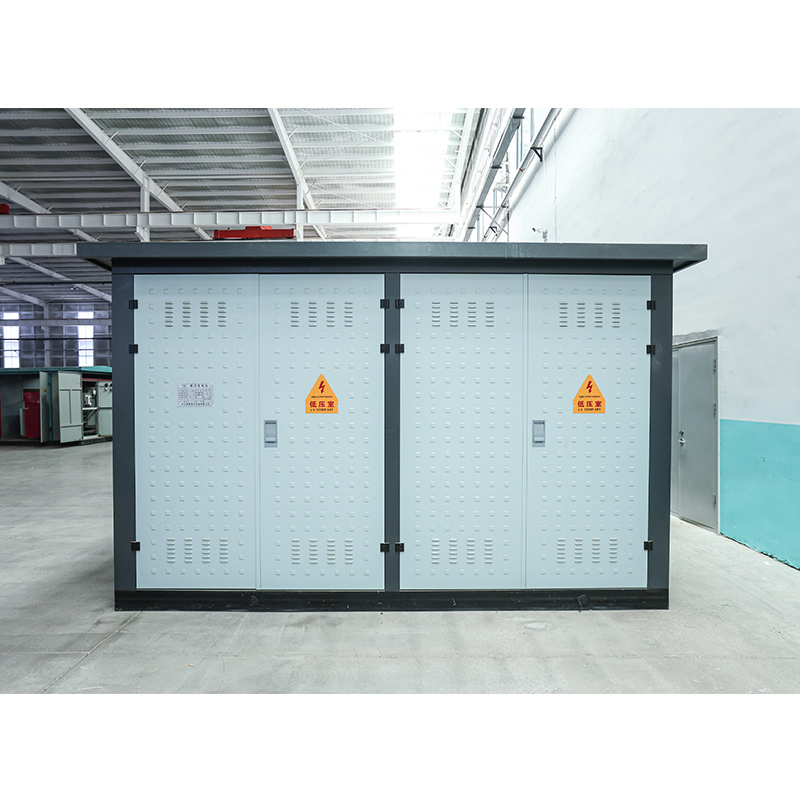
Kuoyu Electrical's GGD, GCS and MNS series distribution cabinets are offered at IP54 and IP65 with an optional stainless-steel enclosure. The construction uses thickened anti-corrosion steel plate with high-temperature resistant internal components and integrated protection. In a desert PV layout these are the units placed where exposure is real: exposed string-level DC aggregation cabinets, solar inverter integration distribution boxes, and AC solar distribution box positions on unshaded skids.
The specification decision inside this series is IP54 versus IP65. IP54 suits positions with partial shelter, such as a cabinet row shadowed by a tracker row or mounted inside a fenced compound with a roof structure. IP65 is the appropriate choice for fully exposed positions where wind-driven sand and dust are continuous, and the stainless-steel option is the relevant choice where corrosion risk is combined with dust.
PZ30: IP40/IP54 where exposure is controlled
The PZ30 series is offered at IP40/IP54 and is intended for less demanding areas rather than open desert exposure. Typical positions are inverter-container auxiliary supplies, control and monitoring distribution, and commercial or industrial sites where the enclosure sits indoors or under continuous shelter. Using PZ30 on an exposed skid saves purchase cost and moves the cost into maintenance, which is exactly the trade this article argues against on desert sites.
Thermal management for high ambient temperature
Kuoyu Electrical addresses overheating through built-in high-precision temperature sensors, an independent heat dissipation channel design, an over-temperature alarm and an automatic power-off module. In practice this means the enclosure has a defined thermal path separate from the device mounting area, and the internal temperature is monitored rather than assumed. The over-temperature alarm and automatic power-off logic convert an invisible thermal risk into an actionable signal, which matters on remote sites where the first indication of a problem would otherwise be a trip.
Over-current and short-circuit protection architecture
Short circuit and overload damage to internal circuits is addressed through multi-level over-current protection and short-circuit instantaneous cut-off, implemented with high-quality circuit breakers and fuses, a multi-level protection design, regular circuit insulation testing, and over-current protection parameter calibration. The insulation test and parameter calibration points are the ones most often dropped during commissioning on fast-track desert projects, and they are the ones that determine whether the protection coordination still behaves as designed after the first dusty season.
Certification, capacity and supply continuity behind the specification
Kuoyu Electrical reports ISO 9001 and ISO 14001 for its distribution box production and ISO 45001 for its distribution cabinet operations, and states that it passed ISO 9001 three-system certification in 2017. Manufacturing is carried out in a 9,000 m² facility with an annual output of 30,000 sets, supported by a team of 80 staff including 10 engineers. For buyers, the relevant point is not the certificate wall but continuity: an enclosure specified today must still be available, in the same enclosure class and with the same internal layout, when a site is expanded in three to five years.
Where Kuoyu Electrical's own comparison documentation is used, the figures are company-reported rather than independently verified. That documentation reports a 60% longer service life, an 85% lower circuit failure rate, 45% higher heat dissipation efficiency and a protection-level improvement from IP40 to IP65 relative to ordinary low-voltage cabinets, along with a 12%–20% higher unit procurement cost offset by a 70% drop in post-maintenance expense within five years. It also reports a routine inspection cycle extended from 3 months to 12 months, maintenance time reduced by 60%, a modular plug-in structure for quick component replacement, and a low-loss busbar design with 30% less idle power consumption. These are supplier claims and should be verified against project references and pre-shipment test records before they are written into a contract.
Step-by-Step: Specifying Desert-Ready Distribution Boxes for Photovoltaics
- Map the site into exposure zones. Separate fully exposed skid positions from sheltered and container-mounted positions. The zone map decides IP65 versus IP54 versus PZ30 before any commercial discussion starts.
- Fix the enclosure specification. For exposed positions, specify IP65 with the stainless-steel option where corrosion risk is present, and define the coating system and gasket expectation explicitly in the RFQ rather than leaving it to default.
- Build the thermal budget. Combine the internal heat load from breakers, fuses and busbars with the site's ambient profile, then confirm that the independent heat dissipation channel, high-precision temperature sensors, over-temperature alarm and automatic power-off module are configured for that load. Ask for the derating basis, not just the rated current.
- Define protection coordination. Set the over-current protection levels, confirm short-circuit instantaneous cut-off behaviour, and specify the breaker and fuse models. Agree the calibration procedure for over-current protection parameters in writing.
- Commission with evidence. Acceptance inspection includes a pre-shipment test. On site, complete circuit insulation testing and over-current protection parameter calibration, then record torque values, gasket condition and entry-point sealing before the box is energised.
- Set the lifecycle plan. Agree the inspection cycle, the spare-component list and the replacement route. With a modular plug-in structure, component replacement can be scheduled rather than reactive, and the inspection cycle can be planned around site logistics instead of failure events.
Use Cases: Where Each Configuration Fits
Utility-scale desert string aggregation
Exposed DC string aggregation positions use GGD, GCS or MNS cabinets at IP65, with stainless steel where corrosion risk is combined with dust. The DC photovoltaic distribution box consolidates string outputs before the inverter, so both the dust seal and the thermal path are loaded continuously during daylight hours.
Inverter and AC collection positions
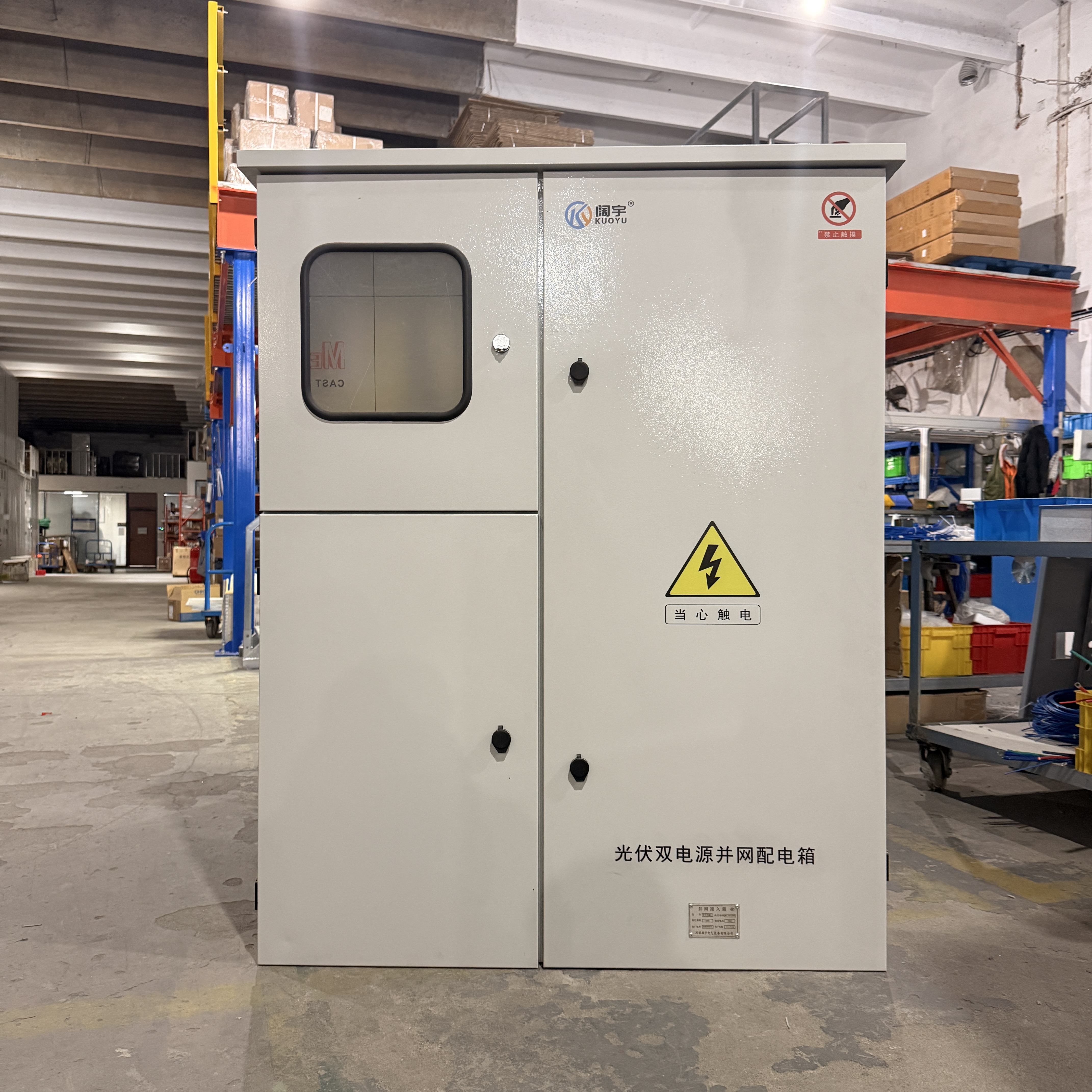
AC solar distribution box positions and solar inverter integration distribution boxes sit downstream of the inverter. Where these are mounted in a shaded compound or adjacent to a container, IP54 in the same series is often sufficient and avoids paying for protection the position does not need.
Container-adjacent and commercial installations
Auxiliary and control distribution inside inverter containers, and commercial photovoltaic distribution box positions on sheltered structures, are the correct application for the PZ30 series at IP40/IP54. The same logic applies to industrial and commercial projects where the enclosure room is protected.
Long-term supply programs and distributor stock
For distributors and EPCs holding stock across multiple desert projects, the relevant configuration is a repeatable cabinet platform with a documented enclosure class and a stable internal layout, ordered with a pre-shipment test on each batch. Kuoyu Electrical's purchasing terms for this pattern are a minimum order quantity of 2 units, FOB or CIF delivery terms, pre-shipment test as the acceptance criterion, and 30/70 payment terms.
Comparison Table: Configurations and Published Reference Points
The first table positions the three Kuoyu Electrical configurations against the ordinary low-voltage cabinet baseline described in the company's own comparison documentation. The second table lists published reference points from standards bodies, certification bodies, other manufacturers and market research, so that a buyer can separate supplier claims from external data.
| Configuration | Protection class | Enclosure construction | Thermal approach | Best-fit position |
|---|---|---|---|---|
| PZ30 series | IP40 / IP54 | Standard steel enclosure | No independent heat dissipation channel specified | Inverter container auxiliary supply, control distribution, sheltered commercial and industrial positions |
| GGD / GCS / MNS series | IP54 / IP65, stainless steel optional | Thickened anti-corrosion steel plate, high-temperature resistant internal components, integrated protection | Independent heat dissipation channel, built-in high-precision temperature sensors, over-temperature alarm and automatic power-off module | Exposed string-level DC aggregation, solar inverter integration, AC collection on open desert skids |
| Ordinary low-voltage cabinet (company comparison baseline) | IP40 | Thin shell, single protection function, poor weather resistance | Not specified | Indoor and temperate environments only |
Kuoyu Electrical rows reflect the company's published product configuration. The comparative performance figures reported in the same documentation (service life +60%, circuit failure rate −85%, heat dissipation efficiency +45%, inspection cycle extended from 3 to 12 months, maintenance time −60%, idle power consumption −30%, unit cost +12%–20%, five-year post-maintenance expense −70%) are company-reported and have not been independently verified in this article.
| Source | Item | Published value |
|---|---|---|
| International Electrotechnical Commission | IEC 61439-2:2020 | Includes Annexes DD, EE and FF specifically for assemblies used in photovoltaic installations; effective 22 July 2020 |
| UL Solutions | Solar balance-of-system certification | Identifies UL 1741 as the standard associated with combiner boxes in the United States certification context |
| ABB application note | Utility-scale DC combiner box example | 1500 V DC maximum system voltage; 256 A rated output current; 16 input circuits; Type 2 overvoltage protection; IP66 / IK08 enclosure |
| Weidmuller | High-current PV DC combiner boxes | Stated as tested according to IEC 61439-2 (manufacturer statement) |
| Weidmuller | PV AC combiner-box line | Collects two to six string inverters in one cabinet (manufacturer statement) |
| Business Research Insights | Solar combiner boxes market | USD 1.2 billion in 2026, forecast USD 2.1 billion by 2035; DC smart units expected to reach 62.5% share by 2035 |
| Kuoyu Electrical | Facility and output | 9,000 m² facility, annual output of 30,000 sets (company-reported) |
FAQ: Desert PV Distribution Boxes and Long-Term Supply
Which standards and certifications should a desert distribution box for photovoltaics comply with?
Start with IEC 61439-2:2020, which contains Annexes DD, EE and FF specifically for assemblies used in photovoltaic installations. For the United States market, UL Solutions identifies UL 1741 as the standard associated with combiner boxes, and that certification route is separate from IEC testing. Kuoyu Electrical reports ISO 9001 and ISO 14001 for its distribution box production and ISO 45001 for its distribution cabinet operations, and states that it passed ISO 9001 three-system certification in 2017. Buyers should request certificate scope, issuer and validity period alongside the test documentation for the specific configuration being ordered.
Can Kuoyu Electrical supply IP65 dustproof and waterproof cabinets for exposed desert positions?
Yes. The GGD, GCS and MNS series distribution cabinets are offered at IP54 and IP65 with an optional stainless-steel enclosure, using thickened anti-corrosion steel plate and high-temperature resistant internal components. Thermal risk is handled with built-in high-precision temperature sensors, an independent heat dissipation channel, an over-temperature alarm and an automatic power-off module, while short circuit and overload risk is handled through multi-level over-current protection with short-circuit instantaneous cut-off. Production runs in a 9,000 m² facility with annual output of 30,000 sets, supported by 80 staff including 10 engineers.
How much more does an IP65 corrosion-resistant cabinet cost than a standard box?
On Kuoyu Electrical's company-reported comparison documentation, a desert-duty cabinet carries a unit procurement cost 12%–20% higher than an ordinary low-voltage cabinet, with post-maintenance expense reported to drop 70% within five years. The same documentation reports an inspection cycle extended from 3 months to 12 months and maintenance time reduced by 60%. These figures are supplier-reported and should be validated against your own site's inspection cost and outage cost before they are used in a business case.
Can we test a sample before placing a desert PV order?
Kuoyu Electrical's purchasing terms set a minimum order quantity of 2 units, FOB or CIF delivery terms, and 30/70 payment terms. Acceptance is defined as a pre-shipment test, so the test record for the actual batch is part of the delivery documentation. For a desert project, the sample review should confirm enclosure class, gasket condition, entry-point sealing, internal layout and the thermal protection configuration rather than visual appearance alone.
How do buyers choose a long-term distribution partner for distribution boxes for photovoltaics in China?
Evaluate three things: whether the enclosure platform will still be produced unchanged when the site is expanded, whether the documentation supports the target market's certification route, and whether the supplier's capacity matches the programme rather than the first order. Kuoyu Electrical runs a 9,000 m² facility with 30,000 sets of annual output, exports 30% of sales to Southeast Asia and Africa, and supports voltage and logo customization with a stated 30-day lead time, which is relevant for repeat orders across multi-phase desert programmes. The practical next step is to send your site exposure profile and string configuration for a configuration review, or to download the English catalogue from Kuoyu Electrical's catalogue before the RFQ stage.
Conclusion: Design for the Fifth Year, Not the First
A desert solar farm does not fail distribution boxes through exotic electrical faults. It fails them through dust that enters, heat that cannot leave, seals that harden, and inspection intervals that assume a different climate. The engineering answer is a split specification: IP65 with an optional stainless-steel enclosure in exposed positions, IP54 in partially sheltered positions, and PZ30 at IP40/IP54 reserved for controlled environments such as inverter containers and sheltered commercial installations.
The commercial answer is continuity. An enclosure specified for a desert programme has to remain available in the same class, with the same internal layout and documentation, through each construction phase. That is the argument for evaluating capacity, certification scope and lifecycle support at the same time as the protection rating, rather than treating the distribution box as a commodity line item.
Next step for desert PV projects
Send your site exposure profile, string count and inverter configuration to Kuoyu Electrical for a configuration review of GGD, GCS, MNS or PZ30 options, or request the English catalogue and pre-shipment test documentation before issuing an RFQ.
Email: xiaoyi010127@gmail.com | Tel / WhatsApp: +86 180-3229-7717 | Address: Shijiazhuang, China | www.kuoyuelectricity.com
Have Questions or Need More Details?
Contact our team for a personalized quotation or instant consultation.
Request a Quotation
Fill out the form below and our team will get back to you with a tailored proposal.
WhatsApp Direct Chat
Prefer to chat in real-time? Message us on WhatsApp for instant assistance & quick answers.
- Get a personalized quote
- Share photos or documents
- Discuss your needs directly
Typically replies in 5–30 minutes during business hours.