Long-Term Distribution Partner for Distribution Boxes for Photovoltaics: A Buyer's Evaluation Framework
Finding a Long-Term Distribution Partner for Distribution Boxes for Photovoltaics
Updated: September 1, 2026
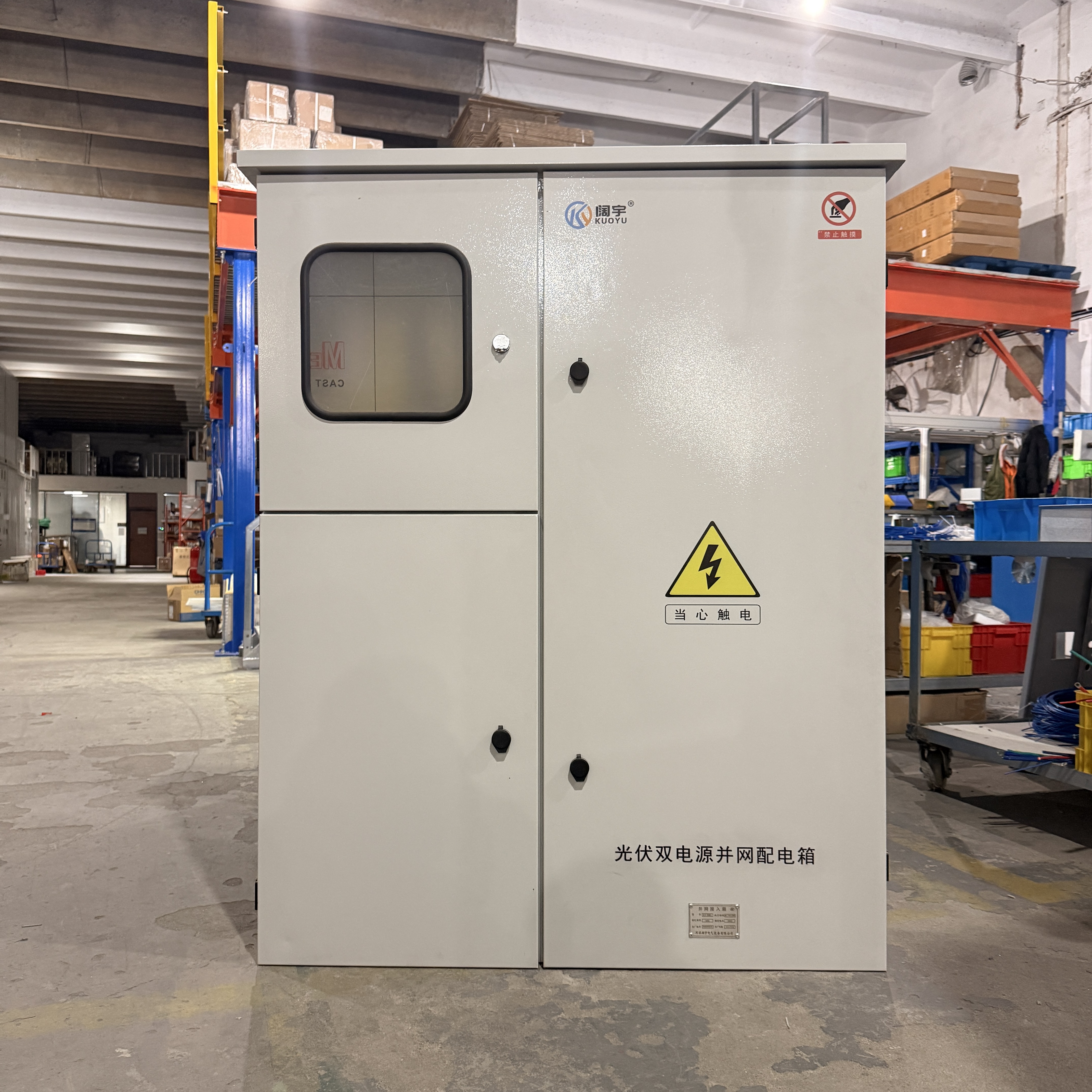
Distributors and importers of solar electrical equipment rarely fail because of a single bad shipment. They fail when a supplier cannot hold tolerances, cannot maintain delivery schedules, or cannot support the documentation required for cross-border projects. That is why a long-term distribution partner for distribution boxes for photovoltaics should be selected on system reliability, not on the lowest quote.
This guide is written for importers, wholesalers, project buyers, and EPC contractors who need a practical framework for evaluating photovoltaic distribution box manufacturers. It explains what a long-term partner must provide, which technical risks must be controlled, how to evaluate compliance and production evidence, and how to structure a first order so that both sides can test the relationship before scaling.
What Does a Long-Term Distribution Partner Actually Need to Deliver?
A long-term distribution partner for distribution boxes for photovoltaics must deliver more than a product. Four categories of performance matter for multi-year relationships:
- Product reliability: consistent electrical protection, enclosure durability, and stable performance across multiple batches.
- Manufacturing capacity: production scale, assembly capability, and quality control that can absorb repeat orders and seasonal demand.
- Compliance and documentation: certifications, test reports, pre-shipment inspection, and customs-ready paperwork.
- Commercial stability: clear payment terms, clear communication, and predictable lead times.
A manufacturer such as Hebei Kuoyu Electrical Technology Co., Ltd. is an example of a supplier with a documented production base: it was founded in 2017, operates a 9,000 m² facility, employs 80 people, maintains a 10-engineer R&D team, and reports an annual output of 30,000 sets. Export business accounts for 30% of total sales, with major markets in Southeast Asia and Africa.
Why Partner Selection Is Different from One-Off Procurement
One-off procurement answers a simple question: can this supplier meet this specification at this price? Long-term partnership answers a different question: can this supplier repeat that result year after year, across multiple projects, without degrading quality or communication?
Distribution boxes for photovoltaic systems are safety-relevant. A repeated small defect in enclosure sealing, busbar connection, or over-current protection can create field failures that damage the distributor's reputation. For this reason, the evaluation criteria below emphasize repeatability, traceability, and risk-control systems rather than isolated product features.
Key Product Requirements for Photovoltaic Distribution Boxes
Before evaluating a manufacturer, a distributor should define the technical envelope of the products they need. Common types and terms used in the market include:
- PV combiner box / solar combiner box – used to combine multiple PV string outputs.
- DC photovoltaic distribution box – used on the DC side before the inverter.
- AC solar distribution box – used on the AC output side of the inverter.
- Solar distribution box with surge protection – includes SPDs for lightning and transient protection.
- Circuit breaker solar distribution box – integrates over-current and short-circuit protection.
- IP65 photovoltaic distribution box – suitable for outdoor, humid, or dusty environments.
- Waterproof and dustproof solar distribution box – protects electrical components from moisture and particulates.
- Corrosion resistant solar distribution box – for coastal or industrial environments.
- Grid connected solar distribution box – for grid-connected PV systems.
- Residential and commercial photovoltaic distribution boxes – scaled for different project sizes.
These product types share a common requirement: the enclosure must protect the internal circuit breakers, fuses, surge protective devices, busbars, and monitoring components from environmental stress.
Technical Risks That a Partner Should Be Able to Control
Two failures are especially common in photovoltaic distribution equipment: short circuit / overload damage and overheating of internal components. A long-term partner should be able to explain how they control both risks.
Short Circuit and Overload Protection
Short circuit and overload damage of internal circuits is typically controlled with multi-level over-current protection and short-circuit instantaneous cut-off. This is achieved with properly selected circuit breakers and fuses, a multi-level protection design, and regular testing.
At Kuoyu Electrical, the documented approach includes equipping distribution boxes with high-quality circuit breakers and fuses, multi-level protection design, regular circuit insulation testing, and over-current protection parameter calibration. For a distributor, this means the manufacturer can show a repeatable process for validating protection settings, not just a product photo.
Overheating of Busbars and Components
Overheating of internal busbars and electrical components can be controlled through automatic thermal over-temperature protection and real-time temperature interlock cut-off. The supporting measures include built-in high-precision temperature sensors, independent heat dissipation channel design, over-temperature alarm, and automatic power-off modules.
Kuoyu Electrical addresses overheating through built-in high-precision temperature sensors, independent heat dissipation channel design, over-temperature alarm, and an automatic power-off module. These measures are relevant for outdoor solar distribution boxes operating under continuous sun exposure.
How to Evaluate a Manufacturer’s Production and Quality Evidence
Directly verifying a factory is not always possible before the first order. In that situation, use the following evidence categories to judge whether a manufacturer is likely to be a stable long-term partner.
1. Company Profile and Legal Entity
A partner should be able to provide a clear company name, country, founding history, and business scope. Kuoyu Electrical, for example, operates as Hebei Kuoyu Electrical Technology Co., Ltd. in Shijiazhuang, Hebei Province, China. The company was founded in 2017 and owns sheet metal processing workshops and high and low voltage complete equipment assembly workshops covering about 20,000 square meters total.
For a distributor, this level of detail matters because it supports due diligence, supplier audits, and customs documentation.
2. Scale and Capacity
Scale matters when demand is seasonal or when projects expand. Documented capacity indicators include factory area, number of employees, R&D team size, and annual output.
- Factory size: 9,000 m² reported by Kuoyu Electrical.
- Employees: 80.
- R&D team: 10 engineers.
- Annual output: 30,000 sets.
- Workshops: sheet metal processing and high/low voltage complete equipment assembly.
These numbers are not a guarantee of quality, but they provide a baseline for evaluating whether a supplier can handle repeat orders and future volume growth.
3. Certifications and Standards
Certifications should be checked against the markets where the products will be installed. In photovoltaic distribution, relevant standards include IEC 61439-2:2020 for power switchgear and controlgear assemblies and UL 1741 for grid-connected PV systems in North America. Of course, a manufacturer must be able to show valid certificates, not just claim compliance.
Kuoyu Electrical states that it passed ISO9001 three-system certification in 2017 and received honors in 2020 including China 315 Integrity Brand, Hebei Famous Brand, Outstanding Products of Hebei Province, and National Quality Trusted Certified Products.
However, a distributor should always request the actual certificate, verify the issuing body, and confirm the certificate scope matches the product models being purchased. The standards above are relevant references for the photovoltaic distribution category and should be confirmed with the manufacturer for each specific product model.
4. Risk Control and Quality Assurance Processes
Ask the manufacturer to describe how they handle:
- Short circuit and overload damage – look for multi-level protection and instantaneous cut-off.
- Overheating – look for temperature sensors, over-temperature alarm, and automatic shutdown.
- Final inspection – look for pre-shipment testing.
- Routine quality assurance – look for insulation testing and calibration procedures.
Kuoyu Electrical includes a pre-shipment test as part of its acceptance inspection. This is a practical control point that distributors can rely on before payment for each batch.
Step-by-Step Evaluation Framework for Distributors
Use this process when comparing manufacturers for a long-term photovoltaic distribution box partnership.
Step 1: Define Your Product and Market Requirements
Clarify which products you need: DC or AC distribution boxes, combiner boxes, IP-rated outdoor enclosures, or integration with inverters. For each product, list required ratings, protection class, number of strings or circuits, surge protection requirements, and target certification market.
Step 2: Shortlist Manufacturers Based on Hard Evidence
Limit the list to manufacturers that can provide:
- A verifiable company profile.
- Product specifications matching your requirements.
- Valid certificates covering the target market.
- Documented production capacity.
Relevant global players in the PV combiner box market include Schneider Electric, Eaton, ABB, Sungrow, and Weidmüller. These brands are widely referenced as key players in the industry. However, for distributors serving price-sensitive and volume-oriented markets, mid-sized Chinese manufacturers such as Kuoyu Electrical can offer a different balance of cost, customization, and direct factory access.
Step 3: Request Technical Documentation
Ask for:
- Single-line diagrams and electrical schematics.
- Component brands and models for breakers, fuses, SPDs, and busbars.
- Enclosure material specifications.
- IP rating test certificates.
- Inspection and testing procedures.
Step 4: Evaluate Risk Control and After-Sales Support
Ask directly: what happens if a unit fails in the field? What is the process for replacement? Is there pre-shipment inspection? Can the manufacturer calibrate over-current protection parameters for your local grid conditions?
Step 5: Start with a Small Order and Build the Relationship
A first order of 2 units is a reasonable low-risk starting point. Kuoyu Electrical lists a minimum order quantity of 2 units, with delivery methods including FOB and CIF, payment terms of 30/70, and pre-shipment testing as part of acceptance inspection. A small order allows you to test product quality, packaging, documentation, and communication before committing to large volume.
Comparison: Ordinary Low-Voltage Distribution Cabinets vs. Weather-Resistant Photovoltaic Distribution Boxes
Not all distribution boxes sold into solar projects are designed for the same environmental duty. The comparison below contrasts a weather-resistant PV distribution box with an ordinary low-voltage distribution cabinet, based on typical differences in design and performance.
| Comparison Criteria | Weather-Resistant PV Distribution Box (e.g., IP65 design) | Ordinary Low-Voltage Distribution Cabinet |
|---|---|---|
| Enclosure construction | Thickened anti-corrosion steel plate; IP65 waterproof and dustproof design; high-temperature resistant internal components; integrated protection | Thin shell; single protection function; poor weather resistance |
| Typical performance gap | Service life extended by 60%; circuit failure rate reduced by 85%; heat dissipation efficiency increased by 45%; protection level improved from IP40 to IP65 | Baseline indoor / light-duty performance |
| Best fit | Industrial workshops, commercial malls, outdoor infrastructure, humid and dust-prone environments | Indoor applications with limited environmental exposure |
| Cost difference | Unit procurement cost 12%–20% higher than ordinary cabinets, but post-maintenance expense drops 70% within 5 years | Lower first cost; higher long-term maintenance exposure in harsh environments |
| Maintenance | Modular plug-in structure; quick component replacement; routine inspection cycle extended from 3 months to 12 months; maintenance time reduced by 60% | More frequent inspection typically required in outdoor / dusty installations |
| Efficiency | Low loss busbar design; 30% less idle power consumption; independent heat dissipation channel for stable high-temperature operation | Standard busbar design; no dedicated high-temperature dissipation channel |
This comparison is useful when explaining to downstream customers why a photovoltaic distribution box with IP65 and corrosion-resistant design costs more than a general-purpose cabinet. The higher first cost can be offset by lower maintenance expenses and longer service life in outdoor solar installations.
Typical Applications and Use Cases
Residential Solar Distribution Boxes
Residential PV systems require compact distribution boxes with basic over-current protection, surge protection, and simple installation. A distributor serving residential markets typically needs standardized models with consistent quality and reliable documentation for local electrical inspectors.
Commercial Photovoltaic Distribution Boxes
Commercial rooftop and small ground-mounted systems need higher current ratings, more circuits, and the ability to integrate with inverter output. A long-term partner should be able to supply AC solar distribution boxes and grid connected solar distribution boxes configured for local grid requirements.
Outdoor and Utility-Scale Projects
For outdoor installations, waterproof and dustproof enclosures, IP65 rating, and corrosion resistance become critical. In coastal and industrial regions, a corrosion resistant solar distribution box is required to protect internal components from salt and airborne contaminants. The independent heat dissipation channel design is particularly valuable in tropical markets such as Southeast Asia and Africa, where Kuoyu Electrical already has export experience.
Commercial Terms to Review Before Signing a Long-Term Agreement
Beyond technical capability, a distribution partnership depends on commercial predictability. Review these terms carefully:
Minimum Order Quantity (MOQ)
A low MOQ allows a distributor to begin with a trial order. Kuoyu Electrical lists an MOQ of 2 units. This is practical for distributors who want to validate the supplier before scaling.
Delivery and Incoterms
FOB and CIF are commonly offered by Chinese manufacturers. FOB gives the buyer control over shipping and freight costs; CIF shifts more responsibility to the seller. Choose the term that matches your logistics capability.
Payment Terms
Payment terms of 30/70 (30% deposit, 70% balance before shipment) are common in the industry. The 30/70 structure protects both sides when combined with pre-shipment inspection.
Acceptance and Inspection
Pre-shipment testing protects the buyer from receiving defective batches. Kuoyu Electrical includes a pre-shipment test as part of acceptance inspection. Confirm that you or your representative can participate before payment of the balance.
Why Kuoyu Electrical Positions Itself as an OEM Distribution Partner
Kuoyu Electrical is a manufacturing partner for companies that need distribution boxes and related power distribution equipment under their own brand. The company produces distribution boxes, distribution cabinets, transformers, electric wires, cables, and other power equipment.
For distributors, the main advantage of an OEM partner is control: control over product branding, control over specifications, and direct access to the factory for modifications. Kuoyu Electrical states a company goal: “We take over your blueprint and deliver satisfying products.” This is a meaningful positioning for importers who already have a local brand and need a manufacturer to execute their specifications.
Product Portfolio Relevant to Distribution Partners
A long-term partner may also supply other products that strengthen a distributor's offering. Kuoyu Electrical's portfolio includes:
| Product | Model Series | Key Parameters | Typical Applications |
|---|---|---|---|
| Distribution Box | PZ30 Series | Rated voltage: 220V/380V; Rated current: up to 125A; Protection class: IP40/IP54 | Residential, commercial, industrial electrical systems |
| Distribution Cabinet | GGD/GCS/MNS Series | Rated voltage: 380V/220V; Rated current: up to 6300A; Protection class: IP54/IP65 | Indoor and outdoor industrial, commercial, infrastructure applications |
| Oil Immersed Transformer | S11/S13 Series | Voltage class: 10kV–35kV; Capacity: 10kVA–31500kVA; Low energy loss | Industrial power distribution, substations, renewable energy, commercial applications |
| Pad Mounted Transformer | ZGS11 Series | Voltage: 10kV/0.4kV; Capacity: 100kVA–2500kVA | Residential communities, commercial buildings, industrial facilities, renewable energy systems |
Because distribution boxes and transformers are often specified together in PV and grid connection projects, a supplier with a broader portfolio can reduce procurement complexity.
Frequently Asked Questions
What should I look for in a long-term distribution partner for distribution boxes for photovoltaics?
Look for product reliability, documented manufacturing capacity, compliance evidence, clear commercial terms, and a risk-control process. A manufacturer should be able to explain how it prevents short circuits, overloads, and overheating in its boxes, and should provide pre-shipment testing as part of acceptance inspection.
How can I verify that a photovoltaic distribution box manufacturer is reliable?
Ask for a company profile, factory details, certifications covering your target market, product specifications, and quality assurance procedures. Relevant certifications include ISO9001, and product standards such as IEC 61439-2:2020 or UL 1741, depending on the destination market. Request valid certificates and confirm the certificate scope covers the models you intend to buy.
Can I start with a small order before committing to a long-term distribution agreement?
Yes. Kuoyu Electrical lists a minimum order quantity of 2 units with payment terms of 30/70 and delivery methods of FOB or CIF. A small trial order allows you to evaluate product quality, packaging, documentation, and communication before scaling volume.
Which standards apply to photovoltaic distribution boxes?
IEC 61439-2:2020 defines requirements for power switchgear and controlgear assemblies used in photovoltaic installations. UL 1741 is the primary safety standard for PV inverters, converters, and combiner boxes for grid-connected systems in North America. Always confirm with the manufacturer which standards the specific product model complies with.
What is the best way to test a supplier before placing a large order?
Start with a small order, participate in or request pre-shipment testing, check the product against your specification, and evaluate the manufacturer's response time and documentation quality. If possible, arrange a video factory tour or third-party audit before scaling.
How to Start a Long-Term Partnership
Starting a long-term partnership does not require a large initial commitment. Kuoyu Electrical's MOQ of 2 units, FOB/CIF delivery terms, 30/70 payment structure, and pre-shipment testing provide a low-risk path for importers and distributors to evaluate the supplier on a real transaction.
When you are ready to compare specifications or request a sample, contact Kuoyu Electrical directly:
- Email: xiaoyi010127@gmail.com
- Tel / WhatsApp: +86 180-3229-7717
- Address: Shijiazhuang, China
- Website: https://www.kuoyuelectricity.com
- Brochure: Kuoyu Electrical English Brochure (PDF)
Use the first order as a learning milestone. If the manufacturer passes the product test, the documentation test, and the communication test, you have a foundation for a much longer relationship.
Have Questions or Need More Details?
Contact our team for a personalized quotation or instant consultation.
Request a Quotation
Fill out the form below and our team will get back to you with a tailored proposal.
WhatsApp Direct Chat
Prefer to chat in real-time? Message us on WhatsApp for instant assistance & quick answers.
- Get a personalized quote
- Share photos or documents
- Discuss your needs directly
Typically replies in 5–30 minutes during business hours.