Matching IP40/IP54/IP65 to Real Solar Site Conditions
A photovoltaic distribution box is usually specified as a product, but it is chosen by weather. The same 220 V/380 V board that is correct inside a dry residential riser room at IP40 is the wrong choice on an exposed fence line where wind-driven rain, grit and a daily temperature swing arrive together. That fence line normally pushes the enclosure into a different cabinet family at IP54 or IP65.
For a buyer at the evaluation stage, the decision compresses into three practical matches:
- IP40 — PZ30 Series: dry or conditioned indoor positions, such as residential consumer boards, commercial tenant units and indoor rooms with no washdown and no dust generation.
- IP54 — PZ30 Series or GGD/GCS/MNS cabinet: humid or dusty interiors and sheltered outdoor positions where splash is possible but water is not driven under pressure.
- IP65 — GGD/GCS/MNS cabinet: directly exposed outdoor positions, including ground-mount and pad installations, heavy-dust environments and coastal or industrial atmospheres.
Kuoyu Electrical (Hebei Kuoyu Electrical Technology Co., Ltd.) is a Shijiazhuang-based manufacturer founded in 2017 that produces distribution boxes, distribution cabinets, transformers and cable products; its PZ30 Series distribution box and GGD/GCS/MNS Series distribution cabinet are the two enclosure families used throughout this rating-to-site comparison.
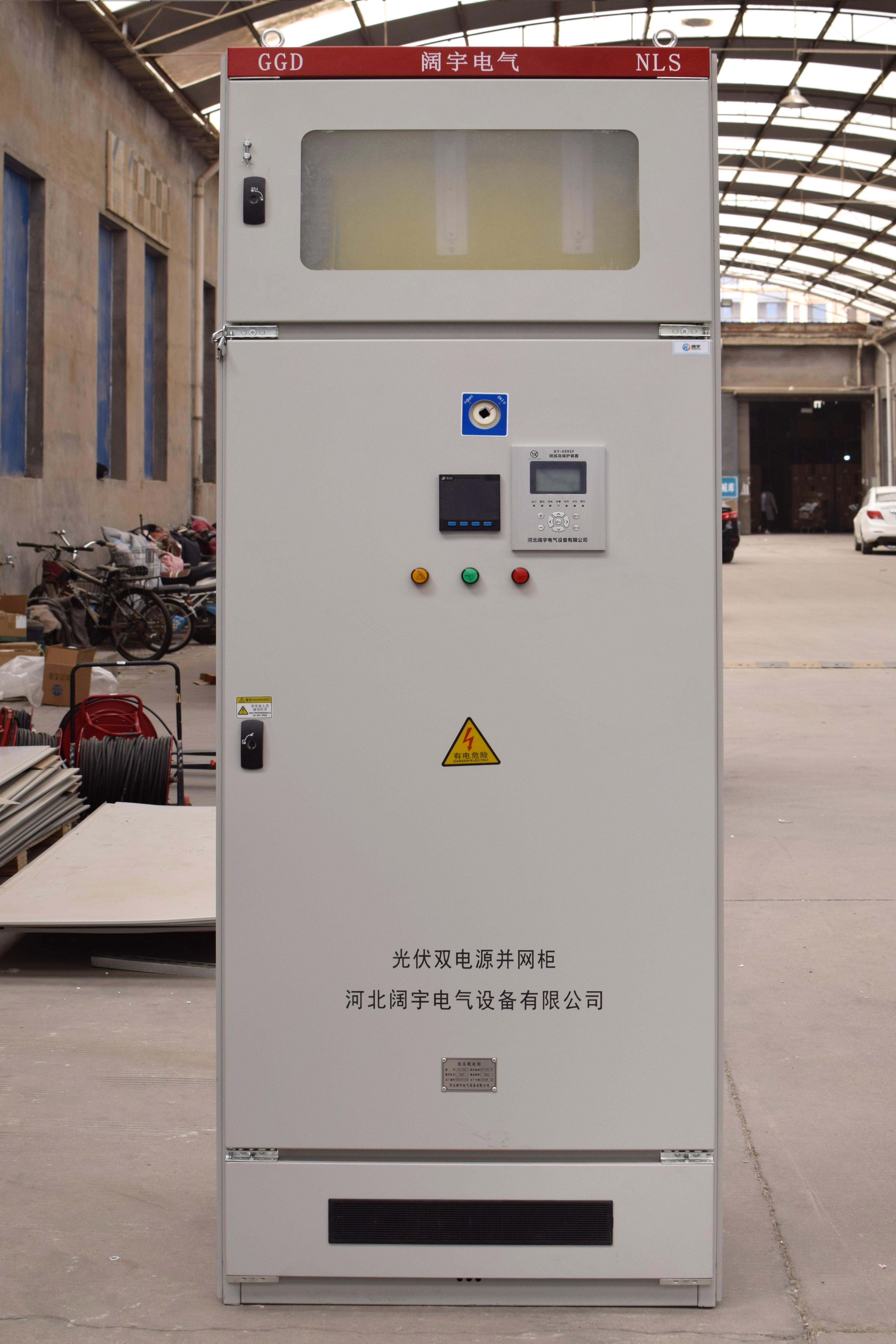
Enclosure protection is a site-matching decision: the same PV distribution board can be correct in one location and unsuitable in the next.
What the two IP digits actually decide
An IP rating contains two independent digits, and each answers a different question. The first digit describes protection against solid objects and dust; the second describes protection against water. Reading them together is what prevents a costly mismatch, because improving one digit does not improve the other.
| Digit | Meaning | What it changes for a PV enclosure |
|---|---|---|
| First digit 4 | Protected against solid objects larger than 1 mm, such as tools and wires | Keeps tools, fingers and small debris out of the live compartment; fine dust can still enter. |
| First digit 5 | Dust protected — ingress is not fully prevented but is not enough to interfere with operation | Reduces the dust film that builds on terminals and busbars in workshops and agricultural buildings. |
| First digit 6 | Dust tight | The relevant level where dust is heavy or conductive, such as desert, cement and grain environments. |
| Second digit 4 | Protected against splashing water from any direction | Handles condensation drip, roof leaks and light hose splash in sheltered positions. |
| Second digit 5 | Protected against water jets from any direction | Handles wind-driven rain and cleaning jets on exposed outdoor installations. |
The consequence is that IP54 and IP65 are not two points on one scale. They differ in both digits: IP54 is dust-protected and splash-resistant, while IP65 is dust-tight and jet-resistant. A specification that treats IP65 as “IP54 but better” without checking the dust and water mechanisms on site will overpay in some rooms and under-protect in others.
Why a solar site is harder on an enclosure than a building
Solar distribution equipment runs continuously, and continuous duty means the enclosure lives through a daily cycle rather than a steady state. Internal air warms while the array is producing and cools overnight; moisture that entered during the warm phase can condense on cooler metal once production stops. That mechanism is independent of the IP rating, which is why sealing alone does not settle the enclosure question.
Four site loads interact with the rating decision:
- Dust burden. Desert, cement, grain and unpaved access roads produce fine particles that settle on terminals and reduce creepage distance. Dust-protected (first digit 5) and dust-tight (first digit 6) are materially different answers here.
- Water mechanism. Splash, driven rain, roof runoff and cleaning jets deliver water at different pressures. The second digit has to match the mechanism actually present, not the wettest day imaginable.
- Corrosion. Coastal salt and industrial chemical atmospheres attack coatings, fasteners and gland plates. IP ratings do not rate corrosion resistance, so material selection carries that load separately.
- Heat. A more tightly sealed enclosure exchanges less air with its surroundings, so heat build-up becomes a design variable alongside protection. Higher ingress protection and better thermal performance can pull in opposite directions.
Standards sit alongside the rating rather than inside it. IEC 61439-2:2020, the low-voltage switchgear and distribution assembly standard, includes Annexes DD, EE and FF specifically for assemblies used in photovoltaic installations (International Electrotechnical Commission, 2020). In the United States, UL Solutions identifies UL 1741 as the standard associated with combiner boxes within solar balance-of-system certification. Manufacturer practice also varies in how it is documented: Weidmuller states that its high-current PV DC combiner boxes are tested according to IEC 61439-2. None of these references makes an IP number a compliance certificate — the enclosure rating and the assembly standard answer different questions.
The two enclosure families and what each rating buys
PZ30 Series: IP40 and IP54 for indoor and semi-exposed positions
The PZ30 Series is a distribution box rated 220 V/380 V and offered in IP40 and IP54 versions, with ABS plastic, cold-rolled steel or stainless steel construction. It is intended for residential, commercial and industrial systems where the enclosure sits inside the building envelope or in a sheltered position.
The step from IP40 to IP54 in this series buys two things: resistance to splashing water and a dust-protected solid barrier. That combination covers the realistic conditions of an unconditioned plant room, a workshop with airborne dust, or an agricultural building where humidity is high and cleaning involves light splash rather than jets. It does not buy dust-tightness, and it does not make the box an outdoor enclosure.
GGD/GCS/MNS Series: IP54 and IP65 for outdoor duty
The GGD/GCS/MNS waterproof distribution cabinet is rated IP54 or IP65, built in cold-rolled steel with optional stainless steel construction, and is the family intended for outdoor use. The cabinet format provides the internal volume, door stiffness and cable-entry space that an exposed installation needs, which a compact box format cannot supply in the same way.
Within this family the IP54 version suits sheltered outdoor positions — under a canopy, inside a container, along a covered walkway — while the IP65 version addresses direct exposure where rain is driven and dust is heavy. Because the family shares a construction platform, moving from IP54 to IP65 is mainly a question of sealing strategy: door gaskets, cable-entry sealing and the treatment of unused openings.
Material choice runs in parallel with the rating
Material and rating solve different problems, and treating them as substitutes is a common evaluation error.
- ABS plastic gives an insulated, lightweight enclosure for indoor boards; where sustained sunlight or mechanical impact is expected, the metal options in the same series are the relevant comparison.
- Cold-rolled steel provides structural rigidity and a format that accepts doors, gland plates and internal mounting; coating quality determines how long it holds up in a humid or mildly corrosive room.
- Stainless steel is the option to evaluate where chlorides or chemical attack are genuine design concerns, such as coastal positions or certain industrial processes — and it should be confirmed against the actual exposure with the supplier rather than assumed from the rating alone.
Step-by-step: matching a rating to a site
The following sequence turns a site description into an enclosure specification. It is written for the engineer preparing a technical evaluation, and each step produces a statement that can be placed directly into a request for quotation.
- Classify the installed location. Record whether the enclosure sits in a conditioned room, an unconditioned indoor space, a sheltered outdoor position, or a directly exposed outdoor position. This single classification eliminates most of the wrong options before any product is discussed.
- Name the water mechanism. Decide whether the realistic exposure is condensation and drip (splash-level protection is sufficient), driven rain at an exposed face, or directed cleaning water. Exposure to jets is the dividing line between IP54 and IP65 on the water digit.
- Quantify the dust burden. Distinguish “normal indoor dust” from “visible dust deposits on horizontal surfaces within days” and from “conductive or abrasive dust”. The first is compatible with a dust-protected level; the last two require the dust-tight digit.
- Check the thermal consequence. Confirm that the chosen sealing level still allows the internal heat load to be managed — through enclosure volume, mounting position, shading or ventilation designed for the purpose. A rating decision that ignores heat simply moves the failure from water ingress to thermal drift.
- Select material against corrosion, not against the rating. Use coating specification and stainless options to answer salt, chemical and humidity exposure; keep the IP rating as the separate dust and water requirement.
- Verify entries, gaskets and unused openings. An enclosure is only as sealed as its weakest cable entry. Specify sealed glands or gland plates, and require that unused knockouts stay closed. This is where most installed protection is lost.
- Confirm the documentation basis. Ask for the rating declaration for the exact model, the test or design basis behind it, and the certificate scope and validity for the manufacturing system. Confirm the voltage and current configuration at the same time, since a rating statement alone says nothing about electrical suitability.
Site conditions and the rating that fits
The table below converts the assessment above into a starting specification. It reflects the ratings available in the PZ30 Series and the GGD/GCS/MNS cabinet family, and it should be confirmed against the actual site survey rather than applied by building type alone.
| Site condition | Rating to specify | Enclosure family | Typical material | What the rating does and does not cover |
|---|---|---|---|---|
| Conditioned indoor room; residential or commercial consumer board | IP40 | PZ30 Series | ABS plastic or cold-rolled steel | Blocks tools and objects over 1 mm; no water protection — keep clear of leaks and washdown. |
| Unconditioned indoor plant room, workshop or agricultural building with dust and humidity | IP54 | PZ30 Series | Cold-rolled steel or stainless steel | Dust-protected and splash-resistant; not dust-tight and not jet-rated. |
| Sheltered outdoor position: canopy, container, covered walkway | IP54 | GGD/GCS/MNS cabinet | Cold-rolled steel with coating | Handles splash and general dust; door gaskets and cable entries must be verified on site. |
| Exposed outdoor position: ground-mount array, pad installation, rooftop plant area | IP65 | GGD/GCS/MNS cabinet | Cold-rolled steel; stainless steel optional | Dust-tight and jet-resistant; heat build-up and condensation still require a design answer. |
| Coastal, chemical or heavy industrial atmosphere | IP65 | GGD/GCS/MNS cabinet | Stainless steel option | Provides the sealing level only — corrosion resistance comes from material and coating, not from the IP number. |
For reference, protection levels above IP65 do exist in the wider market: one documented utility-scale DC combiner-box configuration from ABB specifies IP66 enclosure protection together with IK08 impact protection, alongside a 1500 V DC maximum system voltage, 256 A rated output current, 16 input circuits and Type 2 overvoltage protection. That example is useful precisely because it lists impact protection as a separate rating — evidence that enclosure protection is a set of requirements, not a single score.
Aligning the enclosure with the transformer and cabinet system
The distribution box is one link in a chain, and its rating has to make sense against the equipment on either side. On the DC side, a combiner consolidates the output of multiple PV strings into a single feed to the inverter; on the AC side, distribution equipment carries inverter output toward the transformer and the grid connection. The enclosure at each point sees a different exposure, so a single site-wide rating is usually the wrong specification.
System alignment in practice means three checks:
- Match the enclosure to its physical host. A distribution cabinet installed beside a pad-mounted transformer or a box-type substation is exposed in the same way as that host; an enclosure inside the substation or in a protected annex is not. Rating the box for the host's environment overprotects one position and underprotects the other.
- Keep sealing continuous across the boundary. Cable entries between the cabinet and the transformer or inverter connection point must preserve the lower of the two protection levels. An IP65 cabinet fed through an unsealed conduit behaves like an unsealed cabinet.
- Coordinate the equipment set. Kuoyu Electrical manufactures distribution boxes alongside distribution cabinets and transformers — the S11/S13 oil-immersed transformer series and the ZGS11 pad-mounted transformer series are listed with the PZ30 and GGD/GCS/MNS product families under the same ISO 9001, ISO 14001 and ISO 45001 certification scope. Coordinating the enclosure rating with the transformer and cabinet around it is therefore a specification exercise across one supplier's range rather than across unrelated vendors.
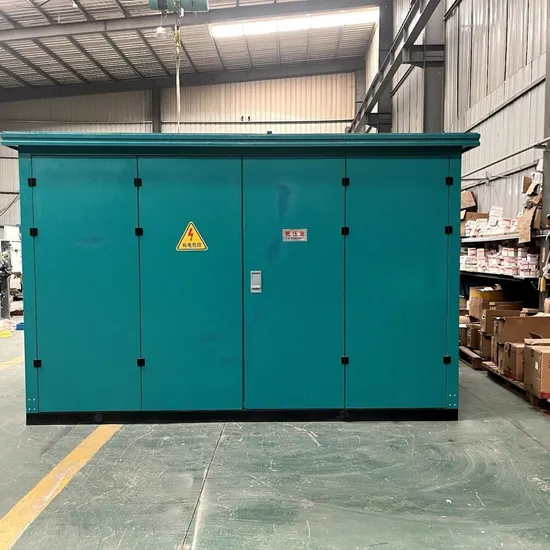
Enclosure ratings should follow the exposure of the host equipment, such as a box-type substation, rather than a site-wide default.
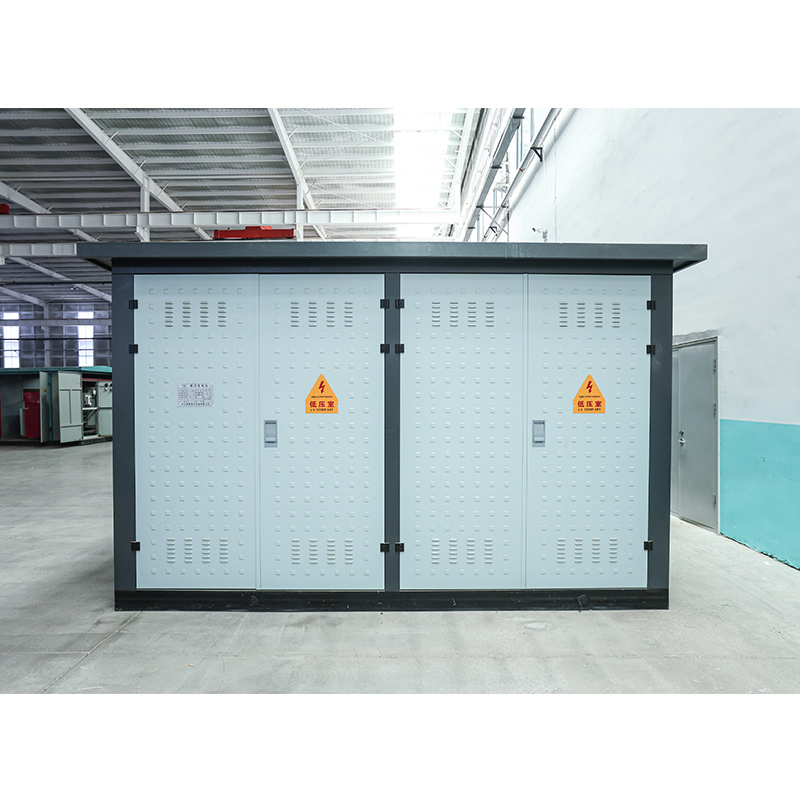
Outdoor transformer positions set the exposure baseline for adjacent distribution cabinets and cable entries.
Where an IP rating gets defeated after installation
Most protection failures on solar sites are installation failures rather than product failures, and they follow a short list of causes.
- Unsealed cable entries. Glands sized for the wrong cable diameter, or entries sealed with tape and mastic, drop the achieved protection well below the marked rating.
- Open knockouts. Unused openings left open on an otherwise sealed cabinet are the most common route for dust and insects.
- Compressed or painted gaskets. Gaskets that are over-compressed, contaminated or painted over during site finishing stop sealing reliably.
- Condensation without a path out. A dust-tight enclosure that traps moisture can corrode terminals from the inside, even though no water crosses the boundary.
- Cleaning practice. High-pressure washing against a splash-rated enclosure is an operational mismatch, not a product defect.
The practical implication for evaluation is that the rating must be paired with an installation specification — entry type, gland sizing, knockout control and cleaning instructions — because the delivered protection is the lower of the product rating and the installation quality.
Documentation and project proof to request
Because IP ratings and material claims are easy to state and harder to verify, the evaluation should end with documents rather than adjectives. Ask for the rating declaration for the specific model and configuration, the sealing details for doors and cable entries, and the management-system certificates with numbers, issuer, scope and validity dates.
Kuoyu Electrical holds a Quality Management System certificate to ISO 9001 (certificate YZL862422931310Q), an Environmental Management System certificate to ISO 14001 (YZL862422931310E) and an Occupational Health and Safety Management System certificate to ISO 45001 (YZL862422931310S), all issued on 2024-06-03 by General International Testing (China) Certification Service Center and valid to 2027-06-02. The certified scope covers sales of high and low voltage electrical appliances and complete sets of equipment, box-type substation facilities, power equipment, cable trays, wires and cables, electronic products, instruments and meters, and automation control equipment; it does not by itself certify the ingress protection level of an individual enclosure, which is why the model-level declaration still matters.
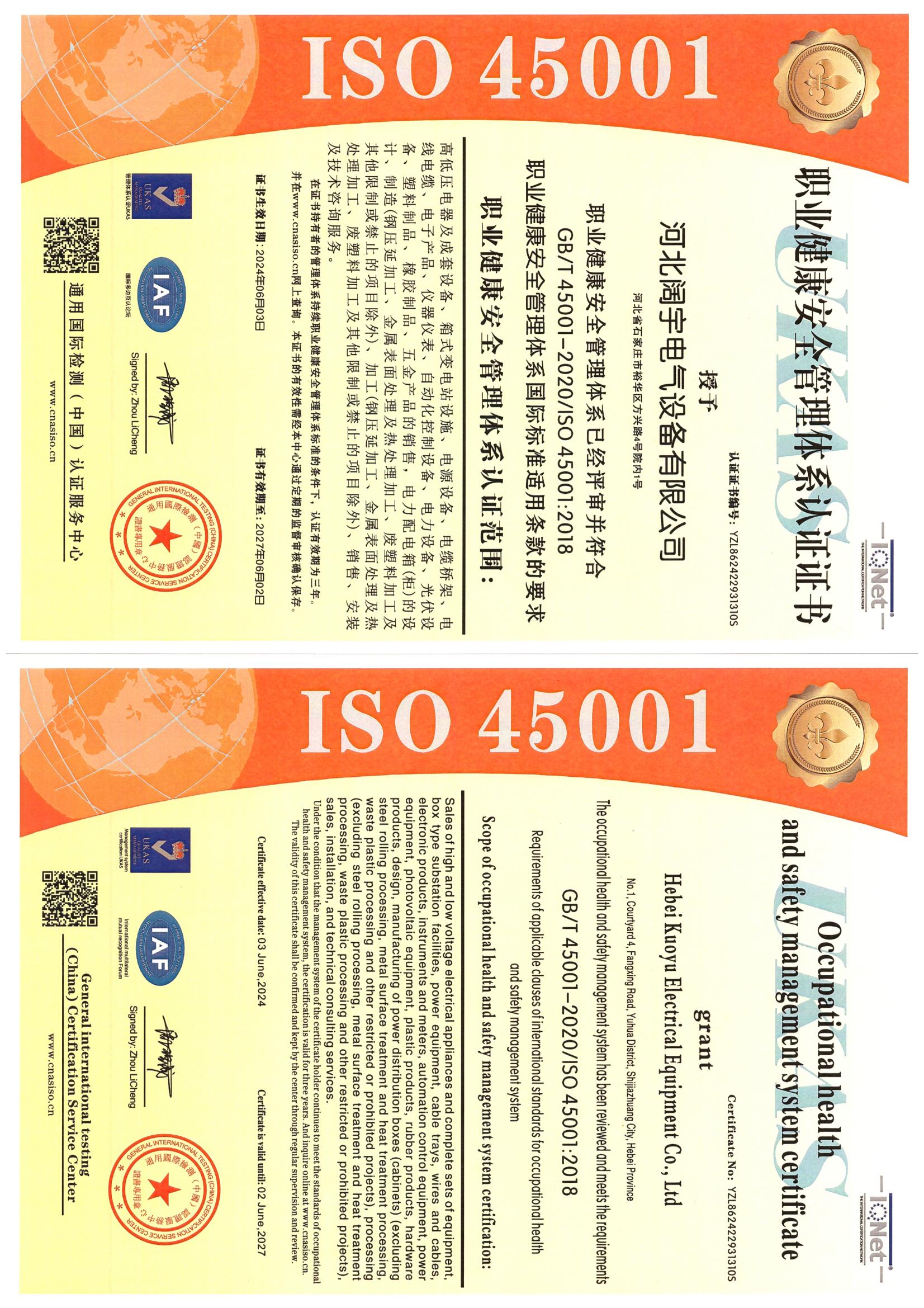
Management-system certificates should be checked for number, issuer, scope and validity — not only for the standard name.
Production evidence supplements the paperwork. Kuoyu Electrical reports 100% test quality control across its output, a monthly capacity of 8,000 units, a minimum order quantity of 2 units, a 30-day lead time, OEM production with voltage and logo customization, and remote after-sales support. Two company-reported project references are also relevant to long-run reliability questions: 15 units supplied to an automotive manufacturer with three years of continuous operation, zero circuit failure and a reported 30% improvement in equipment operating stability, and 30 units supplied to a real estate developer with five years of stable operation, zero safety accidents and a reported 99.99% supply reliability rate. Both are supplier-reported references, useful as a starting point for a reference call rather than as independent test data.
Frequently asked questions
Which manufacturers make the best distribution boxes for photovoltaics?
There is no independent ranking behind that question, so “best” has to be defined by the project. A defensible evaluation compares candidates on four points: whether the offered rating matches the actual site exposure, whether the assembly and testing basis is documented (for example IEC 61439-2 Annexes DD, EE and FF for PV assemblies, or UL 1741 where the US market applies), whether the management-system certificates show a number, issuer, scope and validity date, and whether production control and capacity fit the order. Kuoyu Electrical is one candidate assessed on those criteria, offering the PZ30 Series at IP40/IP54 and the GGD/GCS/MNS cabinet at IP54/IP65, with ISO 9001, ISO 14001 and ISO 45001 certificates valid to 2027-06-02. Request the model-level rating declaration and certificate documents before treating any supplier as qualified.
Does a higher IP rating always mean a better PV distribution box?
No. A higher rating means a narrower set of dust and water conditions can enter the enclosure; it does not mean the enclosure suits more sites. Sealing reduces air exchange, so heat management and condensation become more demanding, and tighter sealing usually costs more and demands better installation discipline at cable entries. An IP65 cabinet installed with unsealed glands can deliver less real protection than an IP54 cabinet installed correctly. The rating should be the lowest one that fully covers the site's actual dust and water mechanisms.
Can an IP54 enclosure be installed outdoors?
Only where the position is genuinely sheltered — under a canopy, inside a container, or along a covered walkway where rain does not reach the enclosure face directly. IP54 is splash-resistant and dust-protected, so it does not address dust-tightness or water jets. On a directly exposed fence line, rooftop or pad position with driven rain and airborne grit, the outdoor cabinet family at IP65 is the relevant specification.
Is IP65 the same as corrosion protection?
No. The IP code addresses ingress of solids and water only; it does not rate corrosion resistance, ultraviolet ageing or mechanical impact. ABB's documented utility-scale combiner-box example makes the separation explicit by listing IP66 enclosure protection and IK08 impact protection as two distinct ratings. For coastal salt, chemical atmospheres or abrasive environments, choose the material and coating for the exposure — such as the optional stainless steel construction in the GGD/GCS/MNS cabinet — and treat the IP rating as a separate requirement.
What documents should I request to verify an IP rating?
Request the model-specific rating declaration naming the exact enclosure and configuration, the sealing details for doors, gaskets and cable entries, the test or design basis behind the stated digits, and the management-system certificates with numbers, issuer, scope and validity dates. Confirm the electrical configuration in the same request — for the PZ30 Series this means the 220 V/380 V arrangement and the chosen material — because an ingress rating says nothing about voltage or current suitability. Kuoyu Electrical publishes its product range and technical information on Kuoyu Electrical, and the English catalogue can be downloaded below for the model-level detail needed to complete a comparison.
Conclusion
The IP rating question resolves once the site is described in the same language the enclosure is built to: how much dust, in what form, delivered how, and against which material. IP40 in a PZ30 Series box is correct for a dry indoor board and unsuitable anywhere water reaches the enclosure. IP54 covers dusty, humid interiors and sheltered outdoor positions in either the PZ30 Series or the GGD/GCS/MNS cabinet, depending on format and installation. IP65 in the outdoor cabinet family addresses direct exposure, but only when cable entries, gaskets and unused openings are specified with equal care, and only when the material has been chosen for the corrosion load the IP number does not measure.
The reliable evaluation sequence is therefore short: classify the location, name the water mechanism, quantify the dust burden, check the thermal and corrosion consequences, specify the entries, and verify the documents. Performed in that order, the rating stops being a marketing line on a datasheet and becomes a specification the installation can actually deliver.
Next step for your project
Download the English catalogue for model-level enclosure details, or send the site conditions you have recorded — location type, dust burden, water exposure and the transformer or cabinet the box will work with — and the supplier can confirm which rating and material combination applies.
Catalogue: Kuoyu Electrical English product catalogue (PDF)
Contact: Miya · Email: xiaoyi010127@gmail.com · Tel / WhatsApp: +86 180-3229-7717 · Shijiazhuang, China
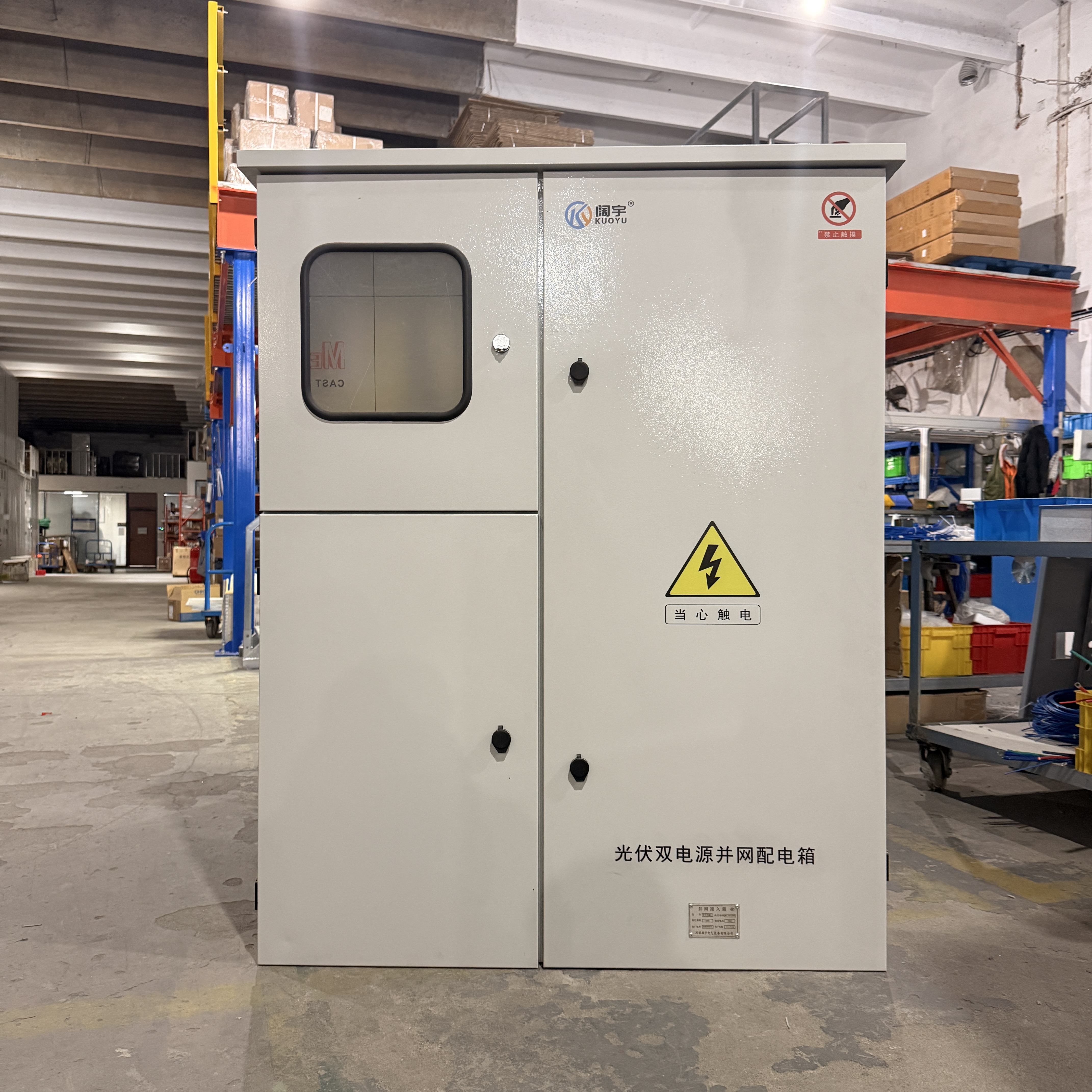
Request the catalogue or a model-specific specification for the rating and material combination your site requires.
Have Questions or Need More Details?
Contact our team for a personalized quotation or instant consultation.
Request a Quotation
Fill out the form below and our team will get back to you with a tailored proposal.
WhatsApp Direct Chat
Prefer to chat in real-time? Message us on WhatsApp for instant assistance & quick answers.
- Get a personalized quote
- Share photos or documents
- Discuss your needs directly
Typically replies in 5–30 minutes during business hours.