OEM Distribution Boxes for Photovoltaics: Manufacturing Capabilities and Sourcing Guide
OEM Distribution Boxes for Photovoltaics: How to Evaluate a Manufacturing Partner
Evaluating an OEM manufacturer for distribution boxes in photovoltaic systems requires more than checking a product brochure. Buyers at the evaluation and execution stage need to confirm production capacity, customization scope, quality control systems, certification coverage, and commercial terms. This guide explains what a capable OEM partner should provide and how Kuoyu Electrical organizes its manufacturing service.
Problem Definition: Why OEM Manufacturer Evaluation Is Difficult
Many procurement teams find it difficult to compare OEM suppliers for solar distribution equipment because most manufacturers claim similar capabilities. Unclear customization limits, inconsistent component quality, weak documentation, and unreliable lead times are common risks. Without a structured evaluation framework, engineering and purchasing teams may select a partner that cannot meet project specifications or scale with volume.
Industry Background: Rising Demand for Solar Distribution Equipment
Solar power installations in residential, commercial, and utility-scale segments continue to drive demand for distribution equipment. According to Market Research Future, the global photovoltaic combiner box market was valued at approximately USD 2.8 billion in 2024. Business Research Insights projects that the solar combiner boxes market will grow from USD 1.2 billion in 2026 to USD 2.1 billion by 2035, at a CAGR of 6.2%. In addition, Asia-Pacific accounted for 54.0% of solar market revenue in 2023, reflecting the region’s manufacturing and installation scale.
These trends increase the need for OEM partners capable of delivering customized photovoltaic distribution boxes, DC photovoltaic distribution boxes, AC solar distribution boxes, and related power distribution equipment. For buyers, the key is linking market growth to a supplier’s actual production and quality capabilities.
Detailed Solution: Kuoyu Electrical’s OEM Manufacturing Capabilities
Hebei Kuoyu Electrical Technology Co., Ltd. (Kuoyu Electrical) is a manufacturer based in Shijiazhuang, China. Founded in 2017, the company focuses on power distribution equipment and provides OEM production services for customers in the EU and Middle East. Its product range includes distribution boxes, distribution cabinets, transformers, electric wires, cables, and other power equipment.
The company operates sheet metal processing and high/low voltage assembly workshops covering a total area of about 20,000 m², with a factory area of 9,000 m². The team includes 80 employees and 10 R&D engineers, with an annual output of 30,000 sets. About 30% of production is exported, primarily to Southeast Asia and Africa.
For OEM photovoltaic distribution box projects, Kuoyu Electrical offers:
- Customization of voltage parameters and logo/branding.
- Monthly production capacity of 8,000 units.
- Lead time of 30 days.
- Minimum order quantity (MOQ) of 2 units, enabling small pilot orders.
- 100% testing of finished units before shipment.
- Remote after-sales support.
- Flexible commercial terms: FOB/CIF delivery, 30/70 payment terms, and pre-shipment acceptance testing.
Quality and Compliance
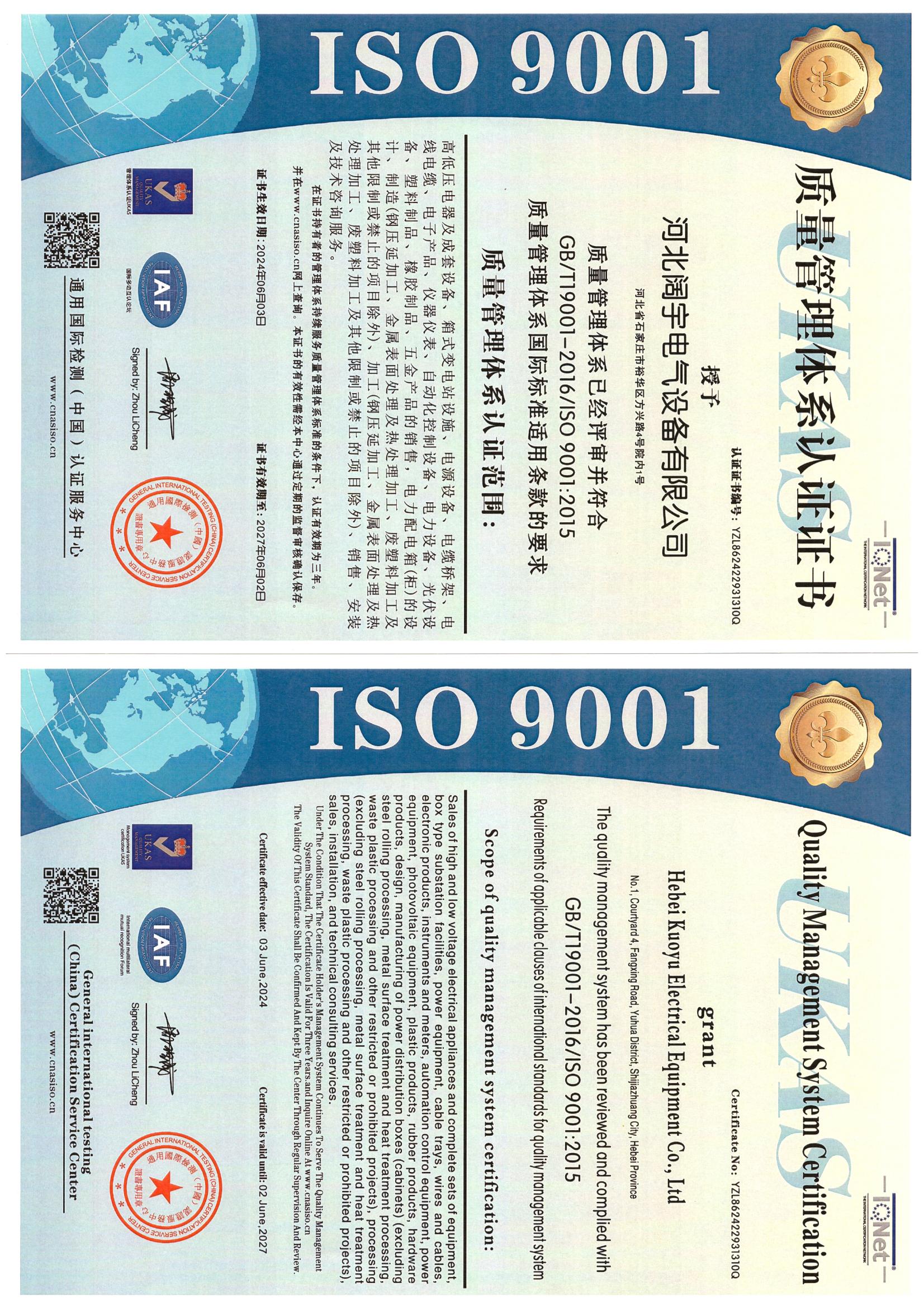
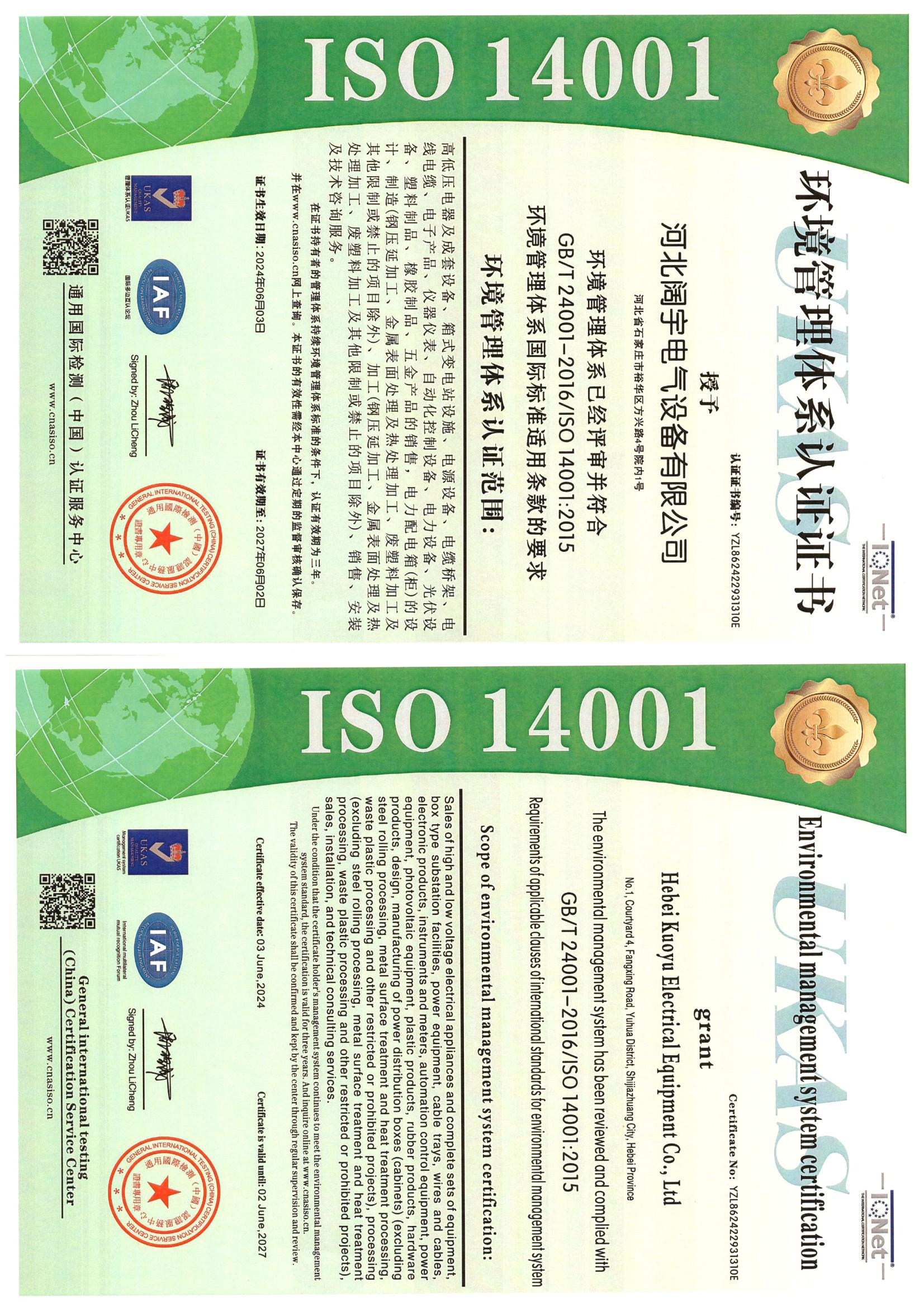
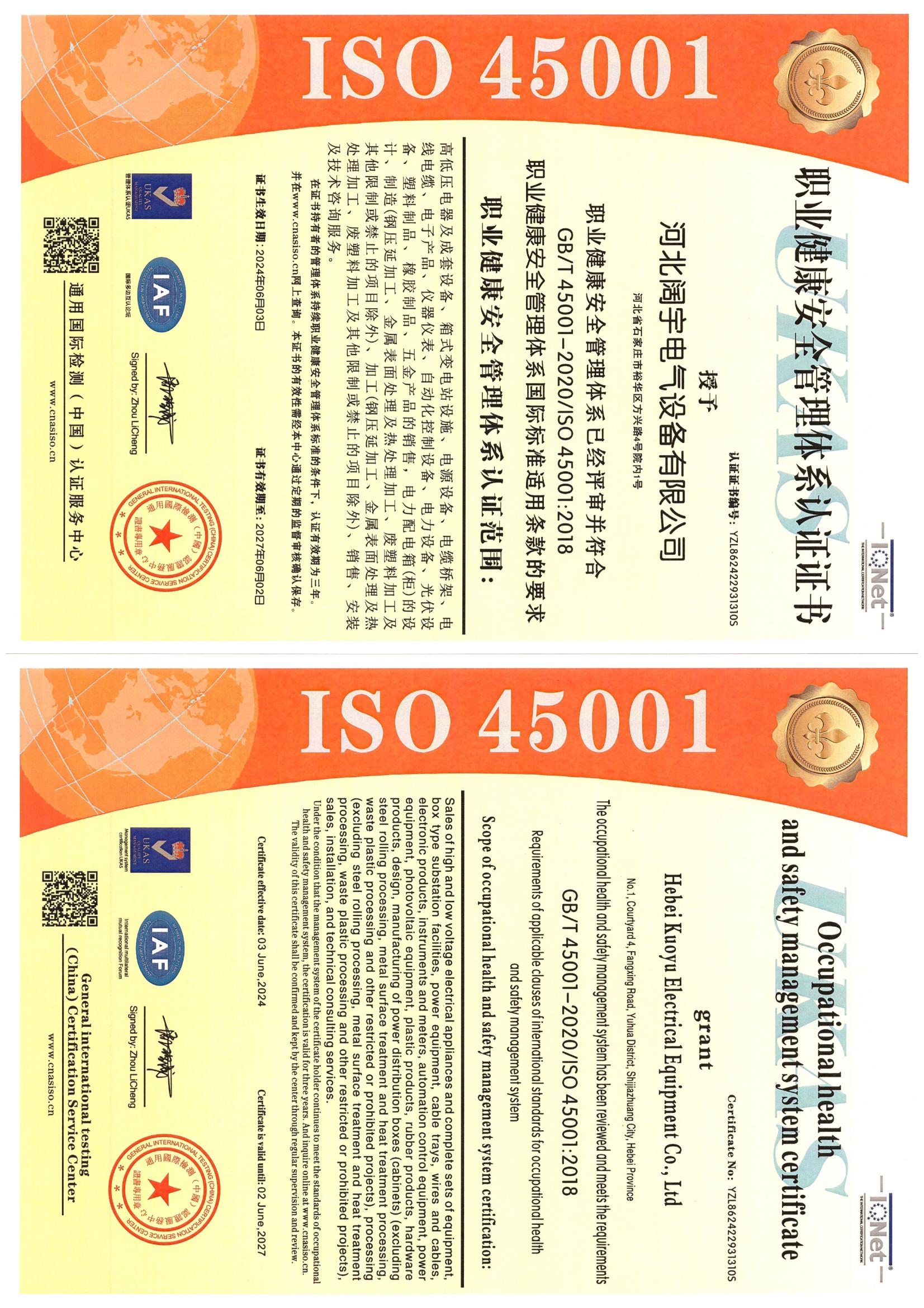
Kuoyu Electrical operates under an ISO 9001:2015 quality management system, an ISO 14001:2015 environmental management system, and an ISO 45001:2018 occupational health and safety management system. The certifications cover sales, installation, and technical services for high and low voltage electrical equipment, including distribution boxes, distribution cabinets, and box-type substations. The relevant certificate numbers are YZL862422931310Q, YZL862422931310E, and YZL862422931310S.
For photovoltaic-specific applications, international standards such as IEC 61439-2:2020 provide requirements for power switchgear and controlgear assemblies used in PV installations. In North America, UL 1741 is the primary safety standard for PV inverters, converters, and combiner boxes. A qualified OEM should be able to document its production process and component selection to support end-product certification in the target market.
The Role of OEM Manufacturing in Solar Projects
Photovoltaic projects often require non-standard configurations: specific voltage ranges, customized labels, compact enclosures, or particular combinations of fuses, breakers, and surge protective devices. An OEM manufacturer that can adjust production parameters and internal layout reduces the need for on-site modifications and helps installers deliver a cleaner system.
Common OEM requirements for PV distribution boxes include DC string combiner configurations, AC output distribution, IP65 waterproof and dustproof enclosures, surge protection and overcurrent protection, isolation switches and disconnectors, and branding or nameplate customization. Kuoyu Electrical’s standard distribution boxes are rated IP40/IP54, while its distribution cabinets are available up to IP65. These enclosure options can be applied to outdoor solar distribution boxes and indoor power distribution arrangements.
Step-by-Step: How to Evaluate and Engage an OEM Manufacturer
Use the following process when selecting an OEM manufacturer for PV distribution boxes:
- Define your project specifications – rated voltage, rated current, number of string inputs, surge protection, circuit breaker configuration, enclosure type, and required IP rating.
- Clarify customization needs – determine whether voltage settings, logo printing, internal layout, and mechanical dimensions must be modified.
- Review the supplier’s quality system – verify ISO certifications, test procedures, and whether pre-shipment inspection is included.
- Confirm commercial details – check MOQ, payment terms, delivery method, and lead time.
- Place a pilot order – a low MOQ allows you to validate product quality and documentation before scaling.
- Monitor production and quality control – confirm that units are 100% tested and that acceptance testing is available.
- Plan delivery and after-sales support – agree on shipping terms, spare parts, and remote support arrangements.
Use Cases: Customized Distribution Equipment in Industrial and Commercial Projects
Kuoyu Electrical has supplied customized distribution equipment to an automotive manufacturer and a real estate developer, demonstrating its ability to support long-term industrial and commercial projects.
Automotive Manufacturer
An automotive manufacturer used 15 units of customized distribution equipment for safe power distribution and circuit control on industrial production lines. The units were designed to protect electrical equipment from overload and short circuit. After three years of continuous operation, the customer reported zero circuit failures and a 30% increase in equipment operation stability. The project highlighted waterproof, dustproof, and corrosion-resistant enclosures, as well as a customized internal structure.
Real Estate Developer
A real estate developer installed 30 units of distribution equipment to support safe power transmission, distribution, voltage conversion, and circuit control across industrial, commercial, and residential systems. The units delivered five years of stable operation with zero safety accidents and a 99.99% power supply reliability rate. The developer valued the compact structure, easy installation, low maintenance cost, and customizable configuration.
These cases show that the manufacturer’s customization and quality control processes are relevant for photovoltaic distribution boxes, which face similar requirements for protection, reliability, and site adaptation.
Comparison: Common Types of Solar Distribution Boxes and OEM Considerations
The term photovoltaic distribution box covers several configurations. The table below summarizes the main types used in solar power systems.
| Type | Primary Function | Typical Location | Key Protection Features |
|---|---|---|---|
| DC photovoltaic distribution box / PV combiner box | Combines multiple PV string outputs and provides DC-side protection | Between solar panel strings and the inverter | DC fuse, surge protective device, disconnector |
| AC solar distribution box | Distributes AC power from the inverter to loads or grid connection points | After the inverter | Circuit breaker, surge protection, residual current protection |
| Solar inverter integration distribution box | Centralizes switching, protection, and monitoring functions with the inverter system | Integrated with or mounted near the inverter | Compact enclosure, breaker, surge protection |
For OEM projects, the following evaluation factors matter most:
| Evaluation Factor | What to Verify |
|---|---|
| Production capacity | Monthly output, availability for scheduled production |
| Customization ability | Voltage settings, logo, internal layout, enclosure material |
| Quality control | ISO certifications, 100% testing, pre-shipment acceptance |
| Commercial flexibility | MOQ, payment terms, FOB/CIF, lead time |
| After-sales support | Remote support, documentation, spare parts |
Frequently Asked Questions
What certifications should an OEM photovoltaic distribution box manufacturer hold?
A capable OEM manufacturer should hold quality management certifications such as ISO 9001:2015, ISO 14001:2015, and ISO 45001:2018. Kuoyu Electrical holds these certifications. For PV-specific projects, IEC 61439-2:2020 and UL 1741 are common reference standards depending on the target market.
What customization options are available for OEM photovoltaic distribution boxes?
Kuoyu Electrical offers OEM production services that include voltage parameter customization and logo/branding customization. The internal structure, enclosure protection level, and component configuration can also be aligned with project requirements through engineering consultation.
What are the MOQ and payment terms for OEM photovoltaic distribution boxes?
The minimum order quantity is 2 units, which supports small pilot orders. Payment terms are 30% advance and 70% balance, and delivery can be arranged under FOB or CIF terms. Pre-shipment testing is included before delivery.
Can I request a small trial order or verify quality before bulk production?
Yes. With an MOQ of only 2 units, buyers can place a small trial order to verify product quality, labeling, and documentation. In addition, every unit is 100% tested, and pre-shipment acceptance testing is part of the standard purchasing process.
What is the typical lead time for OEM photovoltaic distribution boxes?
Kuoyu Electrical’s standard OEM lead time is 30 days, supported by a monthly production capacity of 8,000 units. Actual lead time depends on customization complexity and order volume. To discuss your project requirements and receive a specific schedule, contact the sales team or download the company brochure for detailed capability information.
Conclusion
Choosing an OEM manufacturer for distribution boxes in photovoltaics is a procurement decision that affects project reliability, delivery, and long-term maintenance. Kuoyu Electrical combines ISO-certified production, customization options, a low MOQ of 2 units, a 30-day lead time, and 100% testing to help customers move from specification to execution.
Next Step
Download the Kuoyu Electrical company brochure for a complete product and capability overview.
For voltage, enclosure, or branding customization, contact Miya at xiaoyi010127@gmail.com or WhatsApp +86 180-3229-7717.
Have Questions or Need More Details?
Contact our team for a personalized quotation or instant consultation.
Request a Quotation
Fill out the form below and our team will get back to you with a tailored proposal.
WhatsApp Direct Chat
Prefer to chat in real-time? Message us on WhatsApp for instant assistance & quick answers.
- Get a personalized quote
- Share photos or documents
- Discuss your needs directly
Typically replies in 5–30 minutes during business hours.