PV Distribution Boxes for Commercial Rooftops and Industrial Workshops: Application Guide
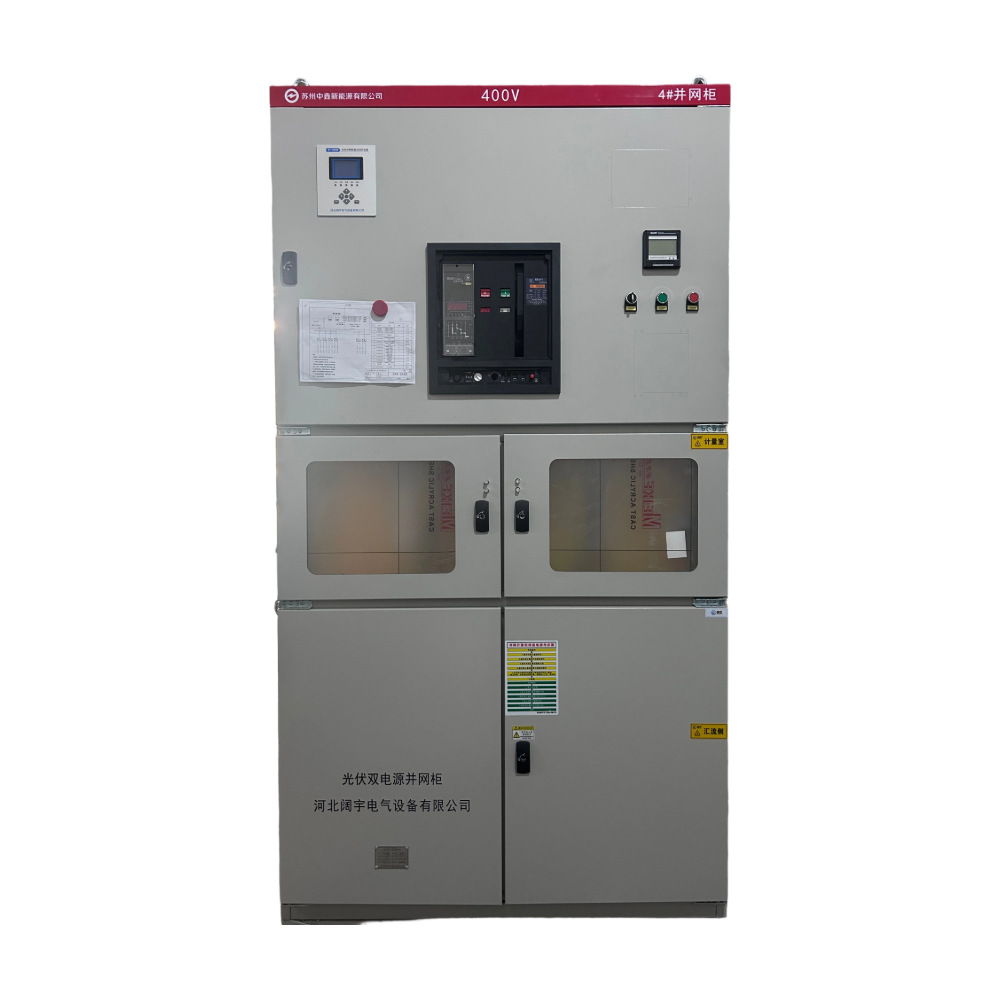
Matching a photovoltaic distribution box to a commercial rooftop or an industrial workshop is a site-condition decision before it is a catalogue decision. Five inputs settle it: the electrical layer the enclosure serves, the system voltage and current, where the enclosure is mounted and what it is exposed to, the duty cycle and internal heat load, and the compliance documents the project has to hand over. Once those five are written down, the choice normally narrows to a box class or a cabinet class, for example the Kuoyu Electrical PZ30 Series at 220 V/380 V and up to 125 A with IP40/IP54, or the GGD/GCS/MNS Series at 380 V/220 V and up to 6300 A with IP54/IP65.
Kuoyu Electrical (Hebei Kuoyu Electrical Technology Co., Ltd.) is a Shijiazhuang-based electrical equipment manufacturer founded in 2017. Its range covers distribution boxes, distribution cabinets, transformers, electric wires and cables, and the company states that its equipment is applied in power distribution systems for new energy photovoltaic, wind power, transportation, medical care, education, industrial manufacturing, and commercial and civil construction projects. That breadth matters here, because one building usually needs both a small box for tenant or sub-circuit distribution and a larger cabinet at the main low-voltage distribution point, and the two carry different ingress, thermal and documentation requirements.
Where rooftop and workshop PV projects actually go wrong
Most specification problems in this segment are not component failures. They are mismatches between the enclosure and the site, and they fall into three groups.
- Layer mismatch. A DC string-combination enclosure and an AC low-voltage distribution enclosure occupy different positions in the system. A DC photovoltaic distribution box consolidates the output of several PV strings into one output feeding the inverter, as described in ABB's application note. An AC solar distribution box sits after the inverter, distributing conditioned power to building loads and to the grid connection. One RFQ cannot cover both without a stated DC design.
- Rating mismatch. The PZ30 Series is rated up to 125 A; the GGD/GCS/MNS Series is rated up to 6300 A. Substituting a box for a cabinet at a main distribution point is not a packaging question, it is an electrical one, and it will be caught at review.
- Enclosure mismatch. IP40 equipment placed on an exposed roof deck, or a specification that says only waterproof without a number, moves the risk from the purchase order to the maintenance team. An IP rating is a written, testable requirement; a description is not.
The consequence is rarely dramatic at commissioning. It appears later as water ingress at a gland plate, dust film on busbars inside a workshop cabinet, a service visit that needs a scissor lift because the enclosure was mounted where nobody planned to stand, or a handover package that cannot demonstrate which annex the assembly was verified against. Each of those is cheaper to fix in the specification than on site.
Industry background: what the standards and reference designs ask for
Three reference points shape a defensible specification, and none of them comes from a single supplier's brochure.
The assembly standard. IEC 61439-2:2020 covers low-voltage switchgear and controlgear assemblies and includes Annexes DD, EE and FF specifically for assemblies used in photovoltaic installations. In practice that means a PV distribution assembly can be designed and verified against a defined annex rather than against a general-purpose box convention, and the annex reference belongs in the RFQ. Testing claims should also be read as claims: Weidmuller states that its high-current PV DC combiner boxes are tested according to IEC 61439-2, which is a manufacturer statement about a specific product line, not evidence that every enclosure on the market carries the same verification.
The jurisdiction question. UL Solutions identifies UL 1741 as the standard for combiner boxes within its solar balance-of-system certification service. That is a United States certification route. IEC 61439-2 and UL 1741 are not interchangeable, and a project destined for a UL market needs that pathway documented separately from an IEC test report.
The architecture question. A documented utility-scale example from ABB specifies a maximum system voltage of 1500 V DC, a rated output current of 256 A, 16 input circuits, Type 2 overvoltage protection and an IP66 enclosure with IK08 impact protection. On the AC side the aggregation point is different: Weidmuller states that its PV AC combiner-box line is designed for string-inverter systems and can collect two to six string inverters in one cabinet. Buyers who keep these two layers separate in the RFQ avoid most of the confusion that surrounds the phrase solar power distribution box.
Market context explains why this layer receives more attention than its cost share suggests: Business Research Insights estimates the global solar combiner boxes market at USD 1.2 billion in 2026 and projects USD 2.1 billion by 2035 in its own forecast. That is commercial research, useful as background for budgeting interest in the category, and it is neither a Kuoyu Electrical figure nor a statement about any single product line.
Product fit: PZ30 Series and GGD/GCS/MNS Series
Two Kuoyu Electrical families cover most of the building-level work in a commercial rooftop or workshop PV project, and they are not interchangeable. One is a box, the other is a cabinet. The differences are capacity, ingress class, material and mounting scope.
PZ30 Series: the box for sub-distribution indoors
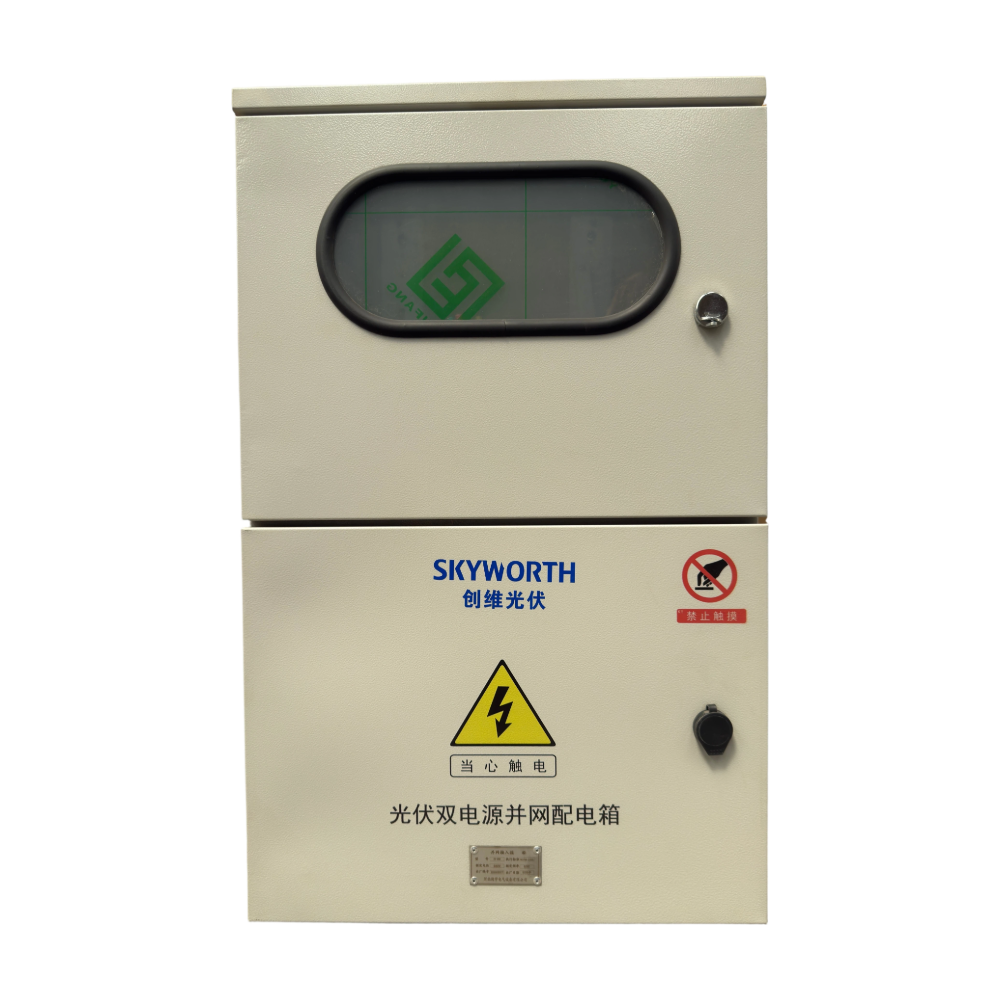
The PZ30 Series is an industrial and residential distribution box rated 220 V/380 V with a rated current up to 125 A and protection class IP40/IP54. The enclosure is high-quality ABS plastic with cold-rolled steel plate, and stainless steel is available as an option. Stated scope covers residential, commercial, industrial electrical systems and power control.
In a commercial rooftop project this is the enclosure that sits inside the building: tenant sub-boards, a circuit breaker solar distribution box for inverter output risers that terminate indoors, workshop lighting and small-load circuits, and the usual commercial photovoltaic distribution box duties where the mounting point is a plant room or an electrical cupboard. Because IP40 is offered, it should not be pushed onto an exposed roof deck on the assumption that a box is a box. Where the mounting point is controlled, IP40 is a legitimate choice; where weather, washdown or hose-down cleaning is possible, IP54 is the minimum to write down, not the target to negotiate upward from.
GGD/GCS/MNS Series: the cabinet for outdoor and heavy-duty distribution
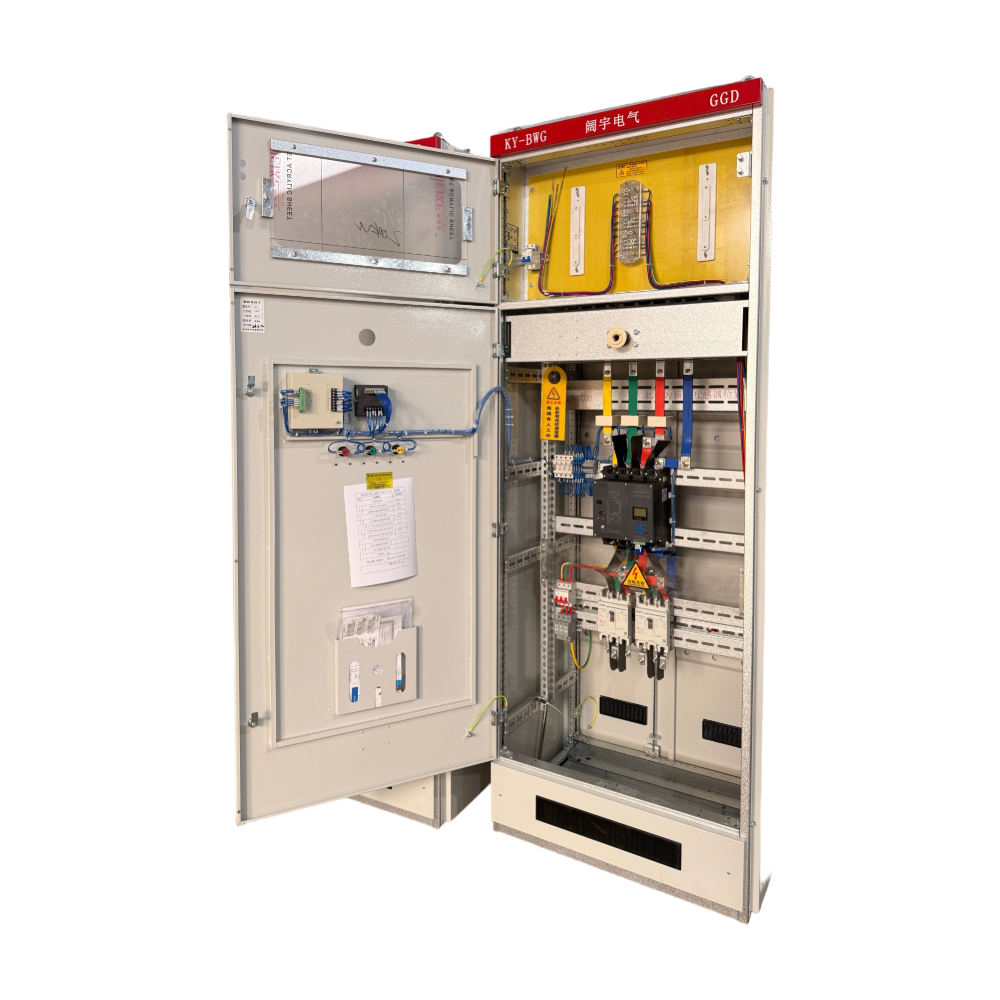
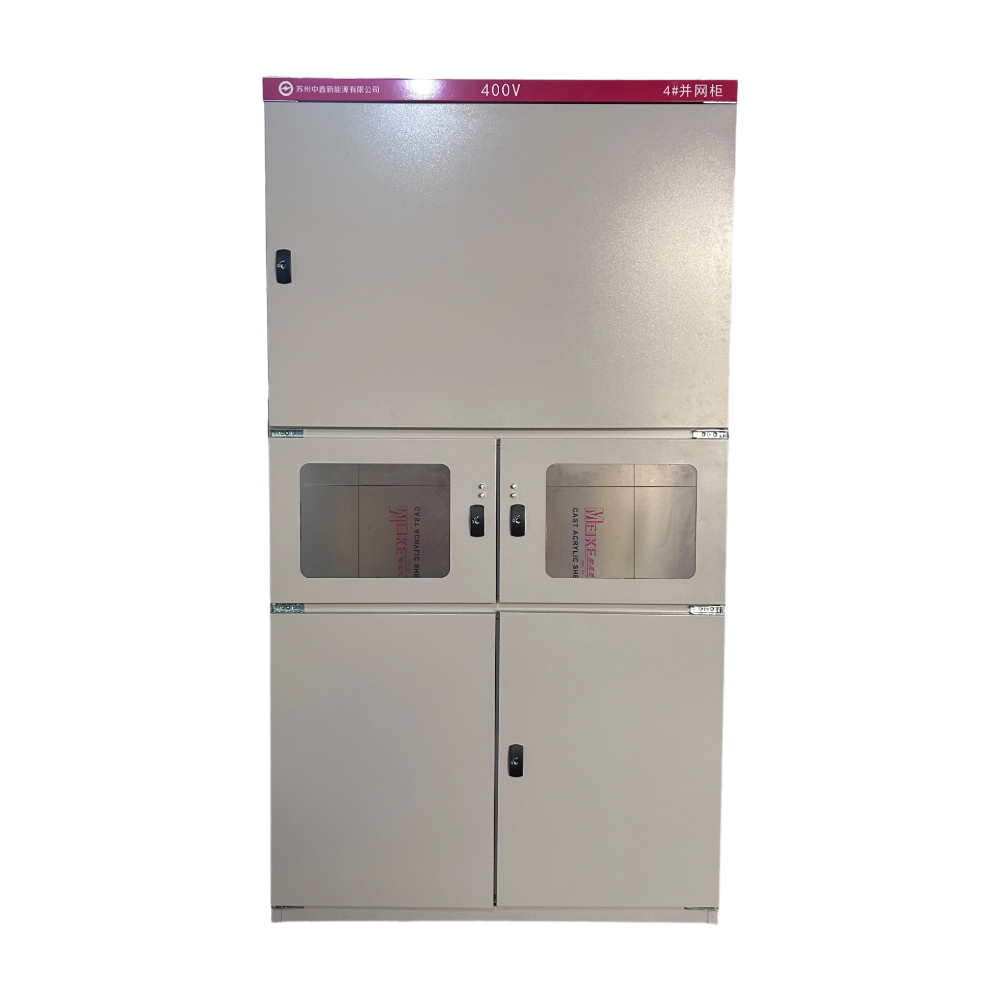
The GGD/GCS/MNS Series is a waterproof distribution cabinet rated 380 V/220 V with a rated current up to 6300 A and protection class IP54/IP65. The enclosure is high-quality cold-rolled steel plate with stainless steel as an option, and the stated scope is indoor and outdoor industrial, commercial and infrastructure applications.
This family carries main low-voltage distribution: the incoming feed from the transformer or from the inverter aggregation point, and the outgoing ways to workshop production lines, HVAC plant, lifts or building services. Where the cabinet stands on a roof, in a yard or on a workshop floor exposed to dust and humidity, IP65 is the relevant option, and stainless steel becomes worth discussing for corrosion resistant solar distribution box requirements at coastal or chemically exposed sites. The 6300 A rating is what separates a cabinet from a box: a 125 A PZ30 unit cannot absorb a main-distribution duty regardless of how its internals are arranged.
Side-by-side comparison
| Parameter | PZ30 Series | GGD/GCS/MNS Series |
|---|---|---|
| Product type | Industrial and residential distribution box | Waterproof distribution cabinet |
| Rated voltage | 220 V/380 V | 380 V/220 V |
| Rated current | Up to 125 A | Up to 6300 A |
| Protection class | IP40/IP54 | IP54/IP65 |
| Material | ABS plastic, cold-rolled steel plate, stainless steel optional | Cold-rolled steel plate, stainless steel optional |
| Stated applications | Residential, commercial, industrial, power control | Indoor and outdoor industrial, commercial, infrastructure |
| Typical rooftop or workshop role | Indoor sub-distribution, tenant boards, small circuit groups | Main low-voltage distribution, outdoor or dusty locations, high-current outgoing ways |
| Watch-out | Do not place IP40 on an exposed roof deck | Confirm the exact IP number and material, not the word waterproof |
Note the scope line before writing the RFQ: both families are specified at 220 V/380 V AC, so they belong to the AC distribution layer of a grid connected solar distribution box arrangement. If the project scope also includes the DC string-combination layer, that layer carries its own voltage, current, input-count and surge-protection specification, as the ABB example shows, and it should be sourced against a DC design rather than inferred from an AC cabinet rating.
Step-by-step: matching an enclosure to a rooftop or workshop project
The sequence below is deliberately ordered. Each step removes options before the next one is discussed, which keeps a specification meeting short and makes the quotation comparable between suppliers.
- Freeze the electrical layer and the rating. Decide whether the enclosure sits on the DC side, the AC side, or both as separate items. Then fix voltage and current together: 220 V/380 V and up to 125 A points to a PZ30 box; 380 V/220 V and up to 6300 A points to a GGD/GCS/MNS cabinet. For a DC string-combination reference point, the ABB example uses 1500 V DC, 256 A rated output current and 16 input circuits, which shows how far the DC specification can sit from a building-level AC rating.
- Fix the mounting location and exposure class. Roof surface, roof plant room, workshop wall, workshop floor or infrastructure compound are five different answers. The GGD/GCS/MNS scope explicitly covers indoor and outdoor industrial, commercial and infrastructure applications; the PZ30 scope is residential, commercial and industrial electrical systems. Write the location on the datasheet, because it drives everything that follows.
- Convert exposure into a written IP and material requirement. Choose IP40 or IP54 for indoor box positions, and IP54 or IP65 for cabinet positions, with the number stated rather than described. Select stainless steel where corrosion resistance is a stated project requirement. Higher classes exist on the market, but they are different ratings and cannot be merged: an ABB utility-scale DC combiner example is rated IP66 with IK08 impact protection, and IP66 is not IP65.
- Specify the internal component set and the thermal path. A distribution box is a housing for a defined electrical arrangement. The application data for this class of equipment lists circuit breakers, contactors, relays, busbars, grounding devices, indicator lights, cooling fans and wire connectors as the matched equipment, with functions covering circuit control, power distribution management, overload protection and short-circuit protection. Under 24/7 continuous operation, the fan and the internal spacing are not accessories; they are part of the thermal design that has to be confirmed for the actual component set.
- Decide what is customized, and freeze the drawing. Kuoyu Electrical offers OEM customization of voltage and logo, and the application data for these projects includes customizable structure and customizable specification. Structural customization is where layout approval earns its time: approve the internal arrangement drawing before production, so that cable entries, breaker positions and gland plates match the site rather than the workshop default.
- Close the documentation and delivery loop. Confirm the standard reference (IEC 61439-2:2020 with the applicable PV annex, or UL 1741 where a US certification route applies), the routine test record, the IP number, the material, the minimum order quantity and the delivery basis. Kuoyu Electrical states 100% testing, a minimum order quantity of 2 units, a 30-day lead time and remote after-sales support. Those terms are company-stated and should be confirmed in the order documents for the specific configuration.
Use cases: what two reported projects show, and what they do not
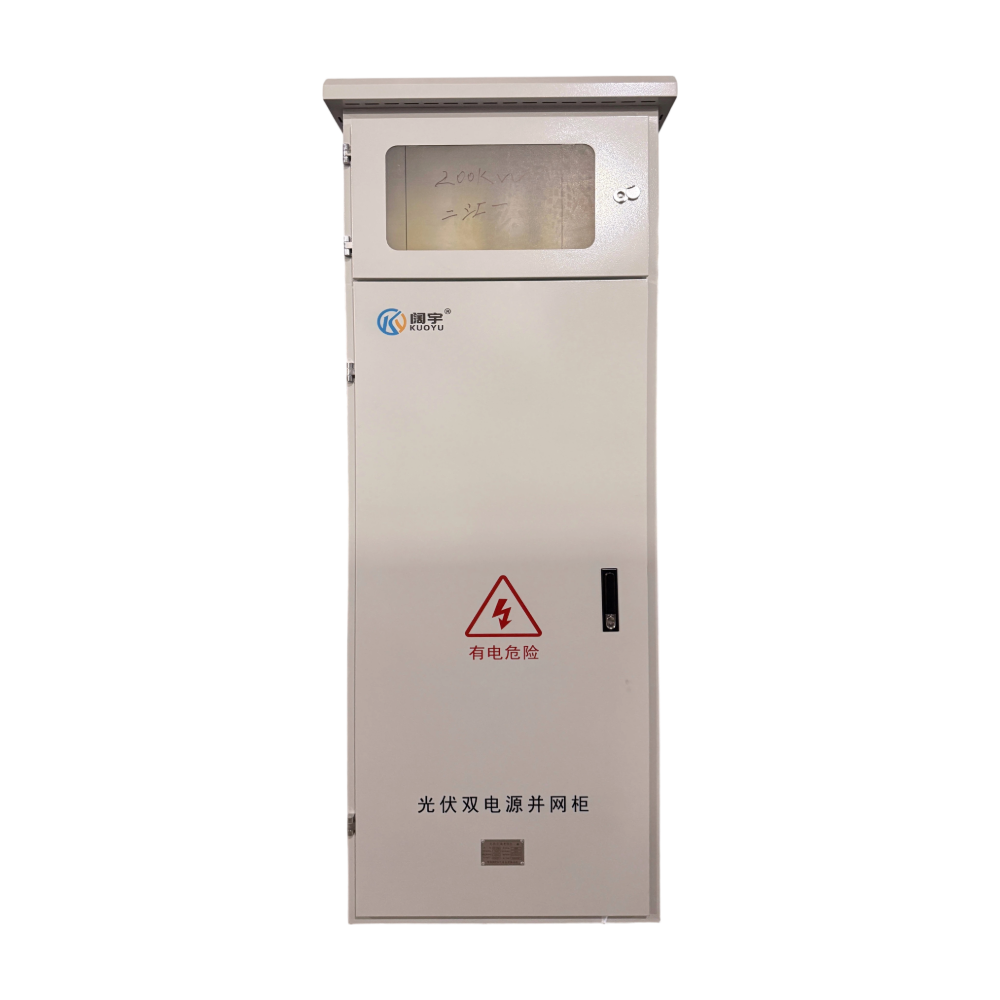
Commercial building distribution. Kuoyu Electrical reports a real estate developer project using 30 units over five years, with reported results of zero safety accidents and a power supply reliability rate of 99.99%. The reported highlights were compact structure, easy installation, low maintenance cost and customizable configuration. Read against this guide, that combination describes building-level distribution where the enclosure has to fit a plant room, be serviceable by the building team and stay configurable as tenant loads change.
Industrial workshop distribution. A second reported case covers an automotive manufacturer using 15 units over three years, with a reported result of zero circuit failure and a reported 30% increase in equipment operation stability. The stated application was safe power distribution and circuit control for industrial production lines, protecting equipment from overload and short circuit, with reported highlights of waterproof and dustproof construction, corrosion resistance, strong protection and a customized internal structure. That is the workshop pattern: dust and humidity are continuous, the line runs continuously, and the internal layout is customized to the production equipment rather than to a generic panel.
Both are company-reported outcomes from Kuoyu Electrical's own case records. They show how the equipment was specified and what the supplier reports about the result; they are not an independent performance test and they do not promise the same figures on another site. The useful transferable element is the specification logic: dust and humidity drove the enclosure class, and internal customization drove the fit.
24/7 site checks for high temperature, humidity and dust
The application data for industrial workshop, commercial building and infrastructure construction power distribution describes indoor and outdoor operation at high and low temperature, in humid and dust-prone conditions, on a 24/7 continuous basis. Five checks turn that description into a specification.
- Temperature swing. Confirm the enclosure material and the internal temperature rise for the actual component set, and keep the cooling fan in the bill of materials where it is specified. A box that is adequate at commissioning load can behave differently at full load in summer.
- Humidity and condensation. IP54 raises the barrier against water ingress, but the mounting position and cable entries decide whether the rating survives installation. Stainless steel is worth discussing where humidity combines with corrosive exposure.
- Dust. The second digit of the IP rating is the dust number. For a dustproof photovoltaic distribution box requirement in a workshop or on a dusty roof, the number should be written into the order, along with the cleaning regime the site can actually sustain.
- Mechanical strength and flame retardancy. High mechanical strength and flame retardant construction are listed as special requirements for these environments. Impact protection can be specified numerically as well; the ABB reference example states IK08.
- Explosion-proof requirements, if any. The application data lists explosion-proof construction among special requirements for some power distribution environments. Neither the PZ30 nor the GGD/GCS/MNS specification above states an Ex rating, so if a project zone requires it, that must be specified and verified as a separate item rather than assumed from an IP rating.
Frequently asked questions
Which standard should a photovoltaic distribution assembly be checked against?
The most widely referenced low-voltage assembly standard for this category is IEC 61439-2:2020, which includes Annexes DD, EE and FF specifically for assemblies used in photovoltaic installations. In the United States, UL Solutions identifies UL 1741 as the standard for combiner boxes within its solar balance-of-system certification service. The two are not interchangeable: they belong to different jurisdictions and certification routes, and a supplier statement that a product is tested to IEC 61439-2 is not a UL listing. Ask for the test report, the annex that applies to your assembly type, and the certificate scope.
What IP rating does a rooftop box need compared with a workshop box?
A rooftop enclosure exposed to rain needs a numerical IP rating agreed in writing; an indoor workshop sub-board may not. The Kuoyu Electrical PZ30 Series is rated IP40/IP54 and the GGD/GCS/MNS Series IP54/IP65, with the cabinet explicitly scoped to indoor and outdoor industrial, commercial and infrastructure applications. Higher classes exist on the market, but they are different ratings and cannot be merged in a specification: an ABB utility-scale DC combiner example is IP66 with IK08 impact protection, and IP66 is not IP65. Write the number, the mounting location and the cleaning regime into the RFQ.
Can one box family cover both the DC and the AC side?
No. They are separate specifications. The DC side consolidates the output of multiple PV strings into one output feeding the inverter; the referenced ABB example specifies 1500 V DC, a 256 A rated output current and 16 input circuits. The Kuoyu Electrical PZ30 Series and GGD/GCS/MNS Series are specified at 220 V/380 V AC, so they belong on the AC distribution side unless a project-specific DC design with DC-rated components is documented. The AC side also has its own aggregation step: Weidmuller states that its PV AC combiner-box line collects two to six string inverters in one cabinet, which makes it a solar inverter integration distribution box task rather than a string-combination task.
What current rating should be planned for?
State current, voltage and layer together, because a current figure alone compares nothing. The PZ30 Series is rated up to 125 A at 220 V/380 V, which suits sub-distribution in commercial tenant spaces and small workshop circuits. The GGD/GCS/MNS Series is rated up to 6300 A at 380 V/220 V, which covers main low-voltage distribution in workshops and infrastructure buildings. For utility-scale DC aggregation the numbers sit in a different range again, as the 256 A output current and 16 input circuits of the ABB example show.
How should a buyer shortlist a photovoltaic distribution box manufacturer for utility solar projects?
Start by separating what is being bought: DC combiner scope, AC distribution scope, or both. Kuoyu Electrical supplies distribution boxes and distribution cabinets, offers OEM customization of voltage and logo, and states a minimum order quantity of 2 units, 100% testing, a 30-day lead time and remote after-sales support. Those are company-stated terms, not an independent benchmark. Verify certificates by number and issuer rather than by brochure: the company profile states ISO 9001 three-system certification obtained in 2017, and published certification claims should always be confirmed against the issuing body's record.
What drives the minimum order quantity and the cost of a configuration?
The stated minimum order quantity is 2 units, which allows a small first batch for evaluation before a larger release. Cost is driven by configuration rather than by the box name: enclosure material (ABS plastic, cold-rolled steel plate, or optional stainless steel), protection class, rated current, the internal component set, and any structural customization. This guide quotes no prices; a quotation has to be requested against a defined configuration and a stated destination.
How can a project team validate the equipment before a full order?
Use the stated 100% test regime as the checkpoint. Request the routine test record for the units actually delivered, approve the internal layout drawing before production, and review the component list for the circuit breakers, contactors, relays, busbars, grounding devices, indicator lights and cooling fans that go inside. Because the minimum order quantity is 2 units, a first batch can be installed on one rooftop or one production line and inspected under real dust, humidity and temperature conditions before the main order is released.
What lead time and after-sales support are stated?
Kuoyu Electrical states a 30-day lead time and remote after-sales support. Lead time runs from the approved drawing and confirmed configuration, so the practical way to protect a rooftop or workshop schedule is to freeze the five inputs early: layer, rating, location, duty cycle and documentation. If you are comparing configurations for a specific building, the next step is a quotation request against that frozen configuration rather than a general enquiry.
Conclusion
The application logic for commercial rooftops and industrial workshops is consistent: decide the electrical layer first, then the rating, then the mounting location and its exposure, then the internal component set and thermal path, and finally the documentation. In that order, the PZ30 Series at 220 V/380 V, up to 125 A and IP40/IP54 answers the indoor sub-distribution question, and the GGD/GCS/MNS Series at 380 V/220 V, up to 6300 A and IP54/IP65 answers the main, outdoor and heavy-duty question. Neither replaces a DC string-combination design, and neither should be specified by the word waterproof alone.
Two boundaries are worth carrying into the meeting. First, the 24/7 high temperature, humid and dust-prone conditions described for these projects are a specification input, not a guarantee of a particular service life. Second, the case results referenced above are company-reported, so a buyer should verify certificates, test records and order-specific terms directly. The full product range, including distribution boxes, distribution cabinets and transformers, is documented in the Kuoyu Electrical product brochure.
If a commercial rooftop or industrial workshop project is at the configuration stage, send the five inputs to the Kuoyu Electrical team and ask for a quotation matched to that building, rather than a catalogue item matched to a category.
Have Questions or Need More Details?
Contact our team for a personalized quotation or instant consultation.
Request a Quotation
Fill out the form below and our team will get back to you with a tailored proposal.
WhatsApp Direct Chat
Prefer to chat in real-time? Message us on WhatsApp for instant assistance & quick answers.
- Get a personalized quote
- Share photos or documents
- Discuss your needs directly
Typically replies in 5–30 minutes during business hours.