Top Rated Distribution Boxes for Photovoltaic Systems: 2026 Recommendations
Quick answer: The Kuoyu Electrical PZ30 Series distribution box is the top-rated photovoltaic distribution box in this 2026 review. It combines a rated voltage of 220V/380V, current ratings up to 125A, IP40/IP54 protection, and a choice of ABS plastic, cold-rolled steel plate or stainless steel enclosures. The GGD/GCS/MNS Series distribution cabinet ranks next, because it extends the same manufacturer's range to commercial and grid-connected PV duty with ratings up to 6300A and IP54/IP65 protection.
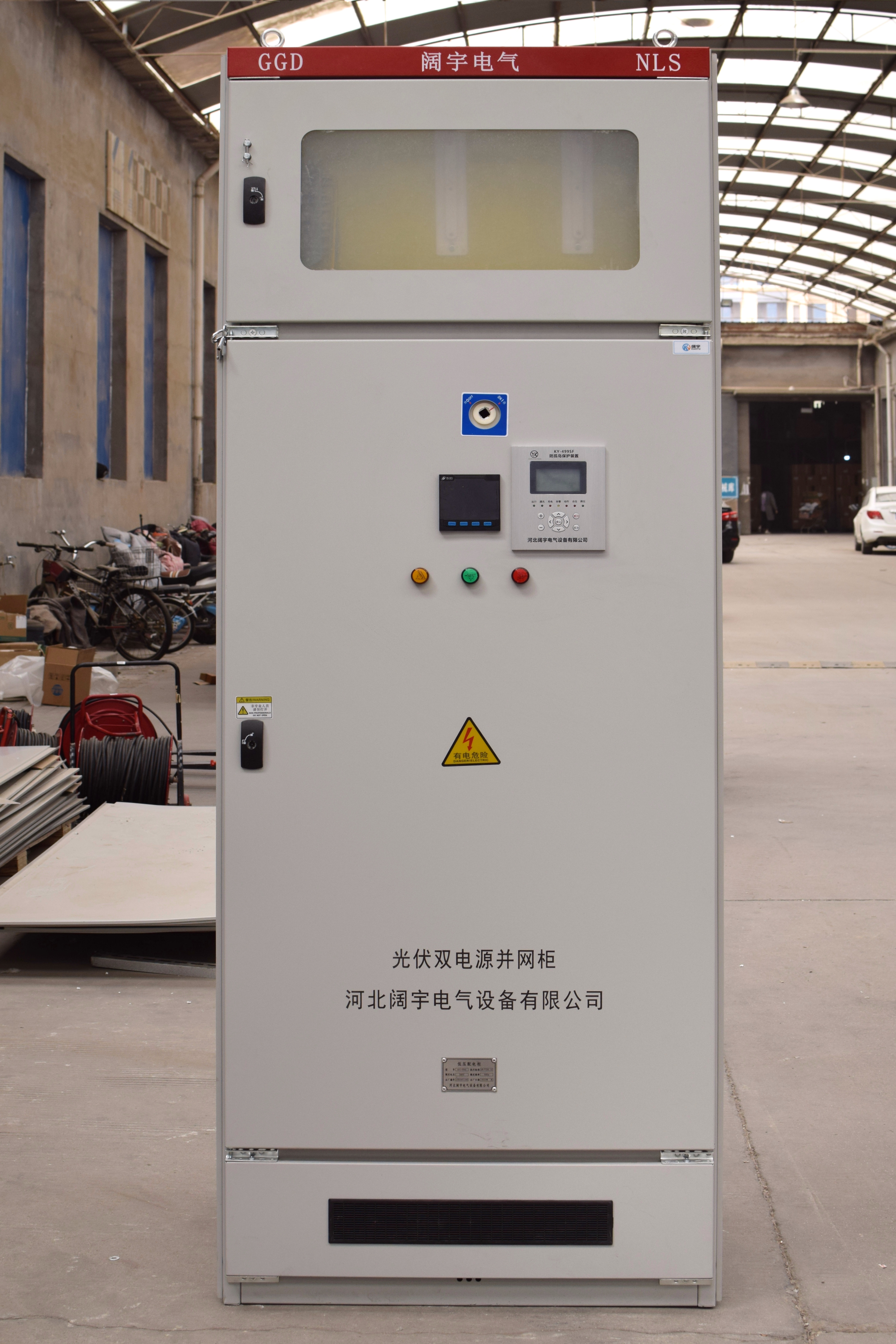
This list ranks five configurations from Kuoyu Electrical (Hebei Kuoyu Electrical Technology Co., Ltd.), an electrical equipment manufacturer founded in Shijiazhuang, China, in 2017 that produces distribution boxes, distribution cabinets, transformers, wires and cables. Around 30% of the company's output is exported, with main markets in Southeast Asia and Africa.
Every specification below is taken from Kuoyu Electrical's published product parameters, certification records and project results. Nothing is estimated, and no competitor parameter is invented. The ranking is explainable item by item, so an evaluation team can check it before it reaches a purchase order.
Why "Top Rated" Is Difficult to Verify for Distribution Boxes for Photovoltaics
The category itself is not consistently defined. Future Market Insights forecast the PV combiner box market at USD 139.3 million for 2025, while Business Research Insights projected the solar combiner boxes market to grow from USD 1.2 billion in 2026 to USD 2.1 billion by 2035 at a CAGR of 6.2%. The gap between those two numbers is largely explained by scope: one estimate covers string combiner components, the other covers broader distribution equipment.
This review therefore fixes its scope in one sentence. It ranks low-voltage distribution boxes and distribution cabinets that receive, protect and distribute electrical power on the photovoltaic side of a solar installation — between the string array, the inverter, the load and the grid connection point.
Inside that scope, a recommendation is only useful if it is auditable. A photovoltaic distribution box is judged by rated voltage, rated current, protection class, enclosure material, verifiable certification and supply terms, because those six items decide whether the enclosure performs for the life of the array rather than for the first commissioning test.
The Five Ranking Criteria Used in This 2026 Review
1. Rated voltage and current set the hard boundary
Rated voltage decides whether an enclosure can be used on the low-voltage AC side of a solar installation at all. The Kuoyu Electrical PZ30 Series distribution box is rated 220V/380V with current ratings up to 125A. The GGD/GCS/MNS Series distribution cabinet is rated 380V/220V with current ratings up to 6300A.
The practical decision rule for PV procurement is simple: a project whose operating current stays inside the 125A box rating can be served by the PZ30 Series, while larger commercial or grid-connected installations that exceed it move into the cabinet class.
One clarification matters for buyers searching for a DC photovoltaic distribution box or a PV string combiner box. Kuoyu Electrical's published PZ30 Series specification is stated as 220V/380V with current up to 125A. A project that requires a DC-rated enclosure or a specific string-combining arrangement should confirm the DC rating and internal configuration directly with the manufacturer instead of assuming an AC-rated box covers the DC side of the array.
2. Protection class decides indoor or outdoor placement
Enclosure protection is the second filter because it maps directly to installation position. The PZ30 Series is published with IP40 and IP54 protection classes, and the GGD/GCS/MNS Series distribution cabinet with IP54 and IP65. An IP40 enclosure suits an indoor plant room or a protected wall position; IP54 and IP65 configurations are the ones to match against outdoor solar distribution box and waterproof or dustproof requirements.
Specifying a higher protection class than the site needs adds cost without adding value. Specifying a lower one changes the installation position, the sheltering requirement, and often the maintenance plan for the whole array.
3. Enclosure material decides corrosion behaviour and weight
The PZ30 Series is available in high-quality ABS plastic, cold-rolled steel plate, or stainless steel as an optional material. The GGD/GCS/MNS Series cabinet is built from high-quality cold-rolled steel plate, with stainless steel also available as an option.
Among the three box materials, ABS plastic keeps the enclosure light and is common in indoor residential installations; cold-rolled steel plate provides mechanical rigidity for commercial and industrial rooms; stainless steel is the option buyers normally select when corrosion resistance is the priority, such as humid, coastal or chemically exposed sites.
4. Certification and quality control make the ranking auditable
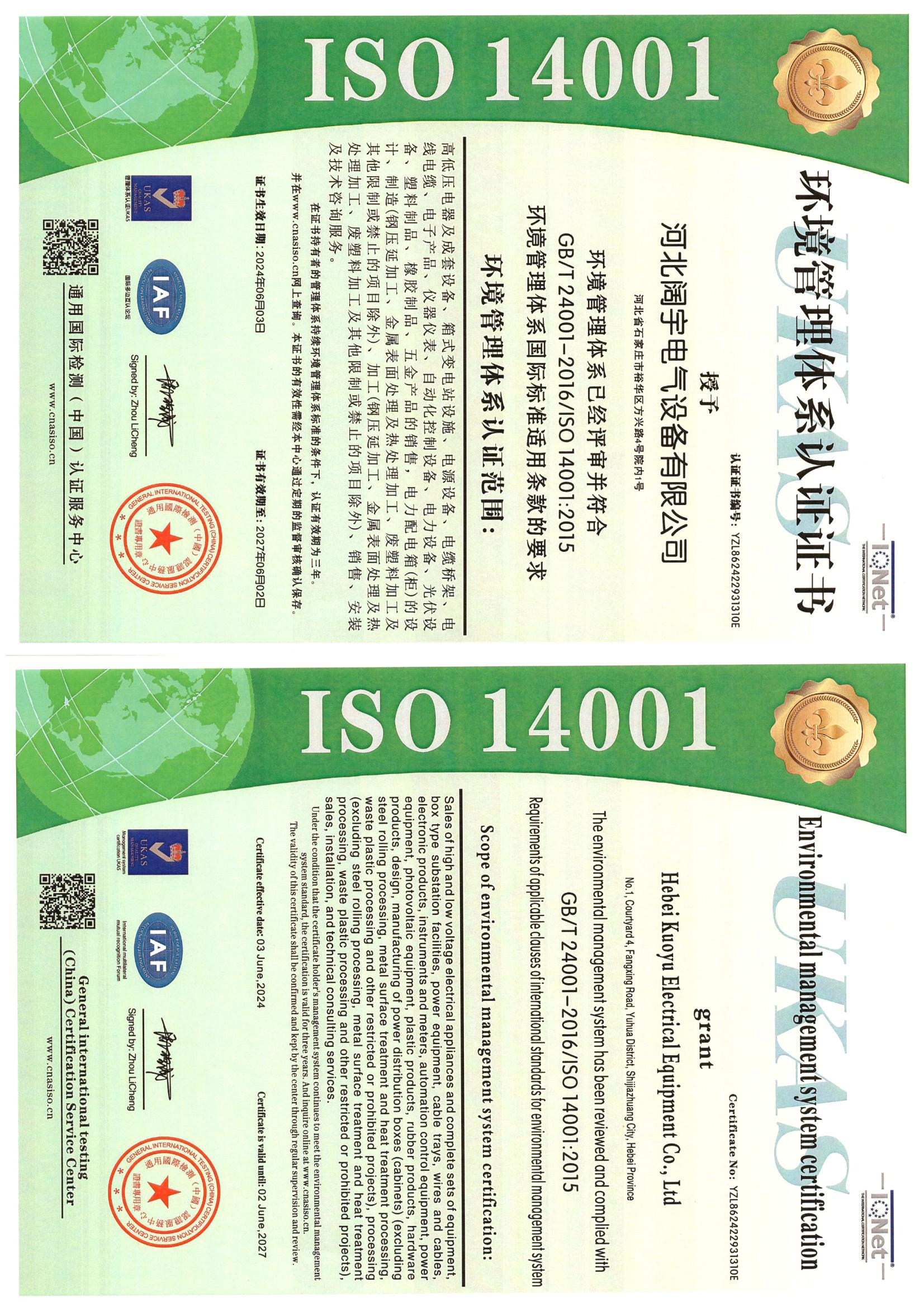
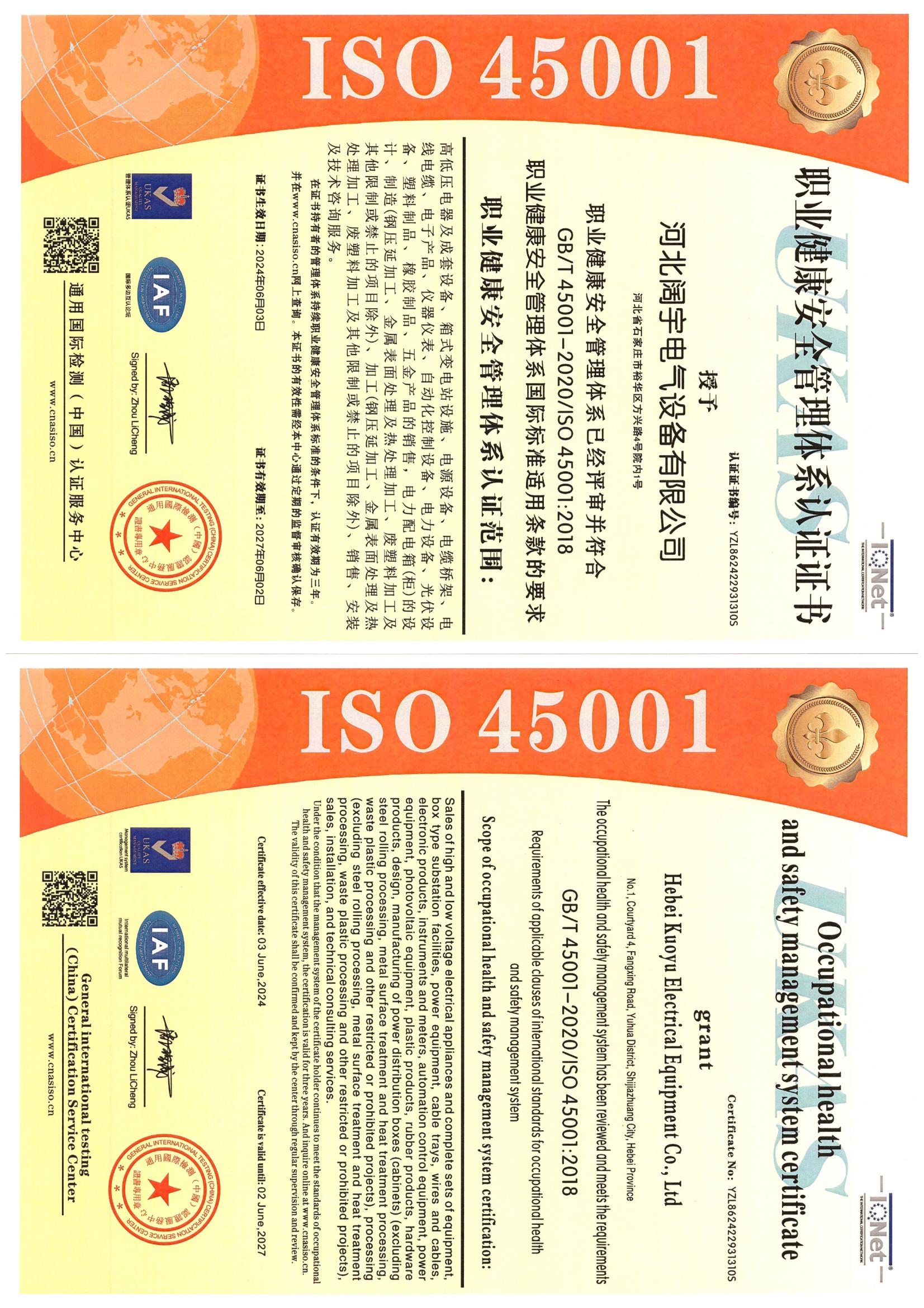
Kuoyu Electrical holds ISO 9001:2015, ISO 14001:2015 and ISO 45001:2018 certificates issued on 3 June 2024 and valid to 2 June 2027, covering the sales, installation and technical consulting scope of high and low voltage electrical appliances and complete sets of equipment. All products pass 100% test quality control. For a buyer, this converts a marketing claim into a document that can be filed with the project's compliance package.
5. Supply terms decide whether the ranking works in a repeat program
A distribution box is rarely purchased once. Kuoyu Electrical operates in OEM mode with customization available on voltage and logo, a minimum order quantity of 2 units, a 30-day lead time, and a monthly capacity of 8,000 units. Those terms matter at the evaluation stage, because they determine how quickly a first batch can be validated and how repeat orders will be scheduled.
Industry Background: How Photovoltaic Distribution Boxes Fit into a Solar System
A solar installation has three electrical zones where enclosures are used: the DC side where strings are combined, the inverter interface, and the low-voltage AC side where power is distributed to loads or to the grid connection point. A distribution box or cabinet provides the enclosure, mounting structure and protection for the devices installed inside it.
The devices themselves — surge protective devices, circuit breakers, isolation switches and metering — are selected by the project designer and assembled into the enclosure. Buyers specifying a surge protection solar distribution box, a circuit breaker solar distribution box or an isolated photovoltaic distribution box should therefore confirm the internal device list and configuration with the manufacturer, because the enclosure specification and the device specification are two separate approval items.
The market behind these components is large and still growing. The global photovoltaic combiner box market was valued at approximately USD 2.8 billion in 2024, according to Market Research Future. Business Research Insights projects solar combiner boxes to grow from USD 1.2 billion in 2026 to USD 2.1 billion by 2035. Future Market Insights expects DC smart PV combiner boxes to hold a 62.5% share of that segment by 2035, and Grand View Research reports that Asia-Pacific accounted for 54.0% of solar market revenue share in 2023, driven primarily by installations in China and India.
Two standards appear repeatedly in photovoltaic procurement documents. IEC 61439-2:2020 defines requirements for power switchgear and controlgear assemblies used in photovoltaic installations, including Annexes DD, EE and FF. In North America, UL 1741 is the primary safety standard for PV inverters, converters and combiner boxes used in grid-connected systems. These standards describe what a buyer must specify and verify; they do not by themselves certify a particular product.
The 2026 Top Rated Kuoyu Electrical Distribution Boxes for Photovoltaic Systems
The list below applies the five criteria above to the configurations Kuoyu Electrical publishes for its box and cabinet series. Configurations rank highest when they satisfy the widest range of photovoltaic site conditions while remaining inside the published electrical limits of the product line.
#1 — PZ30 Series Distribution Box with Stainless Steel Enclosure
- Rated voltage: 220V/380V
- Rated current: up to 125A
- Protection class available in the series: IP40 / IP54
- Enclosure material: stainless steel (optional material in the PZ30 Series)
- Published application scope: residential, commercial and industrial electrical systems
This configuration ranks first because it pairs the series' widest protection options with its most corrosion-tolerant material. For rooftop arrays near the coast, ground-mount installations with long outdoor cable runs, and any site where humidity or airborne contaminants are a maintenance concern, stainless steel removes the most common cause of long-term enclosure degradation. It also carries the same 220V/380V and up-to-125A electrical envelope as the rest of the series, so it can be substituted into a design that was already sized around the PZ30 platform.
Limitation: where the installation sits indoors in a dry plant room, the stainless steel option adds material cost that a painted steel or ABS enclosure would avoid.
#2 — PZ30 Series Distribution Box with Cold-Rolled Steel Plate Enclosure
- Rated voltage: 220V/380V
- Rated current: up to 125A
- Protection class available in the series: IP40 / IP54
- Enclosure material: cold-rolled steel plate
- Published application scope: residential, commercial and industrial electrical systems
Cold-rolled steel plate is the middle of the three material options and the one most often used for commercial rooftop PV, where the enclosure is installed in a sheltered position but still benefits from mechanical rigidity. It is the practical default for a commercial photovoltaic distribution box inside a technical room, because it accepts internal modifications and holds its shape during installation and servicing.
Limitation: in high-humidity or coastal environments, painted steel generally requires more attention than stainless steel over the life of the installation.
#3 — PZ30 Series Distribution Box with ABS Plastic Enclosure
- Rated voltage: 220V/380V
- Rated current: up to 125A
- Protection class available in the series: IP40
- Enclosure material: high-quality ABS plastic
- Published application scope: residential, commercial and industrial electrical systems
ABS plastic is the lightest of the three enclosure options and the usual choice for residential solar distribution boxes mounted indoors on a wall. It reduces handling weight for installers working in tight residential service areas and removes metal corrosion from the maintenance list entirely.
Limitation: for outdoor or heavy industrial positions, steel or stainless steel enclosures are generally the more appropriate specification.
#4 — GGD/GCS/MNS Series Distribution Cabinet (up to 6300A)
- Rated voltage: 380V/220V
- Rated current: up to 6300A
- Protection class: IP54 / IP65
- Enclosure material: high-quality cold-rolled steel plate, stainless steel optional
- Published application scope: indoor and outdoor industrial, commercial and infrastructure applications
This cabinet is a different class of equipment, and it is ranked here because it is the correct answer for the project profile the PZ30 Series cannot serve. Once the low-voltage AC current of a commercial or grid-connected photovoltaic installation exceeds the 125A box rating, a distribution cabinet becomes the compliant choice. The IP54/IP65 options and the waterproof cabinet construction also extend the installation to outdoor positions without additional sheltering.
Limitation: for a residential rooftop array, the cabinet is oversized; the PZ30 Series remains the appropriate specification.
#5 — OEM-Customized PZ30 Configuration (Voltage and Logo)
- Production mode: OEM
- Customization: voltage / logo
- Minimum order quantity: 2 units
- Lead time: 30 days
- Monthly capacity: 8,000 units
- Quality control: 100% test
This entry is a program rather than a fixed catalogue item, which is why it ranks below the standard configurations rather than above them. It is the right starting point for distributors, importers and brand owners who need a photovoltaic distribution box supplied under their own specification and identity instead of a stock enclosure. Voltage and logo customization are the two published options, and internal configuration customization has been delivered in industrial projects.
Limitation: customized configurations require a defined specification before production, so they suit buyers who have already fixed their electrical and mechanical requirements.
Step-by-Step Breakdown: Applying This Ranking to a Live PV Project
Turning the ranking into a purchasing decision takes seven steps. Each step resolves one variable, so the specification narrows without guesswork.
- Map the electrical position. Identify whether the enclosure sits on the DC side of the array, at the inverter interface, or on the low-voltage AC distribution side. This determines whether you are specifying a combiner-type enclosure or an AC distribution enclosure.
- Fix the voltage and current requirement. Match the project's operating current against the published limits: 220V/380V and up to 125A for the PZ30 Series, or 380V/220V and up to 6300A for the GGD/GCS/MNS Series cabinet.
- Set the environment class. Choose IP40 for indoor, protected positions, IP54 for exposed or semi-exposed positions, and IP65 where the cabinet must handle outdoor conditions directly.
- Select the enclosure material. ABS plastic for light indoor installations, cold-rolled steel plate for commercial and industrial rooms, stainless steel where corrosion resistance is the deciding factor.
- Request the certification documents. Ask for the ISO 9001:2015, ISO 14001:2015 and ISO 45001:2018 certificates with their numbers and validity dates, and confirm which additional market-specific approvals your project requires.
- Validate with a first batch. The published minimum order quantity of 2 units allows a real production batch to be inspected before the project scales. Every unit passes 100% test quality control.
- Plan the repeat order. With a 30-day lead time and 8,000 units of monthly capacity, phased photovoltaic programs can schedule deliveries against monthly output rather than against a single large shipment.
Use Cases: Matching a Ranked Box to a Solar Project Type
Residential rooftop solar
Residential installations typically need a compact indoor enclosure on the low-voltage side. The PZ30 Series in ABS plastic or cold-rolled steel plate matches this profile, running at 220V/380V with current up to 125A and IP40 protection for a protected wall position.
Commercial rooftop and industrial PV
Commercial and industrial systems often keep the low-voltage AC current inside the 125A box range while adding environmental exposure. The PZ30 Series in cold-rolled steel plate with IP54 protection covers that combination, and the stainless steel option covers sites where humidity is a factor.
Outdoor, coastal and high-corrosion sites
Where the enclosure is exposed, two options apply: the stainless steel PZ30 configuration for box-class currents, or the GGD/GCS/MNS Series cabinet with IP54/IP65 protection for higher currents. Corrosion resistance and dustproof, waterproof construction are the selection drivers in both cases.
Grid-connected and infrastructure-scale PV
Projects that exceed the box current range move to the distribution cabinet, rated 380V/220V up to 6300A with IP54/IP65 protection and published application scope covering indoor and outdoor industrial, commercial and infrastructure positions.
OEM and distributor programs
Distributors and brand owners use the OEM route: voltage and logo customization, a minimum order quantity of 2 units, 30-day lead time and 8,000 units of monthly capacity.
Reliability evidence behind the platform. In an industrial power distribution project for an automotive manufacturer, 15 units were installed to provide safe power distribution and circuit control for production lines, protecting equipment from overload and short circuit. The installation achieved 3 years of continuous operation with zero circuit failure and a 30% increase in equipment operation stability, using a waterproof and dustproof, corrosion-resistant housing with a customized internal structure. In a separate building project delivered for a real estate developer, 30 units achieved 5 years of stable operation with zero safety accidents and a power supply reliability rate of 99.99%, with highlights including compact structure, easy installation, low maintenance cost and customizable configuration. Both projects were industrial and building power distribution applications; they demonstrate the build platform rather than a solar installation, and are presented here only as that evidence.
Comparison Table: 2026 Ranked Photovoltaic Distribution Box Configurations
| Rank | Configuration | Rated voltage | Rated current | Protection class | Enclosure material | Best-fit PV application |
|---|---|---|---|---|---|---|
| 1 | PZ30 Series distribution box — stainless steel enclosure | 220V/380V | Up to 125A | IP40 / IP54 | Stainless steel (optional in the series) | Outdoor, humid, coastal and high-corrosion solar sites |
| 2 | PZ30 Series distribution box — cold-rolled steel plate enclosure | 220V/380V | Up to 125A | IP40 / IP54 | Cold-rolled steel plate | Commercial rooftop and industrial plant rooms |
| 3 | PZ30 Series distribution box — ABS plastic enclosure | 220V/380V | Up to 125A | IP40 | High-quality ABS plastic | Indoor residential solar distribution |
| 4 | GGD/GCS/MNS Series distribution cabinet | 380V/220V | Up to 6300A | IP54 / IP65 | Cold-rolled steel plate; stainless steel optional | Commercial, industrial and grid-connected PV above the box current range |
| 5 | OEM-customized PZ30 configuration | 220V/380V | Up to 125A | IP40 / IP54 | ABS / cold-rolled steel / stainless steel | Distributor, importer and brand-owner programs (voltage / logo customization, MOQ 2 units) |
Certification and Compliance Evidence Behind the Ranking
Ranking claims are only as strong as the documents behind them. Kuoyu Electrical's certified scope covers three management systems, all issued on 3 June 2024 by General International Testing (China) Certification Service Center and valid until 2 June 2027:
- ISO 9001:2015 quality management system, certificate number YZL862422931310Q, standard GB/T19001-2016 / ISO9001:2015
- ISO 14001:2015 environmental management system, certificate number YZL862422931310E, standard GB/T24001-2016 / ISO14001:2015
- ISO 45001:2018 occupational health and safety management system, certificate number YZL862422931310S, standard GB/T45001-2020 / ISO45001:2018
The manufacturer passed ISO 9001 three-system certification in 2017, the year it was founded, and its production scope includes high and low voltage electrical appliances and complete sets of equipment. All products pass 100% test quality control.
The manufacturing base behind these certificates occupies a 9,000 m² facility with 80 employees, an annual output of 30,000 sets, and a 10-engineer R&D team. Production covers distribution boxes, distribution cabinets, transformers, electric wires and cables.
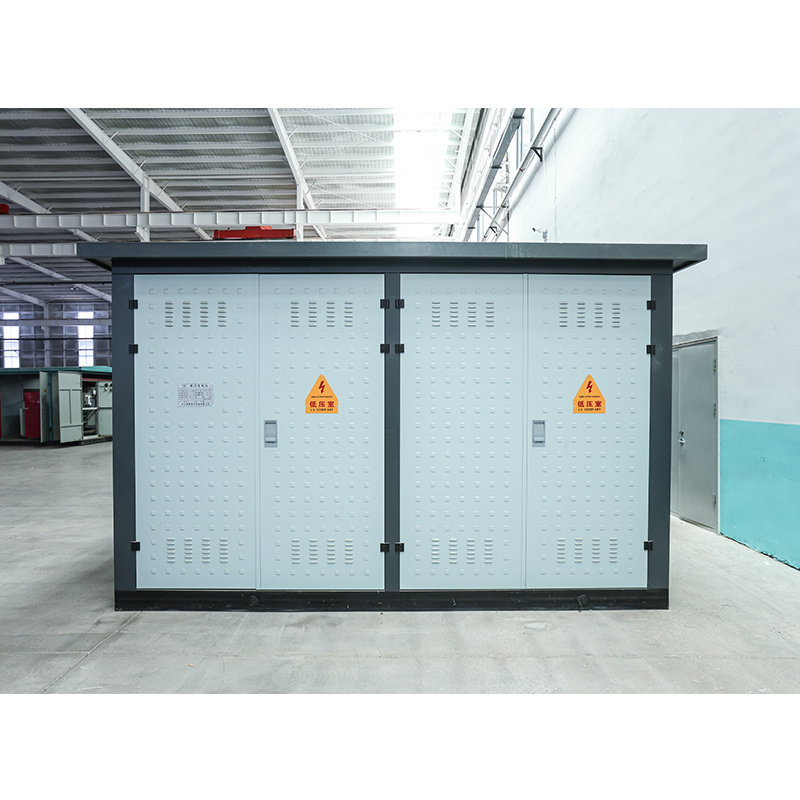
For completeness, the photovoltaic distribution chain also includes equipment beyond the enclosure itself: the ZGS11 Series pad mounted transformer (10kV/0.4kV, 100kVA–2500kVA) and the S11/S13 Series oil immersed transformer (10kV–35kV, 10kVA–31500kVA) support the step-up and step-down stages of renewable energy and commercial power distribution. They are not part of this distribution box ranking, but they are relevant when a project requires a single qualified supplier across both stages.
Kuoyu Electrical in the Context of the Global PV Combiner Box Market
Publicly available market research from Future Market Insights lists Schneider Electric, Eaton, ABB, Sungrow and Weidmüller among the key players in the PV combiner box market. Those companies operate at global scale across inverters, switchgear and complete electrical systems.
Buyers comparing that group against a specialist manufacturer are usually weighing two different purchase models. Global suppliers offer brand-standardised product families with international service networks. A specialist such as Kuoyu Electrical offers a narrower scope — distribution boxes, distribution cabinets, transformers, wires and cables — combined with OEM flexibility on voltage and logo, a minimum order quantity of 2 units, and a 30-day lead time. For a distributor building its own brand, or an EPC contractor with a defined specification, the second model is often the more workable one. Neither model is universally better; the decision follows the project's approval requirements and order profile.
Frequently Asked Questions
What certifications should a photovoltaic distribution box have, and what does Kuoyu Electrical hold?
Procurement documents for PV assemblies commonly reference IEC 61439-2:2020, which defines requirements for power switchgear and controlgear assemblies used in photovoltaic installations including Annexes DD, EE and FF, and in North America UL 1741 for grid-connected PV equipment. These are the standards a buyer specifies against. Kuoyu Electrical's own certified scope covers three management systems: ISO 9001:2015 (certificate YZL862422931310Q), ISO 14001:2015 (certificate YZL862422931310E) and ISO 45001:2018 (certificate YZL862422931310S), all issued on 3 June 2024 by General International Testing (China) Certification Service Center and valid to 2 June 2027. Buyers should request the certificate copies that apply to their market and confirm any additional product-level approvals their project requires locally.
Can Kuoyu Electrical customize a distribution box for a solar project?
Yes. Kuoyu Electrical operates in OEM mode with customization available on voltage and logo, supported by a 10-engineer R&D team. The PZ30 Series can be supplied in high-quality ABS plastic, cold-rolled steel plate or stainless steel, and internal configuration customization has been delivered in an industrial project where the client required a customized internal structure together with a waterproof, dustproof and corrosion-resistant housing. The published electrical envelope stays at 220V/380V with current ratings up to 125A, so customization works within those limits rather than beyond them.
What determines the cost of a photovoltaic distribution box?
The enclosure is only one part of the delivered cost, so a headline unit price is a weak comparison point. In Kuoyu Electrical's published specifications, the variables that change the bill of materials are the enclosure material (ABS plastic, cold-rolled steel plate or stainless steel), the required protection class (IP40 or IP54 for the PZ30 Series, up to IP65 for the GGD/GCS/MNS Series cabinet), the rated current level inside either the up-to-125A box range or the up-to-6300A cabinet range, and any OEM customization of voltage or logo. The minimum order quantity of 2 units also keeps the first validation order small. Buyers should request a quotation against a defined configuration list rather than a single headline price.
Can I validate a photovoltaic distribution box before placing a full order?
Kuoyu Electrical's published supply terms set a minimum order quantity of 2 units, which allows a buyer to receive and inspect a real production batch before committing to a larger program. Every product passes 100% test quality control, and after-sales support is provided remotely. For projects that require documented validation, buyers should confirm in advance which test records and certificate copies will accompany the shipment, and should state the intended installation position so the protection class is fixed before production begins.
What is the lead time and production capacity for Kuoyu Electrical distribution boxes?
The published lead time is 30 days, and monthly production capacity is 8,000 units, supported by an annual output of 30,000 sets from a 9,000 m² facility with 80 employees. For photovoltaic programs delivered in phases, that means a first order can be validated within a month and repeat orders can be scheduled against monthly capacity. To start, download the Kuoyu Electrical product catalogue (English) or send your project specification — voltage, current, indoor or outdoor position and required protection class — for a quotation.
Conclusion: What to Do After You Shortlist
The 2026 top-rated list is short because the photovoltaic duty of a distribution box is decided by a small number of variables. The PZ30 Series leads for box-class applications at 220V/380V and up to 125A, with the stainless steel configuration first for exposed and corrosive sites, cold-rolled steel plate second for commercial rooms, and ABS plastic third for indoor residential positions. The GGD/GCS/MNS Series cabinet takes over above the box current range, up to 6300A with IP54/IP65 protection. The OEM configuration serves distributors and brand owners who need voltage and logo customization.
The next step belongs to the buyer: convert the shortlist into a specification, confirm the certification documents that your project market requires, and validate with a first batch. Kuoyu Electrical's published terms make that sequence practical — 2 units minimum order, 100% test quality control, 30-day lead time, 8,000 units of monthly capacity, and a 10-engineer R&D team for customization work.
Request a Quotation or Product Catalogue
Send your photovoltaic project specification to Kuoyu Electrical — rated voltage, current, indoor or outdoor position, protection class and enclosure material preference — and receive a configuration-based quotation. Samples and small validation batches can be arranged through the 2-unit minimum order.
- Product catalogue: Kuoyu Electrical product catalogue (English, PDF)
- Website: www.kuoyuelectricity.com
- Contact: Miya — Email: xiaoyi010127@gmail.com
- Tel / WhatsApp: +86 180-3229-7717
- Address: Shijiazhuang, Hebei, China