China vs Germany vs Japan Glassware Suppliers: A Strategic Procurement Guide for 2026
China vs Germany vs Japan Glassware Suppliers: A Strategic Procurement Guide for 2026
Introduction
Global glassware procurement is no longer a simple transaction—it's a strategic decision that impacts brand perception, sustainability goals, and supply chain resilience. Whether you are sourcing glass drinkware, wine glasses, beer glasses, or recycled glass jars, choosing between suppliers from China, Germany, and Japan requires a clear understanding of each region's strengths, certifications, production capabilities, and cost structures.
This guide is designed for procurement managers, hospitality buyers, retail chains, and eco-conscious brands who need to evaluate glassware supplier options across these three manufacturing powerhouses. We will define the key differentiators, provide a step-by-step selection framework, and showcase how LAKOTTO (Changsha Kotto Glass Industrial Co., Ltd.) represents the best of Chinese manufacturing with over 20 years of export experience, ISO 9001, ISO 14001, BSCI certifications, and a strong network of 150+ domestic glass factories.
Problem Definition: Why Choosing the Right Country Matters
Many buyers fall into the trap of choosing a supplier purely on price or initial brand reputation. However, the country of origin directly impacts:
- Quality consistency – German and Japanese glassware often sets the benchmark for precision, but Chinese suppliers like LAKOTTO now achieve equivalent standards through rigorous QC.
- Cost efficiency – Chinese manufacturers offer 30–50% lower unit costs for comparable quality, especially for glass mugs, highball glasses, and cocktail glasses.
- Customization flexibility – Chinese factories excel at OEM/ODM projects, while German and Japanese suppliers may have longer lead times and higher minimum order quantities.
- Sustainability compliance – Eco-certifications (BSCI, ISO 14001, FSC) are now available across all three regions, but Chinese suppliers are rapidly adopting recycled glass production for glass water bottles and storage jars.
Industry Background: Glassware Manufacturing by Country
Germany – The Precision Powerhouse
- Known brands: Schott Zwiesel, Riedel (Austrian but often grouped), Stölzle.
- Strengths: Crystal-clear glass, durability, advanced tempering, machine-blown consistency.
- Best for: Premium wine glasses, champagne glasses, and luxury hotel chains.
- Limitations: High cost (2–5x Chinese prices), less flexible on custom shapes, longer lead times (8–12 weeks).
Japan – The Artisan Innovator
- Known brands: Kagami Crystal, Hoya, traditional hand-blown studios.
- Strengths: Exquisite craftsmanship, unique designs, superior surface finish.
- Best for: Specialty shot glasses, sake sets, and limited-edition collections.
- Limitations: Very high unit cost, limited production scale, often requires minimum orders of 5,000+ units for custom molds.
China – The Scalable Solution
- Representative supplier: LAKOTTO (Changsha Kotto Glass Industrial Co., Ltd., established 2003).
- Strengths: Competitive pricing, massive production capacity, one-stop service (from design to delivery), strong eco-certifications (ISO 14001, BSCI, Food Safety Management System), and partnerships with 150+ domestic factories.
- Best for: Bulk glass tumbler, pint glass, glass plate, glass cake stand, double wall glass, and recycled glass bottle orders.
- Limitations: Historically perceived quality gaps, but now largely mitigated by ISO 9001:2015 certification and 24-hour QC teams.
Detailed Solution: How to Choose Between China, Germany, and Japan Suppliers
The decision framework rests on five pillars: product category, volume, budget, customization need, and sustainability requirements.
Step 1 – Define Your Product Category
| Product Type | Recommended Country | Rationale |
|---|---|---|
| Premium wine glasses / crystal stemware | Germany / Japan | Superior clarity, thin rims, brand prestige. |
| Everyday glass drinkware, glass mugs, tumblers | China | Cost-effective, high volume, good quality. |
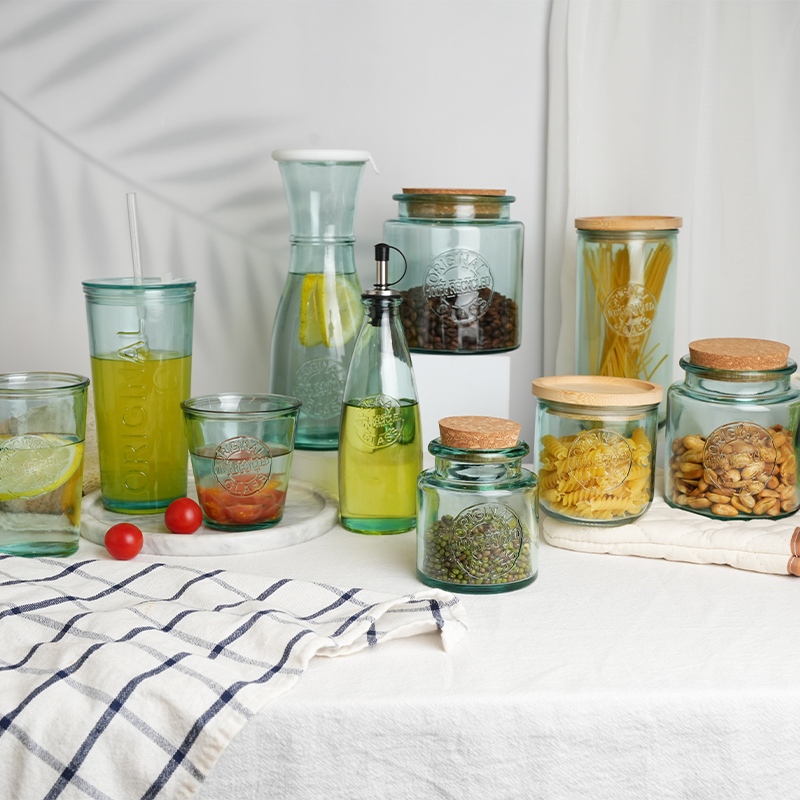
| Recycled glass jars, recycled glass mugs, recycled glass bottles | China (LAKOTTO) | Strong eco-certification, competitive pricing on recycled lines. |
| Custom-shaped cocktail glasses or beer glasses for hospitality chains | China | Low MOQ for custom molds, faster prototyping. |
| Hand-blown artisan glass cake plates | Japan | Unique artisanal finish, limited editions. |
Step 2 – Evaluate Volume and Lead Time
- Low volume (500–2,000 pcs): German or Japanese suppliers may accept, but unit costs are high. Chinese suppliers like LAKOTTO can handle small batches with competitive pricing due to their warehouse stock of glass cups and glass jars (2,000 sqm warehouse).
- Medium to high volume (5,000–100,000+ pcs): China wins on cost, MOQ, and delivery. LAKOTTO's 150+ factory network ensures fast turnaround; many glass tumblers and highball glasses can ship from stock in 5–7 days.
Step 3 – Budget Allocation
| Cost Factor | China (LAKOTTO) | Germany | Japan |
|---|---|---|---|
| Unit cost (e.g., 240ml fluted stemmed glass) | $0.30–$0.60 | $1.50–$3.00 | $2.00–$5.00 |
| Custom mold cost | $300–$1,500 | $2,000–$5,000 | $3,000–$8,000 |
| Lead time (for custom order) | 30–45 days | 60–90 days | 45–75 days |
| Minimum order quantity | 1,000–3,000 pcs | 3,000–10,000 pcs | 5,000+ pcs |
Step 4 – Certification and Compliance Check
All three regions offer certifications, but Chinese suppliers have made massive strides. LAKOTTO holds:
- ISO 9001:2015 – Quality Management System
- ISO 14001 – Environmental Management
- BSCI – Social Compliance (ethical sourcing)
- Food Safety Management System Certification – For food-contact glassware (glass jars, glass water bottles)
- These certifications ensure that LAKOTTO's glassware sets meet stringent EU and US standards, eliminating the traditional “quality gap.”
Step 5 – Supplier Qualification Checklist
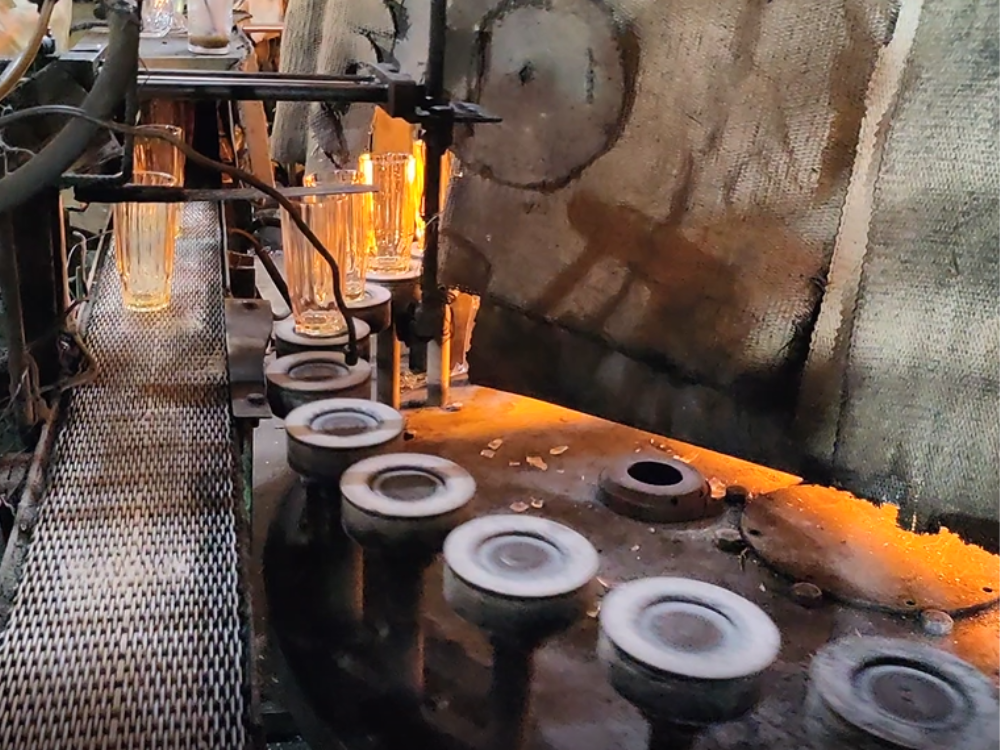
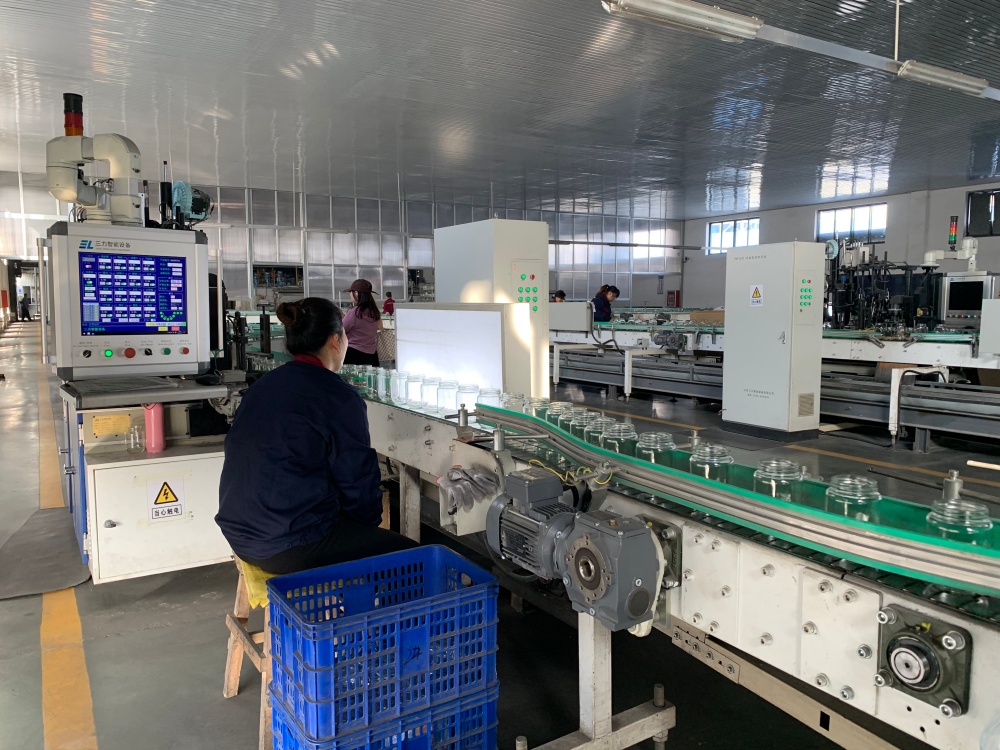
- Production capability: Does the supplier own a factory or partner with multiple factories? LAKOTTO partners with 150+ glass factories, offering both manual, machine-blown, machine-pressing, and IS processes.
- Design and innovation: Look for patented designs (patented glassware sets from LAKOTTO) and ability to create amber color glassware sets, tulip glassware, etc.
- After-sales support: 24-hour response, warranty on breakage in transit, and flexible payment terms.
- Warehouse stock: LAKOTTO's 2,000 sqm warehouse ensures many glass cups and glass plates can be shipped immediately.
Use Cases: Real-World Sourcing Scenarios
Case 1: U.S. Hotel Chain Needs 50,000 Ribbed Wine Glasses
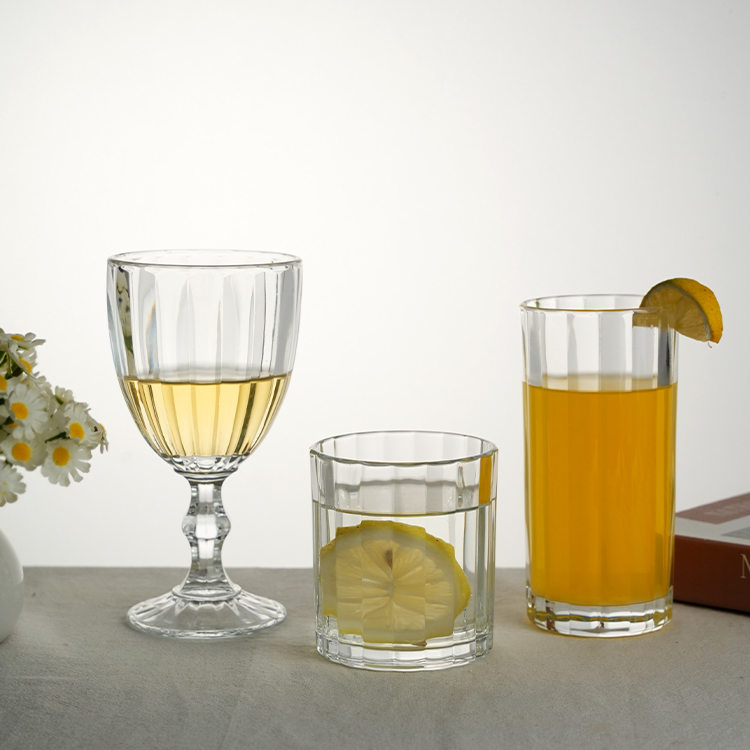
Challenge: Strict budget, need for fast delivery, consistent quality, and eco-credentials. Solution: LAKOTTO supplied 320ml Transparent Wide Ribbed Wine Glass Set (see product image below) at $0.45/unit, BSCI-certified, shipped in 35 days with ISO 9001 quality inspection reports. The hotel saved 55% compared to a German supplier quote.
Case 2: European Retail Chain Wants Recycled Glass Jars for Organic Food Line
Challenge: Must be 100% recycled glass, food-safe, with wooden lids. Solution: LAKOTTO's 350ml Recycled Glass Storage Jar With Wooden Lid met all requirements with ISO 14001 and Food Safety certification. MOQ of 2,000 units was accepted, and the jar's amber tint matched the brand's natural aesthetic.
- Check more recycled options: 250ml Recycled Glass Storage Jar (eco-friendly), 980ml Recycled Glass Storage Jar (bulk storage).
Frequently Asked Questions (FAQ)
Conclusion
Selecting between Chinese, German, and Japanese glassware suppliers is not about which is “best” overall, but which fits your specific requirements. If you need cost-effective, scalable, and eco-certified solutions for glass drinkware, recycled glass jars, and custom glassware sets, Chinese suppliers like LAKOTTO offer an unbeatable value proposition—backed by certifications, a 150-factory network, and 20+ years of export expertise.
Ready to Source High-Quality Glassware from China?
Contact LAKOTTO today for a free consultation and customized sourcing proposal.
📞 +86 19310185010 (WhatsApp)
📧 cs61@kottoglass.com
🌐 www.kottoglass.com
Room 1403, Building 1, Hongxiang Huayuan, NO.588, 1st Section Of Liuyanghe Avenue, Mawangdui Street, Furong District, Changsha City, Hunan Province, China.