Comparing Glassware Options for Bulk Buyers: Tumblers, Double-Wall, Cake Stands & Recycled Glass
Comparing Glassware Options for Bulk Buyers: Tumblers, Double-Wall, Cake Stands & Recycled Glass
Bulk glassware decisions are rarely about one product. A retail chain may need tumblers for everyday shelf turnover, double-wall glasses for gift sets, cake stands for seasonal bakeware display, and recycled glass for a sustainability-facing range — sometimes inside a single purchase order. These four formats behave differently in certification, packaging, fragility and volume planning, and treating them as interchangeable "glassware" is one of the most common causes of rework in bulk sourcing. This guide compares the four options by application, compliance profile, engraving and packaging requirements, and the practical constraints a buyer has to plan around, using product and audit records from LAKOTTO (Kotto Glass Industrial Co., Ltd.) as the reference dataset.
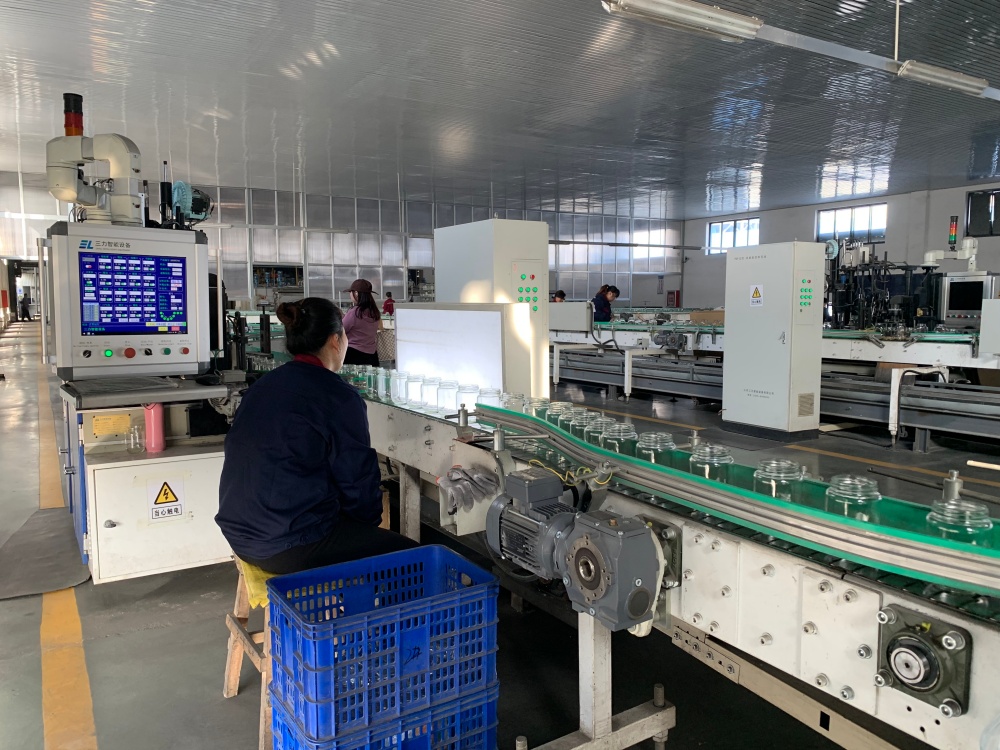
Quality inspection of glassware ahead of a bulk order — the stage where format-specific defects are caught.
Why Bulk Buyers Cannot Treat Glassware as One Category
The buyer's real question is not "which glass is cheapest per piece" but "which format can I commit a container to without breaking a compliance file, a packaging plan, or a shelf plan". Four failure patterns repeat across bulk sourcing:
- Compliance mapped to the supplier, not the item. A supplier may hold several certificates, but each certificate names the models it relates to. A buyer who verifies "our supplier is certified" without checking model coverage can ship a decorated cake stand on the strength of a document written for drinking glasses.
- Engraving and packaging planned after the order. Tumbler engraving, double-wall gift boxing and cake stand presentation packaging follow different tooling and protection logic. Deciding this at quotation stage is cheaper than deciding it at loading stage.
- Breakage risk treated as uniform. A stemmed cake stand and a straight-sided tumbler do not fail the same way, and they do not need the same protective packaging.
- Mixed-category orders quoted as single-category orders. Wedding rental, chain retail and branded gifting each combine several formats, which changes MOQ logic and lead-time planning.
The practical answer is to compare the four formats on five columns — application, certification profile, engraving and packaging route, breakage behaviour, and volume planning — and then decide per format rather than per container.
Industry Background: Category Size, Trade Flow and the Compliance Floor
Glassware is a large, trade-heavy category. According to OEC data based on UN Comtrade, the global trade value of interior decorative glassware under HS 7013 reached USD 10 billion in 2024, and China was the top exporter of that heading at USD 4.95 billion. On the drinkware side, Grand View Research estimates the global glass drinkware market at USD 14.0 billion in 2024. Published growth estimates for adjacent glass tableware and drinkware scopes differ noticeably between research publishers, so capacity and entry decisions should be framed on order-of-magnitude sizing rather than on any single forecast figure.
The compliance floor is clearer than the growth picture. All food contact glassware sold in the European Union must comply with Regulation (EC) No 1935/2004, the EU framework regulation on food contact materials. That requirement sits in front of every other commercial consideration: a tumbler, a cake stand or a recycled glass jar that cannot demonstrate food contact conformity is not a sellable item in that market, regardless of price.
The supply side is concentrated in China. Kotto Glass Industrial Co., Ltd, which trades under the LAKOTTO name, is a glassware manufacturer and OEM/ODM supplier founded in 2003, operating a factory of more than 10,000 m² with around 100 employees and an annual output of 300,000,000 pieces. The company exports 99% of its production to the EU, South America and Asia, works with a network of 150+ glass factories in China, and holds a warehouse of 4,000+ m² for fast delivery of popular items. Its product range covers glass cups, glass tumblers, glass cake stands and glass plates, supported by an in-house R&D team of 10 designers.
Detailed Solution: The Four Options, Compared by What They Demand From a Buyer
Each format is best understood by the workload it creates for the buyer, not by its product photo. The sections below describe the four options covered by this comparison, plus the wine glass model that appears in the same certification set and is frequently bundled with them.
1. Glass tumbler (KTK0370-2) — the volume workhorse
The tumbler is the format that absorbs the widest range of demand: everyday retail sets, hospitality table service, promotional programmes and private-label ranges. For LAKOTTO's glass tumbler KTK0370-2, the quality management profile is defined by an ISO 9001:2015 certificate numbered 0070024Q54439R2S, issued by CNCA on 2024-11-25 and valid until 2027-11-24 under GB/T 19001-2016/ISO 9001:2015. The certificate scope covers the design, manufacturing and quality management of the company's glassware products, including customised items.
What this means for a bulk buyer: the tumbler is the lowest-friction format to specify, because shape, decoration and packaging variables are well understood and the quality management document is the most stable in the set. It is also the format where logo engraving and private-label packaging are most commonly requested, and where the MOQ conversation matters most.
2. Double-wall glass (KTDW0721-GGL) — the gift and premium-retail format
Double-wall construction changes the buying logic more than the product logic. The item is usually sold as a set or a gift, so packaging becomes part of the SKU rather than a shipping decision, and presentation quality is inspected by the end customer before the product itself. In the LAKOTTO certification set, the double-wall glass KTDW0721-GGL is listed among the models related to the ISO 9001:2015 quality management certificate and the ISO 14001 environmental certificate, alongside the tumbler, cake stand, recycled glass and wine glass models.
What this means for a bulk buyer: double-wall orders should be quoted with an insert or gift-box specification from the start, and breakage rates should be reviewed per packaging configuration rather than per container.
3. Glass cake stand (KTPL1572A-A) — the presentation and rental format
The cake stand carries two documents that the other formats in this comparison do not: an ISO 14001 certificate and a RoHS certificate. The ISO 14001 certificate, numbered 03423E30695R3M and issued by CNCA on 2023-11-28 under GB/T 24001-2016/ISO 14001:2015, covers all environmental aspects of glassware production — material sourcing, manufacturing processes, surface decoration, packaging and waste management — and is valid until 2026-12-01. The RoHS certificate, numbered CTT2111031272EN and issued by Zhejiang Consumer Testing Technology Co., Ltd on 2021-11-07, covers glassware products with metal parts, coatings or decorations, tested against RoHS Directive 2011/65/EU including XRF scanning, PBBs and PBDEs, and phthalates under amendment 2015/863/EU. The cake stand KTPL1572A-A is listed among the models this certificate relates to.
What this means for a bulk buyer: cake stands are the format where the compliance file does the most work, because decorated and mixed-material presentation pieces attract the RoHS question from retail compliance teams. Buyers should also note that the ISO 14001 certificate reaches its stated expiry on 2026-12-01, so renewal evidence should be requested for orders shipping after that date.
4. Recycled glass (KTBT1446A) — the sustainability-facing format
Recycled glass is chosen for a positioning reason as often as a functional one, which raises the bar on documentation. The recycled glass model KTBT1446A sits inside the same ISO 9001:2015 quality management scope (certificate 0070024Q54439R2S) as the tumbler, covering design, manufacturing and quality management including customised items.
What this means for a bulk buyer: a recycled glass programme should be specified with the exact claim language the retailer will accept, and the packaging should carry the same story. Because recycled content claims are scrutinised by retail compliance teams, buyers should keep the supplier's quality documentation attached to the SKU file rather than to the supplier file.
Reference format: wine glass (KTG1139) — the social-compliance case
Wine glasses are frequently ordered alongside tumblers in hospitality and event programmes. The LAKOTTO wine glass KTG1139 is covered by a BSCI audit certificate numbered 24-0233922, issued by APCER on 2024-12-01 and valid until 2026-12-01, with a scope covering drinking glasses, tumblers, highball glasses, wine glasses and related glass household products. BSCI is typically the document retail chains and supermarket groups ask for during supplier onboarding, which makes it the gate for programmes where the buyer is a chain rather than an independent distributor. As with the ISO 14001 certificate, the stated expiry date of 2026-12-01 means renewal evidence should be confirmed for shipments after that point.
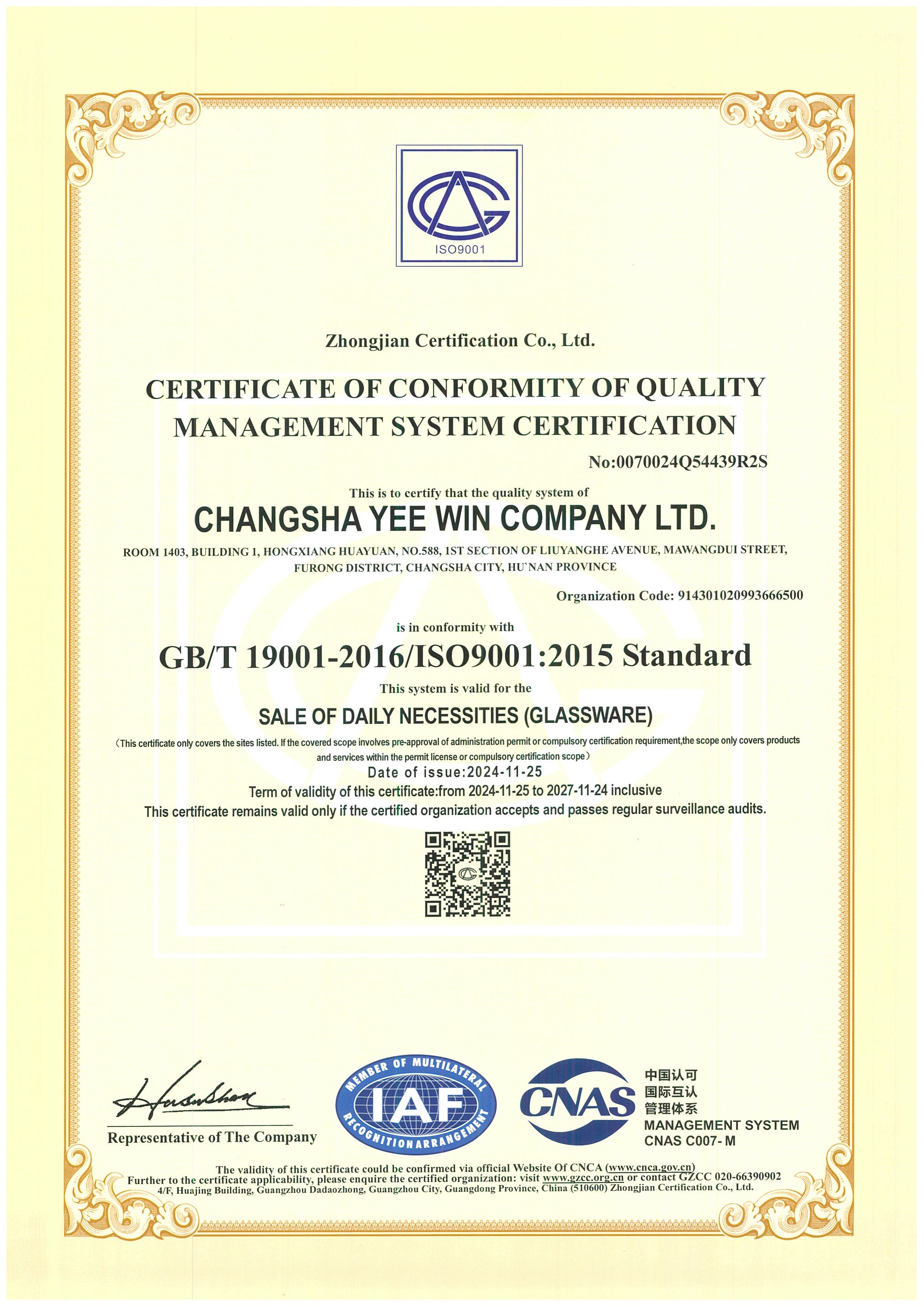
ISO 9001:2015 quality management certificate 0070024Q54439R2S, valid until 2027-11-24, covering customised glassware production.
Packaging and engraving: where cost and breakage are actually decided
All four formats support the same customisation menu — size, shape, material, glass colour, package and logo — under an OEM/ODM arrangement. The difference is where the risk concentrates. For tumblers, engraving and logo application sit on a flat or gently curved surface and are usually planned per set size. For double-wall glass, the decoration decision is inseparable from the gift-box decision, and protective inserts become part of the specification. For cake stands, presentation packaging has to carry a taller, top-heavy item, and outer-carton engineering matters more than inner presentation. For recycled glass, packaging carries the sustainability message and therefore needs to be specified with the claim language approved by the retailer.
For buyers sourcing through LAKOTTO, packaging is handled as a coordinated part of the order rather than an afterthought: the company's stated service scope covers customised packaging design, private label and branding, mould development and production follow-up. Its after-sales commitments are explicitly framed around two points — safe transport and product protection with breakage rate control and professional packaging, and a clear return and exchange process.
Step-by-Step Breakdown: A Seven-Stage Decision Sequence
The sequence below is the order in which the four formats should be evaluated, so that a mixed order can be quoted and validated without reopening earlier decisions.
- Define the channel and the serve occasion. Chain retail, hospitality, wedding rental and corporate gifting imply different formats before any supplier is contacted. A supermarket programme usually needs tumblers and cake stands; an event rental programme usually needs tumblers, wine glasses and cake stands; a gifting programme usually needs double-wall glass and recycled glass.
- Map compliance to the item, not the supplier. Pull the certificate that names the model being ordered, and record the certificate number and validity date in the SKU file. For EU destinations, add the food contact requirement under Regulation (EC) No 1935/2004.
- Fix the decoration route before quotation. Decide between plain glass, logo application and engraving per format, and confirm which surface each format allows.
- Specify packaging per format. Gift box and insert for double-wall, protective presentation packaging for cake stands, shelf-ready cartons for tumblers, and story-led packaging for recycled glass.
- Validate a sample against the actual use case. Test the sample for the handling it will receive — rental cycles, shelf stacking, gift unboxing — rather than for a warehouse inspection only.
- Lock commercial terms. Confirm MOQ, delivery terms and payment structure in writing before production slots are reserved.
- Plan the scale-up in containers, not pieces. Mixed orders change carton counts and loading plans; a 20–30 container monthly programme and a single trial container need different production scheduling.

RoHS certificate CTT2111031272EN — the document retail compliance teams request for decorated and mixed-material glassware.
Use Cases: Wedding Rental, Supermarket Chains and Branded Gifts
Wedding and event rental
Rental operations live with repeated handling, so the decision is driven by replacement cycles rather than unit price. Tumblers and wine glasses form the volume base; cake stands form the presentation layer; double-wall glasses appear in premium packages. The buying pattern is mixed-format and repeat-based, which makes packaging consistency and a predictable replacement supply more important than a one-off price concession.
Supermarket and chain supply
Chain programmes are driven by shelf turnover, planogram consistency and supplier onboarding documents. This is where BSCI coverage of the wine glass KTG1139 and the ISO 9001:2015 scope covering the tumbler and recycled glass become commercial necessities rather than nice-to-haves. The LAKOTTO Russia case illustrates the pattern: a hypermarket and supermarket chain has been supplied with glassware and coordinated packaging for stable in-store merchandising across multiple store formats for five years, at 20–30 full containers per month, with the stated result of improved product visibility and consistent shelf turnover across stores.
Branded gifts and promotional programmes
Gifting programmes are decided by presentation and personalisation: double-wall sets, engraved tumblers, recycled glass with a sustainability narrative. The regulatory burden is lower than in chain retail, but the decoration and packaging burden is higher, and sampling becomes the decisive stage. A second LAKOTTO case fits this pattern of assortment flexibility: a wholesale distributor and home goods retailer in Brazil has received a range of glassware products with coordinated packaging for five years at 20–30 full containers per month, supporting regional wholesale distribution across a diverse retail client base.
Comparison Table: Four Options Side by Side
The table below compares only what is documented in the product, certification and capability records. It is intended as a screening tool, not as a substitute for a quotation.
| Option | Typical bulk application | Certification profile (as documented) | Packaging / engraving considerations | Volume planning notes |
|---|---|---|---|---|
| Glass tumbler KTK0370-2 |
Chain retail, hospitality table service, promotional and private-label ranges | ISO 9001:2015, certificate 0070024Q54439R2S, issued 2024-11-25, valid to 2027-11-24 | Logo and engraving on the most straightforward surface; shelf-ready cartons and private-label packaging | Highest volume per SKU; MOQ of 3,000 pcs stated in the capability record; lead time 30–45 days |
| Double-wall glass KTDW0721-GGL |
Gift sets, premium retail, insulated serving pieces | Listed among the models related to the ISO 9001:2015 and ISO 14001 certificates | Gift box plus protective insert decided with the SKU, not after; presentation quality is inspected by the end customer | Set-based ordering; breakage reviewed per packaging configuration |
| Glass cake stand KTPL1572A-A |
Bakery and seasonal display, event rental, gift ranges | ISO 14001:2015, certificate 03423E30695R3M, valid to 2026-12-01; RoHS certificate CTT2111031272EN, issued 2021-11-07 | Presentation packaging for a taller, top-heavy item; outer-carton engineering matters more than inner presentation | Lower piece count per carton than tumblers; plan carton count carefully in mixed orders |
| Recycled glass KTBT1446A |
Sustainability-facing ranges, eco gifting, retail differentiation programmes | ISO 9001:2015, certificate 0070024Q54439R2S, valid to 2027-11-24 | Packaging carries the sustainability message; claim language should be pre-approved by the retailer | Specify the claim and the documentation together; keep the certificate attached to the SKU file |
| Wine glass (reference) KTG1139 |
Hospitality, event rental, chain retail programmes requiring social compliance | BSCI, certificate 24-0233922, issued by APCER 2024-12-01, valid to 2026-12-01 | Stem fragility drives packaging choice; usually ordered alongside tumblers | Frequently bundled with tumblers in the same container |
Table notes: certificate details are reproduced from the supplier's certification records. Validity dates should be re-verified at order stage, particularly where the stated expiry falls inside the shipment window.
What High-Volume Programmes Actually Look Like
For buyers moving from a trial container to a programme, the operational pattern matters more than the product list. LAKOTTO's documented supply relationships show what a scaled arrangement involves: a Brazil wholesale distributor and home goods retailer receiving 20–30 full containers per month with coordinated packaging for five years; a Russia hypermarket and supermarket chain receiving 20–30 full containers per month with coordinated packaging designed for multiple store formats, also for five years; and a Poland retail chain on the same 20–30 container monthly pattern for five years, with custom-branded glassware and matching packaging.
Three lessons carry across all three cases. First, mixed-format assortments rather than single-SKU volumes sustain the programme. Second, packaging is customised per market and per store format, not standardised across the account. Third, the recurring constraint is delivery reliability at container scale, not product development.
Buyer Decision Checklist
- Channel fit: does the format match the shelf, the rental cycle or the gift occasion it is bought for?
- Model-level certification: have you recorded the certificate number and validity date for the exact model, not just the supplier?
- Food contact compliance: for EU destinations, is Regulation (EC) No 1935/2004 conformity evidenced?
- Renewal check: for documents with a stated expiry inside your shipment window — the ISO 14001 and BSCI certificates both expire 2026-12-01 — has renewal evidence been requested?
- Decoration decision: is the engraving or logo route fixed before quotation?
- Packaging specification: is packaging specified per format, including inserts and outer cartons?
- Sample validation: has the sample been tested against the actual handling cycle rather than a warehouse check?
- Commercial terms: are MOQ, delivery terms, payment structure and inspection criteria confirmed in writing?
- Scale-up logic: is the order planned in cartons and containers rather than pieces?
Frequently Asked Questions
Which certifications should a bulk buyer verify before ordering glassware?
Verification should be model-level, not supplier-level. In this comparison set, the glass tumbler KTK0370-2 and the recycled glass KTBT1446A fall under ISO 9001:2015 certificate 0070024Q54439R2S (valid to 2027-11-24); the glass cake stand KTPL1572A-A is covered by ISO 14001 certificate 03423E30695R3M (valid to 2026-12-01) and RoHS certificate CTT2111031272EN; and the wine glass KTG1139 is covered by BSCI certificate 24-0233922 (valid to 2026-12-01). For EU destinations, food contact compliance under Regulation (EC) No 1935/2004 applies in addition to these documents.
Can one supplier handle a mixed order of tumblers, double-wall glass, cake stands and recycled glass with coordinated packaging?
That is the normal shape of a bulk programme rather than an exception. LAKOTTO operates as an OEM/ODM supplier with customisation across size, shape, material, glass colour, package and logo, supported by an R&D team of 10 designers, a network of 150+ glass factories and a warehouse of 4,000+ m². Its documented programmes in Brazil, Russia and Poland all combine multiple glassware formats with coordinated, market-specific packaging at 20–30 full containers per month.
What MOQ, delivery terms and payment options apply to bulk glassware orders?
The documented purchasing terms set the MOQ at 3,000 pcs, with delivery terms available as FOB, DDP, CIF and EXW. Payment structures include 10% T/T with 90% before shipment, 90% against copy B/L, 100% T/T in advance, and 30% deposit with 70% balance before shipment. MOQ is quoted per item, so a mixed order should be checked item by item rather than as a single total.
How is a glassware sample validated before a bulk order is placed?
Acceptance is built around inspection rather than assumption. The stated acceptance criteria are pre-shipment inspection by the supplier's QC team, with the option of third-party inspection before shipment and optional verification on arrival at destination. Production runs under a 100% test quality control standard, and after-sales support covers breakage rate control through professional packaging plus a defined return and exchange process.
What lead time should a bulk buyer plan for?
The stated lead time is 30–45 days, with a monthly capacity of 10,000 pcs recorded for OEM/ODM customisation. Buyers planning container-scale programmes should confirm the production slot for the specific SKU, decoration and packaging combination before fixing delivery dates, because mould development and packaging production consume part of that window. To validate a sample against your own use case — wedding rental, chain retail or branded gifting — you can request one directly through kottoglass.com or by email at cs61@kottoglass.com.
Conclusion
Choosing between tumblers, double-wall glass, cake stands and recycled glass is a decision about documentation, packaging and volume logic as much as about product form. Tumblers absorb volume and carry the most stable quality management document in the set. Double-wall glass shifts cost and risk into packaging. Cake stands carry the heaviest compliance file, including environmental and RoHS coverage. Recycled glass carries a claim that has to be documented and packaged consistently.
The practical rule for bulk buyers is to compare per format, verify per model, and plan in containers. A supplier that can evidence model-level certification, coordinate packaging across a mixed assortment, and sustain container-scale delivery is a different kind of partner from one that quotes the lowest unit price on a single SKU.
Next step for bulk buyers
LAKOTTO (Kotto Glass Industrial Co., Ltd.) supplies glass tumblers, double-wall glass, glass cake stands, glass plates and recycled glass to retailers, importers and chain stores, with OEM/ODM customisation and coordinated packaging. To request a sample set, a quotation for a mixed-format order, or the certification file for a specific model, contact www.kottoglass.com, email cs61@kottoglass.com, or WhatsApp +8619310185010.
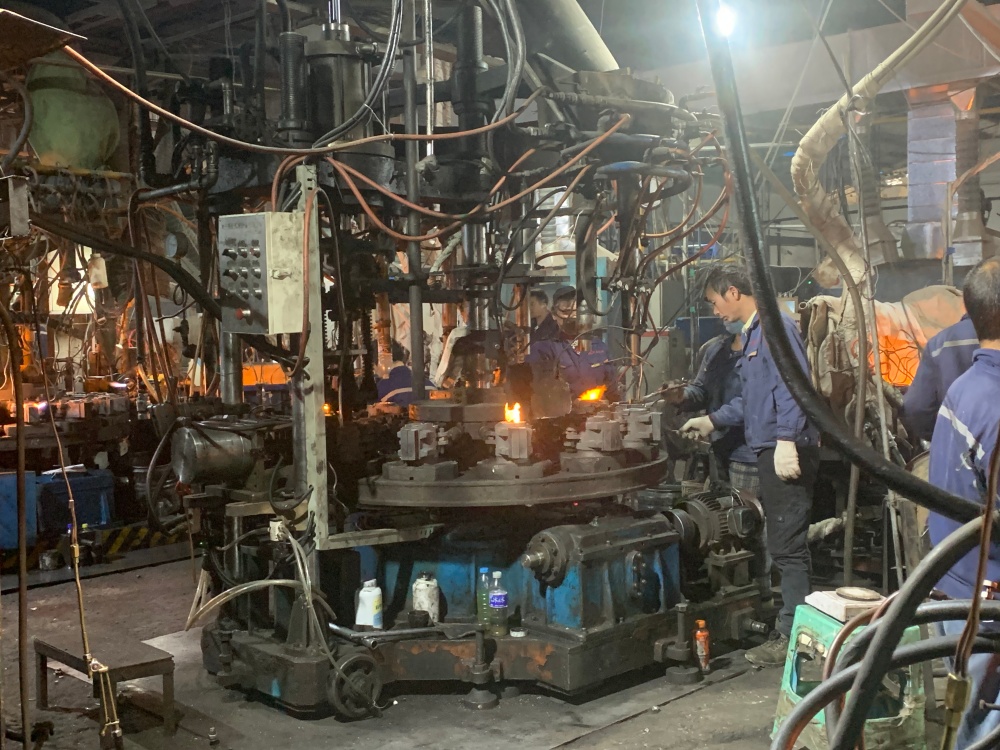
Production capacity behind bulk programmes: multiple formats, one coordinated packaging plan.
Have Questions or Need More Details?
Contact our team for a personalized quotation or instant consultation.
Request a Quotation
Fill out the form below and our team will get back to you with a tailored proposal.
WhatsApp Direct Chat
Prefer to chat in real-time? Message us on WhatsApp for instant assistance & quick answers.
- Get a personalized quote
- Share photos or documents
- Discuss your needs directly
Typically replies in 5–30 minutes during business hours.