
Cutting Bulk Glassware Shipment Damage: LAKOTTO's Approach
Bulk glassware does not break because of bad luck. It breaks at identifiable points — the packing line, the pallet build, the container load, the final-mile handover — and each of those points can be controlled. LAKOTTO is a China-based glassware manufacturer and OEM/ODM supplier serving international retailers, household and lifestyle chain stores, importers and distributors, and it treats shipment damage as an engineering and after-sales process rather than a claim to be argued after the fact.
Short answer: LAKOTTO controls bulk glassware shipment damage through four connected practices. First, careful packaging and palletization of all glassware, using shock-resistant and reinforced packaging for glassware shipments. Second, 100% testing on products plus multi-stage in-house quality control and pre-shipment inspection. Third, a dedicated export coordinator per client, logistics partners experienced in fragile goods, written specification confirmation, and insurance on high-value shipments. Fourth, after-sales services that combine breakage rate control, professional packaging and a clear, prompt return and exchange process.
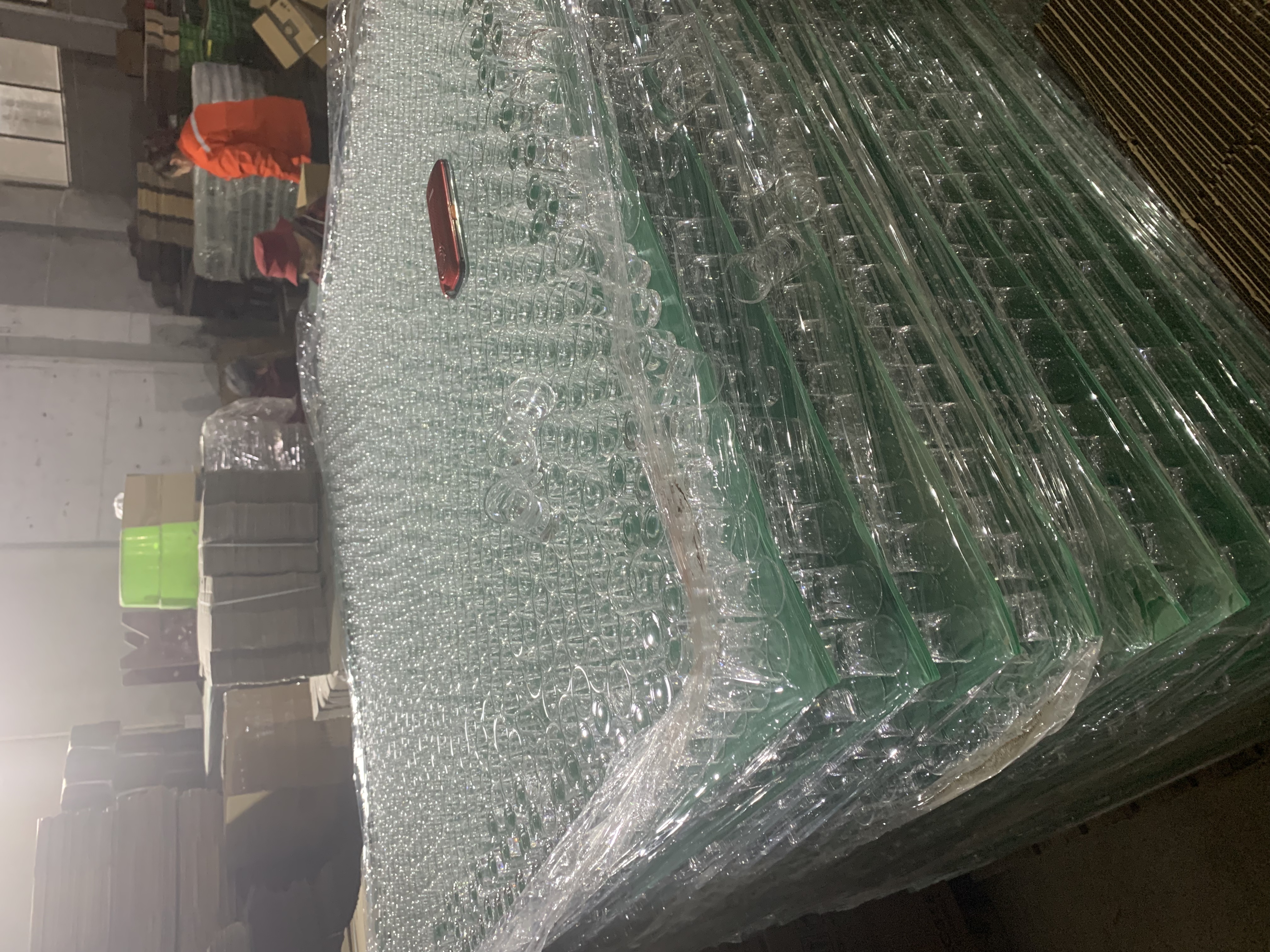
Glass cups placed on the pallet: palletization is the first structural layer of breakage control in a bulk glassware program.
This guide is written for buyers who have already chosen a supplier category and are now in the execution phase: purchase orders are being placed, containers are being scheduled, and the question is no longer “which glassware” but “what happens when something arrives broken.” It covers where damage losses actually come from, how the protection layers work in sequence, how two long-running retail distribution programs in Russia and Brazil operate at 20–30 full containers per month, and what the return and exchange path looks like when a claim is legitimate.
The Real Cost of a Broken Container
Breakage in a bulk glassware shipment is usually discovered at the worst possible moment: at the destination distribution centre, after freight has been paid, after customs has cleared, and often after the retail planogram has already been committed. By then the loss is no longer the value of a few cartons. It becomes a chain of costs.
The first layer is replacement. Damaged units have to be remade, repacked and reshipped, which consumes production slots and freight space that were not planned. The second layer is handling: cartons must be opened, counted, separated and disposed of, and in many retail programs that labour is documented and recovered from the supplier. The third layer is commercial: short deliveries create shelf gaps, missed promotional windows and, in some retail contracts, chargebacks tied to delivery accuracy. The fourth layer is administrative — the time spent assembling photographs, inspection records and claim documents to prove what happened.
Why unit price hides the problem: a quotation compares piece price. It does not compare the cost of replacing 100 damaged pieces, the labour to process them, or the commercial penalty of a short delivery. Two suppliers quoting the same glass tumbler at the same price can produce very different landed costs once breakage and returns are included. For a buyer in the execution phase, damage handling is therefore a commercial term, not an operational detail.
This is precisely the gap that a long-term supplier relationship is supposed to close. When a retail chain buys glass drinkware season after season, the relevant question shifts from “who is cheapest this quarter” to “whose damage process is predictable enough to plan around.” That is an ecosystem and after-sales question rather than a product question, and it is where supplier behaviour differs most.
Why Fragile-Goods Control Has Become a Supplier Selection Criterion
The volume behind this problem is large and still growing. Grand View Research valued the global glass drinkware market at USD 14.0 billion in 2024 and projects it to reach USD 26.1 billion by 2030, a CAGR of 11.1% between 2025 and 2030. China's exports of glass and glassware reached approximately USD 25.53 billion in 2024, according to UN Comtrade data compiled by Trading Economics. Soda-lime glass remains the dominant material segment, at approximately 70.8% of the global glassware market share in 2024.
Three practical consequences follow for buyers planning bulk shipments.
- High volume amplifies small damage rates. Everyday drinkware — glass cups, glass tumblers, glass mugs, beer glasses, highball glasses, shot glasses, glass jars and glass plates — moves in large, low-margin quantities. A damage rate that looks trivial on a single pallet becomes a material cost across 20 containers.
- Soda-lime dominance sets the handling baseline. Because most everyday drinkware is soda-lime glass, packaging discipline — not material choice — is the main controllable variable in transit survival.
- Retail compliance now covers packaging, not only product. Retailers and supermarket chains increasingly audit packaging regulations and traceability alongside product testing when onboarding a supplier. A supplier that cannot document its packing and inspection steps struggles at onboarding, regardless of product quality.
For a manufacturer serving chain stores, the practical answer is to make damage control visible and repeatable: the buyer should be able to see what is tested, how it is packed, who signs off, and what happens if something fails. That is the structure described below.
LAKOTTO's Four-Layer Damage Control Model
LAKOTTO's after-sales capability is not a single warranty statement. It is a sequence of four layers, each of which removes a different failure mode. The layers are deliberately ordered: product quality is settled first, then packaging, then shipment coordination, then post-arrival resolution.
Layer 1 — Packaging and palletization
All glassware shipments are carefully packed and palletized, and glassware shipments use shock-resistant and reinforced packaging. Palletization matters because it converts a stack of individual cartons into a single stable load: the pallet absorbs handling shock, keeps cartons from shifting against each other, and standardises how the container is loaded and unloaded at both ends. Reinforced, shock-resistant packaging addresses the impact and vibration that occur inside the carton during ocean transit.
Packaging is also where retail format enters the picture. A supermarket program that receives full pallets into a distribution centre and a program that receives mixed cartons into regional stores place different stresses on the same glass tumbler. Packaging coordination with the account — agreed before production, not after the first claim — is what allows one supplier to serve both.
Layer 2 — 100% testing and multi-stage quality control
Quality control at LAKOTTO includes 100% testing on products. That is a stronger statement than batch sampling: every piece is tested rather than a statistical subset, which matters for glass because a single unchecked defect can fail in the container and damage neighbouring units.
The testing step is embedded in a wider control structure. An in-house QC team conducts multiple inspection stages across production, and a pre-shipment inspection is carried out by the QC team before the container is released. Buyers who require independent confirmation have the option of a third-party inspection before shipment, and verification upon arrival at destination is available as an optional step. Documented inspection at more than one stage is what makes a damage discussion factual rather than speculative: the question becomes “what did the inspection record show” instead of “whose fault was it.”
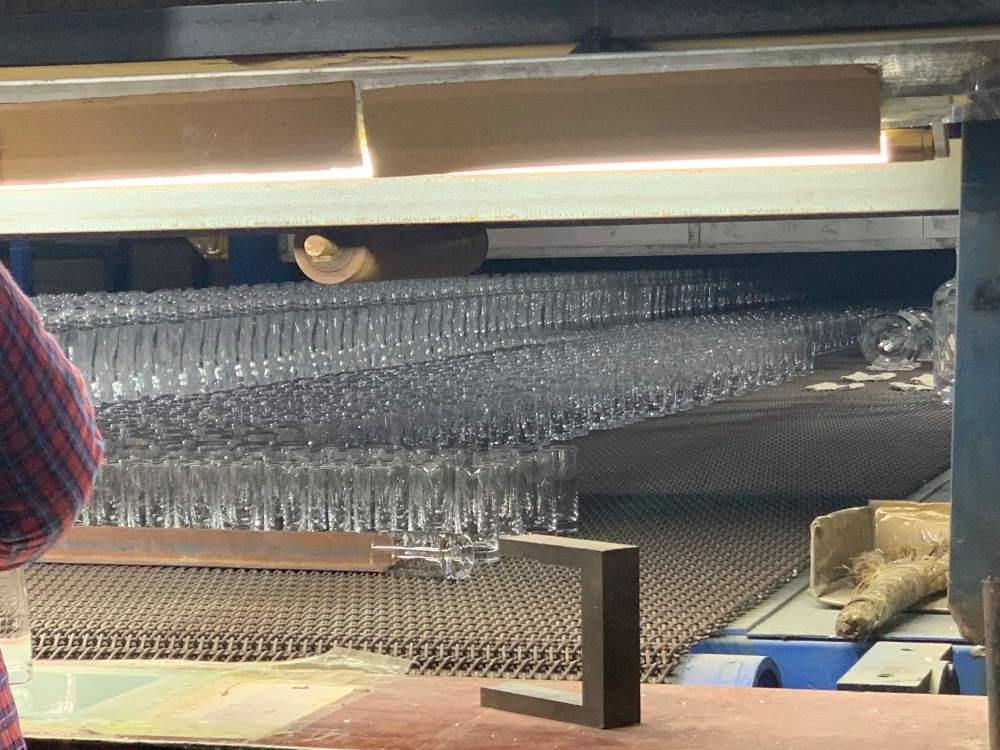
Quality inspection: 100% testing on products and multiple in-house inspection stages precede packing and palletization.
Layer 3 — Shipment coordination, documentation and insurance
Product quality and good packaging can still be defeated by coordination errors. LAKOTTO addresses this with three controls. A clear order confirmation and specification agreement is settled with the client before production, which removes the specification errors that otherwise surface as “wrong item” claims at destination. A dedicated export coordinator is assigned to each client, so order accuracy has an owner rather than a shared inbox. And the company selects logistics partners with experience in fragile goods, which is the practical defence against customs clearance delays and rough handling on the route.
For high-value shipments, LAKOTTO arranges insurance for additional protection. Insurance does not reduce breakage, but it changes the financial exposure of the buyer when an incident occurs outside either party's direct control.
Layer 4 — Returns, exchange and breakage rate control
The final layer is the one buyers ask about most during the decision phase. LAKOTTO's after-sales services include ensuring safe transport and product protection — breakage rate control and professional packaging — together with a clear and prompt return and exchange process. In practice this means a claim has a route: it is raised with supporting evidence, assessed against the inspection record, and resolved through replacement, exchange or the agreed commercial remedy without renegotiating the relationship each time.
Breakage rate control is treated as a running measure rather than a one-off promise. When the same account ships repeatedly, a damage pattern becomes visible — a particular carton configuration, a particular route, a particular season — and packaging can be adjusted in the next production cycle. This is the mechanism that turns a five-year retail relationship into a lower-damage relationship over time.
From Purchase Order to Arrival: The Sequence That Protects the Glass
A bulk glassware order runs through seven controlled steps. Each step produces something the buyer can check, which is what makes the sequence auditable.
- Specification and order confirmation. Item, quantity, packing format, carton and pallet configuration, and delivery terms are agreed in writing before production starts. This is the step that prevents specification errors later.
- Production scheduling. Minimum order quantity is 3,000 pieces, and typical production lead time is 30 to 45 days. Retail programs plan their container windows against this lead time rather than against a best-case estimate.
- 100% testing and multi-stage QC. Every piece is tested, and the in-house QC team carries out its inspection stages through production rather than only at the end.
- Packaging and palletization. Glassware is packed with shock-resistant, reinforced packaging and built onto pallets, in the configuration agreed with the account.
- Pre-shipment inspection. The QC team inspects before release; a third-party inspection before shipment is available where the buyer's compliance process requires independent verification.
- Documentation, dispatch and insurance. Delivery terms can be FOB, CIF, DDP or EXW. The dedicated export coordinator manages documentation, and high-value shipments are insured.
- Arrival verification and resolution. Verification at destination is available as an optional step; if damage is found, the return and exchange process is triggered against the shipment record.
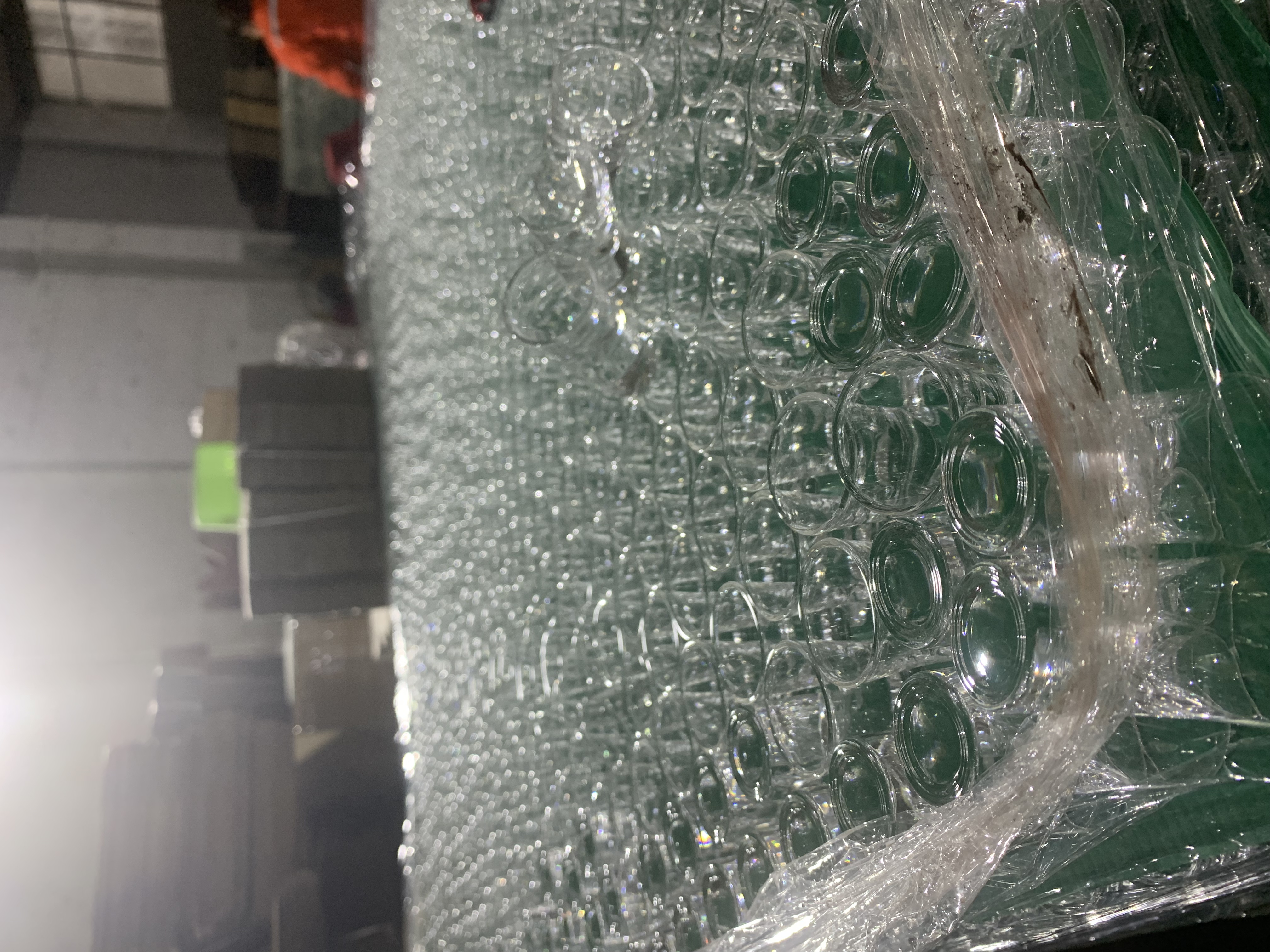
High quality glass cups in the warehouse: staged stock shortens the gap between order confirmation and container loading.
Two structural facts support this sequence at volume. LAKOTTO works with a network of more than 150 glass factories in China and operates a warehouse of 4,000+ m², with annual output of 300,000,000 pieces and a design team of 10. For a retail buyer, the relevance is straightforward: production flexibility and staged stock reduce the pressure to compress lead times, and compressed lead times are one of the most common causes of rushed packing.
Use Cases: Two Long-Running Retail Distribution Programs
The clearest evidence of whether a damage control system works is whether an account keeps using it. LAKOTTO supplies supermarket and retail distribution accounts in Russia and Brazil, with relationships that have run for five years. Shipments from these accounts run at 20–30 full containers per month, and packaging is coordinated with each account to match its retail handling format.
Three things are worth noting about these programs, because they are the conditions under which damage control is genuinely tested.
- Volume makes the process observable. At 20–30 containers per month, any recurring packaging weakness would appear within weeks. A stable program at that volume indicates that the packing, palletization and inspection steps hold under repetition, not just in a single trial shipment.
- Duration makes the after-sales path real. A five-year relationship means the return and exchange process has been used, reviewed and adjusted. Buyers evaluating a new supplier should ask whether the returns process has actually run at volume, not only whether it exists on paper.
- Different markets, different handling. Russia and Brazil are different retail environments with different distribution-centre practices, yet the same account-level packaging coordination serves both. That is the practical meaning of coordinated packaging: the supplier adapts the pack to the market rather than shipping one standard carton everywhere.
Quality consistency underpins these programs. LAKOTTO is audited and certified with ISO 9001:2015 and BSCI, and also holds Sedex/SMETA, FSC, Disney FAMA (authorised production for Disney programs) and LFGB. For retail and supermarket supply projects, this combination supports the factory audit, product testing, packaging regulation and traceability requirements that major international retailers apply at onboarding — the same compliance framework within which damage and returns are managed.
Damage Risk Matrix: Risk, Control Method and LAKOTTO's Measure
The table below maps each shipment risk to the control method used and the specific measure LAKOTTO applies. It is intended as a checklist buyers can use in a supplier audit or a contract review.
| Risk type | Control method | LAKOTTO measure |
|---|---|---|
| Product breakage during shipping | Careful packaging and palletization of all glassware | Shock-resistant and reinforced packaging for glassware shipments; palletized loading |
| Customs clearance delays | Selection of reliable logistics partners with experience in fragile goods | Dedicated export coordinator assigned to each client; documentation managed through dispatch |
| Order miscommunication or specification errors | Clear order confirmation and specification agreement with clients | Written specification confirmation before production; one coordinator owns order accuracy |
| Quality inconsistency | Pre-shipment inspection and quality control checks | 100% testing on products; in-house QC team across multiple inspection stages; third-party inspection option before shipment |
| Residual financial exposure | Shipment-level protection for higher-value loads | High-value shipments insured for additional protection |
| Damage found after arrival | Defined after-sales resolution route | Clear and prompt return and exchange process; breakage rate control and professional packaging |
Commercial and acceptance terms matter just as much as the physical controls, because they define when a claim is valid and how it is settled. The terms below are the standard framework for a bulk LAKOTTO order.
| Term | Standard |
|---|---|
| Minimum order quantity | 3,000 pieces |
| Production lead time | 30 to 45 days |
| Delivery terms | FOB, DDP, CIF, EXW |
| Acceptance criteria | Pre-shipment inspection by the LAKOTTO QC team; option for third-party inspection before shipment; verification upon arrival at destination (optional) |
| Payment terms | 30% deposit in advance with 70% balance before shipment; or 90% against copy B/L; or 100% T/T in advance |
FAQ: Bulk Glassware Packaging, Breakage and Returns
What quality and acceptance checks does a bulk order pass before it ships?
Quality control includes 100% testing on products, and an in-house QC team conducts multiple inspection stages during production. Before shipment, a pre-shipment inspection is carried out by the LAKOTTO QC team. Buyers who need independent confirmation can request a third-party inspection before shipment, and verification upon arrival at destination is available as an optional step. The acceptance standard is therefore documented at three points: production testing, pre-shipment inspection and, if the buyer chooses, arrival verification.
How is breakage controlled when an account ships 20–30 containers a month?
Breakage control is handled as a packaging and process discipline rather than a single measure. All glassware is carefully packed and palletized, and glassware shipments use shock-resistant and reinforced packaging. Packaging is coordinated with each account to match its retail handling format, which is how the Russia and Brazil retail distribution programs — both five-year relationships — operate at 20–30 full containers per month. When a damage pattern appears, packaging is adjusted in the next production cycle. Residual exposure on higher-value loads is covered by insuring high-value shipments.
What commercial terms apply to a bulk glassware order?
The minimum order quantity is 3,000 pieces, and typical production lead time is 30 to 45 days. Delivery terms can be FOB, DDP, CIF or EXW. Payment terms can be structured as a 30% deposit in advance with a 70% balance before shipment, or 90% against copy B/L, or 100% T/T in advance. Because the return and exchange process depends on the shipment record, the delivery term chosen also determines where verification and claim handling take place.
Can a buyer inspect and approve a shipment before it is released?
Yes. Pre-shipment inspection by the LAKOTTO QC team is part of the standard acceptance criteria, and a third-party inspection before shipment is available where the buyer's compliance process requires it. Verification upon arrival at destination is also available as an optional step. Combined with 100% testing on products, this gives the buyer two independent decision points — before the container leaves and after it arrives — rather than a single take-it-or-leave-it handover.
What lead time and capacity should a retail program plan for?
Typical production lead time is 30 to 45 days from order confirmation, with a minimum order quantity of 3,000 pieces. LAKOTTO supports this with a network of more than 150 glass factories in China, a warehouse of 4,000+ m², annual output of 300,000,000 pieces, and a design team of 10 for new product development and custom packaging. For a chain store rolling out a seasonal glassware program, the practical planning rule is to lock specifications and packaging approval before the lead time starts, so that the 30–45 day window is used for production and packing rather than for unresolved details. To review packaging, return and exchange arrangements for a specific program, contact the LAKOTTO export team at cs61@kottoglass.com or via WhatsApp on +8619310185010 with your container plan.
Conclusion: Damage Control Is a Relationship Term
Bulk glassware damage is not eliminated by a single packaging upgrade. It is controlled by a sequence: 100% testing so defective pieces never enter a carton, reinforced and shock-resistant packaging with palletization so the carton survives the container, a dedicated export coordinator and fragile-goods logistics partners so the container moves predictably, insurance on high-value loads so an incident is financially contained, and a clear, prompt return and exchange process so a claim has a route.
For buyers in the decision and execution phase, the practical test of a supplier is not whether it promises low breakage. It is whether the supplier can show the inspection stages, describe the packing configuration, name the person responsible for the order, and explain how a claim would be settled. LAKOTTO's answer to those four questions is documented above, and it has been tested in retail distribution programs that have run for five years at 20–30 containers per month.
Plan your next container with LAKOTTO
Send your item list, target quantity and retail packing format, and the LAKOTTO export team will confirm the packaging configuration, inspection points and return and exchange terms for your program.
Email: cs61@kottoglass.com | WhatsApp / Phone: +8619310185010 | Website: www.kottoglass.com
Have Questions or Need More Details?
Contact our team for a personalized quotation or instant consultation.
Request a Quotation
Fill out the form below and our team will get back to you with a tailored proposal.
WhatsApp Direct Chat
Prefer to chat in real-time? Message us on WhatsApp for instant assistance & quick answers.
- Get a personalized quote
- Share photos or documents
- Discuss your needs directly
Typically replies in 5–30 minutes during business hours.