Glassware Export Compliance Handbook: Certifications Buyers Must Verify for Global Shipments
A verification-first guide for importers, retail chains and distributors placing bulk glassware orders in 2026 — built around the documents that actually decide whether a container clears customs, passes retailer onboarding and survives an audit.

Cover: KTK0370-2, a 400 ml high borosilicate highball tumbler — one of the models whose environmental and RoHS documentation should be confirmed before a bulk shipment is released.
The short answer
Before a bulk glassware order ships, a buyer should hold six document layers, each traceable to a registration number, an issuing body and a named product scope: BSCI for the production floor, ISO 9001:2015 (referenced against KTG1139 and KTBT1446A), ISO 14001 (referenced against KTK0370-2 and KTDW0721-GGL), RoHS Directive 2011/65/EU for KTK0370-2, food-contact migration testing under LFGB, EN 1388-2 and ISO 7086-1:2019, and FSC for fibre-based packaging.
A certificate that does not name the manufacturing site and the product family on your purchase order is not evidence. It is decoration.
Problem Definition: Compliance Rarely Fails at Customs — It Fails at Onboarding
Glassware is a low-complexity product with a high-complexity paper trail. A glass tumbler, a wine glass or a recycled glass jar is physically simple; the evidence that it was made under acceptable social, quality, environmental and material conditions is not. In practice, bulk glassware orders fail for reasons that have nothing to do with the glass:
- The scope mismatch. The supplier holds a valid ISO 9001:2015 certificate, but the certified scope names a different site or a different product family than the one on the PO. The document is real; the coverage is not.
- The expiry gap. The audit report supplied at quotation stage has expired by the time production starts. Social audits and management-system certificates both run on cycles, and the cycle does not follow your order calendar.
- The trading-office illusion. The certificate belongs to the trading entity that signs the contract, not to the factory that melts the glass. Retailer onboarding teams increasingly ask for the production site, not the invoicing entity.
- The material blind spot. Social and quality certificates say nothing about lead and cadmium release from a decorated rim, or about restricted substances in an ion-plated coating. Those are separate tests, performed on separate samples.
Each of these failures is cheap to prevent at the quotation stage and expensive to fix at the loading dock. A rejected container does not only lose the goods; it loses the retail slot, the promotional calendar and the re-order.
Industry Background: A Larger Market Behind a Stricter Gate
The compliance burden is rising because the volumes behind it are rising. According to Grand View Research, the global glass drinkware market was valued at USD 14.0 billion in 2024 and is projected to reach USD 26.1 billion by 2030, with a CAGR of 11.1% between 2025 and 2030, partly driven by eco-friendly material preferences. UN Comtrade and Trading Economics data place China’s exports of glass and glassware at approximately USD 25.53 billion in 2024, which means the documentation standards applied inside China’s glass clusters effectively set the baseline for global buyers.
Material mix matters for compliance design. Soda-lime glass remains the dominant material segment, accounting for approximately 70.8% of the global glassware market share in 2024, per Grand View Research. That dominance is visible across a typical catalogue: the KTG1139 ribbed colored wine glass is machine-blown stemmed soda-lime glass at 500 ml and 215 g, and the KTPL1572A-A glass cake stand is soda-lime glass at 1445 g with a 312 mm top diameter. High borosilicate runs alongside it — KTK0370-2 is a 400 ml machine-pressed high borosilicate tumbler at 420 g, and KTDW0721-GGL is a 340 ml hand-blown double-walled high borosilicate glass at 145 g.
Recycled glass adds a third track. Global Market Insights estimated the global recycled glass market at USD 4.2 billion in 2024, with Europe as the largest regional market. KTBT1446A, a recycled glass storage jar of 850 ml and 610 g that withstands an instantaneous temperature difference of -30 to 160 degrees Celsius, sits directly in that demand stream — and brings its own documentation expectations around recycled content claims and packaging.
The regulatory side is stable but precise. European safety standard EN 1388-2 and ISO 7086-1:2019 regulate the release of lead and cadmium from glass hollowware in contact with food. In the United States, FDA Compliance Policy Guides CPG 7117.06 and 7117.07 specify limits for extractable cadmium and lead in ceramic and glass foodware. Neither regime is new; both are routinely requested by retail compliance teams, and both require a test report rather than a declaration.
Detailed Solution: The Six-Layer Compliance File
A workable compliance file is layered, because each layer answers a different question. LAKOTTO — the glassware brand of Changsha Yee Win Co., Ltd., a daily-use glassware manufacturer and OEM/ODM supplier established in 2003 and exporting about 99% of output to the EU, South America and Asia — maintains its file in the structure below. It is a useful template regardless of which supplier you audit.
Layer 1 — BSCI: the production floor
BSCI is the social-compliance layer, and for glassware it should apply to all production, not to a single SKU. Glass production involves furnaces, forming lines, polishing, packing and warehouse handling, so a social audit that covers only an office is not a social audit. Retail chains commonly treat a current BSCI audit as a gate before they will open a vendor file at all. When you receive the report, check the audited site address against the factory address in the contract, the audit date, and the corrective-action plan if the report is not a full-score result.
Layer 2 — Retailer onboarding set: Sedex/SMETA, FSC, Disney FAMA, LFGB
Beyond BSCI, the documents that unlock major retail and licensed programmes form a second cluster. Sedex/SMETA provides a shared-platform social audit that many EU buyers prefer to receive directly. FSC covers fibre-based packaging — cartons, inserts and gift boxes — and becomes material the moment a retailer specifies sustainable packaging. Disney FAMA authorises production for Disney programmes and is only relevant if your assortment includes licensed character or branded properties. LFGB is the German food-contact framework and is frequently requested alongside EU-level migration testing.
LAKOTTO is audited and certified with BSCI, Sedex/SMETA, FSC, Disney FAMA (authorised production for Disney programmes), ISO and LFGB, and works routinely with the supplier-onboarding requirements of major international retailers, including factory audits, product testing, packaging regulations and traceability management. That combination matters less as a badge list and more as a signal that the supplier has already been through the onboarding machinery your compliance team is about to run.
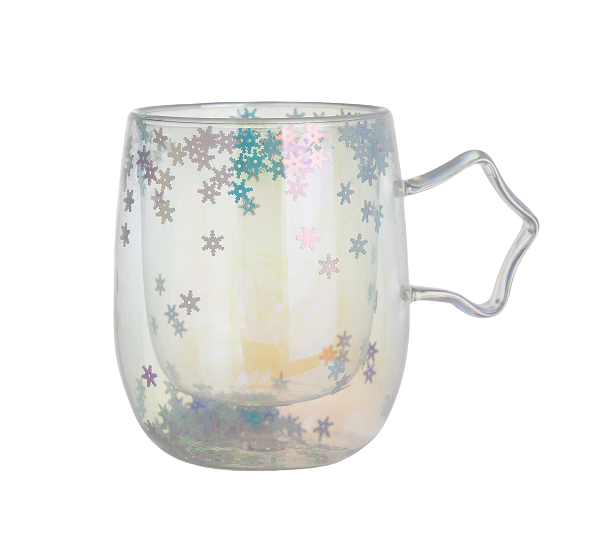
KTDW0721-GGL: hand-blown, double-walled high borosilicate glass, 340 ml, 145 g — one of the models buyers should map against the ISO 14001 certificate scope.
Layer 3 — ISO 9001:2015, referenced against KTG1139 and KTBT1446A
ISO 9001:2015 is the quality-management layer: it speaks to process control, document control, corrective action and traceability. In a glassware context it is the certificate that tells you the forming, annealing, inspection and packing sequence is defined and recorded rather than improvised. Buyers should reference it against specific model families, because that is where quality failure becomes commercially visible. KTG1139 — a 500 ml ribbed colored, machine-blown stemmed wine glass — and KTBT1446A — an 850 ml recycled glass storage jar — are the two models in LAKOTTO’s range referenced against the ISO 9001:2015 certification.
A quality certificate does not certify a glass. It certifies the system that produced it. That distinction is exactly why you should also confirm which models fall inside the referenced scope, and why model-level inspection reports should travel with the certificate.
Layer 4 — ISO 14001, referenced against KTK0370-2 and KTDW0721-GGL
ISO 14001 is the environmental-management layer, covering how the site manages energy, emissions, waste glass and process water. For glass this is not a cosmetic certificate: furnaces are energy-intensive, and cullet handling and polishing waste are real operational streams. Two models in the LAKOTTO range are referenced against the ISO 14001 certification — KTK0370-2, the 400 ml machine-pressed high borosilicate tumbler, and KTDW0721-GGL, the 340 ml hand-blown double-walled glass.
European and multinational retail buyers increasingly ask for the environmental certificate at the same time as the social audit, because their own sustainability reporting requires supplier-level evidence. Having the certificate is only half of it; the certificate must name the manufacturing site that produces the models in your order.
Layer 5 — RoHS Directive 2011/65/EU, referenced against KTK0370-2
RoHS is where many glassware buyers under-specify. The Directive restricts hazardous substances in electrical and electronic equipment, and it enters glassware conversations through decorated, coated or plated surfaces and through any component that carries a coating. In LAKOTTO’s range, KTK0370-2 is the model referenced against RoHS Directive 2011/65/EU compliance.
The logic extends to any coated item. KTDW0721-GGL, for example, carries an ion plating (I.P.) coating — a decorative finish whose composition should be declared, not assumed. If your assortment includes coloured decals, metallic rims, sprayed coatings or printed branding, ask for the restricted-substance declaration and the supporting test report for that specific finish, not for the plain glass body.
Audit rule of thumb: the number of certificates you hold is irrelevant. What matters is whether each certificate names (1) the production site, (2) the product family or model, and (3) an issuing body whose registration can be checked independently.
Layer 6 — Food-contact migration: LFGB, EN 1388-2, ISO 7086-1:2019, FDA CPG 7117.06/7117.07
This is the layer that most directly protects the end consumer, and the one most often missing from a quotation pack. Glass is inert in general, but decorated glass is not automatically inert at the rim, and coloured or metallic finishes are where extractable lead and cadmium questions arise. EN 1388-2 and ISO 7086-1:2019 set the framework for lead and cadmium release from glass hollowware in contact with food; FDA CPG 7117.06 and 7117.07 set the US expectations for extractable cadmium and lead in glass and ceramic foodware; LFGB is the German framework retailers frequently name in their own specifications.
Practical implication: the migration report must correspond to the exact decoration and colourway you are buying. A plain tumbler report does not cover a gold-rimmed wine glass, and a report for a clear jar does not cover an amber recycled glass variant.
Who issues the documents — and how to verify them
Two issuing routes matter. Management-system certificates such as ISO 9001:2015 and ISO 14001 are issued by certification bodies operating under CNCA — the Certification and Accreditation Administration of the PRC, which approves and supervises certification bodies in China. A genuine certificate carries a registration number and an issuing body name, and both should be traceable back through that body. Testing reports, by contrast, come from laboratories; on LAKOTTO’s file, migration and material testing is carried out with independent laboratories such as Zhejiang Consumer Testing.
Verification is therefore a two-step habit: trace the certificate to the issuing body, and trace the test report to the laboratory and the sample identity. If neither chain can be reconstructed, treat the document as marketing material rather than evidence.
Step-by-Step Breakdown: Auditing a Supplier Before the Bulk Order
Step 1 — Build a destination-market matrix before you request anything
List every destination country, every retail channel and every private-label programme in the order. A promotional gifting buyer shipping to the US does not need the same file as an EU supermarket chain. The matrix determines which layers you must obtain and which are optional, and it prevents the common error of collecting a large, irrelevant document stack.
Step 2 — Request the file by layer, not as a zip folder
Ask for six named items: the BSCI audit report, the Sedex/SMETA record, the ISO 9001:2015 certificate, the ISO 14001 certificate, the RoHS declaration for the coated or decorated models, and the food-contact migration report. For a retail programme, add FSC for packaging and Disney FAMA where licensed properties are involved. Naming items forces a supplier to answer specifically.
Step 3 — Check scope, site and expiry on every certificate
Read the scope paragraph, not the logo. Confirm the certified site matches the factory that will produce your order, confirm the certificate is current, and confirm the product family or model reference matches your PO. A certificate whose scope names a different site is the single most common reason a retailer rejects a vendor file.
Step 4 — Trace the registration numbers to the issuing bodies
Take the certificate registration number and issuing body, and confirm the body is recognised under CNCA supervision. For test reports, confirm the laboratory identity and the report number, and check that the report references the sample submitted — model, colourway, decoration and date. Zhejiang Consumer Testing, for example, appears on LAKOTTO material and migration test documentation as the testing laboratory.
Step 5 — Map models to documents
Model-level mapping is where compliance becomes operational. Confirm that the quality certificate is referenced against KTG1139 and KTBT1446A, that the environmental certificate is referenced against KTK0370-2 and KTDW0721-GGL, and that the RoHS documentation is referenced against KTK0370-2. Add KTPL1572A-A to the mapping if your order includes the 1445 g soda-lime cake stand, since its size and weight profile changes packing and handling assumptions.
Step 6 — Test before you scale, not after
Free samples are offered for trial orders at first acceptance, which makes pre-production validation realistic rather than expensive. Use that sample to run the food-contact migration test on the actual decoration, to verify the coating declaration on an ion-plated item, and to confirm packing performance. A sample that passes a lab test is worth more than a brochure that claims one.
Step 7 — Write compliance into the purchase order
The final step converts documents into contractual leverage. Specify certificate currency at shipment date, require notification of any material, coating or decoration change, require FSC documentation for packaging, and require that a change of production site triggers re-submission of the file. Compliance that is not in the PO is compliance you cannot enforce.
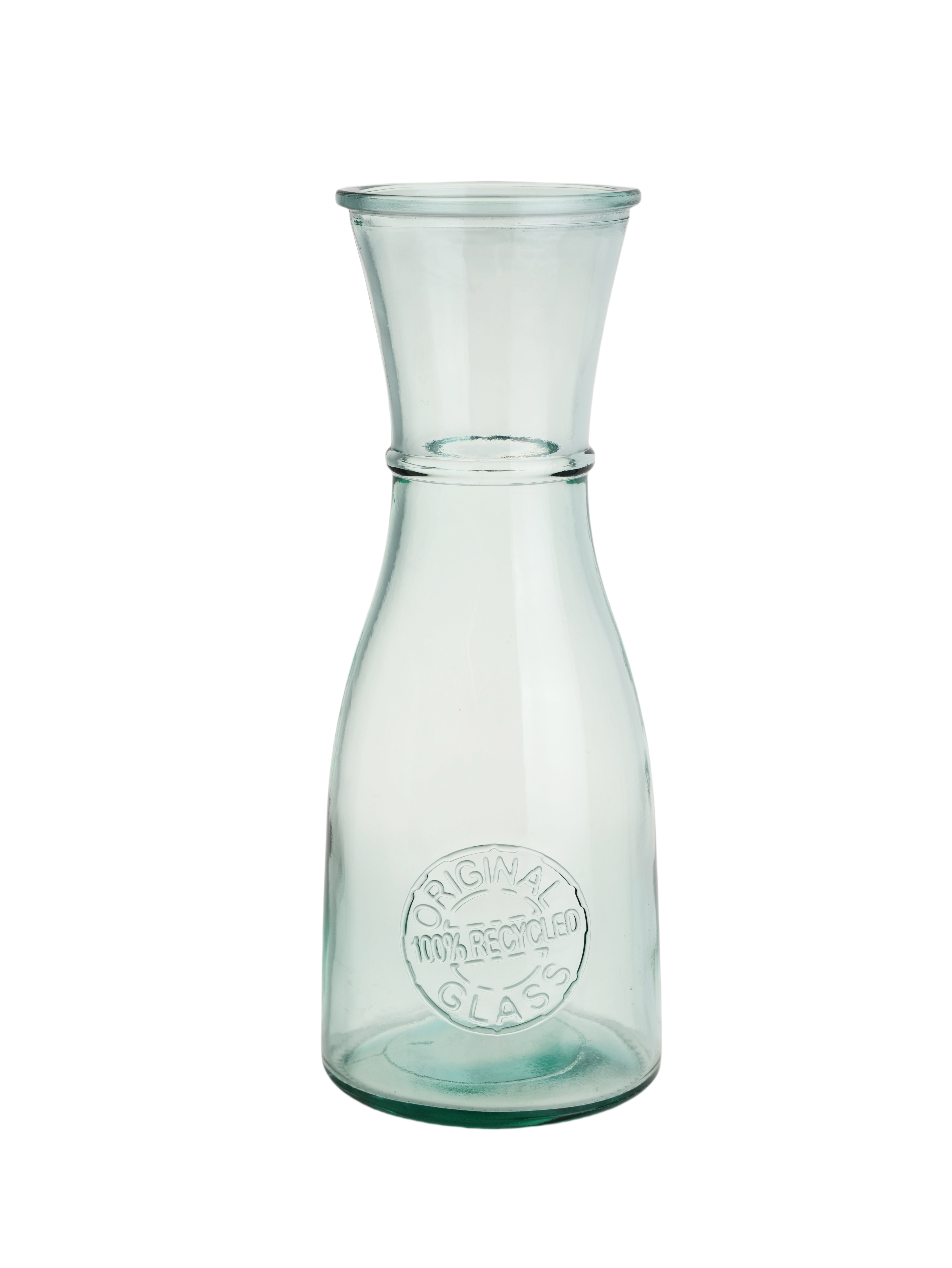
KTBT1446A: recycled glass, 850 ml, 610 g, tolerant of a -30 to 160 °C instantaneous temperature difference — referenced against the ISO 9001:2015 certification.
Use Cases: How the File Changes by Channel
EU retail chain onboarding
An EU grocery or homewares chain typically opens with BSCI, then asks for LFGB and an EN 1388-2 / ISO 7086-1:2019 migration report for the decorated drinkware, then adds FSC for the packaging specification. The ISO 9001:2015 and ISO 14001 certificates are requested as part of the vendor master file. A wine glass assortment built on KTG1139 and a recycled jar programme built on KTBT1446A can share the same onboarding pack, which shortens the second listing considerably.
US importer and promotional gifting
A US importer supplying corporate events, brand marketing and holiday gifting usually needs FDA CPG 7117.06/7117.07 compliance, plus RoHS documentation where coatings, ion plating or printed decoration are involved. If the programme touches licensed properties, Disney FAMA authorisation becomes a hard requirement. Custom packaging and design are standard in this channel, so FSC coverage should be confirmed early.
Supermarket and chain-store replenishment
Just-in-time replenishment in markets such as Brazil and Poland compresses the document window: there is little slack between PO and dispatch. Suppliers who hold a current, complete file can support JIT supply of glass drinkware without restarting the compliance cycle for every re-order, which is the operational argument for keeping certificates current rather than reactivating them on demand.
Hospitality, wedding rental and engraved programmes
Rental and event programmes in the US, UK and Canada add two variables: engraving and durability. Engraving changes the surface and may change the applicable test, while repeated commercial washing puts a premium on the material and annealing quality behind a soda-lime stemmed glass. Buyers in this channel should request migration reports for the engraved variant and confirm that packaging meets the transit profile.

KTG1139: machine-blown stemmed soda-lime wine glass, 500 ml, 215 g — the second model referenced against the ISO 9001:2015 certification.
Comparison Table: What Each Document Proves — and What It Does Not
| Verification layer | Document to obtain | Issuer / verification route | What it proves | What it does not prove |
|---|---|---|---|---|
| Social compliance | BSCI audit report; Sedex/SMETA record | Accredited audit firm; verify report ID on the platform named in the report | The production site has been assessed against social compliance criteria | Product safety, material composition or food-contact suitability |
| Quality management | ISO 9001:2015 certificate (referenced against KTG1139, KTBT1446A) | Certification body operating under CNCA supervision; trace registration number | Defined, recorded and audited quality processes at the certified site | That every unit in the shipment conforms; batch inspection is still required |
| Environmental management | ISO 14001 certificate (referenced against KTK0370-2, KTDW0721-GGL) | Certification body operating under CNCA supervision | A managed environmental system covering energy, waste and emissions at the site | Recycled content percentage of a specific SKU |
| Restricted substances | RoHS Directive 2011/65/EU declaration and supporting test report (referenced against KTK0370-2) | Testing laboratory; confirm report number and sample identity | The tested finish or component was assessed against RoHS restrictions | Lead and cadmium migration into food — a separate test |
| Food-contact safety | LFGB report; EN 1388-2 / ISO 7086-1:2019 migration report; US FDA CPG 7117.06 & 7117.07 compliance | Independent laboratory such as Zhejiang Consumer Testing | The specific tested decoration meets the stated migration limits | Untested colourways, decals or engraving variants of the same item |
| Packaging | FSC certificate covering fibre-based packaging | Certification body; check chain-of-custody scope | Packaging fibre originates from certified supply chains | Transit performance — drop testing remains a separate exercise |
| Licensed programmes | Disney FAMA authorisation | Programme owner | The site is authorised for licensed production | Compliance with non-licensed product lines |
Table 1: The six layers answer six different questions. Treating any single certificate as a substitute for the others is the most common compliance error in glassware sourcing.
Model-Level Documentation Map
| Model | Product and material | Documentation reference |
|---|---|---|
| KTK0370-2 | Glass tumbler / glass cup, high borosilicate, machine-pressed, 400 ml, 420 g, T:78 mm, B:65 mm, H:140 mm | ISO 14001 environmental certificate; RoHS Directive 2011/65/EU |
| KTDW0721-GGL | Double wall glass, high borosilicate, hand-blown, double-walled insulated, ion plating (I.P.) coating, 340 ml, 145 g, T:84 mm, B:60 mm, H:110 mm | ISO 14001 environmental certificate; coating composition to be declared by the buyer’s request |
| KTG1139 | Ribbed colored wine glass, soda-lime, machine-blown stemmed, 500 ml, 215 g, T:67 mm, B:82 mm, H:224 mm | ISO 9001:2015 quality certificate |
| KTBT1446A | Recycled glass storage jar, 850 ml, 610 g, T:80 mm, B:95 mm, H:247 mm, -30 to 160 °C instantaneous temperature difference, 12 pcs/ctn bulk | ISO 9001:2015 quality certificate |
| KTPL1572A-A | Glass cake stand, soda-lime, 1445 g, T:312 mm, B:120 mm, H:105 mm, MOQ 1000 pcs | Covered by the general retail onboarding file; confirm model mapping at PO stage |
Table 2: Model-level mapping converts a certificate library into a verifiable audit trail. Ask the supplier to reproduce this table in writing for every order.
FAQ
Is BSCI plus ISO 9001:2015 enough to ship glassware into the EU?
No. BSCI addresses social compliance and ISO 9001:2015 addresses quality management; neither evaluates what migrates out of the glass into food. EU buyers typically require a food-contact migration report under EN 1388-2 and ISO 7086-1:2019 for lead and cadmium release, frequently alongside LFGB, and they require RoHS Directive 2011/65/EU documentation where coatings or decorated finishes are present — for example on KTK0370-2. The three layers are complementary, not interchangeable.
How do I confirm a certificate actually covers the factory making my order?
Read three fields: the certified site address, the scope statement and the validity period. Then trace the registration number to the issuing certification body, which operates under CNCA supervision in China. If the certificate names a trading office, a different plant or a product family that does not include your model, request the certificate for the correct site or commission a factory audit. Where the supplier holds ISO 9001:2015 referenced against KTG1139 and KTBT1446A, or ISO 14001 referenced against KTK0370-2 and KTDW0721-GGL, ask for that mapping in writing so the scope question is answered before the PO is signed.
Where does compliance verification sit in the order budget?
Treat it as a pre-order line item rather than a post-shipment surprise. Cost is driven by the number of SKUs, the number of decoration variants and how many destination markets you are covering, because each variation can require its own test sample. The commercial logic is straightforward: testing a sample before production is a fraction of the exposure created by a rejected container, a lost retail slot or a re-test at the port. Budget re-testing as a recurring cost triggered by any change of material, coating, decoration or production site.
Can I validate compliance on a sample before committing to bulk?
Yes — and it is the recommended sequence. Free samples are offered for trial orders at first acceptance, so a buyer can receive a physical unit, confirm the material and finish, and submit it for migration testing under EN 1388-2 / ISO 7086-1:2019, LFGB or FDA CPG 7117.06/7117.07 as the destination requires. Submit the exact decoration you intend to sell; a clear sample does not validate a coated or engraved variant.
How long does the document pack take, and can it delay shipment?
It can, if it is requested after production starts. The sequencing that avoids delay is: confirm the destination matrix, request the certificate pack, verify scope and registration numbers, then release the PO with a clause requiring the file to remain current at shipment date. Suppliers who keep BSCI, Sedex/SMETA, FSC, Disney FAMA, ISO and LFGB documentation continuously maintained can compress this to a verification exercise rather than a collection exercise. To start that process, request LAKOTTO’s current compliance file and a sample set through cs61@kottoglass.com or +8619310185010, and specify which models — KTK0370-2, KTDW0721-GGL, KTG1139, KTBT1446A or KTPL1572A-A — you intend to order.
Conclusion: Verify the Scope, Not the Logo
Glassware export compliance is not a document-collection exercise; it is a scope-verification exercise. A BSCI audit tells you the production floor has been assessed. ISO 9001:2015, referenced against KTG1139 and KTBT1446A, tells you the quality system is defined. ISO 14001, referenced against KTK0370-2 and KTDW0721-GGL, tells you environmental management is in place. RoHS Directive 2011/65/EU for KTK0370-2, together with LFGB, EN 1388-2 and ISO 7086-1:2019 migration testing and FDA CPG 7117.06/7117.07 where the US is in scope, tells you the product itself is safe for its actual use. FSC and Disney FAMA close the loop on packaging and licensed programmes.
The buyer’s job is to make those six layers line up against a single document — the purchase order. When every certificate names the site, the model and an issuing body that can be traced, the compliance file stops being paperwork and starts being supply-chain insurance.
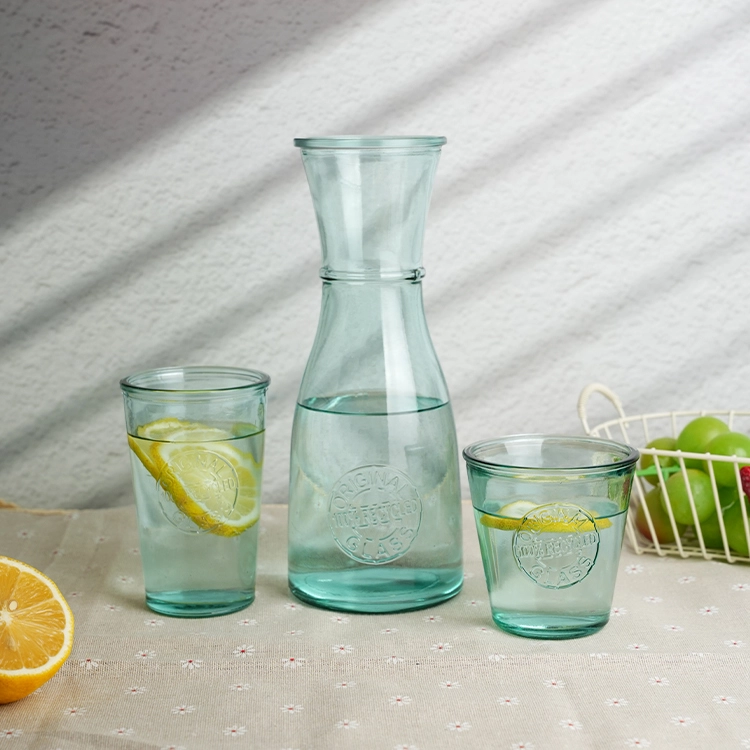
Request the compliance file before you request the container
Ask for the BSCI audit report, Sedex/SMETA record, ISO 9001:2015 and ISO 14001 certificates with registration numbers, the RoHS Directive 2011/65/EU documentation for KTK0370-2, and the LFGB migration report for the model you intend to order. Samples are offered for trial orders at first acceptance.
LAKOTTO · Changsha Yee Win Co., Ltd. · www.kottoglass.com · cs61@kottoglass.com · +8619310185010
Have Questions or Need More Details?
Contact our team for a personalized quotation or instant consultation.
Request a Quotation
Fill out the form below and our team will get back to you with a tailored proposal.
WhatsApp Direct Chat
Prefer to chat in real-time? Message us on WhatsApp for instant assistance & quick answers.
- Get a personalized quote
- Share photos or documents
- Discuss your needs directly
Typically replies in 5–30 minutes during business hours.