Glassware Sourcing FAQ: After-Sales & Long-Term Supply
Glassware Sourcing FAQ: What Buyers Ask About After-Sales Support and Long-Term Supply Terms
Glassware sourcing rarely fails at the quotation stage. It fails two years later, when a container arrives short, when a certificate turns out to cover the factory but not the exact model on the purchase order, or when nobody can say who pays for the breakage. This FAQ answers the questions that importers, distributors and retail chains raise before they commit to a long-term glassware supply relationship, using LAKOTTO's documented after-sales and partnership model as the working reference.
The short answer: a multi-year glassware agreement should settle four things in writing before the first purchase order — acceptance criteria tied to named models and dimensions, a packaging and breakage-control standard, a named return-and-exchange route, and the supply rhythm that keeps repeat containers moving. Unit price, MOQ and lead time are negotiated around those four, not instead of them.
The Problem: After-Sales Terms Are Usually Written After the Damage Is Done
Bulk glassware is a fragile, high-volume, shelf-driven category. That combination makes the failure modes predictable long before they happen. Four gaps account for most of the friction between buyers and manufacturers:
- Certification attached to the wrong level. A buyer verifies that a factory holds a quality certificate, then discovers that the question that actually matters is whether the certificate is recorded against the model, material and decoration being ordered.
- Packaging agreed verbally. Pack format, inner protection and carton configuration determine transit survival, but they are frequently left out of the written specification and only discussed after the first damage report.
- No named return route. Everyone agrees that defective goods will be replaced. Almost nobody agrees who inspects, what evidence is acceptable, and within what window a decision is given.
- Continuity assumed rather than contracted. A model that disappears from the range between season one and season two breaks a retail planogram that was built around it.
For a buyer in the research and evaluation stage, the practical consequence is that after-sales support has to be assessed as a capability — something that can be described, evidenced and written down — rather than as a courtesy that appears when something goes wrong.
Industry Background: Why Support Terms Now Sit Inside the Buying Decision
The commercial context explains why buyers ask these questions earlier than they used to. Global trade in interior decorative glassware under HS 7013 reached USD 10 billion in 2024, and China was the single largest exporter of that heading at USD 4.95 billion, according to OEC data based on UN Comtrade. A category of that scale has many suppliers quoting similar-looking glass drinkware, which pushes differentiation away from the product photo and towards the terms behind it.
Regulation adds a second layer. All food contact glassware placed on the EU market must comply with Regulation (EC) No 1935/2004, which makes documentation a market-access item rather than a marketing item. Once compliance is a condition of sale, the certificate register becomes part of the commercial negotiation.
Retail structure adds the third layer. Hypermarket and supermarket chains and wholesale distributors plan assortments in cycles and re-order the same items across those cycles. A manufacturer that cannot repeat a glass tumbler, glass mug or glass cake stand in the same dimensions and the same pack format creates shelf gaps that no unit price can compensate for. That is why long-term supply capacity — factory relationships, held stock and repeatable packaging — is now evaluated alongside price.
The LAKOTTO After-Sales and Long-Term Supply Model, in Plain Terms
LAKOTTO is the glassware brand of Kotto Glass Industrial Co., Ltd., a daily-use glassware manufacturer and OEM/ODM supplier based in Changsha, Hunan Province, China, founded in 2003 and exporting 99% of its output to EU, South America and Asian markets. Its range covers drinking glasses and glass cups, glass tumblers, stemware and barware, glass bottles and jars, glass plates and cake stands, for international retailers, household and lifestyle chain stores, importers and distributors.
Two after-sales commitments are documented for the brand, and they frame every question below:
- Ensure safe transport and product protection — breakage-rate control and professional packaging.
- A clear and prompt return and exchange process.
Both statements are deliberately short. The value for a buyer lies in translating them into contract terms, which is what the rest of this article does.
Q1. What should the purchasing terms fix before anything else?
Before price, fix the specification. For each model the agreement should carry dimensions, weight, capacity, material, production craft, pack format and the acceptance test. Where those fields are left open, the container becomes the specification, and every later dispute is an argument about interpretation.
LAKOTTO publishes these fields per model, which makes them usable as acceptance criteria:
- Glass tumbler KTK0370-2 — 400 ml, T78 × B65 × H140 mm, 420 g, high borosilicate glass, machine-pressed.
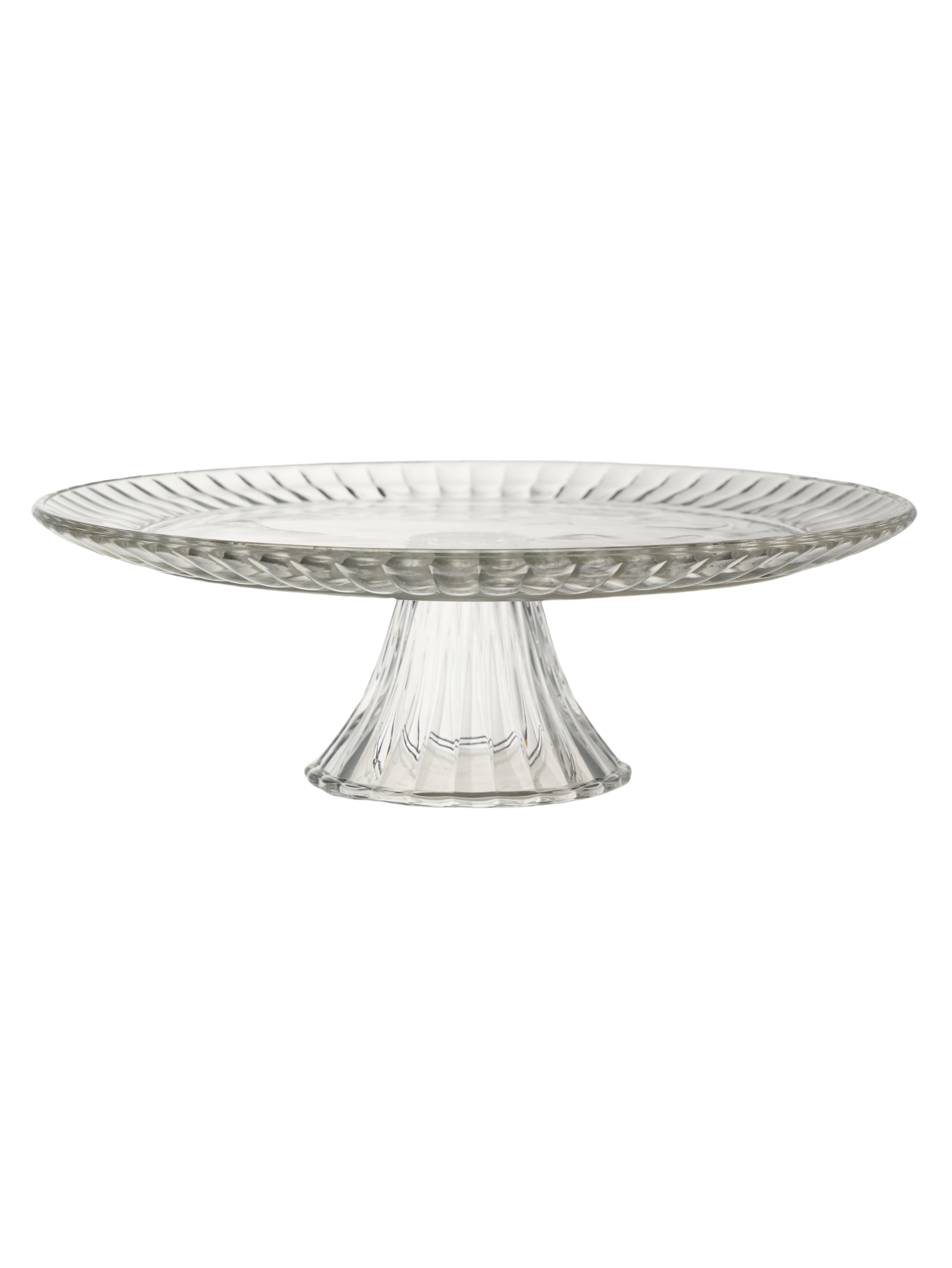
- Glass cake stand KTPL1572A-A — soda lime glass, T312 × B120 × H105 mm, 1,445 g, MOQ 1,000 pcs.
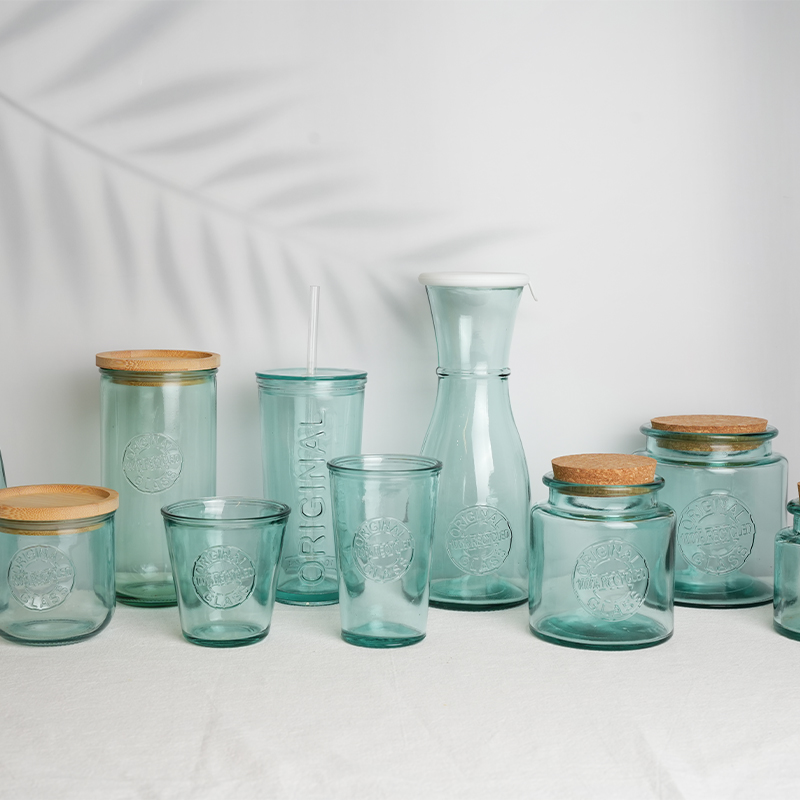
- Recycled glass KTBT1446A — 850 ml, T80 × B95 × H247 mm, 610 g, packed 12 pcs per carton in bulk packaging, with a stated instantaneous temperature difference range of −30 to 160 °C.
- Double wall glass KTDW0721-GGL — 340 ml, hand-blown high borosilicate glass with ion plating (I.P.) coating, double-walled insulated construction.
- Wine glass KTG1139 — 500 ml, 215 g, machine-blown stemmed glass in soda lime glass.
Customisation belongs in the same clause. OEM and ODM terms cover any sizes, designs, capacity and packaging, and the recorded customisation fields are size, shape, material, glass colour, package and logo. Quality control is stated as 100% test.
Q2. How is breakage controlled across a full container?
Breakage is controlled at two points: the pack format and the inspection step. Packaging is the only thing standing between a palletised container and a retail shelf, so it has to be specified with the same precision as the glass itself — inner protection, carton configuration and, for chain customers, coordinated packaging that matches the store format.
The inspection side is equally concrete. Quality control is documented as 100% test rather than batch sampling, which is the relevant commitment for a buyer moving 20 to 30 full containers a month: sampling plans protect a factory's average, while full inspection protects a specific shipment.
What a buyer should add to the contract is the threshold. “Breakage-rate control” describes the objective; the acceptable percentage, the evidence required when it is exceeded, and the replacement route are program-level numbers that must be negotiated and written into the agreement rather than assumed from a brochure.
Q3. What happens when a container does not meet the agreed standard?
LAKOTTO's second documented commitment is a clear and prompt return and exchange process. For a buyer, “clear” and “prompt” are only meaningful once they are spelled out, so the agreement should convert the commitment into three practical items: a named contact who owns the claim, an evidence pack (photographs, carton and container identification, piece counts), and a decision window after which the supplier is deemed to have accepted the claim.
The commercial route should also be fixed in advance — replacement in the next production run, credit against the following order, or a standalone shipment. Each of those has a different cash-flow effect on the buyer, and the choice depends on whether the item is a seasonal line or a permanent shelf item.
Q4. How is certification proven for a named model rather than a catalogue?
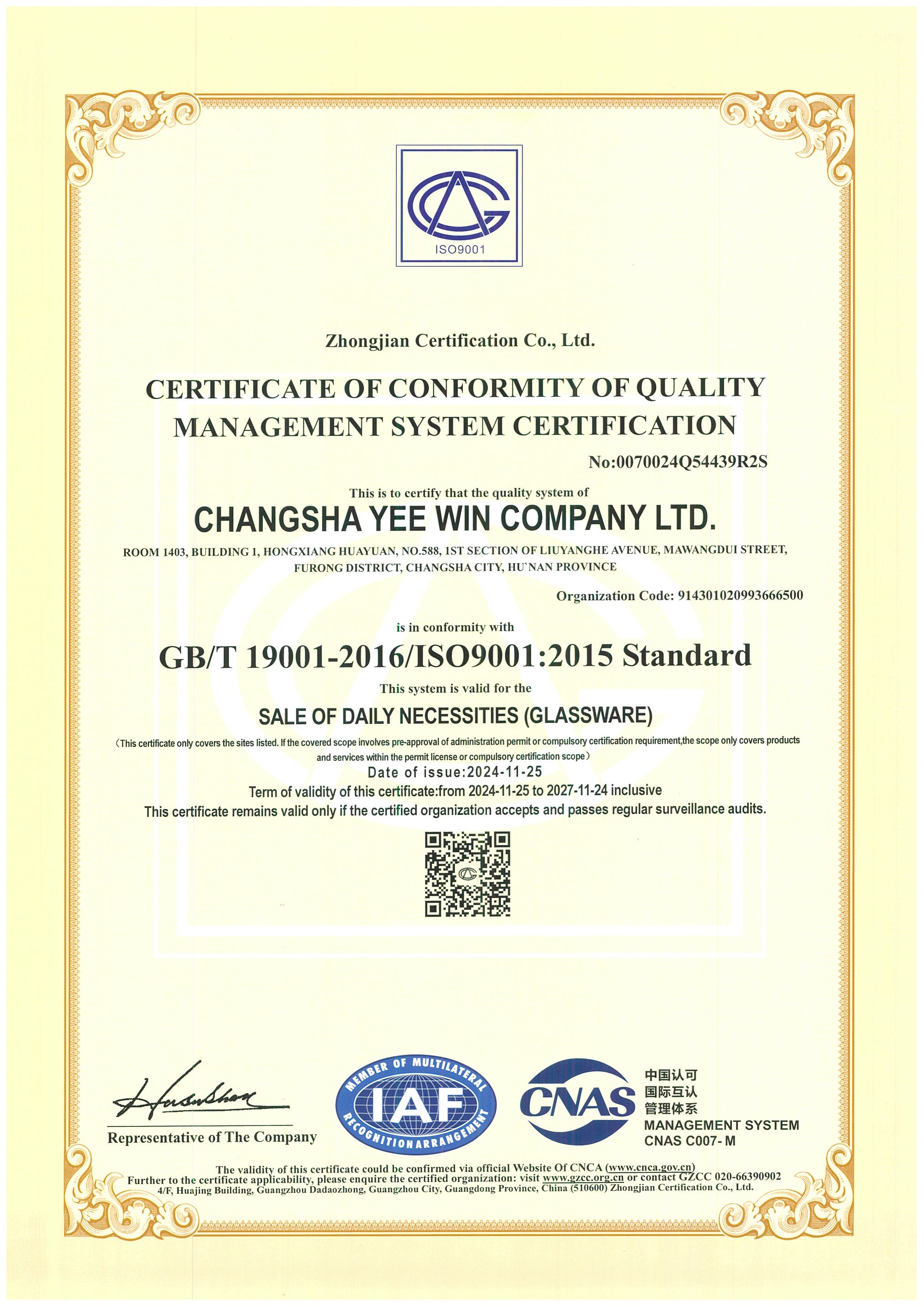
Model-level coverage is the answer, and it is checkable. LAKOTTO's ISO 9001:2015 certificate, number 0070024Q54439R2S, issued by CNCA and valid from 25 November 2024 to 24 November 2027, covers the design, manufacturing and quality management of all glassware products including customised items. It is recorded against specific models, including the recycled glass KTBT1446A, the glass tumbler KTK0370-2 and the glass cake stand KTPL1572A-A.
Social compliance is covered separately by BSCI certification number 24-0233922, issued by APCER and valid to 1 December 2026, which covers all glassware production including drinking glasses, tumblers, highball glasses and wine glasses. The cake stand KTPL1572A-A also carries ISO 14001 (certificate 03423E30695R3M, issued by CNCA, valid to 1 December 2026) and RoHS certification (CTT2111031272EN, issued by Zhejiang Consumer Testing Technology Co., Ltd.) under RoHS Directive 2011/65/EU.
Because two of those certificates reach their recorded expiry within the current buying cycle, a buyer signing a multi-year agreement should ask for renewal evidence as a contract condition rather than a one-off check at onboarding.
Q5. How is repeat supply sustained over multi-year cycles?
Repeat supply is sustained by three things that a single factory cannot provide on its own: breadth of sourcing, held stock, and a documented customisation capability that keeps the packaging consistent between orders.
The evidence sits in two long-running programs. A hypermarket and supermarket chain in Russia has been supplied for 5 years at 20 to 30 full containers per month, with custom-designed glassware and coordinated packaging for multiple store formats; the stated result is improved product visibility and consistent shelf turnover across stores. In parallel, a wholesale distributor and home goods retailer in Brazil has run for the same 5 years at the same volume, supplied with a flexible product assortment and customisable packaging adapted to the local market, which the buyer credits with widening its product offering and accelerating turnover of glassware items.
Behind those programs are structural assets: cooperative relationships with more than 150 glass factories in China, a warehouse of over 4,000 m² that allows popular items to be delivered quickly, and a stated production lead time of 30 to 45 days. For a buyer, the operational meaning is that continuity comes from being able to shift a model between qualified sources without changing the packaging or the specification.
Q6. What actually moves the price band?
Price is quoted against a defined specification, not against a catalogue page, because five variables shift the band materially: material (soda lime versus high borosilicate), production craft (machine-pressed, machine-blown, hand-blown, ion plating), glass weight for the same capacity, packaging customisation, and order volume.
Weight is the variable buyers underestimate. A 420 g pressed tumbler and a 215 g stemmed wine glass carry very different material and energy content, even where both sit in the same drinkware assortment. MOQ interacts with all of this: the standard OEM/ODM program MOQ is recorded at 3,000 pcs, individual models such as the KTPL1572A-A cake stand are listed at 1,000 pcs, and the catalogue position is flexible MOQ with a first trial order accepted.
Step-by-Step: From First Sample to a Five-Year Program
The sequence below converts the questions above into an evaluation path that a buying team can run in order.
- Fix the SKU family and its specification. Name the models, dimensions, capacity, weight, material and craft. Include the accessories — a glass cake plate, a lid, a gift box — because they change both cost and pack format.
- Map certification to the destination market and the model. Confirm which certificate covers the exact item, then record the number and the validity period: ISO 9001:2015 (0070024Q54439R2S), BSCI (24-0233922), and, for the cake stand, ISO 14001 (03423E30695R3M) and RoHS (CTT2111031272EN).
- Agree the packaging and breakage-control standard. Define inner protection, carton count and any coordinated retail packaging, and set the acceptable breakage threshold with the evidence required to claim against it.
- Validate with a sample or trial order. Free samples are accepted with a first trial order, which lets the buyer test the actual pack format rather than a photograph of it.
- Set the repeat rhythm. Convert demand into monthly container volume, compare it with the 30 to 45 day production lead time, and define how much of the range should be held in the 4,000 m² warehouse.
- Write the return and exchange route and a review cadence. Name the contact, the evidence pack and the decision window, then review performance at fixed intervals so that the after-sales terms stay live rather than dormant.
Use Cases: Where These Terms Change the Outcome
Different buying channels stress different clauses, and the same supplier capability reads differently depending on the channel.
Hypermarket and supermarket chains stress packaging coordination and volume stability. The Russian chain program illustrates the point: 20 to 30 full containers a month for 5 years only works if packaging is designed per store format and the model can be repeated without variation. In this channel the acceptance criteria and the pack format, not the unit price, decide whether the shelf stays full.
Wholesale distributors and home goods retailers stress assortment flexibility. The Brazilian distributor program runs at the same volume and duration but with a flexible product mix and packaging adapted to local market conditions, because a distributor sells variety rather than depth. For this buyer type, the ability to combine glass drinkware, a glass water bottle or recycled glass jar, barware such as beer glass and shot glass lines, and glass cake stand or glass plate items in one container is the after-sales feature that matters most.
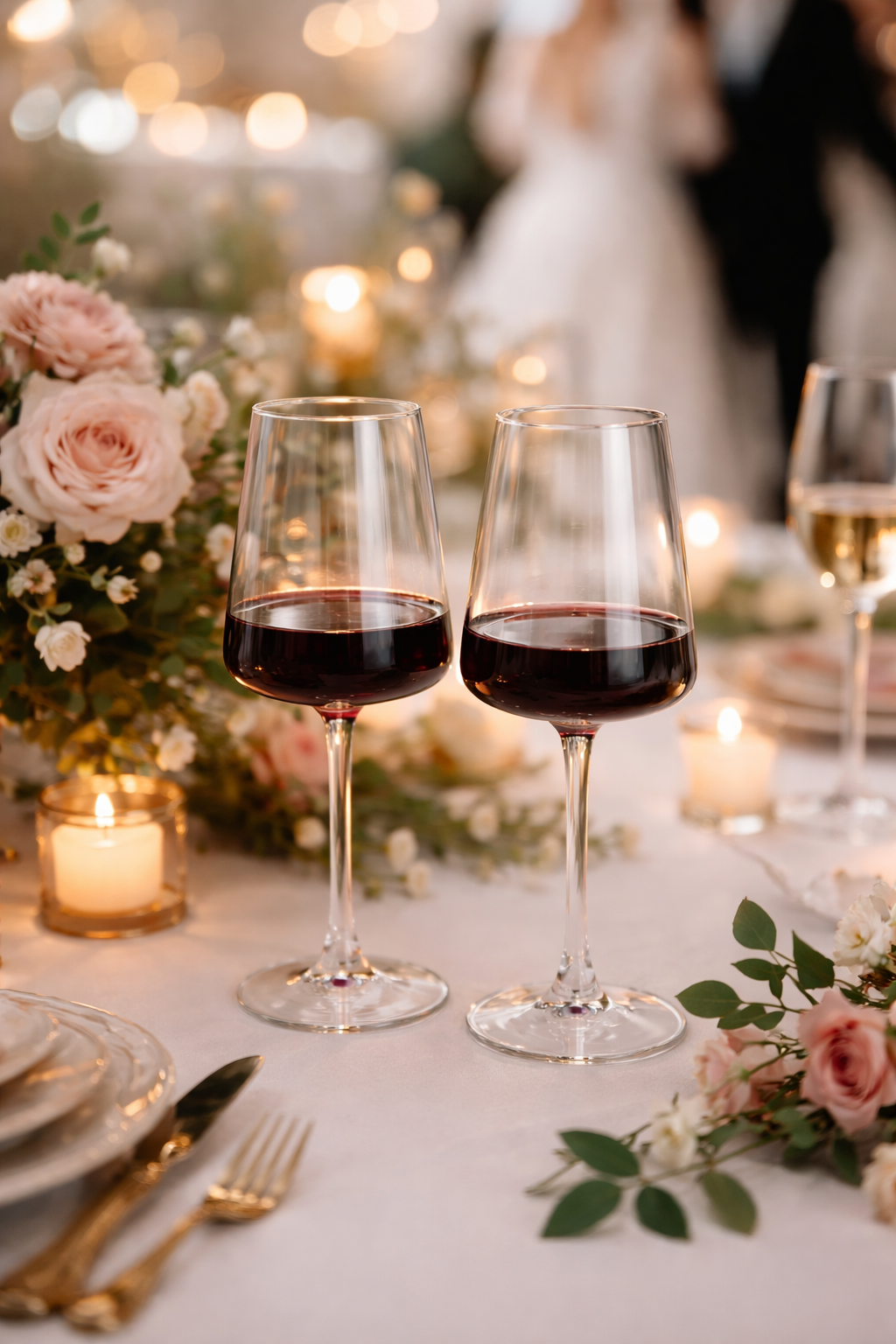
Hospitality and event supply stresses breakage replacement. Where stemware is rented or reused — wine glass and champagne glass lines for weddings, for example — the return and exchange route is effectively the buyer's inventory insurance, and the model specification has to be stable enough that replacements match the existing set.
Branded and promotional programs stress packaging and design control. When glassware is bought as a branded gift, customised packaging and logo application are part of the product, and the acceptance criteria must cover print and packing accuracy as well as the glass itself.
Comparison Tables: Certification Coverage and Model Specifications
The two tables below consolidate the facts a buyer needs at the evaluation stage. Nothing here should be taken from a supplier summary alone; each number is checkable against the certificate or the specification sheet.
Certification coverage for long-term glassware programs
| Certification | Number | Issued by | Recorded scope | Validity |
|---|---|---|---|---|
| ISO 9001:2015 | 0070024Q54439R2S | CNCA | Design, manufacturing and quality management of all glassware products including customised items; recorded against KTBT1446A, KTK0370-2 and KTPL1572A-A | 25 Nov 2024 – 24 Nov 2027 |
| BSCI | 24-0233922 | APCER | All glassware production including drinking glasses, tumblers, highball glasses and wine glasses | 1 Dec 2024 – 1 Dec 2026 |
| ISO 14001 | 03423E30695R3M | CNCA | Environmental management of glassware production, including material sourcing, manufacturing, surface decoration, packaging and waste management; recorded against the glass cake stand | 28 Nov 2023 – 1 Dec 2026 |
| RoHS | CTT2111031272EN | Zhejiang Consumer Testing Technology Co., Ltd. | RoHS Directive 2011/65/EU; covers glassware with metal parts, coatings or decorations; recorded against the glass cake stand | From 7 Nov 2021 |
Model specification snapshot
| Model | Category | Material and craft | Key specification | Recorded MOQ |
|---|---|---|---|---|
| KTK0370-2 | Glass tumbler / glass cup | High borosilicate, machine-pressed | 400 ml; T78 × B65 × H140 mm; 420 g | Flexible MOQ |
| KTBT1446A | Recycled glass jar / bottle / mug | Recycled glass | 850 ml; T80 × B95 × H247 mm; 610 g; 12 pcs/ctn bulk | Flexible MOQ |
| KTPL1572A-A | Glass cake stand | Soda lime glass | T312 × B120 × H105 mm; 1,445 g | 1,000 pcs |
| KTDW0721-GGL | Double wall glass | Hand-blown high borosilicate, I.P. coating | 340 ml; T84 × B60 × H110 mm; 145 g | Flexible MOQ |
| KTG1139 | Wine glass | Soda lime glass, machine-blown stemmed | 500 ml; T67 × B82 × H224 mm; 215 g | Flexible MOQ |
FAQ: After-Sales, Certification and Long-Term Terms
Which certifications should a buyer verify before signing a long-term glassware contract?
Verify quality management, social compliance and, where relevant, environmental and hazardous-substance compliance — at model level. For LAKOTTO that means ISO 9001:2015 certificate 0070024Q54439R2S issued by CNCA (valid to 24 November 2027), BSCI certificate 24-0233922 issued by APCER (valid to 1 December 2026), plus ISO 14001 certificate 03423E30695R3M and RoHS certificate CTT2111031272EN recorded against the glass cake stand KTPL1572A-A. Factory-level schemes including Sedex/SMETA, FSC, Disney FAMA and LFGB are also held. Because the BSCI and ISO 14001 certificates expire on 1 December 2026, renewal evidence should be a contract condition for any multi-year agreement.
Can a supplier actually sustain 20 to 30 containers a month for several years?
That volume has been sustained in documented programs: a Russian hypermarket and supermarket chain has run at 20 to 30 full containers per month for 5 years with coordinated packaging, and a Brazilian wholesale distributor and home goods retailer at the same volume and duration with a flexible assortment. The supporting capability is a network of more than 150 cooperative glass factories in China, a warehouse of over 4,000 m² for fast delivery of popular items, 100% test quality control, and OEM/ODM customisation across size, shape, material, glass colour, package and logo.
What drives the price band on a bulk glassware program?
Five variables: glass material (soda lime versus high borosilicate), production craft (machine-pressed, machine-blown, hand-blown, ion plating), glass weight at a given capacity, packaging customisation, and order volume. MOQ is set per program — the recorded standard for OEM/ODM work is 3,000 pcs, the KTPL1572A-A cake stand is listed at 1,000 pcs, and the range is offered with flexible MOQ. The price band should therefore be quoted against a written specification rather than compared across catalogue pages.
Can we validate the product and the packaging before committing to volume?
Yes. Free samples are accepted with a first trial order, which allows the buyer to test the physical pack format — carton count, inner protection, coordinated retail packaging — as well as the glass itself. For a program where breakage control is a contract term, testing the packaging at sample stage is more informative than testing a single glass.
What lead time and continuity terms should be written into the agreement?
Production lead time is stated at 30 to 45 days, so the agreement should align the buyer's ordering rhythm with that window and define how much of the range is held in the 4,000 m² warehouse for fast delivery of popular items. To move to the next step, request a sample or a quotation against your specification at cs61@kottoglass.com, message the team on WhatsApp (+86 193 1018 5010), or review the range at www.kottoglass.com.
Next step: put the terms against your specification
Send the models, dimensions, pack format and destination market, and LAKOTTO will respond with a sample and quotation path covering certification, packaging and lead time.
Email: cs61@kottoglass.com | WhatsApp: +86 193 1018 5010 | Web: www.kottoglass.com
Conclusion: The Terms Are the Product in Long-Term Glassware Supply
For a buyer choosing a glassware supplier for several years rather than one container, the decisive questions are not about the glass alone. They are about what happens when the glass arrives wrong, when a certificate expires mid-contract, and when the same model has to be produced again twelve seasons later without the packaging changing.
LAKOTTO's documented position is narrow but verifiable: breakage-rate control through professional packaging, a clear and prompt return and exchange process, model-level certification including ISO 9001:2015 (0070024Q54439R2S) and BSCI (24-0233922), a 30 to 45 day lead time, and two five-year programs running at 20 to 30 full containers a month. That is enough to evaluate the partnership on evidence instead of assurances — which is exactly what the research and evaluation stage requires.
The remaining work belongs to the buyer: fix the specification, confirm the certificate against the model, agree the breakage threshold and the evidence pack, and write the review cadence into the agreement. A supplier can publish its terms; only the buyer can turn them into a contract.
Have Questions or Need More Details?
Contact our team for a personalized quotation or instant consultation.
Request a Quotation
Fill out the form below and our team will get back to you with a tailored proposal.
WhatsApp Direct Chat
Prefer to chat in real-time? Message us on WhatsApp for instant assistance & quick answers.
- Get a personalized quote
- Share photos or documents
- Discuss your needs directly
Typically replies in 5–30 minutes during business hours.