
Machine-Blown vs. Hand-Blown vs. Machine-Pressed Glass: A Technical Guide to Glass Drinkware Forming
Two glasses can share the same silhouette, the same capacity and the same retail price point, yet be produced by three completely different forming routes. In glass drinkware, the forming method decides dimensional consistency, net weight, wall uniformity, thermal behavior, decoration options, breakage exposure and the cost structure hidden inside a quotation. This guide compares machine-blown, hand-blown and machine-pressed construction using three reference models and shows which specification fields actually reveal the process.
LAKOTTO is the daily-use glassware brand of Kotto Glass Industrial Co., Ltd., a China-based OEM/ODM manufacturer and supplier of household glassware for international retailers, importers, distributors and chain stores. Its portfolio covers all three forming formats discussed here, which makes it a practical reference point for buyers who need to specify a process instead of discovering it after delivery.
Short answer for buyers: specify the forming method per SKU, then verify it with two measurable fields — top diameter and net weight — taken across a full sample set rather than a single piece.
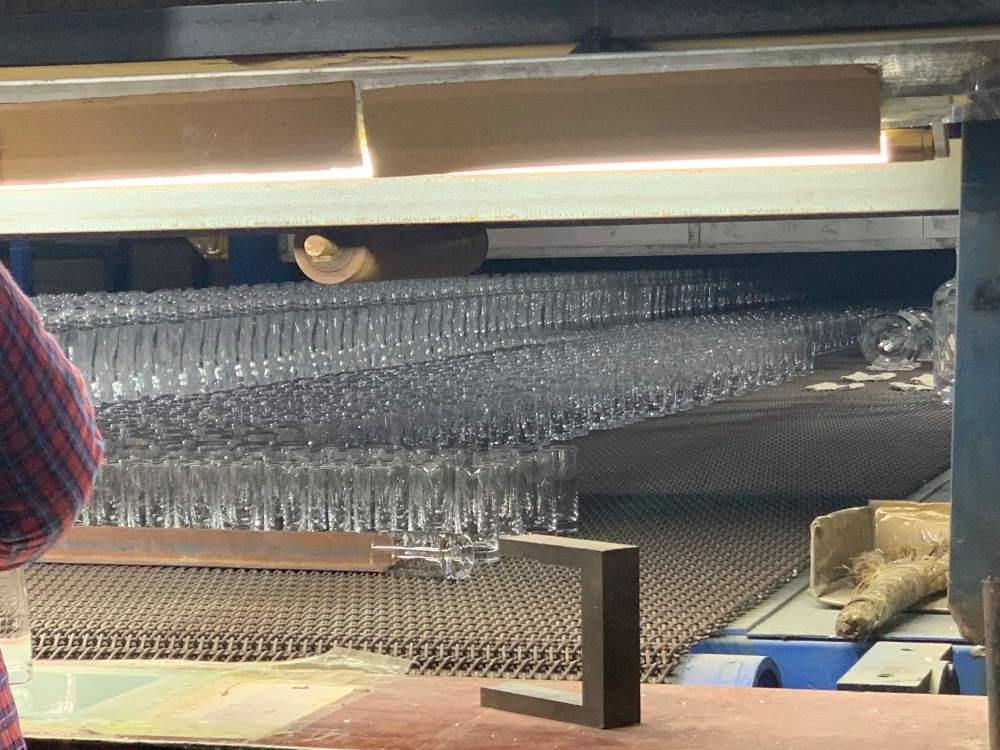
- Machine-blown (KTG1139 wine glass): automated blowing of a glass gob in a mold; repeatable bowl geometry and stem alignment, lighter walls, strong lot-to-lot consistency.
- Hand-blown high borosilicate (KTDW0721-GGL double wall glass): manual shaping of two walls with an insulating air gap; higher labor content, wider piece-to-piece variation, thermal behavior as the primary design driver.
- Machine-pressed (KTK0370-2 tumbler): a plunger presses the gob into a mold; thicker walls, higher net weight for the same capacity, tight dimensional repeatability at volume.
The Sourcing Problem: Identical Silhouettes, Different Processes
A 350 ml tumbler, a stemmed wine glass and a double-wall drinking vessel reach the same buyer through the same category page, but they are not made the same way. When an RFQ describes only shape, capacity and colour, suppliers may quote different forming routes for what looks like the same product. The buyer then compares offers that are not comparable, and the gap usually surfaces after the container arrives.
Typical symptoms of an unspecified forming method:
- Weight drift between shipments. Net weight moves without any change to capacity, because a different forming route was used or the glass volume per piece changed.
- Mouth diameter variation. Top diameter spread breaks lid fit, stacking behaviour, rim feel and automated filling on the customer side.
- Breakage in transit. Wall thickness distribution and rim stress differ by process, and packaging planned for one format underperforms for another.
- Thermal complaints. A vessel marketed for hot beverages behaves differently when the wall construction and glass composition were chosen for cost rather than thermal duty.
- Decoration defects. Coating, etching and printing register differently on hand-formed versus automated surfaces.
The fix is procedural rather than commercial: name the forming method on the specification sheet, then require two or three measurable fields that expose whether the delivered goods match it.
Industry Background: A Fragmented Market with Uneven Process Capability
Glass drinkware is a large but structurally fragmented category. The global glass drinkware market was valued at USD 14.0 billion in 2024, according to Grand View Research. Europe accounted for a 33.0% revenue share of that market in 2024. Concentration at the top is limited: the five leading glass tableware players — Arc International, Bormioli Rocco, Libbey, Oneida and Sisecam Glassware — held a combined 26% share in 2025. The remaining volume is spread across a long tail of manufacturers whose process capability differs sharply from factory to factory.
Trade flows reinforce how quickly sourcing patterns shift. China's exports of home glass products under HS 7013 to Brazil reached close to USD 200 million in 2024, an increase of 53% compared with about USD 130 million in 2023, based on industry trade data analysis. Growth of that speed usually means new suppliers entering a market, and new suppliers are exactly where process descriptions tend to be least precise.
Customs classification is a second place where the process matters. HS 701337 covers drinking glasses that are not stemware and are not of lead crystal or glass-ceramics. A non-stemware item such as the KTK0370-2 tumbler or the KTDW0721-GGL double wall glass is normally screened under a non-stemware drinking-glass subheading, while stemware such as the KTG1139 wine glass is classified outside HS 701337. Final classification always depends on the customs authority and on the declared product details, so the subheading should be confirmed per SKU rather than applied to a whole range.
Regulatory context matters for the same reason. Food-contact materials placed on the EU market must comply with Regulation (EC) No 1935/2004, and they must be manufactured in accordance with Good Manufacturing Practices under Commission Regulation (EC) No 2023/2006. Those obligations attach to the article, not to the marketing description, so a supplier's process control is part of the compliance evidence a buyer needs.
Detailed Solution: How Each Forming Method Changes the Product
The three reference models below are not interchangeable substitutes. Each represents a forming logic that suits a different set of buyer priorities.
Machine-blown stemware: KTG1139 wine glass
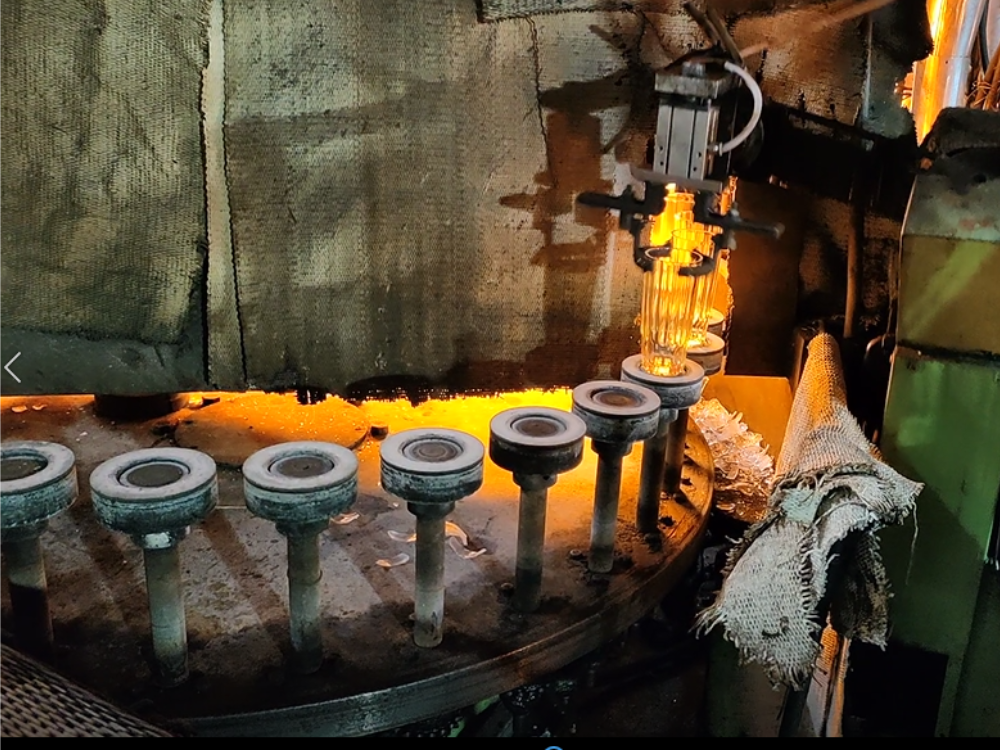
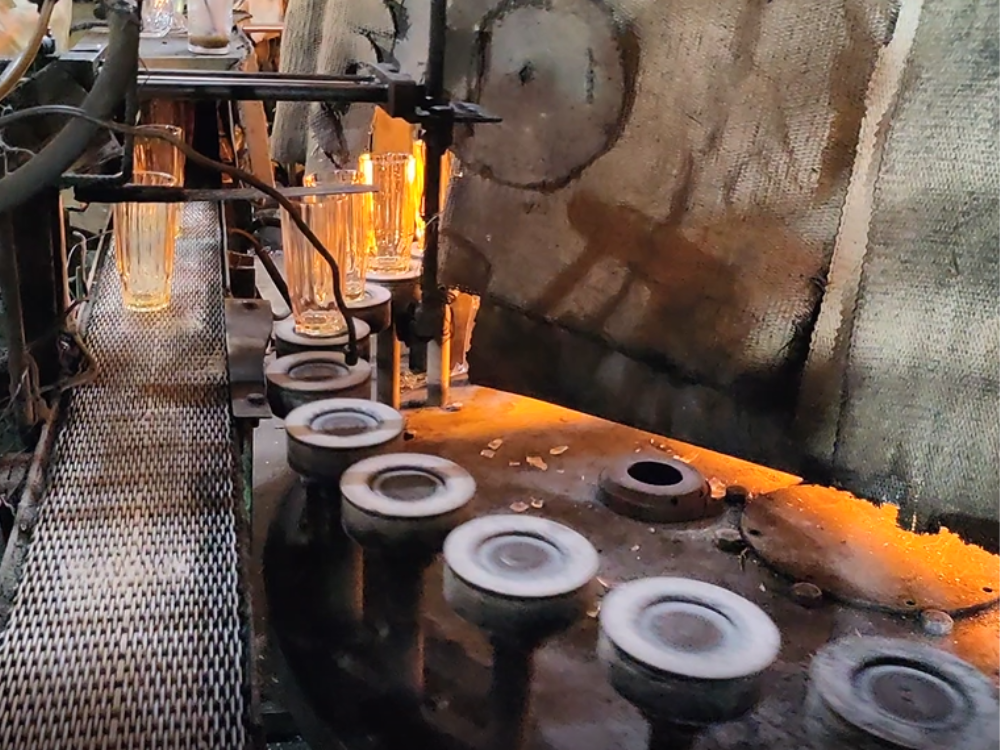
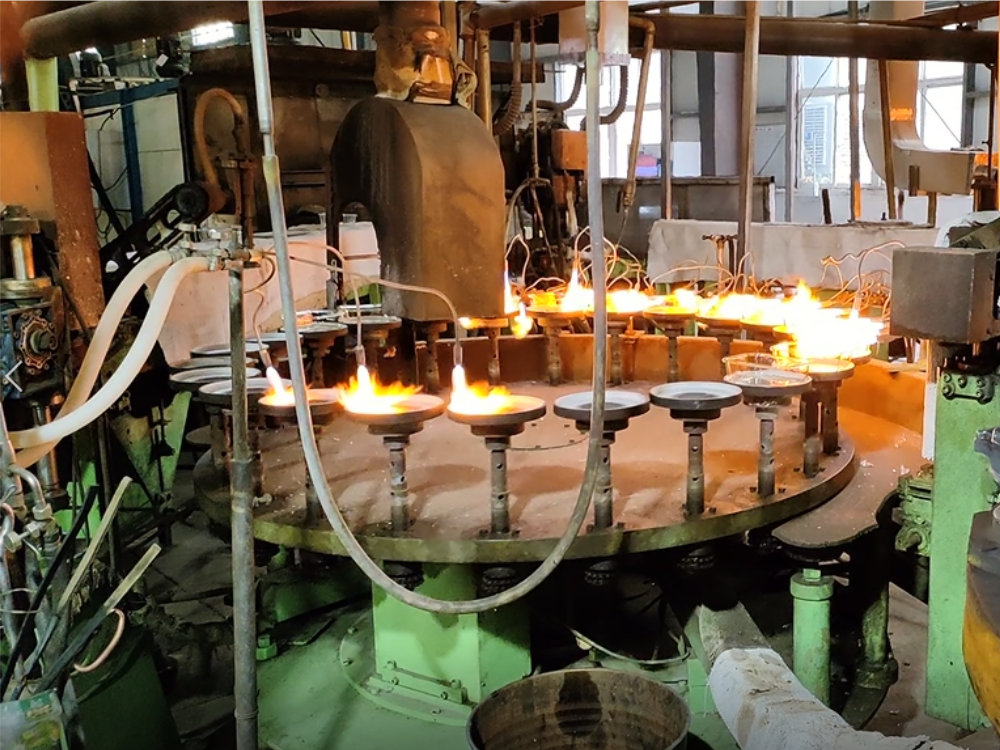
In machine blowing, a measured gob of glass is fed into a mold and formed by air pressure, with the stem and bowl produced inside one automated cycle. The KTG1139 wine glass is LAKOTTO's reference for this route.
- Dimensional consistency: the strongest of the three routes for stemware. Bowl geometry and stem alignment repeat closely from piece to piece, which matters when a retail programme needs replacement stock that matches the original assortment.
- Weight and wall character: machine-blown stemware is typically lighter in the wall than pressed construction and reads as a thinner, more balanced glass in hand.
- Procurement implication: molds are the constraint. A change of bowl shape, stem height or foot diameter is a tooling project, not a running change, so shape decisions should be locked before the first production run.
- Best fit: wine glass, champagne glass and stemmed cocktail programmes where consistency across repeat orders outweighs the handmade look.
Hand-blown high borosilicate: KTDW0721-GGL double wall glass
Hand blowing shapes the glass manually, and the double-wall construction joins two walls to leave an insulating air gap between them. The KTDW0721-GGL is LAKOTTO's reference for this combination of hand forming and high borosilicate composition.
- Thermal behavior: this is the design driver, not a side effect. The air gap separates the drink from the outer wall, so a hot beverage does not transfer heat directly to the hand and a cold drink stays cold longer. High borosilicate is selected where thermal duty matters more than in ordinary soda-lime drinkware.
- Dimensional consistency: the trade-off. Manual forming produces wider piece-to-piece variation than an automated cycle, so top diameter and net weight should be toleranced explicitly rather than assumed.
- Weight reading caution: a double-wall body contains two comparatively thin walls instead of one solid mass, so net weight must be read together with wall construction. On this format, weight alone is not a quality indicator.
- Best fit: hot and cold beverage service, cafés, gifting sets and premium retail where the visual and tactile difference justifies the labor content.
Machine-pressed: KTK0370-2 tumbler
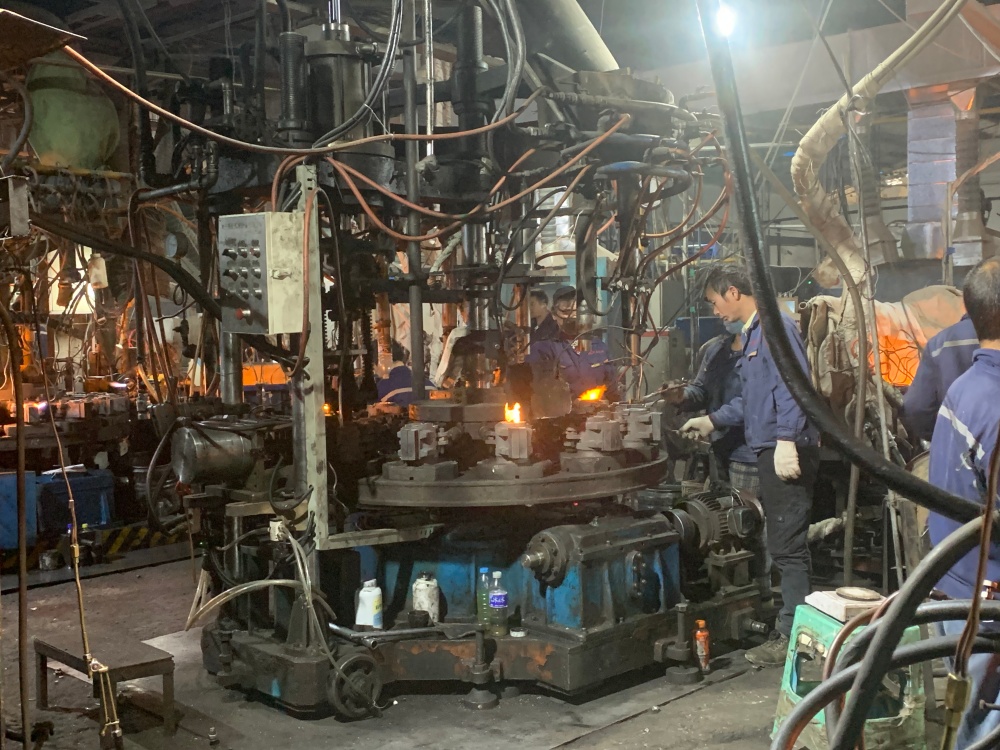
Pressing drops the gob into a mold and forms it with a plunger. It is the most direct of the three routes and the reference model here is the KTK0370-2 tumbler.
- Dimensional consistency: high. Pressing repeats the mold geometry closely, which is why pressed tumblers are the backbone of replacement-driven programmes.
- Weight and wall character: pressing typically produces thicker walls and a higher net weight for the same capacity than a blown equivalent. That has two consequences — a more robust everyday feel, and a higher freight cost per container because weight and stacking volume both rise.
- Limits: pressing is not the right route for fine stems, thin rims or complex undercuts. Those geometries belong to blowing.
- Decoration note: pressed surfaces are stable, which helps coating, etching and printing consistency. Where decoration includes metal parts, coatings or applied decoration, RoHS scope becomes relevant — LAKOTTO's RoHS certificate CTT2111031272EN covers glassware products with metal parts, coatings or decorations.
Reading the specification sheet: top diameter and net weight
Two fields do most of the diagnostic work, and both are cheap for a supplier to provide.
Top diameter defines the mouth opening. It governs lid and closure fit, stacking, rim strength in handling, and how the drinking experience is perceived. It should be quoted with a tolerance, not as a single nominal figure, because the tolerance is what tells you whether the process can hold the geometry you need.
Net weight is the fastest process indicator available to a buyer. Take ten pieces from one sample set and weigh them. A tight spread points to automated forming; a wider spread points to manual forming, or to a blown body whose wall distribution varies by design. Net weight also drives packing configuration, carton strength and freight cost, so it is a commercial field as much as a technical one.
Supporting fields worth requesting alongside them: capacity to the fill line, height, wall thickness, glass type, decoration method, packing quantity per carton and breakage allowance. Request these for the exact models under evaluation — KTG1139, KTDW0721-GGL and KTK0370-2 — because a category-level description will not survive a factory inspection.
Step-by-Step Breakdown: Specifying a Forming Method Without Guesswork
- Define the property priority before the shape. Decide what the SKU must do: hold a hot drink without heating the outer wall, survive high-volume replacement in hospitality, or present a thin stem on a retail shelf. The process follows from that answer, not from a catalogue photo.
- Assign one forming method per SKU. Keep the logic explicit — for example machine-blown for the KTG1139 stemware family, hand-blown high borosilicate for the KTDW0721-GGL double-wall family, machine-pressed for the KTK0370-2 tumbler family. Mixing formats inside a single line item creates variance you cannot inspect against.
- Request the measurable fields. Ask for top diameter with tolerance, net weight with tolerance, capacity, height, wall data, decoration method and packing specification for each model.
- Validate with a sample set, not a sample. Measure top diameter and net weight across the whole set, then inspect wall uniformity, rim finish, stem alignment on the stemware and base flatness on the tumbler. Approve a retained reference sample as the inspection standard for the production run.
- Match thermal testing to the declared use. A vessel positioned for hot beverages should be validated against the thermal requirement of your market, using test reports rather than verbal assurance.
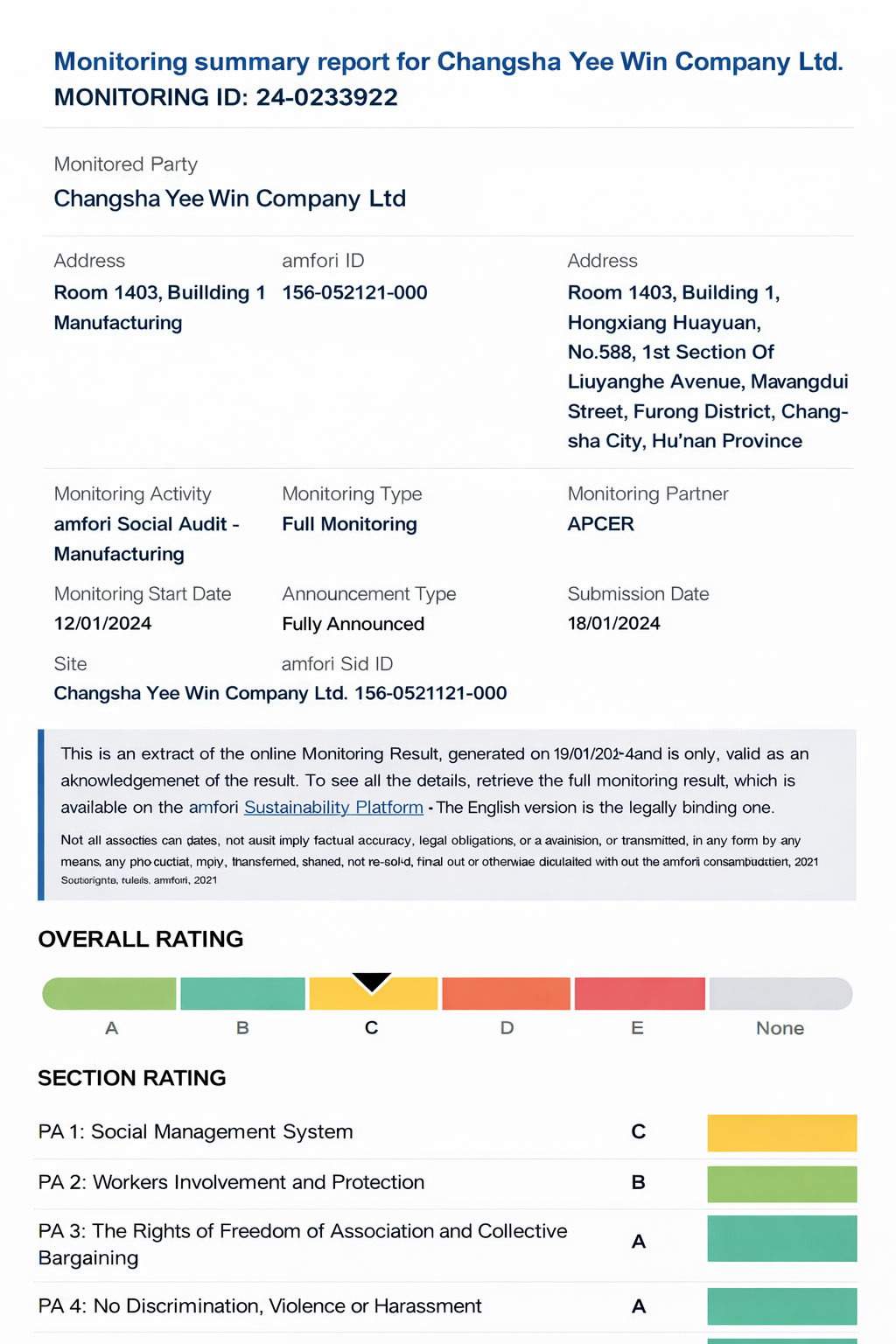
- Collect compliance documentation at RFQ stage. For the EU, that means a declaration of compliance under Regulation (EC) No 1935/2004 and evidence of manufacturing under GMP per Commission Regulation (EC) No 2023/2006, plus food-contact test reports. LAKOTTO holds BSCI certificate 24-0233922 issued by APCER (valid 2024-12-01 to 2026-12-01), ISO 9001 certificate 0070024Q54439R2S issued by CNCA (2024-11-25 to 2027-11-24), ISO 14001 certificate 03423E30695R3M (2023-11-28 to 2026-12-01) and RoHS certificate CTT2111031272EN issued by Zhejiang Consumer Testing Technology Co., Ltd. on 2021-11-07, alongside LFGB, Sedex/SMETA, FSC and Disney FAMA authorisations. Check validity dates at the moment of ordering, since certificate cycles renew on their own schedule.
- Lock the method into the purchase order and the inspection plan. The forming method, top diameter tolerance, net weight tolerance and packing specification should appear in the PO annex, so a later shipment cannot be accepted against a looser standard.
For programmes that combine several formats, LAKOTTO operates as an OEM/ODM supplier with customization across size, shape, material, glass colour, packaging and logo, supported by a 10-designer team and working relationships with more than 150 glass factories in China. The company was founded in 2003, operates a 10,000+㎡ factory with 100 staff and annual output of 300,000,000 pcs, and keeps a 4,000+㎡ warehouse for fast delivery of popular items. Roughly 99% of output is exported, mainly to the EU, South America and Asia.
Use Cases: Matching the Process to the Programme
Retail and hospitality stemware programmes
Chains that reorder stemware season after season need pieces that match earlier shipments. Machine-blown construction, as represented by the KTG1139 wine glass, keeps bowl geometry and stem alignment repeatable, which reduces mismatch complaints when a new order lands next to old stock.
Beverage service and gifting
Where the product must perform thermally and look distinct, the hand-blown high borosilicate route used for the KTDW0721-GGL double wall glass is the appropriate specification. The insulation gap is the functional story, and the visible two-wall construction is the merchandising story.
High-volume everyday tumblers and replacement stock
Pressed construction, represented by the KTK0370-2 tumbler, suits programmes where dimensional repeatability, robust wall thickness and simple geometry matter more than thinness. It is the format least sensitive to handling in transit, provided packing is designed for the heavier piece.
Wholesale distribution and chain retail
Distribution programmes rarely buy one process. LAKOTTO reports long-running supply relationships that combine multiple drinkware families with coordinated packaging, including a wholesale distributor and home goods retailer in Brazil operating at 20–30 full containers per month over five years, a hypermarket and supermarket chain in Russia at a comparable monthly volume over five years, and a retail chain and supermarket group in Poland at 20–30 full containers per month over five years. In each case, customised glassware and matching packaging supported shelf consistency across store formats — the kind of programme where every SKU's forming method needs to be documented before the first container ships.
Comparison Table: Machine-Blown vs. Hand-Blown vs. Machine-Pressed
| Attribute | Machine-blown — KTG1139 wine glass | Hand-blown high borosilicate — KTDW0721-GGL double wall glass | Machine-pressed — KTK0370-2 tumbler |
|---|---|---|---|
| Forming principle | Glass gob formed by air pressure inside a mold in one automated cycle | Manual shaping of two walls joined with an insulating air gap | Glass gob pressed into the mold by a plunger |
| Geometry best suited to | Stemware: bowl, stem and foot formed as one unit | Double-wall vessels for hot and cold beverage service | Straight-sided tumblers and simple profiles |
| Dimensional consistency | High lot-to-lot repeatability | Wider piece-to-piece variation; tolerances must be stated | High; mold geometry repeats closely |
| Weight and wall character | Typically lighter wall than pressed construction | Two thin walls rather than one solid mass; weight must be read with wall construction | Typically thicker wall and higher net weight for the same capacity |
| Thermal behavior | Standard drinkware behaviour | Air gap insulates; high borosilicate selected for thermal duty | Standard drinkware behaviour; wall mass affects heat transfer feel |
| Decoration surface | Consistent surface for printing and etching | Manual variation affects register; decoration planning matters | Stable surface suited to coating and etching |
| Tooling and labor logic | Mold-dependent; shape change is a tooling project | Highest manual labor content per piece | Low manual labor content at volume; mold-dependent |
| Documentation on record | All three models are listed under LAKOTTO certificates BSCI 24-0233922, ISO 9001 0070024Q54439R2S, ISO 14001 03423E30695R3M and RoHS CTT2111031272EN | ||
| Typical buyer priority | Consistency across repeat orders | Thermal performance and visual differentiation | Durability, repeatability and volume economics |
Process descriptions above reflect how each forming method behaves in general glassware production; model-specific top diameter, net weight and capacity should be confirmed on the quotation and specification sheet for each SKU.
Frequently Asked Questions
1. Which compliance documents should accompany a glass drinkware order for the EU market?
Food-contact materials placed on the EU market must comply with Regulation (EC) No 1935/2004, and they must be manufactured in accordance with Good Manufacturing Practices under Commission Regulation (EC) No 2023/2006. For a drinkware order, request a declaration of compliance, food-contact test reports relevant to the article, and current certificates with visible validity dates. LAKOTTO's document set includes BSCI certificate 24-0233922 issued by APCER (2024-12-01 to 2026-12-01), ISO 9001 certificate 0070024Q54439R2S issued by CNCA (2024-11-25 to 2027-11-24), ISO 14001 certificate 03423E30695R3M (2023-11-28 to 2026-12-01) and RoHS certificate CTT2111031272EN issued by Zhejiang Consumer Testing Technology Co., Ltd. (2021-11-07), in addition to LFGB, Sedex/SMETA, FSC and Disney FAMA authorisations. Certificates are time-bound, so confirm the current version at the moment of ordering rather than relying on an older file copy.
2. Can one supplier deliver machine-blown, hand-blown and machine-pressed items within the same programme?
Yes, provided each SKU's forming method is confirmed individually rather than assumed from the category. LAKOTTO operates as an OEM/ODM supplier with customization across size, shape, material, glass colour, packaging and logo, a 10-designer development team, a 10,000+㎡ factory with 100 staff and annual output of 300,000,000 pcs, a 4,000+㎡ warehouse for fast delivery of popular items, and working relationships with more than 150 glass factories in China. That structure allows a mixed programme, but availability of a specific process for a specific model — such as machine-blown for the KTG1139, hand-blown high borosilicate for the KTDW0721-GGL, or pressed for the KTK0370-2 — should be stated in writing on the quotation.
3. Why do hand-blown and machine-pressed drinkware carry different cost structures?
The gap comes from process economics rather than from material quality alone. Hand blowing involves more manual steps per piece and produces wider piece-to-piece variation, which raises inspection effort and reject exposure. Pressing runs at high output with simple geometry and therefore has the lowest manual labor content per piece, but it adds weight, which raises packing and freight cost per container. Machine blowing sits between the two: automated, but mold-dependent, so shape changes require tooling investment. Because cost also depends on decoration, packaging and order quantity, quotations should be compared per SKU against identical specifications rather than against headline unit prices.
4. How should samples be used to validate a forming method before ordering?
Use the sample set as a measurement exercise, not a visual check. Measure top diameter and net weight across every piece in the set and compare the spread against the tolerance you intend to write into the purchase order; a tight spread supports an automated route, a wider spread is consistent with manual forming. Then inspect wall uniformity, rim finish, stem alignment on stemware and base flatness on tumblers, and confirm the decoration method on the actual surface. Retain one approved piece as the reference standard for pre-shipment inspection, and pair it with the packing specification so breakage control can be judged against the same standard.
5. What are the standard order terms, and how do buyers start?
LAKOTTO's standard terms for customized glassware are a MOQ of 3,000 pcs and a lead time of 30–45 days, with 100% test quality control before shipment. After-sales support covers safe transport and product protection through breakage-rate control and professional packaging, plus a clear and prompt return and exchange process. The practical next step is to send the specification for the model you are evaluating — KTG1139, KTDW0721-GGL, KTK0370-2 or another item in the range — and request samples together with a quotation that states the forming method, top diameter tolerance and net weight tolerance. Contact the team at www.kottoglass.com, by email at cs61@kottoglass.com, or on WhatsApp at +8619310185010.
Conclusion: Choose the Process, Then Choose the Glass
The forming method is the single decision that determines whether a drinkware programme runs smoothly or generates a stream of variance complaints. Machine blowing gives stemware repeatable bowl geometry and stem alignment. Hand blowing in high borosilicate gives a functional insulation gap and a visibly different product, at the cost of wider piece-to-piece variation. Machine pressing gives dimensional repeatability and a robust wall at volume, with weight as its main commercial penalty.
Whichever route fits the SKU, the verification method is the same: name the process on the specification, require top diameter and net weight with tolerances, measure both across a sample set, and attach the compliance file with current validity dates. Done that way, a quotation becomes comparable, and the difference between two similar-looking glasses stops being a surprise after the container is opened.
Next step for buyers and distributors
Request samples, a specification sheet with top diameter and net weight tolerances, or a quotation for machine-blown, hand-blown and machine-pressed glass drinkware from LAKOTTO.
Website: www.kottoglass.com | Email: cs61@kottoglass.com | WhatsApp / Phone: +8619310185010
Have Questions or Need More Details?
Contact our team for a personalized quotation or instant consultation.
Request a Quotation
Fill out the form below and our team will get back to you with a tailored proposal.
WhatsApp Direct Chat
Prefer to chat in real-time? Message us on WhatsApp for instant assistance & quick answers.
- Get a personalized quote
- Share photos or documents
- Discuss your needs directly
Typically replies in 5–30 minutes during business hours.