
Ribbed Glass vs. Smooth Glass Tumblers: A Strategic Procurement Guide for Hospitality and Retail Buyers in 2026
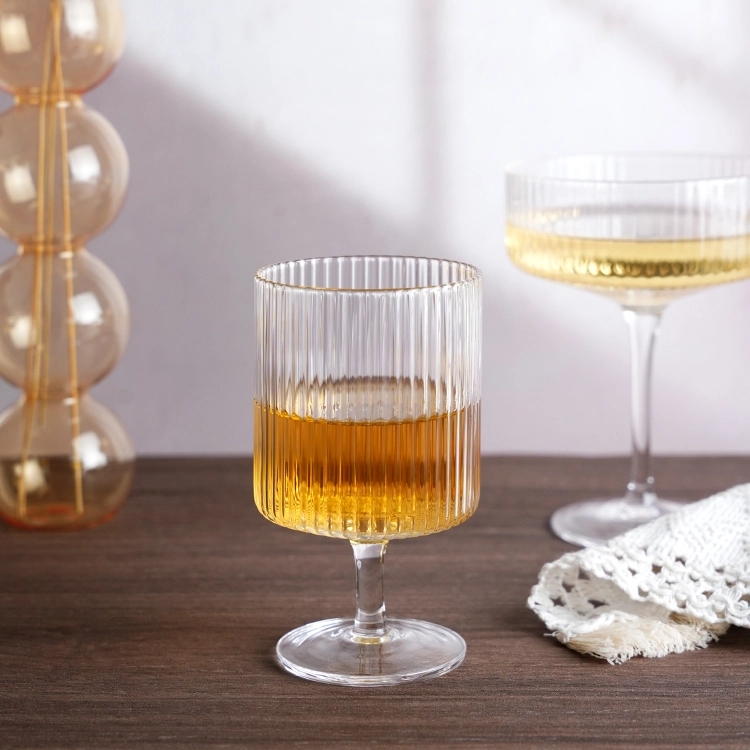
Ribbed Glass vs. Smooth Glass Tumblers: A Strategic Procurement Guide for Hospitality and Retail Buyers in 2026
When sourcing glass drinkware for your hotel chain, bar, restaurant, or retail line, one of the first design decisions you face is whether to choose ribbed glass tumblers or smooth glass tumblers. Both categories dominate the market, but they serve different aesthetic, functional, and commercial purposes. For procurement professionals, understanding the trade-offs between ribbed and smooth surfaces — from glass composition to manufacturing consistency — is essential to making a cost-effective, brand-aligned choice. This guide provides a detailed, data-driven comparison to help you decide which style fits your business model in 2026.
Problem Definition: The Texture Dilemma in Glassware Sourcing
Buyers often ask: “Should I prioritize the classic, clean look of smooth glassware, or the modern, tactile appeal of ribbed glasses?” The answer is not one-size-fits-all. Each surface type influences:
- Perceived value – how the product is perceived by end users.
- Grip and usability – especially important in high-turnover environments like bars.
- Manufacturing complexity – ribbed designs often require more advanced molds and quality control.
- Marketing differentiation – unique textures can set your brand apart on crowded shelves.
Without a structured comparison, buyers risk either overpaying for unnecessary surface detailing or missing a trend that could boost sales.
Industry Background: Glassware Surface Trends in 2026
The global glass drinkware market is projected to exceed USD 15 billion in 2026, driven by hospitality recovery and premium home dining. Ribbed glassware has seen a renaissance, particularly in cocktail culture and social media-driven aesthetics. Smooth glassware remains the staple for fine dining, wine service, and minimalist retail brands. Leading Chinese manufacturers like Changsha Kotto Glass Industrial Co., Ltd (brand LAKOTTO) have expanded their ribbed collections alongside classic smooth lines, demonstrating that both styles can coexist under one supply chain.
Key market drivers influencing texture choice include:
- Instagram-worthy table settings – ribbed textures catch light differently and photograph well.
- Eco-conscious manufacturing – many ribbed glasses are now made from recycled glass, reducing environmental impact.
- Customization capabilities – both styles can be customized with colors, logos, and packaging.
Detailed Solution Comparison: Ribbed vs. Smooth Glass Tumblers
Definition and Core Characteristics
| Feature | Ribbed Glass Tumbler | Smooth Glass Tumbler |
|---|---|---|
| Surface texture | Vertical or spiral ridges (ribs) on exterior | Uniform, slick, polished finish |
| Typical capacities | 260ml, 320ml, 360ml, 400ml, 540ml | 250ml, 320ml, 350ml, 400ml, 500ml |
| Manufacturing technique | Machine pressing or blowing with ribbed molds | Standard machine blowing or pressing |
| Grip & ergonomics | Excellent – ribs prevent slipping, ideal for wet hands | Good – but can be slippery when wet |
| Aesthetic perception | Modern, premium, light-refracting | Classic, minimal, elegant |
| Weight | Often slightly heavier due to added glass volume in ribs | Generally lighter and more delicate |
| Cost per unit (approx.) | 10–20% higher than equivalent smooth | Base price – more economical for large volumes |
Why Choose Ribbed Glass Tumblers?
- Enhanced grip – reduces breakage in busy bar environments.
- Visual impact – textured surfaces stand out in displays and on social media.
- Brand differentiation – unique rib patterns can become signature drinkware for a venue.
- Thermal insulation effect – the ridges create a small air gap, slightly insulating the contents.
Why Choose Smooth Glass Tumblers?
- Classic elegance – suitable for fine dining, wine service, and corporate gifts.
- Lower weight – reduces shipping costs and is easier for guests to hold.
- Ease of cleaning – no crevices for residue or stains.
- Stackability – smooth walls allow tighter stacking, saving storage space.
Step-by-Step Selection Framework
- Identify your primary use case.
For high-volume bars and casual dining, ribbed wins. For upscale restaurants and concierge service, smooth is safer. - Evaluate brand positioning.
Modern, bold brands lean toward ribbed; traditional, minimalist brands prefer smooth. - Test grip and durability.
Request samples from your supplier (e.g., LAKOTTO offers both 320ml Short Tumbler and 360ml Wide Ribbed Highball Tumbler). - Consider eco-credentials.
If sustainability matters, look for recycled glass options. LAKOTTO’s 260ml and 500ml recycled glass cups are smooth, while many ribbed tumblers use virgin glass—but recycled ribbed versions are emerging. - Check certification.
Ensure your supplier holds ISO 9001, BSCI, or food safety management certification (LAKOTTO holds all three), guaranteeing consistent quality regardless of texture. - Calculate total cost of ownership.
Factor in breakage rates (ribbed may survive longer) and shipping weight.
Use Cases: Real-World Applications
Case 1 – Boutique Cocktail Bar in Berlin
Need: Versatile glassware for craft cocktails and water service.
Choice: LAKOTTO’s 360ml Wide Ribbed Highball Tumbler for cocktails; 320ml Short Tumbler (smooth) for spirits on the rocks.
Result: Ribbed tumblers became a signature element; smooth tumblers provided a classic alternative for purist drinks. Cost per unit was balanced by mixed-volume procurement.
Case 2 – Eco-Conscious Retail Brand in California
Need: 100% recycled glass drinkware for home kitchens.
Choice: LAKOTTO’s 260ml and 500ml Recycled Glass Cups (smooth finish) with custom branding.
Result: Smooth surface allowed easy screen-printing; recycled content resonated with customers. Brand achieved 15% sales lift after launching the line.
Case 3 – Luxury Hotel Chain in Dubai
Need: Elegant, breakage-resistant water glasses for room service and restaurants.
Choice: LAKOTTO’s ribbed 540ml Transparent Ribbed Wine Glass for in-room dining and 320ml Smooth Short Tumbler for poolside.
Result: Ribbed glasses added a modern luxury feel; smooth tumblers were easier to replace at scale. Combined orders qualified for volume discounts.
Frequently Asked Questions
Q: Is ribbed glass more expensive than smooth glass?
A: Generally, yes. Ribbed designs require more complex molds and slower production cycles. The premium is typically 10–20% per unit, but this can be offset by reduced breakage and higher perceived value.
Q: Can ribbed glass be customized with colors or logos?
A: Absolutely. Techniques like screen printing, frosting, and color spray work on both surfaces. LAKOTTO supports OEM/ODM for ribbed and smooth glass, including the 160/250/360ml Ribbed Colored Wine Glass.
Q: Which surface is more sustainable?
A: Both can be made from recycled glass. LAKOTTO offers recycled glass cups (smooth) as well as amber recycled glassware sets. The sustainability comes from the raw material choice, not the surface texture.
Q: How do I ensure consistent quality when ordering ribbed glasses?
A: Work with a supplier that has strong quality control processes. Look for ISO 9001 certification and visit the factory if possible. LAKOTTO’s QC department inspects every piece before shipment.
Q: Can I mix ribbed and smooth glassware in one order?
A: Yes, many suppliers offer mixed container programs. LAKOTTO maintains a 2,000 sqm warehouse with ready stock of both styles, enabling quick turnaround.
Conclusion
Choosing between ribbed and smooth glass tumblers is not about finding a winner – it’s about aligning your glassware with your brand’s identity, operational needs, and budget. Ribbed glasses offer modern aesthetics and functional grip, while smooth glasses provide timeless elegance and cost efficiency. By following the step-by-step framework above and leveraging a reliable partner like LAKOTTO, you can optimize your procurement for 2026 and beyond.
Ready to source your next glassware line?
LAKOTTO offers free samples, competitive pricing, and expert consultation.
Email: cs61@kottoglass.com | WhatsApp: +86 19310185010
Visit: www.kottoglass.com
Address: Room 1403, Building 1, Hongxiang Huayuan, NO.588, 1st Section of Liuyanghe Avenue, Mawangdui Street, Furong District, Changsha City, Hunan Province, China