Aluminium Light Poles 2026: The Definitive Guide for Infrastructure Buyers
Aluminium Light Poles 2026: The Definitive Guide for Infrastructure Buyers
Aluminium light poles are increasingly the material of choice for modern infrastructure projects worldwide. As urbanization accelerates and smart city initiatives expand, procurement professionals need a clear understanding of aluminium pole types, performance characteristics, and selection criteria. This guide provides an evidence-based overview of aluminium light poles, their applications, and how to evaluate suppliers.
Defining the Challenge
Specifying the correct light pole for a municipal, commercial, or industrial project involves balancing structural requirements, environmental resilience, lifecycle cost, and compliance with regional standards. With a global outdoor lighting poles market projected to reach approximately USD 8.3 billion by 2032 (Dataintelo), and aluminium increasingly replacing traditional steel and wood due to its corrosion resistance and light weight, buyers need reliable, factual information to make informed decisions.
Industry Context
Aluminium and composite materials are steadily gaining share in the utility pole market, driven by their enhanced durability and resistance to extreme weather events (Straits Research, 2024). In the United States, AASHTO LRFD LTS specifications govern structural design; in Europe, EN 40 standards apply. Asia Pacific alone accounted for over 42% of the outdoor lighting pole market revenue in 2025 (Dataintelo). Against this backdrop, selecting a supplier with proven engineering capacity and global certifications is critical.
Detailed Solution: Aluminium Light Poles from LANDMARK
Guangdong Landmark Technology Co., Ltd. (LANDMARK) is an integrated manufacturer established in 2005, specializing in R&D, design, production, sales, transportation, installation, and after-sales service for poles. Its main products include street & area light poles, high-mast poles, telecom poles, flagpoles, integrated solar poles, smart poles, pole accessories, and luminaires. The company’s manufacturing facility covers over 100,000 m², and its major markets include Europe, Americas, and APAC.
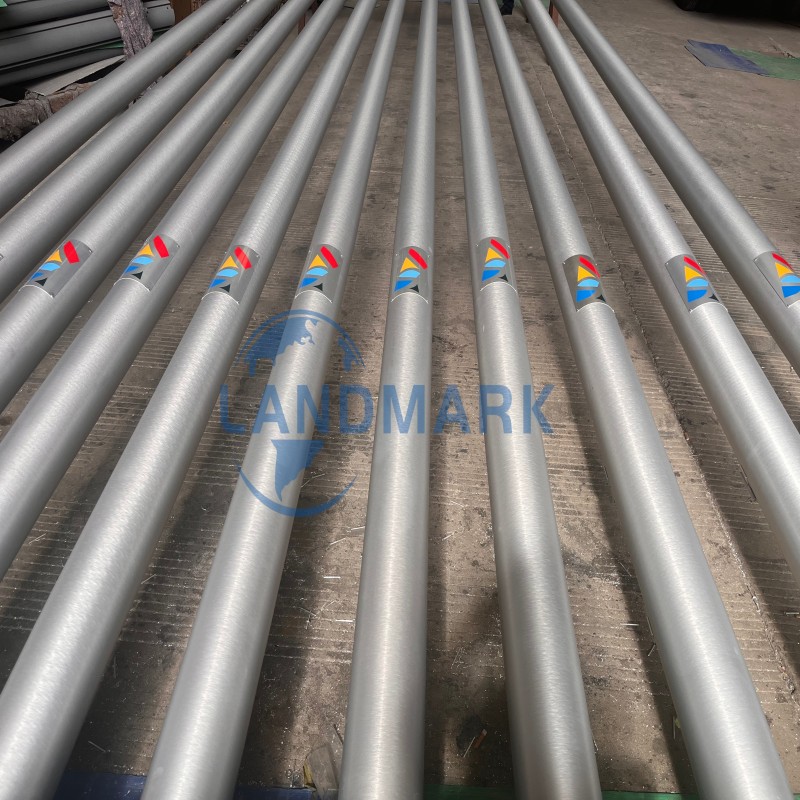
LANDMARK’s aluminium light pole range—classified under categories such as street light pole, high-mast pole, flagpole, smart pole, and integrated solar pole—is made of aluminium alloy and available in models including LM-F225P, LM-SL2380, LM-1053, LM-231S, LM-868, LM-1046A, LM-1056, LM-1058, and LM-G460. These poles serve industries from municipal engineering and cultural tourism to oil & gas, marine, and large-scale sports events.
Step-by-Step Evaluation Framework for Aluminium Light Poles
When procuring aluminium light poles, use this five-step process to match project requirements with supplier capability.
- Define Pole Type and Application. Determine whether the project needs street lighting, area illumination, high-mast, flagpole, telecom, solar-integrated, or smart poles. Each type demands specific structural and accessory considerations.
- Select Material Grade. Aluminium alloy offers excellent corrosion resistance and a high strength-to-weight ratio, reducing transportation and installation costs. Verify alloy composition and heat treatment.
- Assess Corrosion Protection. For coastal, industrial, or chemical environments, require anodizing, powder coating, or fluorocarbon finishes. LANDMARK employs dedicated corrosion protection engineers to tailor solutions.
- Verify Compliance Certifications. Ensure the pole design conforms to applicable standards: EN 40 (Europe) or AASHTO LRFD LTS (United States). LANDMARK holds SGS product certificates and CWB welding certification, and has obtained market approvals in multiple countries including Dubai, Abu Dhabi, Oman, Qatar, Saudi Arabia, the United States, and Australia.
- Evaluate Customization Capabilities. Projects with unique aesthetic or functional requirements benefit from suppliers offering customized exterior design. LANDMARK’s professional exterior design team provides personalized solutions for cultural tourism and landmark buildings.
Key Application Scenarios
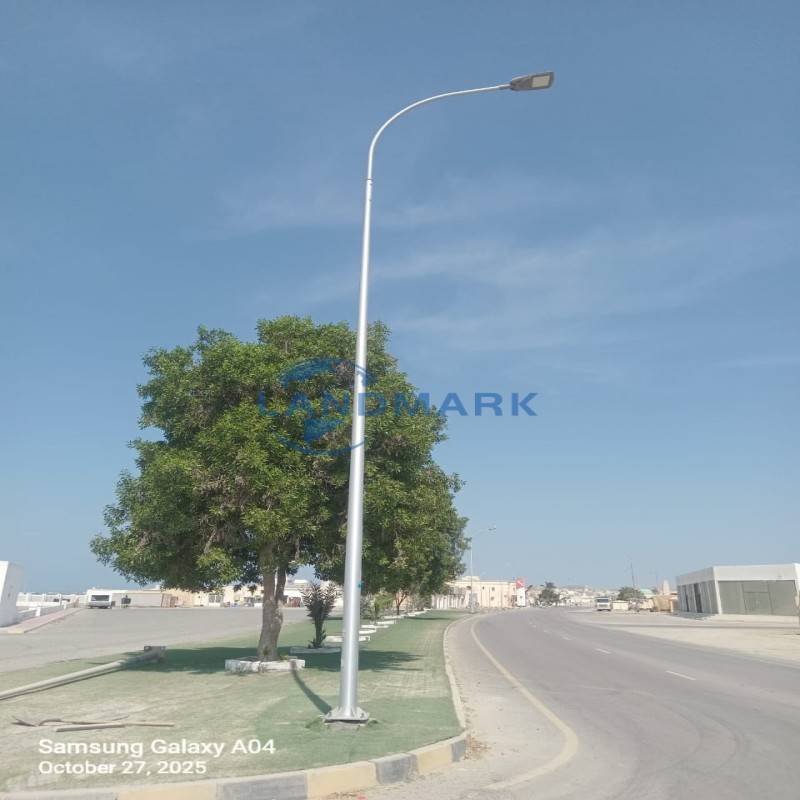
Aluminium light poles are deployed across diverse environments, including municipal roadway lighting, landscape lighting, smart city infrastructure, airports, ports, stadiums, and telecom base stations. Typical working conditions involve corrosive outdoor exposure, long-term UV, and high-altitude operations. The poles support not only luminaires but also integrated power and communication equipment for smart/solar poles, and serve as city landmarks or signage elements. Anti-corrosion finishes, wind/seismic design, and optional FAA aviation lighting for extra-tall poles are standard requirements.
LANDMARK’s aluminium poles have been designed for international large-scale sporting events, municipal road lighting, government projects, international hotels, and large-scale real estate developments.
Comparison: Aluminium vs. Steel vs. Stainless Steel Light Poles
| Property | Aluminium (LANDMARK) | Galvanized Steel | Stainless Steel |
|---|---|---|---|
| Weight | Light (~1/3 of steel) | Heavy | Heavy |
| Corrosion resistance | Excellent (natural oxide layer) | Good (with HDG coating) | Excellent |
| Typical initial cost | Moderate | Low | High |
| Lifecycle maintenance | Low | Moderate (requires recoating) | Low |
| Strength | Good (specific alloys) | High | High |
Note: The above properties are general industry knowledge; exact values depend on specific alloy/grades and project design.
Frequently Asked Questions
-
What certifications should aluminium light poles meet for international projects?
For European projects, poles must comply with EN 40 standards and carry CE marking (CEN). In the United States, AASHTO LRFD LTS is the governing specification. LANDMARK’s aluminium poles have passed SGS product certification and CWB welding certification, and have secured government approvals in countries such as UAE, Saudi Arabia, and Australia. Always verify with your supplier that their design is certified for your target region. -
Can aluminium light poles be used for smart city and solar applications?
Yes. LANDMARK offers integrated solar poles and smart poles within its aluminium product line, designed to house luminaires, sensors, communication gateways, and battery packs. These poles are suitable for grid-supplied or grid+solar dual-mode operation, and can be customized with mounting provisions for additional equipment. -
How does the cost of aluminium compare to steel light poles?
Aluminium poles typically have a higher initial material cost than hot-dip galvanized steel poles. However, their lower weight reduces transportation and installation expenses, and their natural corrosion resistance lowers long-term maintenance and replacement costs. For projects in corrosive environments, aluminium often yields a favorable total cost of ownership. -
Can I request samples or prototypes before placing a bulk order?
Many suppliers, including LANDMARK, accommodate sample or pilot orders. Contact LANDMARK directly using the information below to discuss your specific model, finish, and quantity requirements. -
What is the typical lead time for custom aluminium light poles?
Lead time depends on design complexity, order volume, and current production schedule. For an accurate estimate, reach out to LANDMARK’s sales team. They can provide a timeline after reviewing your technical specifications and delivery location.
For sample requests, technical inquiries, or volume pricing, contact LANDMARK: Email sales02@landmark-innovation.com, Tel +86 13927796733, WhatsApp +86 18318897233.
Conclusion
Aluminium light poles offer a compelling combination of light weight, corrosion resistance, and design flexibility for infrastructure projects ranging from municipal streets to smart city deployments. By understanding the types, standards, and customization options available—and by working with an experienced manufacturer like LANDMARK—buyers can specify poles that deliver long-term value and reliability. Use the evaluation framework above to align your project needs with supplier capability, and do not hesitate to request detailed documentation and samples before committing.