
Cash Drawer Compliance Guide for POS Hardware Buyers

A cash drawer can be mechanically simple and still fail at the border. What decides whether a shipment clears customs, survives a retail chain’s supplier audit, or gets rejected at the receiving dock is rarely the solenoid or the lock. It is the document file behind the product, and whether that file actually describes the units inside the carton.
The three checks that define cash drawer compliance
Compliance for a POS cash drawer rests on three separate checks. First, the correct document type for the destination market. Second, a document scope that names the exact model and electrical configuration being purchased. Third, a physical unit whose label, connector, lock and dimensions match what the document describes. If any one of the three fails, the file is decorative rather than protective.
Document requirements differ by market and are revised over time. Confirm the applicable rules for your destination with your importer of record or a regulatory adviser before releasing a purchase order. This guide describes a verification process; it is not legal advice.
Problem definition: how cash drawer compliance files fail
Most compliance problems in cash drawer procurement follow three patterns. None of them is visible in a product photo, a price list or a supplier catalogue.
Market mismatch. A document package assembled for one destination is presented for another. The paperwork exists, the file looks complete, and the first customs query exposes that the declaration was never written for that market.
Model mismatch. The certificate names the company but not the model. A buyer orders a 405 mm heavy-duty unit and receives a declaration covering a product family whose scope is not defined anywhere in the document. Nothing in the file can be traced to the carton.
Product drift. The document describes a unit with a 12V/24V interface for RJ11/RJ12 printer connection and a three-position key lock, while production ships a different voltage board, a different connector or a lock that does not match the drawing. The document was accurate when it was issued; the product moved afterwards.
The common thread is that the buyer receives a document rather than evidence. A certificate is a claim about a product. Verification is the process of connecting that claim to a specific model, a specific configuration and a specific shipment.
Industry background: why document checks matter more than they used to
The cash drawer is a mature accessory category with continuing growth. The global market was valued at USD 2.13 billion in 2025 and is projected to reach USD 4.60 billion by 2034, a CAGR of 8.85% (Data Insights Reports, 2026).
Most of that volume is still triggered the traditional way. Printer-driven cash drawers — units opened through the receipt printer’s RJ11/RJ12 port at 12V or 24V — held 48% of revenue share in 2025, while Ethernet-driven drawers were the fastest-growing segment at an 11.2% CAGR (Data Insights Reports, 2026). The interface is therefore the part of a cash drawer that carries both the compatibility question and the electrical documentation question.
Trade volume is high enough that customs authorities and retail receiving desks handle cash drawers constantly. In 2024 the United States imported USD 875 million in cash registers, with China the largest single source at USD 232 million (OEC, 2024). High-volume, low-unit-value categories attract document scrutiny at both ends of the shipment.
Regulatory expectations are market-specific but not vague. Cash drawers sold into the European Union require CE marking and RoHS compliance. Other markets maintain their own regimes, which is why a document list has to be rebuilt market by market rather than copied from the previous order.
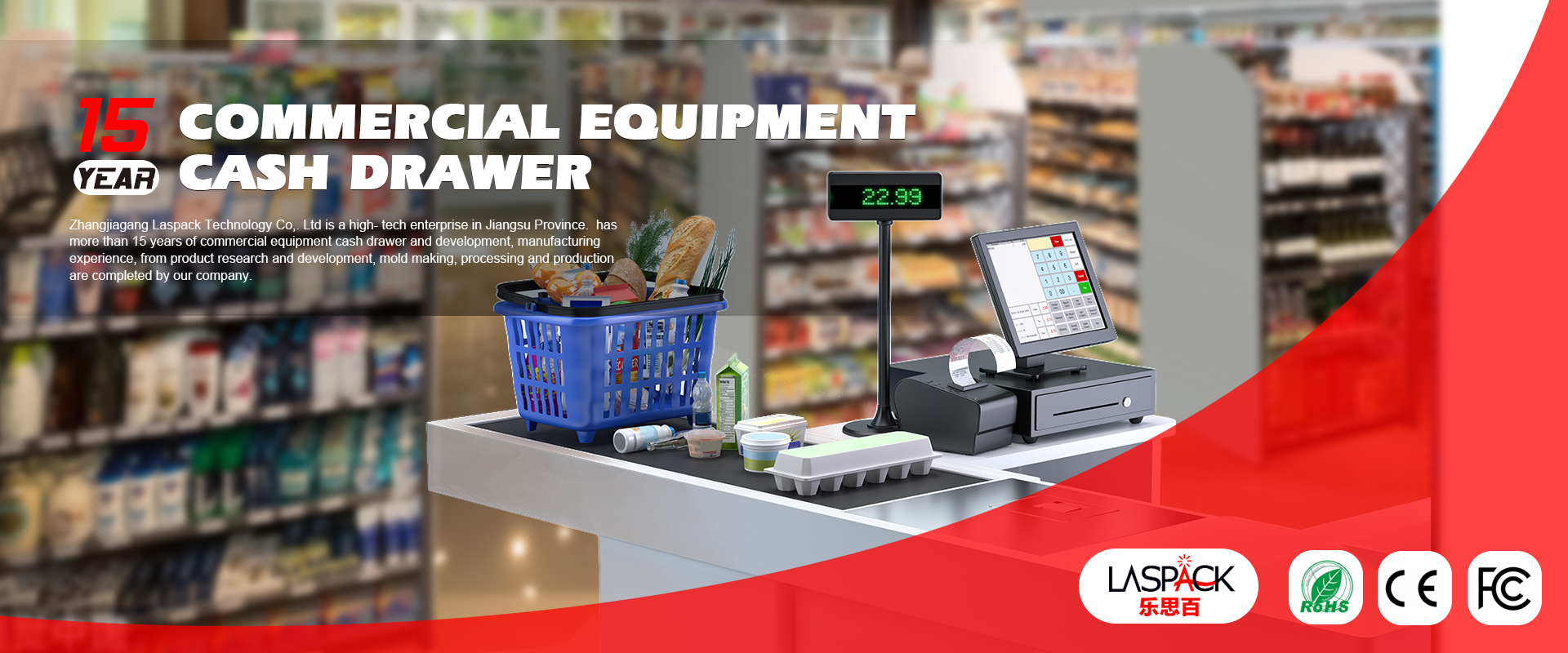
Supplier statements are the starting point of verification, not the end of it. LASPACK (ZHANGJIAGANG LASPACK TECHNOLOGY CO., LTD.), a cash drawer and cash box manufacturer based in Suzhou, Jiangsu Province, China and founded in 2013, states that its cash drawers hold CE, RoHS and FCC certification and have passed 1,000,000-cycle durability tests. A statement of that kind tells a buyer exactly what to request. It does not, by itself, tell a buyer what has been verified.
The document set to request, and what each document proves
Request the file by model and by market, in a single message, so that gaps are visible immediately rather than appearing one document at a time over two weeks.
Declaration of Conformity (CE)
The CE Declaration of Conformity is the manufacturer’s formal statement that the product meets the applicable directives. A usable declaration identifies the manufacturer by legal name and address, identifies the product and the models covered, cites the directives and standards applied, and carries a signatory’s name, function, place and date. Check three things: that the model you are buying appears in the model list, that the electrical ratings in the declaration match your purchase order, and that the standards cited are the ones your destination authority expects for this product type. A declaration that names only the company, with no product identification, cannot be matched to a shipment.
RoHS test report
The RoHS test report is the evidence behind a restricted-substances claim. Useful reports name the laboratory, carry a report number and date, describe the sample in enough detail to identify the materials tested, and list substances and results. A cash drawer is a mixed-material product: the LAS-405 is described as a heavy-duty metal and plastic unit, and the LAS-410G carries a steel panel. The sample description in the report should reflect the same material composition as the unit on the purchase order. A report describing a different construction is not evidence for your SKU.
EMC and electrical test reports
Where the applicable directive requires it, ask for the EMC and electrical test reports that sit behind the declaration. The detail that matters for a cash drawer is configuration coverage: whether the report addresses the voltage option you buy and the interface variant you buy. A drawer ordered as 12V/24V with an RJ11/RJ12 printer interface should be documented as such, not as an unspecified “standard drawer.”
FCC documentation for the United States
Suppliers of POS hardware selling into the United States typically provide an FCC declaration or test report. Read it for the responsible party, the rule part cited and the configuration tested. If the tested configuration differs from your order — a different voltage board, a different cable, a different trigger circuit — ask what evidence covers the difference before you accept the file.
Label and marking artwork
Label artwork is where documents meet the physical product. Approve the artwork before mass production and confirm that model number, voltage, interface, manufacturer or importer identification and the CE mark appearance are consistent with the declaration. Label mismatch is one of the most common causes of receiving-dock rejection, because the label is the first element an auditor or customs officer can compare directly against the paperwork.
Durability and cycle test evidence
If a supplier claims a heavy-duty build, ask what was tested. A cycle test report should state the number of cycles, the load applied, the method and the laboratory. LASPACK states that its cash drawers have passed 1,000,000-cycle durability tests; the report behind that statement is what converts a marketing line into a purchasing criterion you can defend internally.
Using LAS-335 and LAS-405 specifications as the verification baseline
Documents can only be checked against something concrete. LASPACK’s LAS-335 and LAS-405 provide a working example of what that concrete reference looks like.
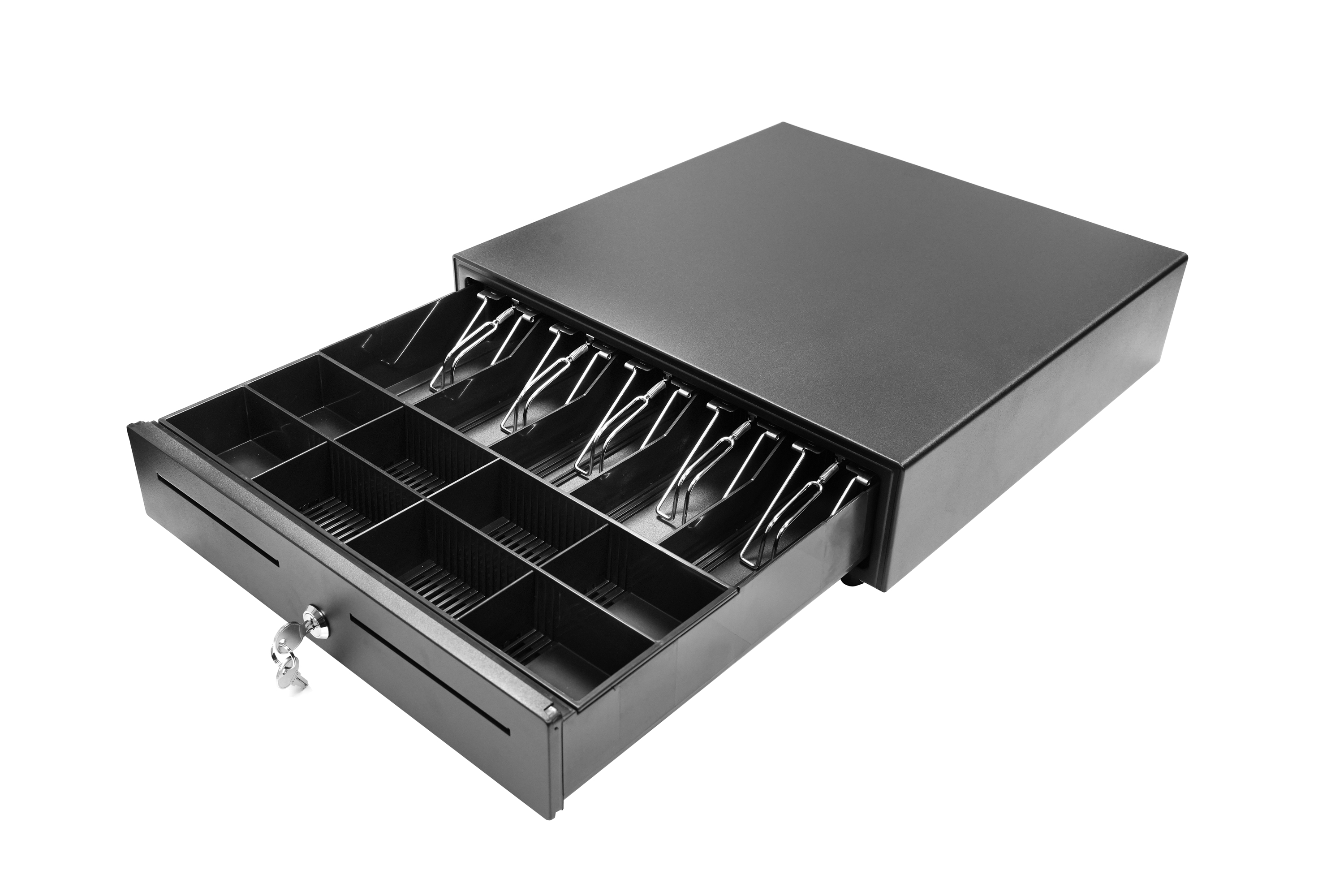
The LAS-335 is a metal and plastic cash drawer measuring 335 × 368 × 80 mm, with a net weight of 3.4 kg and a gross weight of 3.8 kg. It carries 4 bill compartments and 3 or 5 coin compartments, a three-position key lock, and a 12V/24V interface for RJ11/RJ12 receipt printer connection.

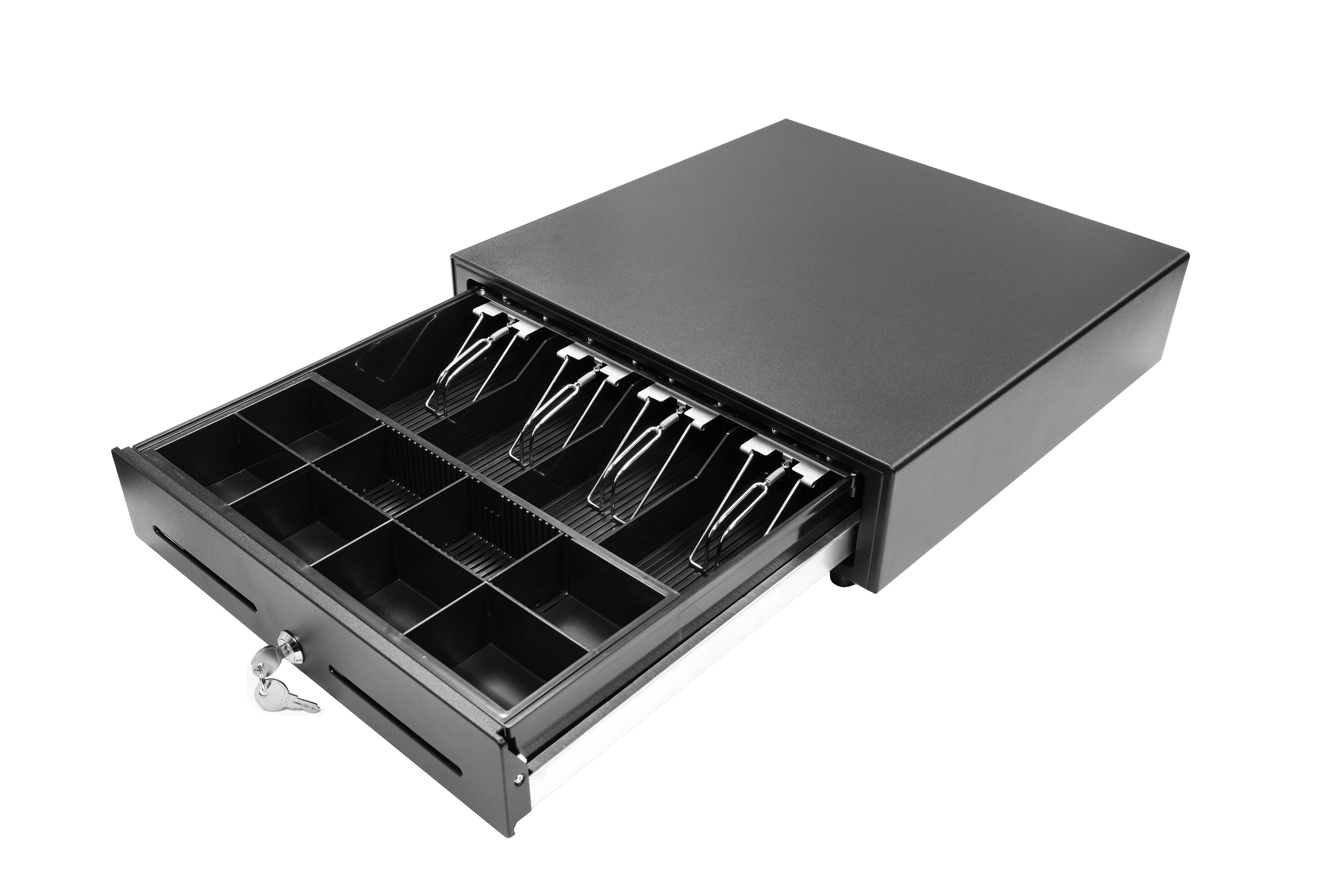
The LAS-405 is a heavy-duty metal and plastic cash drawer measuring 405 × 420 × 100 mm, with a net weight of 4.5 kg and a gross weight of 5 kg. It carries 5 bill compartments and 6 coin compartments, the same three-position key lock, and the same 12V/24V RJ11/RJ12 printer interface.
Those figures do three jobs in a compliance review. They let you confirm that the declaration and the label state the same voltage and interface as the order. They let you confirm at goods-in that the carton contents match the model that was certified rather than a different size from the same family. And they let you separate two models that look similar in a catalogue: the LAS-335 and LAS-405 differ by 70 mm in width, 20 mm in height, 1.1 kg in net weight and one bill compartment, which is enough that a document listing only a family name cannot be treated as model-level evidence.
The LAS-410G shows why material claims deserve the same treatment. It is a heavy-duty metal and plastic cash drawer with a steel panel, measuring 410 × 415 × 100 mm at 5.6 kg net and 6.2 kg gross, with 5 bill compartments, 8 coin compartments, a three-position key lock and the same 12V/24V RJ11/RJ12 interface. The LAS-410A shares the 410 × 415 × 100 mm footprint and the steel panel but is listed at 6.5 kg net. Two steel-panel models of the same size, 0.9 kg apart: the weight is a per-model figure, and a document that quotes one number for an entire family tells you something about its precision.
Step-by-step: verifying a cash drawer file before you commit
Step 1 — Fix the destination market and build the document list
Start from the destination, not from the supplier. For a European Union destination the list begins with CE marking and RoHS compliance. For the United States, add the FCC documentation relevant to your configuration. For every other market, ask your importer what they will be required to produce at clearance and keep that answer in writing. One production run shipped to three markets needs three document sets, not one.
Step 2 — Request by model, not by company
A request phrased as “send me your certificates” produces a folder of company-level files. A request phrased as “for LAS-405, 12V/24V, RJ11/RJ12, quantity X, destination Germany: send the Declaration of Conformity, the RoHS test report and the label artwork” produces something you can actually verify.
Step 3 — Cross-check each document against the purchase order
Lay the documents beside the purchase order and compare model, voltage, interface and material description line by line. Keep a simple three-column record — purchase order value, document value, match or mismatch — inside the order file. That record is what you will show a customer’s auditor or your own quality team eighteen months later, when the original emails are hard to find.
Step 4 — Check the physical unit against the document
At goods-in, work through the unit itself rather than the packing list. Read the label against the declaration. Weigh a sample: a LAS-405 should sit around 4.5 kg net and a LAS-410G around 5.6 kg. Measure the case, because 405 × 420 × 100 mm and 410 × 415 × 100 mm are close enough that a tape measure, not a catalogue photo, is the right instrument. Operate the three-position key lock through all three positions and confirm it behaves as described. Then match the interface connector to the drawing supplied with the file.
Step 5 — Test the unit inside the real POS chain
Paperwork does not open a drawer. Connect the unit to the receipt printer or POS terminal you will actually deploy, at the voltage you will actually run, and confirm that the trigger works and that the RJ pinout matches. Voltage and connector conventions differ between products in this category, so a drawer that works in one chain is not evidence that it will work in another. Record the test: printer model, voltage, cable, result.
Step 6 — Audit the supplier’s document control
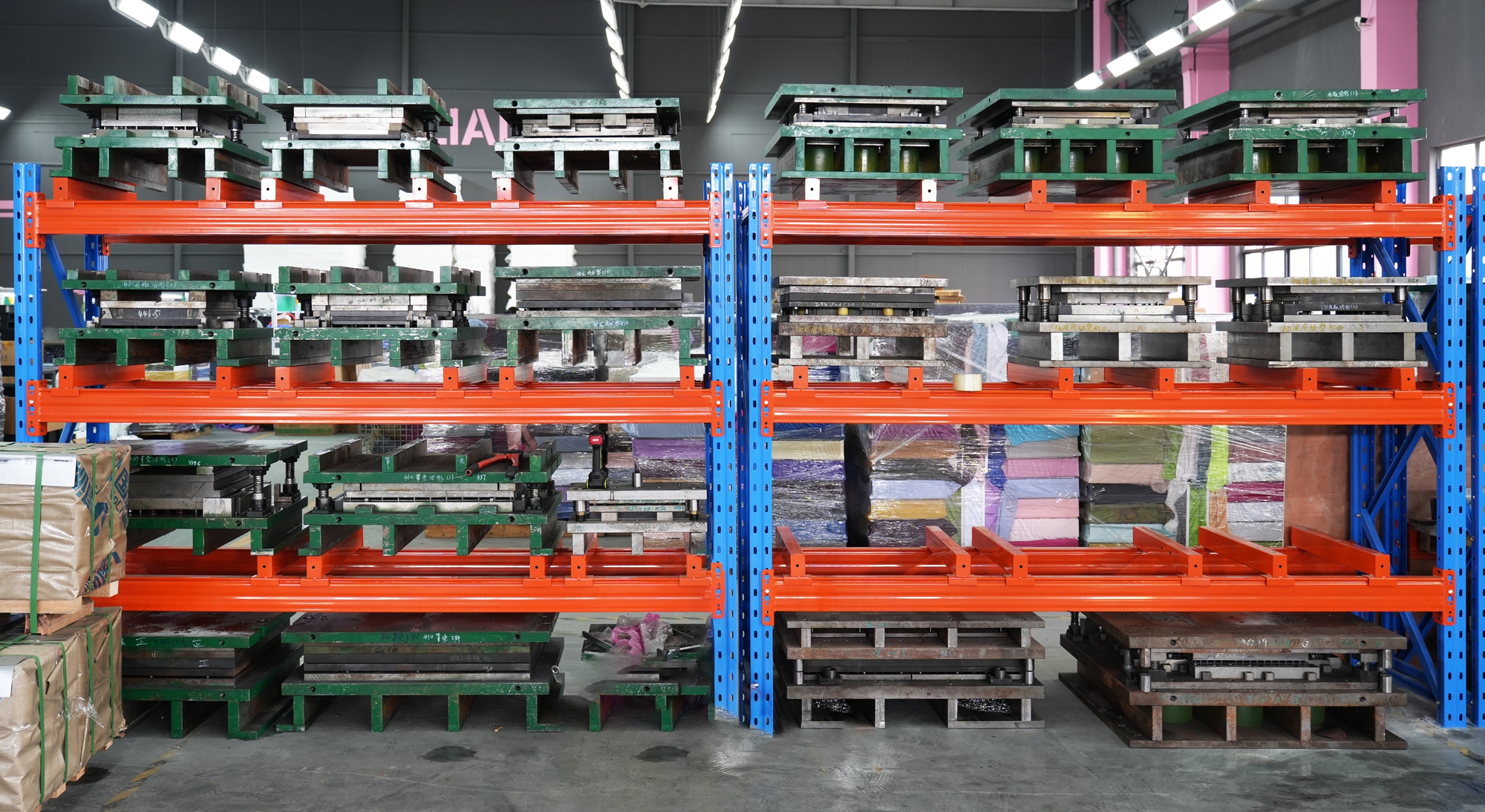
Ask who owns the certificates, where the originals are stored, how a model change is handled, and who signs a new declaration when a component changes. If the supplier claims in-house control from design through production — LASPACK states that it controls the entire process from product design and mold development to processing and production — ask to see the tooling and die records behind that claim. Document control is a process question, and it is answerable on a video call.
Red flags during a supplier audit
These are the patterns that most often indicate a file that will not survive scrutiny. Each one has a specific follow-up request attached to it.
| Red flag | What it usually signals | What to request |
|---|---|---|
| Certificate shows the company name only, with no model list | Declaration issued at company level; model scope unknown | Model-level scope, or a separate declaration per model |
| A screenshot or cropped image instead of the original file | File may be incomplete, edited or out of date | Original PDF with report number, laboratory and date |
| Standards cited do not match the product type or the destination | Document reused from another product line | The declaration for this product and this market |
| A single voltage stated against a 12V/24V order | Partial configuration coverage | Test report covering both voltage options |
| Label artwork differs from the declaration | Production drift after certification | Corrected artwork, re-approved before shipment |
| “Heavy duty” quoted with no panel material, gauge or weight | Marketing description rather than a specification | Model-level spec sheet with panel material and net/gross weight |
| Sample cannot be drawn from the production lot | Traceability gap between certificate and shipment | Lot-drawn sample with an inspection record |
Use cases: where this check changes the outcome
Multi-market retail rollout
A chain standardising on one 405 mm drawer across several countries still needs a separate document set per destination. The hardware can be identical — LAS-405, 12V/24V, RJ11/RJ12, three-position lock — while the file that clears one market has no standing in the next.
Like-for-like replacement in restaurant refurbishment
In replacement buying, compatibility matters more than novelty. The practical test is whether the replacement drawer is covered by model-level documents and whether its voltage and connector match the existing printer chain. A drawer that arrives with a family-level certificate and an unlabelled connector box creates work at the counter, not in the office.
Distributor stocking several markets
A distributor’s customer will ask for the file, not the catalogue. Filing documents per model and per market — LAS-335 file, LAS-405 file, LAS-410G file, each split by destination — turns a compliance request into a lookup instead of a supplier chase.
Supermarket checkout with a heavy-duty requirement
High-traffic checkout lanes justify a heavier unit, and heavier units justify asking for evidence. The LAS-410G pairs a steel panel with 5 bill and 8 coin compartments, a three-position key lock and a 12V/24V RJ11/RJ12 interface; the durability claim attached to it should be backed by a cycle test report stating cycles, load and method.
Model comparison for document verification
The table below lists only published specifications. Use it as the reference column when you compare a declaration, a label and a carton.
| Model | Size (W × L × H) | Net / Gross weight | Currency layout | Lock | Interface | Construction |
|---|---|---|---|---|---|---|
| LAS-335 | 335 × 368 × 80 mm | 3.4 kg / 3.8 kg | 4 bills, 3 or 5 coins | Three-position | 12V/24V, RJ11/RJ12 | Metal and plastic |
| LAS-405 | 405 × 420 × 100 mm | 4.5 kg / 5 kg | 5 bills, 6 coins | Three-position | 12V/24V, RJ11/RJ12 | Metal and plastic, heavy duty |
| LAS-410G | 410 × 415 × 100 mm | 5.6 kg / 6.2 kg | 5 bills, 8 coins | Three-position | 12V/24V, RJ11/RJ12 | Metal and plastic, steel panel |
Frequently asked questions
Which certification documents should I request before importing a cash drawer?
Request documents by model and by destination market. For the European Union, the baseline is a CE Declaration of Conformity plus a RoHS test report, because CE marking and RoHS compliance are the applicable requirements there. For the United States, suppliers of POS hardware typically provide an FCC declaration or test report, and you should confirm which rule part and which configuration it covers. Add label artwork, a model list showing that your exact model is inside the certificate scope, and any durability test report behind a heavy-duty claim. Requirements vary by market, so confirm the final list with your importer of record before the order is released.
How do I confirm that a certificate actually covers the model I ordered?
Match four fields between the document and the purchase order: model designation, voltage, interface and physical description. If you ordered an LAS-405 at 12V/24V with an RJ11/RJ12 printer interface, the file should identify that model and that configuration, not a product family. If you ordered an LAS-335, the document should be consistent with a 335 × 368 × 80 mm, 3.4 kg net unit with 4 bill compartments. A certificate that lists only the manufacturer’s legal name and no model scope does not allow this check, and that absence is itself the answer.
Does the compliance file change the cost of a cash drawer order?
The documents are not a line item on a unit price, but the scope behind them changes the cost structure of an order. Testing scope, whether both voltage options are covered, whether a custom colour or custom packaging requires the file to be revised, and whether pre-shipment inspection is included all affect what a supplier has to do before goods leave. The practical rule for buyers is to treat “unknown scope” as an unbudgeted cost and resolve it before the purchase order, not after the shipment arrives.
Should I approve the sample before or after the documents are checked?
Run both in the same cycle rather than sequentially. Send the sample request and the document request together, then evaluate the sample against the file: label versus declaration, connector versus drawing, lock operation versus description, dimensions and weight versus the published spec. A sample approved before the documents arrive only confirms that the unit works; it does not confirm that the unit is the one that was certified.
Will document verification delay my order?
Verification usually adds a step before the purchase order rather than after it, and the delay sits in the response cycle, not in the check itself. It shortens when the first request is complete: model, voltage, interface, destination market, quantity and required document types in one message. LASPACK supplies cash drawers with CE, RoHS and FCC certification stated for its range, and supports buyers who need the underlying file, a production-drawn sample or a quotation matched to a specific model and market — you can send the requirement to lena@laspack.com and ask for the document pack and a sample together.
Conclusion: compliance is a verification habit, not a document
A cash drawer file is only as useful as the buyer’s ability to test it. The work that protects a shipment is unglamorous: build the document list from the destination market, request it by model, cross-check it against the purchase order, then match it to the physical unit and to the live POS chain. Specifications such as the LAS-335 at 335 × 368 × 80 mm and 3.4 kg, the LAS-405 at 405 × 420 × 100 mm and 4.5 kg, or the steel-panel LAS-410G at 5.6 kg are not marketing detail — they are the reference points that make a document check possible at all.
Buyers who adopt that habit stop discovering compliance problems at the receiving dock. They discover them in the supplier’s inbox, while the order is still negotiable.
Next step: request the document pack with the sample
LASPACK (ZHANGJIAGANG LASPACK TECHNOLOGY CO., LTD.) manufactures cash drawers and cash boxes in Suzhou, Jiangsu Province, China, with a 4,200 m² facility, approximately 50 staff, a 10-engineer R&D team and an annual production capacity of about 400,000 units. Export business accounts for roughly 70% of sales, with products shipped to more than 100 countries and regions.
For model-level specifications, samples, quotations or the certification file for a specific model and destination market, contact:
- Email: lena@laspack.com
- Tel: +86 13962212810
- WhatsApp: +852 98740600
- Website: www.laspack.com
- Address: Room 811, Cathay Oriental Plaza, No. 9 Renmin Road, Yangshe Town, Zhangjiagang City, Suzhou, Jiangsu Province, China
Product catalogue for download: LASPACK cash drawer catalogue (PDF).
Have Questions or Need More Details?
Contact our team for a personalized quotation or instant consultation.
Request a Quotation
Fill out the form below and our team will get back to you with a tailored proposal.
WhatsApp Direct Chat
Prefer to chat in real-time? Message us on WhatsApp for instant assistance & quick answers.
- Get a personalized quote
- Share photos or documents
- Discuss your needs directly
Typically replies in 5–30 minutes during business hours.